Settlement Agreement and Release of Claims - Breach of Contract - General Form
About this form
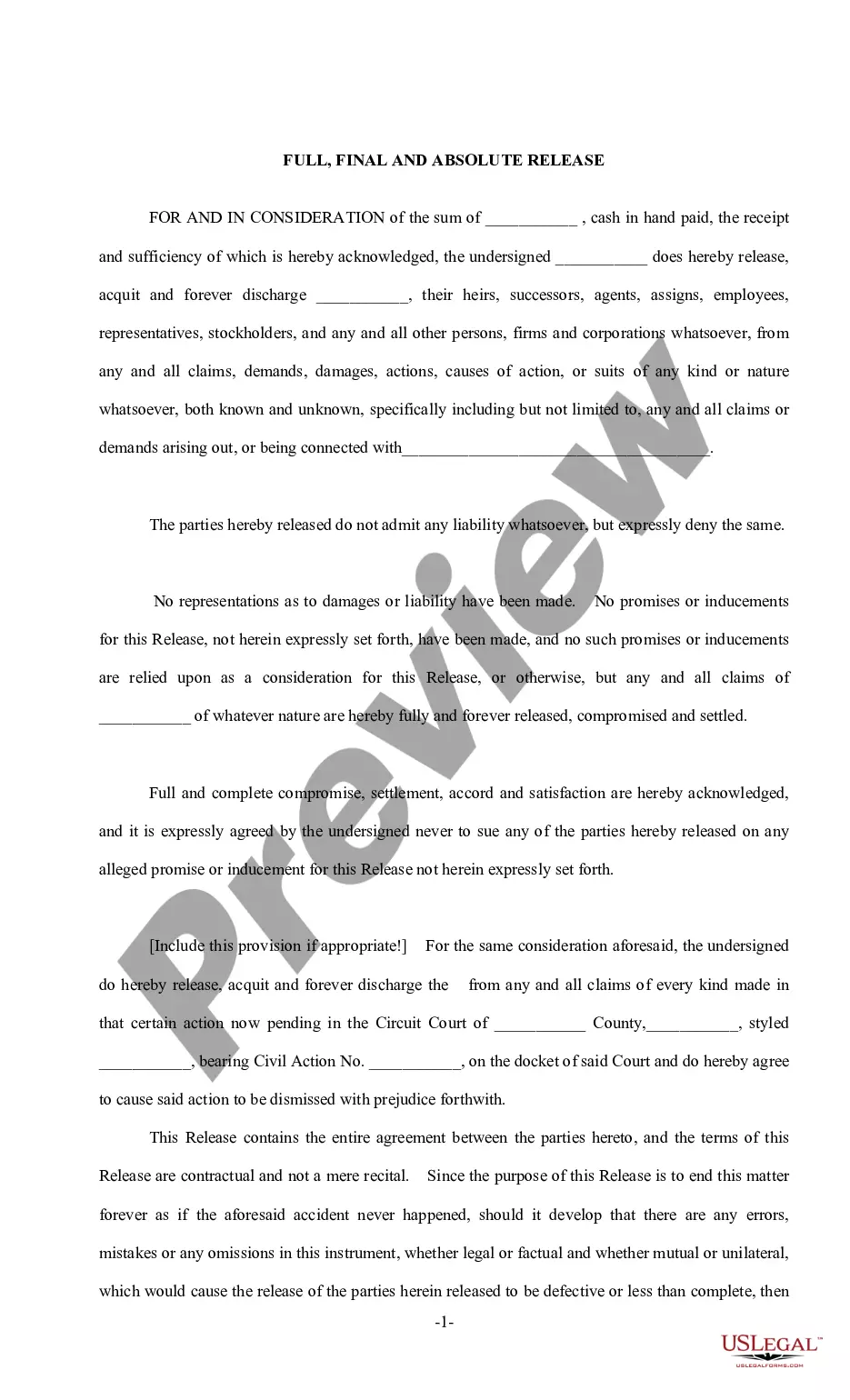
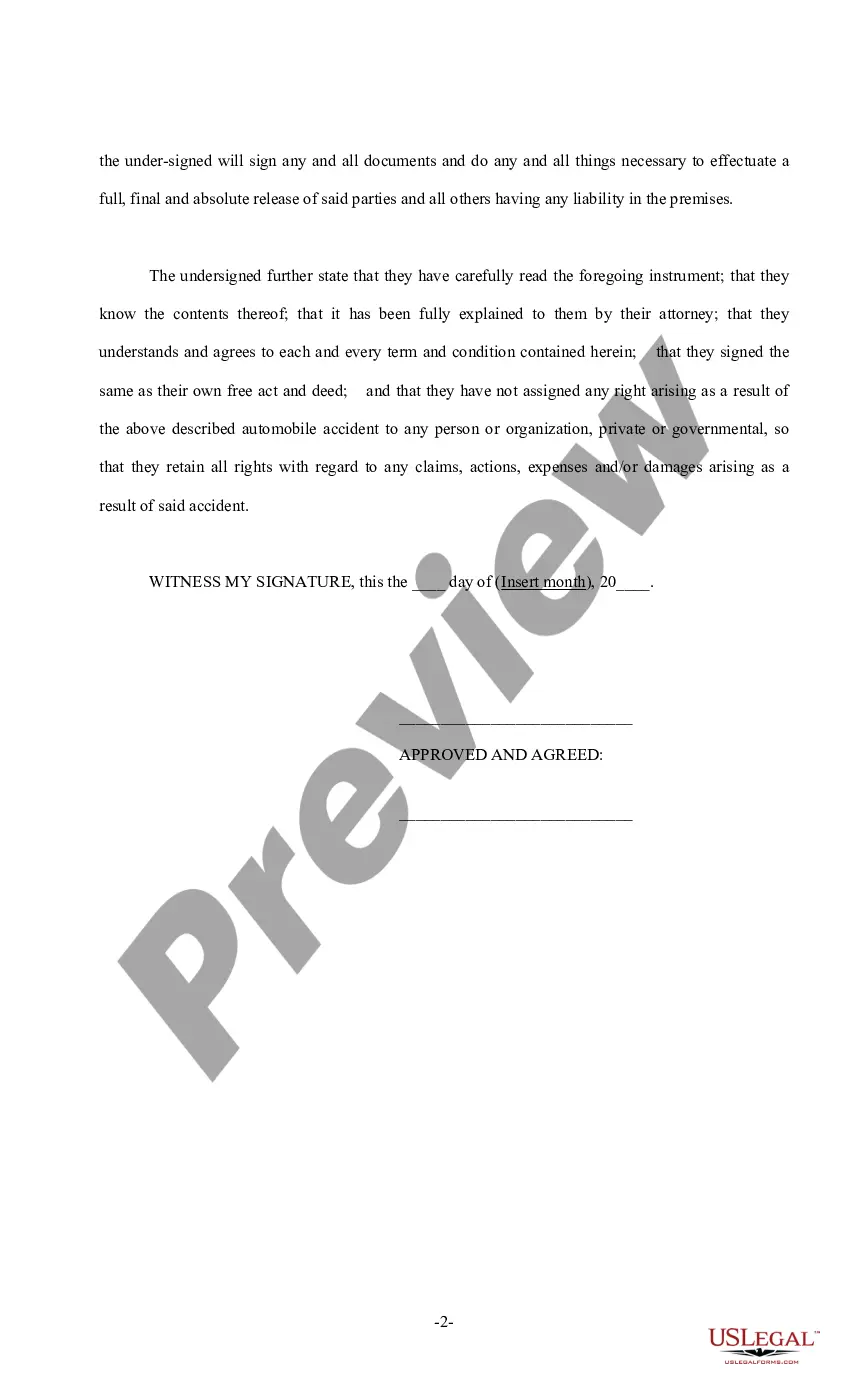
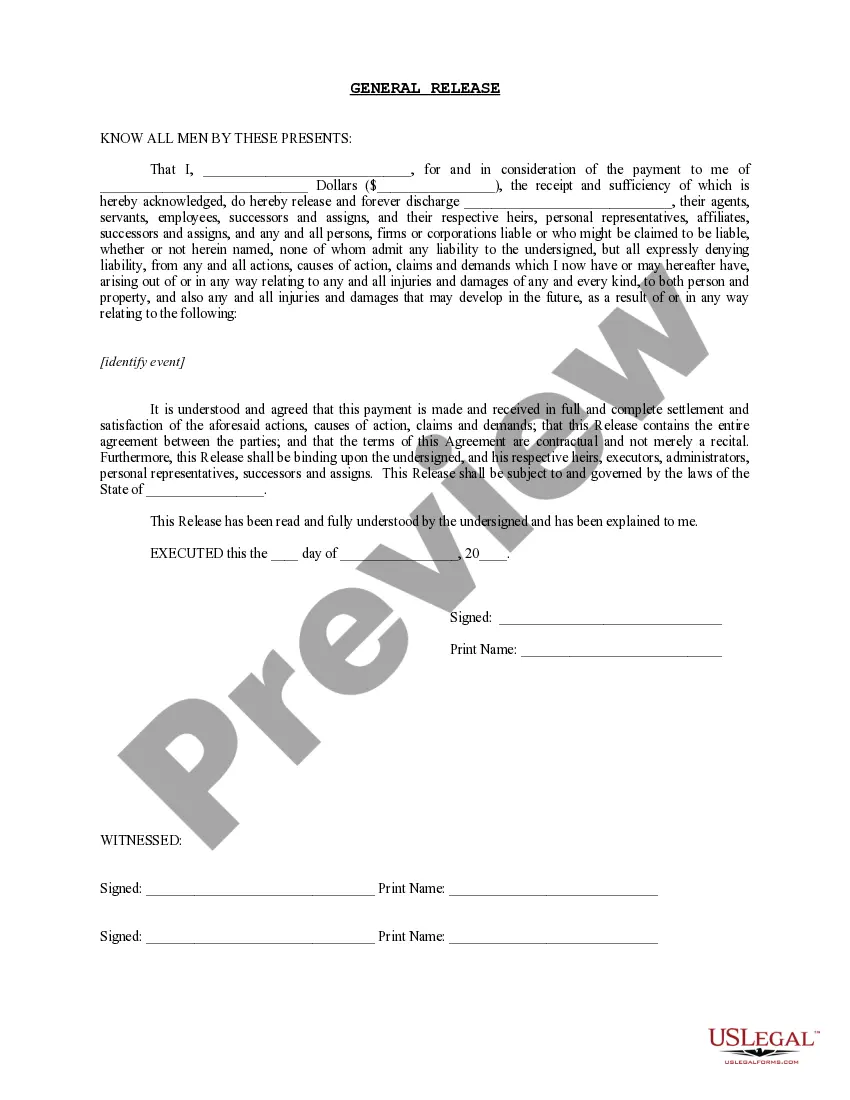
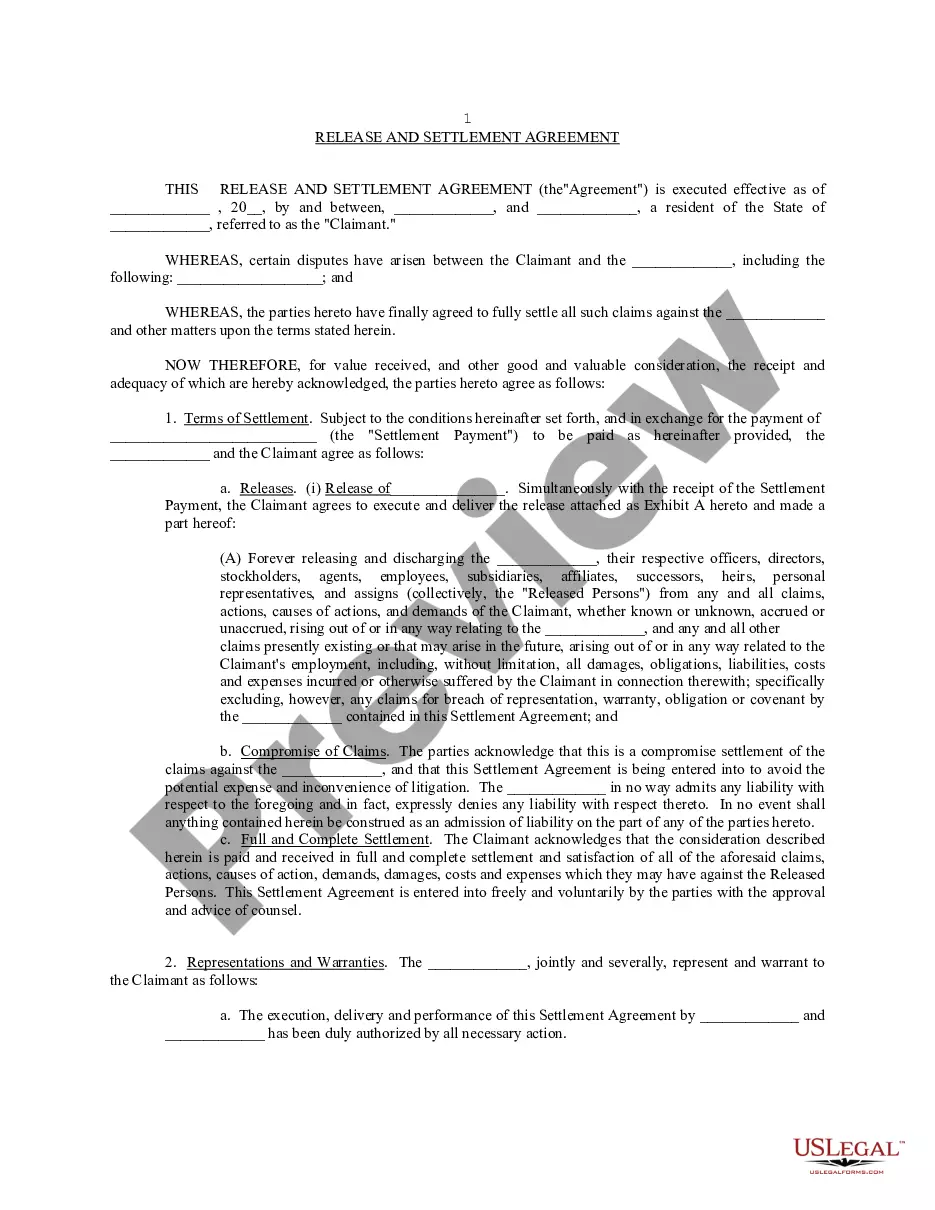
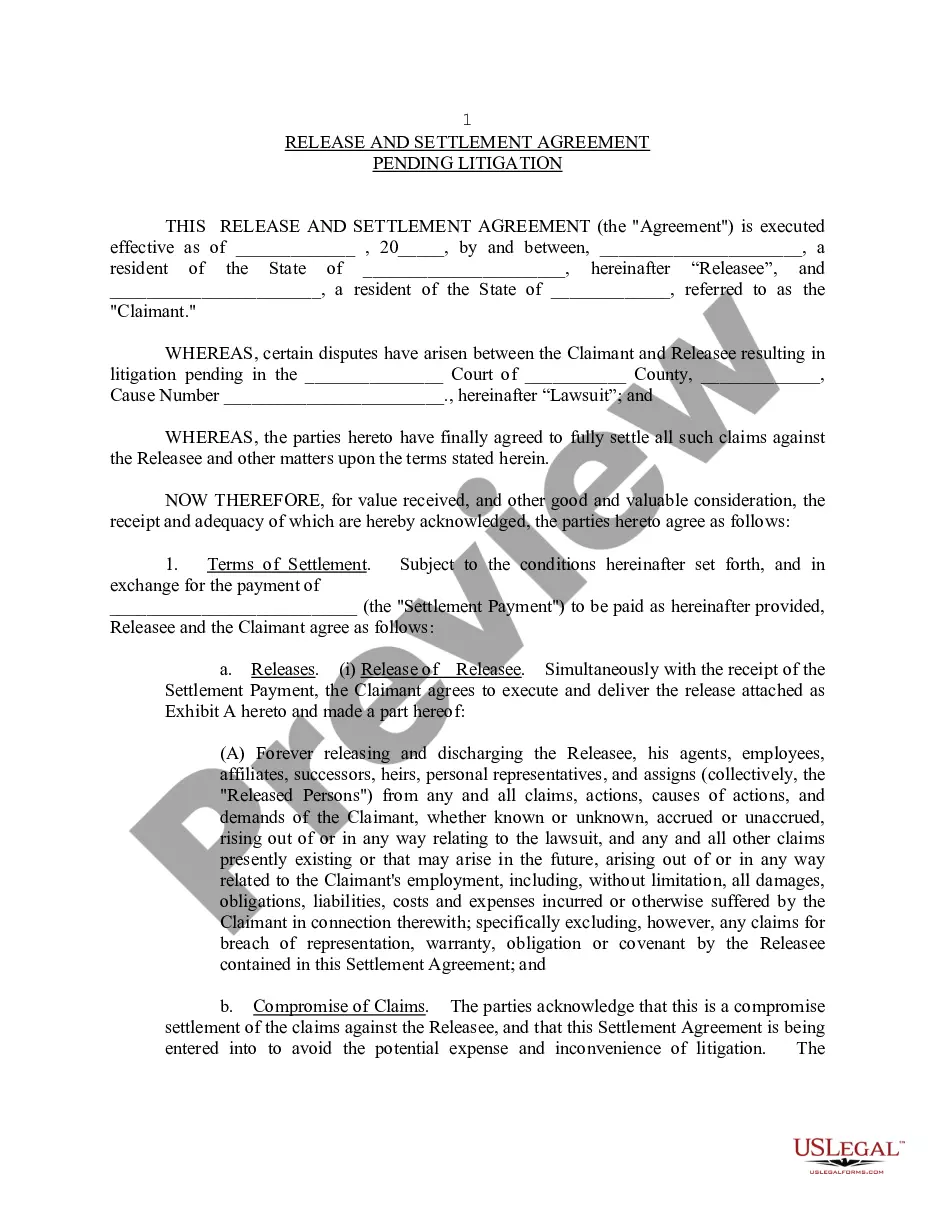
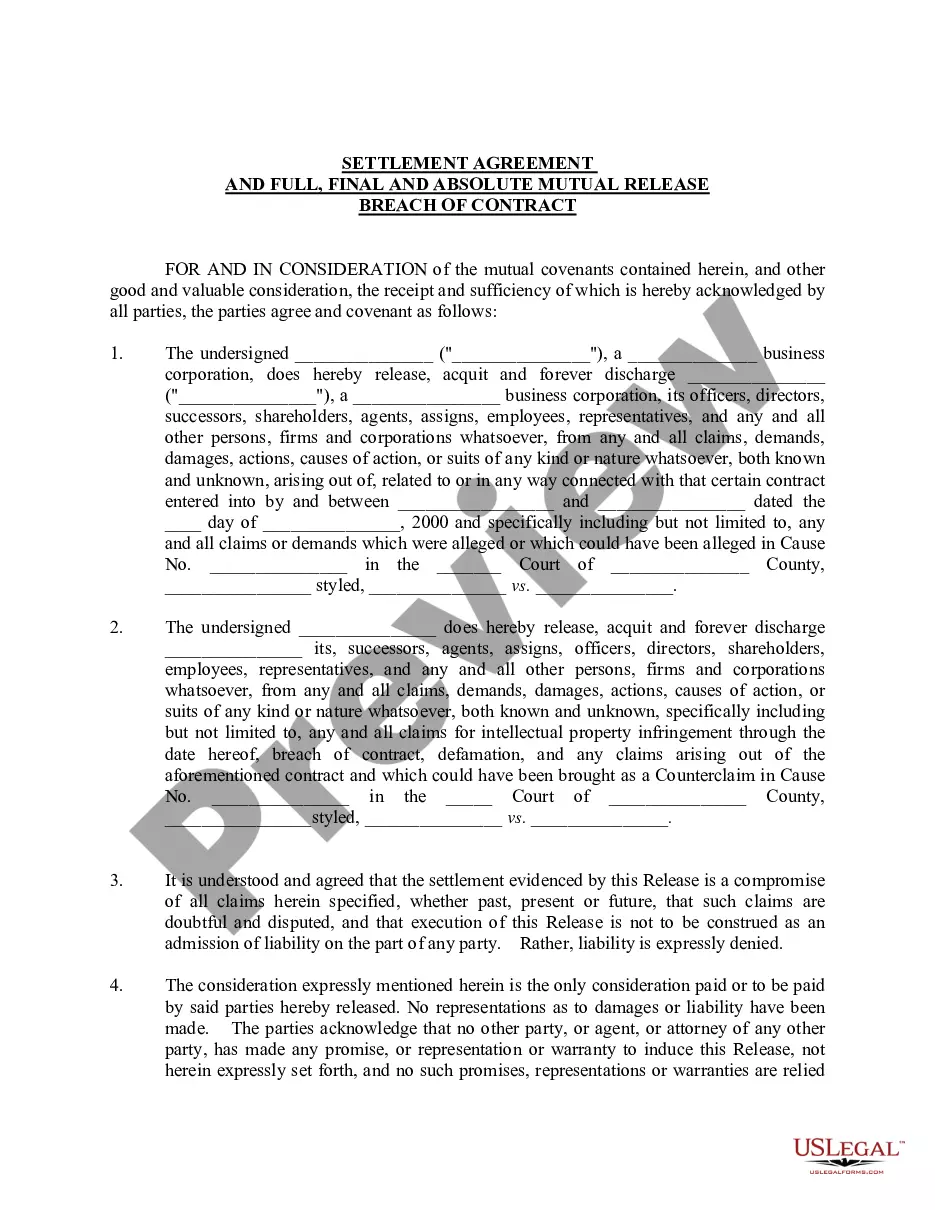
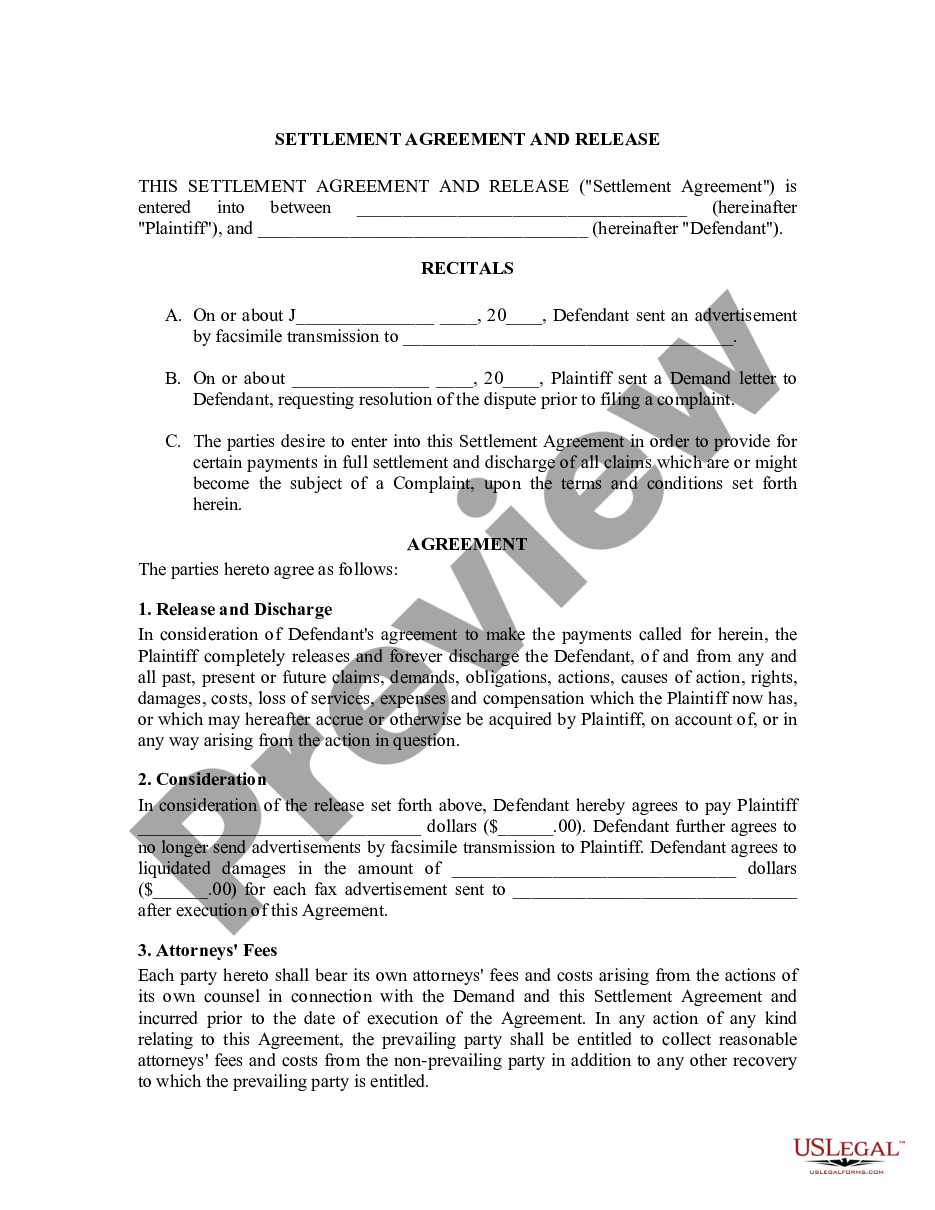
The Settlement Agreement and Release of Claims is a legal document used when one party agrees to release another party from any claims related to a specific event or occurrence, usually a breach of contract. This form provides a clear resolution to disputes, ensuring that the releasing party waives any future claims related to the issue at hand. It differs from similar forms by encompassing both a settlement agreement and a comprehensive release of claims, emphasizing the finality and mutual acceptance of the terms by all parties involved.
Key components of this form
- Identification of the releasor and releasee, including any related parties.
- A clear statement of the amount being paid in consideration of the release.
- A clause releasing all known and unknown claims related to the specified occurrence.
- Acknowledgment of no admission of liability by the releasee.
- Provisions to dismiss any pending legal actions related to the claims.
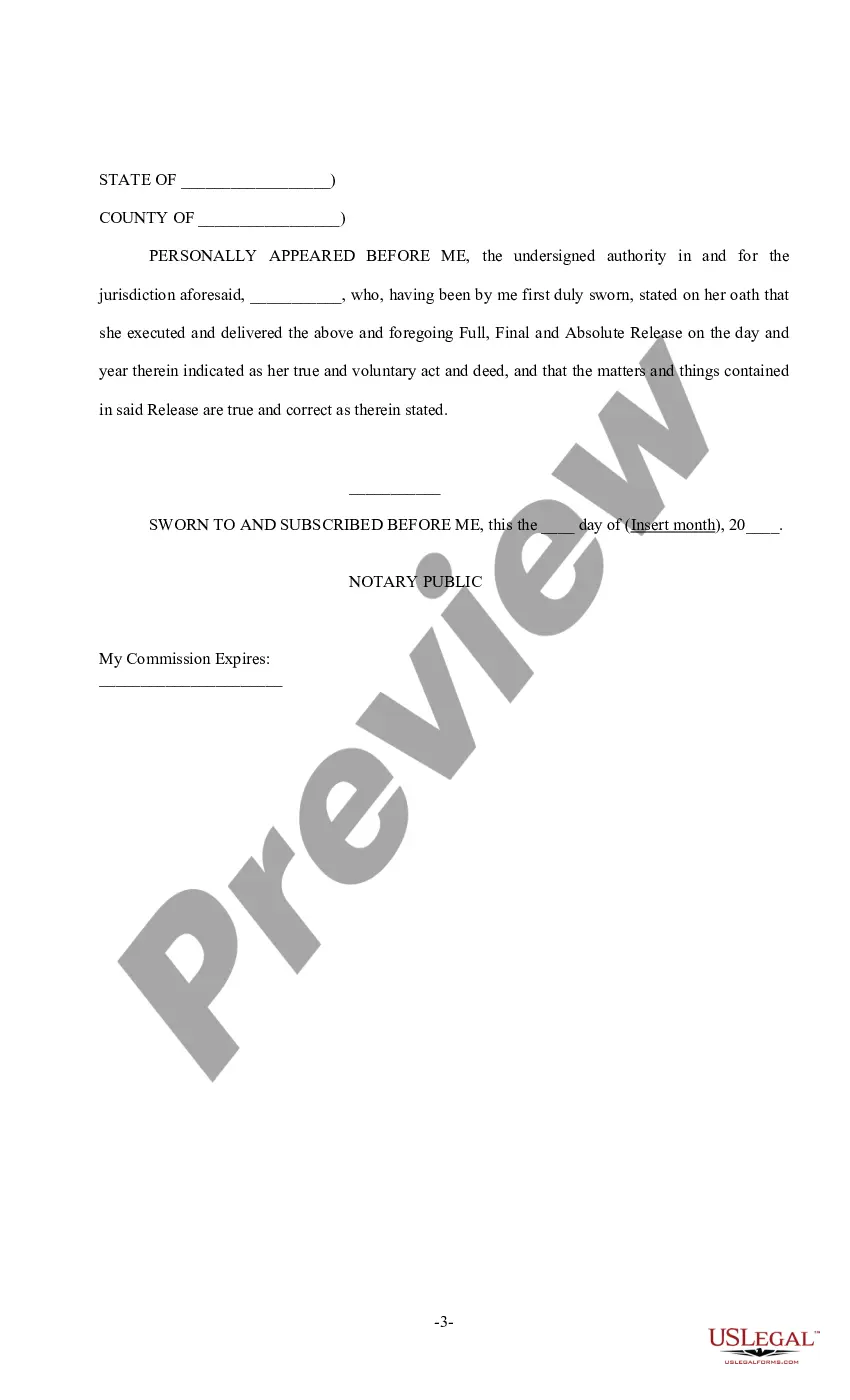
- Notary acknowledgment to validate the agreement.
Common use cases
This form is typically used when parties have reached a settlement in a dispute involving a breach of contract. It may be appropriate in various situations, such as resolving disagreements over contract terms, addressing payment issues, or ending ongoing litigation. Using this form helps both parties clarify their intentions and finalize their agreement, avoiding further disputes or legal actions in the future.
Who needs this form
- Individuals or businesses involved in a contract dispute who wish to settle claims amicably.
- Parties who have reached an agreement after negotiations or mediation.
- Those who want to formally document the resolution of a legal claim and release the other party from liability.
How to complete this form
- Identify the parties involved by completing the releasor and releasee sections.
- Specify the amount being paid as consideration for the release.
- Clearly describe the specific occurrence or issue that is being settled.
- Include any relevant case information if applicable, such as pending lawsuits.
- Sign and date the form, ensuring it is executed voluntarily and without pressure.
- If required, arrange for notarization of the signed document.
Notarization guidance
This document requires notarization to meet legal standards. US Legal Forms provides secure online notarization powered by Notarize, allowing you to complete the process through a verified video call, available 24/7.
Get your form ready online
Our built-in tools help you complete, sign, share, and store your documents in one place.
Make edits, fill in missing information, and update formatting in US Legal Forms—just like you would in MS Word.
Download a copy, print it, send it by email, or mail it via USPS—whatever works best for your next step.
Sign and collect signatures with our SignNow integration. Send to multiple recipients, set reminders, and more. Go Premium to unlock E-Sign.
If this form requires notarization, complete it online through a secure video call—no need to meet a notary in person or wait for an appointment.
We protect your documents and personal data by following strict security and privacy standards.

Make edits, fill in missing information, and update formatting in US Legal Forms—just like you would in MS Word.

Download a copy, print it, send it by email, or mail it via USPS—whatever works best for your next step.

Sign and collect signatures with our SignNow integration. Send to multiple recipients, set reminders, and more. Go Premium to unlock E-Sign.

If this form requires notarization, complete it online through a secure video call—no need to meet a notary in person or wait for an appointment.

We protect your documents and personal data by following strict security and privacy standards.
Typical mistakes to avoid
- Failing to accurately identify all parties involved in the agreement.
- Not specifying the exact claims being released, which can lead to ambiguity.
- Inadequately describing the consideration being exchanged.
- Overlooking the need for notarization if the jurisdiction requires it.
Benefits of using this form online
- Convenient access to legally vetted templates tailored to your needs.
- Editable forms allow for customization according to specific circumstances.
- Instant availability reduces the time spent searching for legal documents.
Looking for another form?





Form popularity
FAQ
Its purpose is to document a settlement and release of claims when one party releases another from claims arising from a specific event, typically a breach of contract. It provides finality by combining a settlement with a comprehensive release, ensuring mutual acceptance and waiving future claims related to the issue and ending related disputes.
To complete this form, fill in the releasor and releasee names, the amount paid in consideration of the release, and add a release clause covering all known and unknown claims. Include a statement that there is no admission of liability, provisions to dismiss related legal actions, and a notary acknowledgment to formalize the agreement.
The release form should include identification of the releasor and releasee, the amount paid in consideration, a clause releasing all known and unknown claims related to the event, an acknowledgment that the releasee is not admitting liability, provisions dismissing any pending actions, and a notary acknowledgment to validate the agreement.
Fill out the releasor and releasee names, specify the settlement amount, insert a release clause covering all known and unknown claims arising from the breach, state that there is no admission of liability, and include provisions to dismiss any related legal actions. Have the document notarized to finalize and validate the agreement.
An example language would state that the releasor releases the releasee from all known and unknown claims arising from the breach of contract, in exchange for the agreed payment, and that there is no admission of liability by the releasee. The example underscores finality and mutual release.
This form combines both a settlement agreement and a comprehensive release of claims in one document. It emphasizes finality and mutual acceptance, includes dismissal of related actions, and requires a notary acknowledgment, whereas stand-alone settlement or release forms may address only one element.