Covenant not to Compete Agreement between Employee and Medical Staffing Agency
Overview of this form
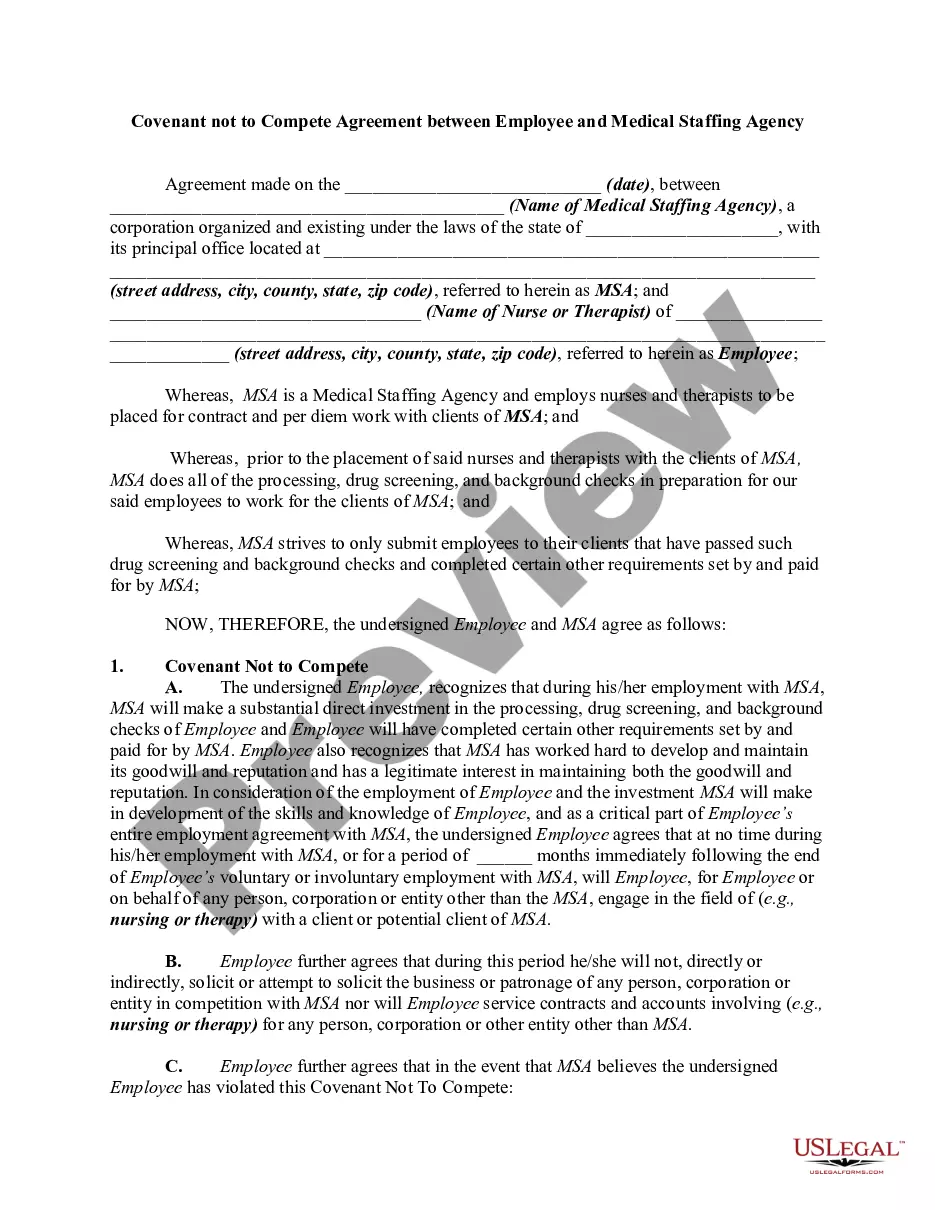
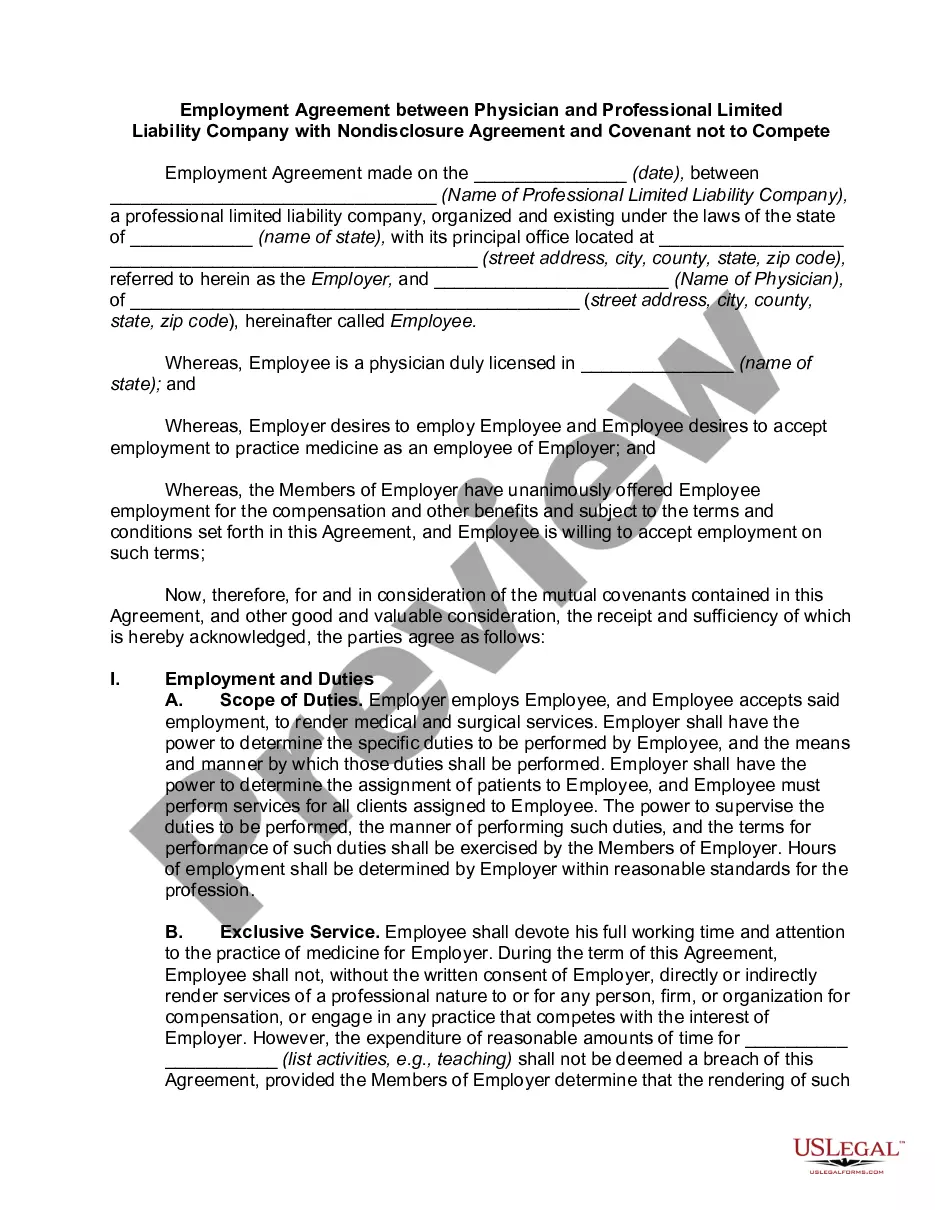
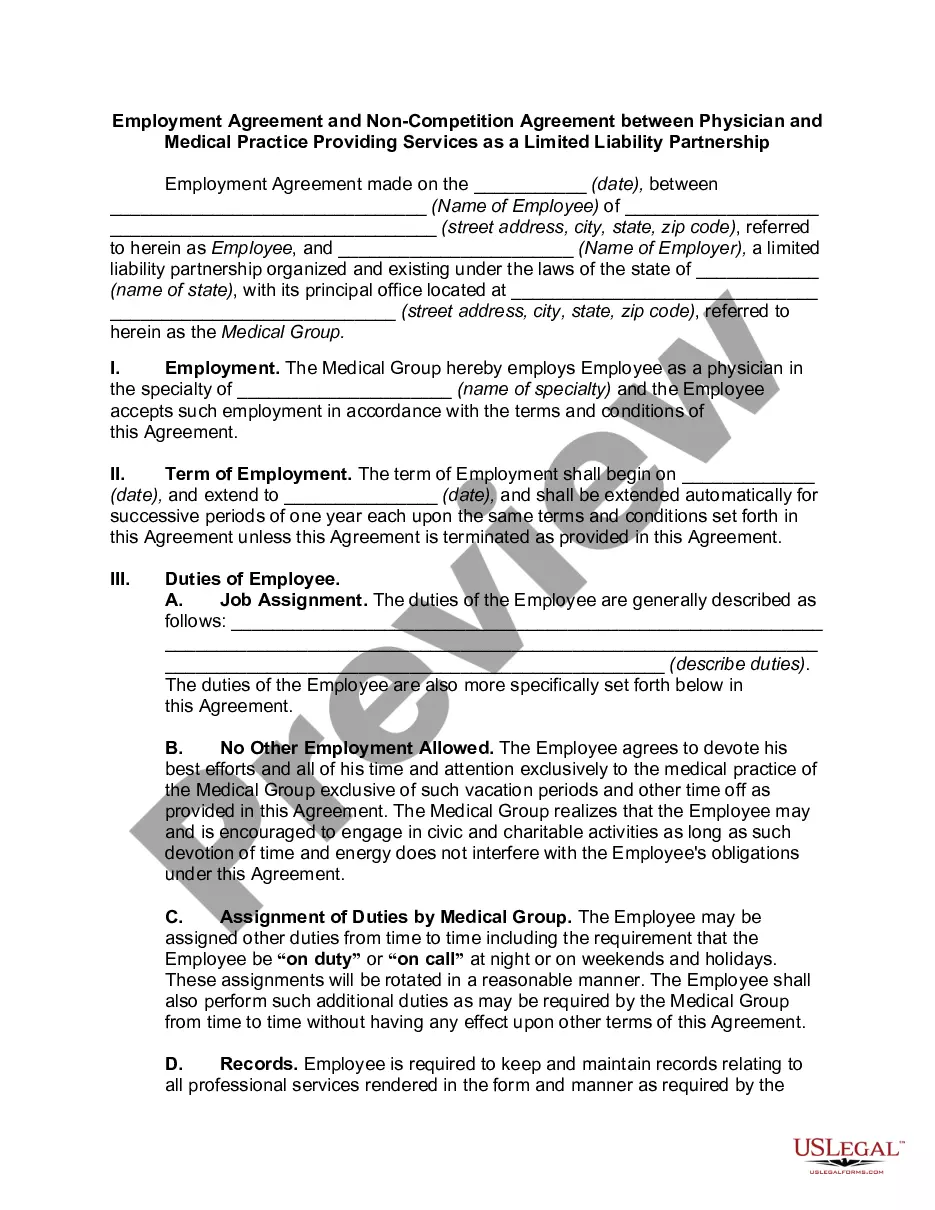
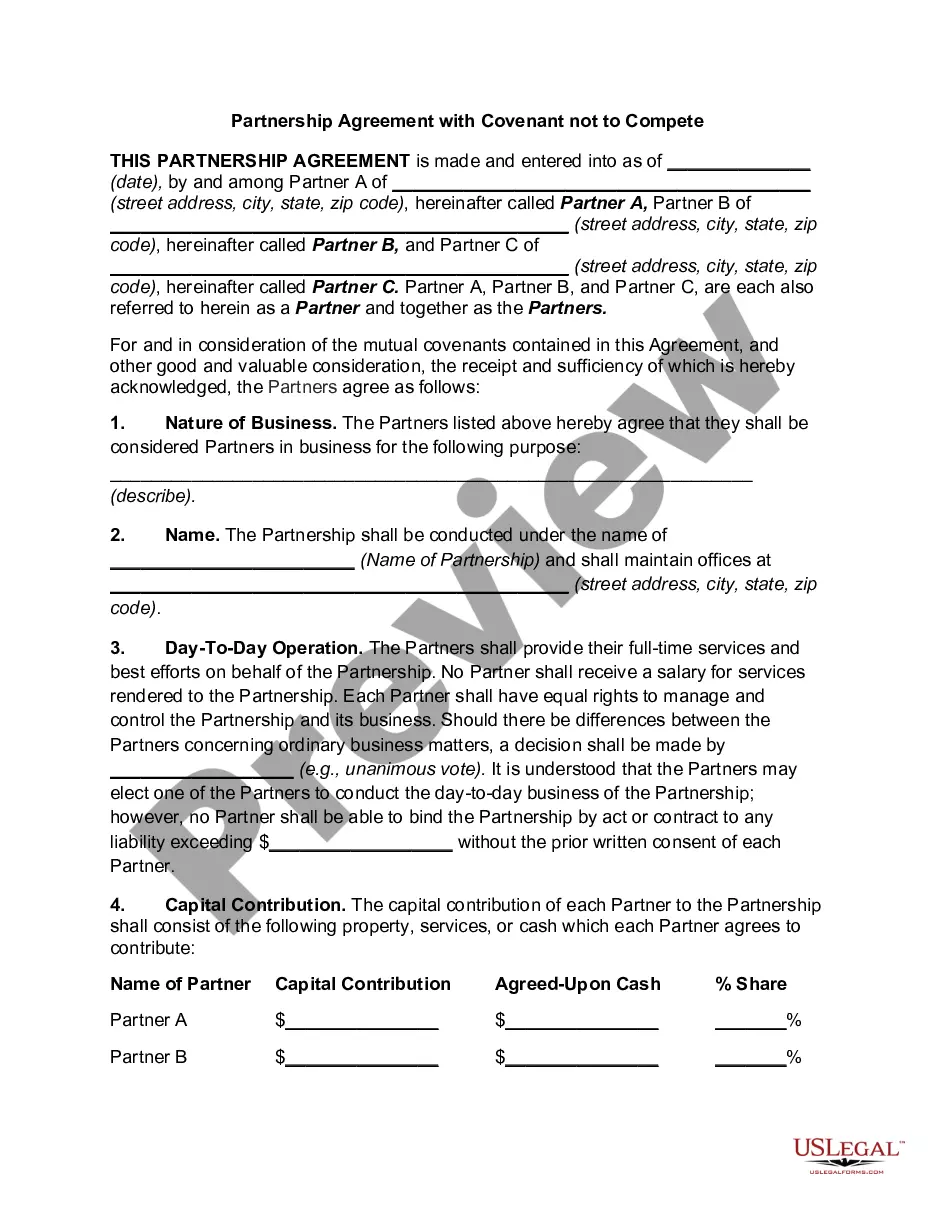
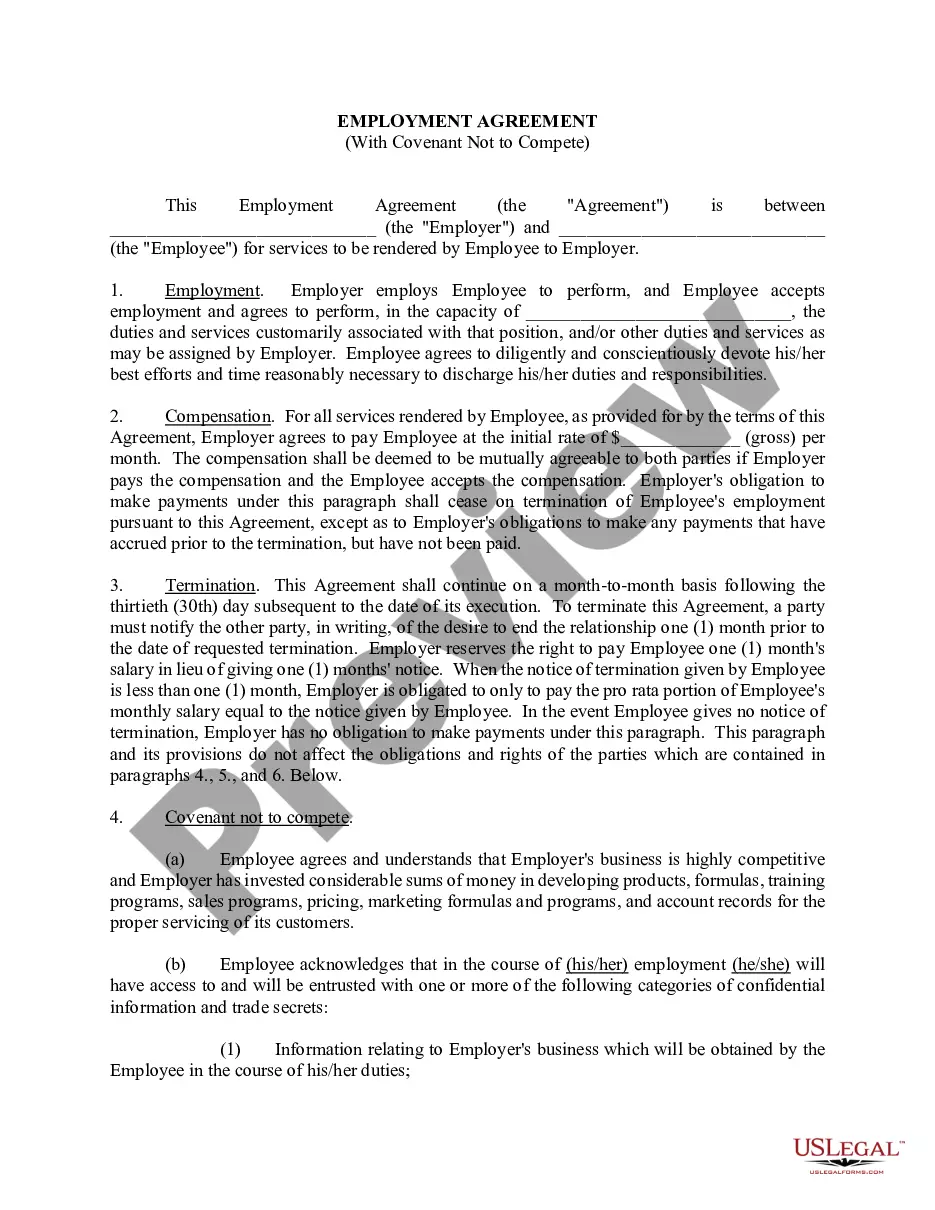
The Covenant Not to Compete Agreement between Employee and Medical Staffing Agency is a legal document designed to prevent a current or former employee from competing against their employer for a specified period of time and within a specific geographical area. This type of agreement is important in the medical staffing industry to protect the investment that staffing agencies make in recruiting and training their employees. Unlike other employment contracts, this agreement specifically addresses post-employment competition and its enforceability in a legal context.
What’s included in this form
- Identification of the parties involved, including the Medical Staffing Agency and the Employee.
- The specific duration of the non-compete clause, which may vary based on the agreement.
- Prohibited activities, detailing what constitutes competition and solicitation of business.
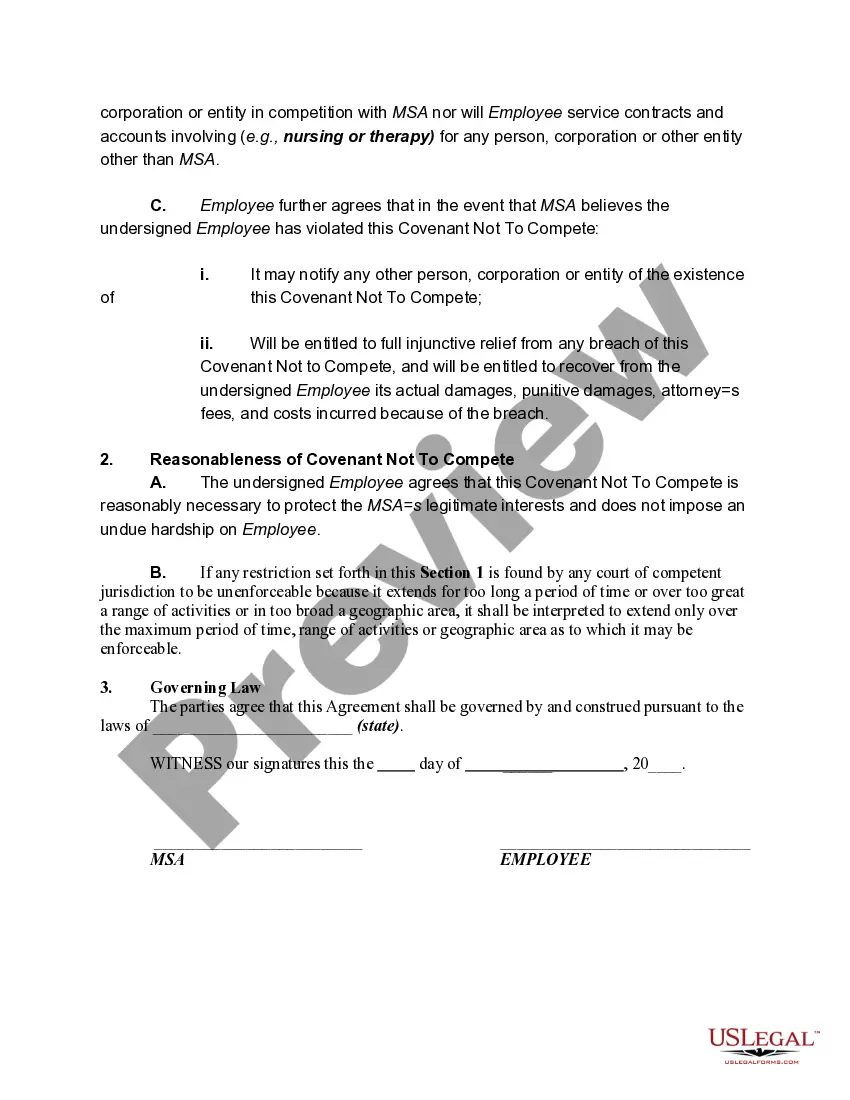
- Provisions for enforcement, including potential legal remedies for breach of contract.
- Reasonableness clause ensuring the restrictions are not overly burdensome for the Employee.
- Governing law specification outlining which state's laws will apply to the agreement.
When to use this document
This form is typically used when a medical staffing agency hires a nurse or therapist and wants to protect its business interests. It is appropriate when the agency has made significant investments in the employee's training, background checks, and professional development, and wants to ensure that the employee does not take clients or proprietary information to a competing entity after leaving the agency.
Who can use this document
- Medical staffing agencies looking to safeguard their business interests.
- Employees (nurses or therapists) who are entering into, or have entered into, an employment relationship with a medical staffing agency.
- Legal professionals advising clients on employment contracts and non-compete agreements.
Instructions for completing this form
- Identify the date of the agreement and insert it at the beginning of the document.
- Fill in the name of the Medical Staffing Agency and its address in the designated fields.
- Specify the name and address of the Employee, ensuring accurate details for legal identification.
- Determine and enter the time period (in months) for which the non-compete agreement will be effective after employment ends.
- Review and confirm the reasonableness of the agreement to ensure it protects the agency without imposing undue hardship on the Employee.
- Both parties should sign the document and date it to make it legally binding.
Does this document require notarization?
Notarization is generally not required for this form. However, certain states or situations might demand it. You can complete notarization online through US Legal Forms, powered by Notarize, using a verified video call available anytime.
Get your form ready online
Our built-in tools help you complete, sign, share, and store your documents in one place.
Make edits, fill in missing information, and update formatting in US Legal Forms—just like you would in MS Word.
Download a copy, print it, send it by email, or mail it via USPS—whatever works best for your next step.
Sign and collect signatures with our SignNow integration. Send to multiple recipients, set reminders, and more. Go Premium to unlock E-Sign.
If this form requires notarization, complete it online through a secure video call—no need to meet a notary in person or wait for an appointment.
We protect your documents and personal data by following strict security and privacy standards.

Make edits, fill in missing information, and update formatting in US Legal Forms—just like you would in MS Word.

Download a copy, print it, send it by email, or mail it via USPS—whatever works best for your next step.

Sign and collect signatures with our SignNow integration. Send to multiple recipients, set reminders, and more. Go Premium to unlock E-Sign.

If this form requires notarization, complete it online through a secure video call—no need to meet a notary in person or wait for an appointment.

We protect your documents and personal data by following strict security and privacy standards.
Common mistakes to avoid
- Not clearly defining what constitutes competition or solicitation.
- Failing to specify the geographical limits or duration of the non-compete period.
- Signing the agreement without fully understanding its implications.
- Not ensuring that the restrictions are reasonable and enforceable in the applicable state.
- Leaving out the governing law clause, which could complicate enforcement.
Benefits of using this form online
- Easy access to professionally drafted and up-to-date legal templates.
- Convenience of downloading and completing forms from home or office.
- Editable fields allow users to customize the agreement to their specific needs.
- Immediate availability saves time and reduces the need for in-person legal consultations.
- Reliability of having forms created by licensed attorneys ensures legal soundness.
Legal use & context
- A Covenant Not to Compete Agreement must be reasonable in time, geographic area, and scope of activity.
- Courts will consider the interests of both the employer and employee when determining enforceability.
- Such agreements vary in enforceability by state, highlighting the importance of local legal standards.
- Clear and specific language in the contract can enhance the likelihood of it being upheld in court.
Looking for another form?


Form popularity
FAQ
Consideration. Protection of a Legitimate Business Interest. Customer relationships. Confidential information. Reasonableness of the Restraint. Duration. Scope. Overbroad Covenant.
Study your competition. Write up the agreement. Have your agreement reviewed by a legal professional. Present the non-compete contract to your employee. If everyone is satisfied, sign and date the agreement.
The seller's ability to compete. The seller's intent to compete. The seller's economic resources. Potential damage posed by the seller's competition. The seller's expertise in the industry in question.
Certain restrictive covenants will be enforceable, if you are able to prove that they are: reasonable. necessary to protect legitimate business interests; and. of a duration no longer than is necessary to protect those interests.
Negotiate the non-compete Outside of failing to read the contract, the worst mistake employees make is being afraid to negotiate its terms. Remember, employers can't force you to sign a non-compete, so use that as leverage to remove terms that are unfavorable.
A covenant not to compete, also called a "nompete agreement" or "non compete clause," is an agreement where one party promises not to compete with the other party in a specified area for a certain period of time. A covenant not to compete can be found in an employment contract or a sale of business contract.
1Study your competition.2Write up the agreement.3Have your agreement reviewed by a legal professional.4Present the non-compete contract to your employee.5If everyone is satisfied, sign and date the agreement.
A covenant not to compete will be unenforceable if it does not protect a legitimate business interest or is broader than necessary to protect a legitimate interest. This is because such a covenant would unreasonably restrain trade and be contrary to public policy.
Voiding a non-compete contract is possible in certain circumstances. For instance, if you can prove that you never signed the contract, or if you can demonstrate that the contract is against the public interest, you may be able to void the agreement.