Seller's Real Estate Disclosure Statement
What this document covers
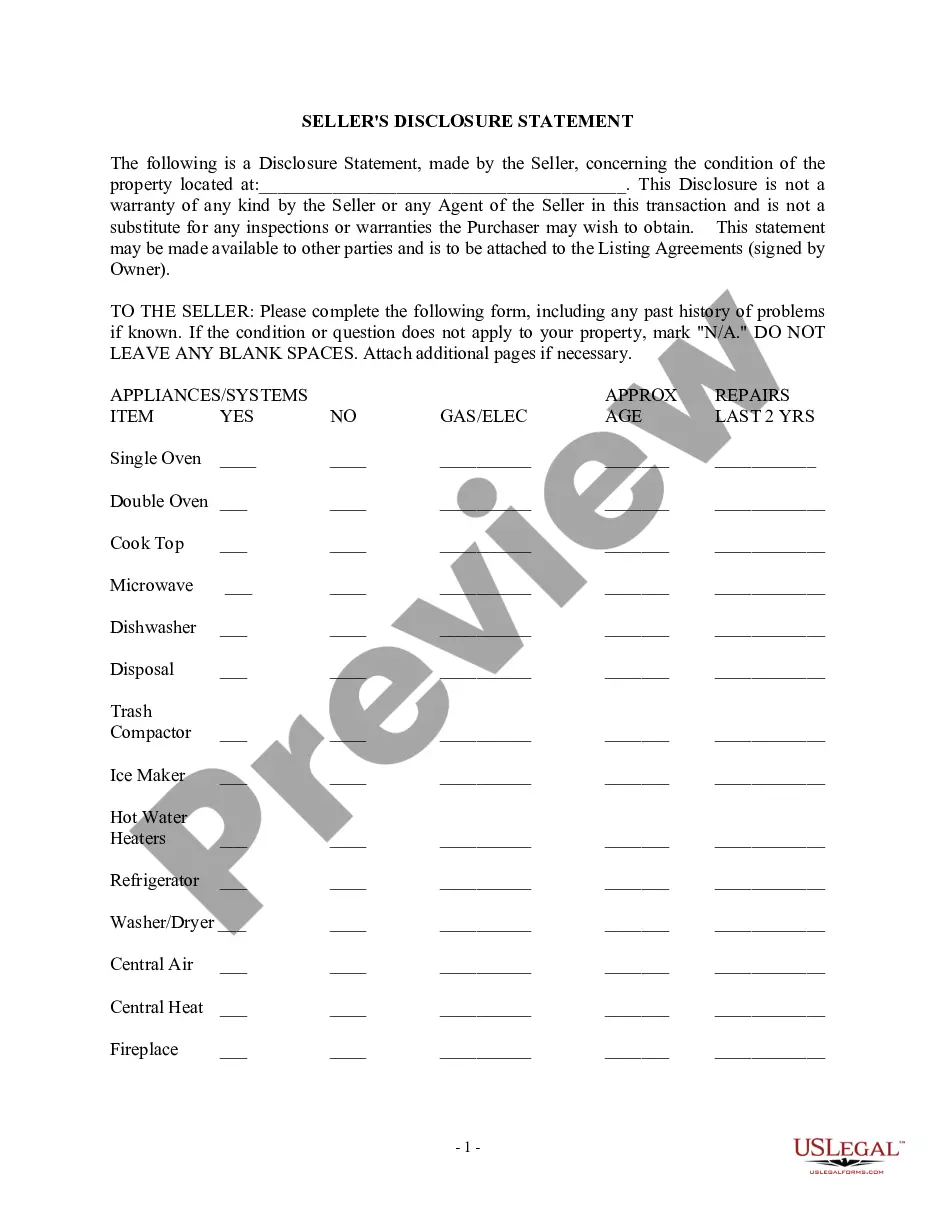
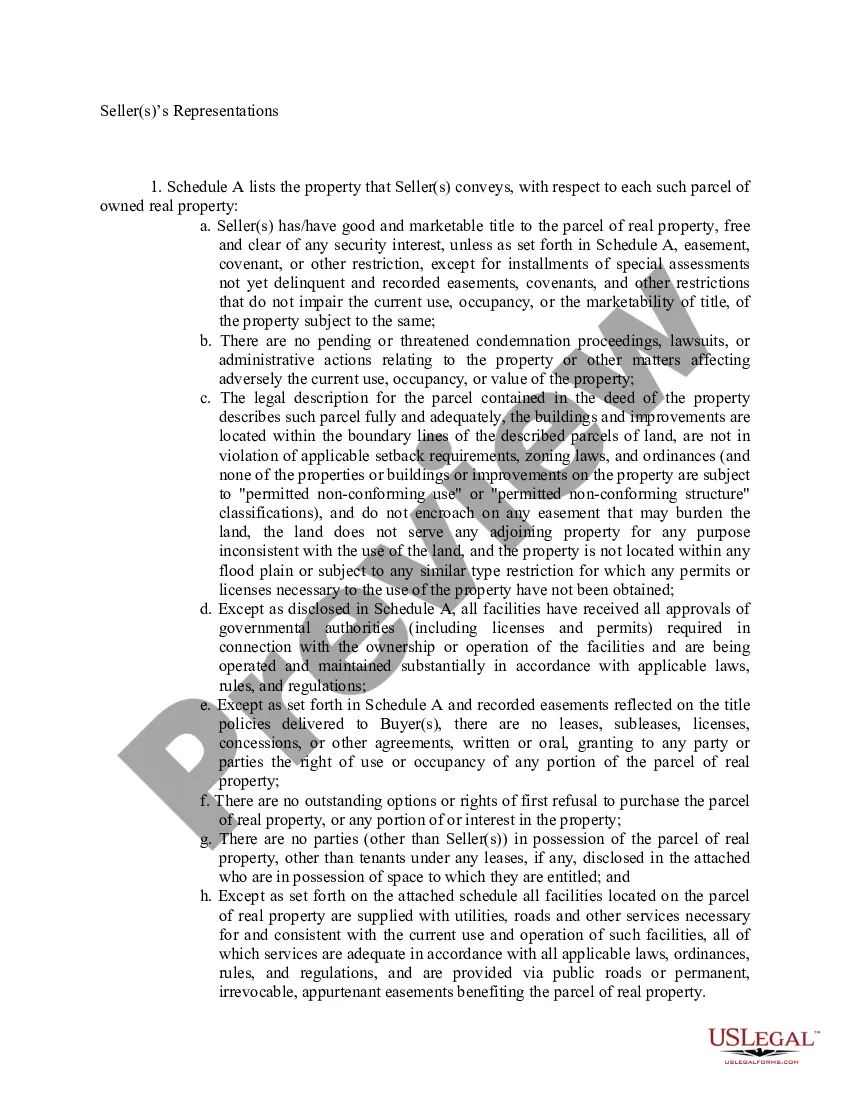
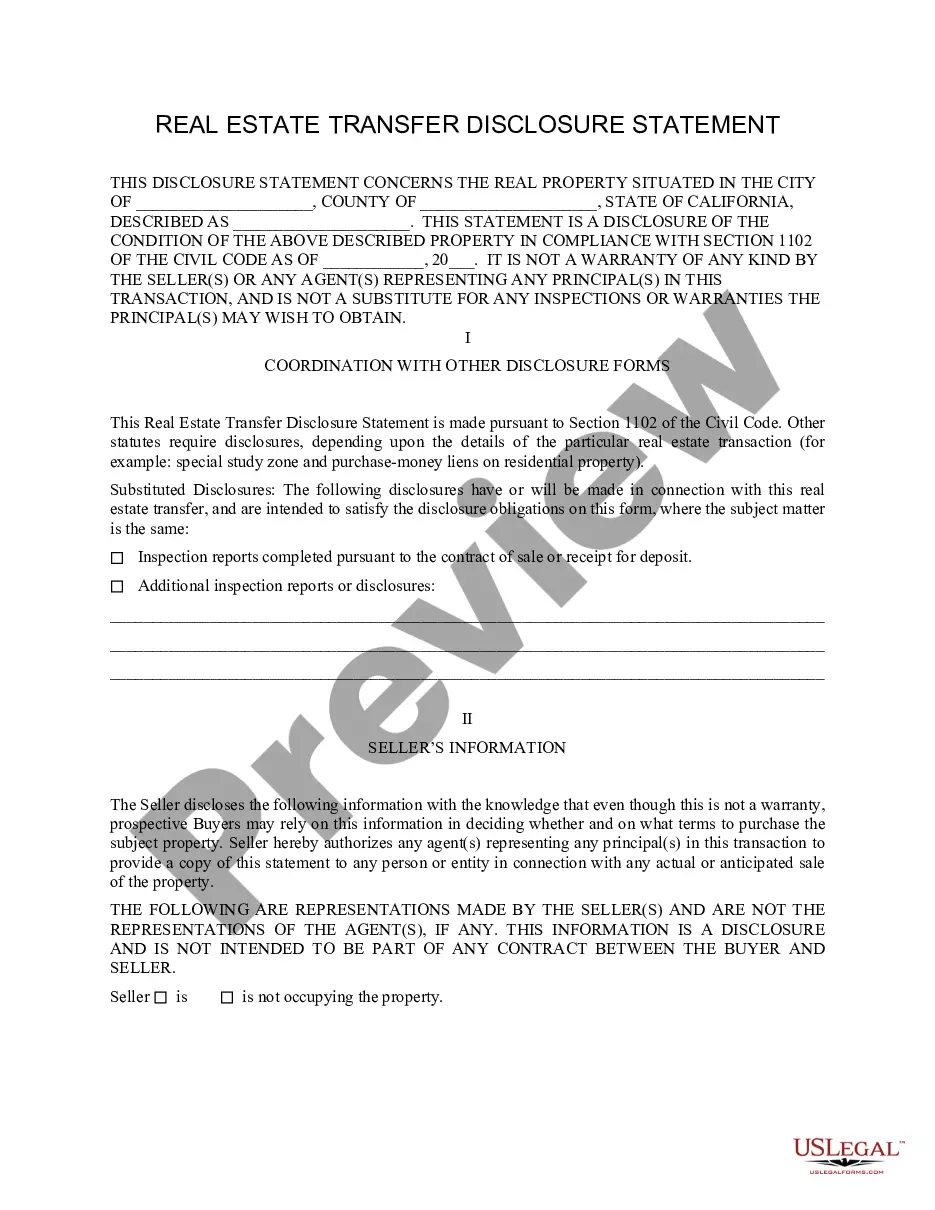
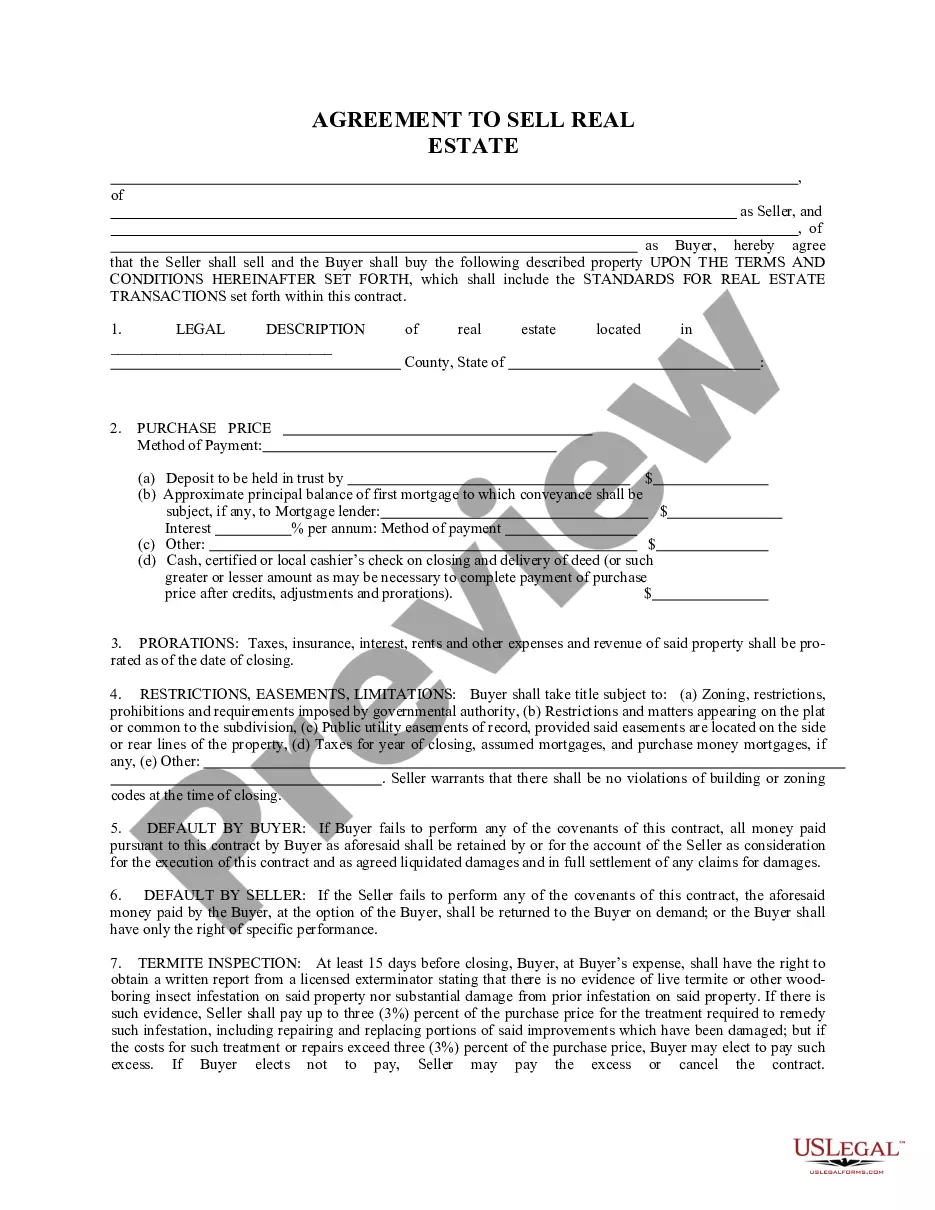
The Seller's Real Estate Disclosure Statement is a legal document that provides potential buyers with essential information regarding the condition of a property. This disclosure helps buyers make informed decisions by detailing known issues about the propertyâs systems, structures, and features. Unlike other forms, this statement specifically focuses on the seller's knowledge of the property's condition, rather than general legal requirements.
Main sections of this form
- Property address and identification
- Seller's acknowledgment of the document's accuracy
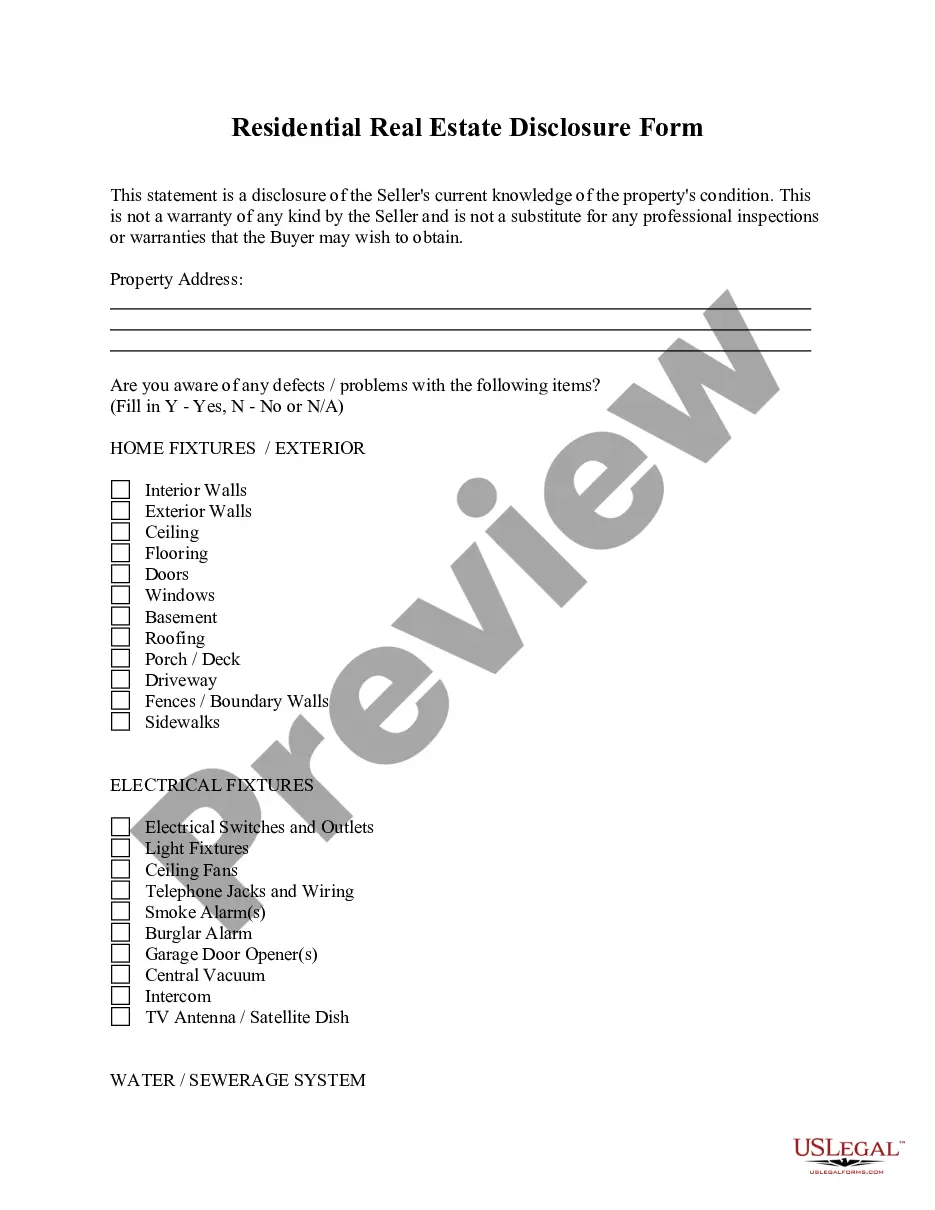
- A detailed list of appliances and systems, including their condition and repair history
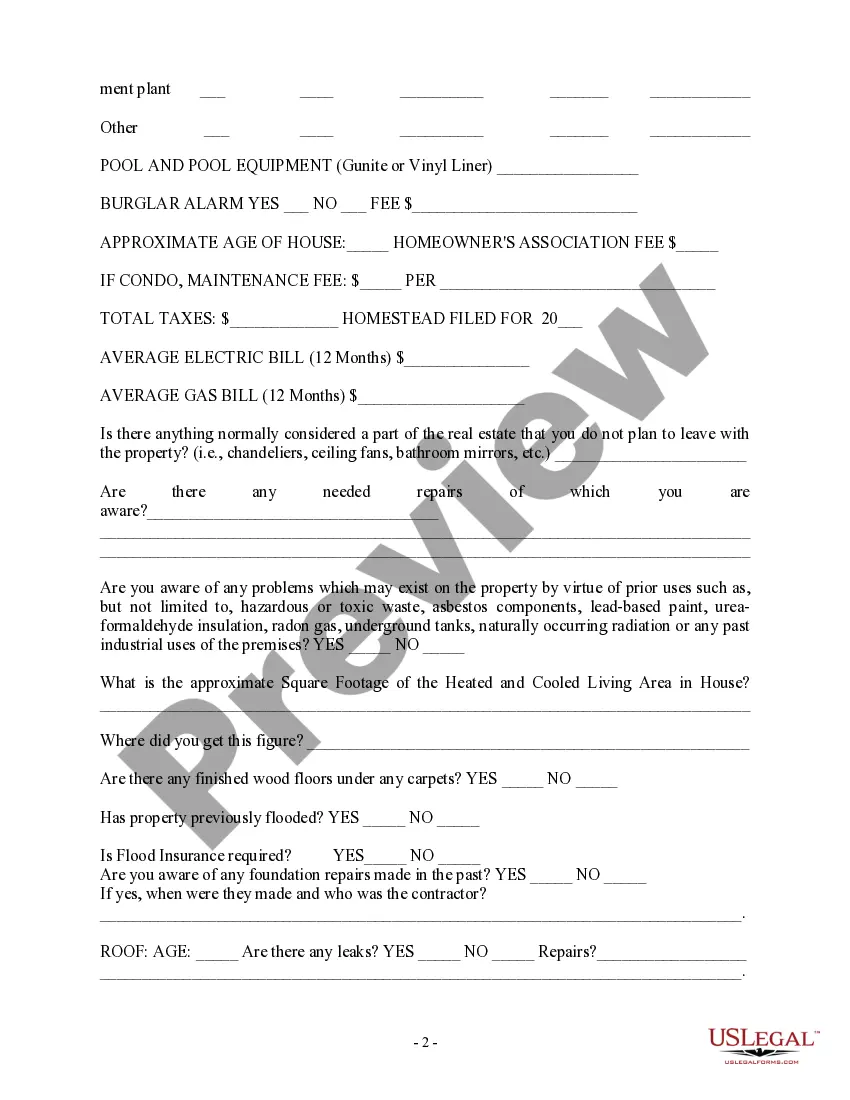
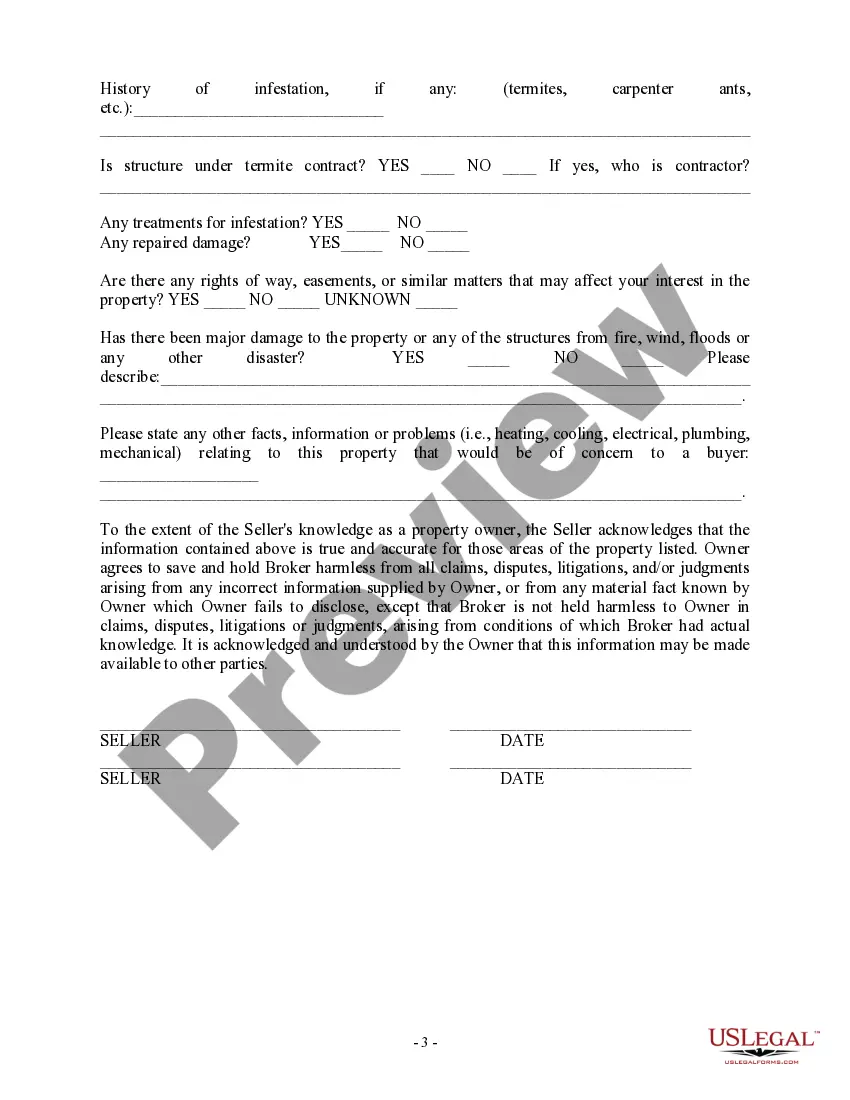
- Disclosure of any known problems or repairs made to the property
- Space for additional comments or disclosures by the seller
- Signatures of the seller(s) and date of completion
When to use this form
This form is used when a property seller needs to disclose information about known issues regarding their property before finalizing a sale. It is typically required by law in many jurisdictions and is essential for ensuring transparency in real estate transactions. Use this form to facilitate trust between the buyer and seller, as it outlines any defects or repairs that could impact the property's value or safety.
Who can use this document
- Homeowners selling residential property
- Real estate agents assisting sellers
- Buyers who want to ensure full disclosure from sellers
- Investors purchasing real estate
Completing this form step by step
- Identify the property by filling in the address and other identifying details.
- Provide accurate information regarding the condition of listed appliances and systems.
- Answer all questions regarding known repairs or issues, marking "N/A" as needed.
- Attach additional pages if necessary to capture all relevant information.
- Have all involved sellers sign and date the document to validate its accuracy.
Does this form need to be notarized?
This form does not typically require notarization unless specified by local law. However, always check your state regulations to ensure compliance.
Get your form ready online
Our built-in tools help you complete, sign, share, and store your documents in one place.
Make edits, fill in missing information, and update formatting in US Legal Forms—just like you would in MS Word.
Download a copy, print it, send it by email, or mail it via USPS—whatever works best for your next step.
Sign and collect signatures with our SignNow integration. Send to multiple recipients, set reminders, and more. Go Premium to unlock E-Sign.
If this form requires notarization, complete it online through a secure video call—no need to meet a notary in person or wait for an appointment.
We protect your documents and personal data by following strict security and privacy standards.

Make edits, fill in missing information, and update formatting in US Legal Forms—just like you would in MS Word.

Download a copy, print it, send it by email, or mail it via USPS—whatever works best for your next step.

Sign and collect signatures with our SignNow integration. Send to multiple recipients, set reminders, and more. Go Premium to unlock E-Sign.

If this form requires notarization, complete it online through a secure video call—no need to meet a notary in person or wait for an appointment.

We protect your documents and personal data by following strict security and privacy standards.
Common mistakes to avoid
- Leaving questions blank instead of marking them as âN/A.â
- Providing misleading or inaccurate information by omitting known issues.
- Failing to attach additional pages when necessary.
- Not signing and dating the form, which can lead to disputes later.
Why complete this form online
- Convenience of completing the form online at your own pace.
- Accessible templates that can be easily customized for your specific property.
- Reliable and legally compliant documents created by licensed attorneys.
Legal use & context
- The disclosure statement is vital for protecting the interests of both the seller and the buyer.
- Failure to disclose known issues can lead to legal repercussions for the seller.
- Buyers may use the information provided to negotiate repairs or price adjustments.
What to keep in mind
- The Seller's Real Estate Disclosure Statement is crucial for transparency in real estate transactions.
- Accurate completion of the form protects sellers from future liability.
- Buyers benefit from the detailed information about the property's condition before making a purchase.
Looking for another form?



Form popularity
FAQ
What does seller disclosure mean? In real estate, disclosures refer to the seller's legal obligation to reveal known defects about the home or property they're selling. A property disclosure statement is the actual documentation of a seller's disclosure.
Some states require that home sellers disclose a number of things, including whether there are any easements on the property. You may have a case against your seller, but an attorney would have to advise you on the status of your specific state's laws.
A seller who has never seen or lived in a property he is selling is still required to disclose what he knows about the property.A buyer isn't required by law to sign a seller's disclosure notice. Relocation companies with title to a property are still required to fill out the seller's disclosure notice.
A Seller Disclosure is a set of documents completed by the seller of a home, listing any known issues with the property and any remodel projects completed during the time they owned the home. In most states, the seller is required to provide this disclosure within a few days of mutual acceptance.
But read the fine print: If a buyer asks, this same statute requires the seller to disclose any death on the property more than 3 years old. Whether it's snakes, mice, or bats, in most states, sellers are required by law to disclose any sort of pest infestation or issue.
The Texas Property Code disclosure requirements are applicable to the sale of a property comprising not more than one dwelling unit, but do not apply to a transfer pursuant to a court order or foreclosure sale; by a trustee in bankruptcy; to or by a mortgage or beneficiary under a deed of trust or pursuant to a court
"No Seller Disclosures" means that the seller is selling the property without disclosing any defects or facts that might be necessary for a buyer to make an informed decision.
"No Seller Disclosures" means that the seller is selling the property without disclosing any defects or facts that might be necessary for a buyer to make an informed decision.
A Seller Disclosure is a set of documents completed by the seller of a home, listing any known issues with the property and any remodel projects completed during the time they owned the home. In most states, the seller is required to provide this disclosure within a few days of mutual acceptance.
The typical seller disclosure form is several pages long, and it asks the seller to report known defects in the home. This will include the appliances, as well as information about electrical, heating, sewer, water or other mechanical systems.