Percentage Shopping Center Lease Agreement
What this document covers
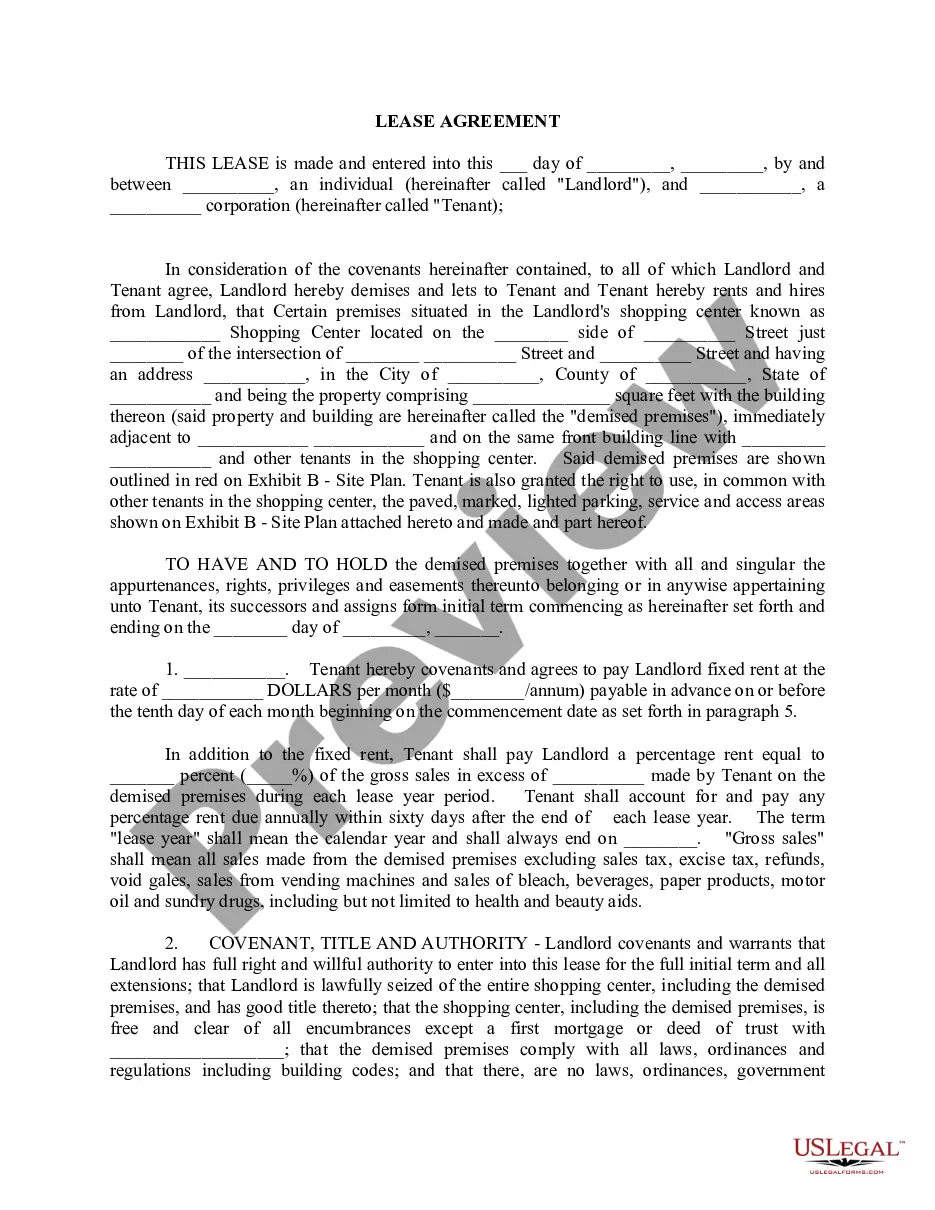
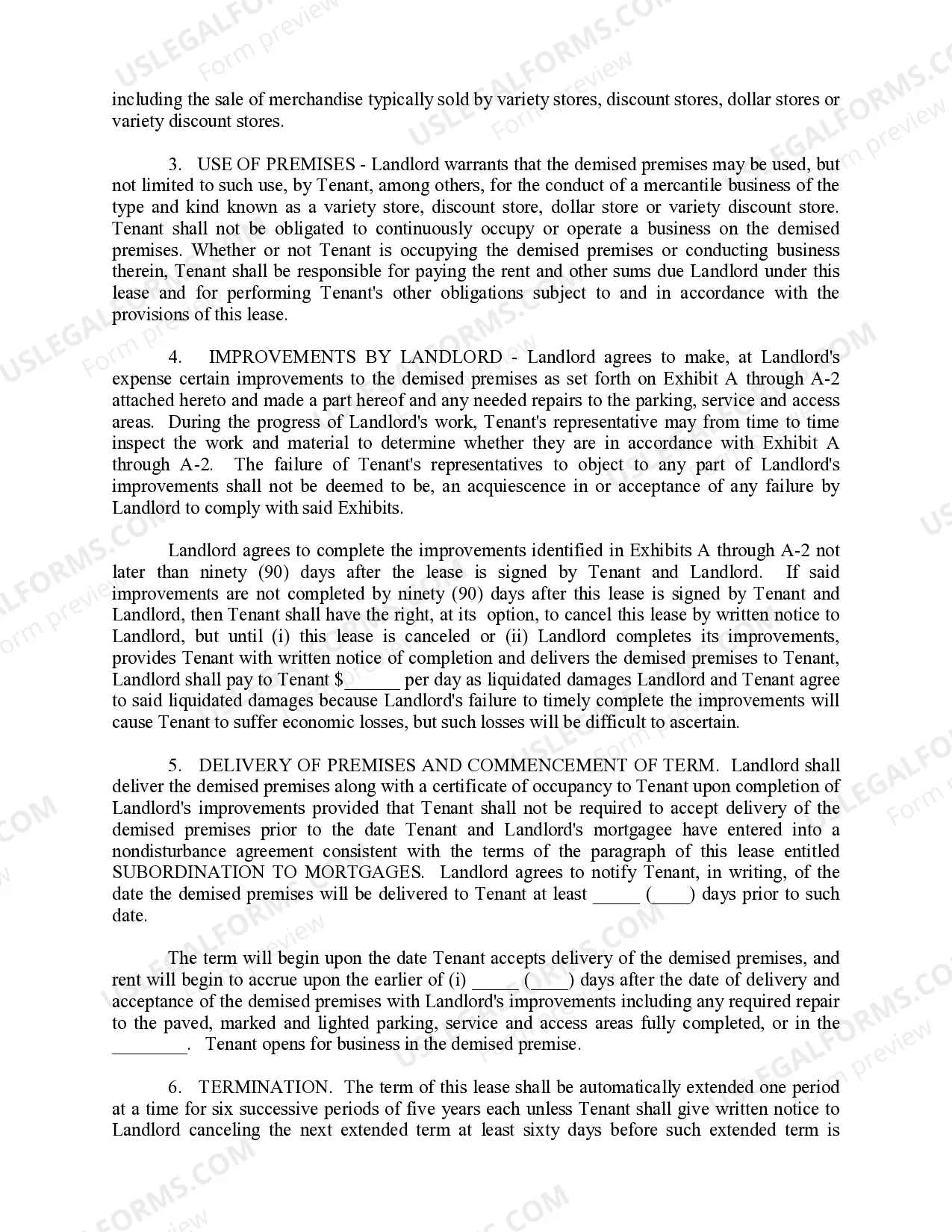
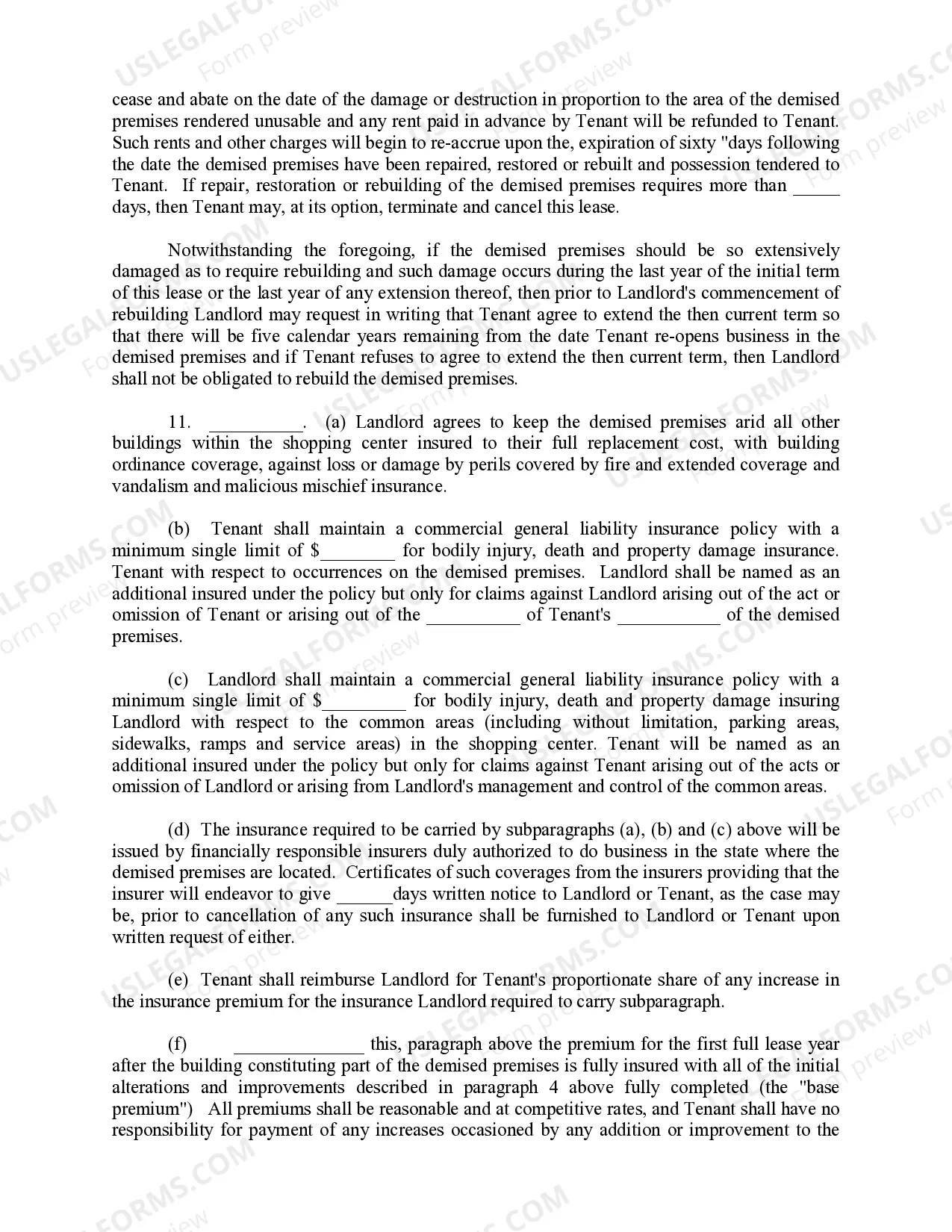
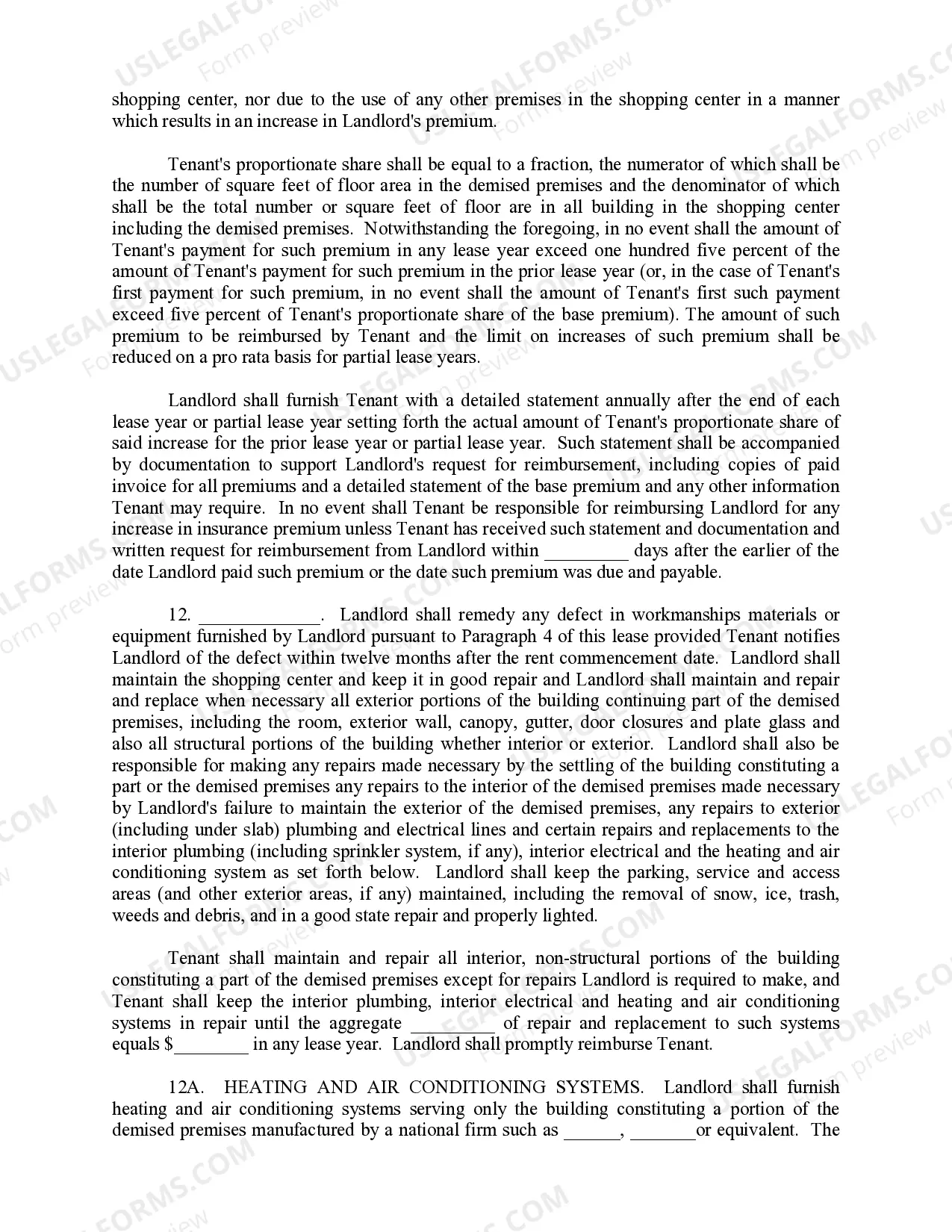
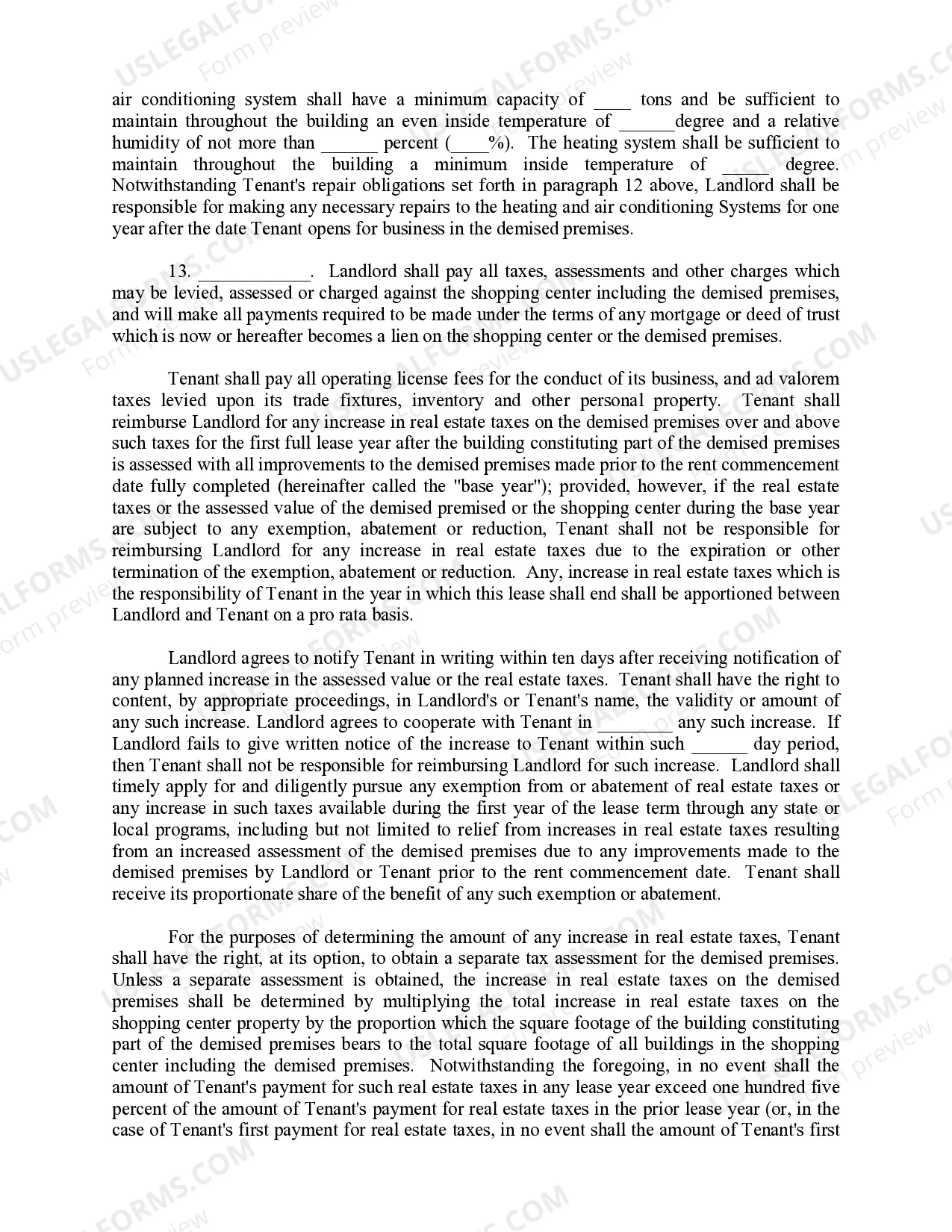
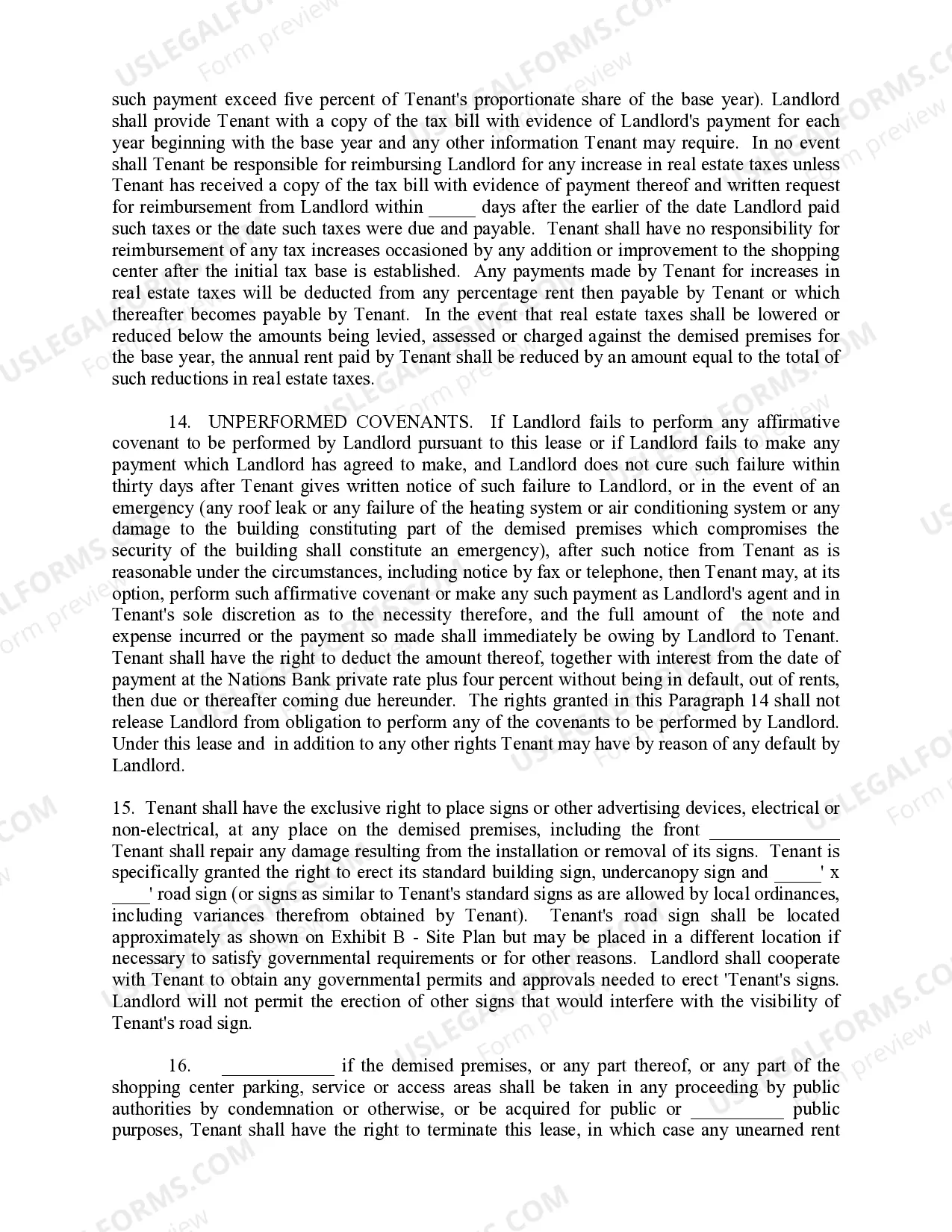
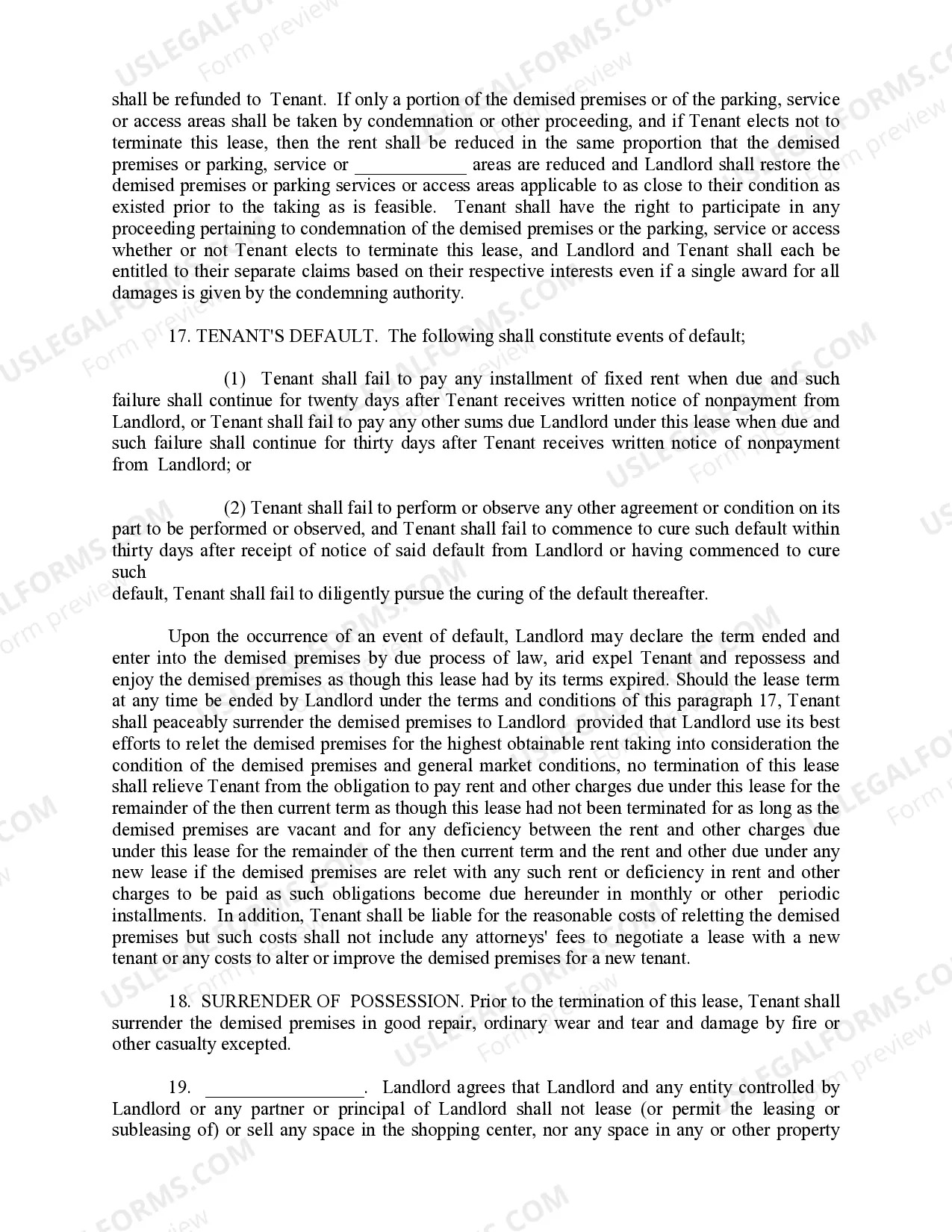
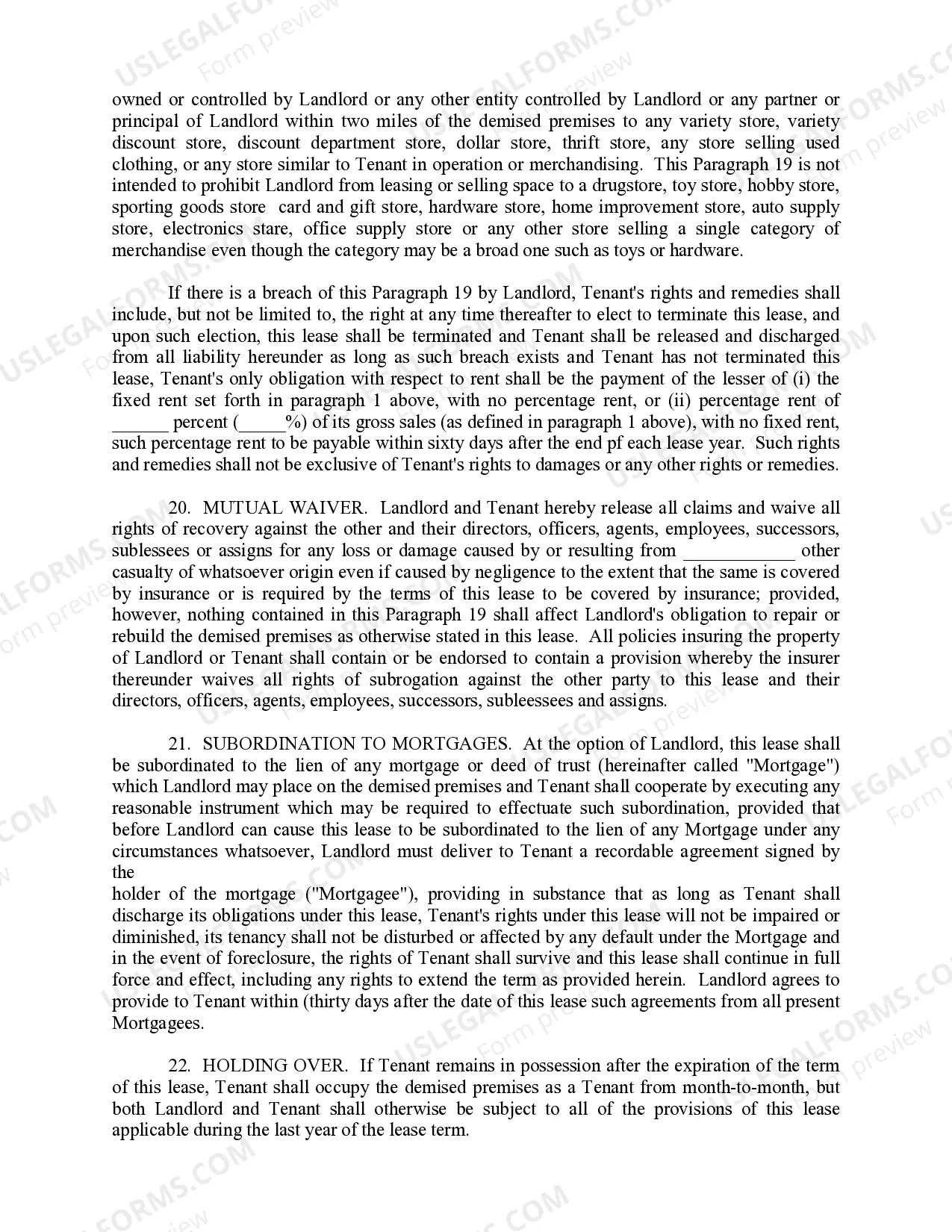
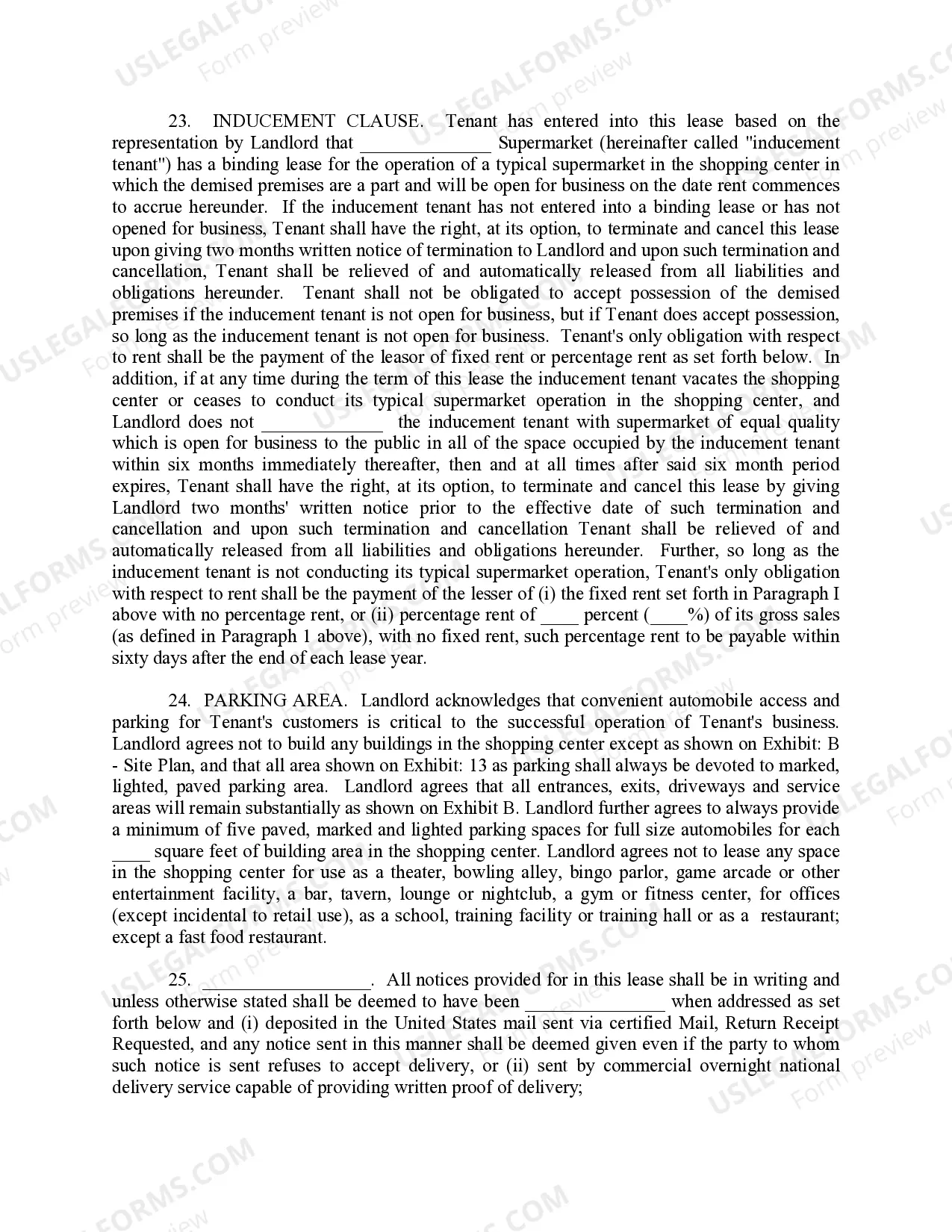
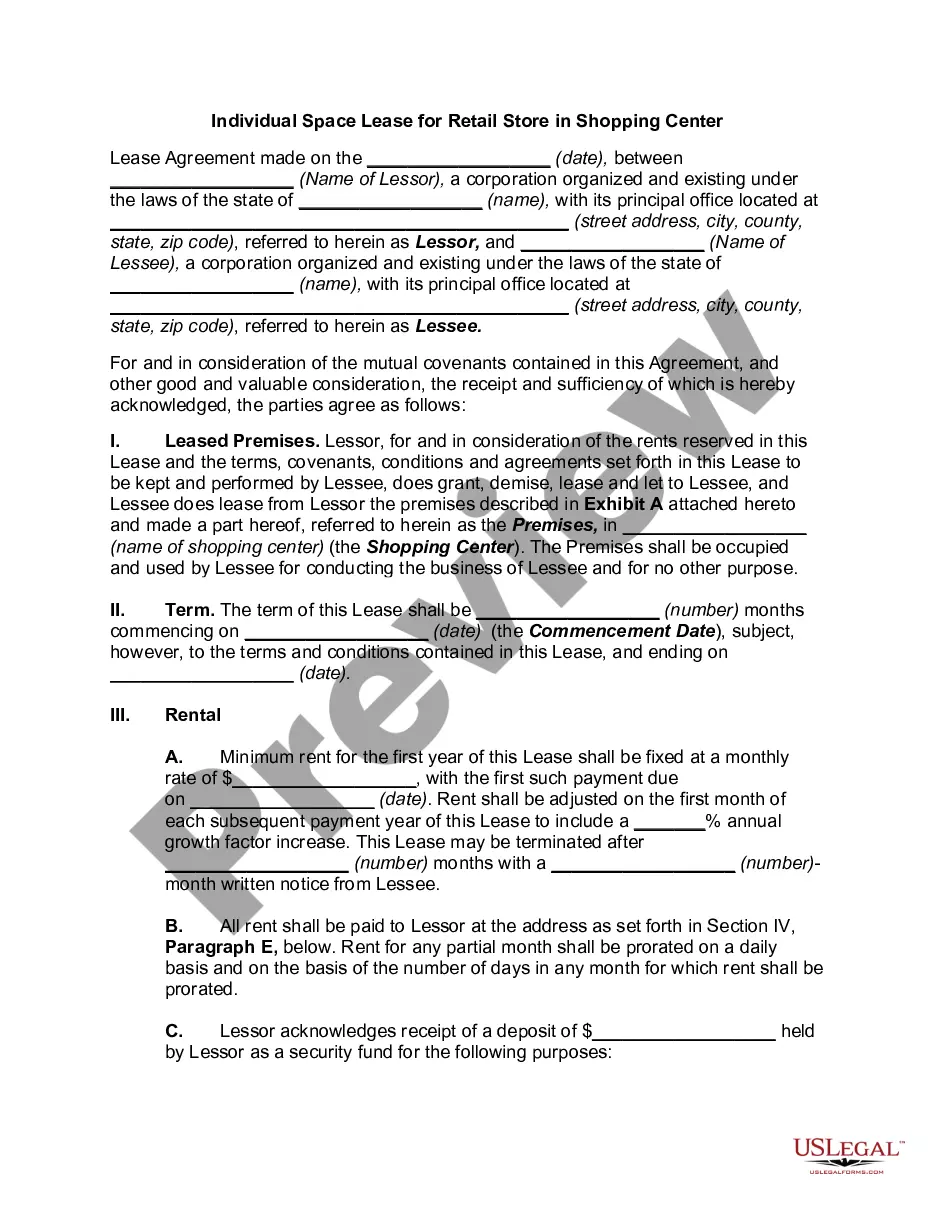
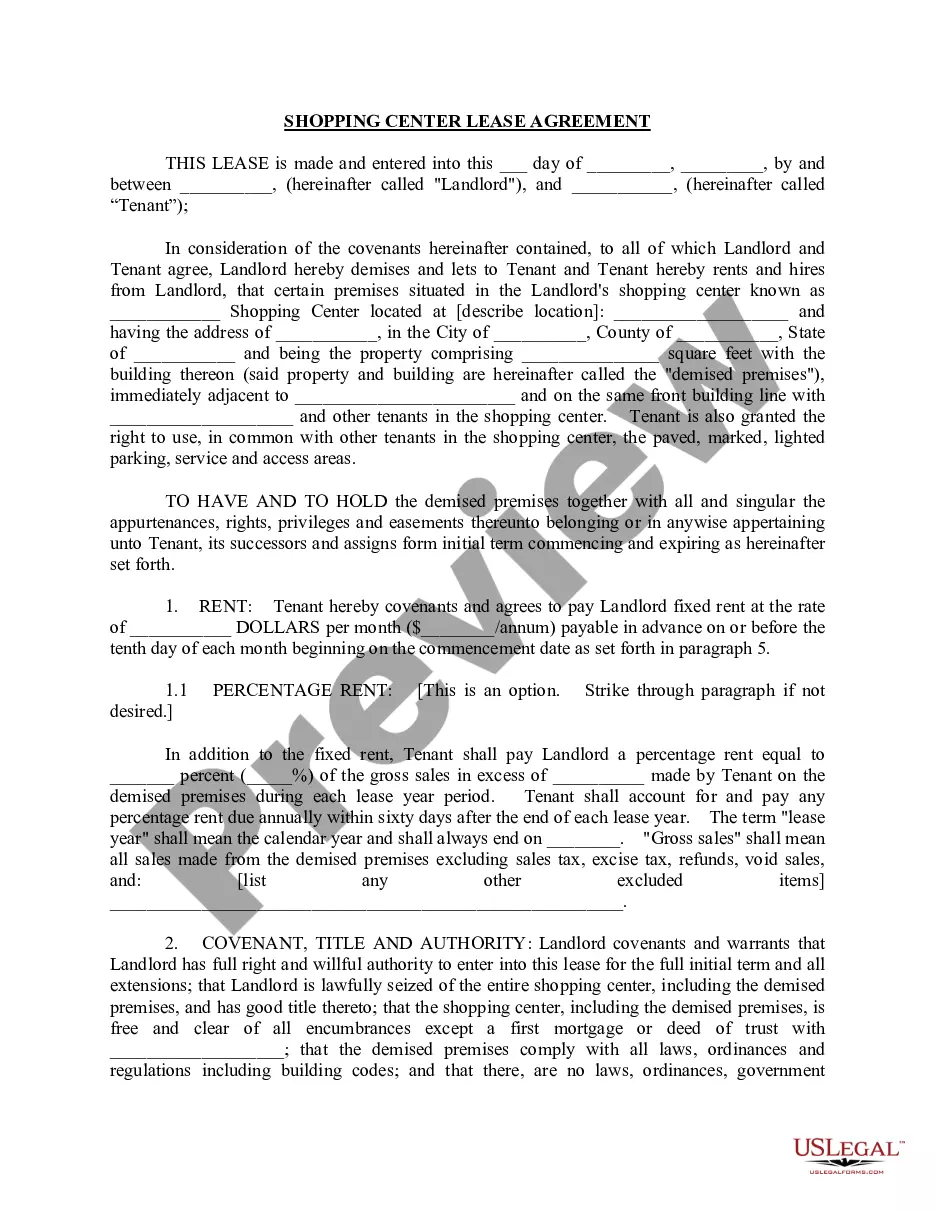
The Percentage Shopping Center Lease Agreement is a legal document used for leasing commercial property intended for shopping centers. This agreement is unique because it includes a percentage rent component, meaning the tenant pays a fixed base rent plus a percentage of their gross sales exceeding a specified amount. This form is ideal for landlords and tenants looking to establish a mutually beneficial lease arrangement that adjusts rent based on business performance.
Main sections of this form
- Parties involved: Identifies the landlord and tenant and establishes their roles in the lease.
- Property details: Describes the leased premises and its location within a shopping center.
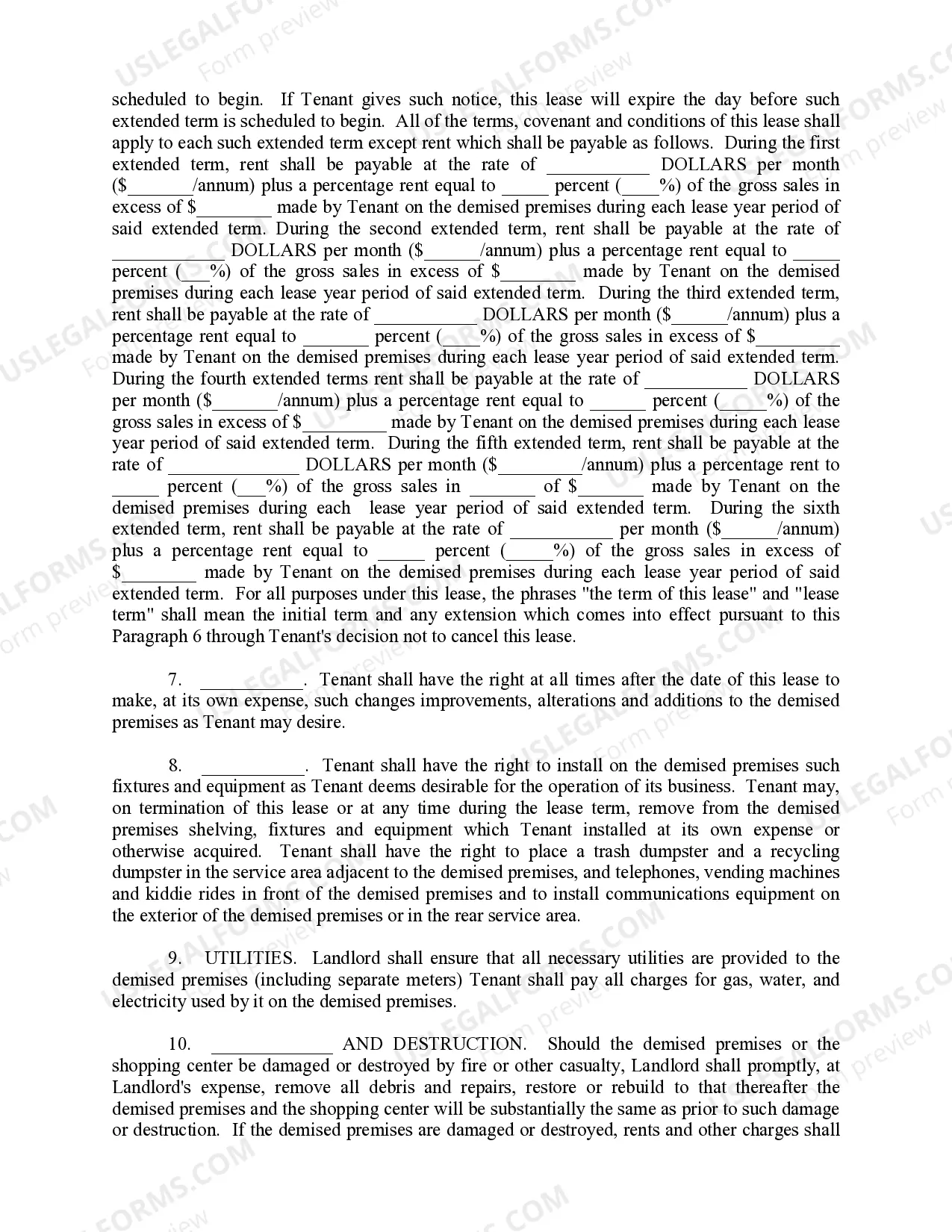
- Rent structure: Outlines both the fixed monthly rent and the percentage rent based on gross sales.
- Duration and term: Specifies the initial term of the lease and conditions for renewal or termination.
- Use of premises: Defines acceptable business activities on the leased property.
- Maintenance obligations: Clarifies responsibilities for repairs, utilities, and insurance.

When to use this form
This form should be used when a commercial property owner (landlord) wants to lease a space within a shopping center to a business (tenant), particularly in situations where the tenant's sales performance can be variable. It is suitable for varied retail businesses such as variety stores, discount stores, and dollar stores. Using this lease agreement allows both parties to align rental terms with the business's revenue potential.
Intended users of this form
Eligible Parties:
- Commercial property owners seeking to lease retail space.
- Business owners looking to establish a retail presence in a shopping center.
- Legal professionals advising clients in retail or real estate sectors.
- Investors interested in retail property management and leasing.
How to prepare this document
Steps to Complete this Form:
- Identify the parties: Enter the landlord's and tenant's full names and business details.
- Specify the property: Describe the commercial space being leased, including its location and size.
- Enter rental terms: Fill in the fixed rent amount and the percentage of sales to be paid as rent.
- Set lease duration: Indicate the start and end dates of the lease, including any renewal terms.
- Detail maintenance obligations: Clearly outline who is responsible for utilities, repairs, and insurance.
Notarization guidance
This form does not typically require notarization unless specified by local law. It is important to verify local requirements to ensure the lease agreement complies with state regulations.
Get your form ready online
Our built-in tools help you complete, sign, share, and store your documents in one place.
Make edits, fill in missing information, and update formatting in US Legal Forms—just like you would in MS Word.
Download a copy, print it, send it by email, or mail it via USPS—whatever works best for your next step.
Sign and collect signatures with our SignNow integration. Send to multiple recipients, set reminders, and more. Go Premium to unlock E-Sign.
If this form requires notarization, complete it online through a secure video call—no need to meet a notary in person or wait for an appointment.
We protect your documents and personal data by following strict security and privacy standards.

Make edits, fill in missing information, and update formatting in US Legal Forms—just like you would in MS Word.

Download a copy, print it, send it by email, or mail it via USPS—whatever works best for your next step.

Sign and collect signatures with our SignNow integration. Send to multiple recipients, set reminders, and more. Go Premium to unlock E-Sign.

If this form requires notarization, complete it online through a secure video call—no need to meet a notary in person or wait for an appointment.

We protect your documents and personal data by following strict security and privacy standards.
Typical mistakes to avoid
Common Mistakes:
- Failing to specify the percentage rent calculation method.
- Omitting the property description, leading to confusion about the leased area.
- Not updating personal and business information for the parties involved.
- Overlooking details about maintenance responsibilities and utilities.
Benefits of using this form online
Benefits of Using This Form Online:
- Convenience of accessing and filling out the form from anywhere at any time.
- Editability allows users to customize sections to meet their specific needs.
- Reliable legal language prepared by licensed attorneys ensures comprehensive coverage.
Legal use & context
- This lease is legally binding once signed by both parties and filed according to local laws.
- It provides specified rights and obligations to both the landlord and tenant, helping to mitigate disputes.
Quick recap
Key Takeaways:
- The Percentage Shopping Center Lease Agreement combines fixed and percentage rent terms, accommodating tenant sales performance.
- It is crucial to accurately describe the leased premises and define all financial terms within the lease.
- Understanding and clarifying maintenance responsibilities helps avoid future disputes.
Looking for another form?
Form popularity
FAQ
Who benefits from a long-term lease? The tenant - 100% of rent is deductible as an expense. The landlord - The property is leased for a long period of time, guaranteeing a return on investment. The tenant - The total debt load of the tenant remains the same.
Calculating Rent Based on a Percentage of Sales Depending on what you're selling, the standard gross-to-rent percentage can range anywhere from less than 1 percent all the way up to more than 13 percent, with most industries paying below 10 percent.
Percentage rent is typically based on a percentage of the tenant's sales in excess of a fixed base dollar amount, which is often referred to as the breakpoint. The breakpoint is the minimum amount of sales that must be generated at the leased premises before percentage rent is payable.
A percentage lease is a type of rental agreement that is most commonly executed between a landlord and tenant for the rental of retail property. There are many ways to negotiate a percentage lease.
A lease purchase agreement in real estate is a rent-to-own contract between a tenant and a landlord for the former to purchase the property at a later point in time. The renter pays the seller an option fee at an agreed-upon purchase price, giving them exclusive rights to buy the property.
Percentage leases can also benefit the property owner because they have the ability to choose the type of businesses and companies that are placed within the retail space. Accordingly, strategic leasing can attract more customers to the space, which gives the landlord the opportunity to negotiate a percentage of sales.
Percentage rent is that sum a tenant will pay in addition to base (minimum) rent as a percentage of a portion of the tenant's gross sales.A common method for determining percentage rent is to use a natural breakpoint. A natural breakpoint is calculated by dividing the base rent by an agreed percentage.
Due to its structure, a percentage lease is most commonly used when negotiating with a retail tenant, especially if that tenant is going to be joining in on a multi-tenant retail space like a mall or shopping center. The draw behind this lease type is that it can be mutually beneficial to both the landlord and tenant.
A lease-option-to-buy arrangement can be a solution for some potential homebuyers, but it's not right for everyone. If you're not certain that you're going to be able to purchase the rental home at the end of the lease period, you might be better served with a standard rental agreement.