Motion to Dismiss Action with Prejudice of Plaintiff's Cause of Action Barred by Statute of Limitations
Overview of this form
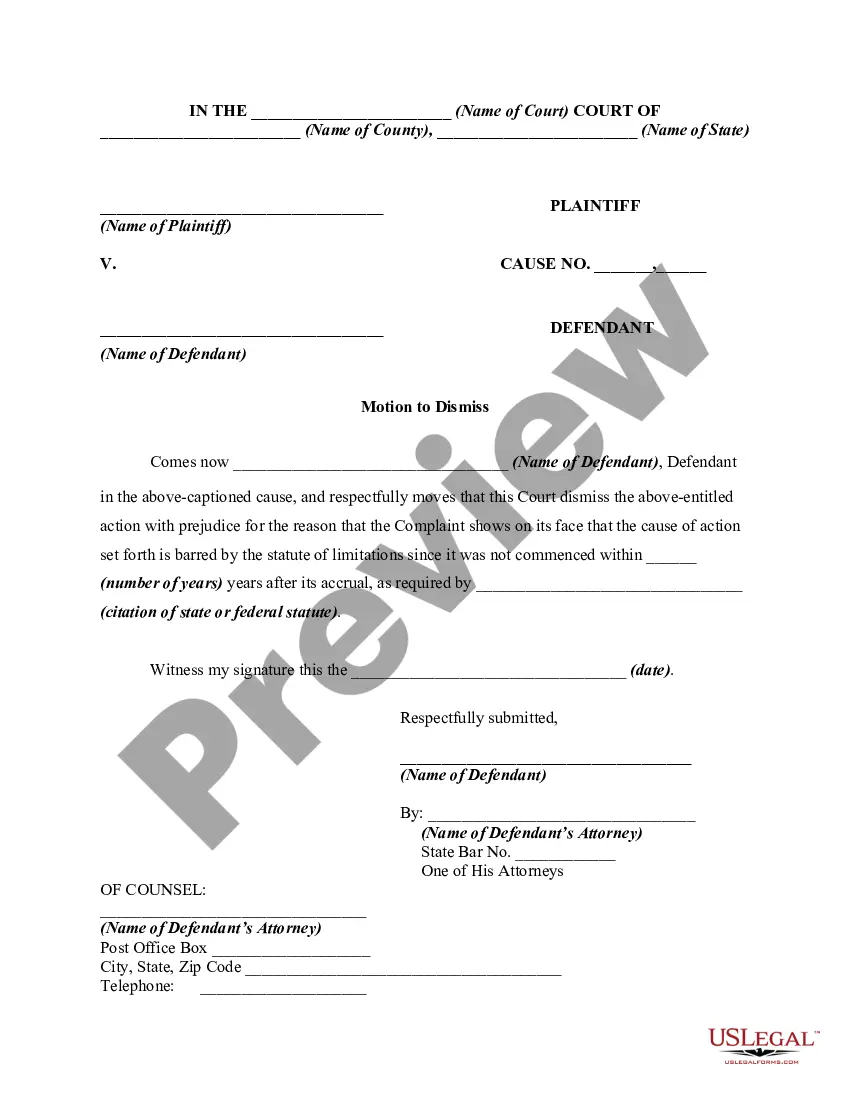
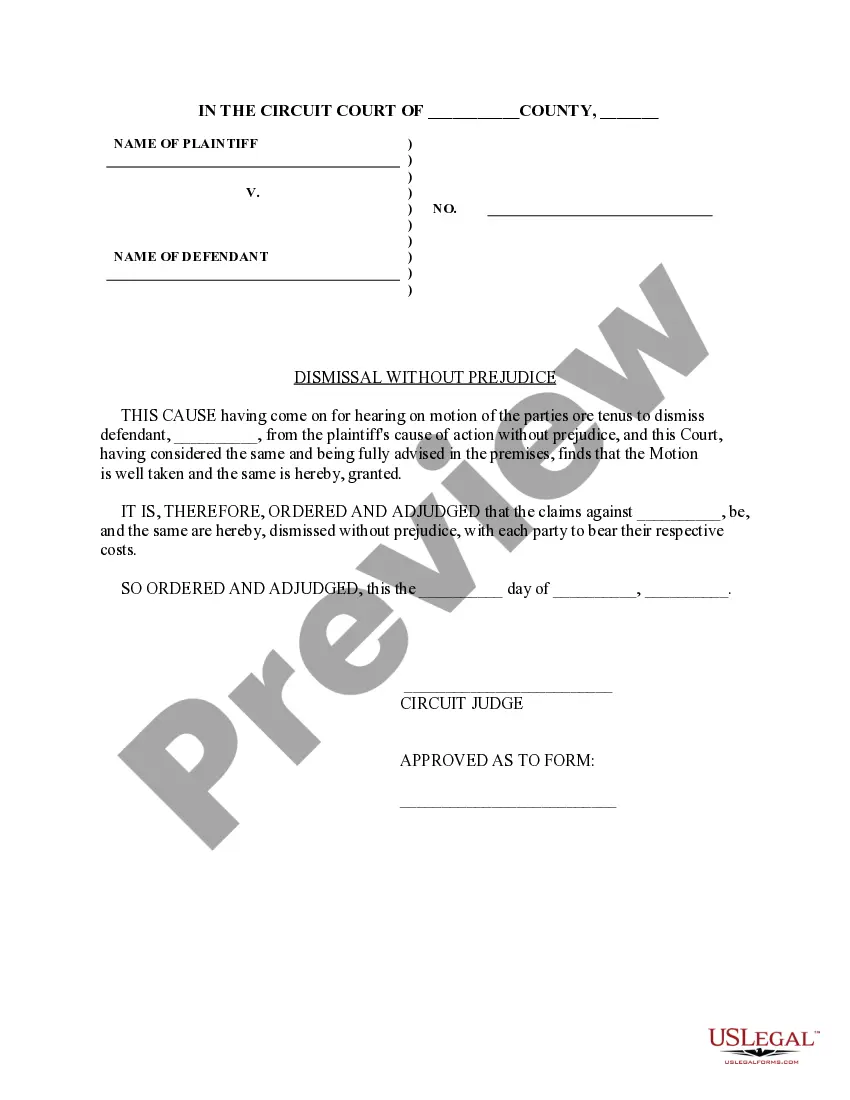
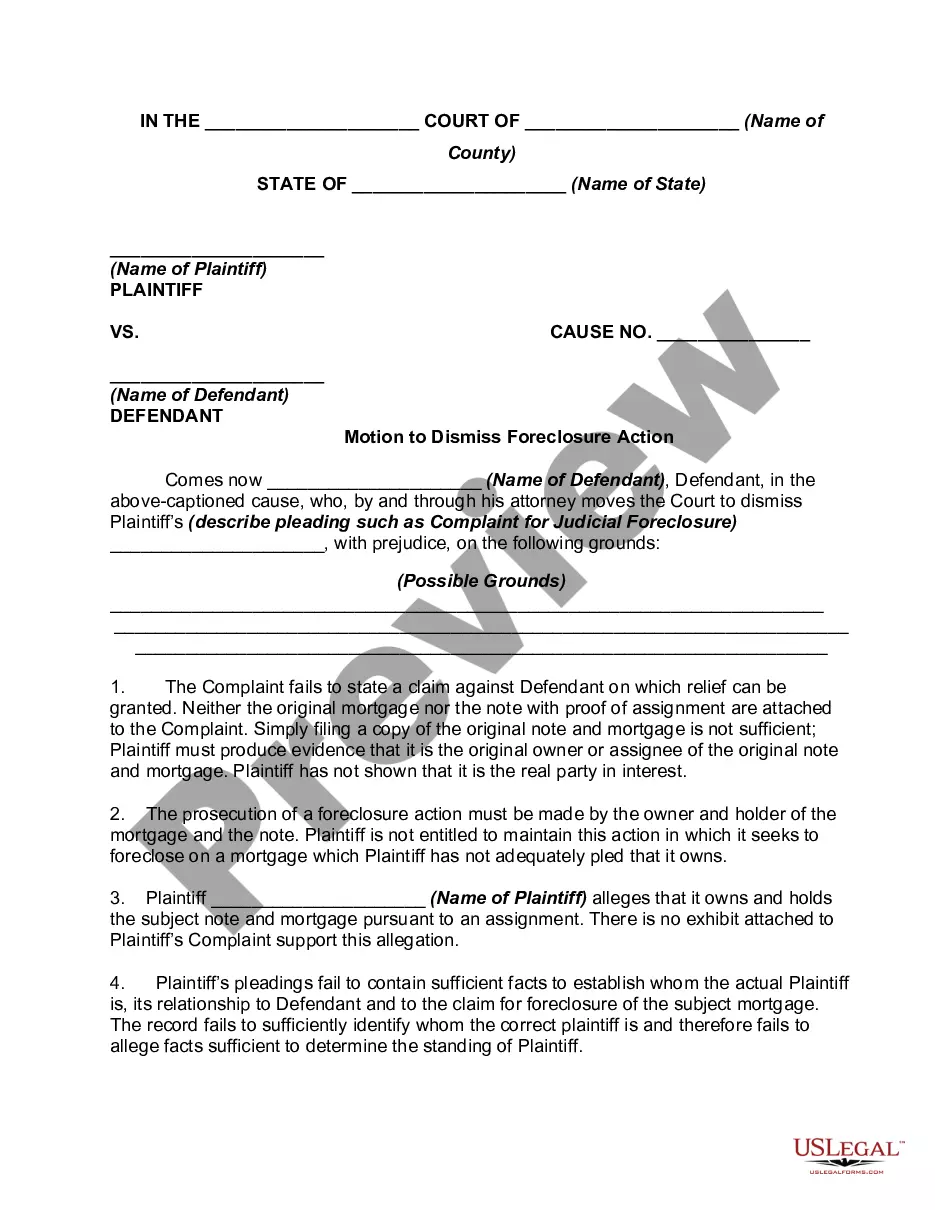
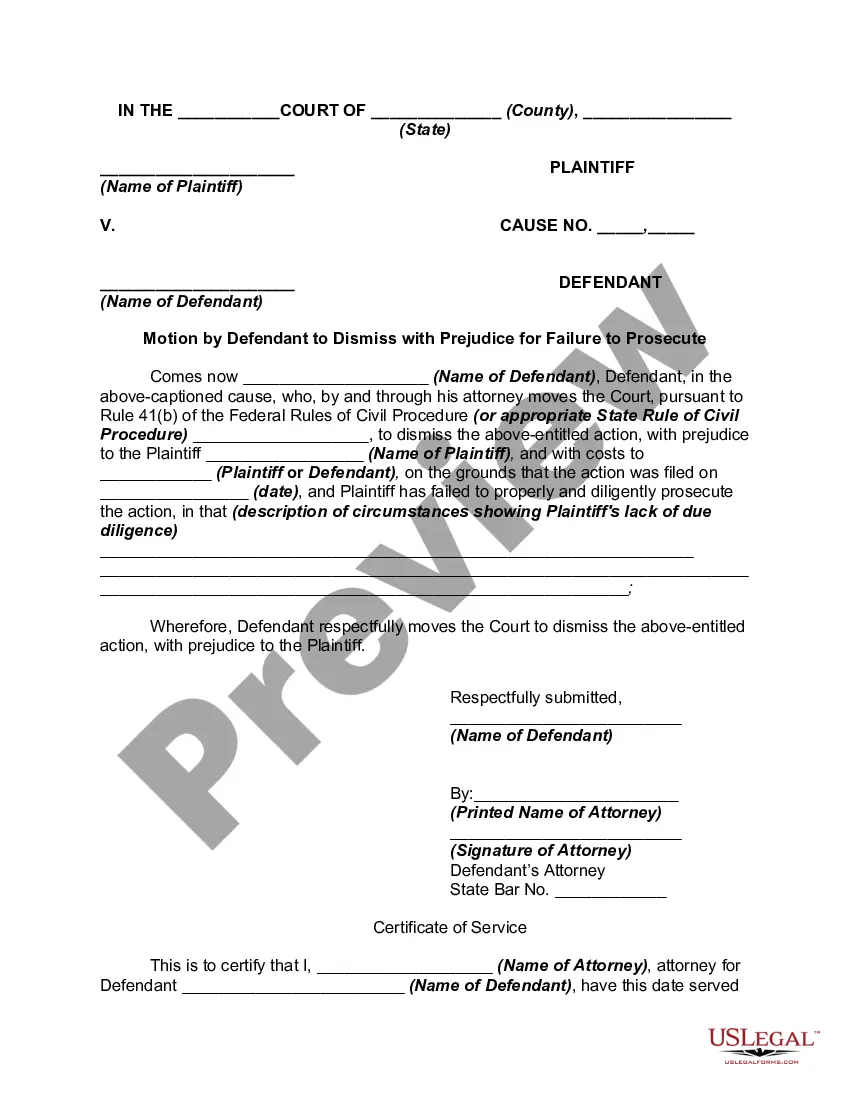
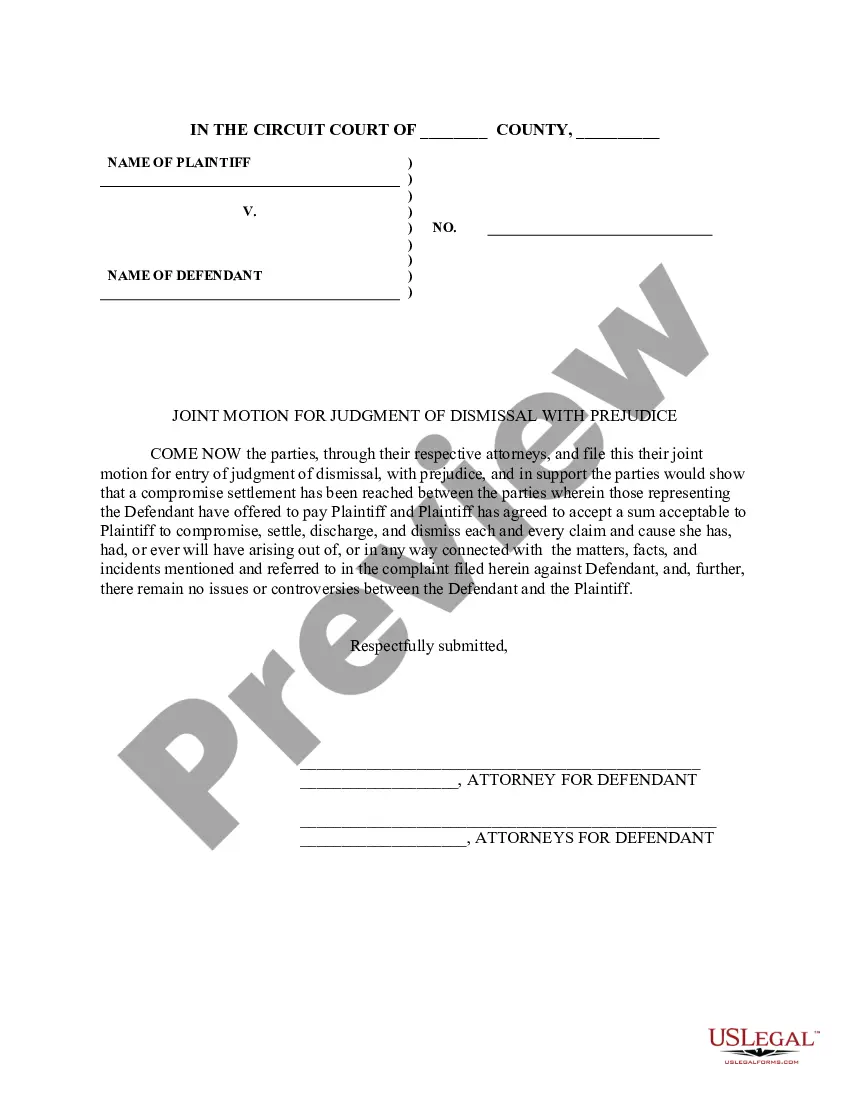
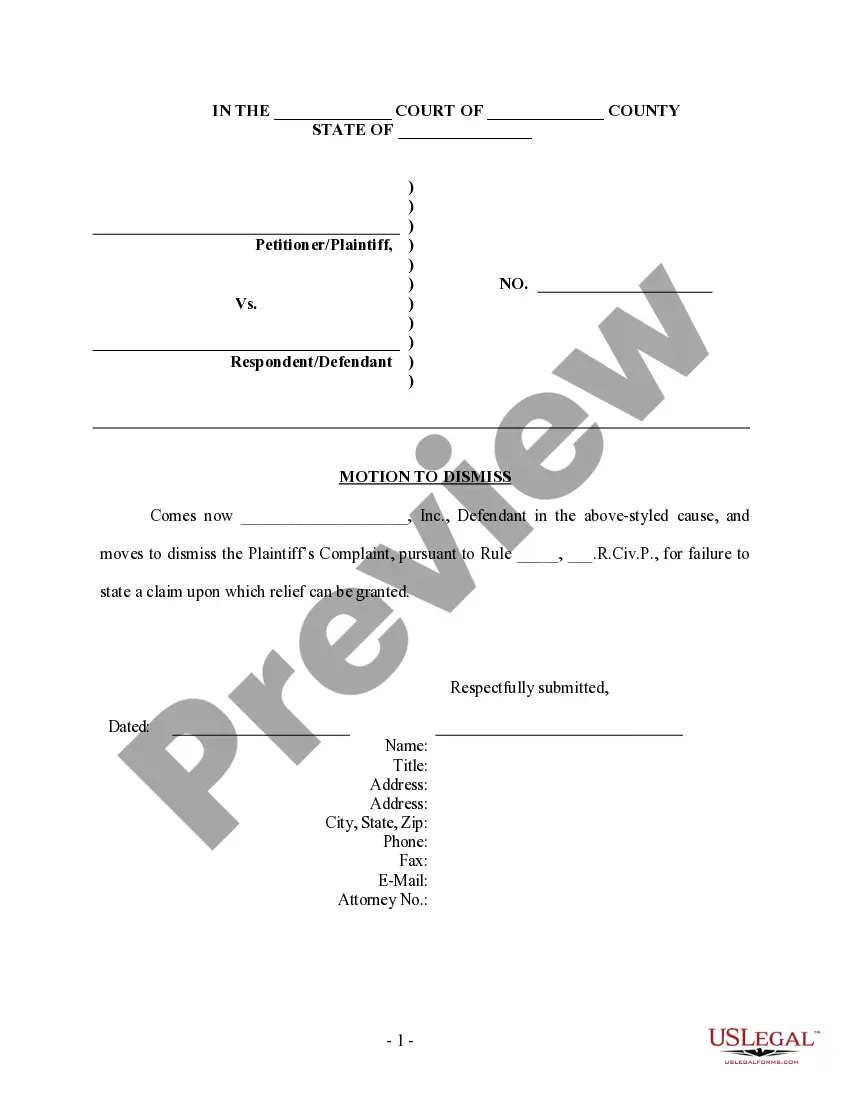
This form, known as the Motion to Dismiss with Prejudice, is a legal document used to request the court to dismiss a plaintiff's cause of action based on the statute of limitations. This motion asserts that the time limit for bringing the claim has expired, making it legally insufficient to proceed. Unlike other motions, this form specifically seeks a dismissal with prejudice, which prevents the plaintiff from filing the same claim again in the future.
What’s included in this form
- Caption: Identifies the parties involved in the case.
- Motion Section: States the request to dismiss the complaint with prejudice.
- Grounds for Dismissal: Details the basis for the motion citing the statute of limitations.
- Signature: Requires the signature of the defendant or the defendant's attorney.
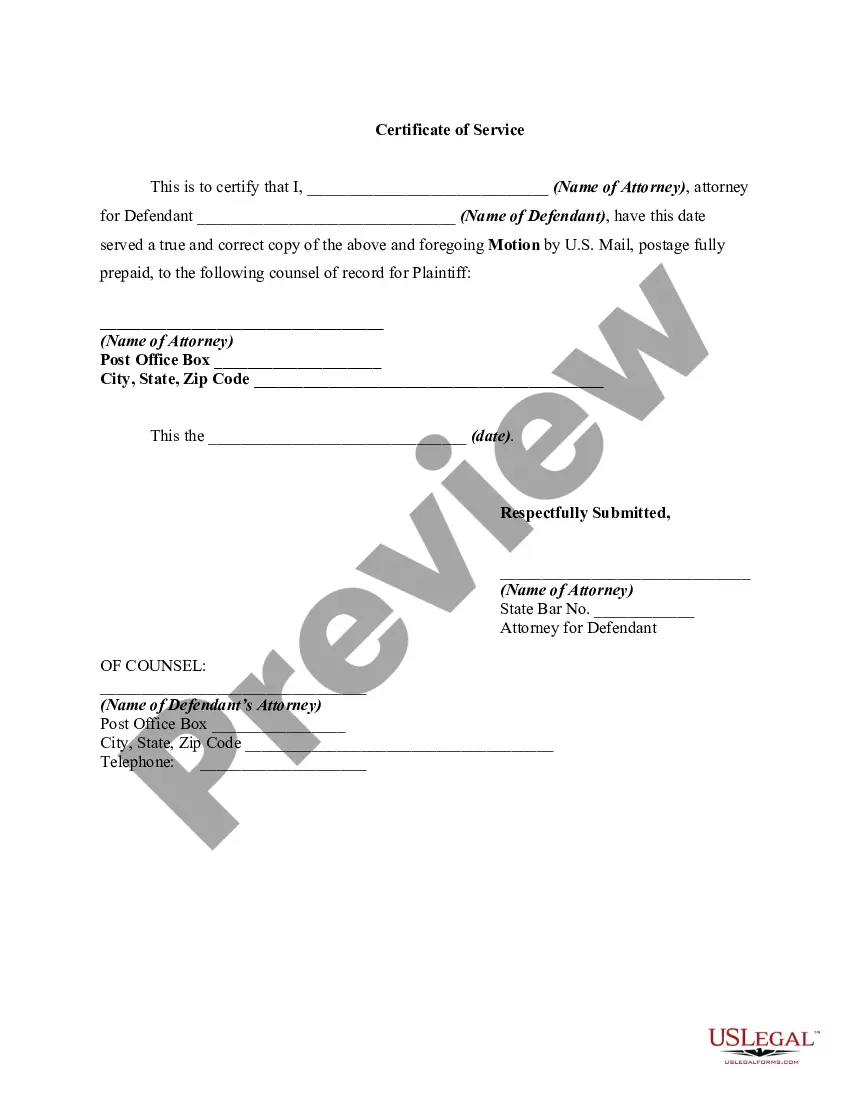
- Certificate of Service: Confirms service of the motion to the opposing counsel.
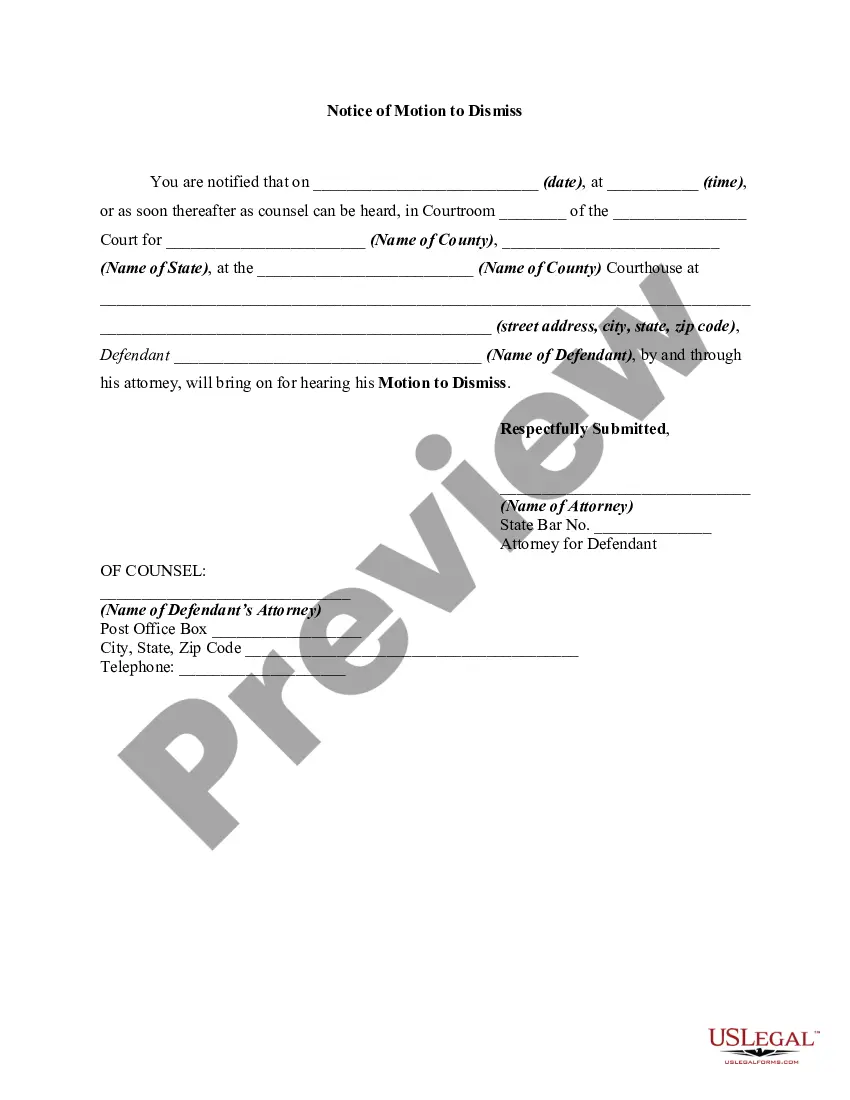
- Notice of Hearing: Provides details about the hearing date and time for the motion.
Situations where this form applies
This form should be used when a defendant believes that the plaintiff's complaint is time-barred due to the statute of limitations. It is applicable in situations where the plaintiff has failed to file a lawsuit within the legally designated timeframe, preventing them from asserting their claim in court.
Intended users of this form
- Defendants in a legal action who wish to challenge the timeliness of the plaintiff's claims.
- Attorneys representing defendants in lawsuits where the statute of limitations is a viable defense.
- Parties involved in litigation who seek to dismiss claims while ensuring the plaintiff cannot refile.
Completing this form step by step
- Identify the plaintiff and defendant by entering their names at the top of the form.
- Specify the cause number provided by the court for the ongoing case.
- Outline the legal grounds for dismissal, citing the statute of limitations and the relevant statute.
- Provide your signature and the date at the end of the motion.
- Complete the Certificate of Service to confirm that the motion has been sent to the plaintiff's attorney.
- Fill out the Notice of Hearing section to inform the court and opposing counsel of the date and time for the motion hearing.
Notarization guidance
This form does not typically require notarization to be legally valid. However, some jurisdictions or document types may still require it. US Legal Forms provides secure online notarization powered by Notarize, available 24/7 for added convenience.
Get your form ready online
Our built-in tools help you complete, sign, share, and store your documents in one place.
Make edits, fill in missing information, and update formatting in US Legal Forms—just like you would in MS Word.
Download a copy, print it, send it by email, or mail it via USPS—whatever works best for your next step.
Sign and collect signatures with our SignNow integration. Send to multiple recipients, set reminders, and more. Go Premium to unlock E-Sign.
If this form requires notarization, complete it online through a secure video call—no need to meet a notary in person or wait for an appointment.
We protect your documents and personal data by following strict security and privacy standards.

Make edits, fill in missing information, and update formatting in US Legal Forms—just like you would in MS Word.

Download a copy, print it, send it by email, or mail it via USPS—whatever works best for your next step.

Sign and collect signatures with our SignNow integration. Send to multiple recipients, set reminders, and more. Go Premium to unlock E-Sign.

If this form requires notarization, complete it online through a secure video call—no need to meet a notary in person or wait for an appointment.

We protect your documents and personal data by following strict security and privacy standards.
Avoid these common issues
- Failing to properly cite the relevant statute of limitations.
- Not including all required signatories on the motion.
- Omitting the Certificate of Service or failing to serve the opposing party.
- Leaving the hearing date blank or failing to schedule a hearing as required.
Advantages of online completion
- Convenient access to legal forms that can be downloaded and filled out at your convenience.
- Editable templates that allow you to customize the document for your specific needs.
- A reliable resource drafted by licensed attorneys, ensuring accuracy and legal compliance.
Looking for another form?
Form popularity
FAQ
This is a civil-procedure motion that asks the court to dismiss the plaintiff's claim with prejudice because the statute of limitations has expired. It prevents the plaintiff from refiling the same claim. The form includes a caption identifying the parties, a motion section, grounds citing the statute of limitations, a signature block, a Certificate of Service, and a Notice of Hearing.
It means the court's ruling ends the plaintiff's claim and bars re-filing the same claim in the future. In this form, the request is to dismiss the action with prejudice based on the statute of limitations, creating a final resolution. The form also includes the caption, motion section, grounds for dismissal, signature, certificate of service, and notice of hearing to implement that ruling.
Dismissal with prejudice is a final court order. It may appear on the case docket and signals the claim cannot be refiled. It does not change unrelated records. For any future matters, consult an attorney about how the dismissal might affect credibility or later proceedings.
Yes, a dismissal with prejudice is typically a final order that may be appealed under the applicable rules, though success depends on the grounds for appeal and state procedures. This form is used to obtain that final dismissal; if a party believes the ruling was incorrect, an appeal may follow with attorney guidance.
Dismissal without prejudice ends the case for now but allows the plaintiff to refile the same claim later. This form, by contrast, seeks dismissal with prejudice, which bars refiling. Understanding the distinction helps parties decide how to proceed after a motion is granted.
The key difference is finality: this motion seeks a dismissal with prejudice that bars refiling the same claim, while dismissal without prejudice allows refiling later. The form’s components—the caption, motion section, grounds, signature, certificate of service, and notice of hearing—are used to secure that final outcome in a multi-state context.