Requests for Production of Documents and Things
What this document covers
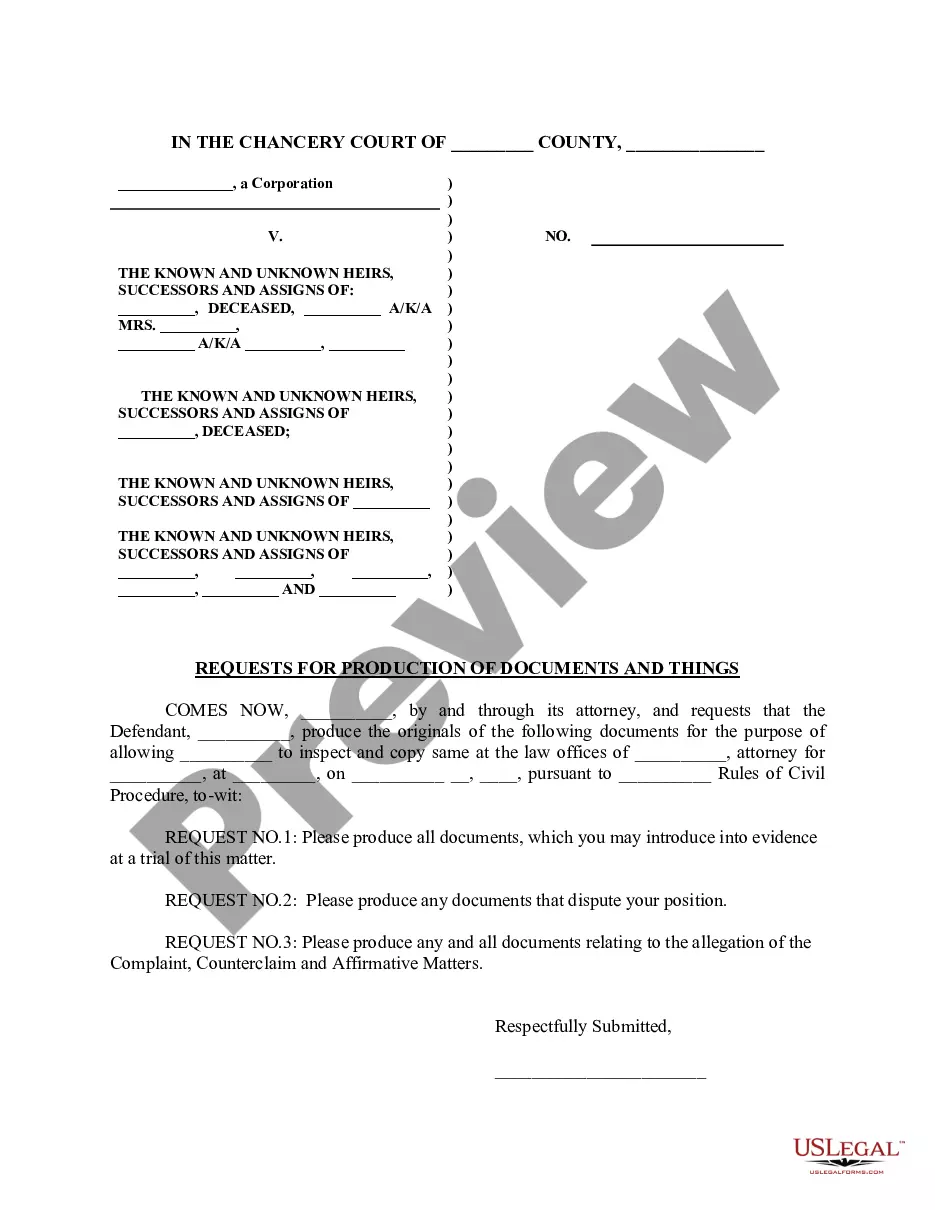
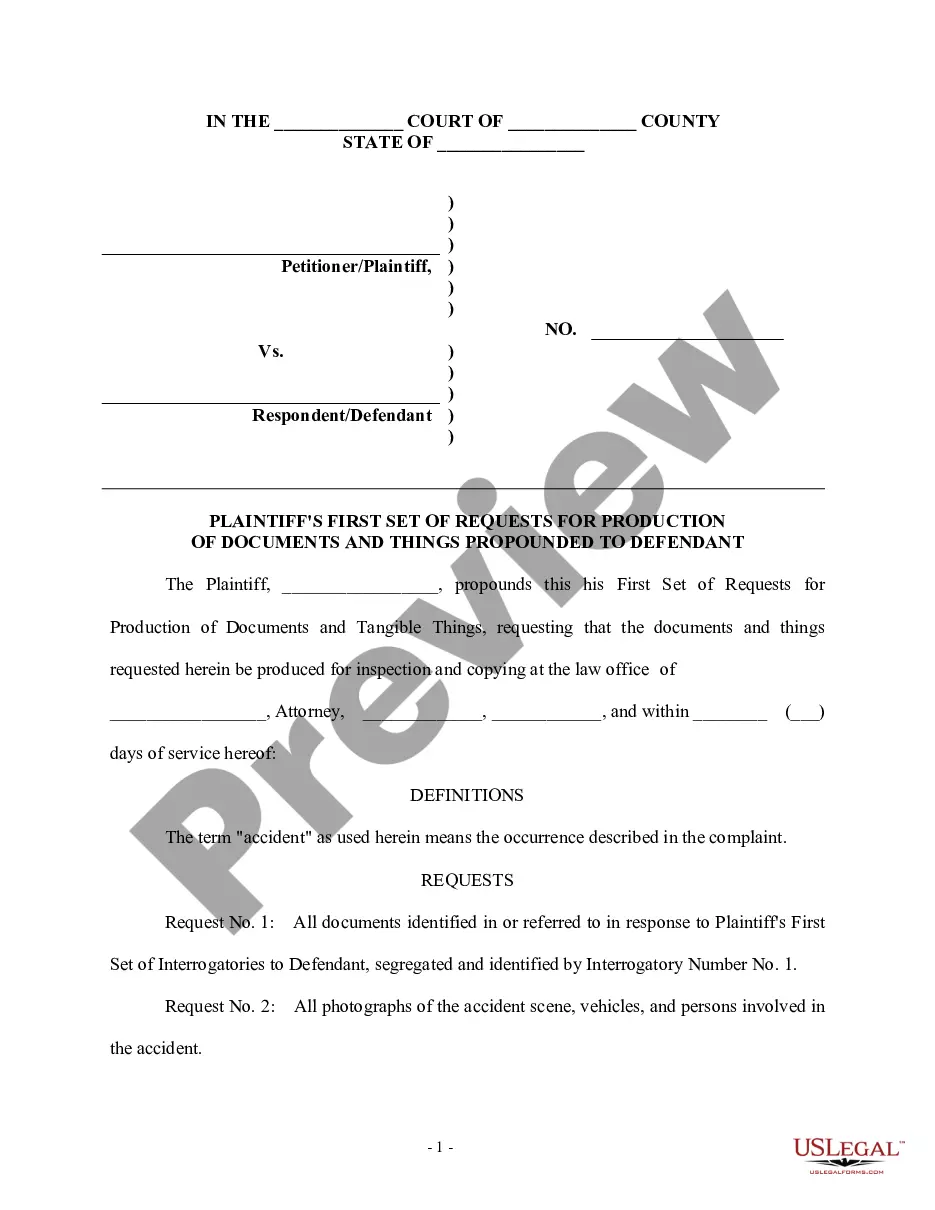
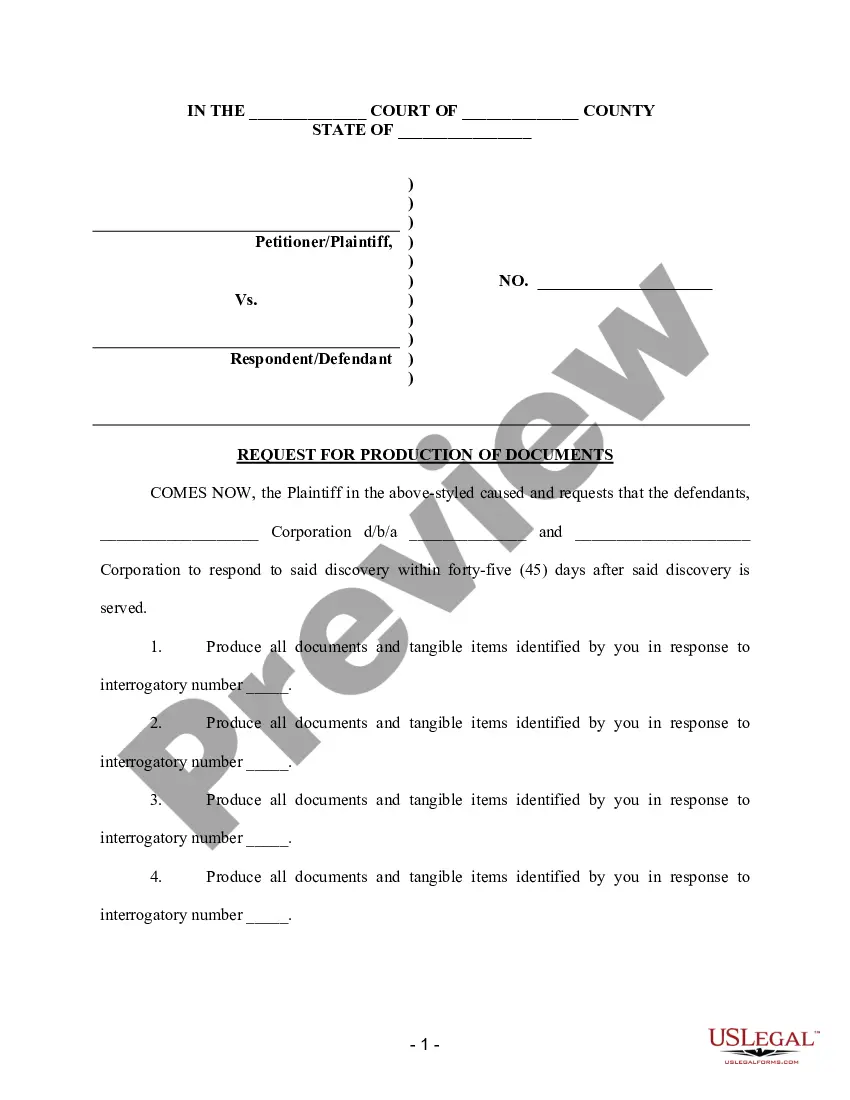
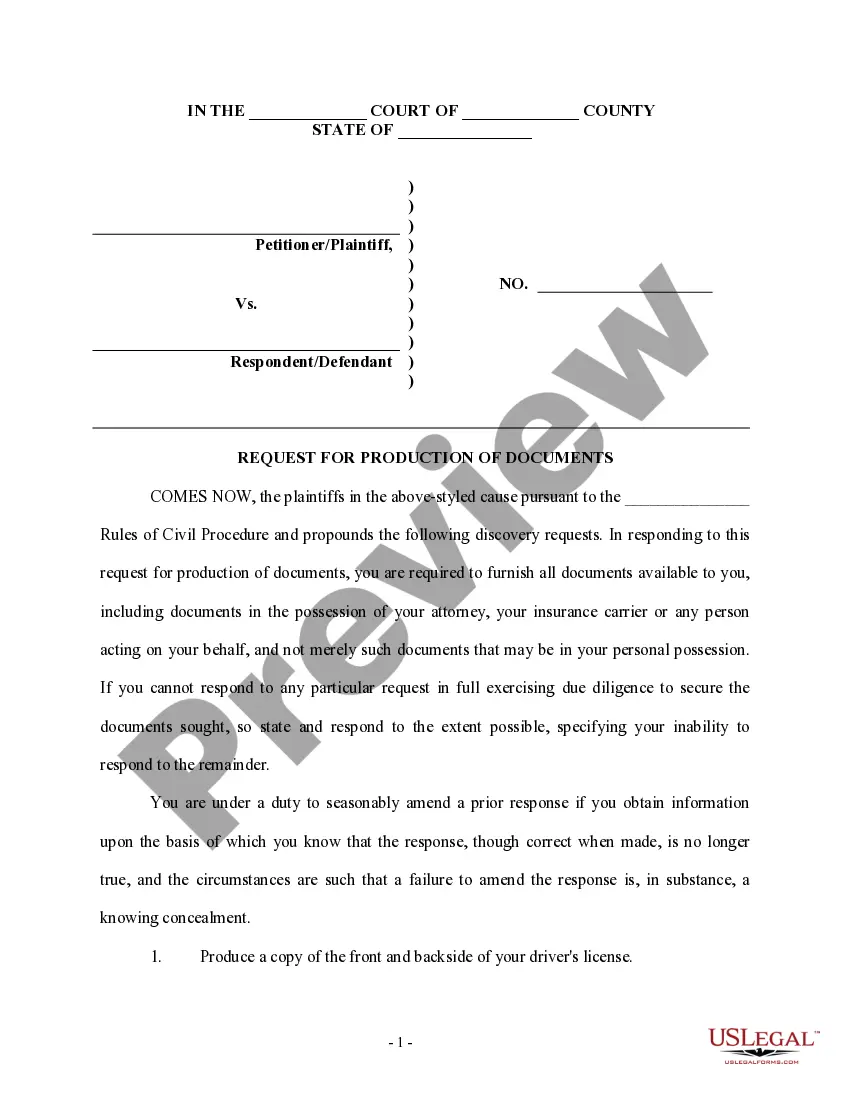
The Requests for Production of Documents and Things form is a legal document used during the discovery phase of civil litigation. This form allows one party to request specific documents or tangible items from another party that are relevant to the case. It is crucial for gathering evidence and understanding the opponent's position. Unlike other discovery forms, this one specifically focuses on the production of documents and things that may be necessary for trial preparation.
Form components explained
- Request Details: Sections to specify what documents or items are being requested, including any relevant details needed for clarity.
- Identification of Parties: Spaces for naming the requesting and responding parties involved in the legal matter.
- Compliance Timeline: A clear deadline for when the requested documents must be produced, ensuring timely responses.
- Legal References: Citations to the relevant rules of civil procedure, establishing the legal grounds for the request.
- Respectful Submission: A closing statement indicating the formal nature of the request and respect for the court's authority.

Common use cases
Use this form when you need to request specific documents or tangible evidence from another party involved in a civil lawsuit. It is often utilized in situations such as disputes over contracts, property claims, or estate matters. Requesting production is essential when documents may contain information that could support your position or undermine the opponentâs case.
Who should use this form
This form is intended for:
- Individuals or corporations involved in a legal dispute seeking to gather evidence.
- Attorneys representing clients in civil litigation who need to request documents from the other party.
- Any party in a lawsuit looking to ensure that all relevant information is available for a fair trial.
Steps to complete this form
To properly complete this form, follow these steps:
- Identify the parties involved: Clearly specify who is making the request and who is required to respond.
- List the requested documents: Clearly detail each document or item you wish to obtain to avoid ambiguity.
- Specify the compliance date: Indicate the deadline by which the responding party must provide the requested documents.
- Cite legal authority: Include references to the relevant rules of civil procedure that govern this request.
- Sign and date the form: Ensure it is signed by the requesting party or their attorney and provide the date of submission.
Notarization requirements for this form
This form does not typically require notarization unless specified by local law.
Get your form ready online
Our built-in tools help you complete, sign, share, and store your documents in one place.
Make edits, fill in missing information, and update formatting in US Legal Forms—just like you would in MS Word.
Download a copy, print it, send it by email, or mail it via USPS—whatever works best for your next step.
Sign and collect signatures with our SignNow integration. Send to multiple recipients, set reminders, and more. Go Premium to unlock E-Sign.
If this form requires notarization, complete it online through a secure video call—no need to meet a notary in person or wait for an appointment.
We protect your documents and personal data by following strict security and privacy standards.

Make edits, fill in missing information, and update formatting in US Legal Forms—just like you would in MS Word.

Download a copy, print it, send it by email, or mail it via USPS—whatever works best for your next step.

Sign and collect signatures with our SignNow integration. Send to multiple recipients, set reminders, and more. Go Premium to unlock E-Sign.

If this form requires notarization, complete it online through a secure video call—no need to meet a notary in person or wait for an appointment.

We protect your documents and personal data by following strict security and privacy standards.
Mistakes to watch out for
- Being vague in the description of requested documents, which may lead to confusion or incomplete responses.
- Failing to include a clear deadline for compliance, which can delay the discovery process.
- Not citing the appropriate rules of civil procedure, making it harder to enforce the request.
- Neglecting to sign the form, resulting in it being viewed as invalid by the court.
Benefits of completing this form online
- Convenient access to a ready-to-use legal form tailored for discovery requests.
- Editability allows users to customize the form to meet specific case needs.
- Drafted by licensed attorneys to ensure reliability and adherence to legal standards.
- The Requests for Production of Documents and Things is a formal request and can be enforced by the court if a party fails to comply.
- It is critical for gathering evidence that may be pivotal in the litigation process.
- Noncompliance with this request may lead to legal consequences, including potential sanctions.
Main things to remember
- The Requests for Production of Documents and Things is essential for evidence gathering in legal disputes.
- Accuracy and clarity in the requests are crucial to facilitate compliance.
- Consult local rules for specific procedures when using this form to ensure effectiveness.
Looking for another form?


Form popularity
FAQ
The process of delivering, or making available for review, documents in response to a request for documents, such as a request for production and a subpoena. A request for documents may call for the production of paper (hard copy) documents and electronically stored information (ESI).
Federal Rule 33 limits interrogatories to twenty-five per party rather than per side.
Requests for the Production of Documents are a discovery device used by a party to enable the individual to learn the facts that are the basis for, or support, a pleading with which he or she has been served by the opposing party.These documents might also be evidence in a hearing or a trial.
The provisions of Rule 36 make it clear that admissions function very much as pleadings do. Thus, when a party admits in part and denies in part, his admission is for purposes of the pending action only and may not be used against him in any other proceeding.
Requests for production may be used to inspect and copy documents or tangible items held by another party. Although these requests are most commonly used to obtain copies of documents, they can also be used to test, measure, photograph, etc., any type of physical evidence in the other party's possession or control.
If a request asks for a document, make a copy of the document; in your response, describe the document and say that a copy is attached; and attach a copy of the document to the responses you send back to the other side.
What Is a Request for Production of Documents? A request for production is a discovery device used to gain access to documents, electronic data, and physical items held by an opposing party in a legal matter. The aim is to gain insight into any relevant evidence that the opposing party holds.