Release of Landlord, Waiver of Liability, and Assumption of all Risks of Personal Bodily Injury Regarding a Play Structure - including a Swing Set - Owned by Landlord and Located on Landlord's Property Being Rented to Tenant
What this document covers
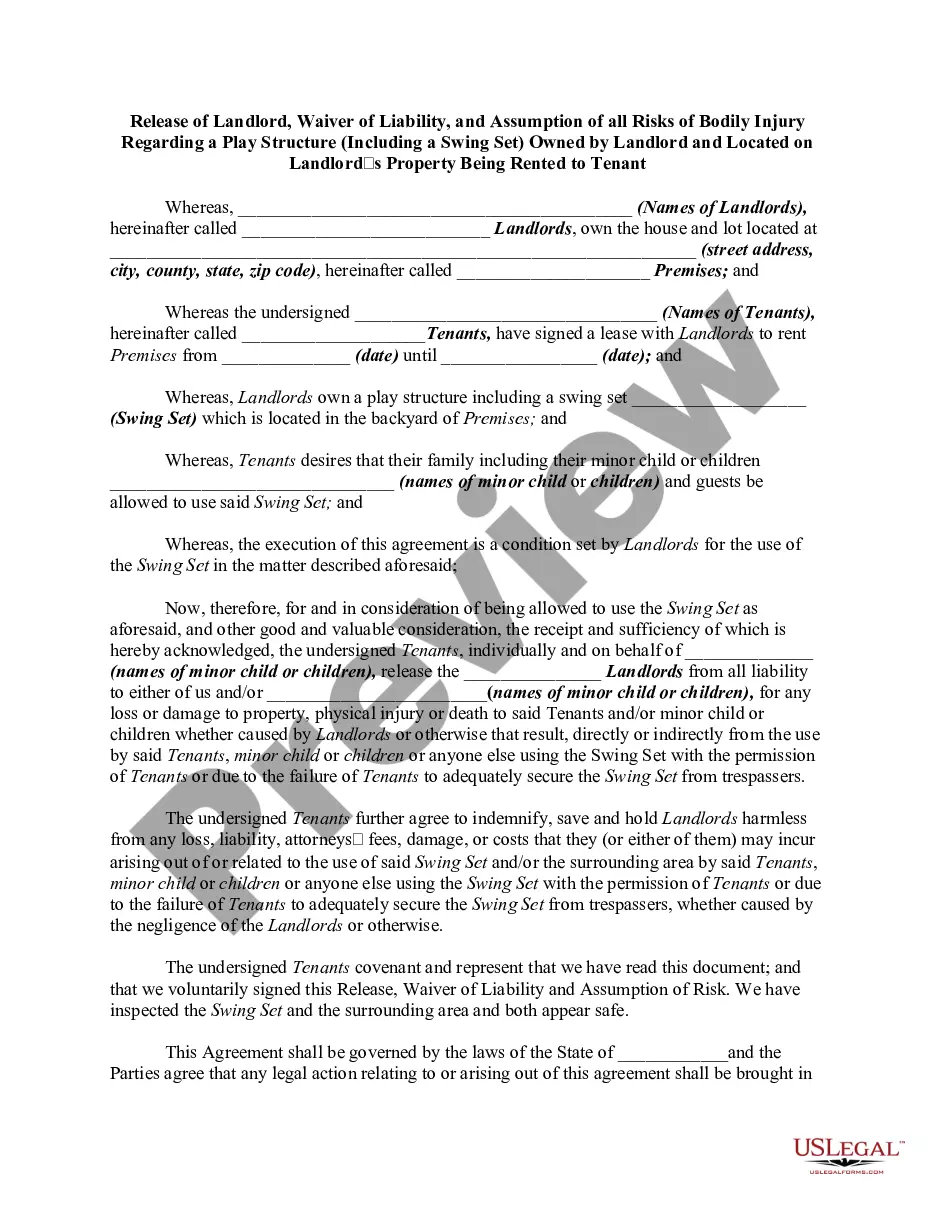
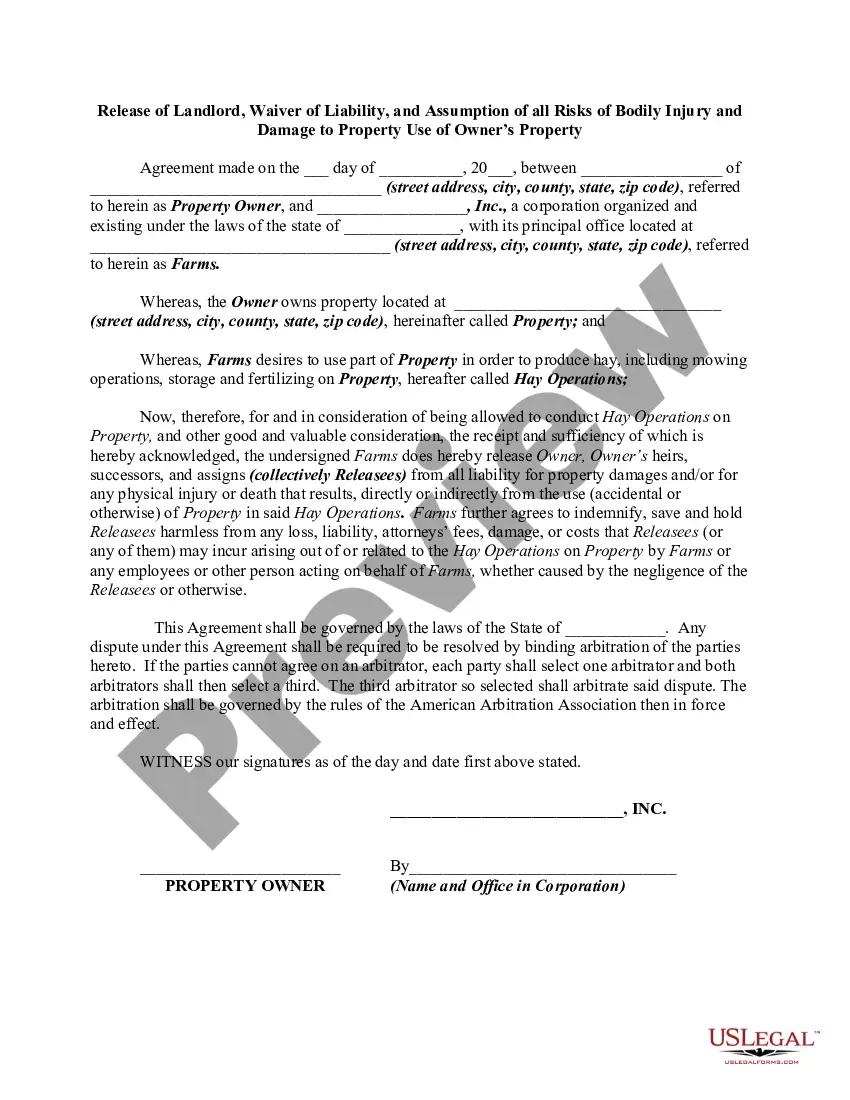
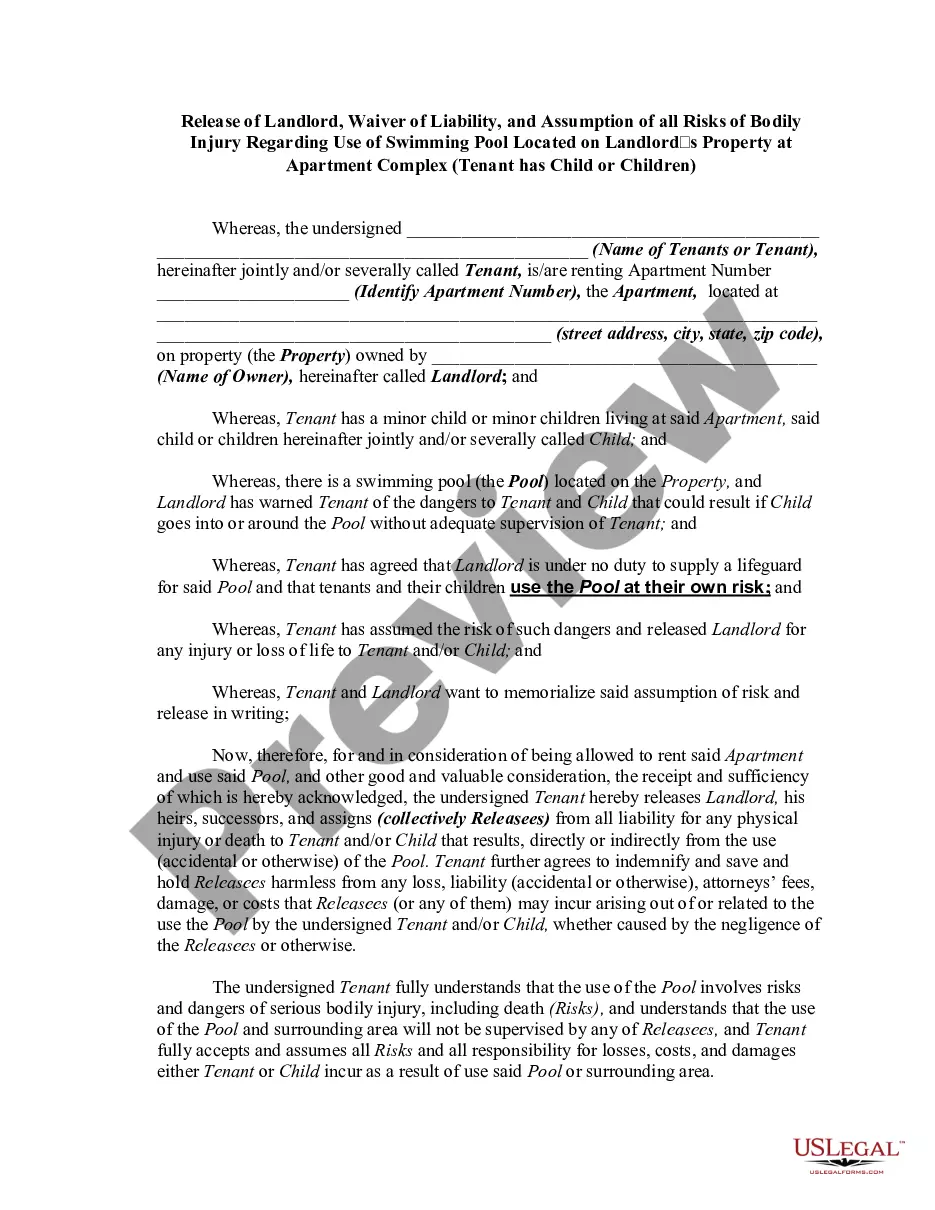
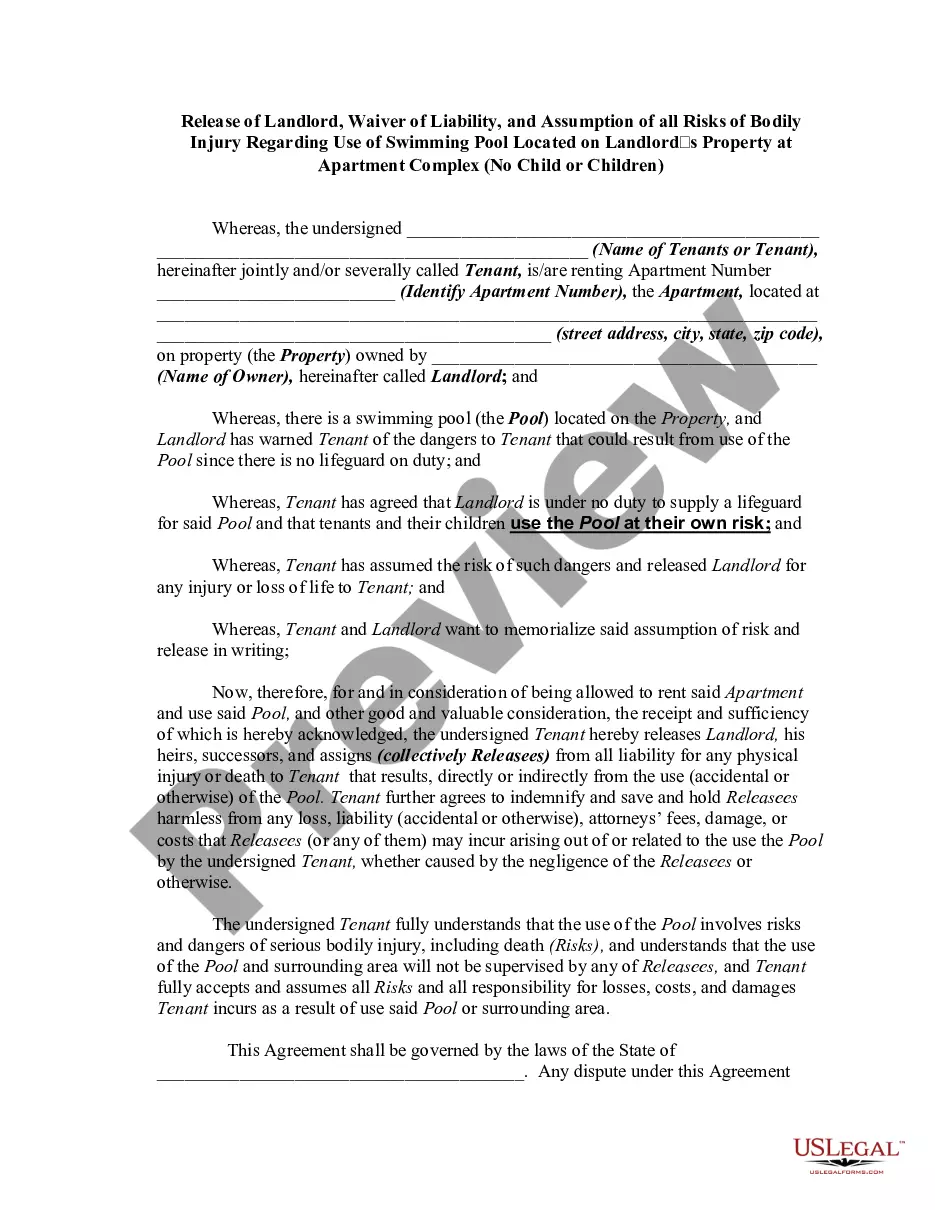
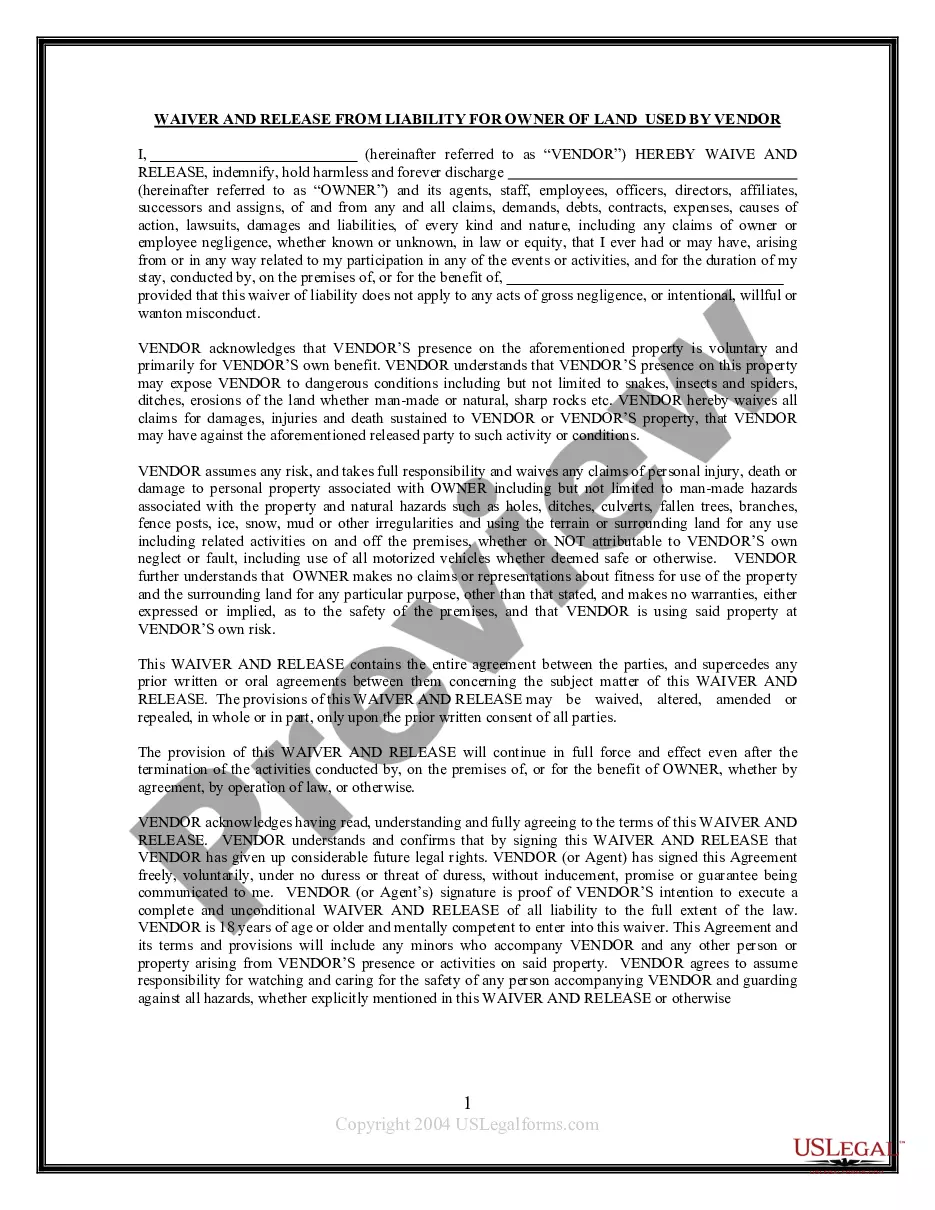
The Release of Landlord, Waiver of Liability, and Assumption of all Risks of Personal Bodily Injury Regarding a Play Structure - including a Swing Set - Owned by Landlord and Located on Landlord's Property Being Rented to Tenant is a legal document that allows tenants to use a swing set and play structure located on a rental property. This form serves to release the landlord from liability for any injuries that may occur while using these amenities. It is vital for tenants to understand that this form differs from other releases in that it specifically pertains to recreational structures on rented premises.
Key components of this form
- Identification of landlords and tenants along with their respective roles.
- Description of the rental property and the specific play structure involved.
- Details regarding the leased period of the property.
- Release of liability clause for injuries incurred while using the swing set.
- Indemnification clause to protect landlords from potential claims.
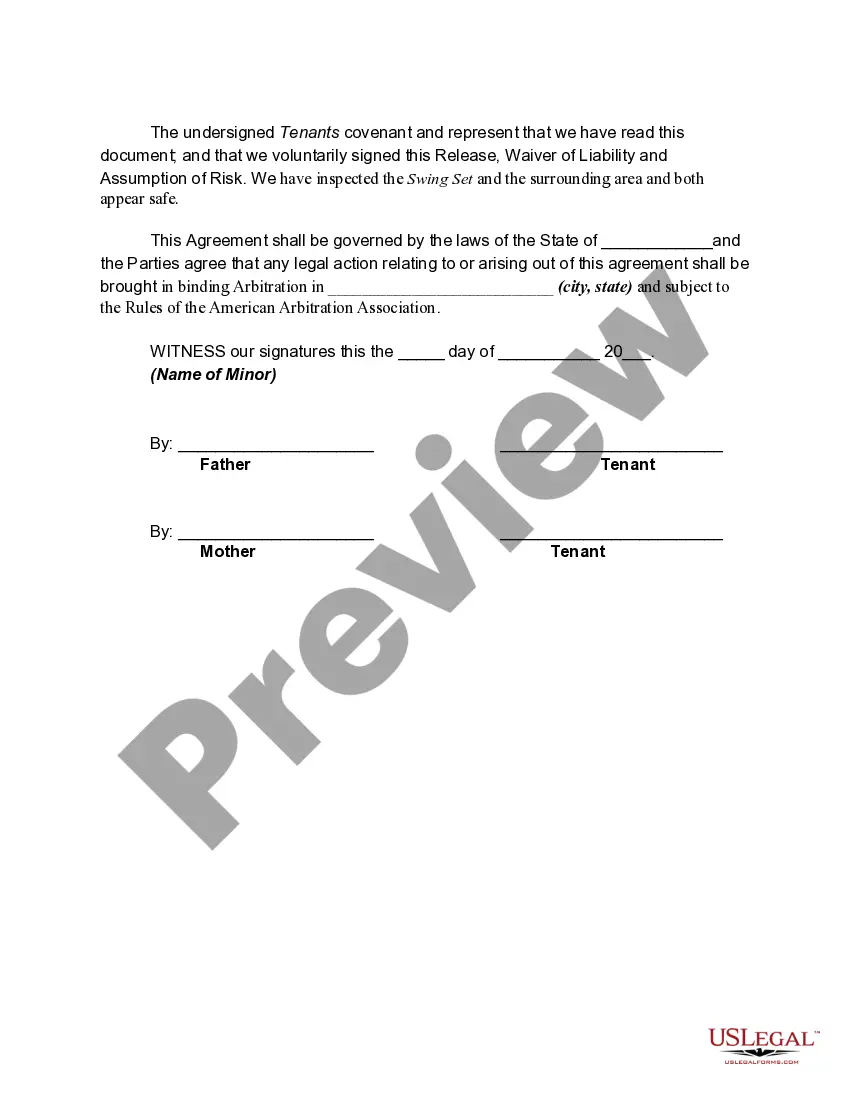
- Governing law and arbitration provisions for dispute resolution.
When this form is needed
This form is necessary when tenants wish to utilize a swing set or play structure located on rented property. It is typically used when the landlord requires a waiver of liability to be signed before allowing their tenants or their children to engage in recreational activities that could potentially lead to injuries. By signing this document, tenants acknowledge the risks involved and release the landlord from any resulting liability.
Who this form is for
- Tenants renting properties with play structures or swing sets owned by the landlord.
- Landlords who want to mitigate their liability regarding the usage of recreational equipment on their rental properties.
- Parents or guardians who are responsible for minors using such facilities.
How to complete this form
- Identify and enter the names of the landlords at the beginning of the document.
- Provide the names of the tenants who will be using the swing set.
- Fill in the exact address of the rental property, including street, city, and state.
- Specify the lease dates to clarify the rental period.
- List the names of any minor children who will be allowed to use the swing set.
- Have all parties sign the document to confirm their agreement to the terms outlined.
Does this form need to be notarized?
This form usually doesn’t need to be notarized. However, local laws or specific transactions may require it. Our online notarization service, powered by Notarize, lets you complete it remotely through a secure video session, available 24/7.
Get your form ready online
Our built-in tools help you complete, sign, share, and store your documents in one place.
Make edits, fill in missing information, and update formatting in US Legal Forms—just like you would in MS Word.
Download a copy, print it, send it by email, or mail it via USPS—whatever works best for your next step.
Sign and collect signatures with our SignNow integration. Send to multiple recipients, set reminders, and more. Go Premium to unlock E-Sign.
If this form requires notarization, complete it online through a secure video call—no need to meet a notary in person or wait for an appointment.
We protect your documents and personal data by following strict security and privacy standards.

Make edits, fill in missing information, and update formatting in US Legal Forms—just like you would in MS Word.

Download a copy, print it, send it by email, or mail it via USPS—whatever works best for your next step.

Sign and collect signatures with our SignNow integration. Send to multiple recipients, set reminders, and more. Go Premium to unlock E-Sign.

If this form requires notarization, complete it online through a secure video call—no need to meet a notary in person or wait for an appointment.

We protect your documents and personal data by following strict security and privacy standards.
Mistakes to watch out for
- Failing to clearly identify all parties involved, leading to confusion or disputes.
- Not specifying the property address correctly, which may invalidate the waiver.
- Incomplete signatures, particularly of both parents or guardians of minors.
- Neglecting to read the waiver thoroughly before signing, which can lead to unexpected liabilities.
Benefits of using this form online
- Convenient access to a legally vetted document that can be tailored to your needs.
- Easy download and completion, saving time compared to traditional methods.
- The ability to edit the form to ensure all necessary details are included.
- Reliable legal protection through clear documentation of agreements.
Legal use & context
- Liability waivers may be enforced differently based on state laws, particularly concerning minors.
- Courts may invalidate waivers if they contravene public policy or involve gross negligence.
- It is advisable to consult legal counsel if unsure about the enforceability of the waiver in your jurisdiction.
Quick recap
- Use this form to manage liability risks for play structures on rental properties.
- Ensure all parties involved understand and agree to the terms laid out in the waiver.
- Complete and sign the form before allowing use of the swing set or play structure.
Looking for another form?


Form popularity
FAQ
A waiver is a legal agreement the primary purpose of which is to let you or another party modify or relinquish a right, privilege, or claim. The agreement can be a separate document on its own, such as if you sign a waiver form, or added to a contract as a waiver clause.
In California, a liability waiver must be clear, unambiguous, and explicit. In other words, waivers cannot be printed in faded ink, in small font, on the back of a paper, or in an otherwise ambiguous form. If the waiver that you sign is not represented clearly, it may not hold up in the event of a lawsuit.
Simply put, waivers don't always protect against a lawsuit. Different states have different laws regarding waivers and their ability to completely protect against litigation. Whether a waiver is sufficient to provide protection against a trainer's liability varies from state to state and, often, case to case.
A property damage loss waiver (PDLW ) program is a damage liability option that provides multifamily property owners and managers financial protection if a participating resident negligently causes damages or losses to the community or building.
Landlord's Waivers are intercreditor agreements for the benefit of the tenant's lender or equipment lessor, stipulating the landlord's and the lender's respective rights in certain property owned by the tenant.
Waiver is defined as follows: When the landlord knows that the tenant is breaching the lease, yet conducts the landlord-tenant relationship in the normal course (for example, accepts rent and otherwise does nothing to object to the violation of the lease), then the court may infer that the owner has waived, or forgiven
In many cases, the waiver is not enforceable.If you've been injured due to negligent actions, you can sue even if you signed a waiver. Winning a lawsuit concerning negligence is not uncommon. Many celebrities have sued for negligence even though they signed documents stating they understood the risks.