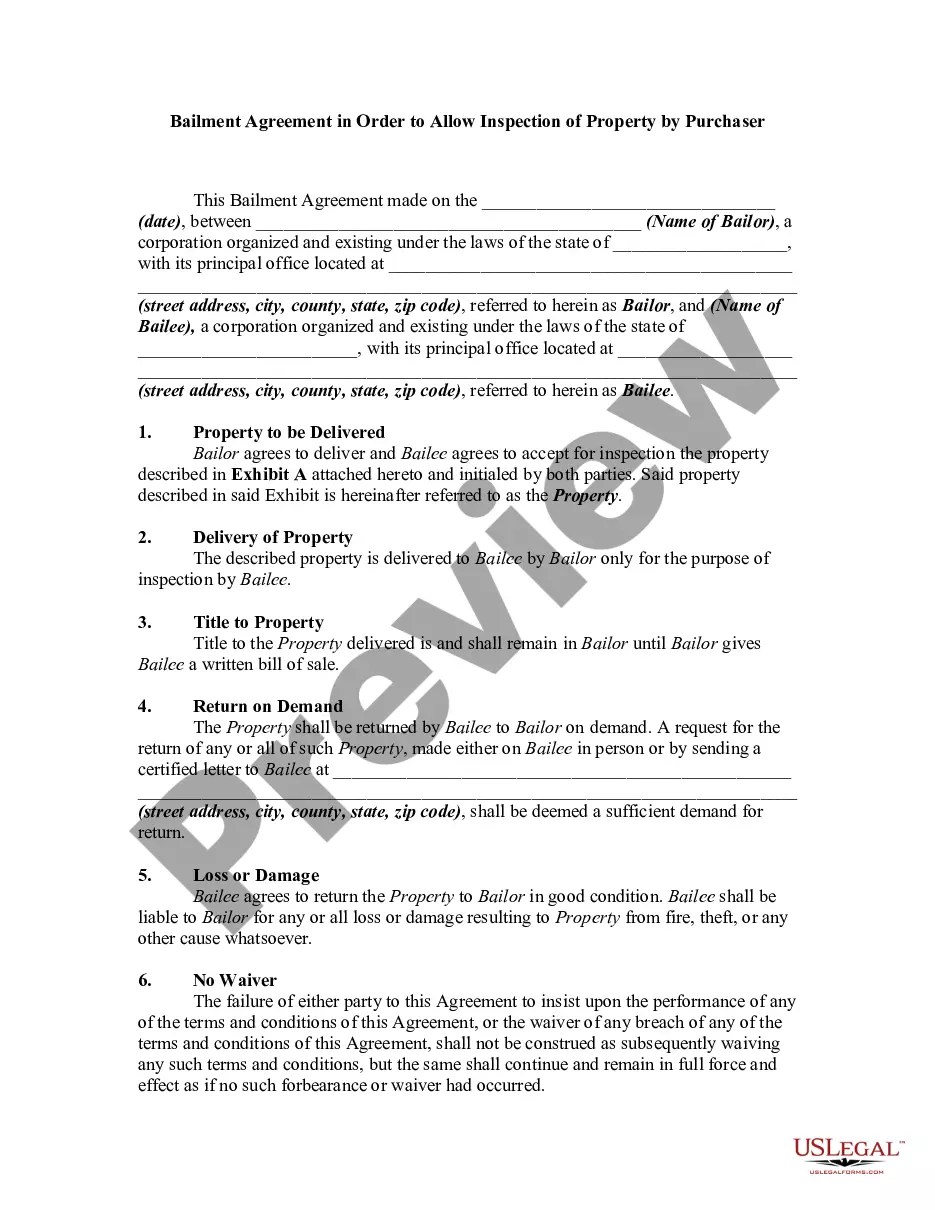
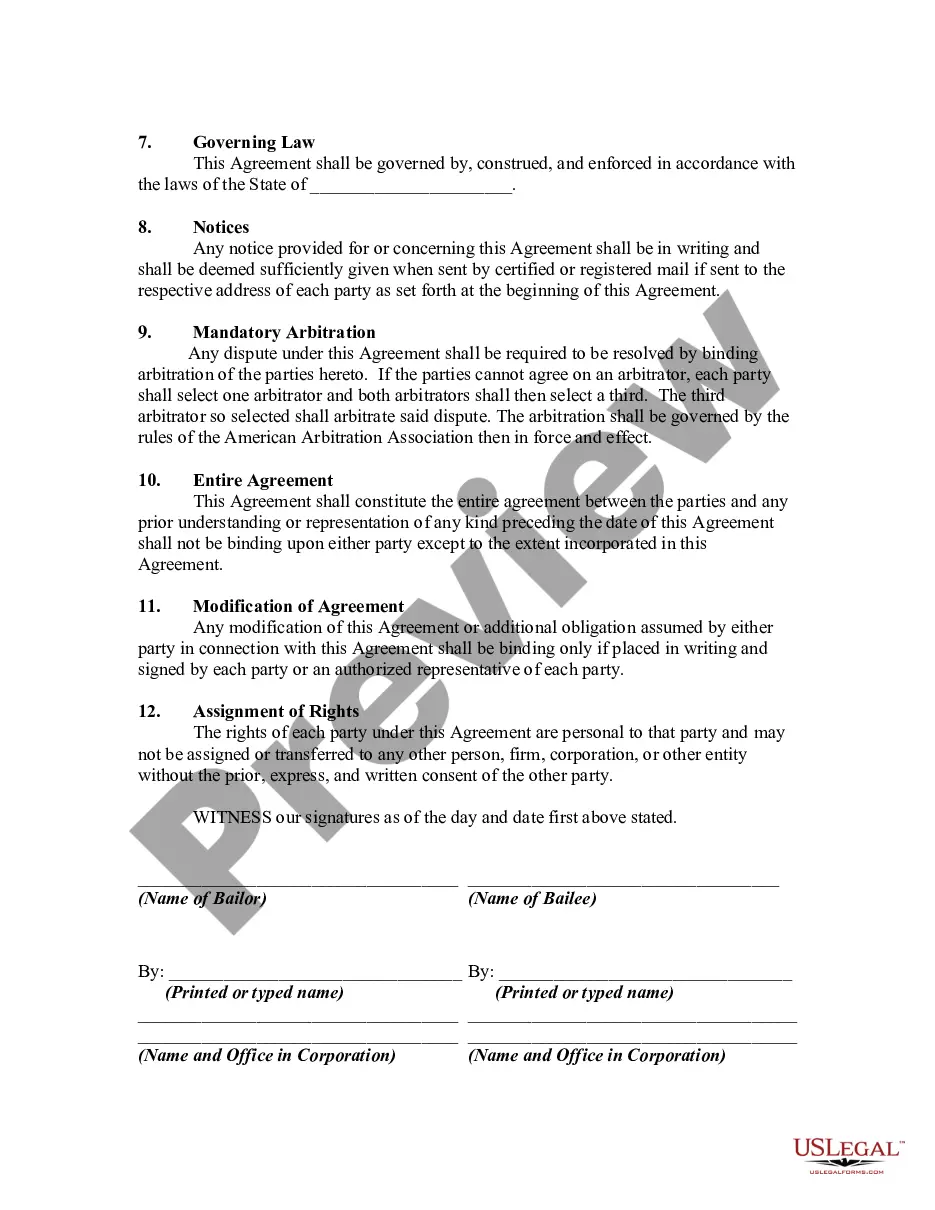
Bailment Agreement in Order to Allow Inspection of Property by Purchaser
Overview of this form
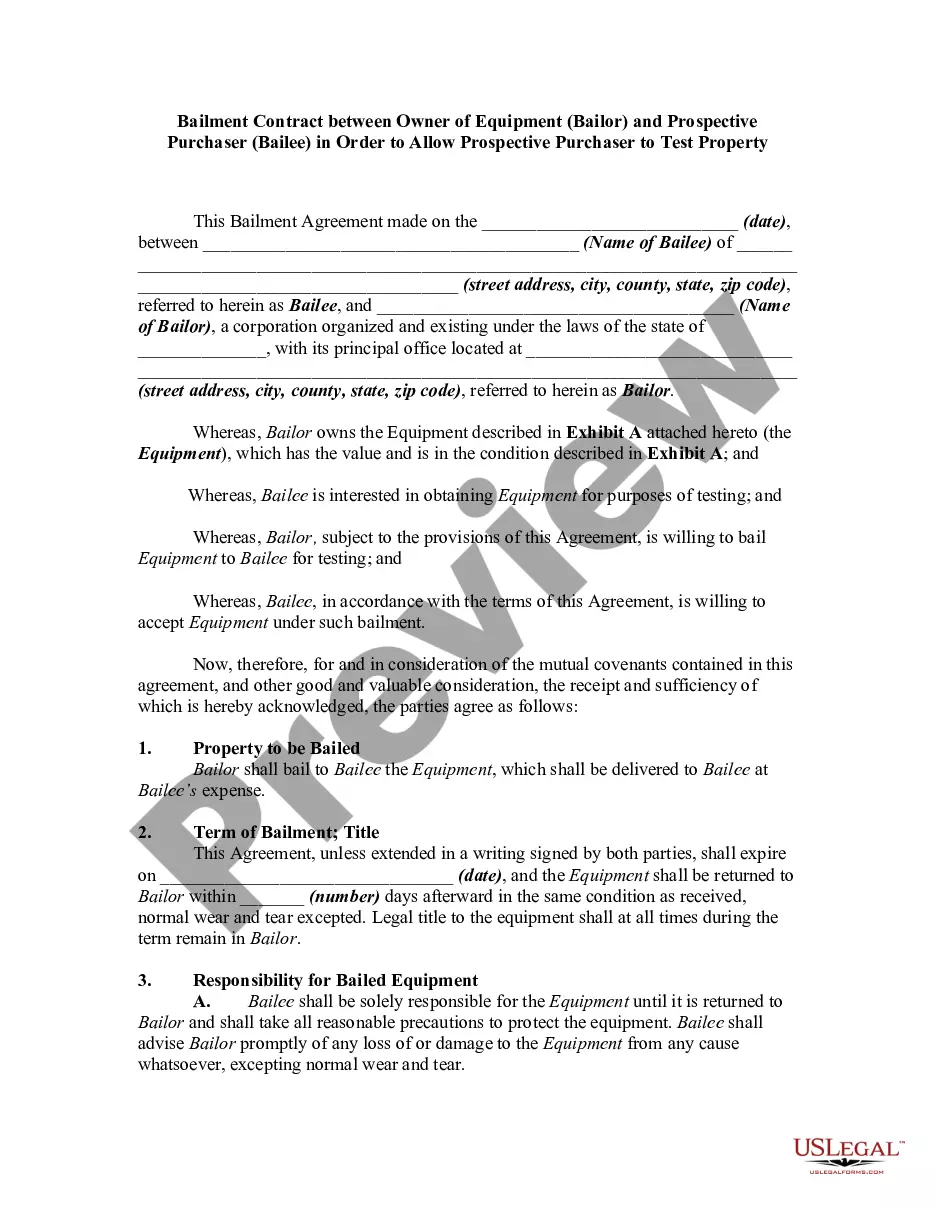
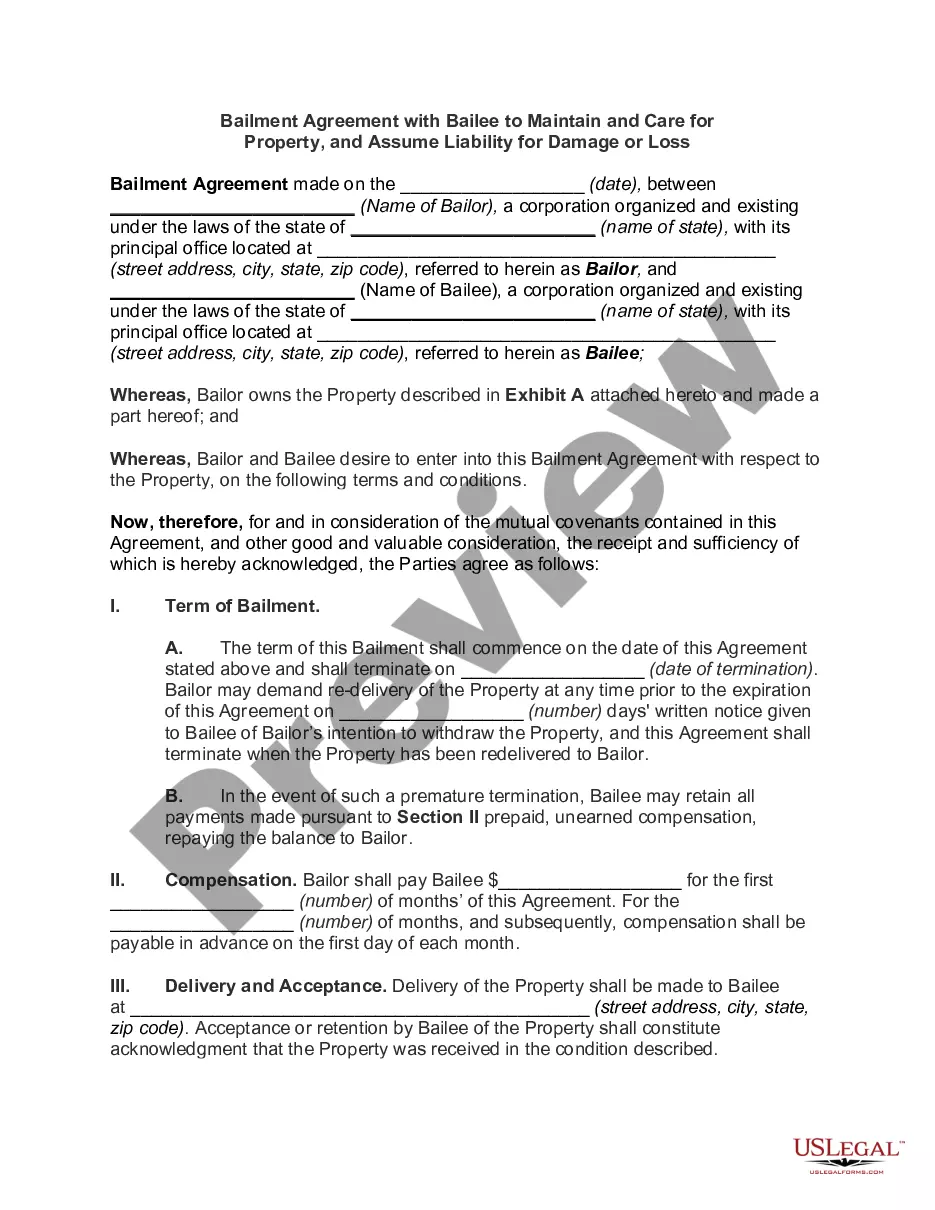
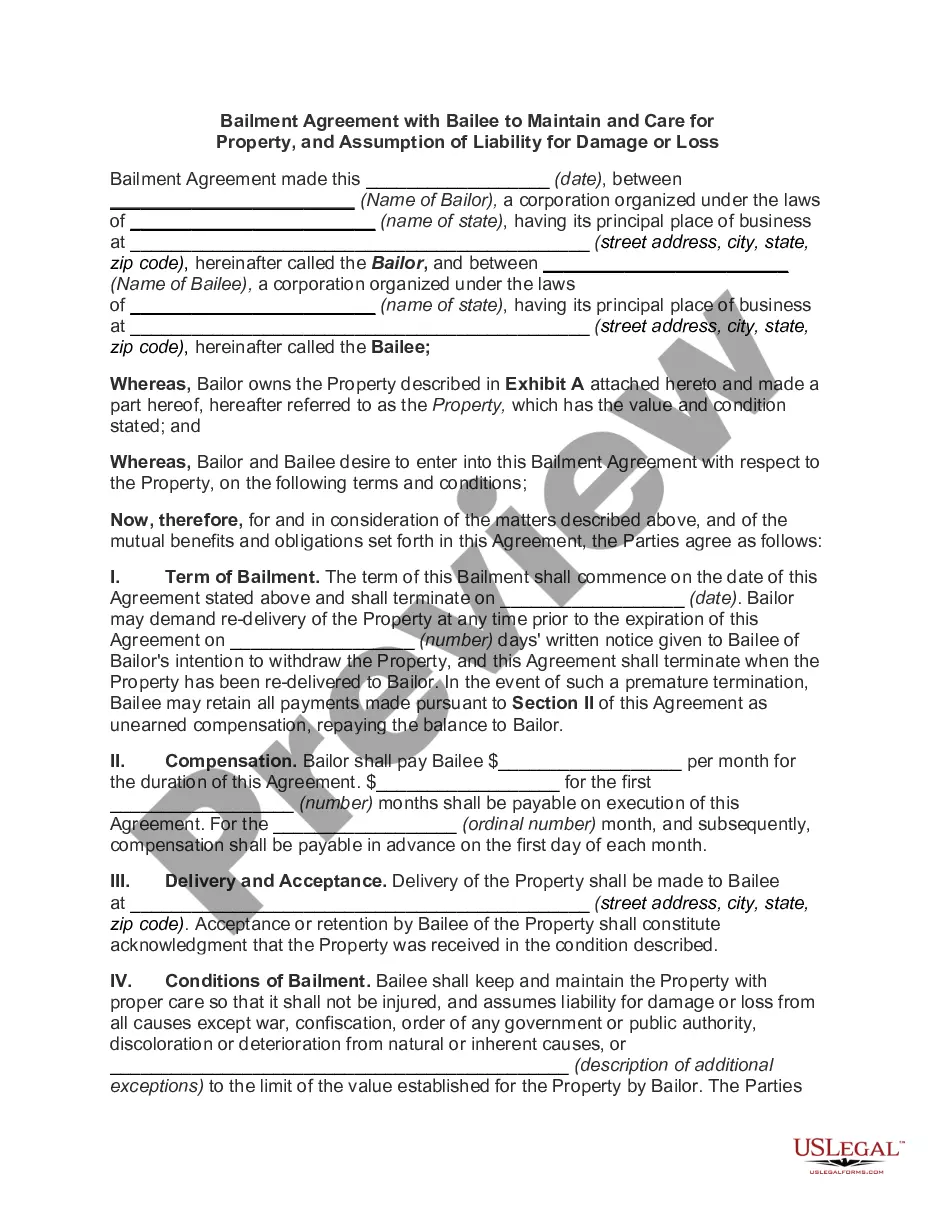
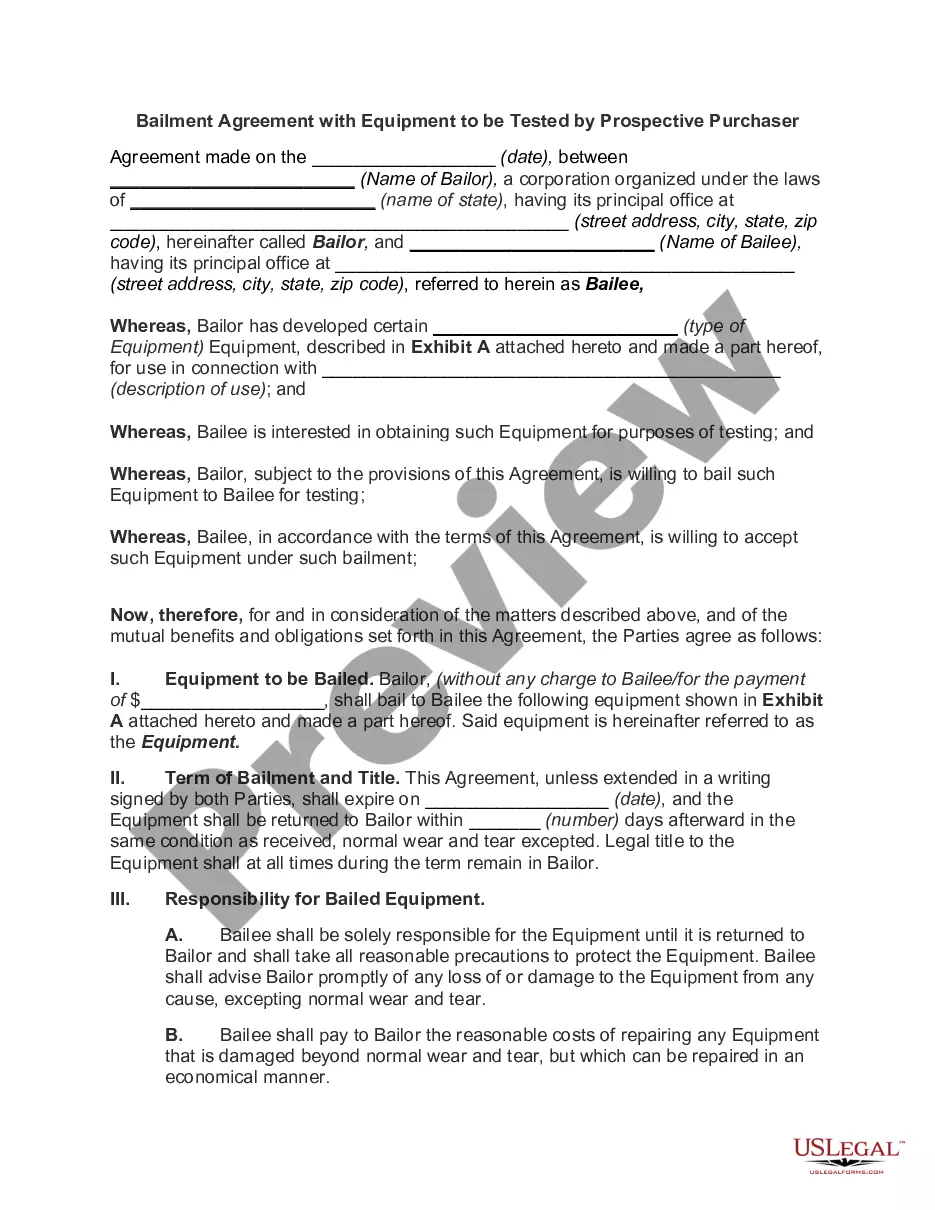
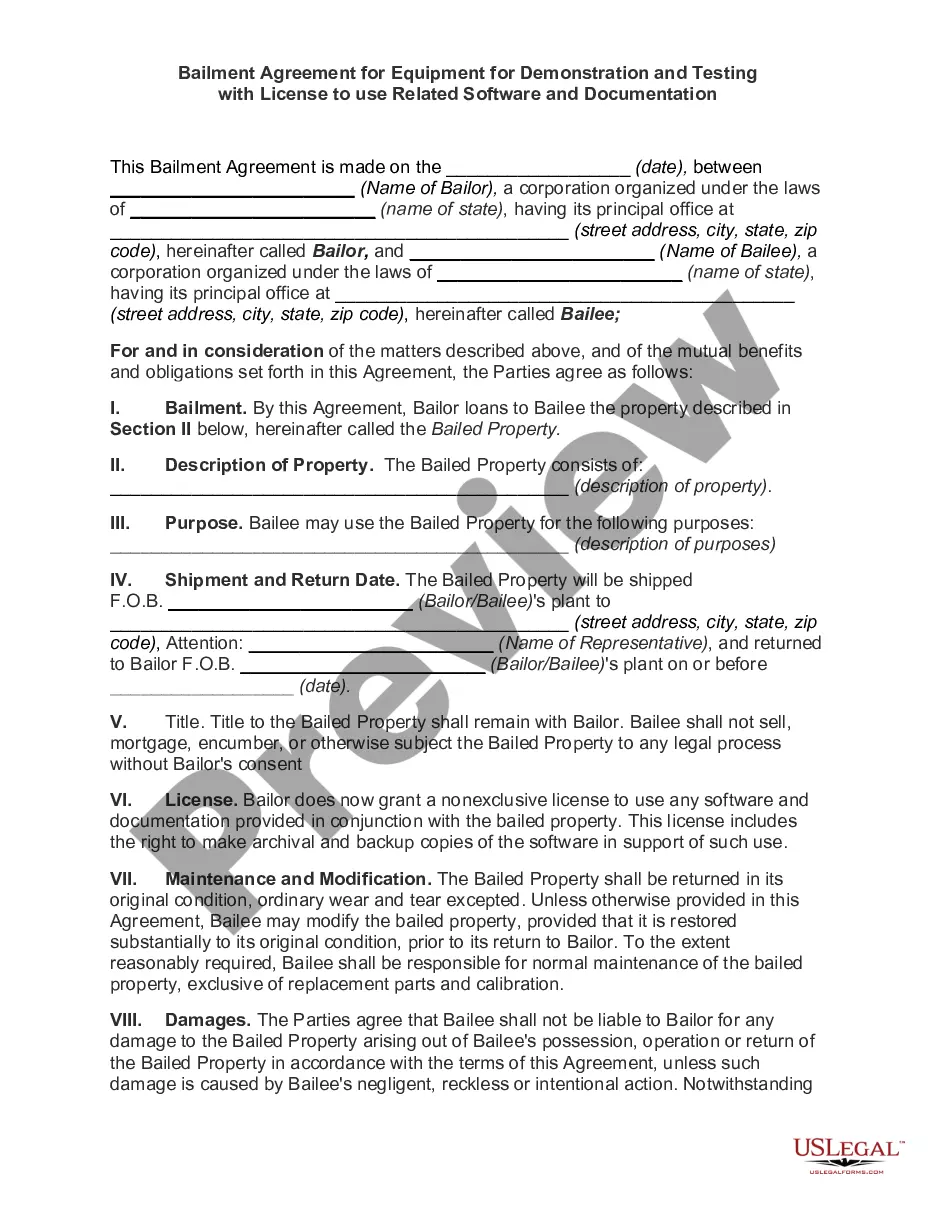
A bailment agreement is a legal document that outlines the terms under which one party (the bailor) permits another party (the bailee) to temporarily possess property for a specific purpose. This Bailment Agreement in Order to Allow Inspection of Property by Purchaser establishes the obligations for the safekeeping and return of the property, ensuring that ownership remains with the bailor. It differentiates itself from other agreements by focusing specifically on the inspection of property prior to a sale or transfer of ownership.
Key parts of this document
- Date of agreement and identification of the parties involved.
- Details of the property being inspected, included in an attached exhibit.
- Clauses regarding the delivery and return of the property.
- Responsibilities of the bailee for loss or damage to the property.
- Governing law and stipulations for dispute resolution via arbitration.
Common use cases
This bailment agreement is useful when a seller or bailor needs to allow a prospective buyer or bailee to inspect property under controlled circumstances. It is particularly applicable in transactions involving valuable goods or equipment, where the seller wants to protect their ownership rights while allowing for evaluation before a sale.
Who this form is for
- Individuals or businesses looking to sell property that requires inspection.
- Prospective buyers who need to evaluate property before completing a purchase.
- Anyone who wants to ensure legal protection for the property during the inspection process.
Completing this form step by step
- Identify the date of the agreement at the beginning.
- Fill in the names and addresses of both the bailor and bailee.
- Describe the property to be inspected in detail, referencing Exhibit A.
- Include provisions regarding the return of the property and any liabilities.
- Sign and date the agreement to make it legally binding.
Does this document require notarization?
Notarization is generally not required for this form. However, certain states or situations might demand it. You can complete notarization online through US Legal Forms, powered by Notarize, using a verified video call available anytime.
Get your form ready online
Our built-in tools help you complete, sign, share, and store your documents in one place.
Make edits, fill in missing information, and update formatting in US Legal Forms—just like you would in MS Word.
Download a copy, print it, send it by email, or mail it via USPS—whatever works best for your next step.
Sign and collect signatures with our SignNow integration. Send to multiple recipients, set reminders, and more. Go Premium to unlock E-Sign.
If this form requires notarization, complete it online through a secure video call—no need to meet a notary in person or wait for an appointment.
We protect your documents and personal data by following strict security and privacy standards.

Make edits, fill in missing information, and update formatting in US Legal Forms—just like you would in MS Word.

Download a copy, print it, send it by email, or mail it via USPS—whatever works best for your next step.

Sign and collect signatures with our SignNow integration. Send to multiple recipients, set reminders, and more. Go Premium to unlock E-Sign.

If this form requires notarization, complete it online through a secure video call—no need to meet a notary in person or wait for an appointment.

We protect your documents and personal data by following strict security and privacy standards.
Typical mistakes to avoid
- Failing to include a detailed description of the property in Exhibit A.
- Not specifying the return procedures or conditions clearly.
- Overlooking the need for signatures of both parties to validate the agreement.
Why complete this form online
- Convenient access to legally vetted forms that can be downloaded instantly.
- Editability allows users to customize the agreement to fit specific needs.
- Reliable templates drafted by licensed attorneys to ensure compliance with the law.
What to keep in mind
- The Bailment Agreement allows for temporary property inspection without ownership transfer.
- Clear responsibilities and conditions for the property must be established.
- This form is essential for both sellers and buyers to protect their rights during a transaction.
- Always ensure the agreement is completed fully and accurately to avoid disputes.
Looking for another form?
Form popularity
FAQ
The most common bailment is a mutual benefit bailment, in which both parties benefit. There are five types of mutual benefit bailments: renting, work and services, pledging, consigning, and storage and parking. In a mutual benefit bailment, the standard of care is that of reasonable care.
Three elements are generally necessary for the existence of a bailment: delivery, acceptance, and consideration. Actual possession of or control over property must be delivered to a bailee in order to create a bailment.
There are three types of bailments: (1) for the benefit of the bailor and bailee; (2) for the sole benefit of the bailor; and (3) for the sole benefit of the bailee.
Gratuitous Bailment. Non-Gratuitous Bailment: Bailment for the Benefit of the Bailor. Bailment for the exclusive Benefit of the Bailee. Bailment for the Benefit of the Bailor and Bailee.
A Bailment that Benefits Both the Bailor and Bailee: An example of this would be parking your car in a paid parking lot. You would get the benefit of parking your car and the owner of the lot would get the benefit of the fee that is paid. A bailee can face liability for damaging the bailed items if they were negligent.
Three elements are generally necessary for the existence of a bailment: delivery, acceptance, and consideration.
A Bailment that Benefits Both the Bailor and Bailee: An example of this would be parking your car in a paid parking lot. You would get the benefit of parking your car and the owner of the lot would get the benefit of the fee that is paid. A bailee can face liability for damaging the bailed items if they were negligent.
A 'bailment' is the delivery of goods by one person to another for some purpose, upon a contract that they shall, when the purpose is accomplished, be returned or otherwise disposed of according to the directions of the person delivering them. The person delivering the goods is called the 'bailor'.
A 'bailment' is the delivery of goods by one person to another for some purpose, upon a contract that they shall, when the purpose is accomplished, be returned or otherwise disposed of according to the directions of the person delivering them. The person delivering the goods is called the 'bailor'.