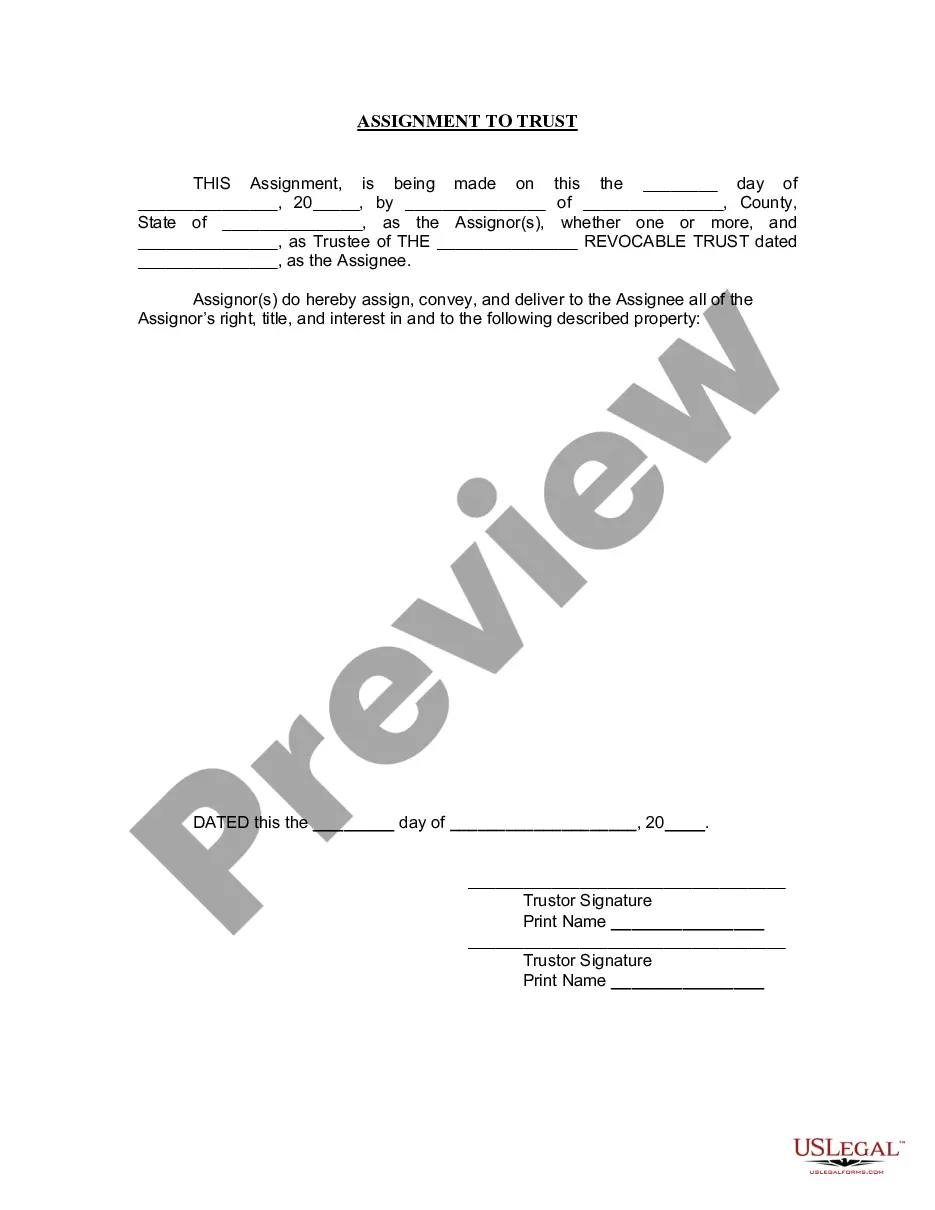
Services Contract with Hair Stylist for Popular Music Band - Self-Employed
What is this form?
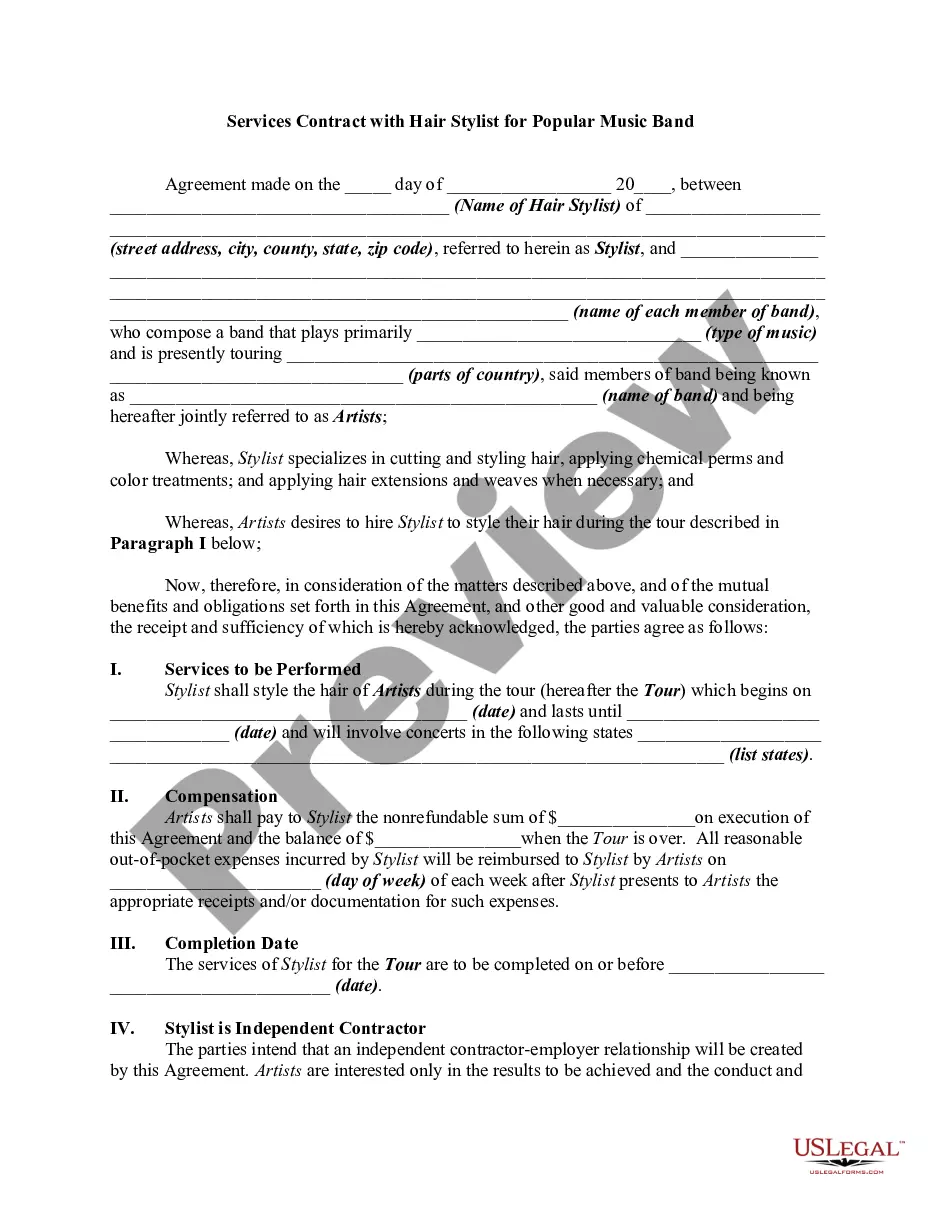
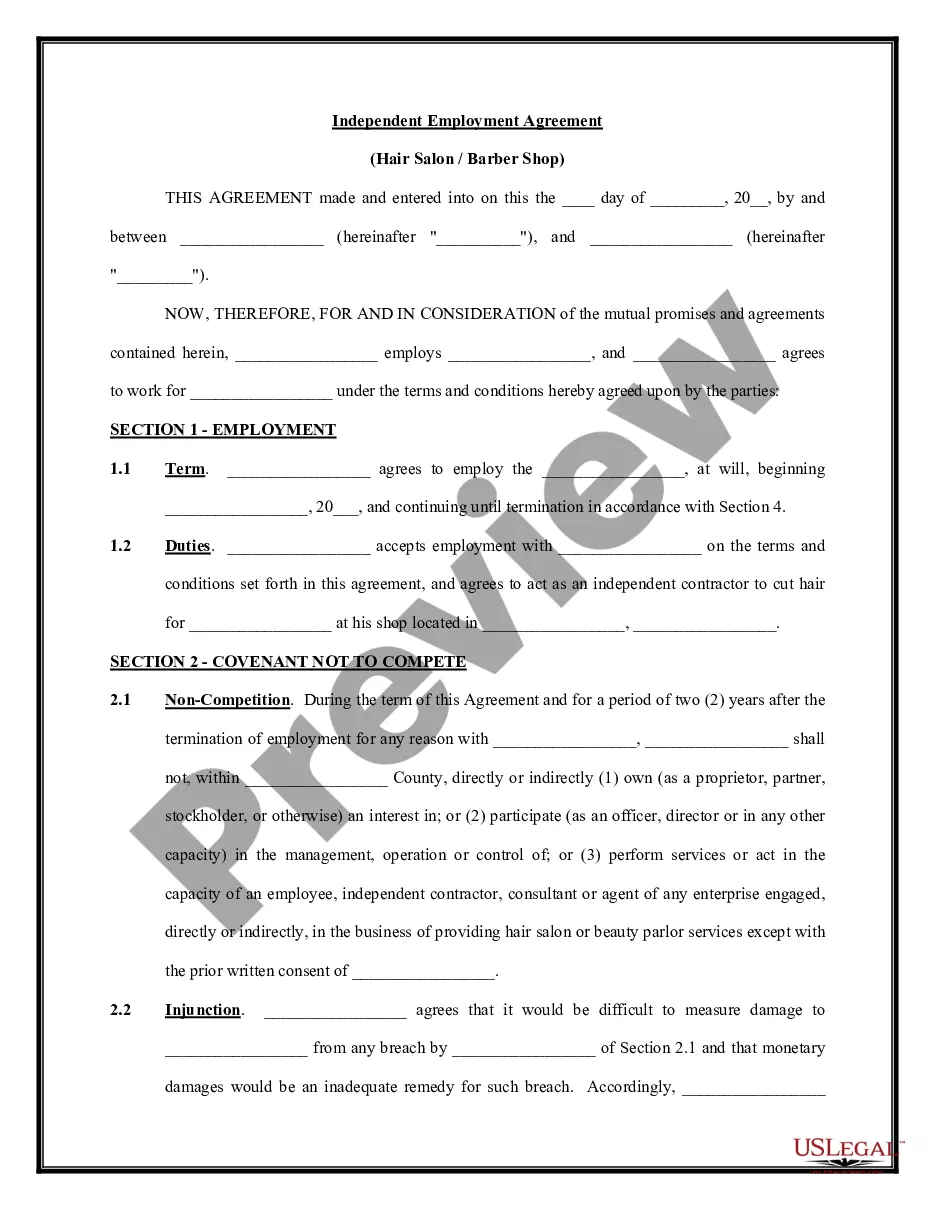
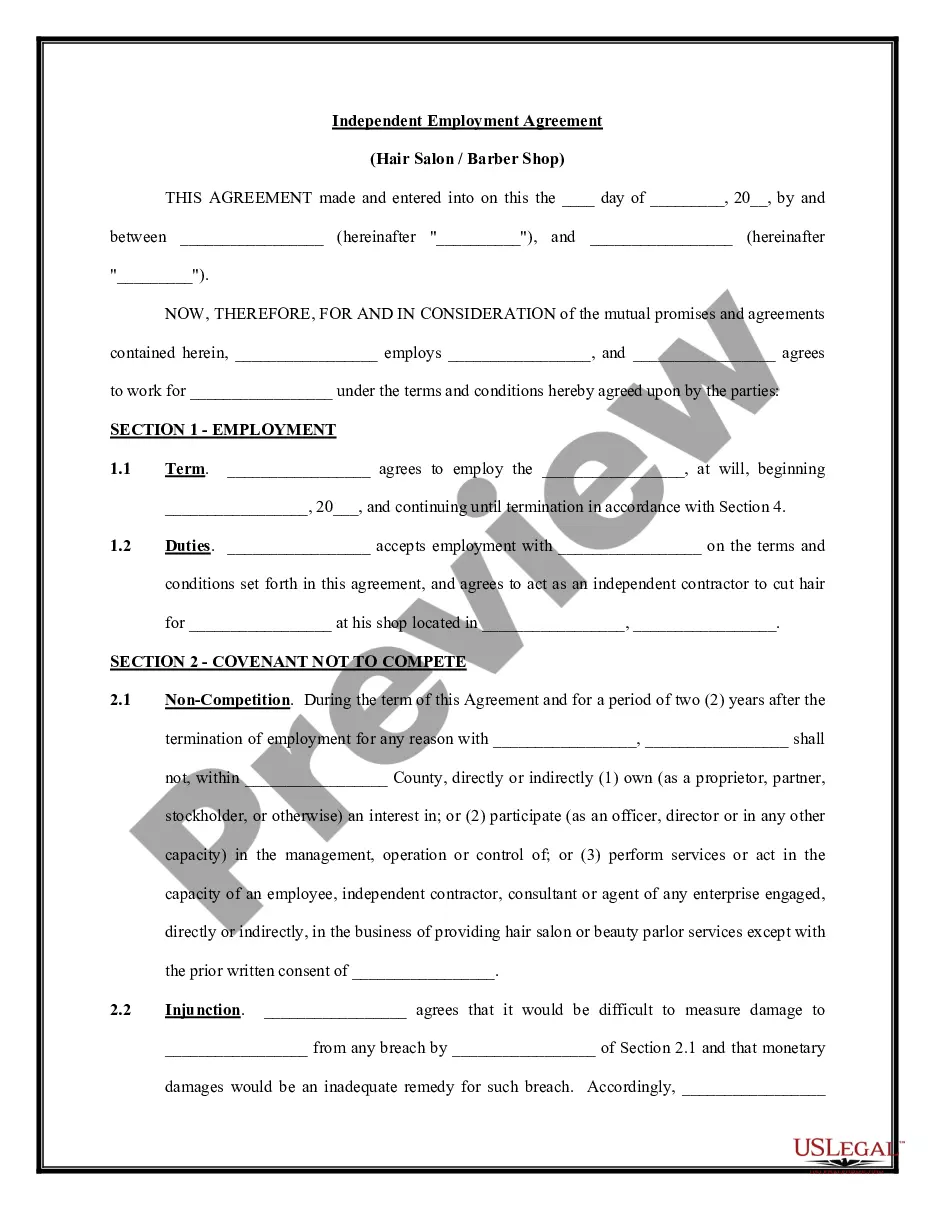
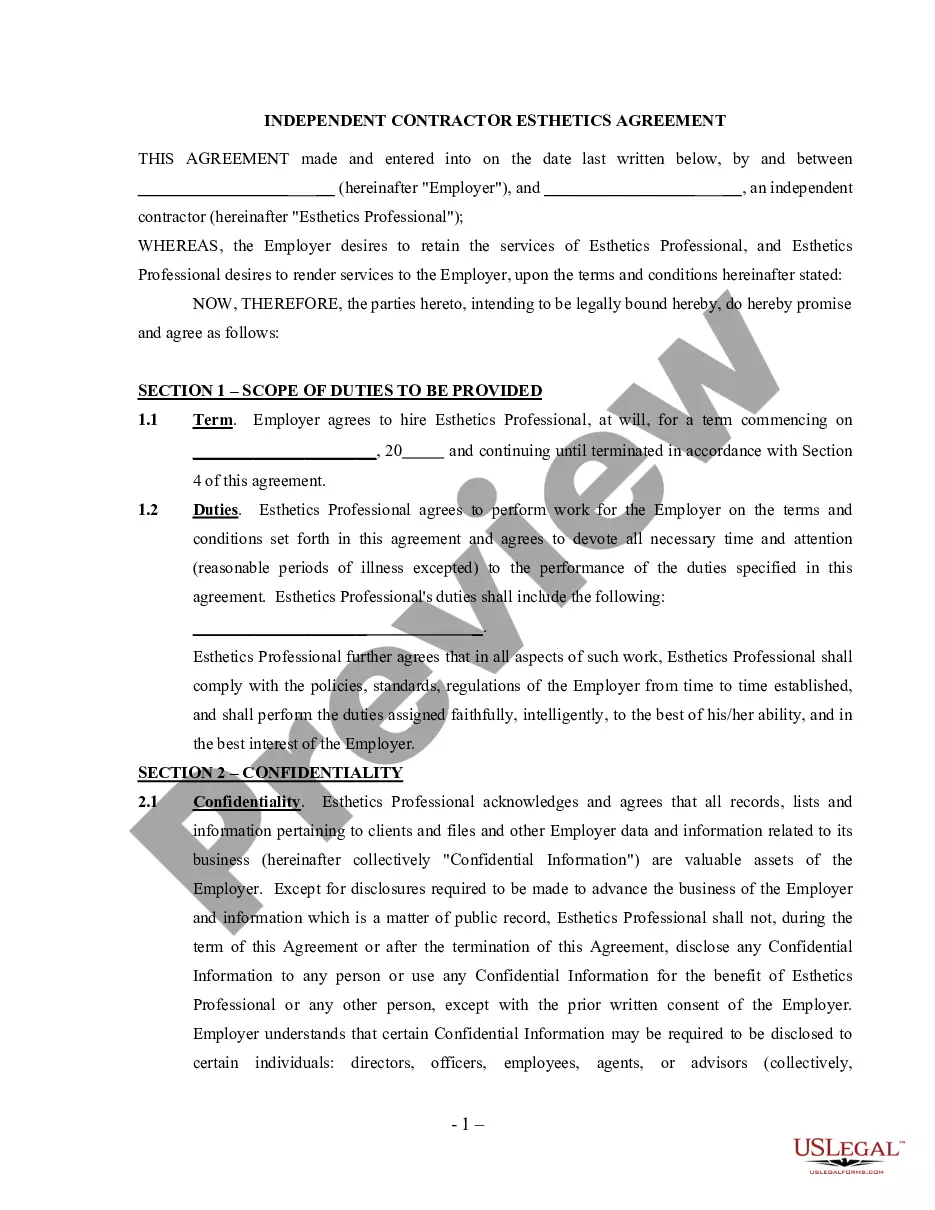
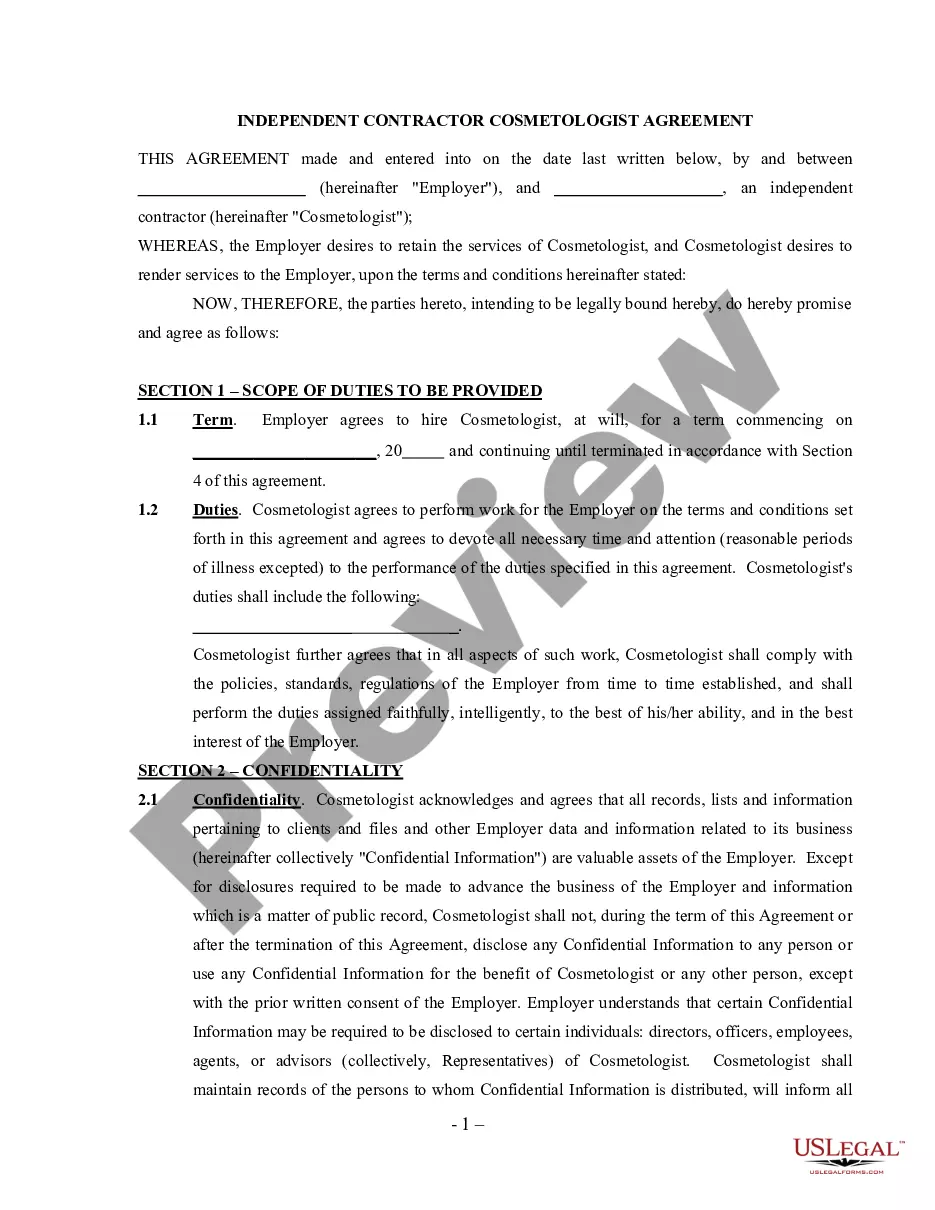
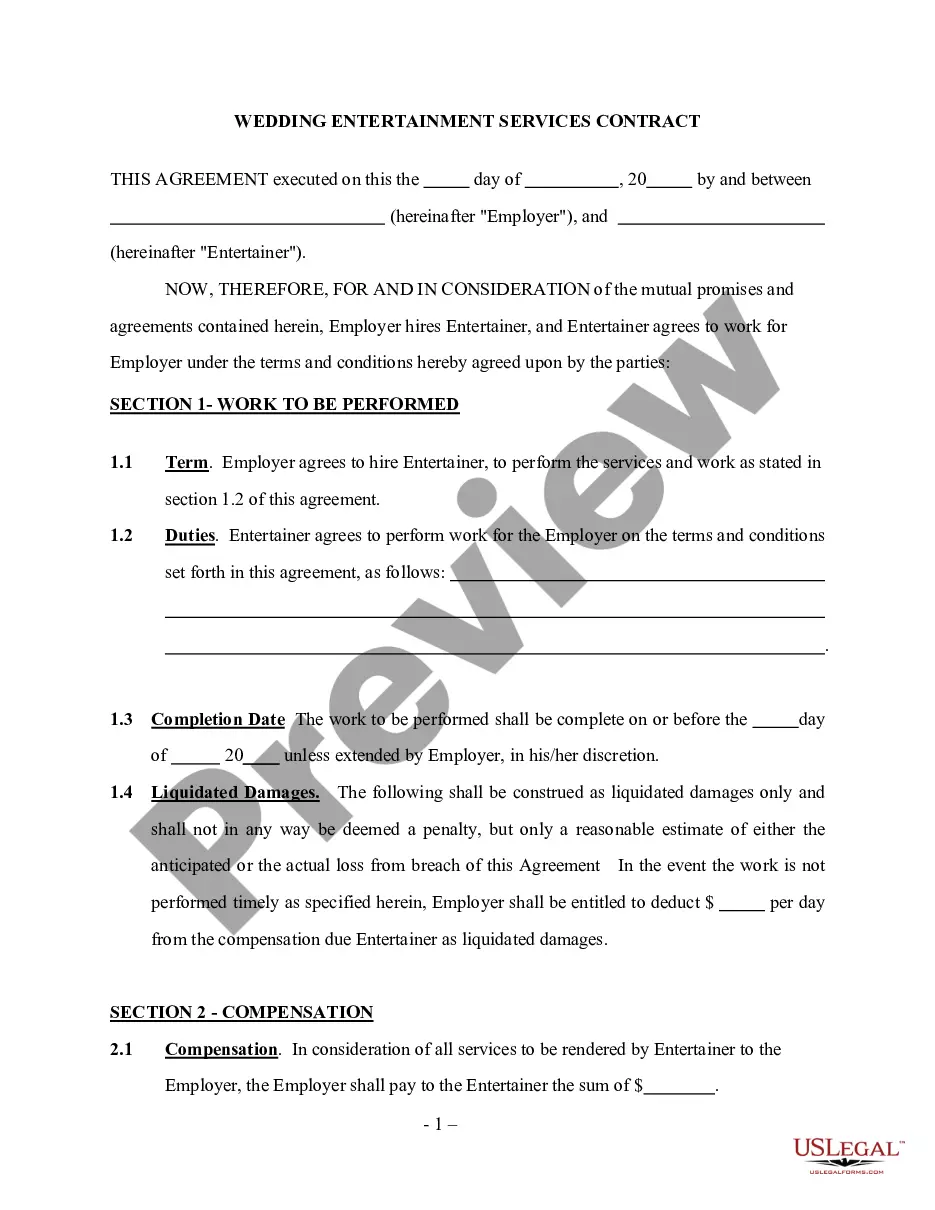
This Services Contract with Hair Stylist for Popular Music Band â Self-Employed is a legal agreement specifically designed for a hair stylist to provide hair styling services to musicians during a tour. This form outlines the responsibilities of the stylist, the payment terms, and the nature of the relationship between the stylist and the band, distinguishing it from other service contracts that may not cater specifically to the entertainment industry or self-employed professionals.
Form components explained
- Parties Involved: Identifies the hair stylist and members of the band.
- Services to be Performed: Specifies the hair styling services during the tour.
- Compensation: Outlines payment terms including upfront and balance payments as well as expense reimbursement.
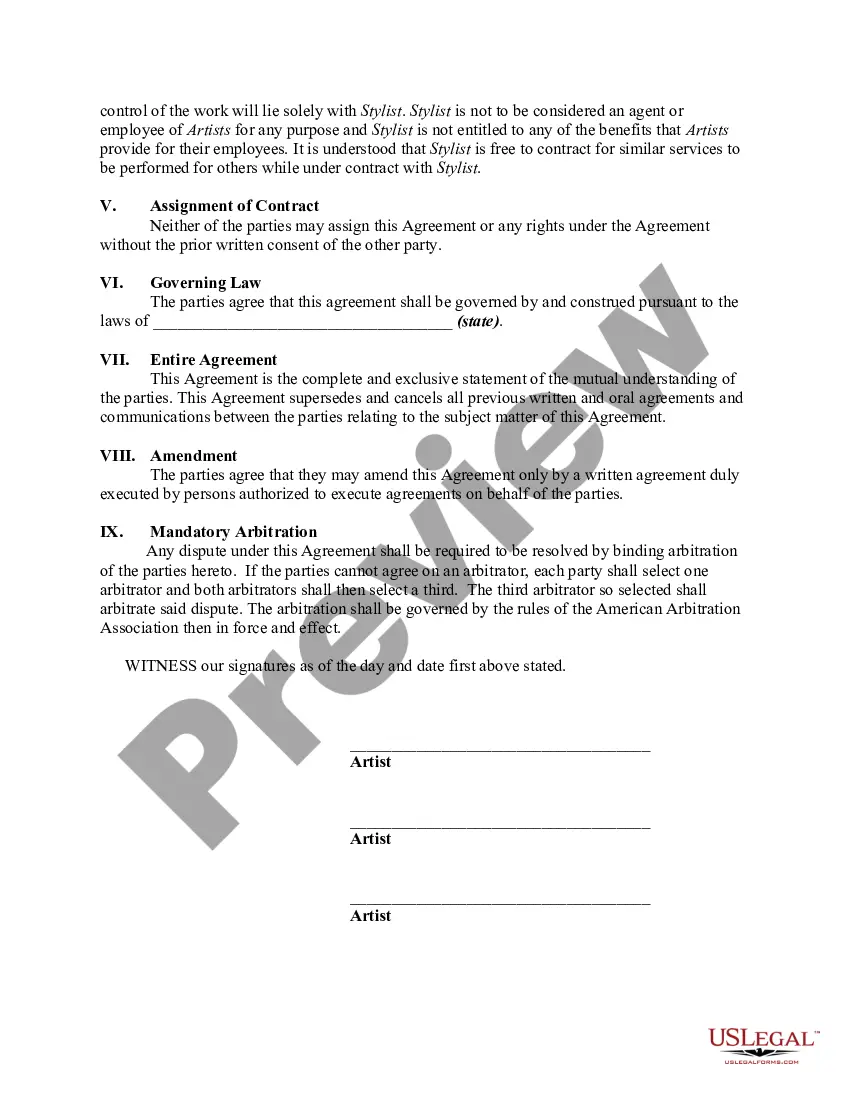
- Independent Contractor Clause: Clarifies that the stylist operates independently and is not an employee of the band.
- Governing Law: Indicates the state law that governs the agreement.
When to use this form
This form is necessary when a musical band hires a hair stylist to style their hair for performances during a tour. It ensures that both parties clearly understand their obligations and the terms of their agreement. Use this contract to formalize the working relationship, protect both parties' interests, and provide clarity in compensation and service expectations.
Who should use this form
- Hair stylists who work independently and are contracted by bands.
- Musicians or bands planning a tour and needing professional hair styling services.
- Self-employed individuals in the entertainment industry looking to establish clear service agreements.
Instructions for completing this form
- Identify the parties: Fill in the name and contact information of the hair stylist and all members of the band.
- Specify the services: Clearly outline the type of hair services to be performed during the tour.
- Enter compensation details: Input the agreed sum for services, including payment terms and reimbursement schedules.
- Set the tour dates: Specify the start and end dates of the tour as well as the locations.
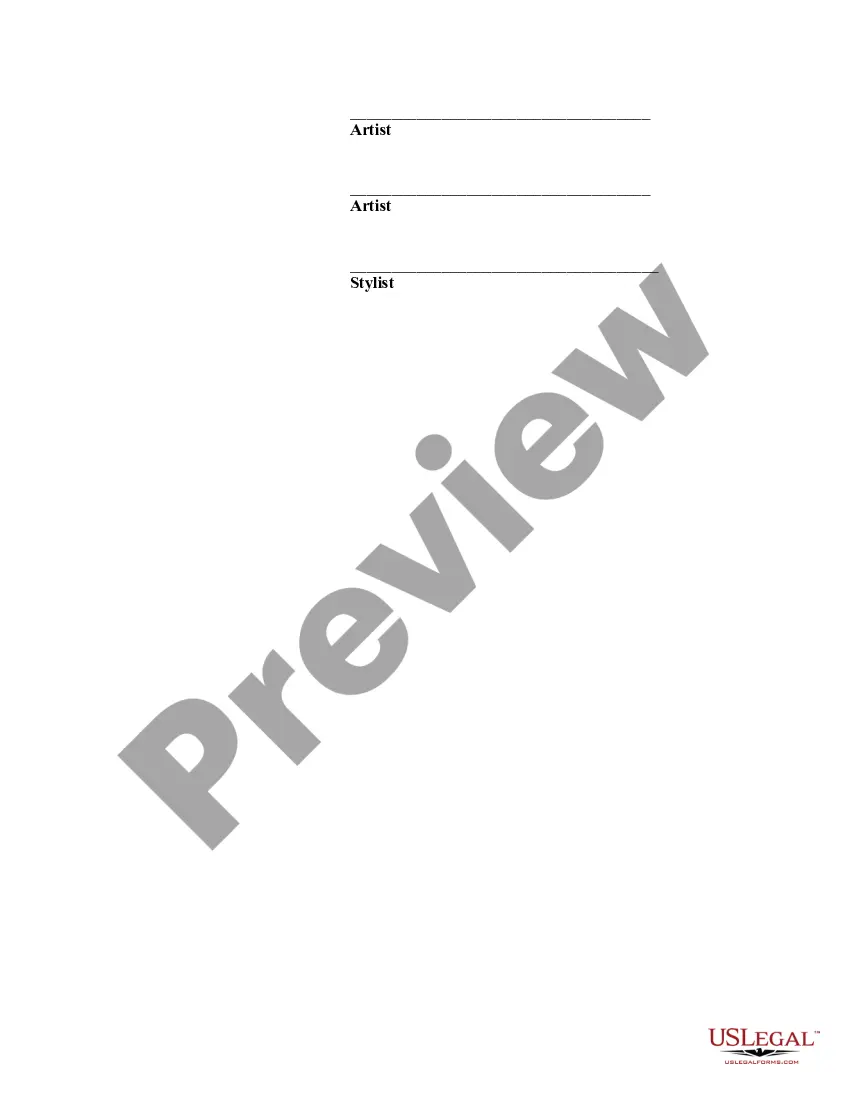
- Include signatures: Ensure that both the stylist and all band members sign the agreement to validate the contract.
Notarization requirements for this form
In most cases, this form does not require notarization. However, some jurisdictions or signing circumstances might. US Legal Forms offers online notarization powered by Notarize, accessible 24/7 for a quick, remote process.
Get your form ready online
Our built-in tools help you complete, sign, share, and store your documents in one place.
Make edits, fill in missing information, and update formatting in US Legal Forms—just like you would in MS Word.
Download a copy, print it, send it by email, or mail it via USPS—whatever works best for your next step.
Sign and collect signatures with our SignNow integration. Send to multiple recipients, set reminders, and more. Go Premium to unlock E-Sign.
If this form requires notarization, complete it online through a secure video call—no need to meet a notary in person or wait for an appointment.
We protect your documents and personal data by following strict security and privacy standards.

Make edits, fill in missing information, and update formatting in US Legal Forms—just like you would in MS Word.

Download a copy, print it, send it by email, or mail it via USPS—whatever works best for your next step.

Sign and collect signatures with our SignNow integration. Send to multiple recipients, set reminders, and more. Go Premium to unlock E-Sign.

If this form requires notarization, complete it online through a secure video call—no need to meet a notary in person or wait for an appointment.

We protect your documents and personal data by following strict security and privacy standards.
Common mistakes
- Failing to include all members of the band in the contract.
- Not specifying the services clearly, leading to misunderstandings.
- Omitting the reimbursement terms for expenses.
- Using unclear or vague language in compensation and payment terms.
Why complete this form online
- Convenience: Download the form at your convenience and fill it out at your own pace.
- Editability: Easily customize sections to fit your specific needs.
- Reliability: Ensure that the form is created by licensed attorneys, providing peace of mind.
Legal use & context
- This contract is legally binding when signed by both parties.
- It protects the rights and responsibilities of both the hair stylist and the band members.
- Absence of a signed contract may lead to disputes about payment and services provided.
What to keep in mind
- The Services Contract with Hair Stylist provides a clear framework for hair styling services during a band tour.
- Essential elements include detailed services, compensation terms, and dispute resolution procedures.
- This form is suitable for both self-employed stylists and music bands, ensuring legal clarity and protection for both parties.
Looking for another form?





Form popularity
FAQ
If you run your own hair salon, you already know you're self-employed. But if you're working at someone else's establishment, your status as either an employee or an independent contractor may not be so clear.If you're self-employed you'll need to pay self-employment tax, and you might need to pay taxes quarterly.
According to the North American Industry Classification System better known as the NAICS, beauty salons fall into category 8121 Personal Care Services.
As a hairstylist, you can work as a salon employee or a freelancer running your own business. If you're a small-business owner or freelancer, you report your business income and expenses on Schedule C. You then report the total on your 1040, along with any other income.
Under the new test for independent contractor vs employee status in California, it is illegal to classify a barber or hair stylist as an independent contractor unless the salon can prove that: (1) the hair stylist is free the hair salon's control; (2) the job of cutting or styling hair falls outside the salon's usual
As an independent beauty professional, you are subject to both self-employment tax and income tax. Use Form Schedule SE to estimate the amount owned for self-employment tax, report your income and losses on Form 1040 Schedule C, and then complete Form 1049-ES to pay the estimated tax.
Locate all of your annual tax returns. Tax returns are your first go-to when it comes to income proof. Bank statements indicate personal cash flow. Make use of online accounting services that track payments and expenditures. Maintain profit and loss statements.
Pay stubs. If you work a full-time or part-time job where you earn a regular paycheck, you'll have access to a pay stub. Tax returns. Bank statements. Letter from employer. Social security documents. Disability insurance. Pension. Court-ordered payments.