Discretionary Distribution Trust for the Benefit of Trustor's Children with Discretionary Powers over Accumulation and Distribution of Principal and Income Separate Trust for each Beneficiary
Understanding this form
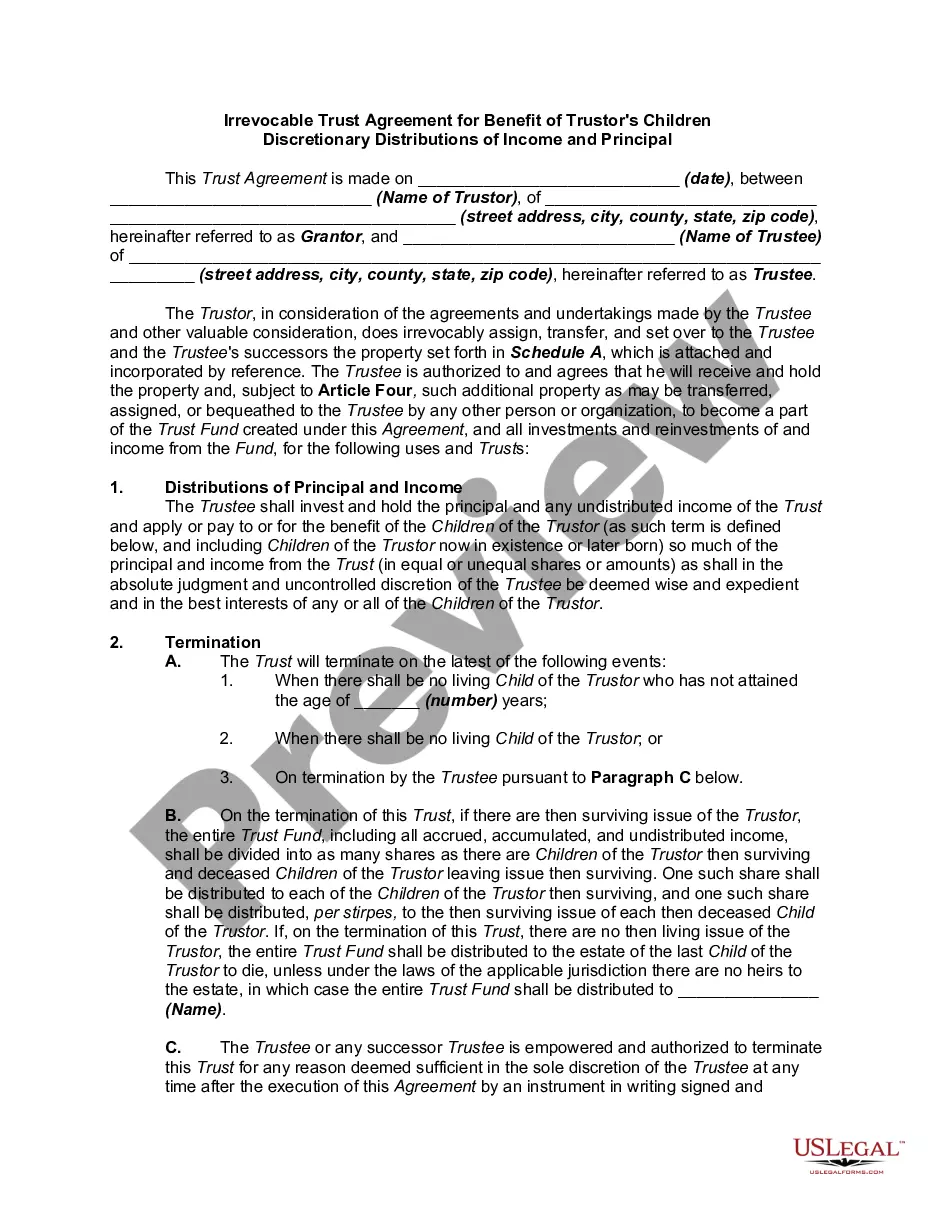
The Discretionary Distribution Trust for the Benefit of Trustor's Children is a specialized legal document that establishes a discretionary trust, designed to financially support the children of the trustor. Unlike fixed trusts, this form allows the trustee discretion over how and when to distribute both income and principal to the beneficiaries. This flexibility accommodates changing circumstances and aims to provide financial security to the children while possibly safeguarding the assets from the beneficiaries' creditors or poor financial decisions.
Form components explained
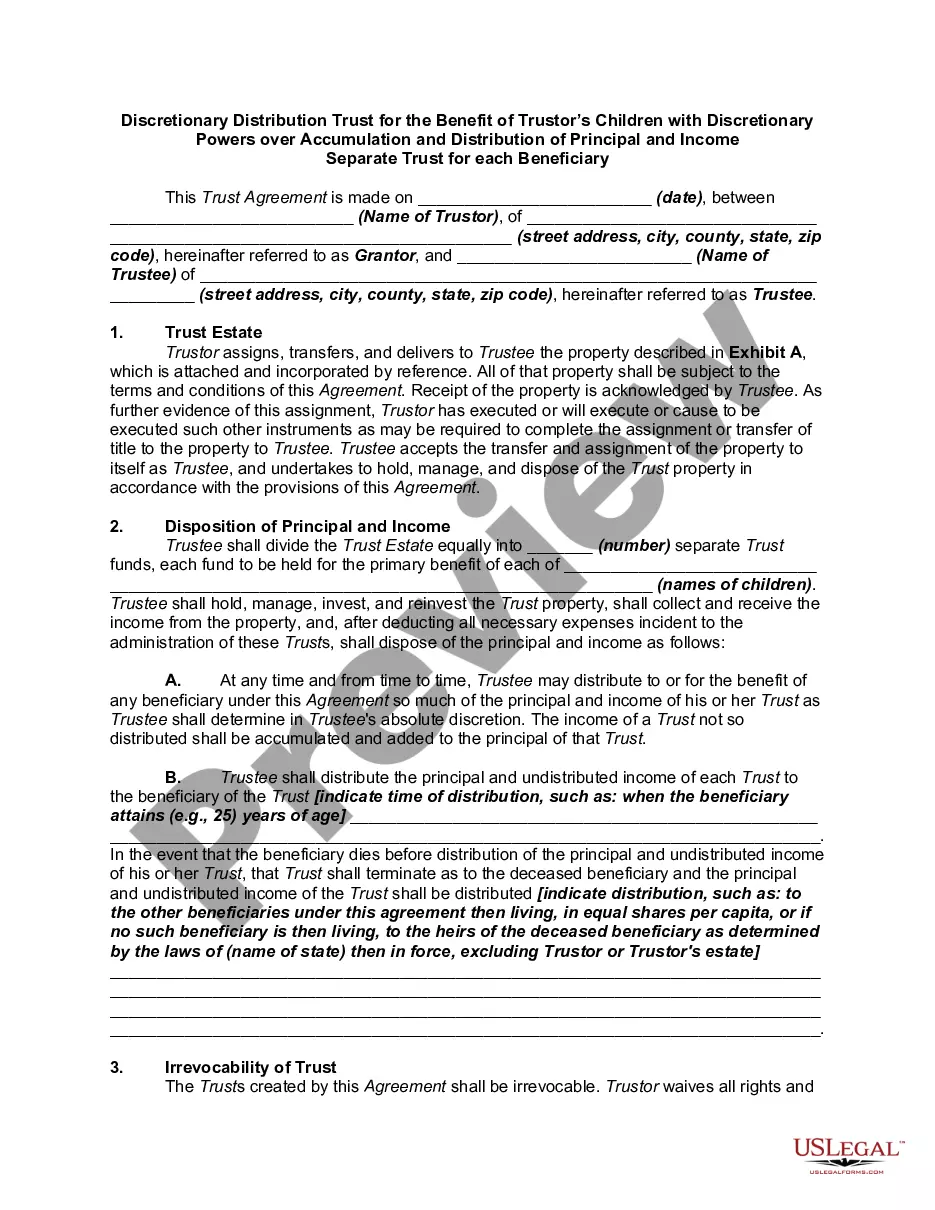
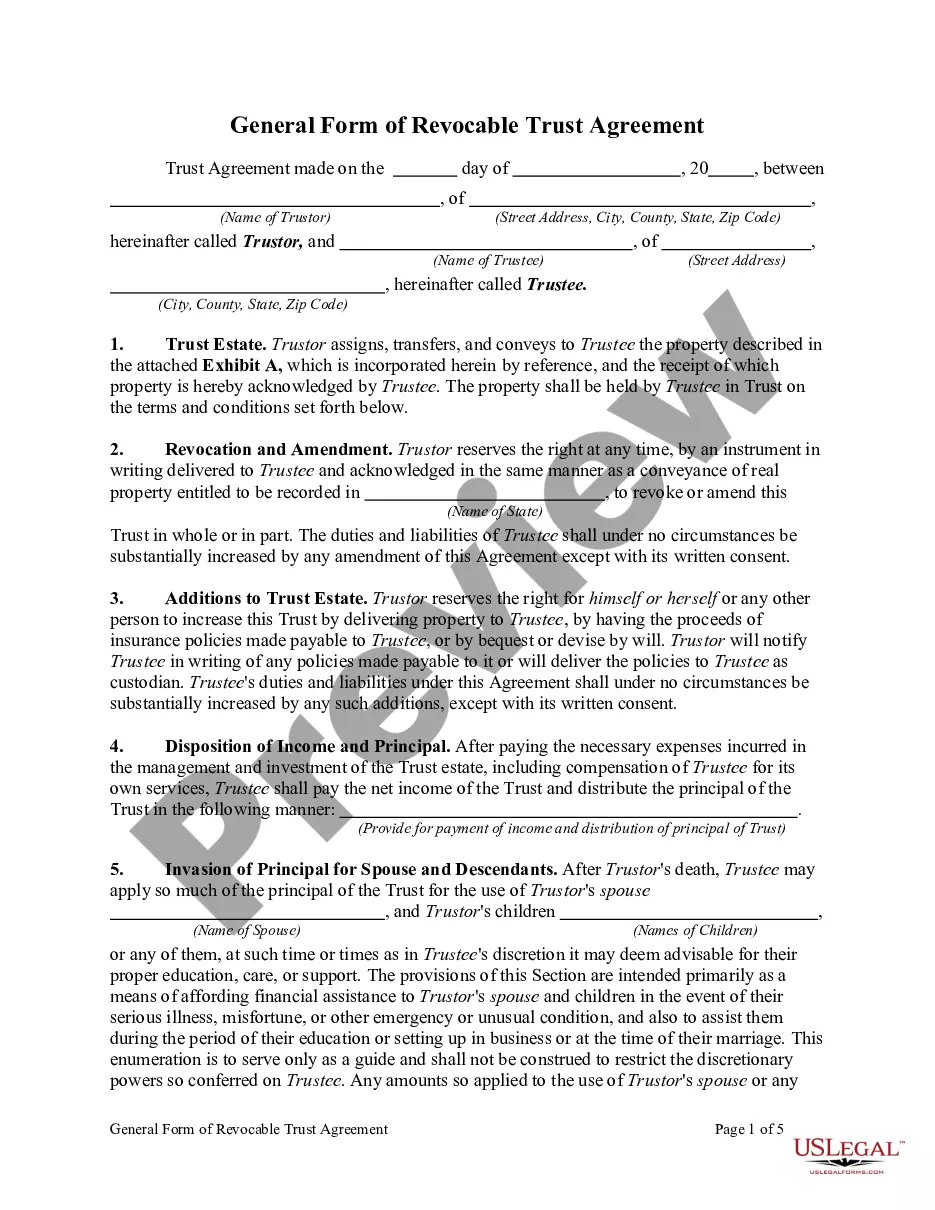
- Identification of the trustor (grantor) and trustee, including their names and addresses.
- Specification of the trust estate, detailing the property designated for the trust.
- Provisions for the management and distribution of principal and income for each beneficiary.
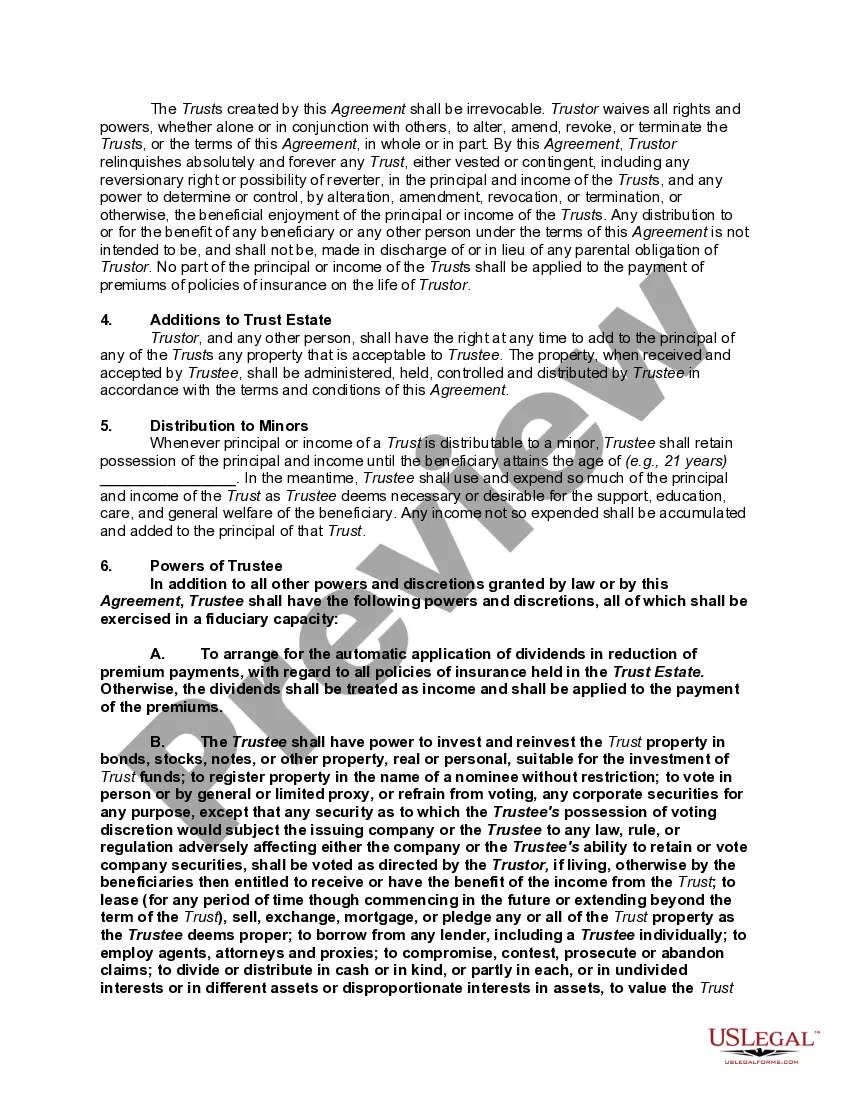
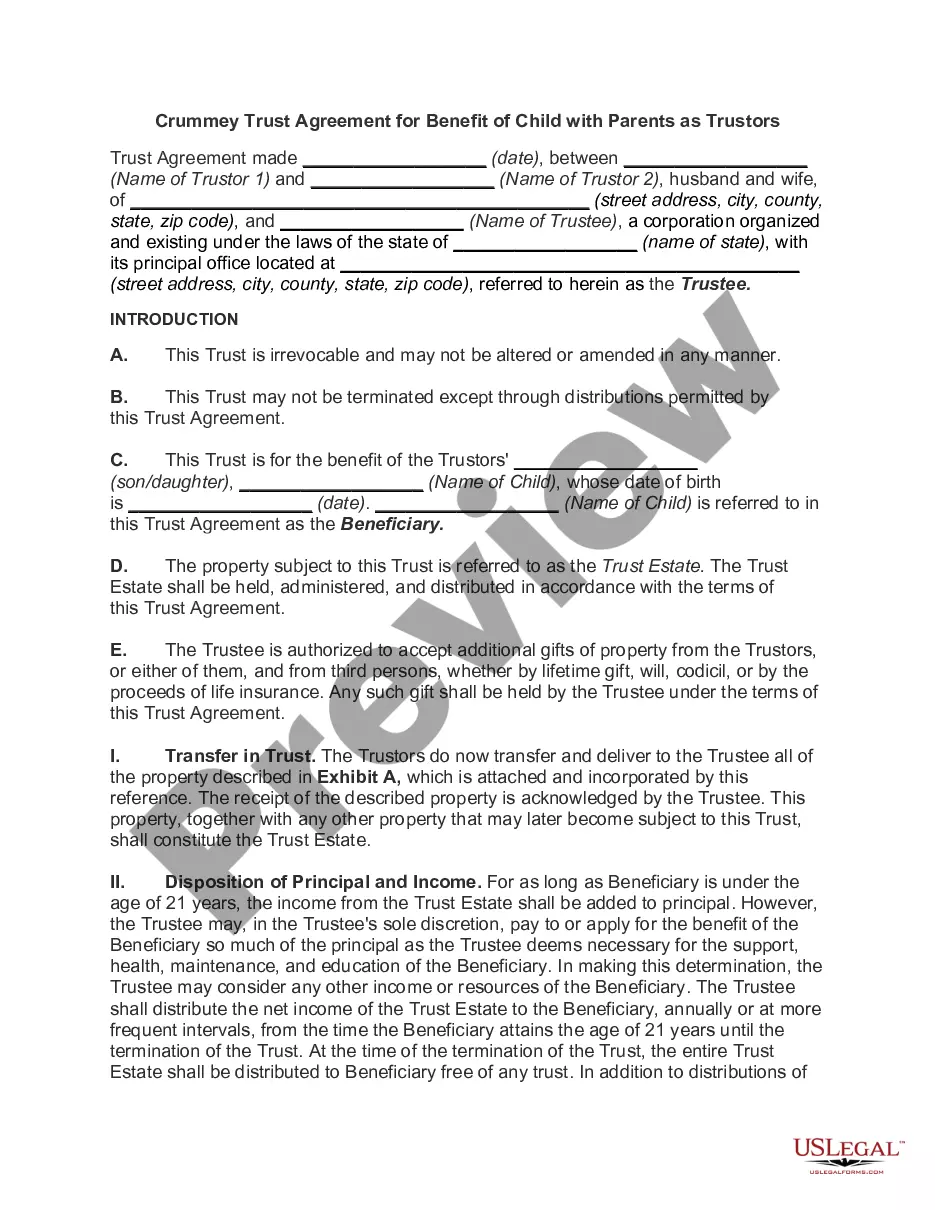
- Clauses addressing the irrevocability of the trust, meaning it cannot be altered or terminated unilaterally.
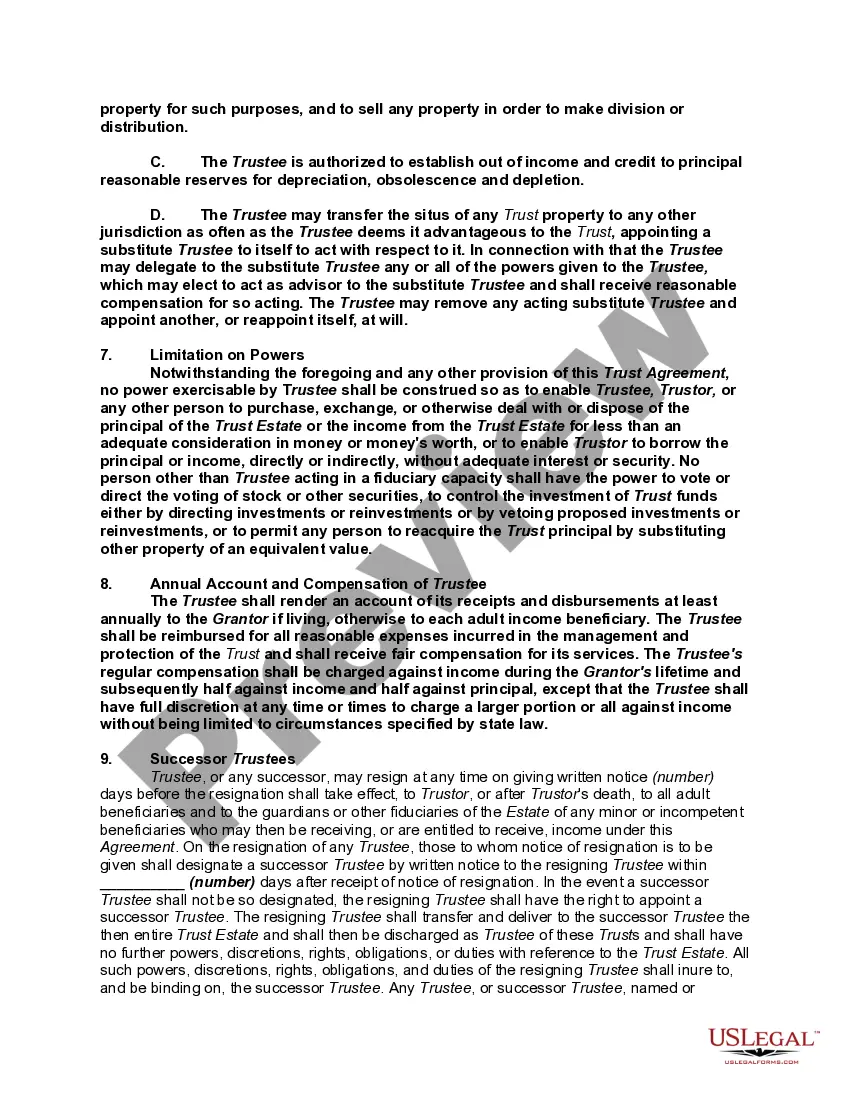
- Authorization for the trustee to manage and invest trust assets with specific powers outlined.
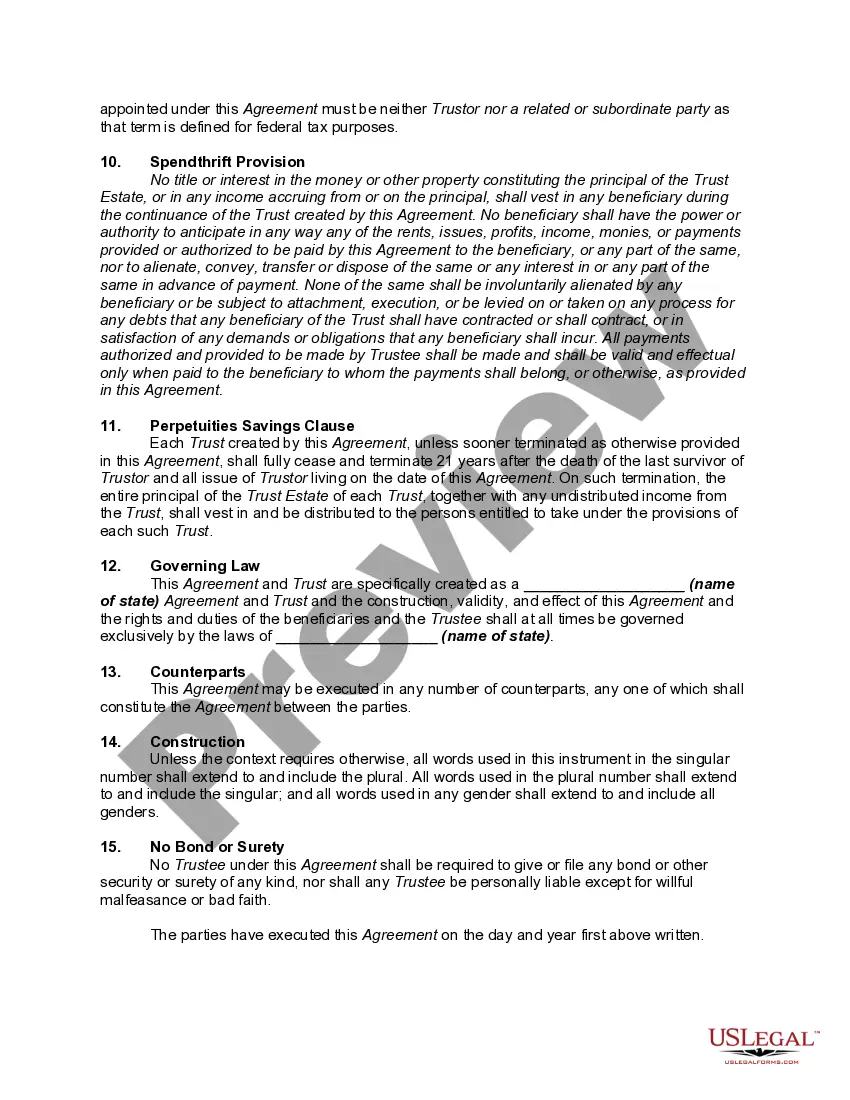
- Spendthrift provisions that protect trust assets from the beneficiaries' creditors.



Situations where this form applies
This form is useful when a trustor wishes to provide financial support to their children while maintaining control over the distribution of trust assets. It is ideal for families looking to manage wealth across generations, particularly in situations where beneficiaries may not be financially responsible or where it is important to retain discretion regarding distributions. Additionally, this form can help protect assets from potential financial mismanagement or claims from creditors.
Who needs this form
- Individuals who want to establish a trust for the benefit of their children.
- Parents with concerns about the financial responsibility or maturity of their children.
- Individuals seeking to protect family assets from creditors or irresponsible spending.
- Those who wish to have flexibility in deciding how and when their children receive trust assets.
Steps to complete this form
- Identify and enter the names and addresses of the trustor and trustee.
- Specify the date the trust agreement is established.
- Detail the property included in the trust estate as referenced in Exhibit A.
- Outline the rules for distributing income and principal to beneficiaries, including any age milestones for distributions.
- Sign the agreement in the presence of a notary public, if required.
Notarization requirements for this form
Yes, this form must be notarized to be legally valid. Using US Legal Forms' integrated online notarization services makes the process easy and secure, including 24/7 availability for video calls and ensuring legal equivalence without the need for travel.
Get your form ready online
Our built-in tools help you complete, sign, share, and store your documents in one place.
Make edits, fill in missing information, and update formatting in US Legal Forms—just like you would in MS Word.
Download a copy, print it, send it by email, or mail it via USPS—whatever works best for your next step.
Sign and collect signatures with our SignNow integration. Send to multiple recipients, set reminders, and more. Go Premium to unlock E-Sign.
If this form requires notarization, complete it online through a secure video call—no need to meet a notary in person or wait for an appointment.
We protect your documents and personal data by following strict security and privacy standards.

Make edits, fill in missing information, and update formatting in US Legal Forms—just like you would in MS Word.

Download a copy, print it, send it by email, or mail it via USPS—whatever works best for your next step.

Sign and collect signatures with our SignNow integration. Send to multiple recipients, set reminders, and more. Go Premium to unlock E-Sign.

If this form requires notarization, complete it online through a secure video call—no need to meet a notary in person or wait for an appointment.

We protect your documents and personal data by following strict security and privacy standards.
Typical mistakes to avoid
- Failing to clearly identify the trustor and trustee can lead to disputes or confusion.
- Not specifying the property that constitutes the trust estate can result in complications.
- Neglecting to consider the age and maturity of beneficiaries when setting distribution milestones.
- Overlooking state-specific legal requirements, which could invalidate the trust.
Why use this form online
- Convenience of accessing and completing the document from anywhere at any time.
- Editability allows for customizations according to specific needs and circumstances.
- Reliability in that the form is drafted by licensed attorneys to ensure it meets legal standards.
Looking for another form?




Form popularity
FAQ
Distribute trust assets outright The grantor can opt to have the beneficiaries receive trust property directly without any restrictions. The trustee can write the beneficiary a check, give them cash, and transfer real estate by drawing up a new deed or selling the house and giving them the proceeds.
Select a custodian and a trustee. Decide when and how you want the child to receive the funds from the trust. Start drafting your trust documents. Consult with a trust fund attorney.
As of 2019, attorney fees can range from $1,000 to $2,500 to set up a trust, depending upon the complexity of the document and where you live. You can also hire an online service provider to set up your trust. As of 2019, you can expect to pay about $300 for an online trust.
What rights do the beneficiaries have? The beneficiaries under a discretionary trust have no 'proprietary interest' in the trust fund unless the trustees decide on a distribution. This means they do not own the beneficial interest under the trust merely a hope that they will benefit. They may never do so.
Discretionary beneficiaries are individuals or entities that a grantor names in a trust, life insurance policy, or retirement plan who will only receive their distributions at a time that has been deemed as appropriate, such as if they pass certain milestones in age or education.
Locate the deed that's in trust. Use the proper deed. Check with your title insurance company and lender. Prepare a new deed. Sign in the presence of a notary. Record the deed in the county clerk's office.
When you're ready to transfer trust real estate to the beneficiary who is named in the trust document to receive it, you'll need to prepare, sign, and record a deed. That's the document that transfers title to the property from you, the trustee, to the new owner.
Most Trusts take 12 months to 18 months to settle and distribute assets to the beneficiaries and heirs.
Distribution of trust funds after death The Trustee simply transfers all assets to the beneficiary. Distribution is also fairly easy if the trust document identifies all assets and specific amounts to be paid to each beneficiary.