Irrevocable Trust Agreement for Benefit of Trustor's Children and Grandchildren
What this document covers
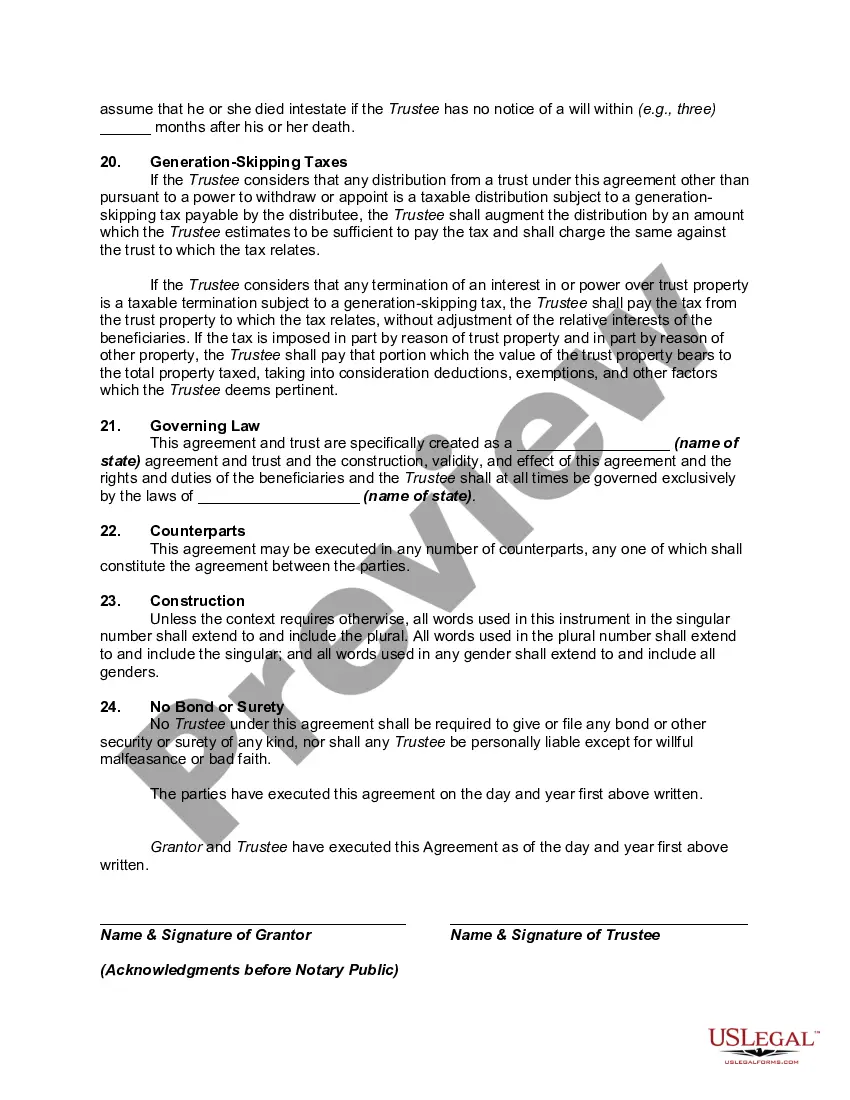
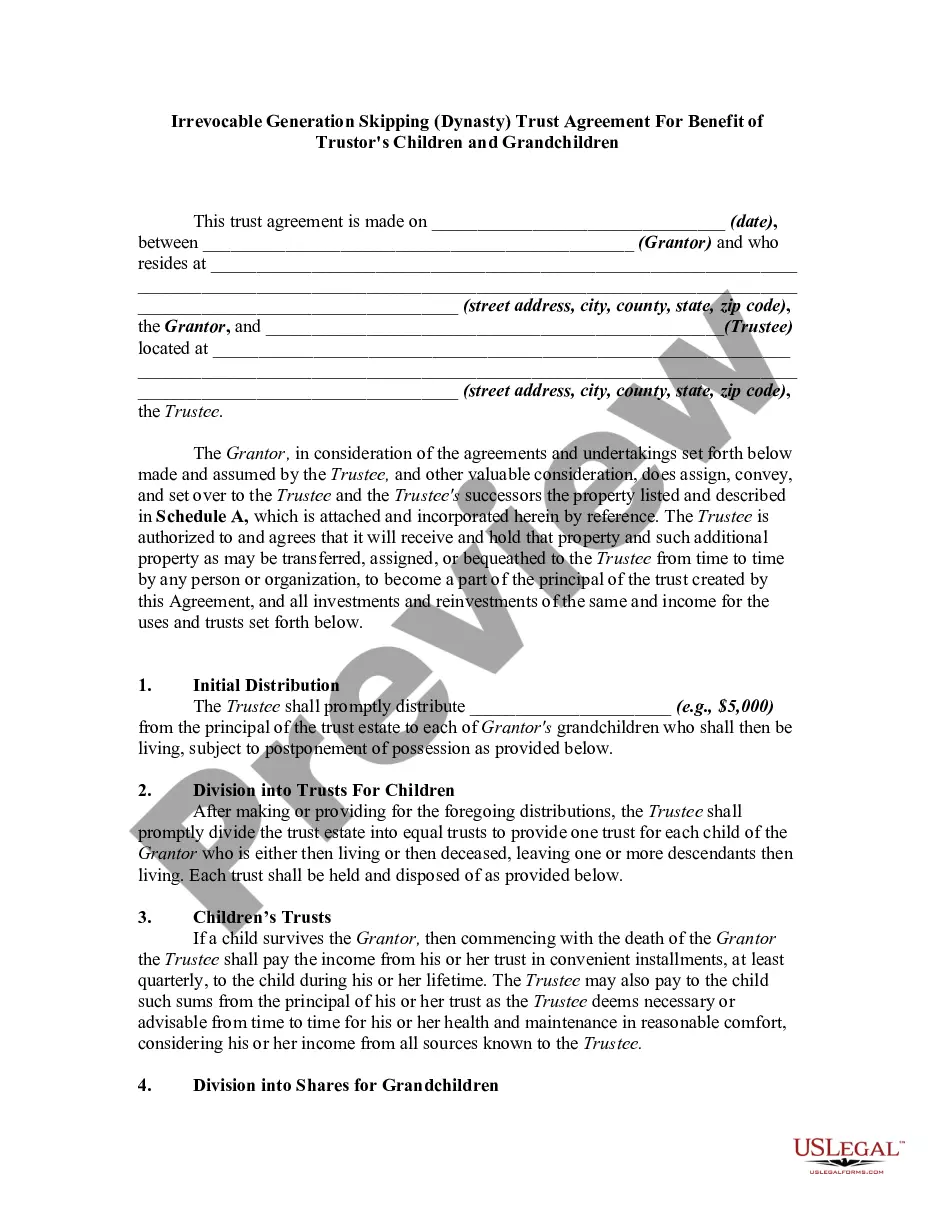
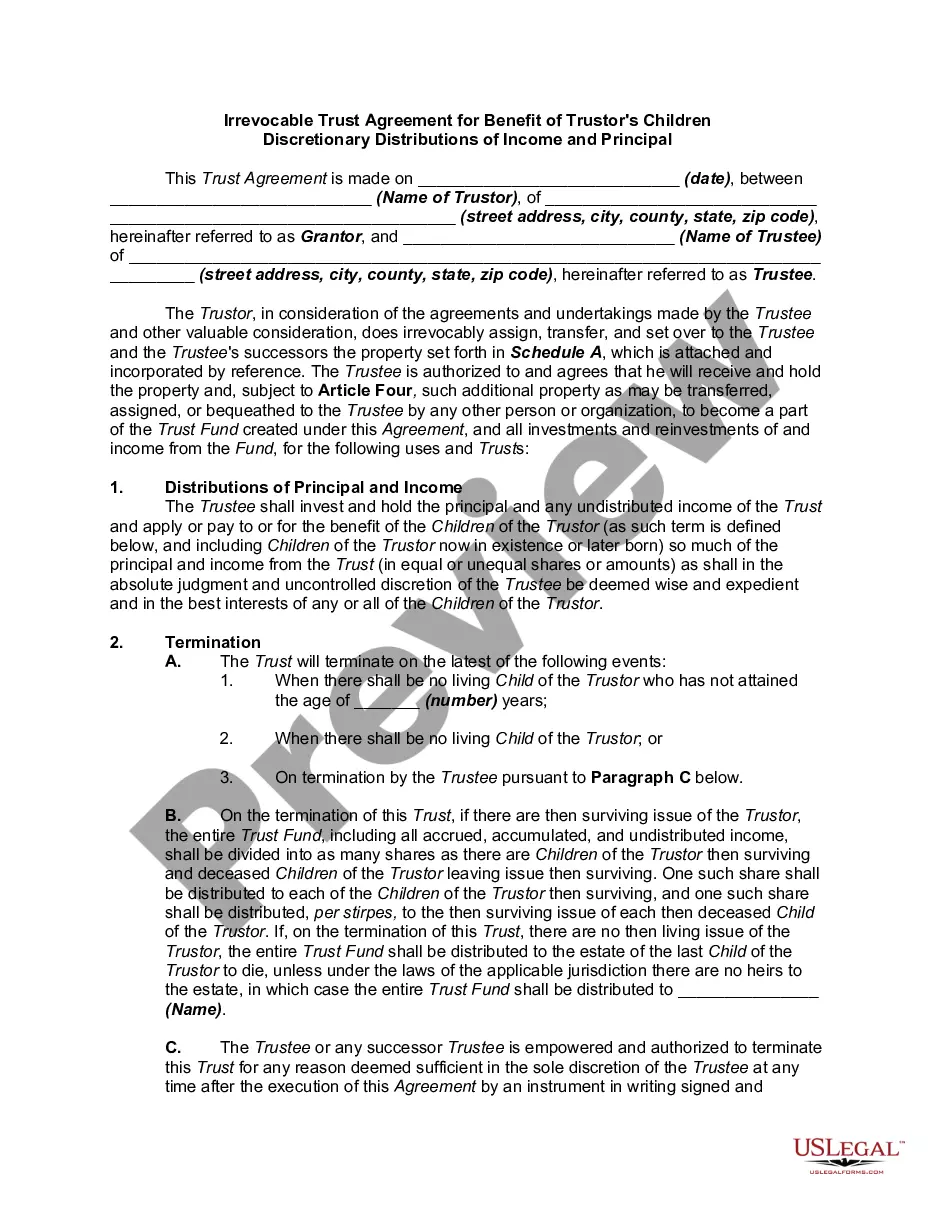
The Irrevocable Trust Agreement for Benefit of Trustor's Children and Grandchildren is a legal document that establishes a trust to manage and distribute assets for the benefit of the grantor's descendants. Unlike revocable trusts, once assets are placed in an irrevocable trust, the grantor cannot alter or revoke the agreement. This form is specifically designed to detail how the trust assets are managed and how and when they are distributed to the grantor's children and grandchildren.
Main sections of this form
- Grantor and Trustee Information: Names and addresses of both the grantor and the trustee are required.
- Trust Property: Details about the property included in the trust are addressed in Schedule A.
- Initial Distribution: Specifies amounts to be distributed to grandchildren from the trust principal.
- Trust Division: Mechanism for dividing assets among living children and their descendants.
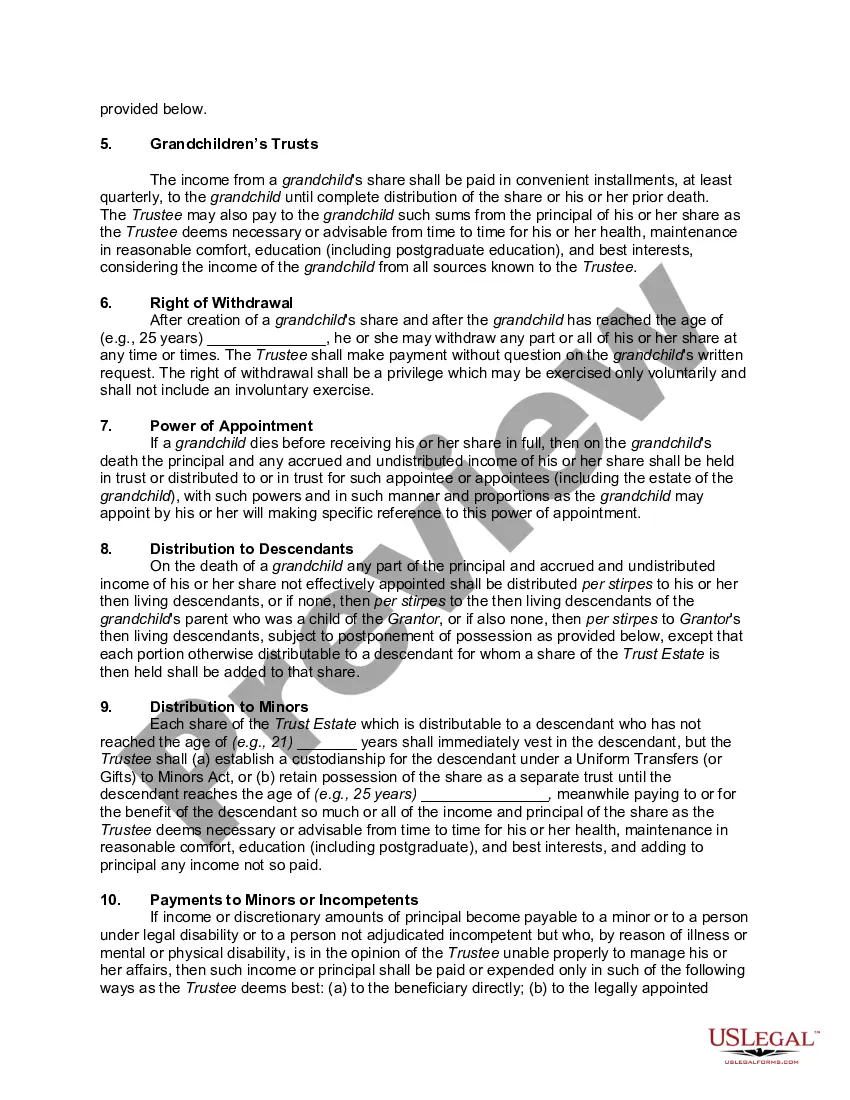
- Grandchildren's Trusts: Provisions outlining how income and principal are distributed to grandchildren.
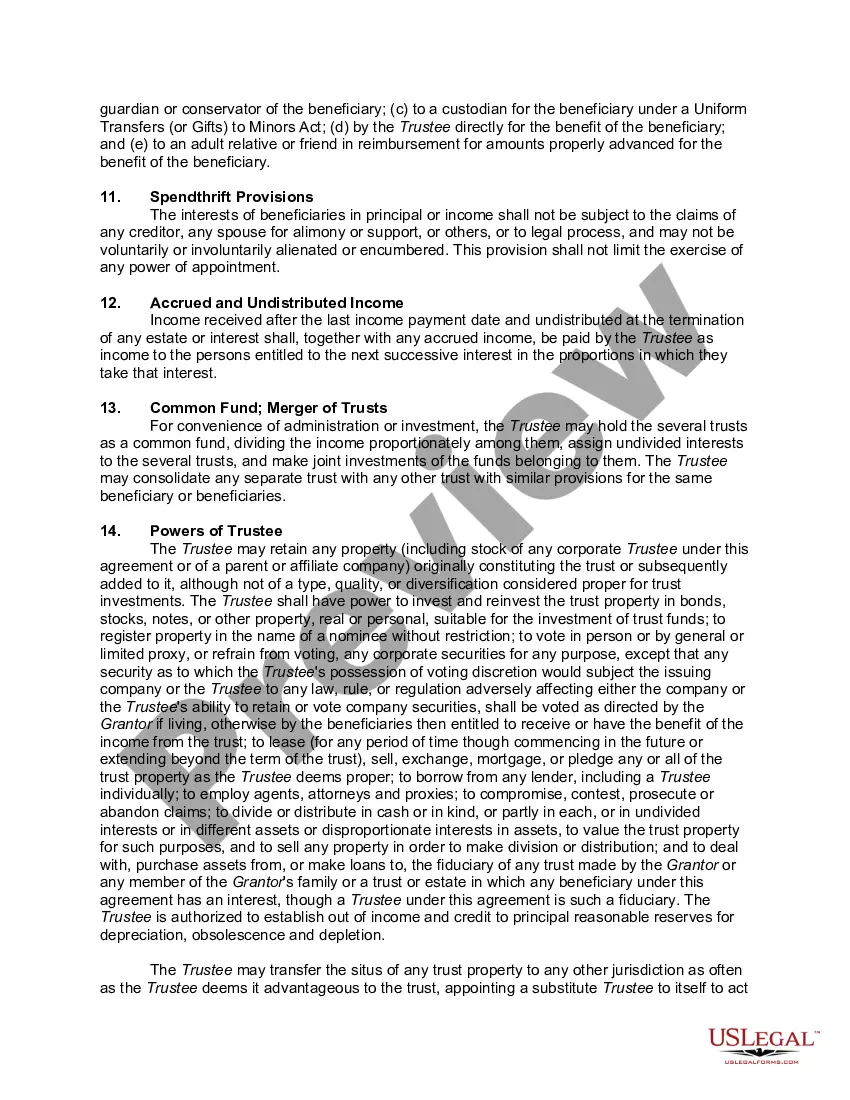
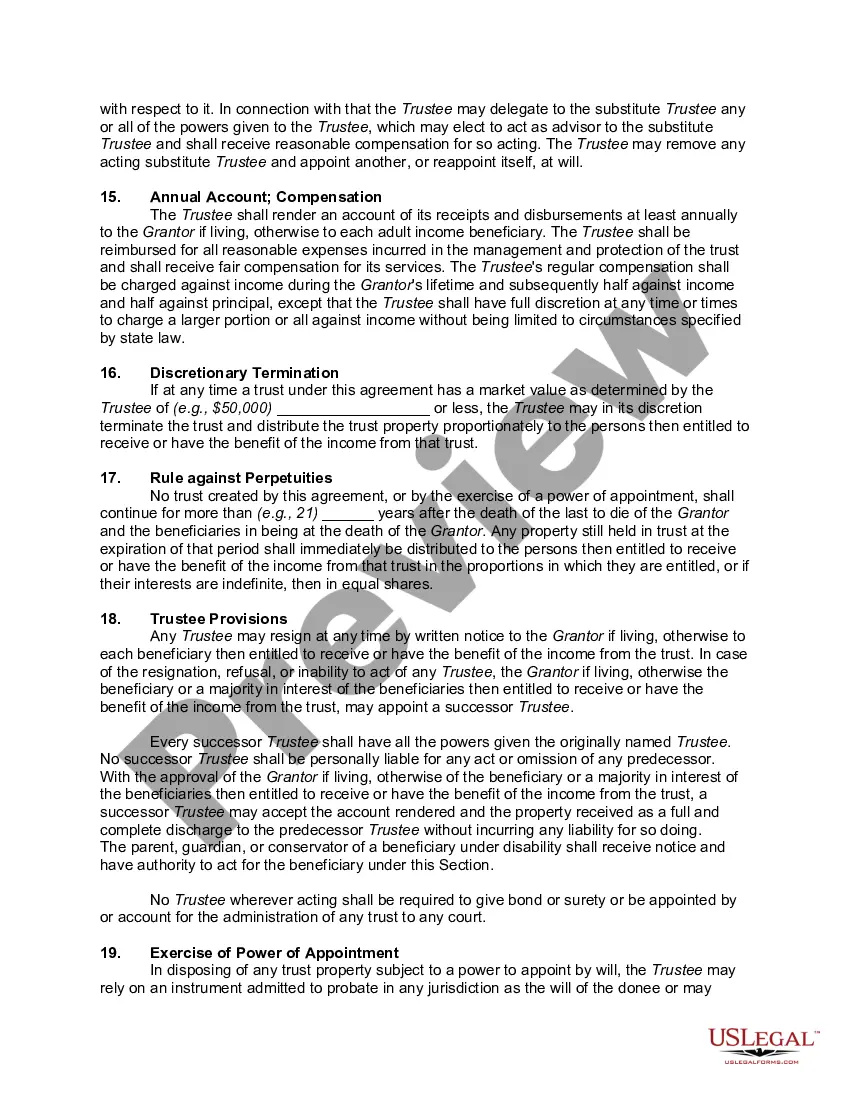
- Trustee Powers: Enumerates the powers granted to the trustee for managing trust assets.




When to use this form
This form is useful when a grantor wishes to ensure that their assets are managed and distributed according to their specific wishes for their children and grandchildren. It is particularly applicable when the grantor wants to prioritize their descendants' financial security and potentially minimize estate taxes. Situations may include establishing a long-term plan for family wealth or setting aside funds for education and health care needs of grandchildren.
Intended users of this form
- Individuals with substantial assets who wish to provide for their children and grandchildren after their death.
- Parents who want to protect their children's inheritance from creditors or marital claims.
- Anyone looking to minimize estate taxes and provide controlled access to funds for beneficiaries.
Instructions for completing this form
- Identify the parties involved, including the grantor and trustee.
- List the property being transferred to the trust in Schedule A.
- Specify the amounts to be initially distributed to each grandchild.
- Detail the terms for distributing trust assets among children and grandchildren.
- Sign the form in the presence of a notary public if required by local laws.
Is notarization required?
This form needs to be notarized to ensure legal validity. US Legal Forms provides secure online notarization powered by Notarize, allowing you to complete the process through a verified video call, available anytime.
Get your form ready online
Our built-in tools help you complete, sign, share, and store your documents in one place.
Make edits, fill in missing information, and update formatting in US Legal Forms—just like you would in MS Word.
Download a copy, print it, send it by email, or mail it via USPS—whatever works best for your next step.
Sign and collect signatures with our SignNow integration. Send to multiple recipients, set reminders, and more. Go Premium to unlock E-Sign.
If this form requires notarization, complete it online through a secure video call—no need to meet a notary in person or wait for an appointment.
We protect your documents and personal data by following strict security and privacy standards.

Make edits, fill in missing information, and update formatting in US Legal Forms—just like you would in MS Word.

Download a copy, print it, send it by email, or mail it via USPS—whatever works best for your next step.

Sign and collect signatures with our SignNow integration. Send to multiple recipients, set reminders, and more. Go Premium to unlock E-Sign.

If this form requires notarization, complete it online through a secure video call—no need to meet a notary in person or wait for an appointment.

We protect your documents and personal data by following strict security and privacy standards.
Typical mistakes to avoid
- Failing to accurately identify all beneficiaries.
- Not specifying the assets included in the trust clearly.
- Neglecting to seek legal advice to ensure compliance with state laws.
Benefits of using this form online
- Convenience of completing the form at your own pace.
- Editability allows for personalization of terms and conditions.
- Access to templates drafted by licensed attorneys, ensuring legal soundness.
Main things to remember
- The irrevocable trust ensures your assets are protected and managed for future generations.
- Properly completing the form guarantees that your wishes are executed effectively.
- Consider consulting with a legal professional for guidance specific to your situation and state laws.
Looking for another form?


Form popularity
FAQ
A grandparent can open a savings account for their grandchild in the child's name as long as they have documentation, such as the child's birth certificate. There are lots of accounts specifically for children but the most important point is the rate paid, rather than any gimmicks.
A trust is a legal entity that you transfer ownership of your assets to, perhaps in order to decrease the value of your estate or to simplify passing on assets to your intended beneficiaries after you die. An estate planning attorney may charge at least $1,000 to create a trust for you.
Distribute trust assets outright The grantor can opt to have the beneficiaries receive trust property directly without any restrictions. The trustee can write the beneficiary a check, give them cash, and transfer real estate by drawing up a new deed or selling the house and giving them the proceeds.
When you're ready to transfer trust real estate to the beneficiary who is named in the trust document to receive it, you'll need to prepare, sign, and record a deed. That's the document that transfers title to the property from you, the trustee, to the new owner.
Set guidelines on how you'd like the money to be used. Release funds at key milestoneslike graduating college, getting married, or turning 35over your grandchild's lifetime, rather than all at once. Help protect the inheritance from potential depletion due to lack of financial literacy or other financial challenges.
Determine the purpose of the trust and who the beneficiaries will be. Determine how the trust will be funded. Determine who will manage the trust. Sign a trust deed. Transfer assets into the trust.
The grantor (as an individual or couple) transfers their assets to an irrevocable trust. However, unlike other irrevocable trusts, the grantor can be the income beneficiary.The grantor can receive income from the trust to the maximum amount allowed by Medicaid.
Discretionary trust the trustees have absolute power to decide how the assets in the trust are distributed. You could set up this kind of trust for your grandchildren and leave it to the trustees (who could be the grandchildren's parents) to decide how to divide the income and capital between the grandchildren.
Set guidelines on how you'd like the money to be used. Release funds at key milestoneslike graduating college, getting married, or turning 35over your grandchild's lifetime, rather than all at once. Help protect the inheritance from potential depletion due to lack of financial literacy or other financial challenges.