Complaint or Petition to Foreclose on Mechanic's Lien
Understanding this form
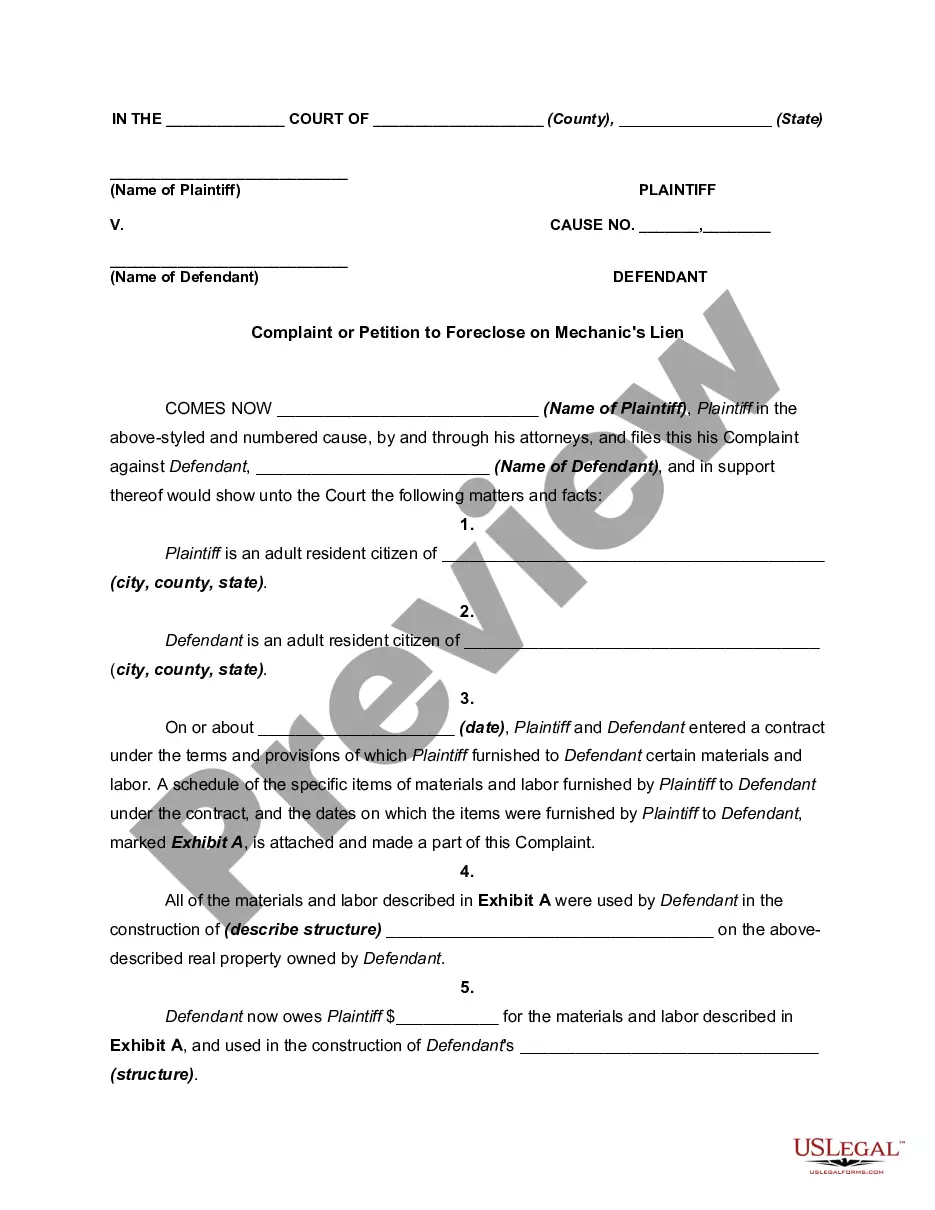
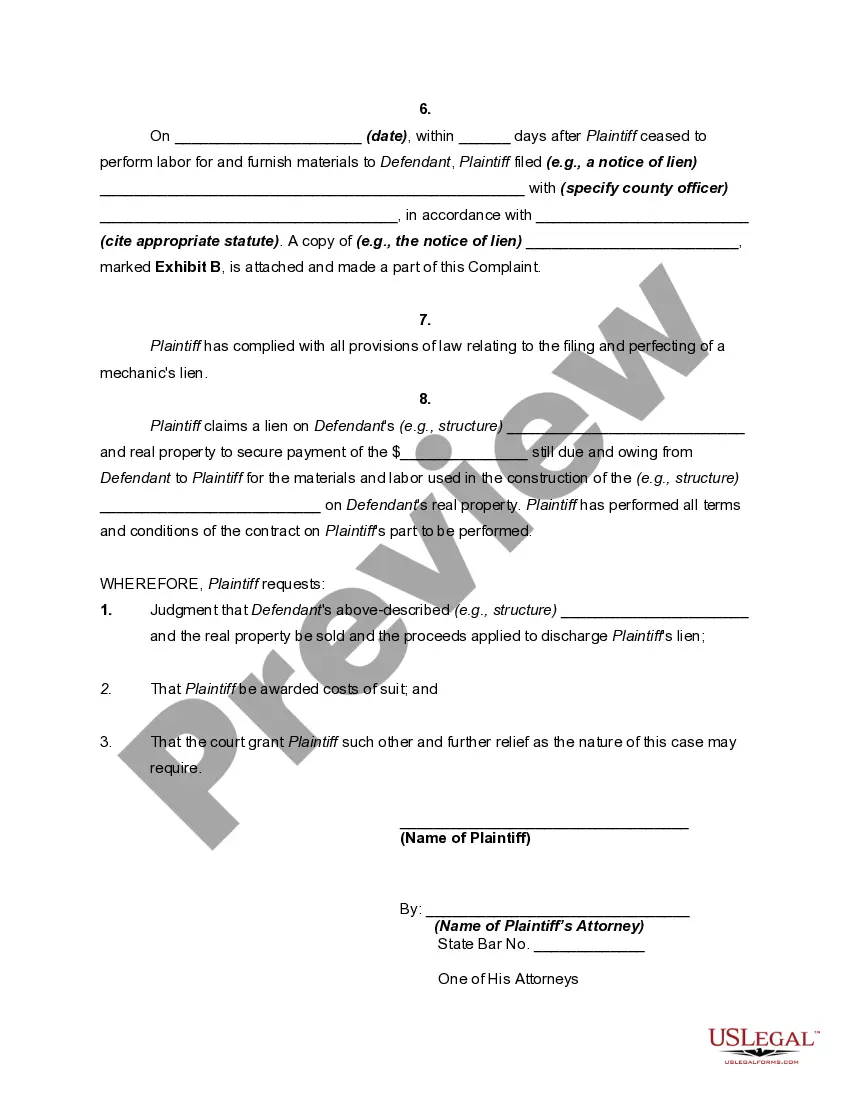
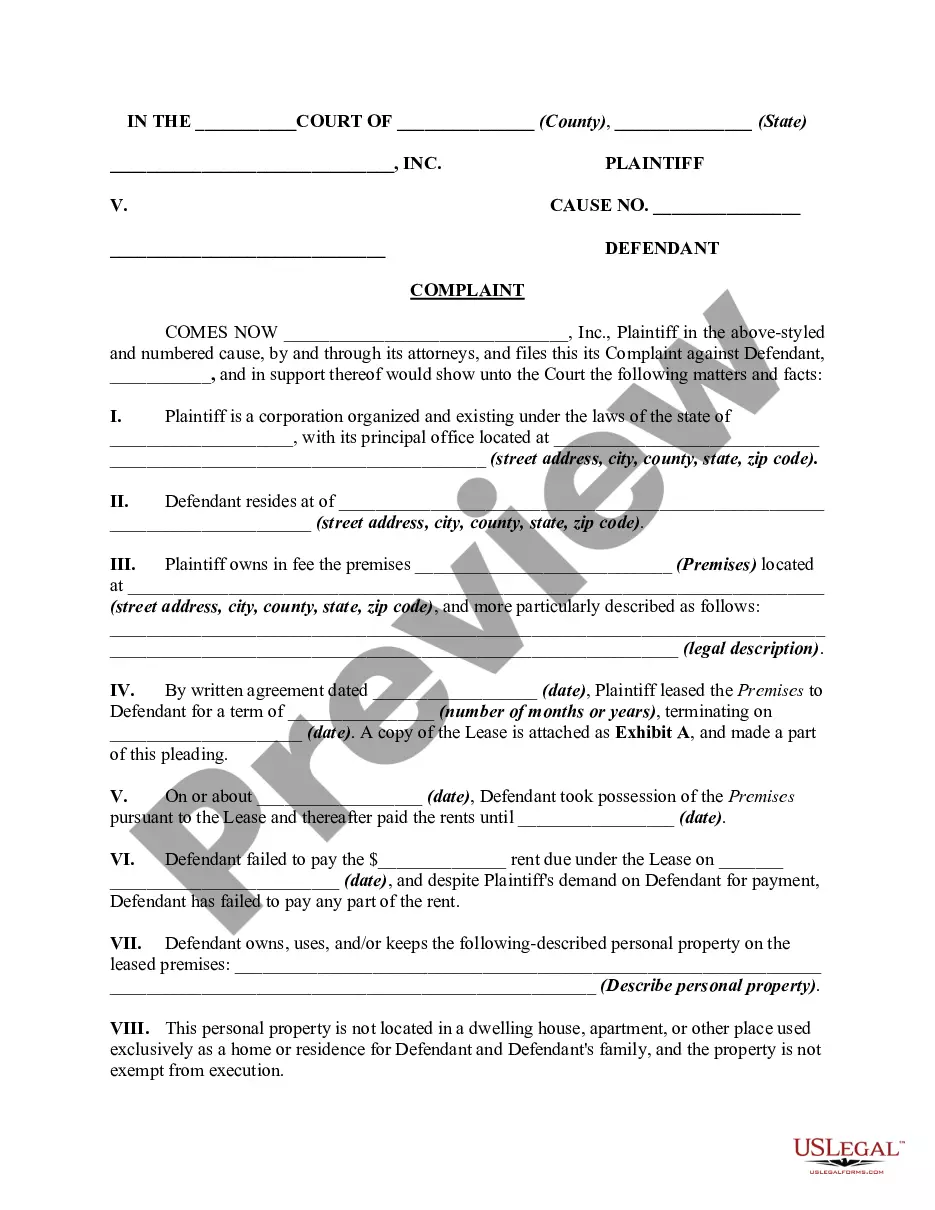
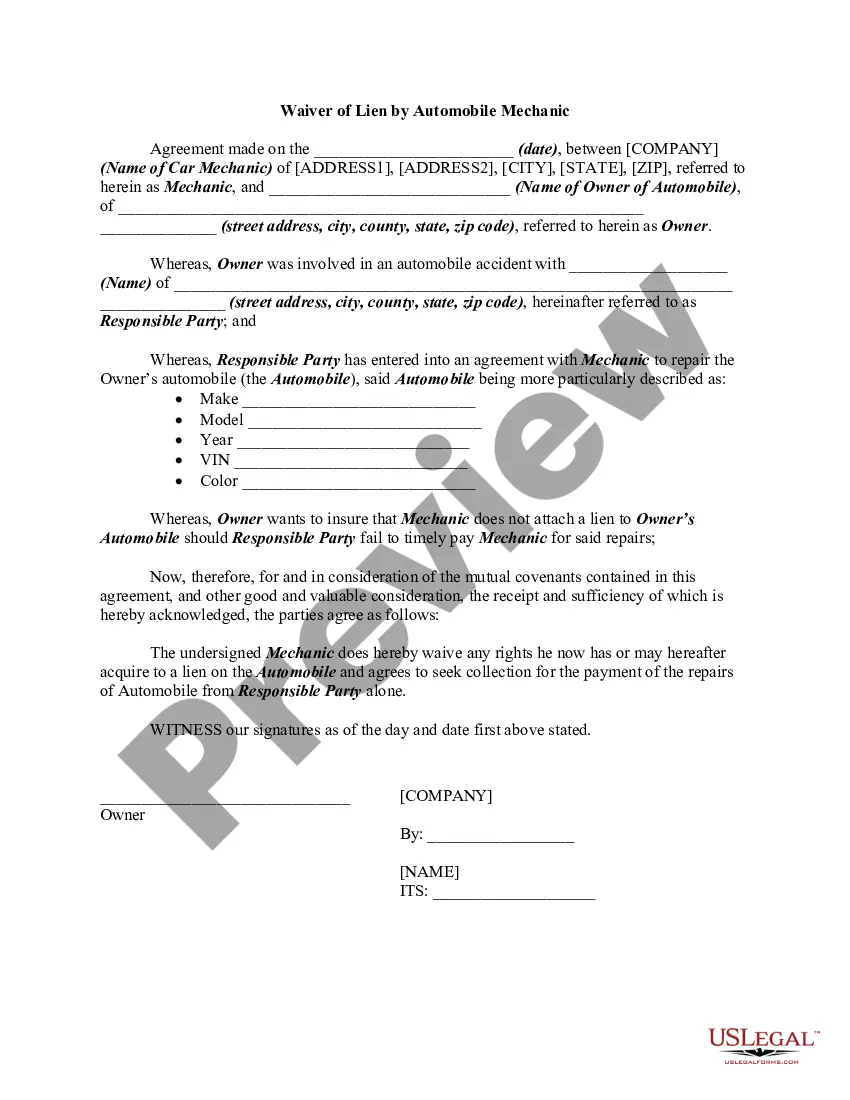
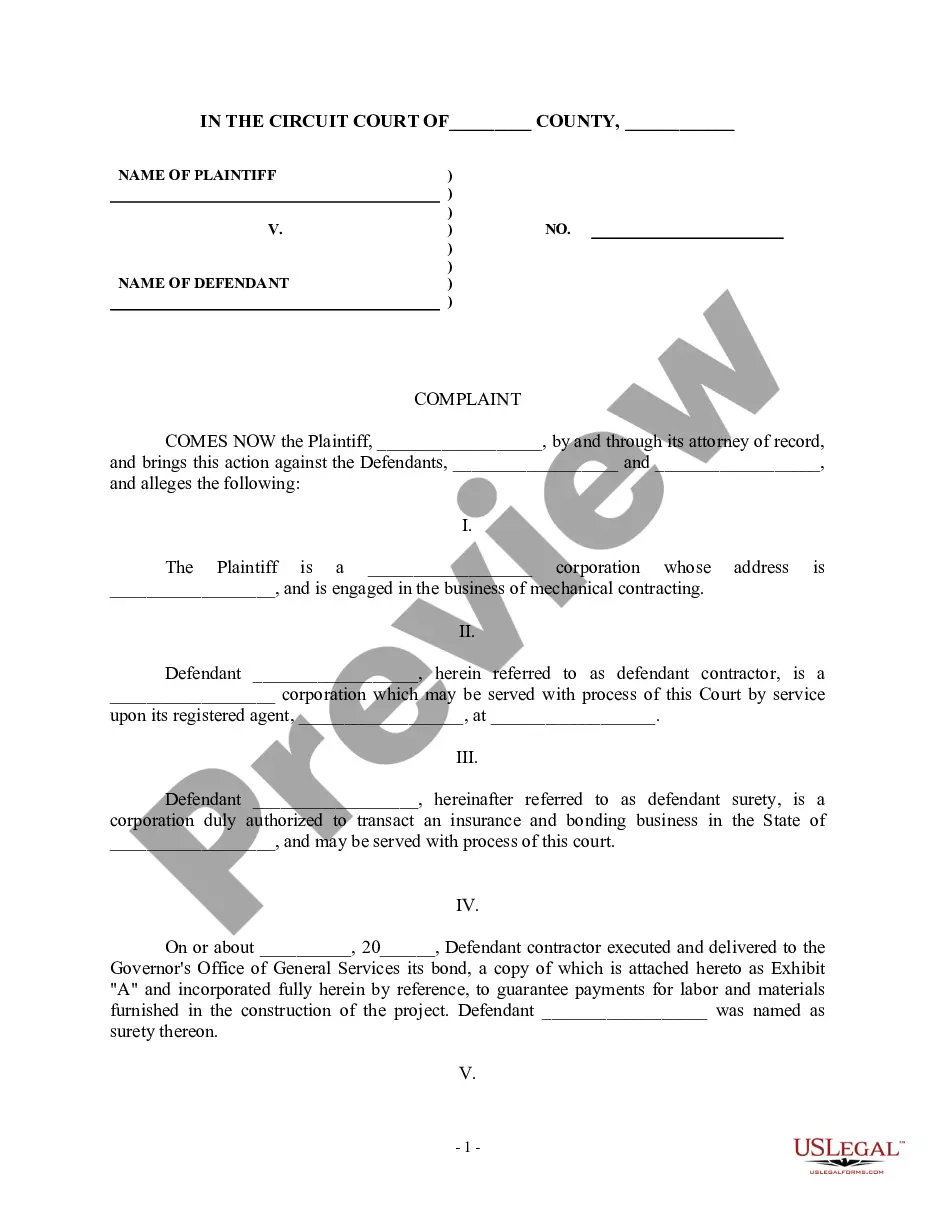
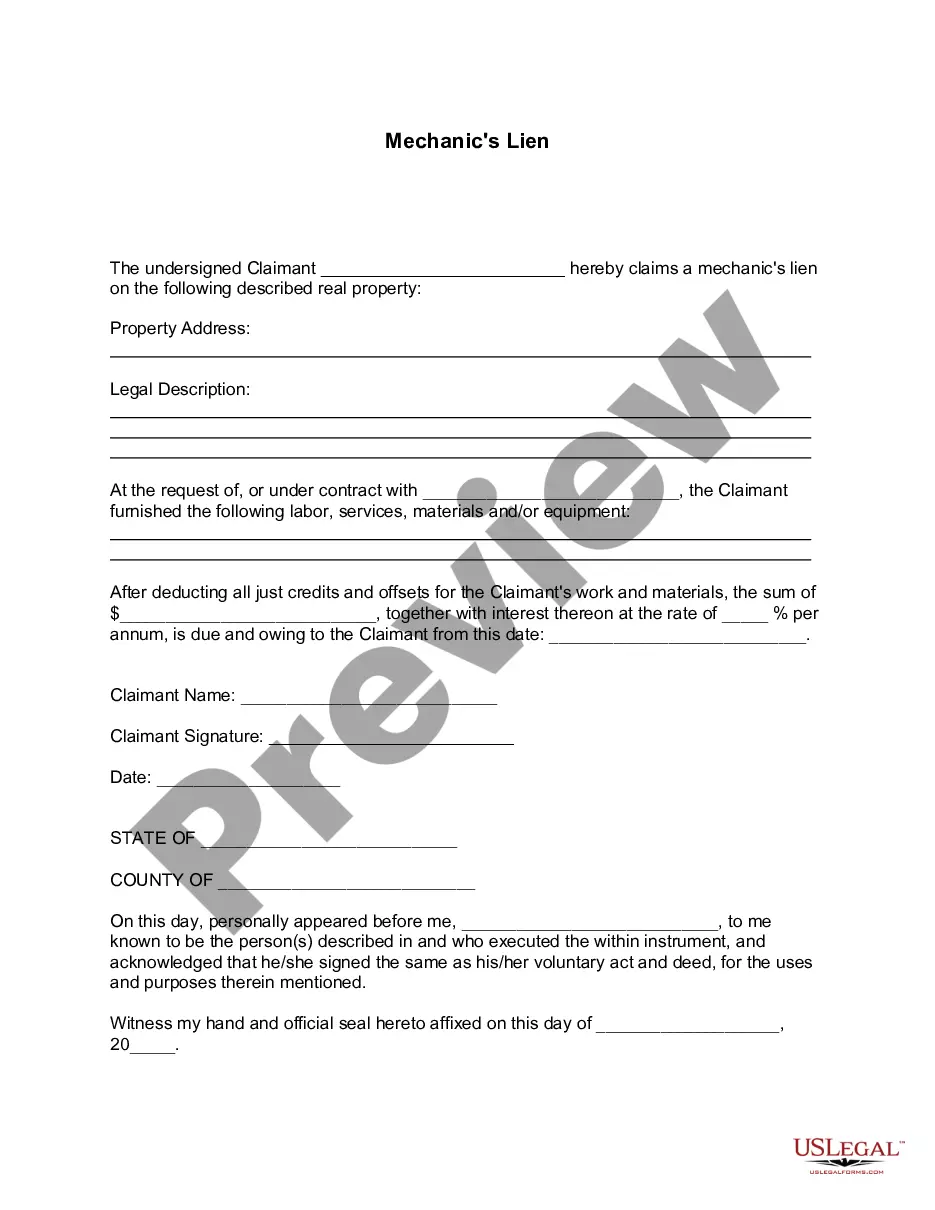
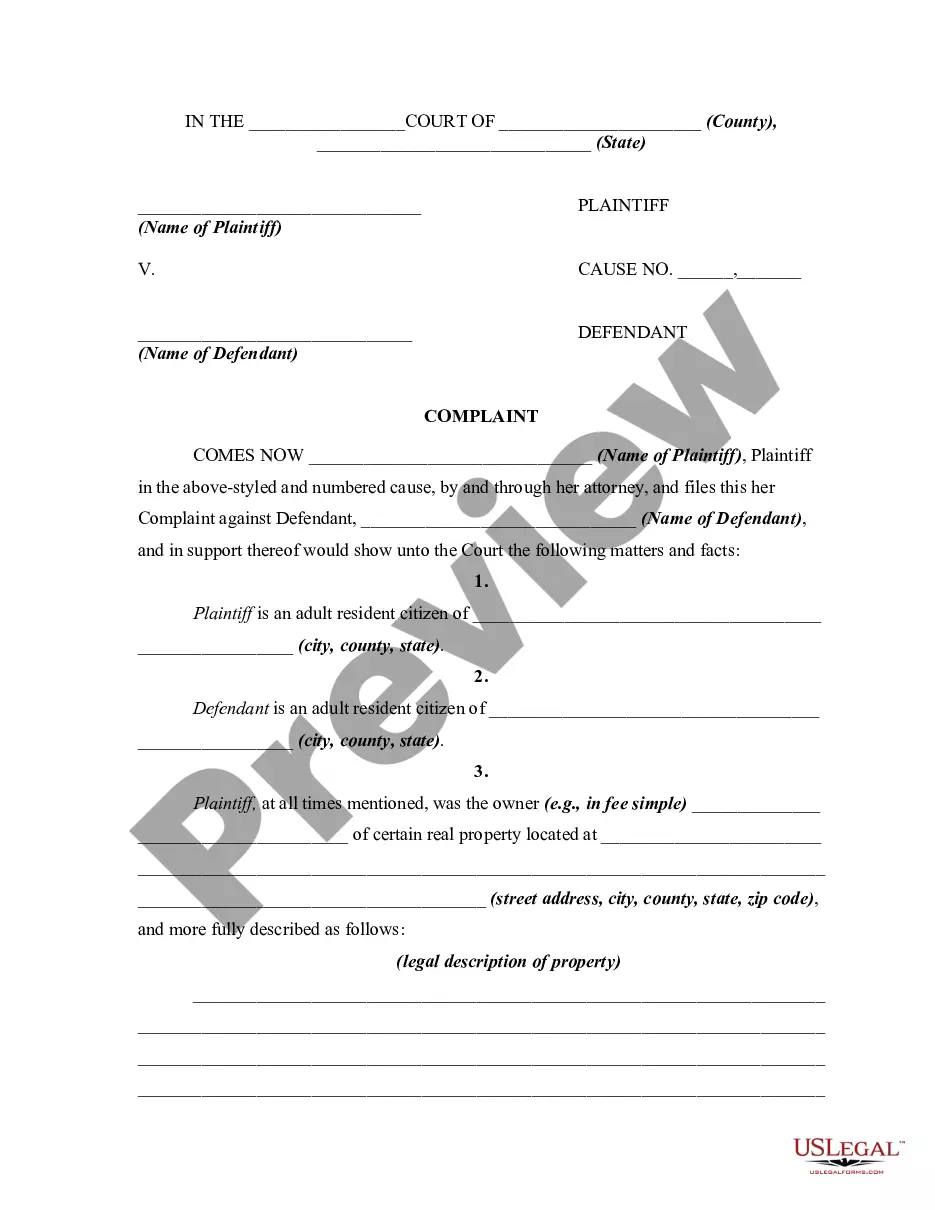
The Complaint or Petition to Foreclose on Mechanic's Lien is a legal document that allows a contractor or supplier to enforce their rights to a lien on a property after failing to receive payment for materials or labor provided. This form serves to initiate a foreclosure action on the mechanic's lien, distinguishing it from other types of legal complaints due to its specific focus on construction-related debts. By using this form, plaintiffs can assert their claims and seek payment through the sale of the property involved.
Form components explained
- Name of Plaintiff and Defendant.
- Details of the contract including materials and labor provided.
- Statement of the amount owed by the Defendant.
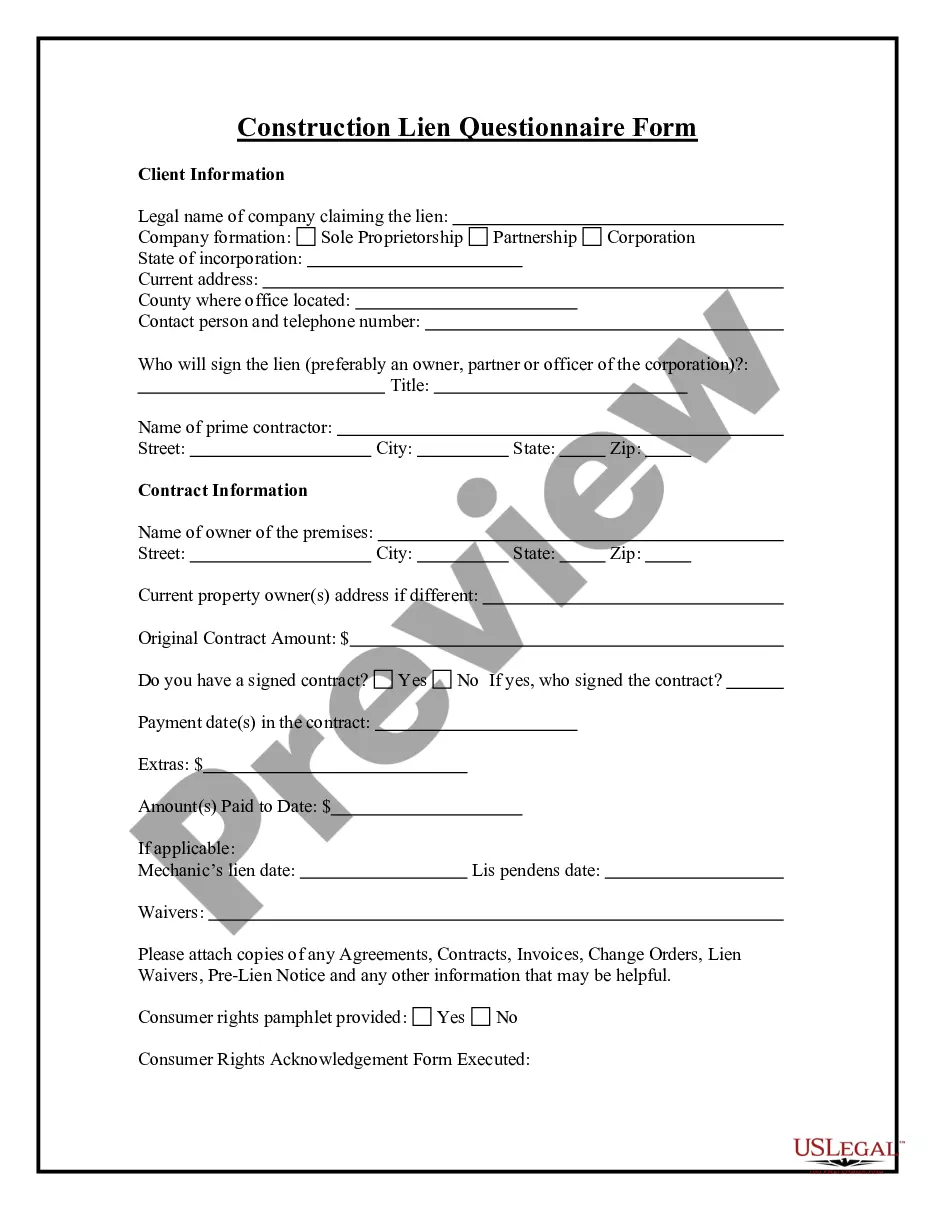
- Date of lien filing and compliance with state laws.
- Request for judgment to sell the property and recover costs.
When this form is needed
This form should be used when a contractor, subcontractor, or supplier has added value to a property through their work but has not been compensated. If a mechanic's lien has been filed and the debt remains unpaid, this form initiates the legal process to foreclose on that lien and recover amounts due through the sale of the property in question.
Who needs this form
- Contractors and subcontractors seeking payment for their work.
- Suppliers of materials who have not received compensation.
- Legal representatives of individuals or companies involved in construction.
- Property owners who have been issued a mechanic's lien and need to resolve disputes.
Completing this form step by step
- Identify the parties involved by entering the name of the Plaintiff and Defendant.
- Provide specific details about the contract, including dates and nature of work performed.
- State the amount owed for the materials and labor provided.
- Specify the date the lien was filed and include supporting documentation as exhibits.
- Request the court to grant a judgment for the sale of the property to enforce the lien.
Notarization requirements for this form
This document requires notarization to meet legal standards. US Legal Forms provides secure online notarization powered by Notarize, allowing you to complete the process through a verified video call, available 24/7.
Get your form ready online
Our built-in tools help you complete, sign, share, and store your documents in one place.
Make edits, fill in missing information, and update formatting in US Legal Forms—just like you would in MS Word.
Download a copy, print it, send it by email, or mail it via USPS—whatever works best for your next step.
Sign and collect signatures with our SignNow integration. Send to multiple recipients, set reminders, and more. Go Premium to unlock E-Sign.
If this form requires notarization, complete it online through a secure video call—no need to meet a notary in person or wait for an appointment.
We protect your documents and personal data by following strict security and privacy standards.

Make edits, fill in missing information, and update formatting in US Legal Forms—just like you would in MS Word.

Download a copy, print it, send it by email, or mail it via USPS—whatever works best for your next step.

Sign and collect signatures with our SignNow integration. Send to multiple recipients, set reminders, and more. Go Premium to unlock E-Sign.

If this form requires notarization, complete it online through a secure video call—no need to meet a notary in person or wait for an appointment.

We protect your documents and personal data by following strict security and privacy standards.
Mistakes to watch out for
- Failing to include all necessary exhibits that support the complaint.
- Not providing accurate and complete information about the contract and payment owed.
- Neglecting to cite the correct statute for mechanic's lien filings.
- Missing the filing deadline for the complaint or lien.
Benefits of completing this form online
- Convenience of completing the form at your own pace.
- Editable templates that allow for customization based on specific needs.
- Access to forms drafted by licensed attorneys, ensuring legal compliance.
- Time-saving, as you can download and file the form instantly.
Legal use & context
- The form is used as part of a legal process to enforce payment obligations in construction-related transactions.
- Filing this complaint asserts the plaintiff's legal rights regarding the lien on the property.
- It is crucial for the plaintiff to ensure compliance with all state-specific laws regarding lien enforcement.
Looking for another form?
Form popularity
FAQ
Mechanics Lien Foreclosure In California, a properly filed and recorded mechanics lien can lead the filing contractor to foreclose the customer's home. Normally, when a mechanics lien is foreclosed by its holder a foreclosure sale is forced on the homeowner.
California law requires that a lawsuit be filed to foreclose on a mechanic=s lien within 90 days (Civil Code section 3144) after recording it. If the contractor fails to file a lawsuit to foreclose on that lien within 90 days, it is barred from recovering on that stale mechanic's lien.
Negotiate with the contractor who placed the lien (the "lienor" to remove it. Obtain a lien bond to discharge the lien, or. File a lawsuit to vacate the lien.
When a lien is foreclosed upon, the lienholder forces the sale of the property so he or she is paid the portion of the proceeds from the sale that he or she is owed.
A lien foreclosure action is a lawsuit to foreclose the mechanics lien. The lien claimant must file a lien foreclosure action within 90 days of the date that he or she recorded the mechanics lien. Often a lien claimant with a valid claim will fail to follow through, making the lien invalid.
A mechanics lien is one of the most effective payment recovery methods that can pressure construction clients to pay up.When a property gets foreclosed or goes bankrupt, all construction parties with a valid mechanics lien against the property may still recover payment through the proceeds of the foreclosure sale.
Once a non-mortgage lien is placed on your home, the holder of the lien can choose to take one of two routes.For example, property tax liens may sometimes be foreclosed outside of court, while the holder of a mechanics' liens must typically sue the homeowner in court in order to foreclose.