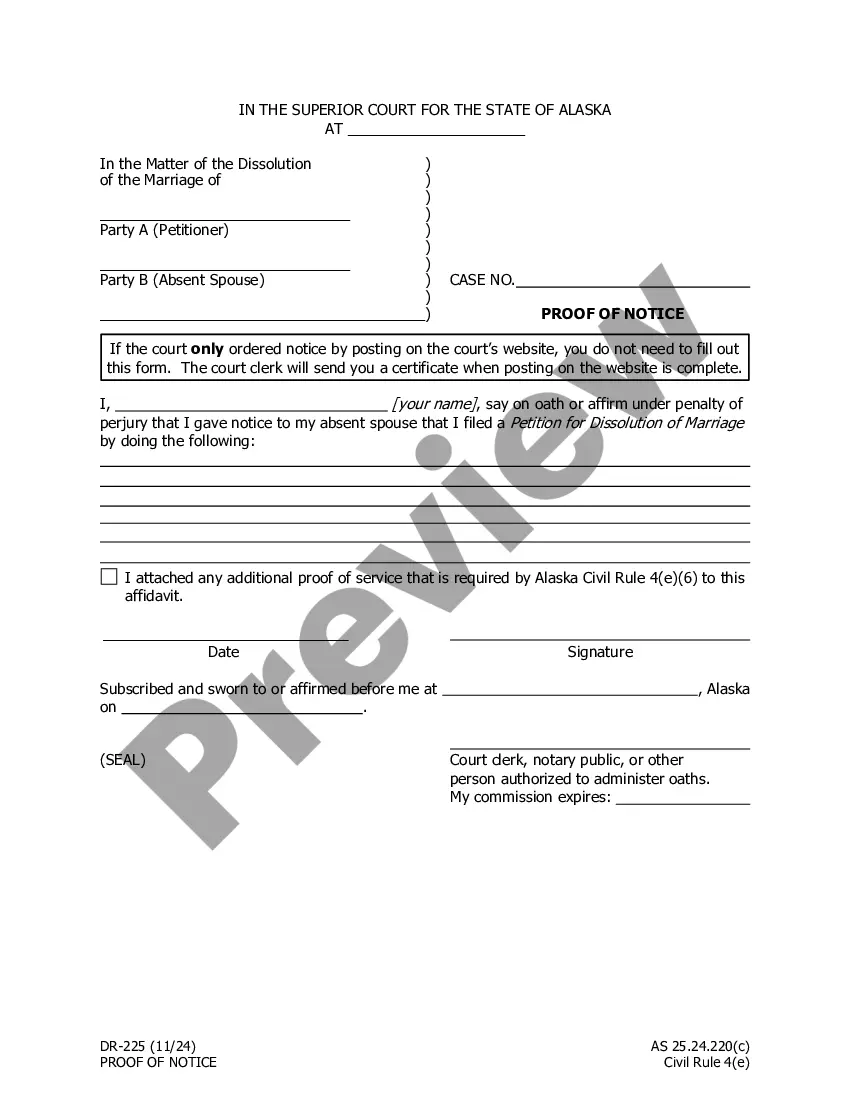
Complaint for Correction and Reformation of Judgment on the Ground of Mistake
What this document covers
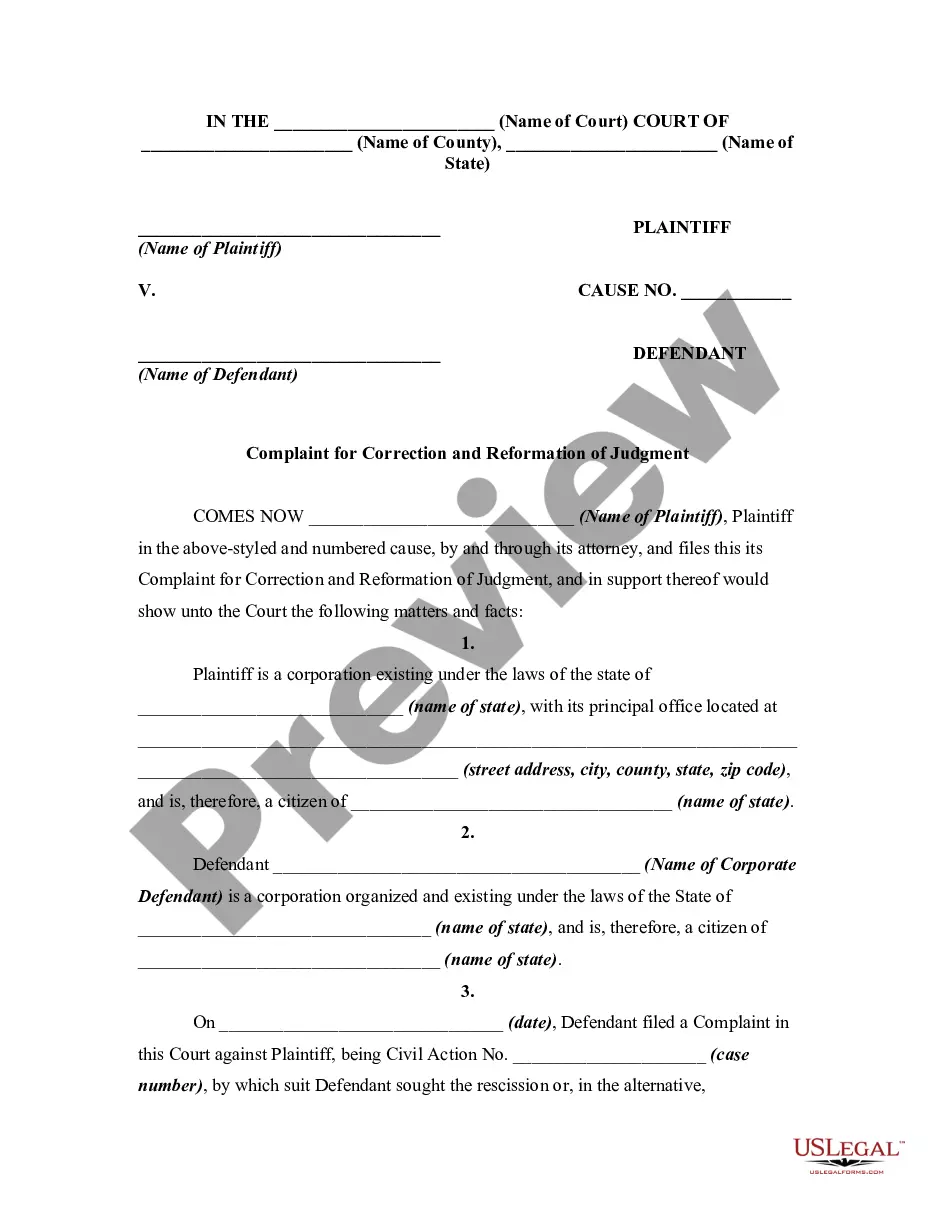
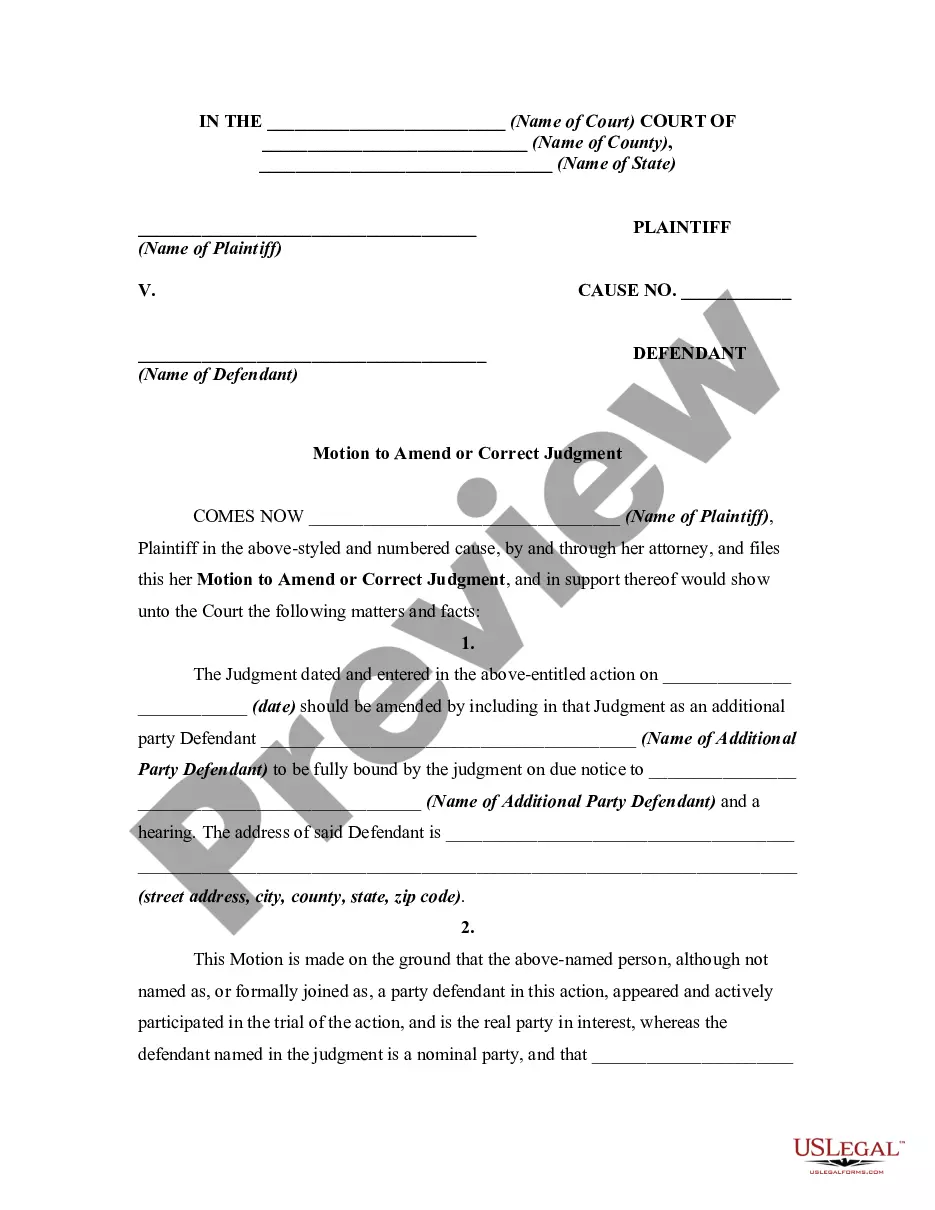
The Complaint for Correction and Reformation of Judgment on the Ground of Mistake is a legal document used to request modifications to a court judgment based on errors. This form follows the "notice pleadings" format, which simplifies the filing process. It is specifically designed for situations where a judgment needs to be corrected to reflect the intended outcomes of the parties involved more accurately. This form is distinct because it addresses specific errors in legal judgments rather than simply appealing a decision.
What’s included in this form
- Caption: Identifies the parties involved in the case.
- Jurisdictional Statement: Details the legal standing of both the plaintiff and defendant.
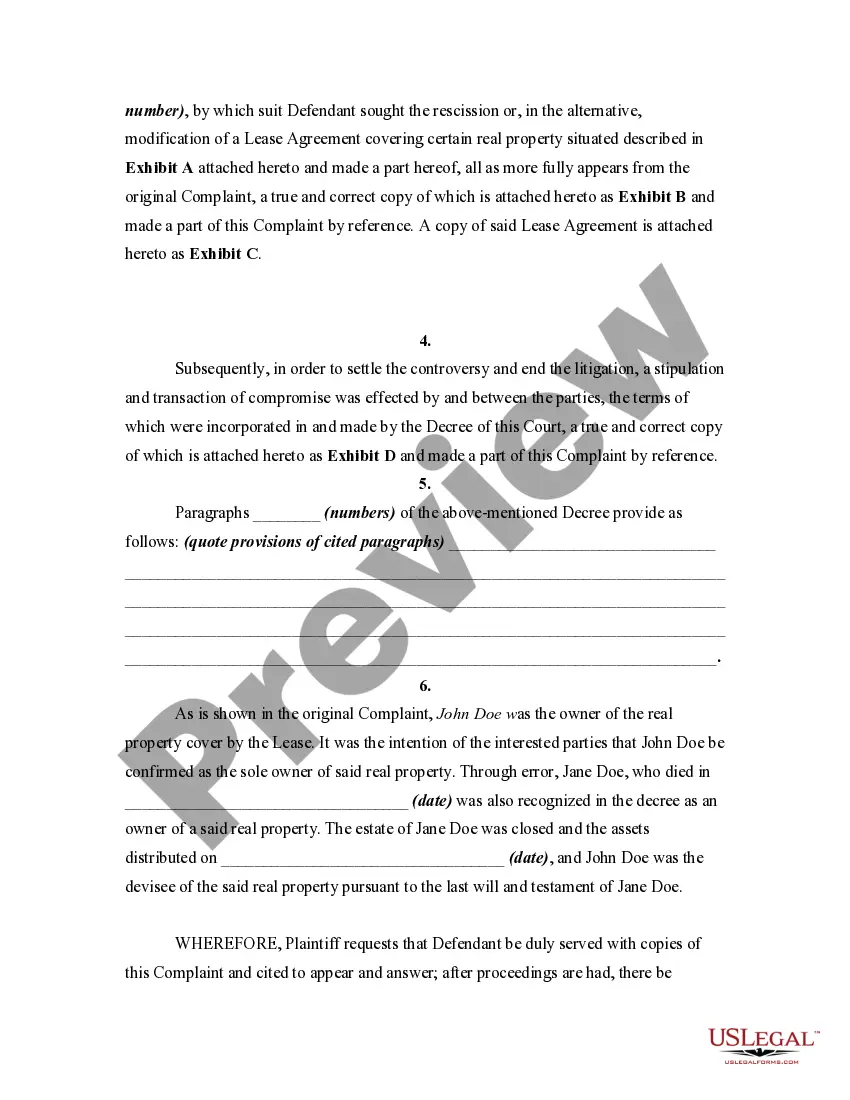
- Background Facts: Summarizes the events leading to the need for correction of the judgment.
- Error Description: Specifies the mistake made in the original judgment.
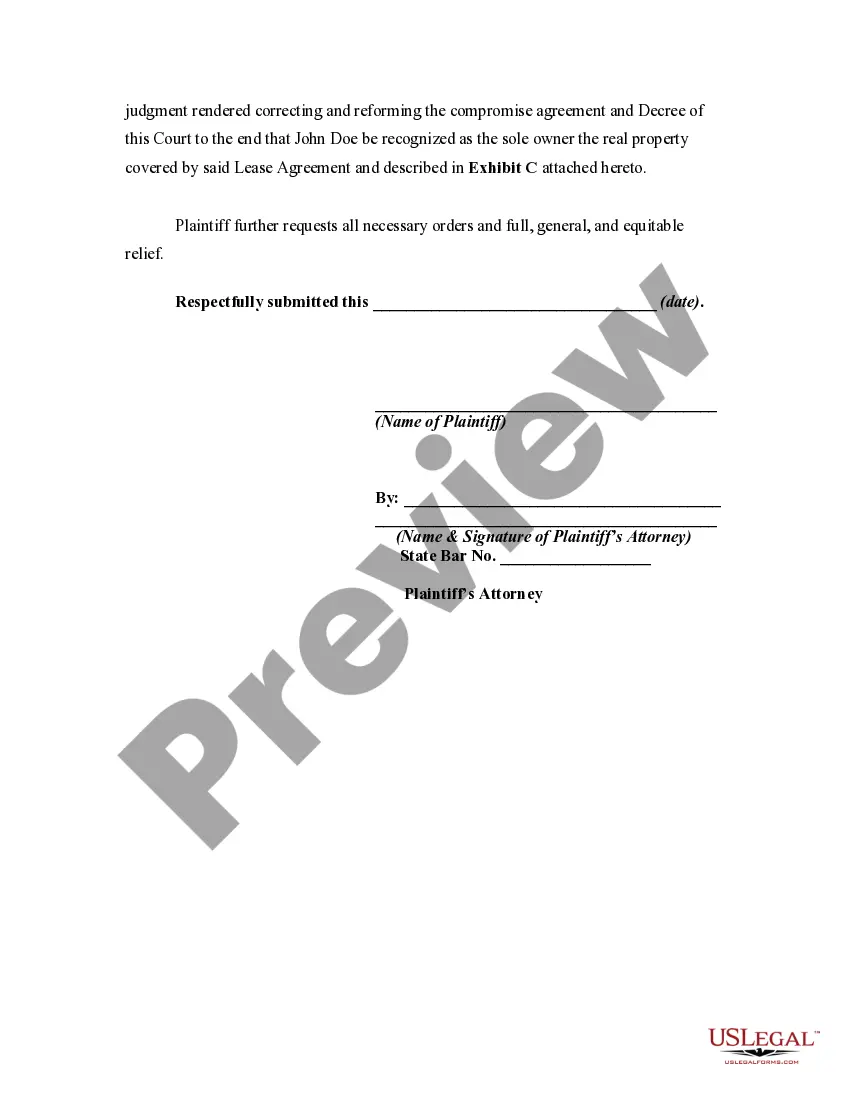
- Request for Relief: Clearly states what the plaintiff seeks from the court.
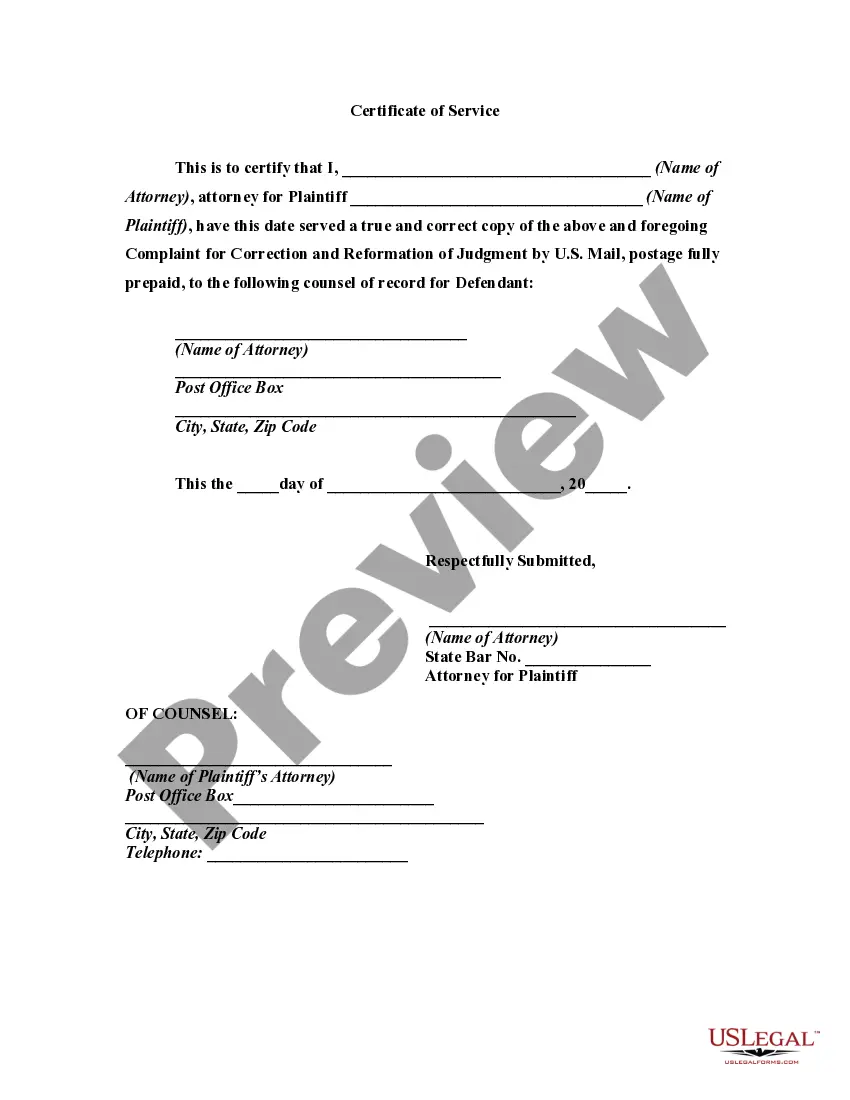
- Certificate of Service: Confirms that all parties were notified of the filing.



When this form is needed
This form is necessary when a party believes there has been a mistake in a court's judgment, and they wish to have it corrected. Common scenarios include errors related to ownership, judgment language discrepancies, or unintended beneficiaries in legal documents. If a mistake has caused confusion or misrepresentation in prior court dealings, this complaint can be the appropriate legal remedy.
Who should use this form
- Individuals or corporations seeking to correct a legal judgment.
- Legal representatives acting on behalf of clients with legitimate claims of error.
- Parties who participated in a legal agreement or court decision that was inaccurately represented.
- Anyone who has previously engaged in litigation that resulted in a judgment containing errors.
Steps to complete this form
- Identify the parties: Fill in the names and addresses of the plaintiff and defendant.
- Provide background facts: Enter relevant information regarding the original judgment and any errors identified.
- Describe the error: Clearly specify the mistake made in the original judgment that needs correction.
- State the desired outcome: Include what relief or corrections are requested from the court.
- Sign and date: Ensure that the form is signed by the plaintiff or their attorney before submitting it to the court.
Notarization requirements for this form
Notarization is generally not required for this form. However, certain states or situations might demand it. You can complete notarization online through US Legal Forms, powered by Notarize, using a verified video call available anytime.
Get your form ready online
Our built-in tools help you complete, sign, share, and store your documents in one place.
Make edits, fill in missing information, and update formatting in US Legal Forms—just like you would in MS Word.
Download a copy, print it, send it by email, or mail it via USPS—whatever works best for your next step.
Sign and collect signatures with our SignNow integration. Send to multiple recipients, set reminders, and more. Go Premium to unlock E-Sign.
If this form requires notarization, complete it online through a secure video call—no need to meet a notary in person or wait for an appointment.
We protect your documents and personal data by following strict security and privacy standards.

Make edits, fill in missing information, and update formatting in US Legal Forms—just like you would in MS Word.

Download a copy, print it, send it by email, or mail it via USPS—whatever works best for your next step.

Sign and collect signatures with our SignNow integration. Send to multiple recipients, set reminders, and more. Go Premium to unlock E-Sign.

If this form requires notarization, complete it online through a secure video call—no need to meet a notary in person or wait for an appointment.

We protect your documents and personal data by following strict security and privacy standards.
Common mistakes to avoid
- Failing to detail the specific error that occurred in the judgment.
- Not including necessary documentation or exhibits that support your claims.
- Leaving out required signatures or missing the date of signing.
- Using outdated information or failing to reference the correct case number.
Why use this form online
- Accessibility: Download and complete the form from anywhere at any time.
- Editability: Modify the form according to your specific situation without needing to create it from scratch.
- Reliability: Obtain forms that are drafted by licensed attorneys to ensure compliance with legal standards.
Looking for another form?

Form popularity
FAQ
Reformation. of an instrument is that remedy in equity by means of which a written instrument is made or construed so as to express or conform to the real intention of the parties when some error or mistake has been committed.
With rescission, the entire contract is cancelled.With reformation, the parties are still bound to perform their contract duties. On the other hand, rescission releases the parties from any contractual obligations that they may have had, since the contract is void and no longer valid.
Line through the incorrect information (make sure the information can still be read). Make the change. Date and initial the change. Have the other party date and initial the change also, so it's clear that the change has been acknowledged by both parties.
Reformation in contract law is a legal remedy in which the court rewrites the contract to ensure both parties' true intentions are reflected. This is an alternative to equitable remedies, such as monetary damages. In a breach of contract case, the injured party often must choose between an equitable and legal remedy.
The reformation is that remedy to amend or correct the form of a contract as a written instrument so that it would conform to the real intention of the parties.a petition/request for the reformation of the instrument; this is in order for the facts to be put into legal proceeding.
You can use a contract amendment letter to list the changes to the original document and have both parties sign. You can create a contract amendment created from a template or from a legal services provider. You can add amendment pagesdigital or printto the end of the original signed contract.
The act of changing a written contract when one of the parties can prove that the actual agreement was different than what's written down. Reformation is usually made by a court, for example, when both parties overlooked a mistake in the document, or when one party has deceived the other. contracts.
In contract law, a mistake is an erroneous belief, at contracting, that certain facts are true. It can be argued as a defense, and if raised successfully can lead to the agreement in question being found void ab initio or voidable, or alternatively an equitable remedy may be provided by the courts.