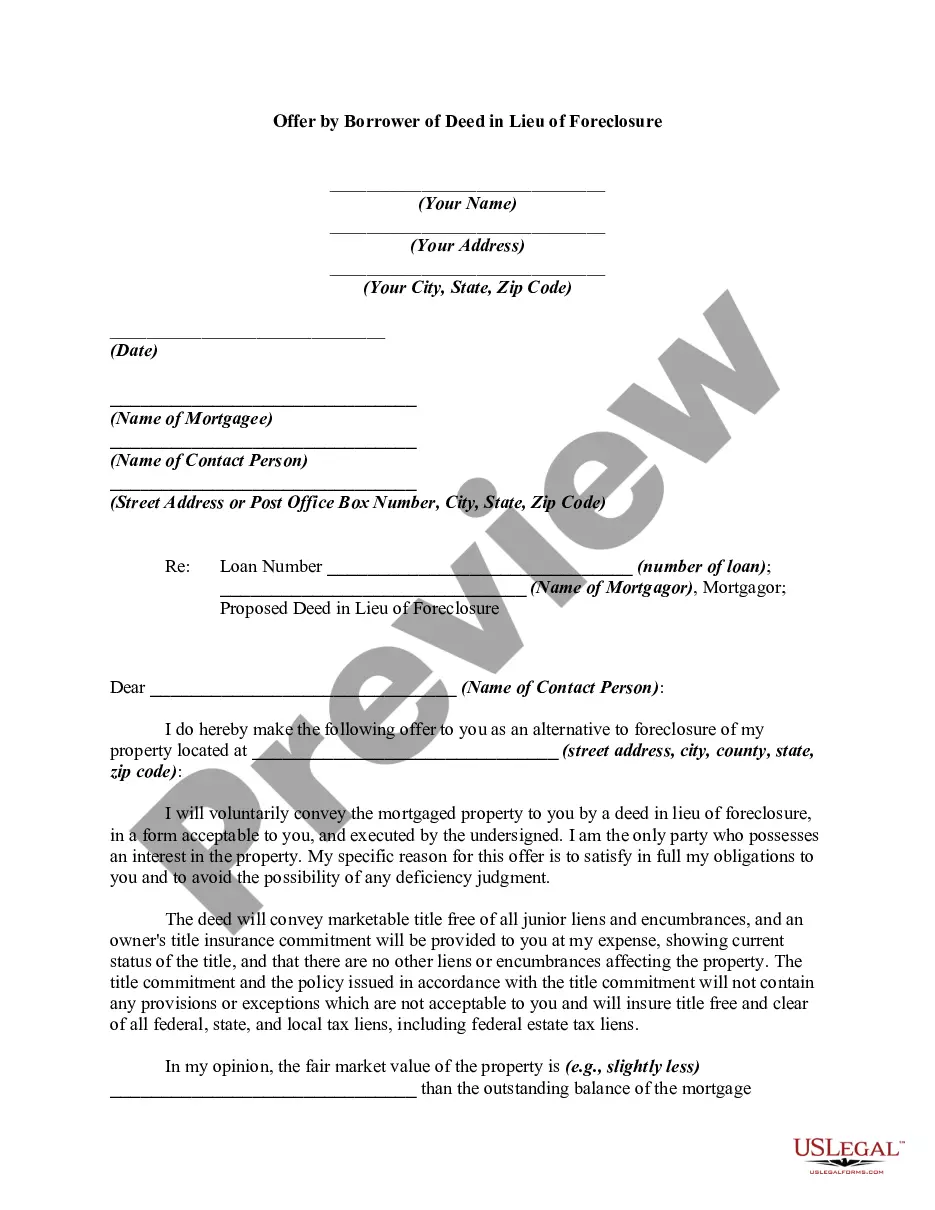
Offer by Borrower of Deed in Lieu of Foreclosure
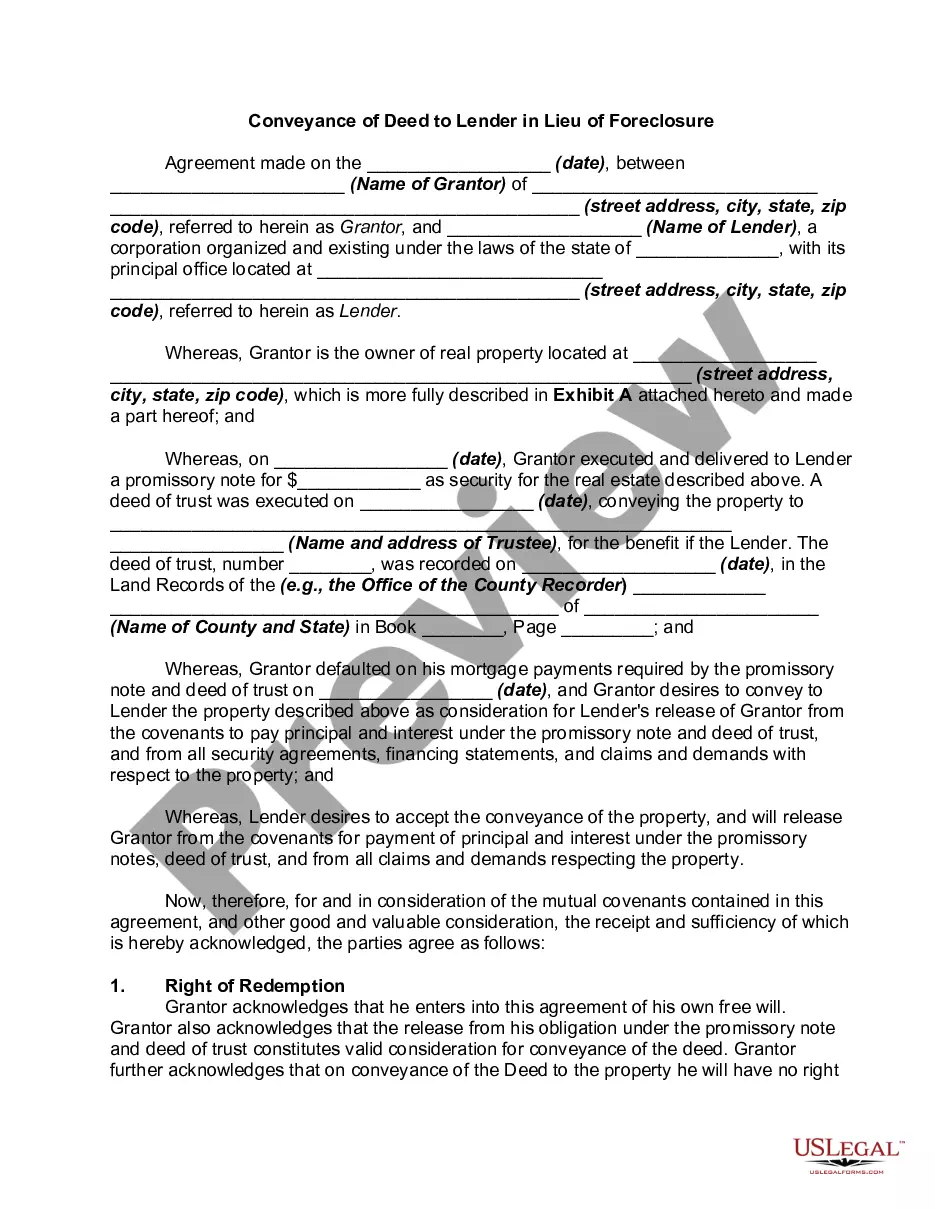
Overview of this form
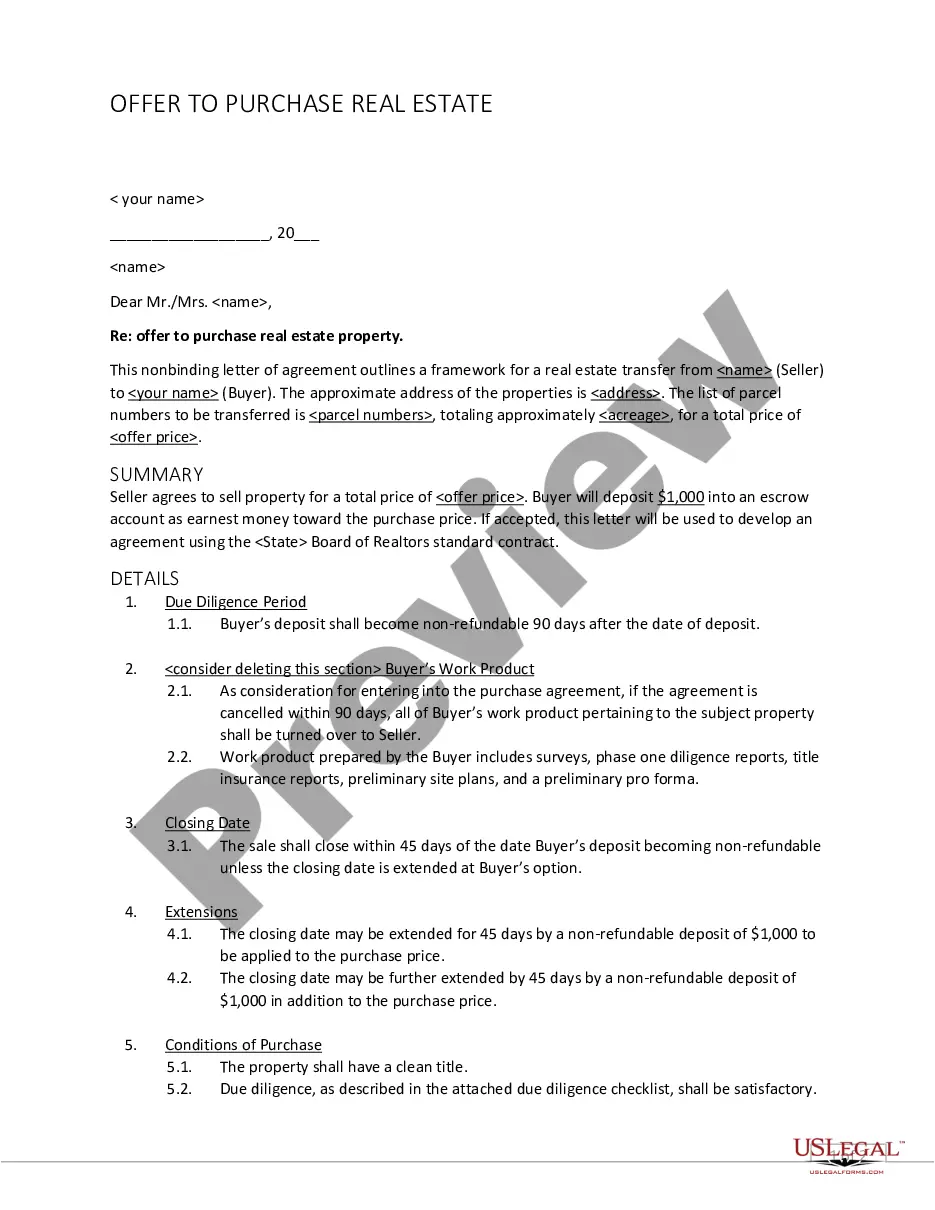
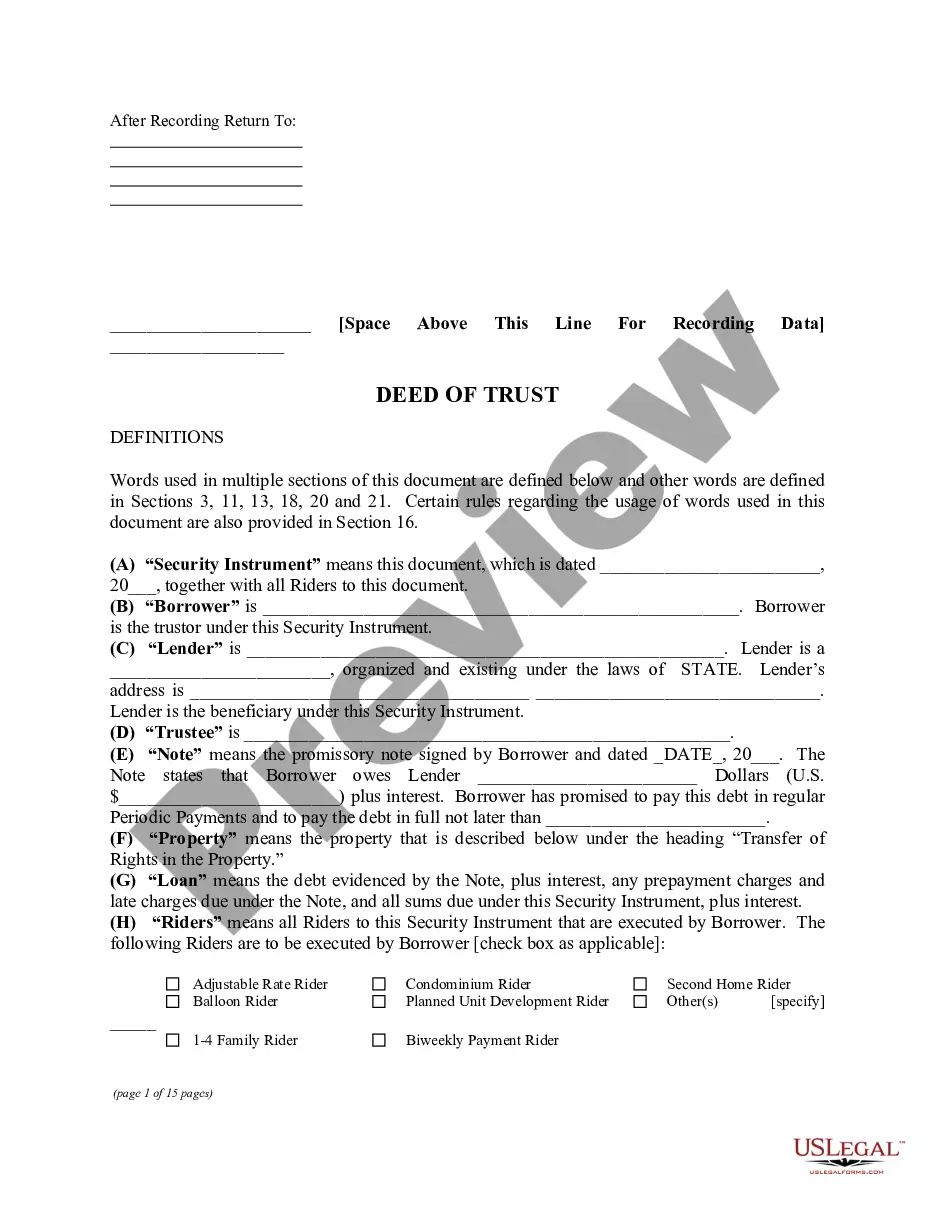
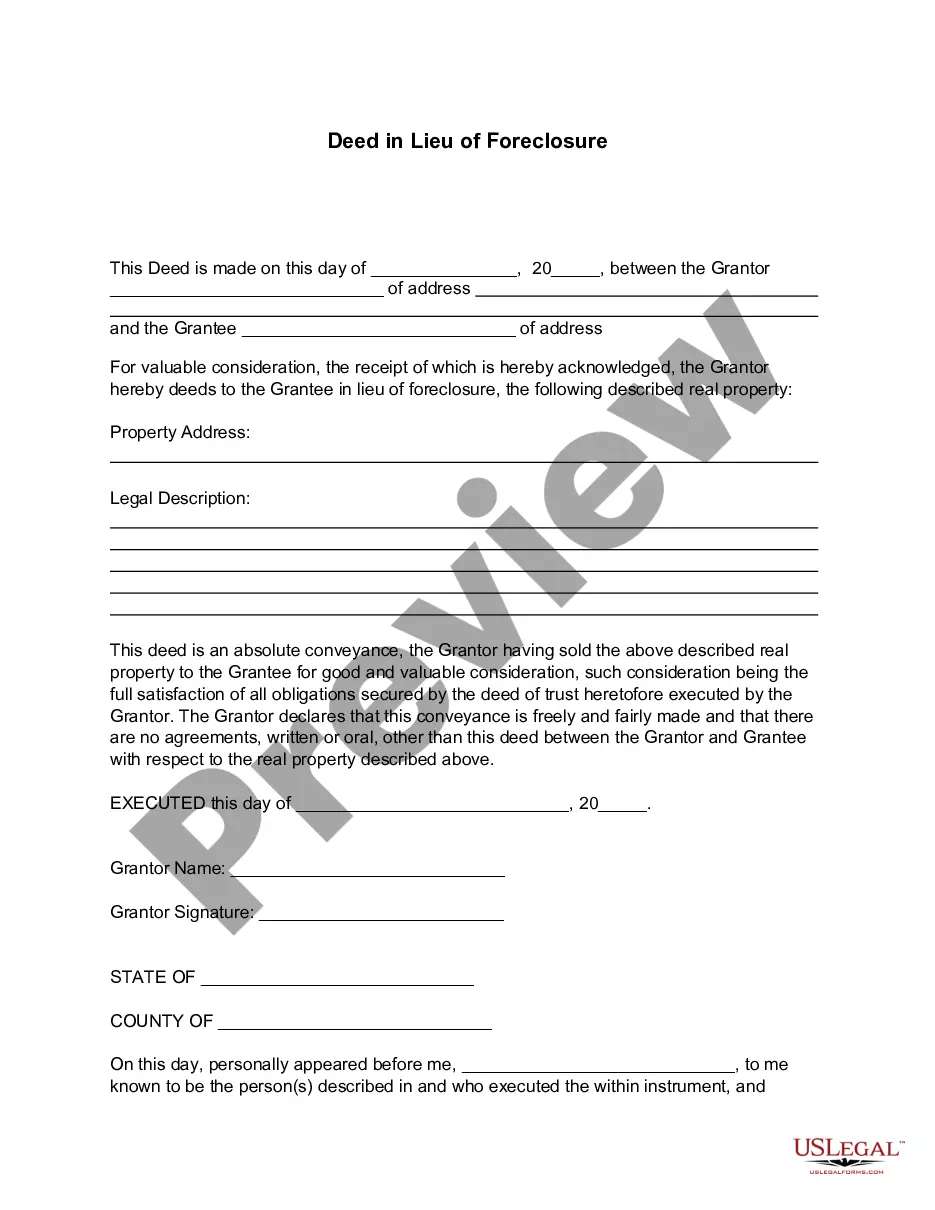
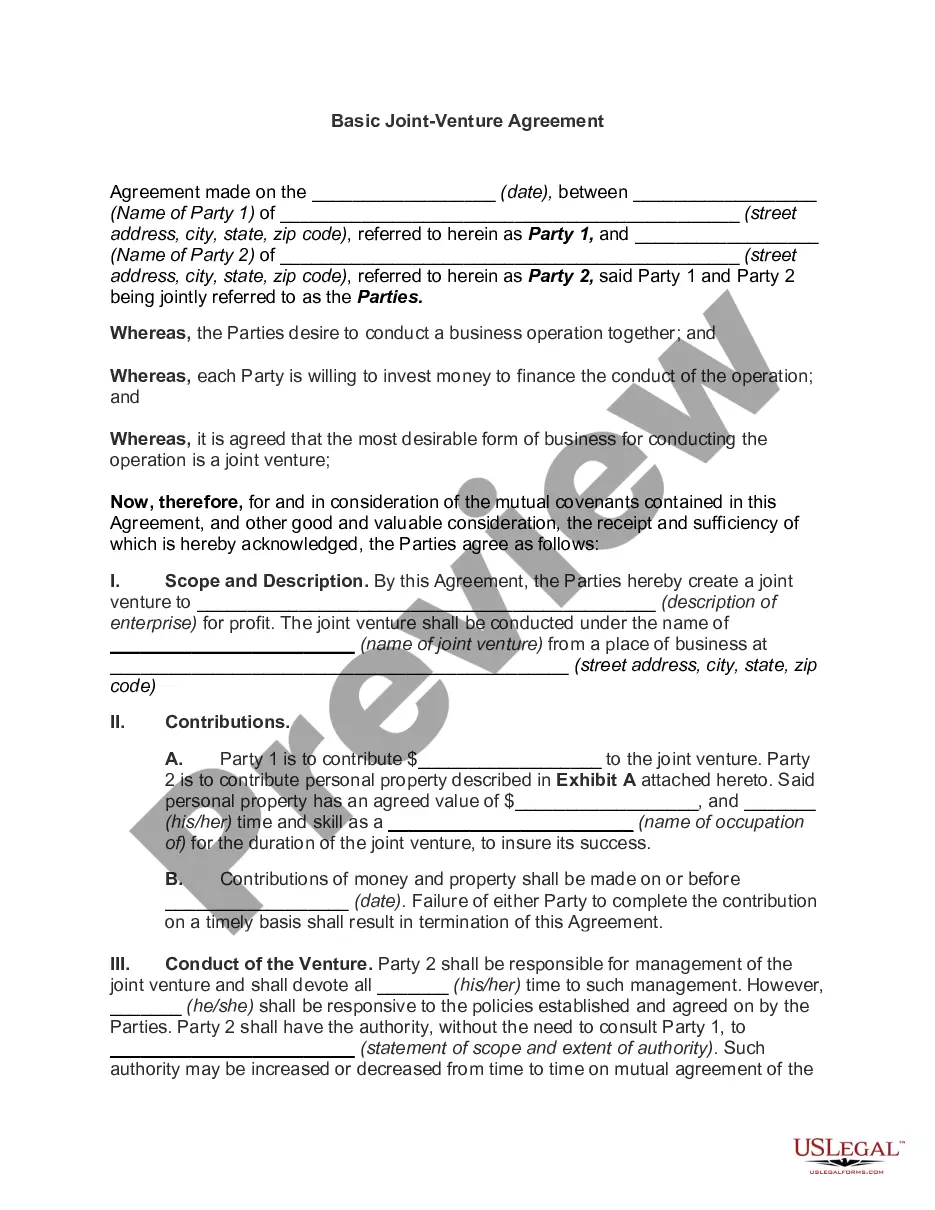
The Offer by Borrower of Deed in Lieu of Foreclosure is a legal document that allows a borrower to voluntarily transfer ownership of their property to the lender, thereby avoiding foreclosure proceedings. This form serves as a formal offer to the lender, indicating the borrower's intention to relinquish the property as a full settlement of the mortgage obligation, instead of going through the lengthy foreclosure process. This is an alternative for borrowers facing financial difficulties and looking to mitigate the consequences of defaulting on their mortgage.
Form components explained
- Borrower's name and contact information
- Details of the mortgaged property being conveyed
- Loan number for reference
- Statement of the borrower's offer to transfer the property
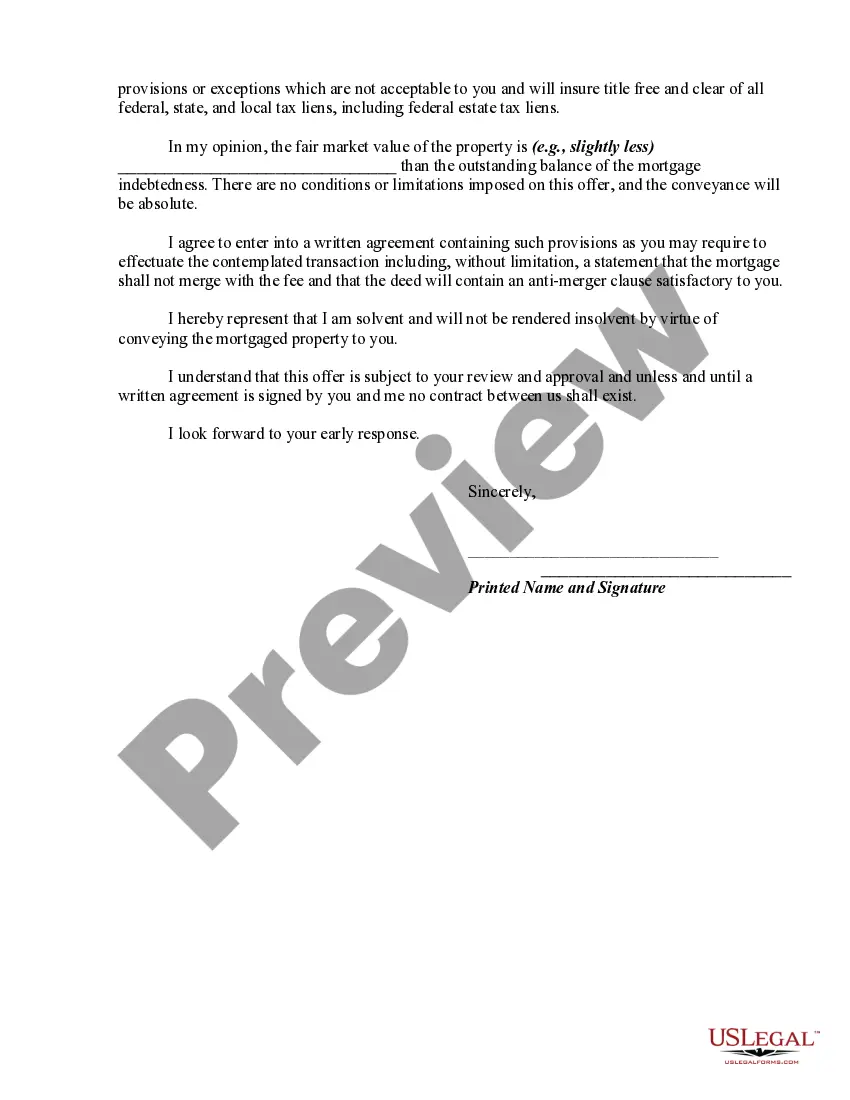
- Conditions for the acceptance of the deed
- Declaration of the borrower's financial status and solvency

Common use cases
This form should be used when a borrower is unable to continue making mortgage payments and is facing foreclosure but prefers to willingly transfer the property back to the lender. It is particularly useful for borrowers who wish to avoid the stress and potential costs associated with foreclosure proceedings. By opting for a deed in lieu of foreclosure, borrowers can also prevent the possibility of a deficiency judgment and simplify the transition away from the property.
Who can use this document
- Homeowners in financial distress unable to maintain mortgage payments
- Borrowers seeking an alternative to foreclosure
- Individuals who own property with clear title and no additional liens
- Borrowers looking to settle their mortgage obligations without legal complications
Steps to complete this form
- Identify the parties involved, including the borrower's name and lender's contact information.
- Specify the property being conveyed in the deed, including the full address.
- Fill in the loan number associated with the mortgage.
- Articulate the intent to transfer the property in exchange for clearing the mortgage debt.
- Include declarations regarding the borrower's financial status and the market value of the property.
- Sign the document to formalize the offer.
Does this document require notarization?
Notarization is required for this form to take effect. Our online notarization service, powered by Notarize, lets you verify and sign documents remotely through an encrypted video session, available 24/7.
Get your form ready online
Our built-in tools help you complete, sign, share, and store your documents in one place.
Make edits, fill in missing information, and update formatting in US Legal Forms—just like you would in MS Word.
Download a copy, print it, send it by email, or mail it via USPS—whatever works best for your next step.
Sign and collect signatures with our SignNow integration. Send to multiple recipients, set reminders, and more. Go Premium to unlock E-Sign.
If this form requires notarization, complete it online through a secure video call—no need to meet a notary in person or wait for an appointment.
We protect your documents and personal data by following strict security and privacy standards.

Make edits, fill in missing information, and update formatting in US Legal Forms—just like you would in MS Word.

Download a copy, print it, send it by email, or mail it via USPS—whatever works best for your next step.

Sign and collect signatures with our SignNow integration. Send to multiple recipients, set reminders, and more. Go Premium to unlock E-Sign.

If this form requires notarization, complete it online through a secure video call—no need to meet a notary in person or wait for an appointment.

We protect your documents and personal data by following strict security and privacy standards.
Common mistakes to avoid
- Failing to include accurate property details leading to confusion for the lender.
- Not providing the correct loan number, which could delay processing.
- Omitting the necessary signatures, which can invalidate the offer.
- Neglecting to disclose all liens or encumbrances on the property.
Benefits of completing this form online
- Convenience of completing the form at any time without needing to visit a physical location.
- Easy editing and customization to suit specific circumstances.
- Access to professionally drafted content that ensures legal validity.
Main things to remember
- The Offer by Borrower of Deed in Lieu of Foreclosure is an alternative to foreclosure that benefits both lenders and borrowers.
- It is essential to include accurate property and financial details in the form.
- Consider local laws regarding the need for notarization or additional requirements.
Looking for another form?
Form popularity
FAQ
The impact that a deed in lieu has on your score depends primarily on your credit history.According to FICO, if you start with a score of around 780, a deed in lieu (without a deficiency balance) shaves 105 to 125 points off your score; but if you start with a score of 680, you'll lose 50 to 70 points.
The deed in lieu of foreclosure offers several advantages to both the borrower and the lender. The principal advantage to the borrower is that it immediately releases him/her from most or all of the personal indebtedness associated with the defaulted loan.
A deed in lieu means you and your lender reach a mutual understanding that you cannot make your loan payments. The lender agrees to avoid putting you into foreclosure when you hand the property over amicably. In exchange, the lender releases you from your obligations under the mortgage.
A deed in lieu can eliminate your deficiency if you owe more on your home than the home is worth. In exchange for giving the lender your deed voluntarily and keeping the home in good condition, your lender may agree to forgive your deficiency or greatly reduce it.
C. The purchaser must pay off both the mortgage and junior lienholders after the sale. What is a major disadvantage to lenders of accepting a deed in lieu of foreclosure?The lender gains rights to private mortgage insurance.
An FHA-approved lender may approve a borrower for a loan three years after a deed-in-lieu.Under extenuating circumstances, FHA may waive the seasoning requirement. Such circumstances include the death or serious illness of a wage earner and a borrower must re-establish good credit to get approved.
Rather than deal with the foreclosure process, I would like to give you the deed to my home, in exchange for forgiveness on the loan. I do not have a second mortgage, and there are no other liens on the property. I have attached all relevant documents for the house and for my current economic situation.
Final Thoughts On Deed In Lieu Of Foreclosure When you take a deed in lieu agreement, you transfer your home's deed to your lender voluntarily. In exchange, the lender agrees to forgive the amount left on your loan. A deed in lieu agreement won't stay on your credit report if a foreclosure will.
First, approach your lender with sufficient proof of inability to repay your mortgage, and then offer a deed in lieu of foreclosure. Second, negotiate the terms of any reports to credit bureaus your lender may make after it accepts your deed in lieu.