Absenteeism and Tardiness Provisions for Personnel or Employee Manual or Handbook
Overview of this form
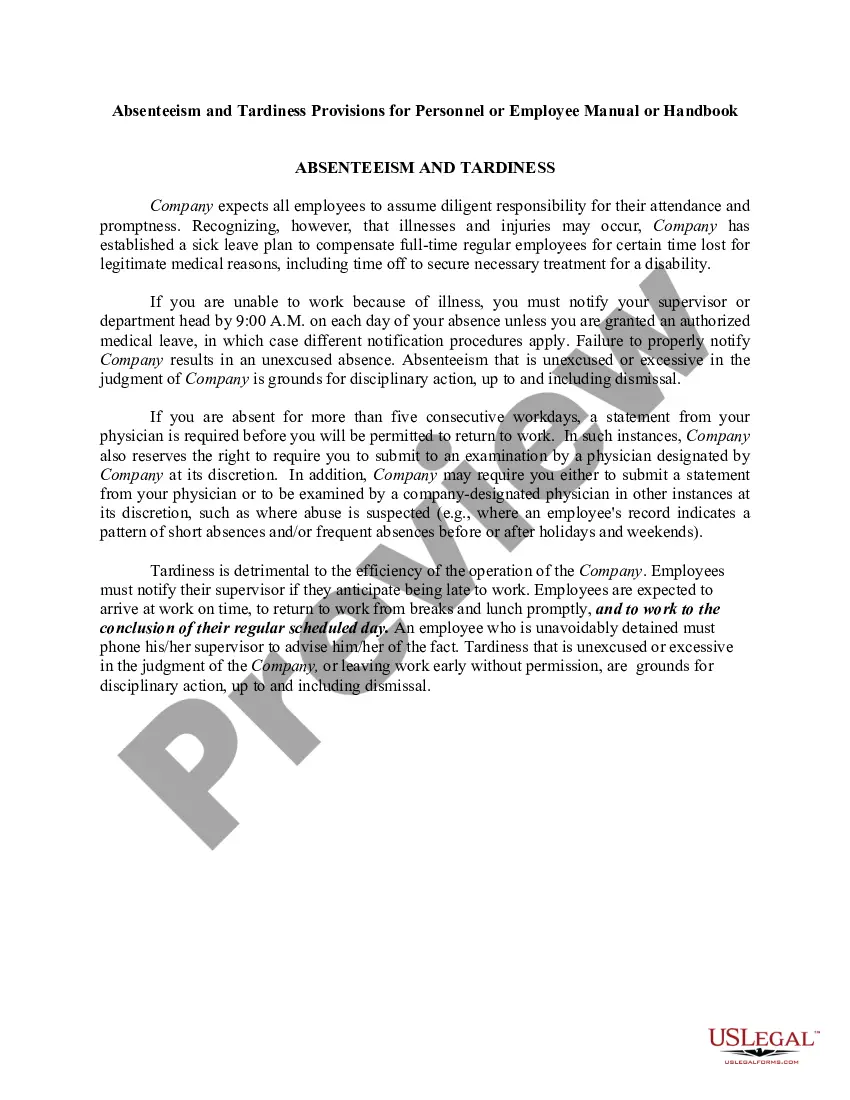
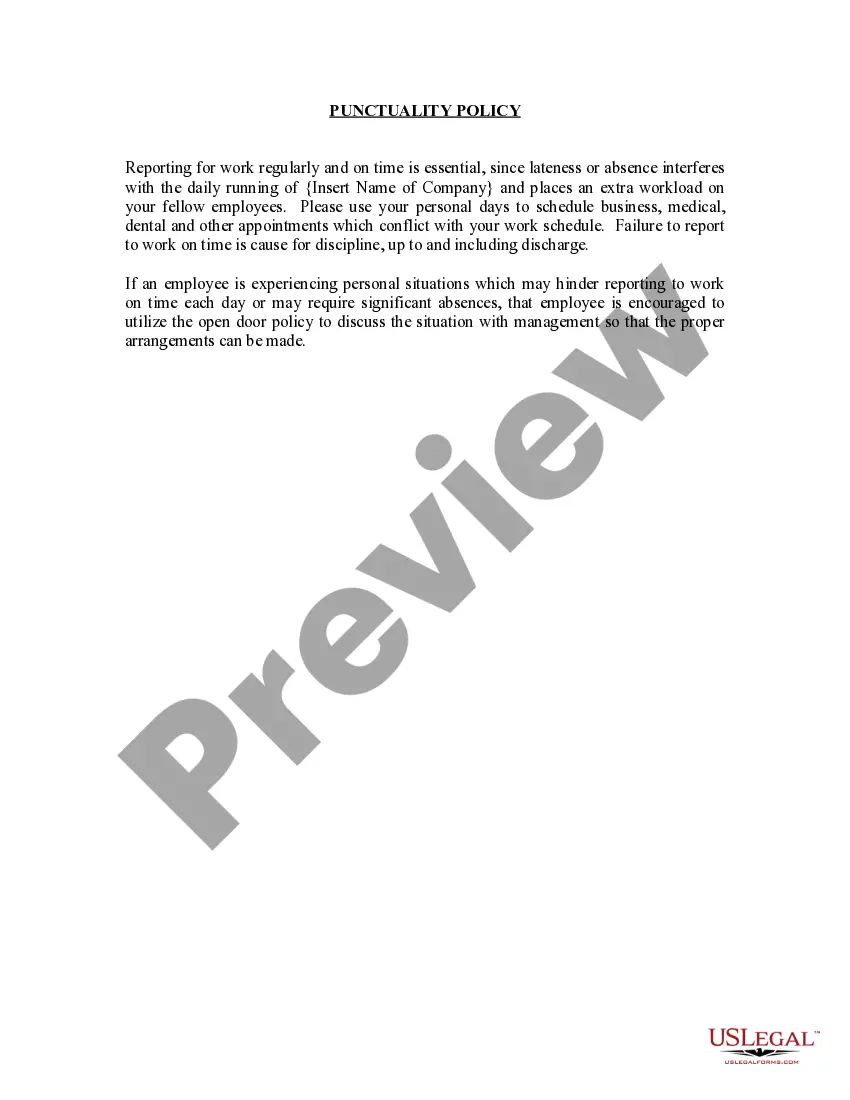
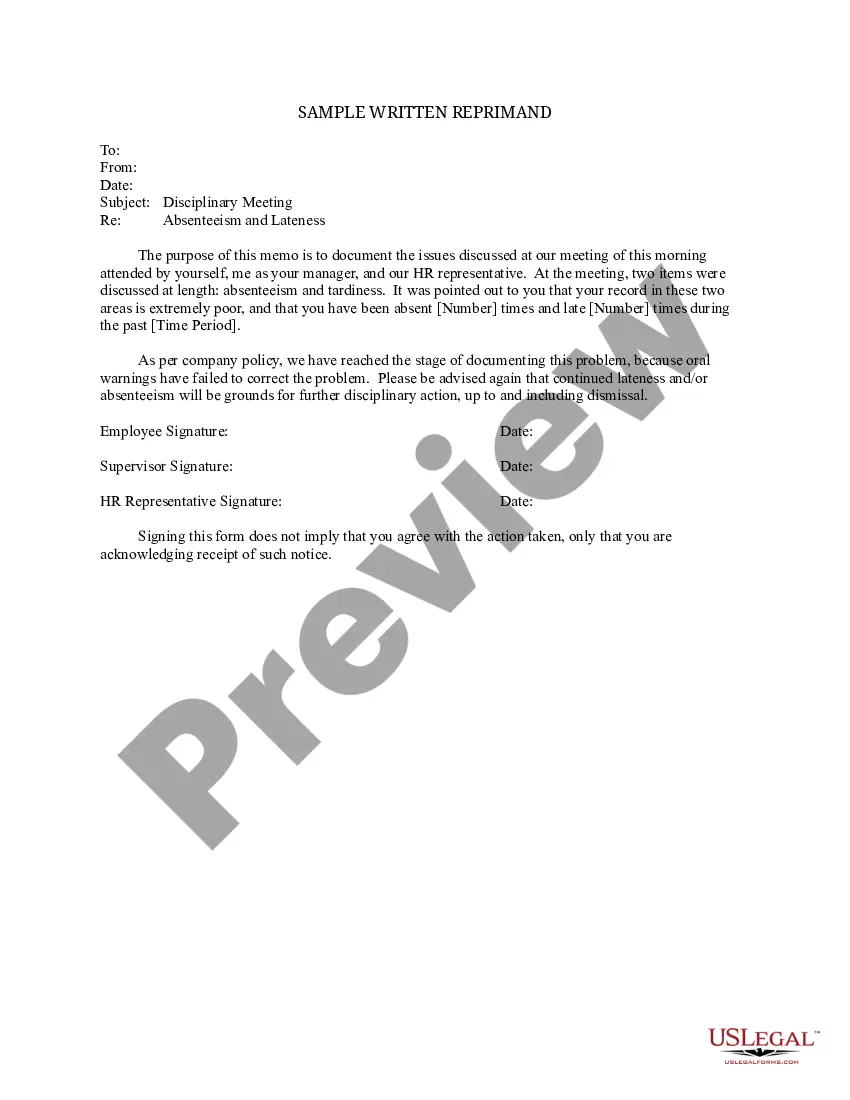
The Absenteeism and Tardiness Provisions for Personnel or Employee Manual are essential guidelines that establish expectations for employee attendance and punctuality. This form provides a clear framework for managing unexcused absences and tardiness through disciplinary measures. Unlike similar forms, this document offers a structured approach tailored for organizations looking to develop or refine their absenteeism and tardiness policies.
Key components of this form
- Expectations for attendance and promptness.
- Sick leave compensation details for legitimate medical reasons.
- Notification procedures for absences or tardiness.
- Consequences for unexcused absences or tardiness.
- Requirements for medical documentation after extended absences.
- Disciplinary actions related to excessive absenteeism or tardiness.

When this form is needed
This form should be used when an organization seeks to implement policies regarding employee absenteeism and tardiness. It is vital for situations such as the creation of an employee manual, addressing chronic attendance issues, or when developing a framework for disciplinary actions related to absenteeism and tardiness. Companies looking to align their policies with legal standards will find this form particularly useful.
Who can use this document
The following individuals or entities should consider this form:
- Human resources professionals developing an employee manual.
- Business owners looking to establish clear attendance policies.
- Managers addressing attendance issues within their teams.
- Organizations seeking to ensure compliance with local employment laws.
How to prepare this document
- Clearly state the company's expectations regarding attendance and punctuality.
- Detail the sick leave policy and the procedures for reporting absences.
- Specify the consequences of unexcused or excessive absenteeism and tardiness.
- Incorporate any required medical documentation criteria for extended absences.
- Review the document to ensure compliance with local laws before finalization.
Does this form need to be notarized?
Notarization is not commonly needed for this form. However, certain documents or local rules may make it necessary. Our notarization service, powered by Notarize, allows you to finalize it securely online anytime, day or night.
Get your form ready online
Our built-in tools help you complete, sign, share, and store your documents in one place.
Make edits, fill in missing information, and update formatting in US Legal Forms—just like you would in MS Word.
Download a copy, print it, send it by email, or mail it via USPS—whatever works best for your next step.
Sign and collect signatures with our SignNow integration. Send to multiple recipients, set reminders, and more. Go Premium to unlock E-Sign.
If this form requires notarization, complete it online through a secure video call—no need to meet a notary in person or wait for an appointment.
We protect your documents and personal data by following strict security and privacy standards.

Make edits, fill in missing information, and update formatting in US Legal Forms—just like you would in MS Word.

Download a copy, print it, send it by email, or mail it via USPS—whatever works best for your next step.

Sign and collect signatures with our SignNow integration. Send to multiple recipients, set reminders, and more. Go Premium to unlock E-Sign.

If this form requires notarization, complete it online through a secure video call—no need to meet a notary in person or wait for an appointment.

We protect your documents and personal data by following strict security and privacy standards.
Common mistakes to avoid
- Not clearly defining what constitutes unexcused absences.
- Failing to outline consequences of tardiness effectively.
- Omitting details on how employees should report absences.
- Not updating the policy to reflect changes in local laws.
Why complete this form online
- Immediate access to professionally drafted templates.
- Easily customizable to fit specific organizational needs.
- Save time in policy development with guided steps.
- Convenience of downloading and distributing electronically.
Legal use & context
- This form serves as a guideline for establishing attendance policies.
- Disciplinary actions outlined can help ensure fair treatment of employees.
- Proper use of this form can help protect the organization against potential disputes.
- Always ensure compliance with state-specific employment regulations.
Main things to remember
- Clear absenteeism and tardiness policies are essential for effective workforce management.
- Documentation should include specific reporting methods and consequences for violations.
- This form provides a flexible template adaptable to various organizational needs and local laws.
- Using this form can enhance communication between employees and management regarding attendance expectations.
Looking for another form?
Form popularity
FAQ
"Excessive absenteeism is defined as three (3) or more unexcused absences in any ninety (90) day period. First offense - written counseling and warning that continued excessive absenteeism will lead to subsequent disciplinary action.
Create an employee attendance policy. Enforce your attendance policy consistently. Keep track of employee absences. Address unscheduled absences and no-show's immediately. Don't just treat the symptoms, discover the cause. Don't forget to reward good behavior.
Provide support Support will likely make them feel happier to return to work earlier and prevent repeated absenteeism. You could also consider offering your employees time off in lieu and/or flexible working time. This will ensure people feel like they get a good work-life balance and that you value their needs.
Make Employees Aware of Expectations. Analyse Attendance Records. Have a Clear Policy in Place. Make Employees Aware of the Consequences. Follow Up With Employees Upon Their Return. Identify Any Hidden Causes.
Create an employee attendance policy. Enforce your attendance policy consistently. Keep track of employee absences. Address unscheduled absences and no-show's immediately. Don't just treat the symptoms, discover the cause. Don't forget to reward good behavior.
Remain aware that the meeting is investigative in nature and not disciplinary. Ensure the meeting is private. Have your facts ready before the meeting. Ask the employee for more details about the absences. Explain to the employee that their absences are affecting operations.
Create a clear attendance policy and set expectations. Your attendance policy should explain how to report absences, the procedures in place surrounding absences, and your policy for recording absences. Provide support. Reduce workplace stress. Provide feedback. Reward good attendance.
Create a clear attendance policy and set expectations. Provide support. Reduce workplace stress. Provide feedback. Reward good attendance.
Specific facts (not opinions) about the situation. The rule or policy violated. Objectives and expectations for improvement. Disciplinary action being taken. Consequences for not correcting the problem. Signatures and dates.