Notice of Default by Assignee to Obligor
About this form
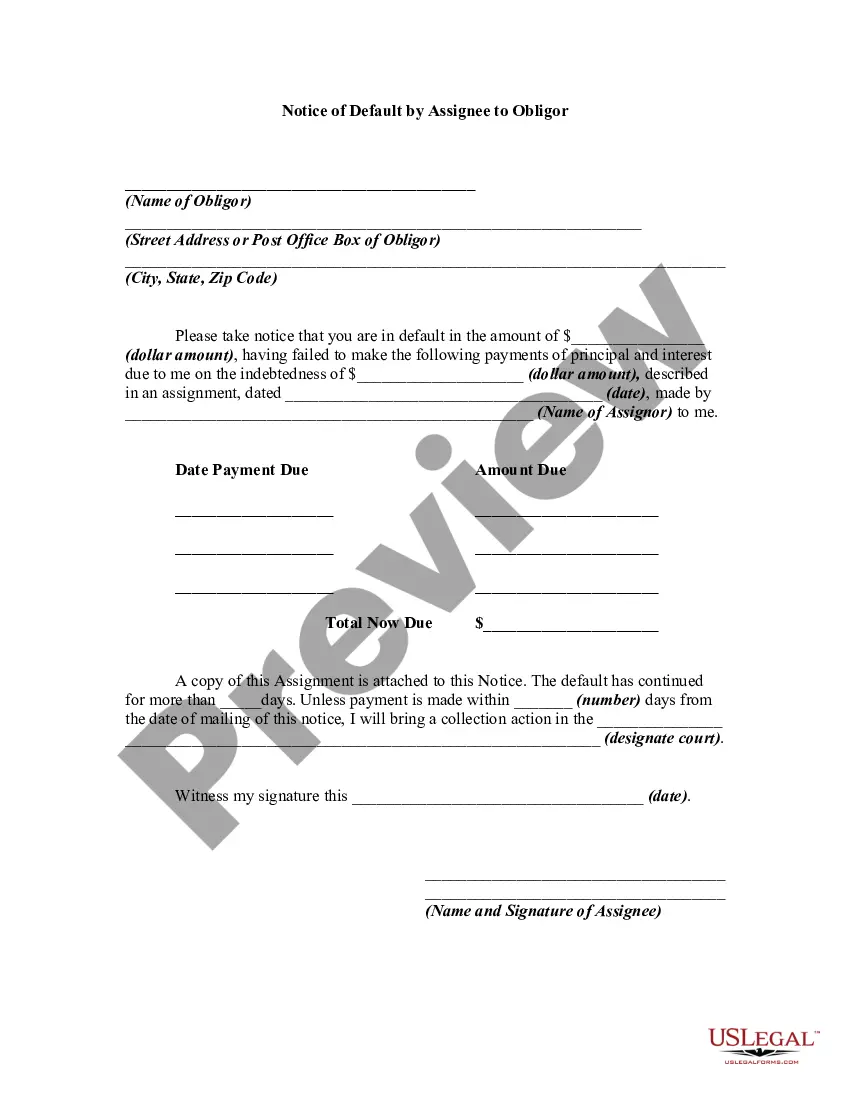
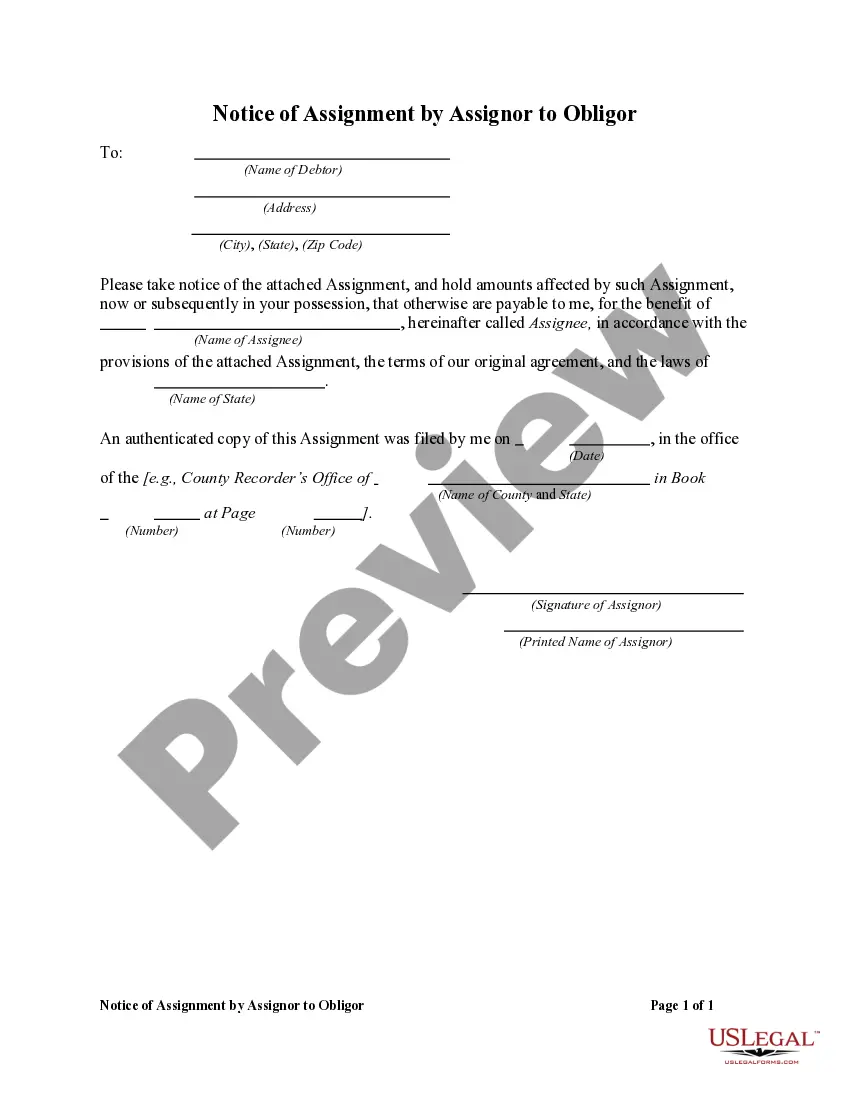
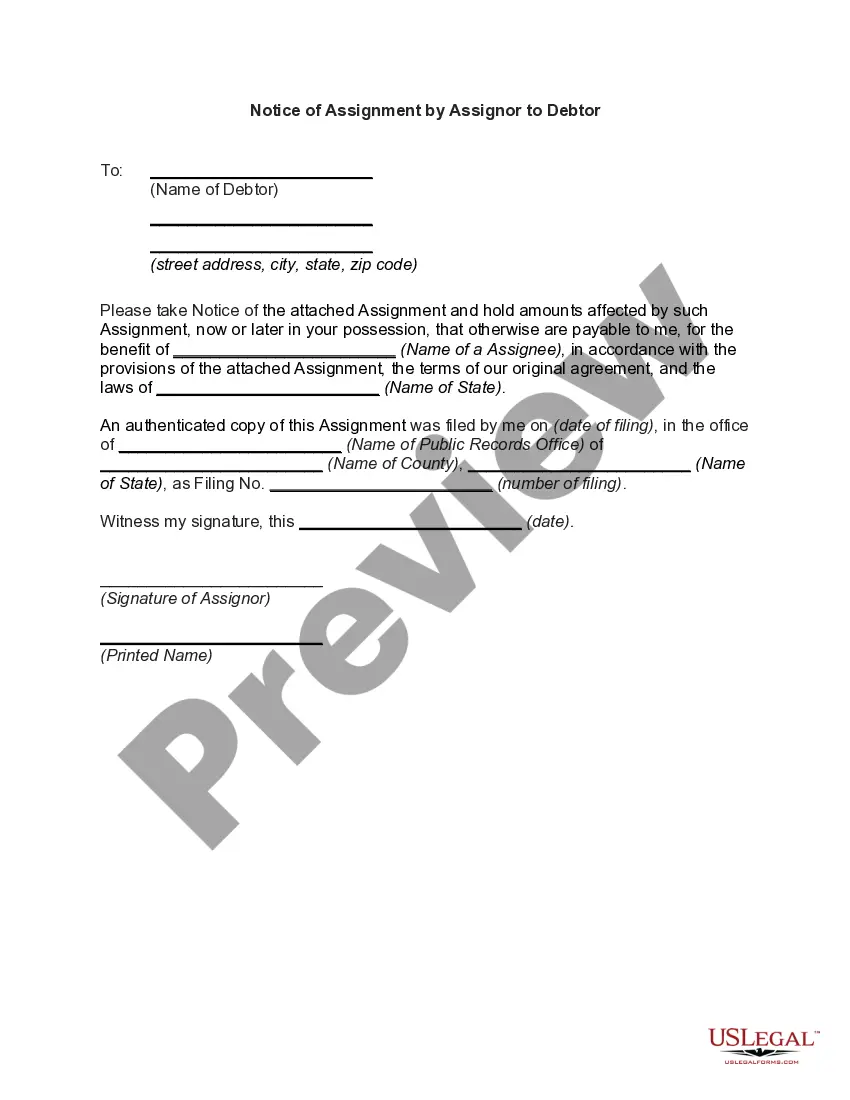
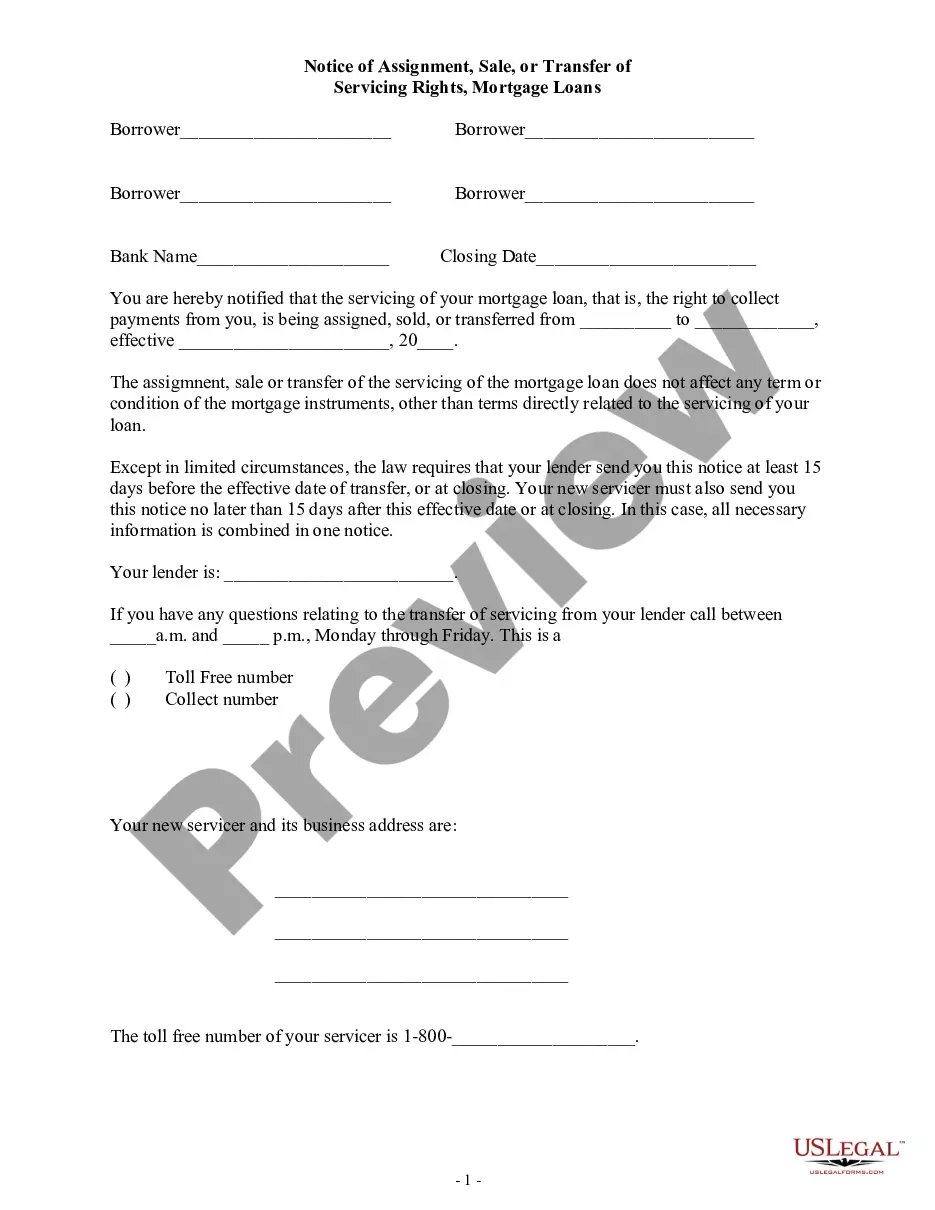
The Notice of Default by Assignee to Obligor is a legal document that informs an obligor (the party required to make payments) that they have failed to meet their payment obligations under a contract assigned to an assignee. This form is critical for the assignee to initiate formal collection actions and to assert their rights following an assignment of a contract. Unlike similar forms, this notice specifically addresses defaults in payment, allowing the assignee to directly communicate the breach to the obligor.
Key parts of this document
- Name and address of the obligor
- Amount of default payment owed
- Details of the assignment, including the assignor's name and the date of the assignment
- Specific payment due dates and amounts
- Signature and date line for the assignee
When this form is needed
This form should be used when an assignee needs to inform the obligor that they are in default on their payment obligations, as specified in the assignment agreement. It is necessary when payments have not been made as agreed and when the assignee wishes to formally alert the obligor of their default status before taking further legal action, such as filing a collection lawsuit.
Who can use this document
- Assignees who have been assigned rights to receive payment under a contract
- Individuals or businesses seeking to enforce payment obligations against obligors
- Attorneys representing clients in cases of payment defaults
- Organizations dealing with accounts receivable and collections
How to prepare this document
- Identify the parties involved by entering the name and address of the obligor.
- Specify the total amount of default payment owed.
- Enter the details of the assignment, including the assignor's name and the date of the assignment.
- List any payment due dates and corresponding amounts that have not been paid.
- Indicate the number of days the default has continued and the legal actions that may follow if payment is not received within the specified period.
- Complete and sign the form with the date to finalize the notice.
Notarization requirements for this form
This form usually doesn’t need to be notarized. However, local laws or specific transactions may require it. Our online notarization service, powered by Notarize, lets you complete it remotely through a secure video session, available 24/7.
Get your form ready online
Our built-in tools help you complete, sign, share, and store your documents in one place.
Make edits, fill in missing information, and update formatting in US Legal Forms—just like you would in MS Word.
Download a copy, print it, send it by email, or mail it via USPS—whatever works best for your next step.
Sign and collect signatures with our SignNow integration. Send to multiple recipients, set reminders, and more. Go Premium to unlock E-Sign.
If this form requires notarization, complete it online through a secure video call—no need to meet a notary in person or wait for an appointment.
We protect your documents and personal data by following strict security and privacy standards.

Make edits, fill in missing information, and update formatting in US Legal Forms—just like you would in MS Word.

Download a copy, print it, send it by email, or mail it via USPS—whatever works best for your next step.

Sign and collect signatures with our SignNow integration. Send to multiple recipients, set reminders, and more. Go Premium to unlock E-Sign.

If this form requires notarization, complete it online through a secure video call—no need to meet a notary in person or wait for an appointment.

We protect your documents and personal data by following strict security and privacy standards.
Common mistakes
- Failing to include the complete and correct name and address of the obligor.
- Not clearly stating the total amount owed or the specifics of the payments in default.
- Inaccurately entering the dates of missed payments.
- Neglecting to sign and date the form before sending it.
Benefits of completing this form online
- Immediate access to a professionally drafted legal document.
- Easy customization to fit specific cases and signatures.
- Downloadable and printable for convenience, enabling quick distribution.
- Guidance on completion and compliance with legal requirements, reducing errors.
Looking for another form?










Form popularity
FAQ
Obligee a person or organization to whom another party (the "obligor") owes an obligation. In a bonding situation, this is the party that requires and receives the protection of the bond.
A person who owes a legal obligation to another person. In the context of financing arrangements, an obligor is usually a debtor (for example, a borrower) or someone who has given security or a guarantee for the payment of a debt or the performance of an obligation.
The debtor or borrower, also called the mortgagor (in a mortgage) or obligor (in a deed of trust), is the person or entity who owes the debt or other obligation secured by the mortgage and owns the real property which is the subject of the loan.
Obligee is a person or entity to whom an obligation is owed. It is a term that is often used in contract law.
As nouns the difference between borrower and obligor is that borrower is one who borrows while obligor is (legalfinance) the party bearing a legal obligation to another party, the obligee.
An obligor, also known as a debtor, is a person or entity who is legally or contractually obliged to provide a benefit or payment to another. In a financial context, the term "obligor" refers to a bond issuer who is contractually bound to make all principal repayments and interest payments on outstanding debt.
As nouns the difference between obligor and guarantor is that obligor is (legalfinance) the party bearing a legal obligation to another party, the obligee while guarantor is a person, or company, that gives a guarantee.
In the law of secured transactions, a person that, with respect to an obligation secured by a security interest in or an agricultural lien on some collateral owes payment or other performance of the obligation, has provided property other than the collateral to secure payment or other performance of the obligation, or