Contract Between a Waste Management Company and the Owner of an Apartment Complex - Self-Employed
What this document covers
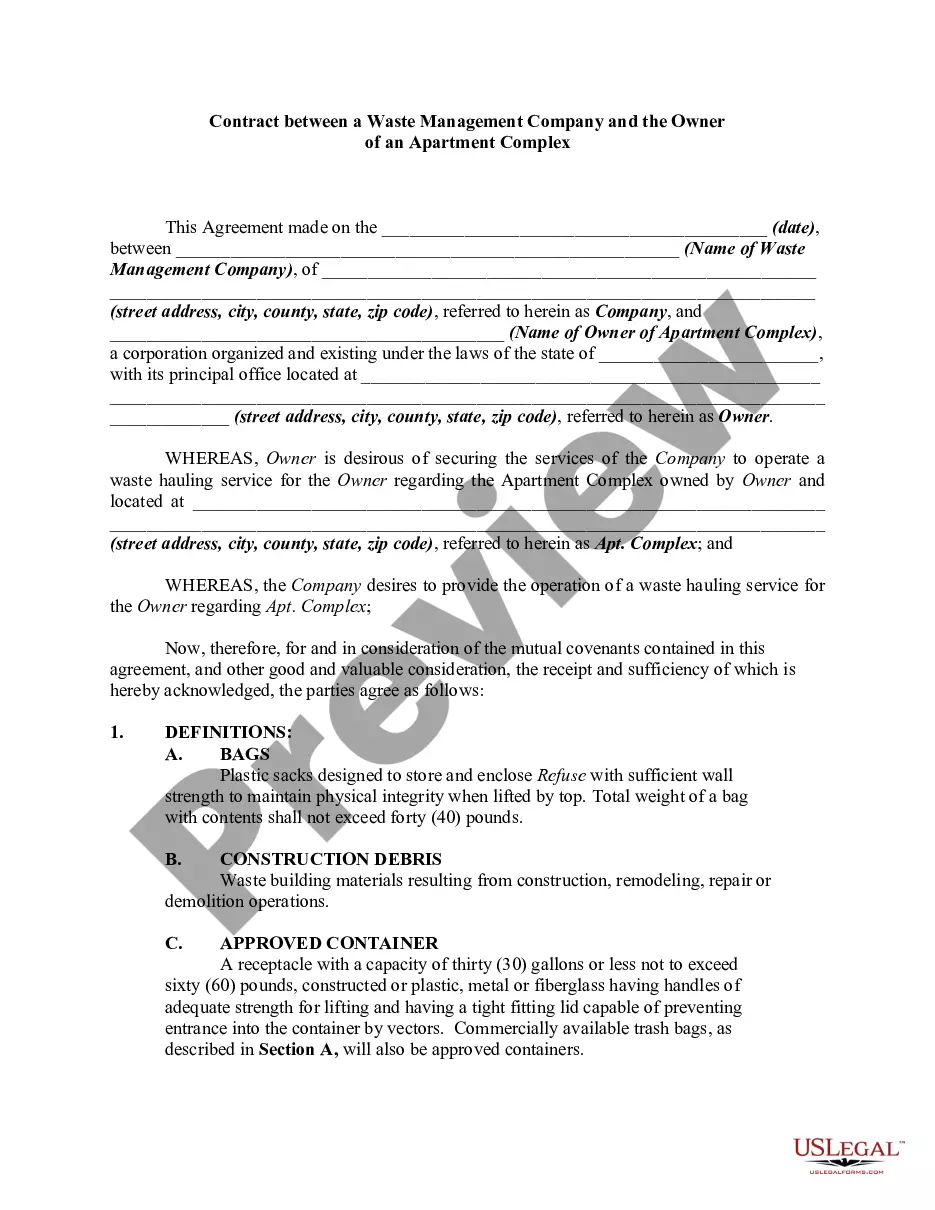
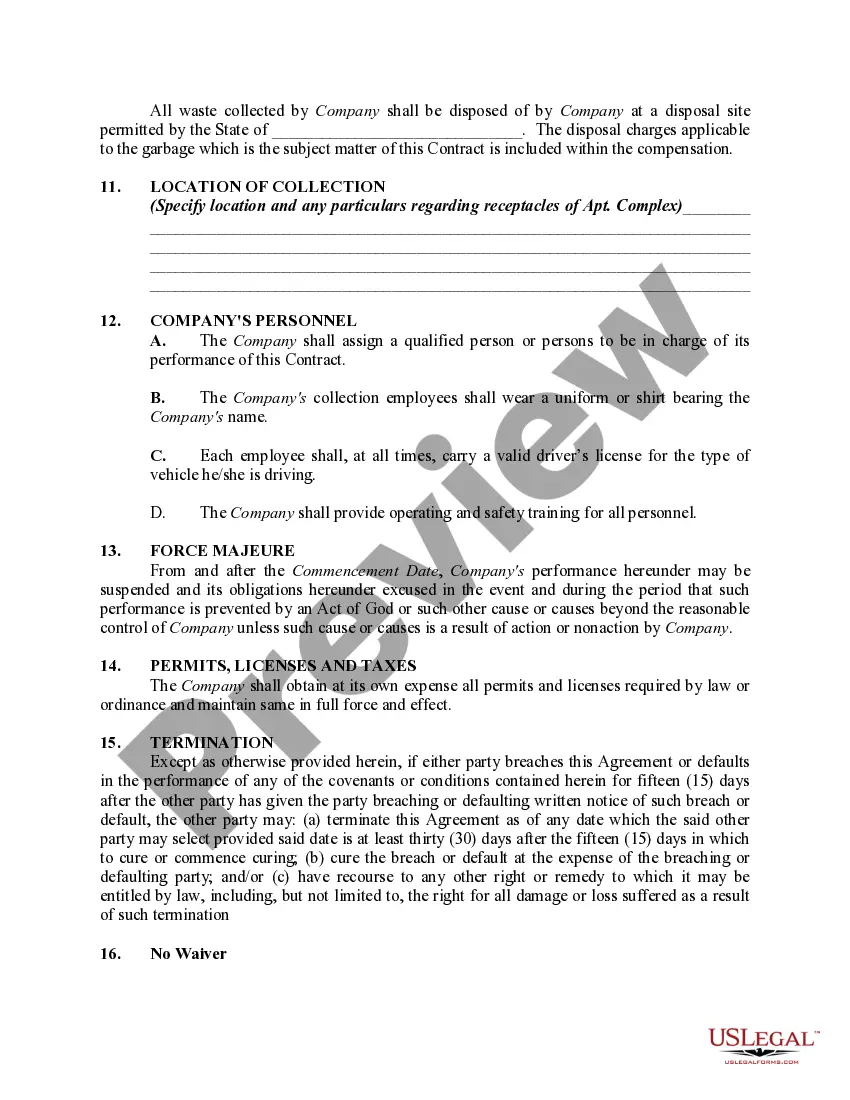
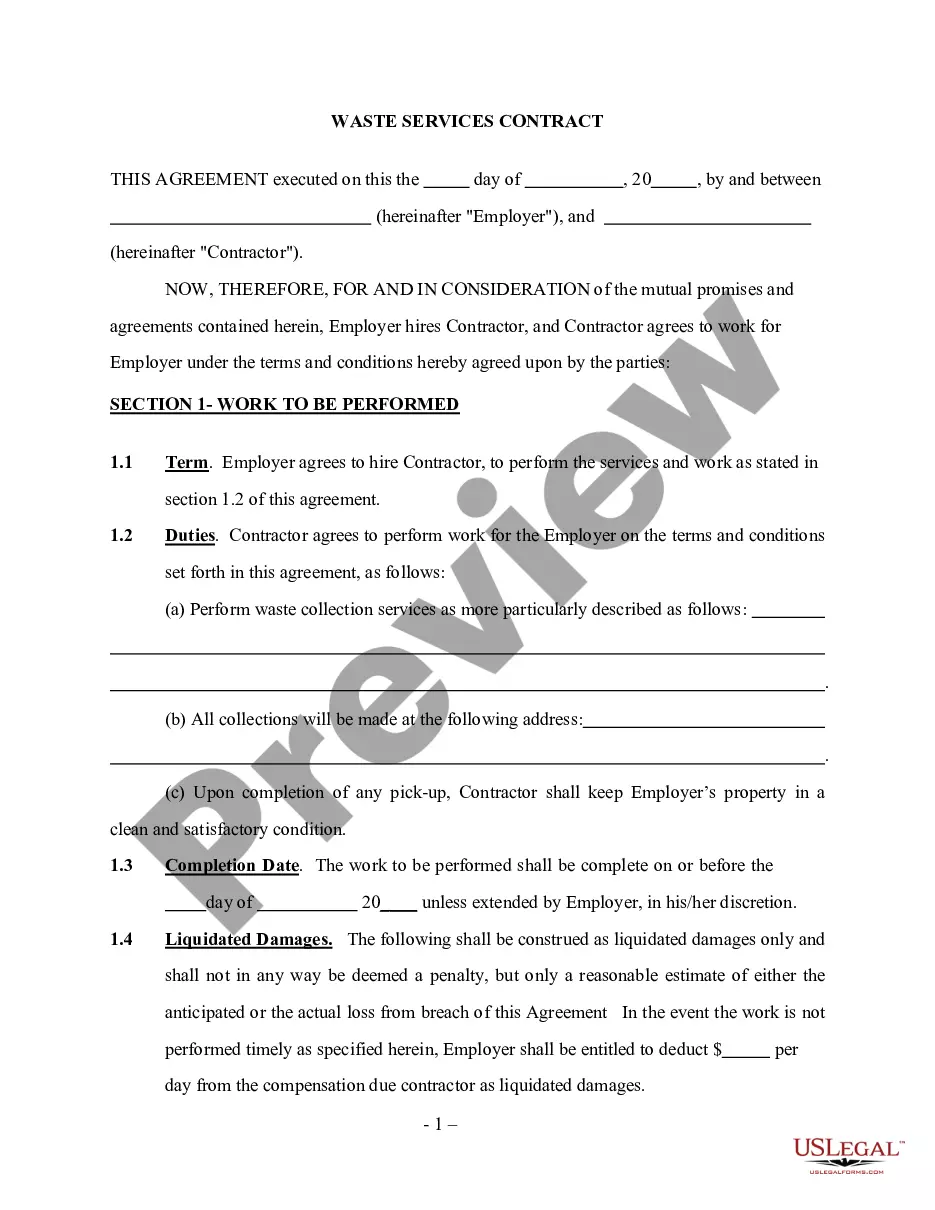
This Contract Between a Waste Management Company and the Owner of an Apartment Complex is a legally binding agreement that outlines the responsibilities and services related to waste collection for an apartment complex. It ensures that both parties understand their roles and obligations regarding waste management services, differentiating it from other service contracts by focusing specifically on waste hauling in a residential context.
Key components of this form
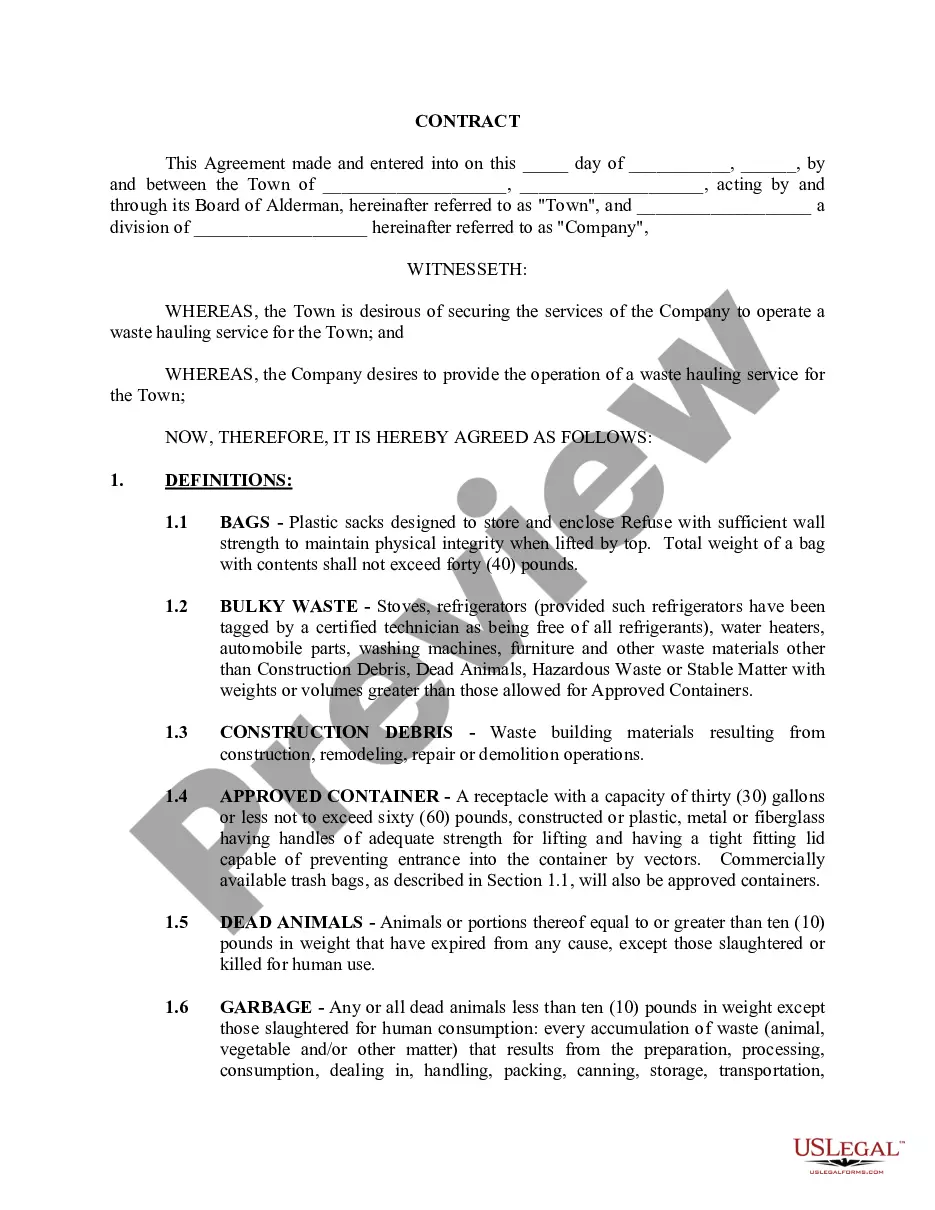
- Identification of the parties involved (waste management company and apartment owner) along with their addresses.
- Definitions of key terms such as garbage, refuse, and approved containers.
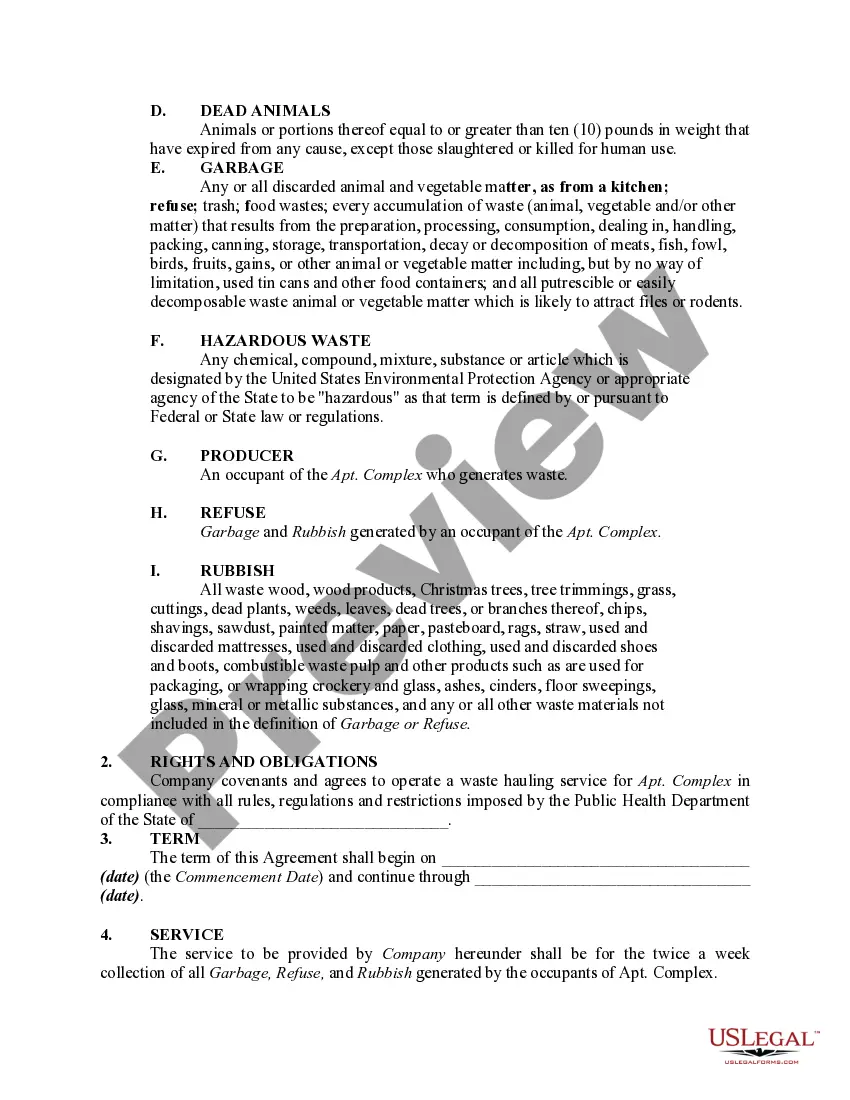
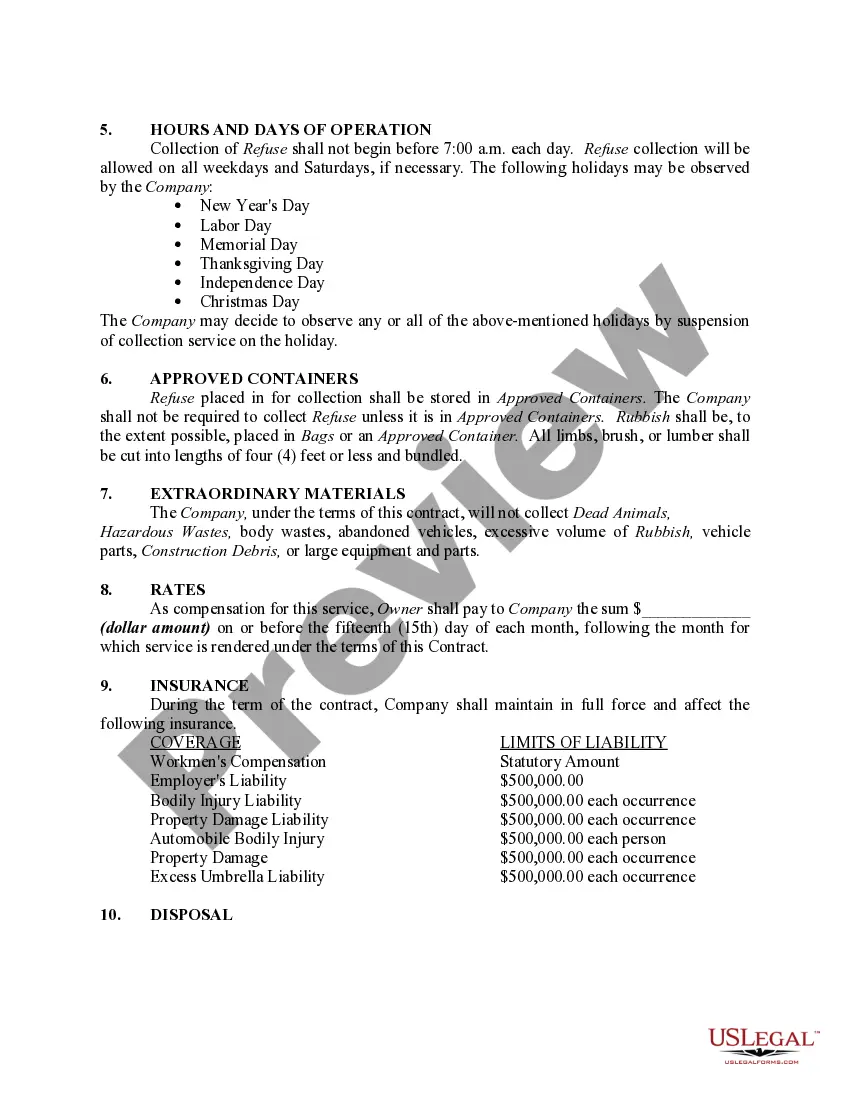
- Details on the service frequency, including collection days and hours of operation.
- Obligations of the waste management company, including compliance with local regulations.
- Compensation structure for services provided, including payment due dates.
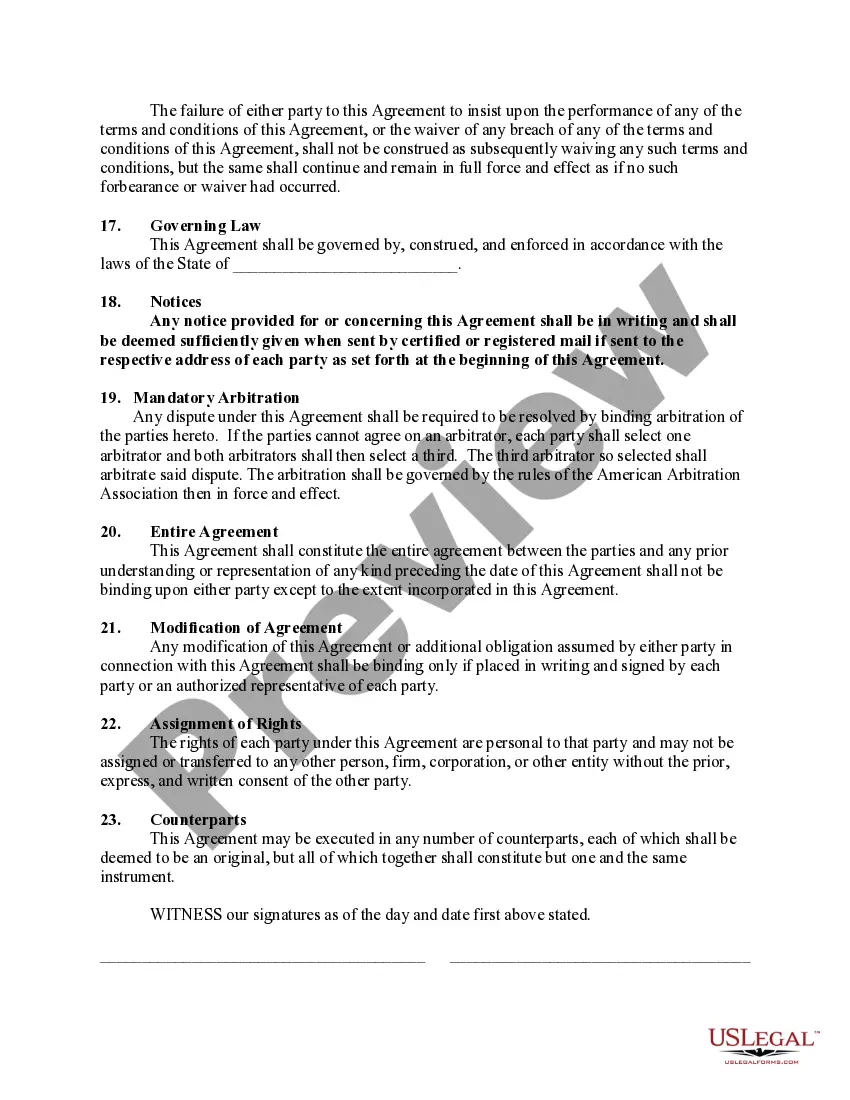
- Terms for termination of the contract and dispute resolution through mandatory arbitration.
When to use this document
This form should be used when an apartment complex owner seeks to establish a formal agreement with a waste management company for regular waste collection services. Scenarios may include transitioning to a new waste management provider, setting up services for a newly constructed apartment complex, or revising existing service agreements to meet changing needs.
Who this form is for
- Apartment complex owners who require organized waste management services.
- Waste management companies that provide residential waste hauling services.
- Property management companies overseeing multiple residential units that generate waste.
How to complete this form
- Identify the waste management company and the owner of the apartment complex, including their contact details.
- Specify the date of the agreement and the effective start and end dates for service.
- Detail the frequency and schedule for waste collection services.
- Clearly outline payment terms, including the amount due and payment deadlines.
- Add any specific requirements related to waste disposal and handling procedures.
Does this form need to be notarized?
This form usually doesn’t need to be notarized. However, local laws or specific transactions may require it. Our online notarization service, powered by Notarize, lets you complete it remotely through a secure video session, available 24/7.
Get your form ready online
Our built-in tools help you complete, sign, share, and store your documents in one place.
Make edits, fill in missing information, and update formatting in US Legal Forms—just like you would in MS Word.
Download a copy, print it, send it by email, or mail it via USPS—whatever works best for your next step.
Sign and collect signatures with our SignNow integration. Send to multiple recipients, set reminders, and more. Go Premium to unlock E-Sign.
If this form requires notarization, complete it online through a secure video call—no need to meet a notary in person or wait for an appointment.
We protect your documents and personal data by following strict security and privacy standards.

Make edits, fill in missing information, and update formatting in US Legal Forms—just like you would in MS Word.

Download a copy, print it, send it by email, or mail it via USPS—whatever works best for your next step.

Sign and collect signatures with our SignNow integration. Send to multiple recipients, set reminders, and more. Go Premium to unlock E-Sign.

If this form requires notarization, complete it online through a secure video call—no need to meet a notary in person or wait for an appointment.

We protect your documents and personal data by following strict security and privacy standards.
Mistakes to watch out for
- Failing to define terms clearly, leading to misunderstandings about services covered.
- Overlooking state-specific regulations that may affect the contract's enforceability.
- Not specifying the collection schedule or payment terms, which can lead to disputes.
Benefits of using this form online
- Convenience of downloading and completing the form at your own pace.
- Editability allows you to tailor the agreement to your specific circumstances.
- Access to templates drafted by licensed attorneys, ensuring legal reliability.
Looking for another form?
Form popularity
FAQ
The transportation of waste is the movement of waste over a specific area by trains, tankers, trucks, barges, or other vehicles. The types of wastes that may be transported range from municipal garbage to radioactive or hazardous wastes.Wastes may also be released while being loaded or unloaded during transportation.
Technical Siting Criteria. Access to Major Transportation Routes. Sufficient Space for Onsite Roadways, Queuing and Parking. Ability for Expansion. Buffer Space. Access to Utilities.
We Are One of The Nation's Leading Waste Management Franchises. When you're ready to invest in your future and become your own boss, there are a lot of opportunities for you to do so.
If you want to cancel your Waste Management account contact Customer Service at 1-800-592-9995 (M-F 7 AM-5 PM, SAT 9 AM-1 PM) to order.
Landfill. Incineration. Waste compaction. Composting. Vermicomposting.
Send a cancellation letter to your current waste hauling company, specifically citing the liquidated damages provision of the contract and specifying the exact date for removal of containers from your property.
Community: Householders and businesses put waste out for collection, and paid workers collect the containers and take them to a community composting, recycling or disposal site. There might be door-to-door collections, or communal containers placed near the road, marketplace or other public area.
For the full year 2019, collection and disposal internal revenue growth from volume was 2.6% and total Company internal revenue growth from volume was 2.3%. Throughout 2019 strong revenue growth from the collection and disposal business was partially offset by recycling commodity price headwinds.
Workers at local transfer stations sort the garbage dropped off by delivery trucks. Items that aren't accepted at local landfills, such as batteries or other hazardous items, are removed before the remaining materials are compacted and reloaded onto trucks, trains or barges to be taken to a final destination.