Mortgage Extension Agreement with Assumption of Debt by New Owner of Real Property Covered by the Mortgage and Increase of Interest
About this form
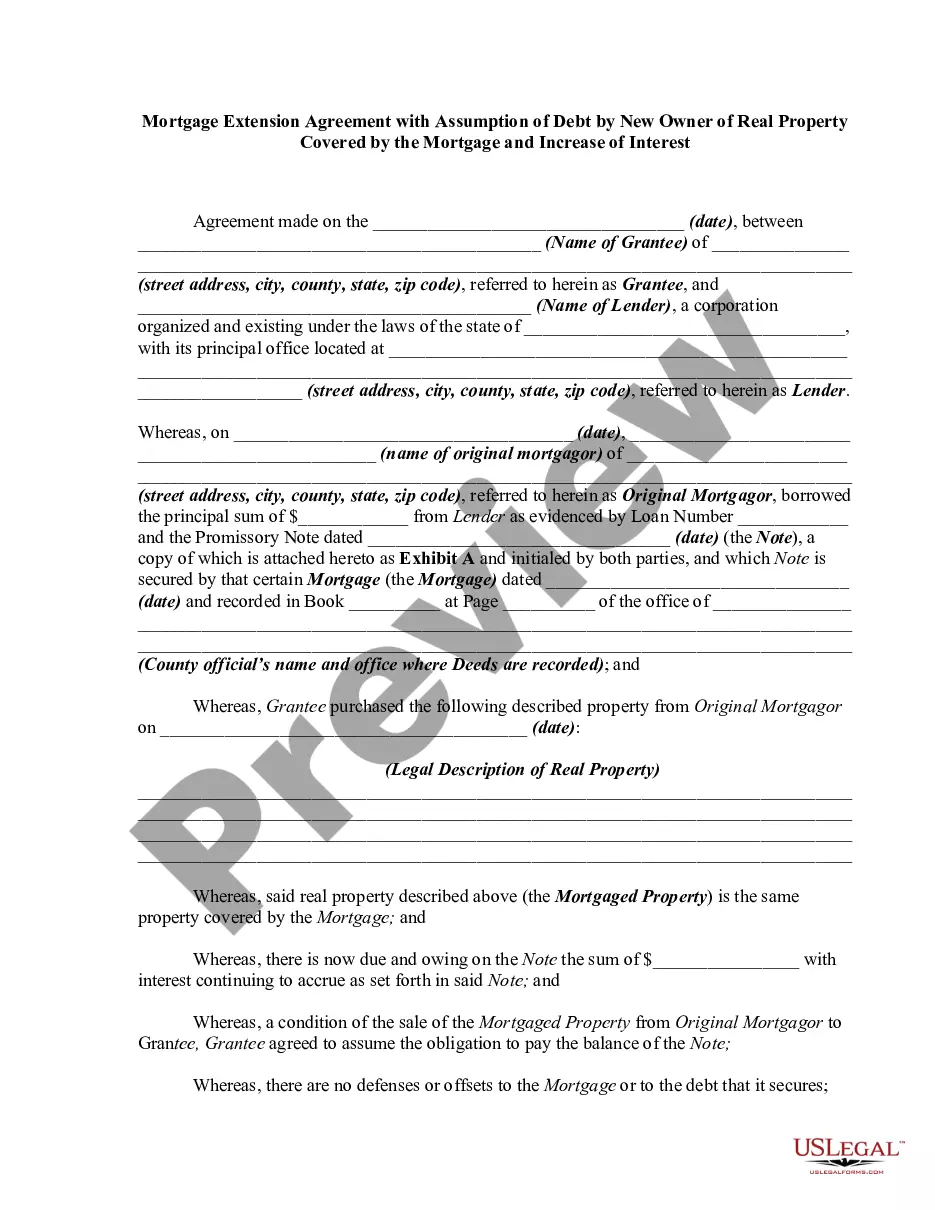
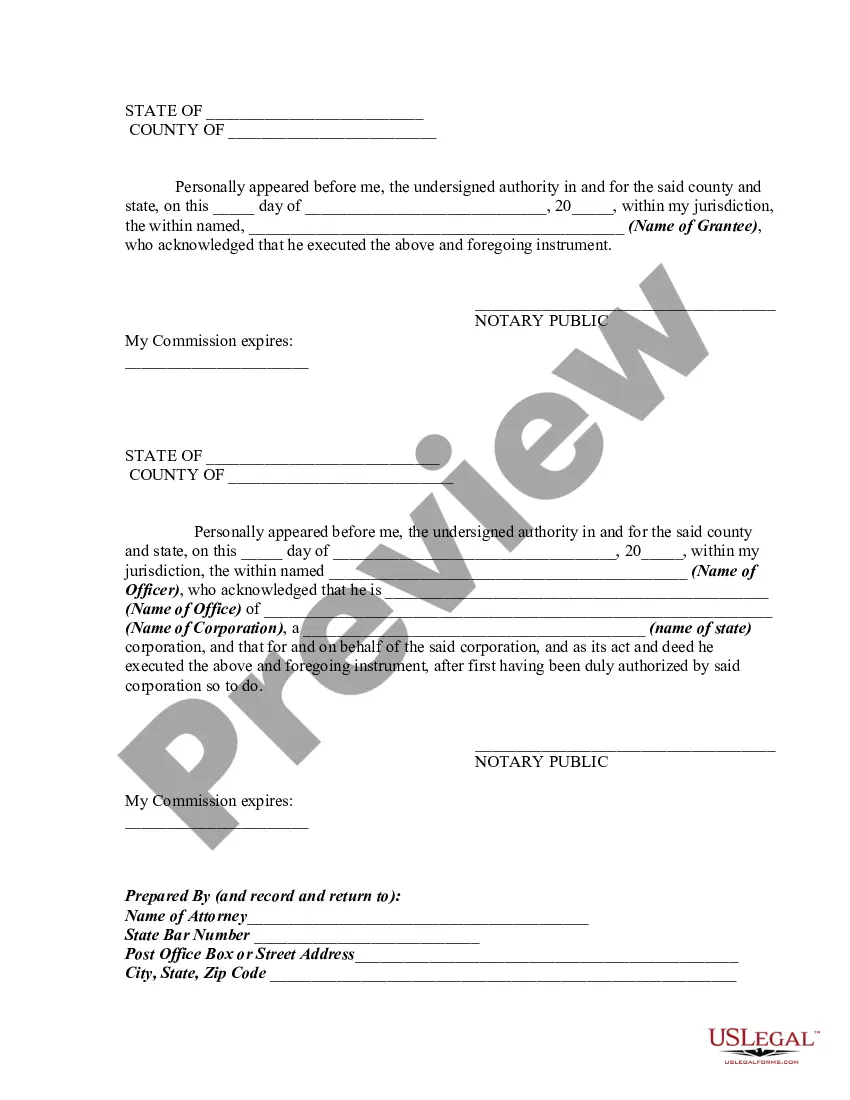
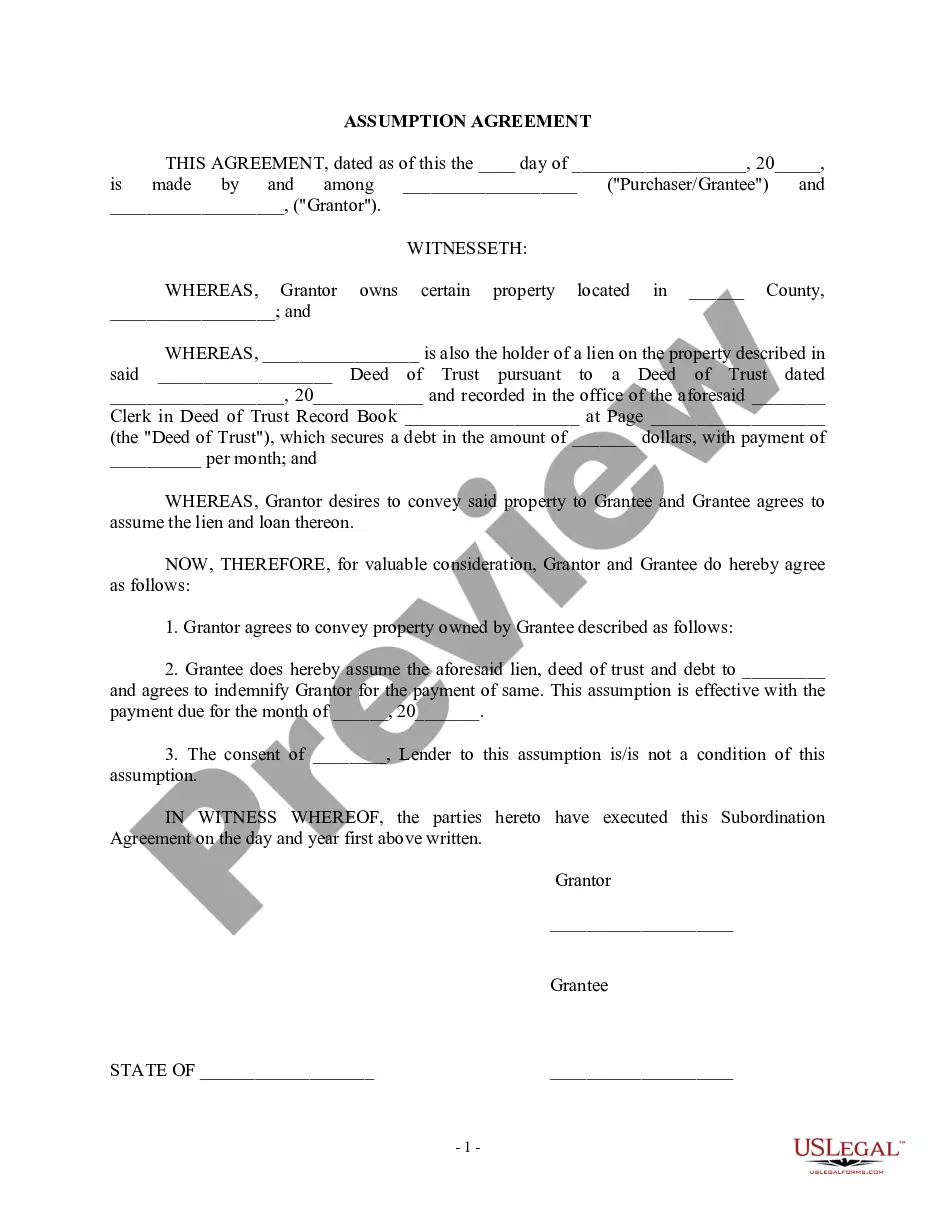
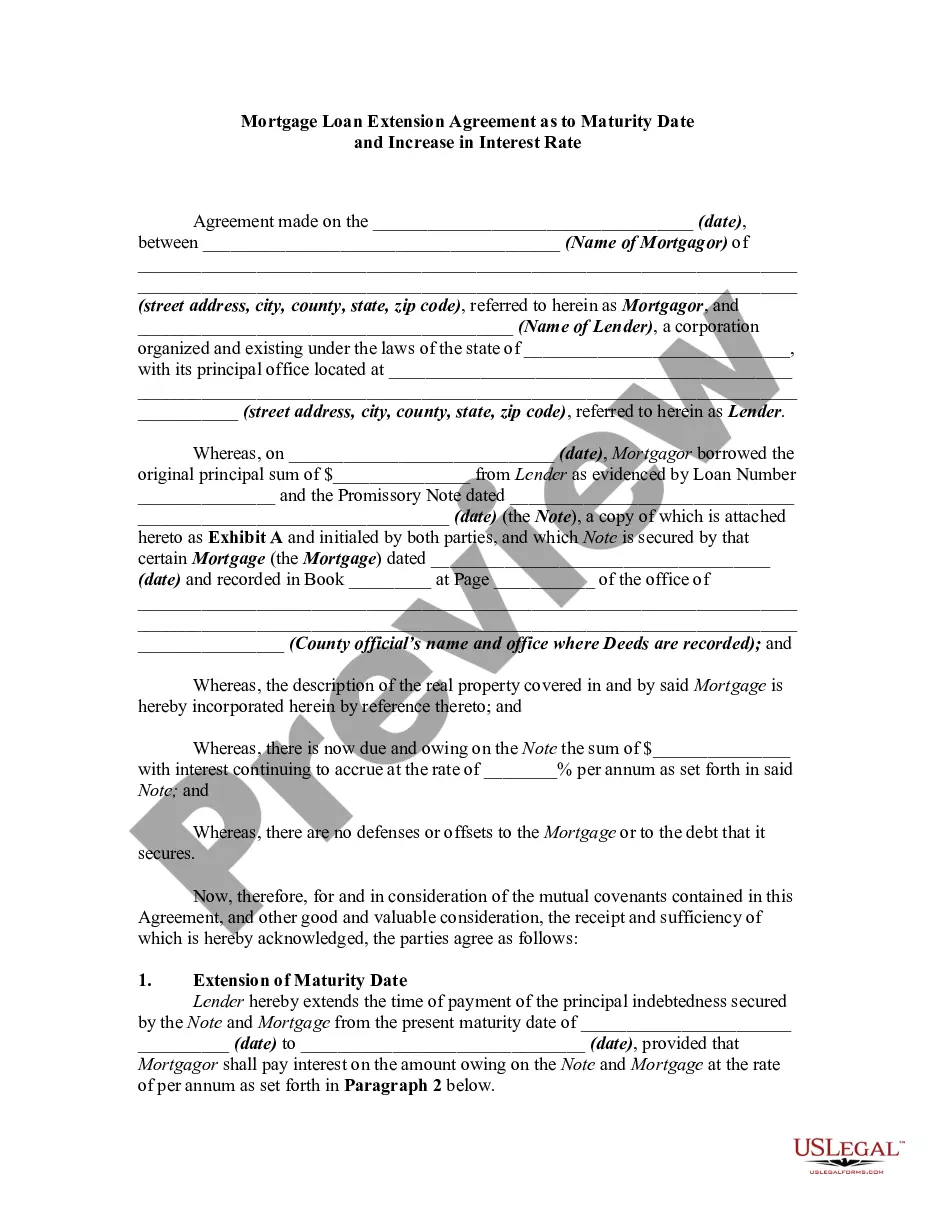
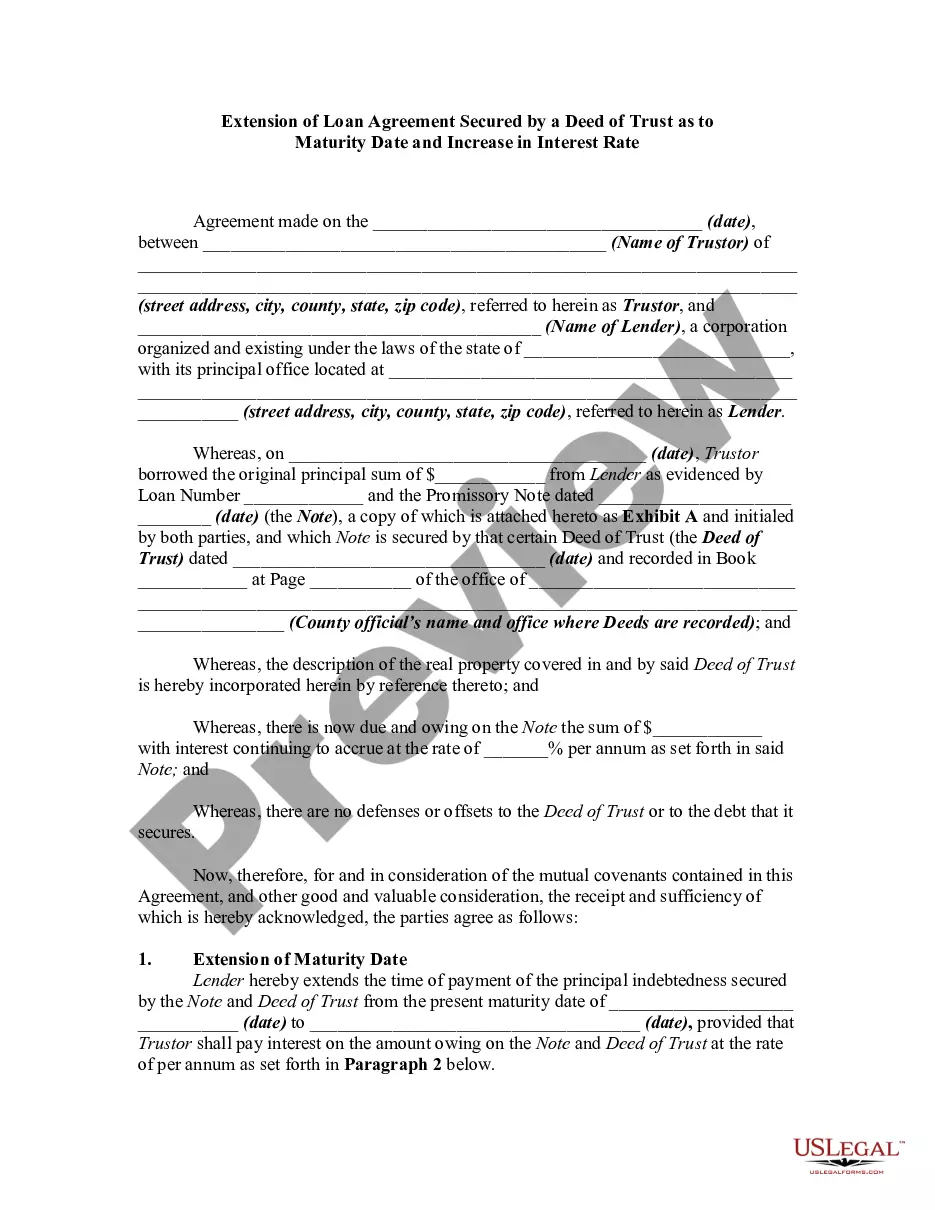
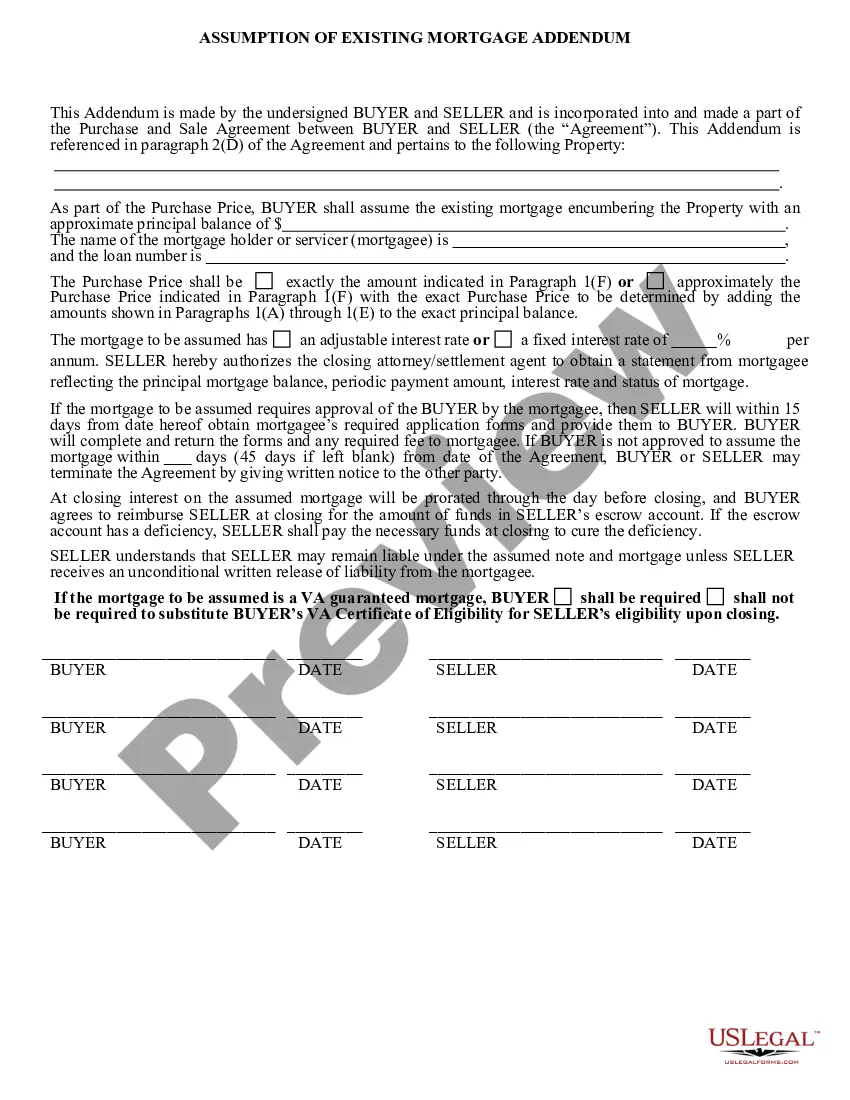
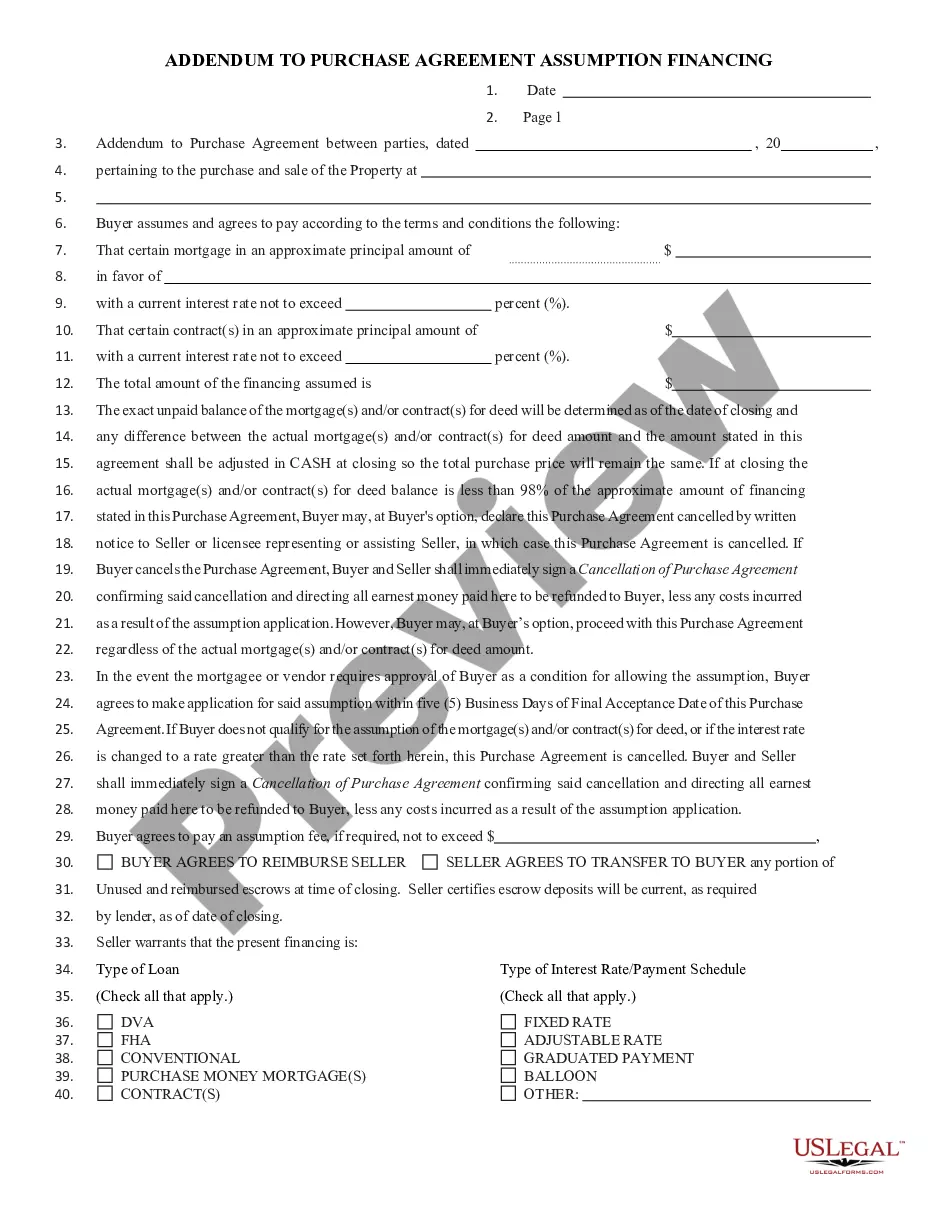
The Mortgage Extension Agreement with Assumption of Debt by New Owner of Real Property Covered by the Mortgage and Increase of Interest is a legal document that modifies an existing mortgage agreement. This form allows a new property owner (Grantee) to take over an existing mortgage from the original borrower, while also extending the loan's maturity date and increasing the interest rate. This agreement is essential to formalize the transfer of debt obligations and establish new payment terms. Similar to a standard mortgage modification, this document is specifically tailored for situations where a property's ownership is changing hands.
Key components of this form
- Parties involved: Identification of the Grantee (new owner) and the Lender (bank or financial institution).
- Original loan details: Information about the original mortgagor, loan amount, and terms.
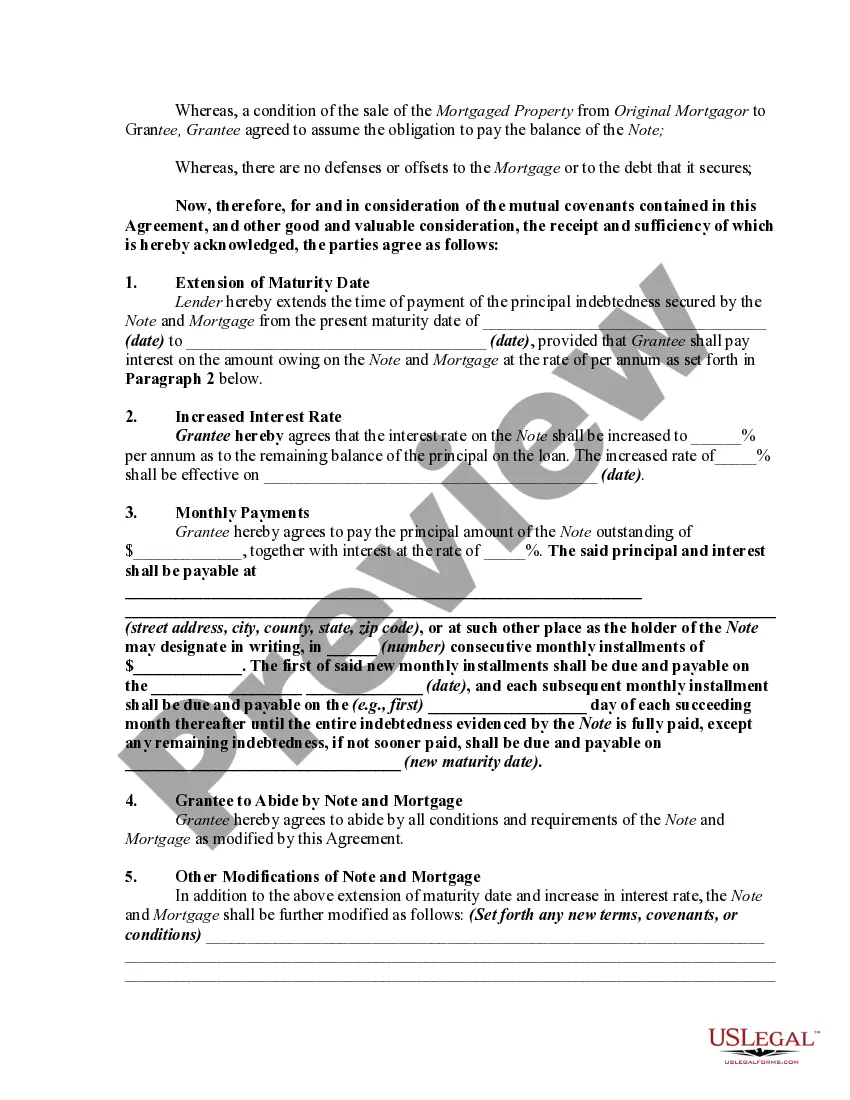
- Extension of maturity date: New agreement on the timeline for loan repayment.
- Increased interest rate: Specification of new interest rates applicable to the outstanding loan balance.
- Monthly payment structure: Details about how payments will be organized and scheduled.
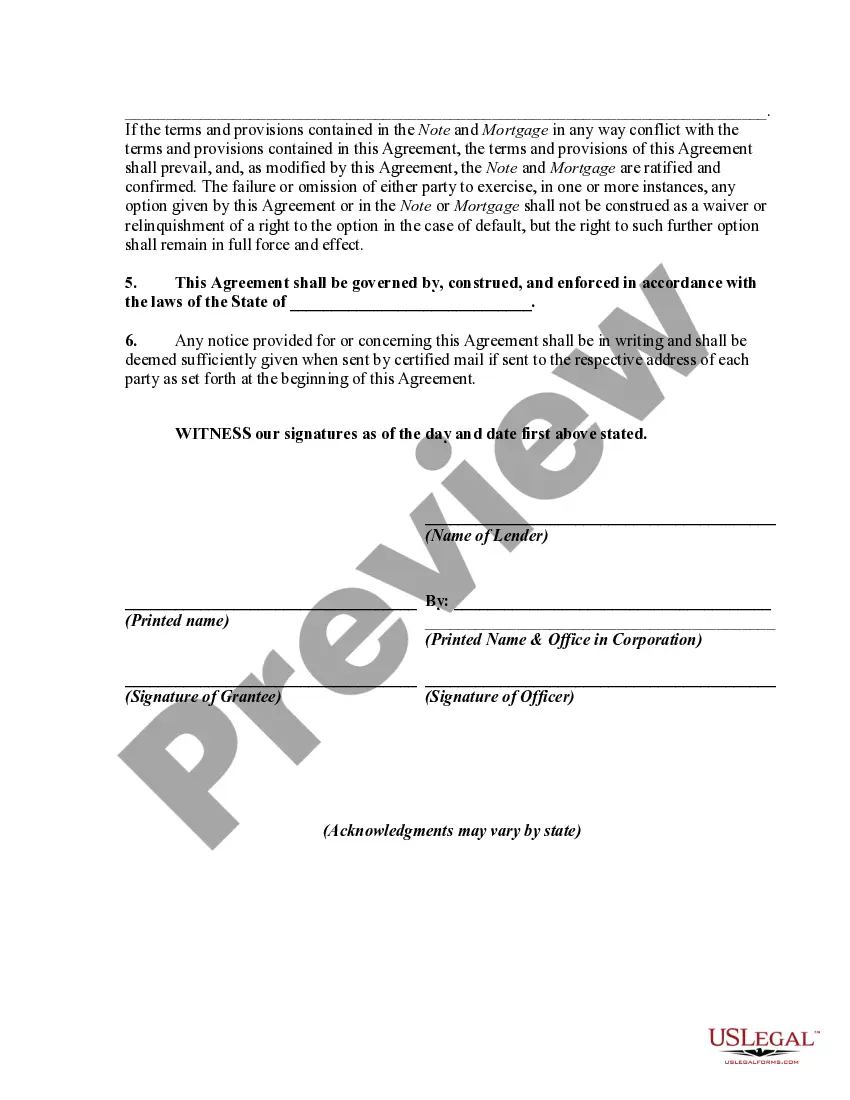
- Governing law: Indication of the state law applicable to the agreement.

When to use this form
This form is necessary when a property has been sold to a new owner who agrees to assume the existing mortgage, especially when the terms of the original loan need to be altered, such as the maturity date or interest rate. Common scenarios include real estate transactions where the buyer does not secure new financing but instead takes over the mortgage from the seller, allowing for continuity in loan management while adjusting to new terms.
Who should use this form
This agreement should be used by:
- New property owners (Grantees) who assume an existing mortgage from the original borrower.
- Lenders who need to document the transfer of mortgage obligations and changes to loan terms.
- Real estate professionals or attorneys managing the sale process of real estate with existing mortgages.
Completing this form step by step
- Identify the parties: Fill in the names and addresses of the Grantee and the Lender.
- Provide original loan details: Include information about the original mortgagor and loan specifics.
- Specify the new maturity date: Indicate the new date by which the mortgage must be paid off.
- Enter the increased interest rate: Clearly state the new interest rate that will apply to the balance of the loan.
- Detail monthly payment terms: Define how many installments will be made and the amount of each payment.
- Obtain signatures: Ensure that all parties sign the agreement and have it recorded as necessary.
Does this form need to be notarized?
To make this form legally binding, it must be notarized. Our online notarization service, powered by Notarize, lets you verify and sign documents remotely through an encrypted video session.
Get your form ready online
Our built-in tools help you complete, sign, share, and store your documents in one place.
Make edits, fill in missing information, and update formatting in US Legal Forms—just like you would in MS Word.
Download a copy, print it, send it by email, or mail it via USPS—whatever works best for your next step.
Sign and collect signatures with our SignNow integration. Send to multiple recipients, set reminders, and more. Go Premium to unlock E-Sign.
If this form requires notarization, complete it online through a secure video call—no need to meet a notary in person or wait for an appointment.
We protect your documents and personal data by following strict security and privacy standards.

Make edits, fill in missing information, and update formatting in US Legal Forms—just like you would in MS Word.

Download a copy, print it, send it by email, or mail it via USPS—whatever works best for your next step.

Sign and collect signatures with our SignNow integration. Send to multiple recipients, set reminders, and more. Go Premium to unlock E-Sign.

If this form requires notarization, complete it online through a secure video call—no need to meet a notary in person or wait for an appointment.

We protect your documents and personal data by following strict security and privacy standards.
Common mistakes
- Failing to accurately identify all parties involved in the agreement.
- Not specifying the correct new maturity date or interest rate.
- Omitting necessary signatures, leading to an invalid agreement.
- Not consulting state-specific requirements for mortgage modifications.
Benefits of completing this form online
- Immediate access to customizable legal forms at your convenience.
- Easy editing options allow for quick modifications based on individual needs.
- Secure storage and retrieval of completed forms through the platform.
- Access to supportive resources for guidance while completing the form.
Looking for another form?


Form popularity
FAQ
An assumable mortgage allows a buyer to take over the seller's mortgage. Once the assumption is complete, you take over the payments on a monthly basis, and the person you assume the loan from is released from further liability. If you assume someone's mortgage, you're agreeing to take on their debt.
You may be charged a loan assumption fee on top of your closing costs. For example, FHA lenders can charge buyers up to $900 for assuming a loan.
You can transfer a mortgage to another person if the terms of your mortgage say that it is assumable. If you have an assumable mortgage, the new borrower can pay a flat fee to take over the existing mortgage and become responsible for payment. But they'll still typically need to qualify for the loan with your lender.
An assumable mortgage allows a buyer to take over the seller's mortgage. Once the assumption is complete, you take over the payments on a monthly basis, and the person you assume the loan from is released from further liability. If you assume someone's mortgage, you're agreeing to take on their debt.
You can legally take over a mortgage by assuming the original loan, provided you meet the bank's requirements. An "assumable" loan is secured by a mortgage that contains no "due on sale" provision. Ask to see the seller's mortgage documents to determine if it is assumable.
An assumable mortgage allows a home buyer to not only move into the seller's former house but to step into the seller's loan, too.For a buyer, assuming a mortgage can save thousands of dollars in interest payments and closing costs but it could require making a big down payment.
If a loan is "assumable," you're in luck: That means you can transfer the mortgage to somebody else. In most cases, the new borrower needs to qualify for the loan. To complete a transfer of an assumable loan, request the change with your lender.
You will need a minimum credit score of 580 to 620, depending on individual lender guidelines. Your household income cannot exceed 115% of the average median income for the area. Your debt ratios should not exceed 29% for your housing expenses and 41% for your total monthly expenses.
An assumable mortgage is an arrangement in where an outstanding mortgage and its terms can be transferred from the current owner to a buyer.