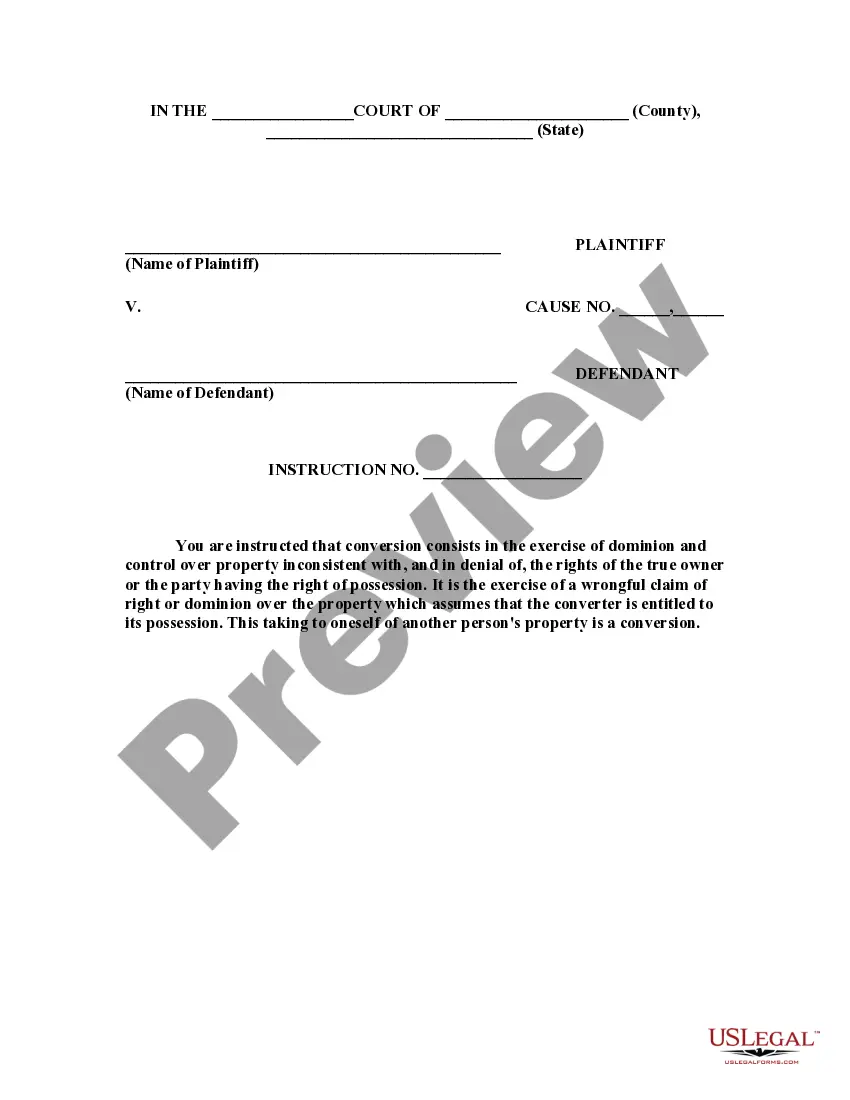
Instruction to Jury as to the Definition of Conversion
Overview of this form
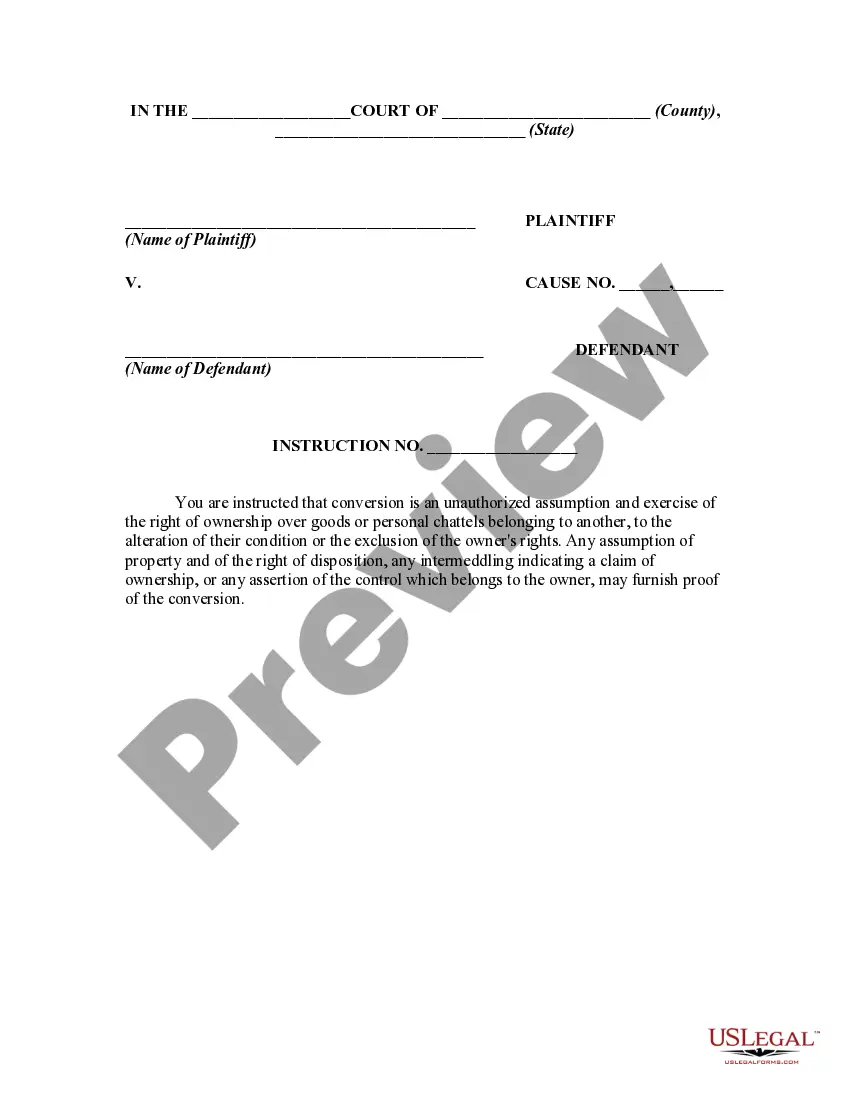
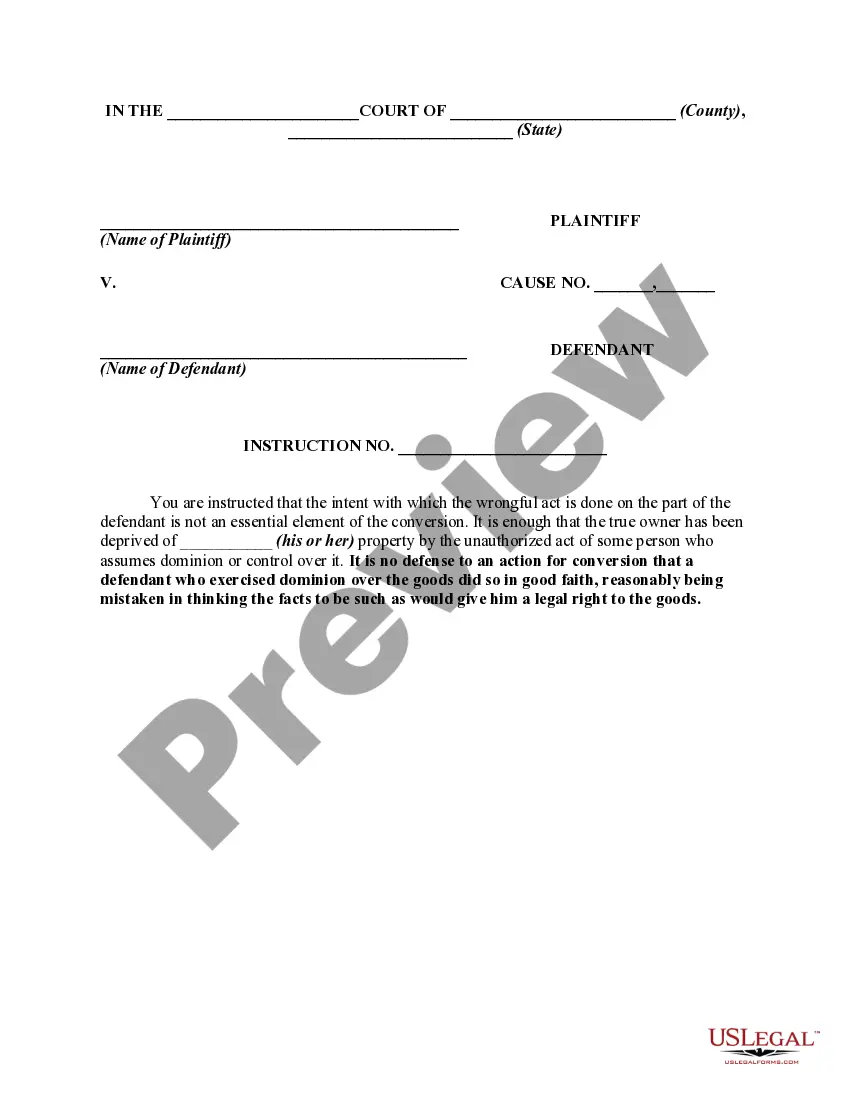
The Instruction to Jury as to the Definition of Conversion is a legal document used to explain the concept of conversion to a jury in a civil case. The form outlines the judge's guidance regarding the elements that constitute conversion, which is the unauthorized exercise of control over someone else's property. Understanding this definition is crucial for the jury as they make decisions regarding the case, distinguishing it from other legal concepts like theft or property disputes.
Form components explained
- Case title, including names of the plaintiff and defendant
- Cause number for court records
- Instruction number to identify specific jury instructions
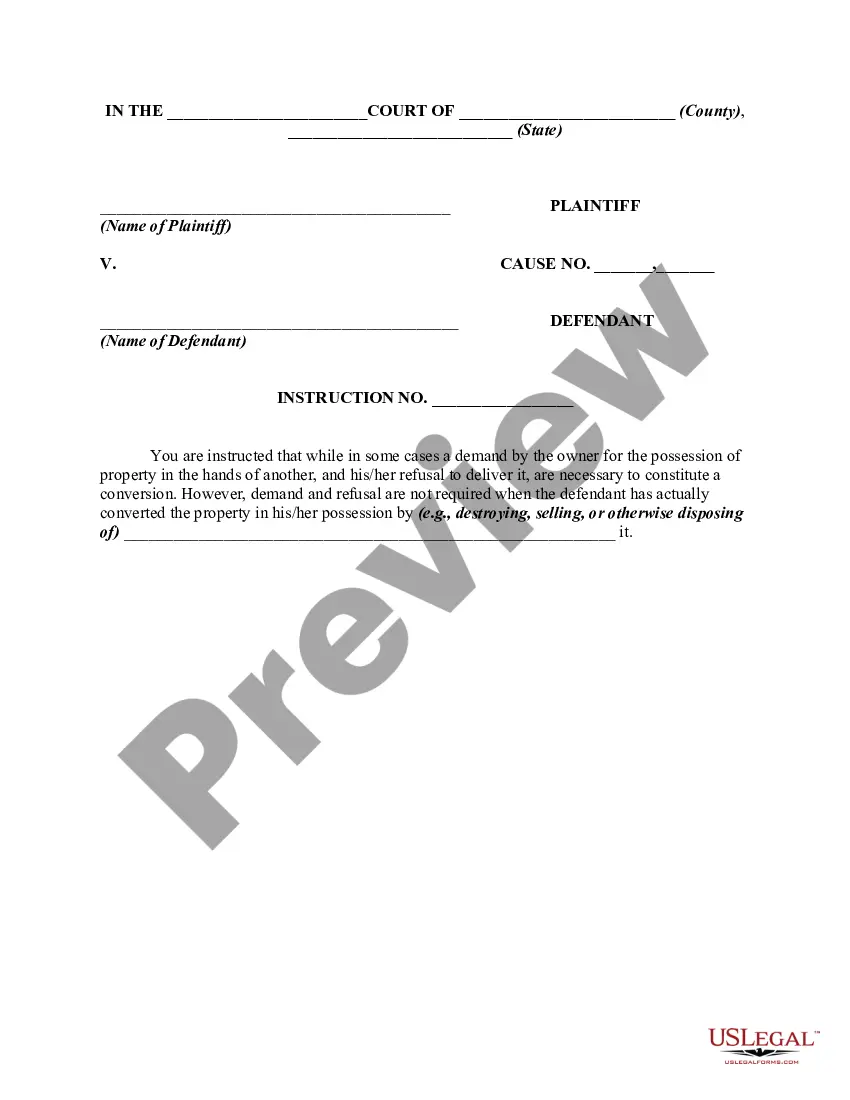
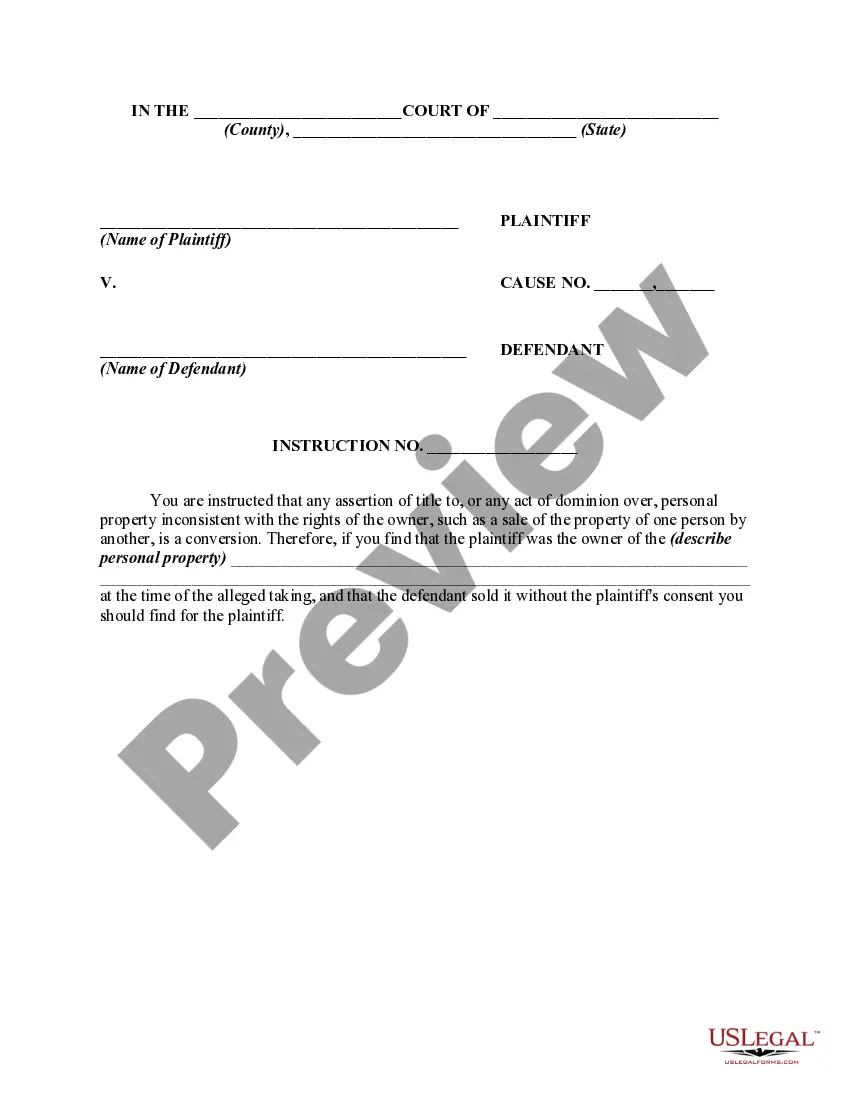
- Definition of conversion, including elements such as dominion and control over property
- Clarification of the wrongful claim of rights over another person's property
Common use cases
This form is used when a jury is being instructed on the legal definition of conversion in a civil lawsuit. You will need this form when the case involves disputes over property rights, and it's important for the jury to fully understand what constitutes conversion in order to make an informed decision about liability and damages.
Intended users of this form
- Judges issuing jury instructions in a civil trial
- Attorneys preparing for a civil trial involving property disputes
- Litigants in cases where conversion claims are made
Steps to complete this form
- Begin by filling in the names of the plaintiff and defendant at the top of the form.
- Enter the cause number, assigned by the court, next to the case title.
- Specify the instruction number for internal tracking purposes.
- Clearly state the legal definition of conversion as outlined in the form content.
- Ensure that the instruction accurately reflects the details pertinent to the case being tried.
Notarization guidance
This form does not typically require notarization unless specified by local law. Always check the specific legal requirements applicable in your jurisdiction before proceeding.
Get your form ready online
Our built-in tools help you complete, sign, share, and store your documents in one place.
Make edits, fill in missing information, and update formatting in US Legal Forms—just like you would in MS Word.
Download a copy, print it, send it by email, or mail it via USPS—whatever works best for your next step.
Sign and collect signatures with our SignNow integration. Send to multiple recipients, set reminders, and more. Go Premium to unlock E-Sign.
If this form requires notarization, complete it online through a secure video call—no need to meet a notary in person or wait for an appointment.
We protect your documents and personal data by following strict security and privacy standards.

Make edits, fill in missing information, and update formatting in US Legal Forms—just like you would in MS Word.

Download a copy, print it, send it by email, or mail it via USPS—whatever works best for your next step.

Sign and collect signatures with our SignNow integration. Send to multiple recipients, set reminders, and more. Go Premium to unlock E-Sign.

If this form requires notarization, complete it online through a secure video call—no need to meet a notary in person or wait for an appointment.

We protect your documents and personal data by following strict security and privacy standards.
Typical mistakes to avoid
- Failing to adapt the instruction to the specific facts of the case, which can cause confusion for jurors.
- Omitting essential elements of the definition of conversion, which may lead to misinterpretation.
- Using outdated or incorrect case law references that do not match current legal standards.
Why use this form online
- Convenience of accessing and downloading the form anytime from anywhere.
- Editability allows for customization to fit specific case needs.
- Reliability of a form drafted by licensed attorneys familiar with state laws.
Legal use & context
- The form serves as a guide for jurors to understand their role in determining conversion claims.
- It is legally significant, as improper jury instructions can be grounds for appeal.
- The instructions must align with prevailing legal standards and case law in the relevant jurisdiction.
Key takeaways
- The Instruction to Jury as to the Definition of Conversion clarifies the concept for jurors.
- Proper use of this form is essential for ensuring fair legal proceedings regarding property disputes.
- Customizing the instructions based on the specifics of the case is crucial for clarity.
Looking for another form?
Form popularity
FAQ
The full cite should be to "Judicial Council of California Civil Jury Instructions (year)". The short cite to particular instructions should be to "CACI No.
Conversion in California is a civil cause of action that applies when a person unlawfully and without permission, took or interfered with someone else's possession of their property. The victim can bring a claim for recovery of the property, or compensation for the value of the lost property.
By tortuous taking; by any use or appropriation of the use of the person in possession, indicating a claim of right in opposition to rights of the owner; or. refusal to give up possession to the owner on demand.
These are civil or criminal jury instructions approved by a state court, bench committee, or bar association. They are commonly used by courts in the relevant jurisdiction, as they ease the process of drafting fair jury instructions and theoretically do not have errors.
Prosecutors are responsible for bringing charges against people who have stolen property. Conversion is the civil equivalent of criminal theft charges. Individuals who want to sue to reclaim the value of their property may sue in small claims court or by hiring a civil attorney to handle the case for them.
These official Judicial Council Civil Jury Instructions are referred to as "CACI" (pronounced "Kay See"), which stands for California Civil Instructions.
Conversion can occur when someone, acting without your consent, does any of the following with your property: Takes and fails to return your property. Sells your property. Substantially changes your property, like cutting down trees to use the wood in construction.
Conversion in California is a civil cause of action that applies when a person unlawfully and without permission, took or interfered with someone else's possession of their property. The victim can bring a claim for recovery of the property, or compensation for the value of the lost property.
First click on Secondary Sources under the Content Types tab on the main Westlaw Edge page. Then click on Jury Instructions