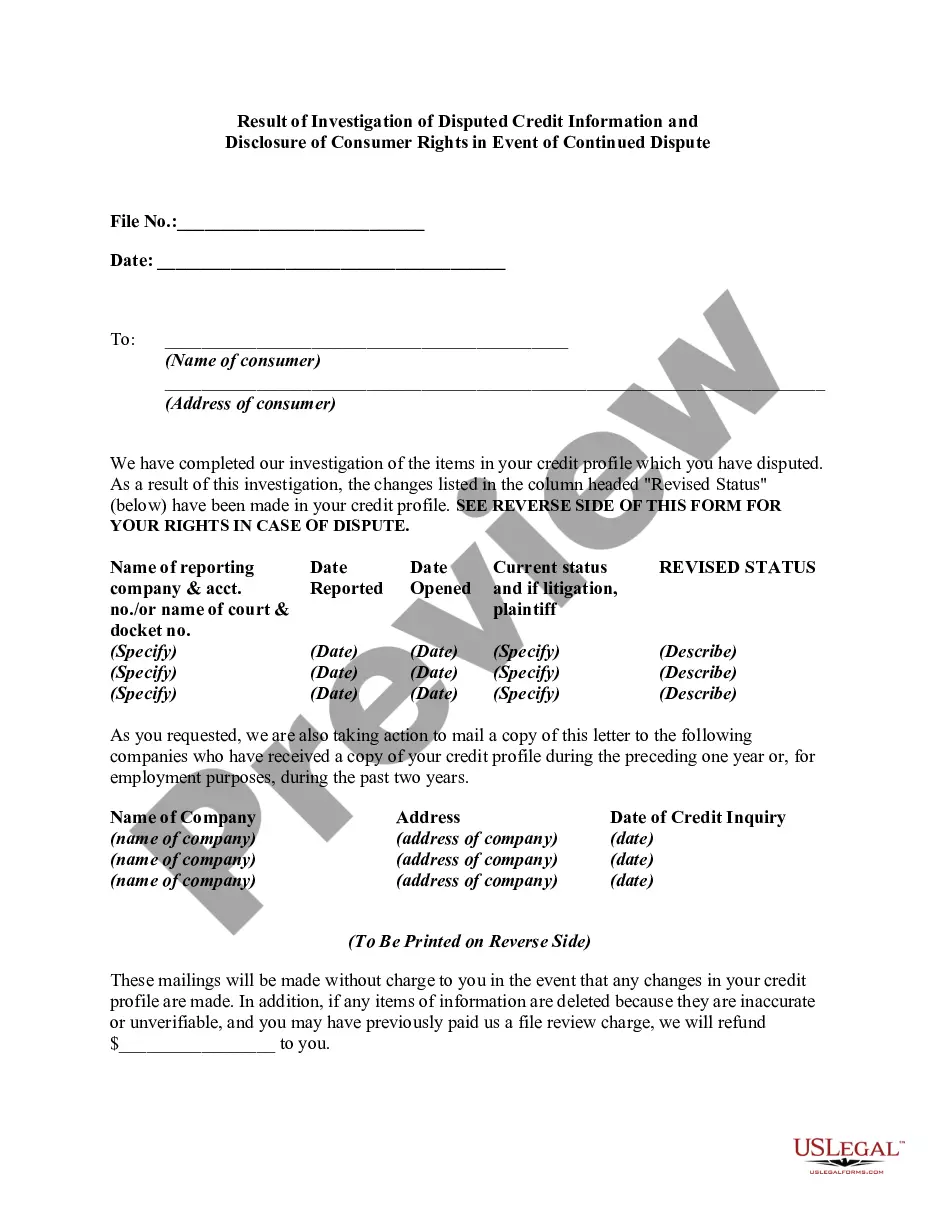
Result of Investigation of Disputed Credit Information and Disclosure of Consumer Rights in Event of Continued Dispute
Understanding this form
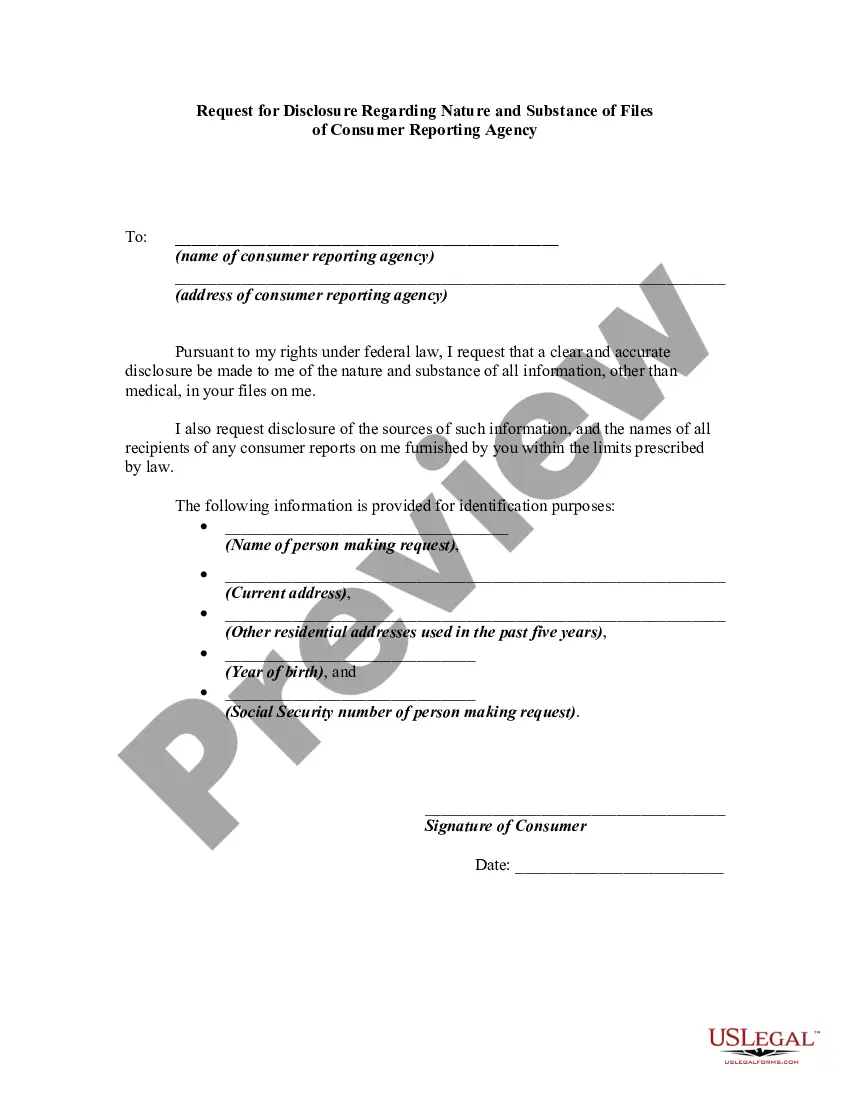
The Result of Investigation of Disputed Credit Information and Disclosure of Consumer Rights in Event of Continued Dispute form is a legal document that enables consumers to learn the outcome of their credit information disputes. It is part of the Fair Credit Reporting Act, which ensures that consumers have the right to challenge inaccuracies in their credit reports. Upon a dispute, credit reporting agencies are required to investigate the claims and provide the results to the consumer, making this form critical for anyone who believes their credit history contains erroneous information.
Key components of this form
- File number for tracking the dispute.
- Consumer's name and address to ensure accurate identification.
- Details of the investigation results, including changes made to the credit profile.
- Notification section for companies that received the consumer's credit profile.
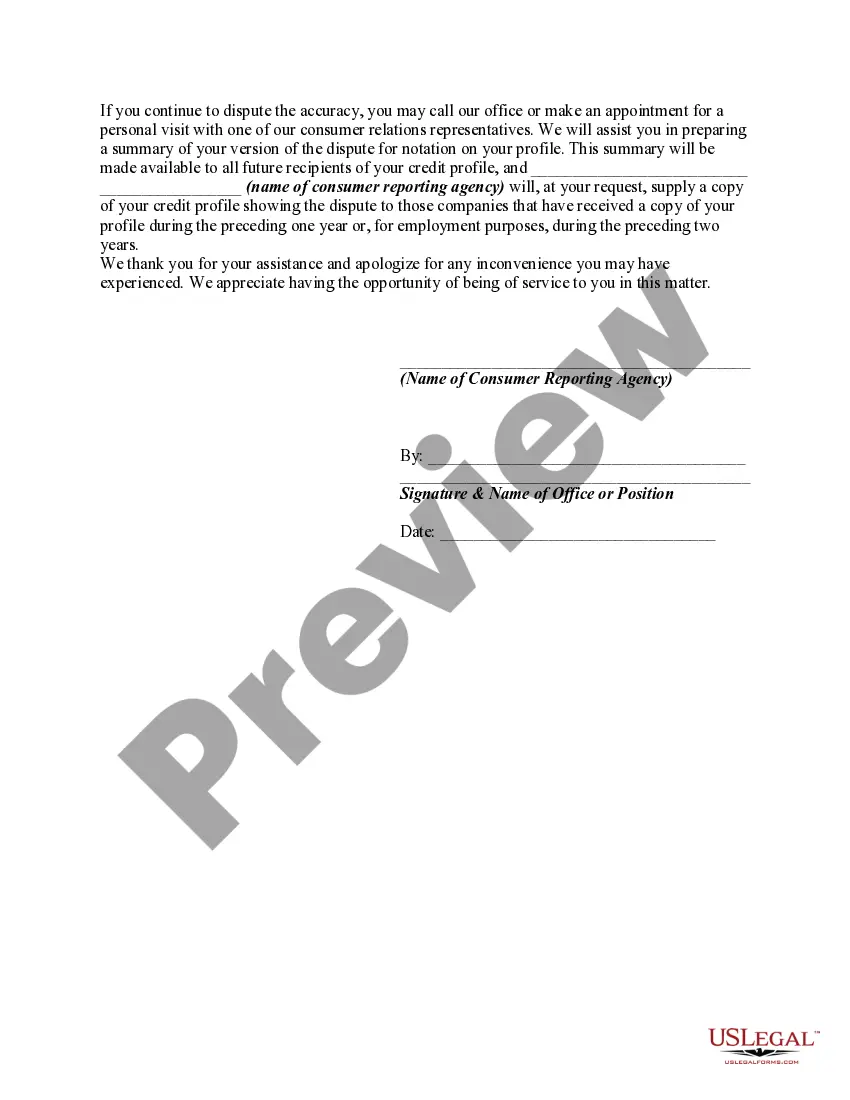
- Actions for further dispute, including an option to discuss with consumer relations representatives.
- Consumer rights disclosure regarding their dispute and future credit reports.
Common use cases
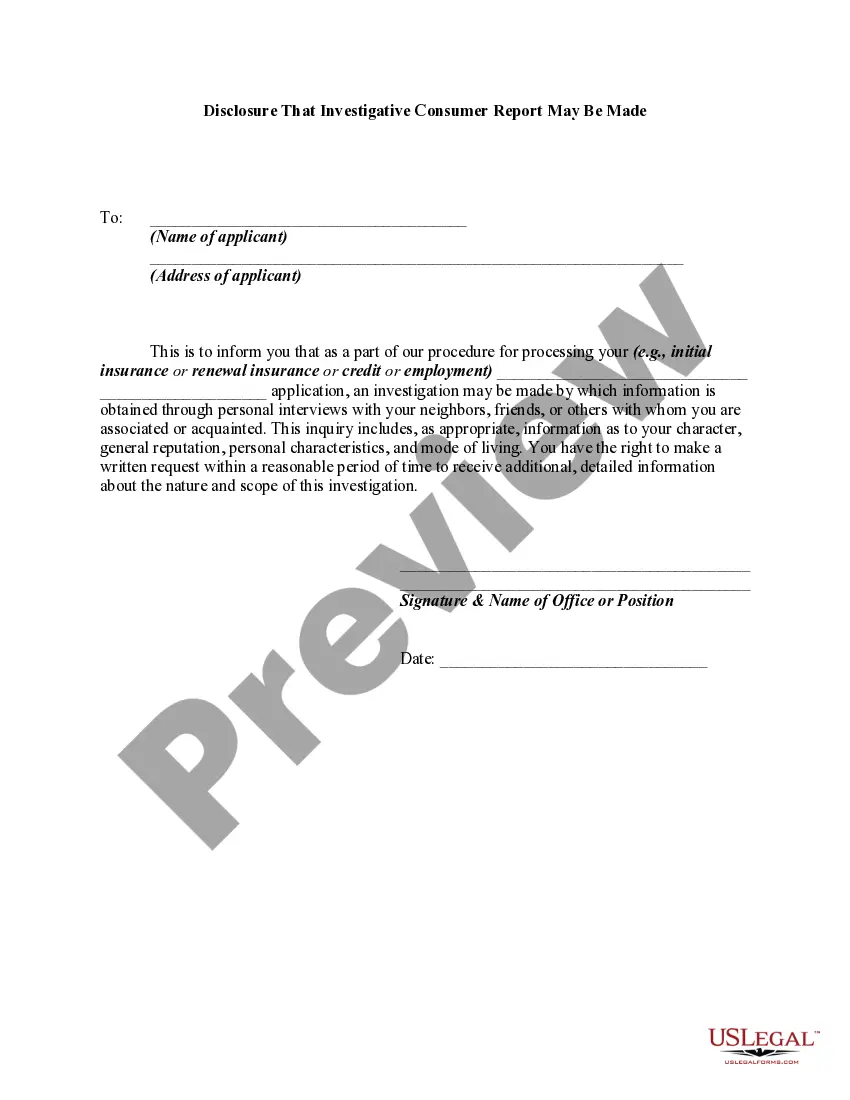
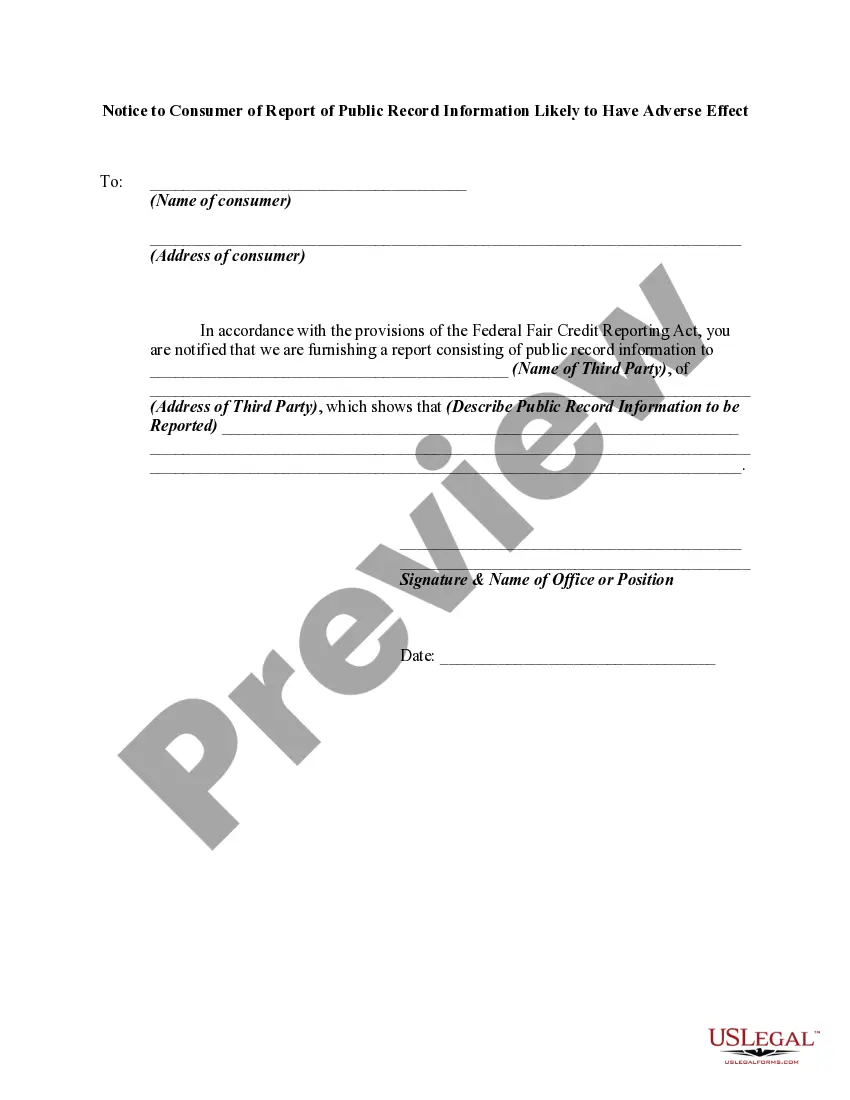
This form should be used when a consumer disputes specific items in their credit report and has received notification of the results from the credit reporting agency. It is ideal for individuals who have had inaccuracies addressed during an investigation and need formal documentation of those results to understand their rights and next steps. Additionally, it can be used to communicate with other entities that have accessed the consumer's credit report in the past.
Who can use this document
- Consumers who have disputed inaccuracies in their credit reports.
- Individuals seeking to understand the outcomes of those disputes.
- Anyone needing a record of revised credit information for future reference.
- Consumers who want to notify other companies about changes in their credit profiles.
How to prepare this document
- Fill in the file number at the top of the form for tracking purposes.
- Enter the consumer's name and address accurately to ensure proper identification.
- Document the results of the investigation in the designated sections, noting the revised statuses.
- List the names and addresses of companies that received the consumerâs credit profile.
- Sign and date the form to acknowledge completion and receipt of the results.
Notarization guidance
In most cases, this form does not require notarization. However, some jurisdictions or signing circumstances might. US Legal Forms offers online notarization powered by Notarize, accessible 24/7 for a quick, remote process.
Get your form ready online
Our built-in tools help you complete, sign, share, and store your documents in one place.
Make edits, fill in missing information, and update formatting in US Legal Forms—just like you would in MS Word.
Download a copy, print it, send it by email, or mail it via USPS—whatever works best for your next step.
Sign and collect signatures with our SignNow integration. Send to multiple recipients, set reminders, and more. Go Premium to unlock E-Sign.
If this form requires notarization, complete it online through a secure video call—no need to meet a notary in person or wait for an appointment.
We protect your documents and personal data by following strict security and privacy standards.

Make edits, fill in missing information, and update formatting in US Legal Forms—just like you would in MS Word.

Download a copy, print it, send it by email, or mail it via USPS—whatever works best for your next step.

Sign and collect signatures with our SignNow integration. Send to multiple recipients, set reminders, and more. Go Premium to unlock E-Sign.

If this form requires notarization, complete it online through a secure video call—no need to meet a notary in person or wait for an appointment.

We protect your documents and personal data by following strict security and privacy standards.
Mistakes to watch out for
- Failing to provide accurate personal information, which may delay the process.
- Omitting key details about the disputed information, resulting in incomplete records.
- Not documenting the date of the dispute or response, which is important for tracking.
- Ignoring to include notifications to relevant companies regarding any changes made.
Benefits of completing this form online
- Convenient access to legal forms that are easy to download and fill out.
- Editable templates allow users to personalize the form to their unique situation.
- Instant updates and guidance ensure that the form complies with current legal standards.
Legal use & context
- This form serves as an official record of the investigation results and the consumer's rights under law.
- It helps consumers ensure that any erroneous information is corrected in their credit reports.
- The form is legally binding and ensures that consumers are informed during the dispute process.
Looking for another form?
Form popularity
FAQ
The name 623 dispute method refers to section 623 of the Fair Credit Reporting Act (FCRA). The method allows you to dispute a debt directly with the creditor in question as long as you have already filed your complaint with the credit bureau and completed their process.
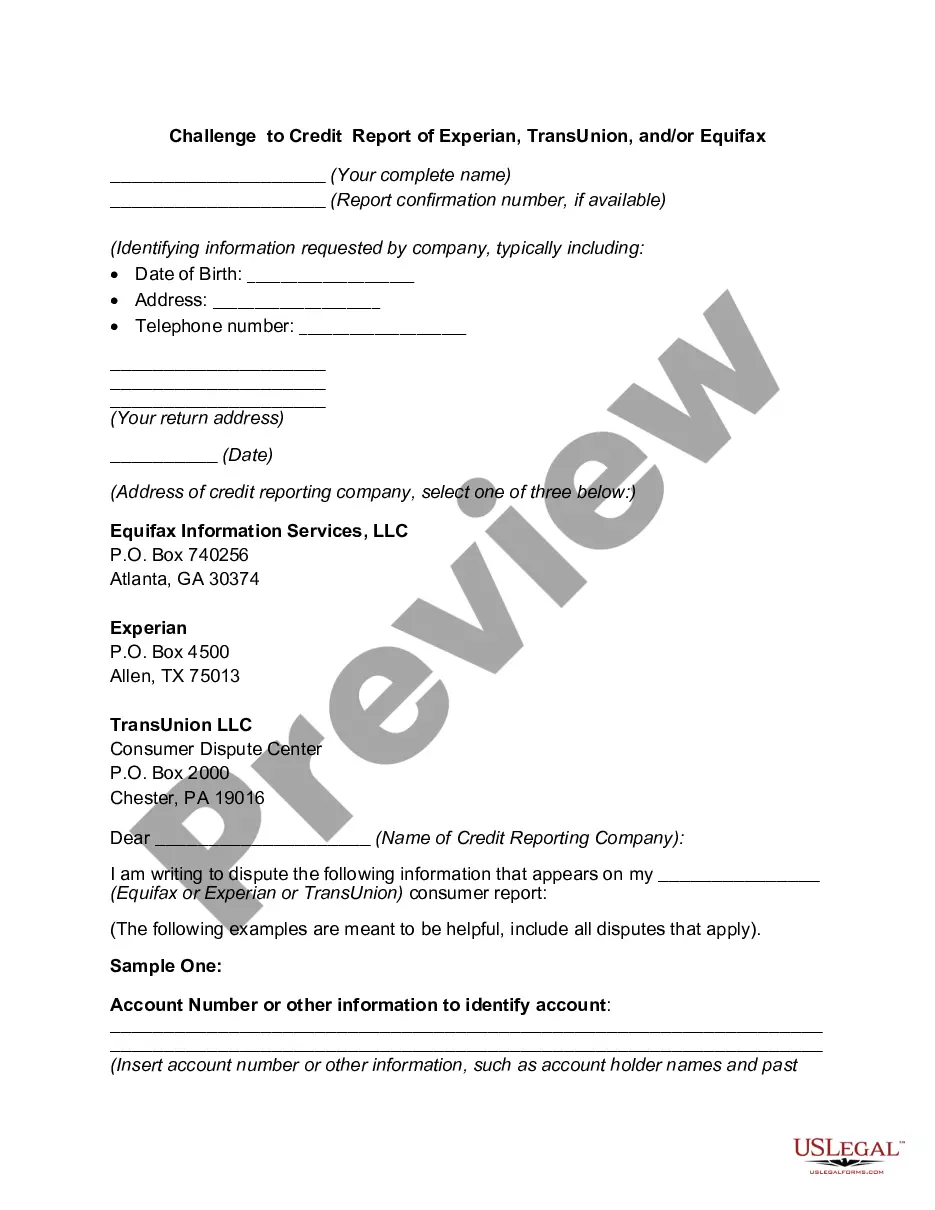
Send your letter by certified mail, return receipt requested, so you can document what the credit reporting company received. Remember to include copies of the applicable enclosures and save copies for your files. Dear Sir or Madam: I am writing to dispute the following information in my file.
If you identify an error on your credit report, you should start by disputing that information with the credit reporting company (Experian, Equifax, and/or Transunion). You should explain in writing what you think is wrong, why, and include copies of documents that support your dispute.
In addition to providing your complete name and address, your letter should clearly identify each item in your report you dispute, state the facts and explain why you dispute the information, and request that it be removed or corrected. You may want to enclose a copy of your report with the items in question circled.
Credit report with the account in question circled and/or highlighted. Birth certificate. Social Security card. Passport (if you have one) the page showing your photo and the number.
Filing a dispute has no impact on your score, however, if information on your credit report changes after your dispute is processed, your credit scores could change.Some information on your credit report has no impact on credit scores, such as identification and address information.
Tell the credit reporting company, in writing, what information you think is inaccurate. Tell the information provider (that is, the person, company, or organization that provides information about you to a credit reporting company), in writing, that you dispute an item in your credit report.
Your full name. Your current address and all addresses you have lived at over the past two years. Copy of a government-issued ID. Copy of a utility bill, bank statement, or insurance statement. A reference line that begins RE: and includes the name of the creditor and the account number for the item(s) you're disputing.
Can I get in trouble? First things first, the Fair Credit Reporting Act gives each of us the right to challenge information on our credit reports with which we don't agree. There's nothing in that law that prohibits consumers from disputing information on their credit reports for any reason.