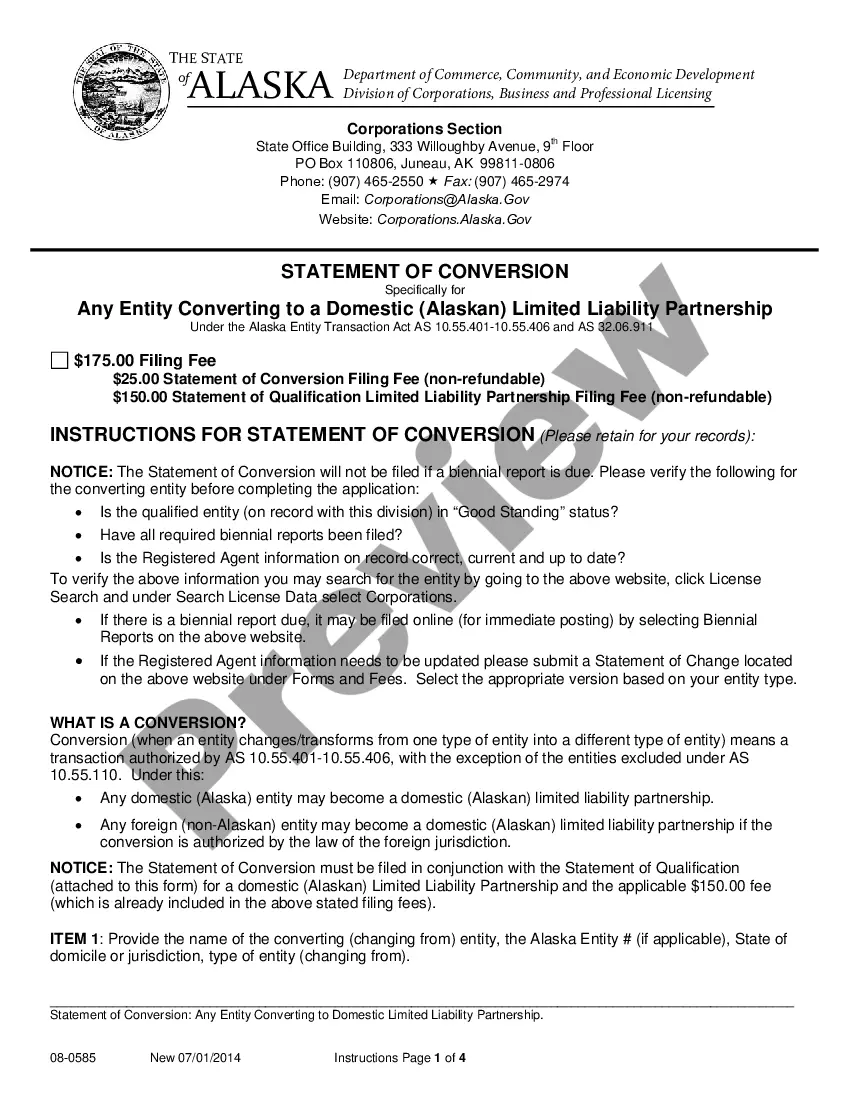
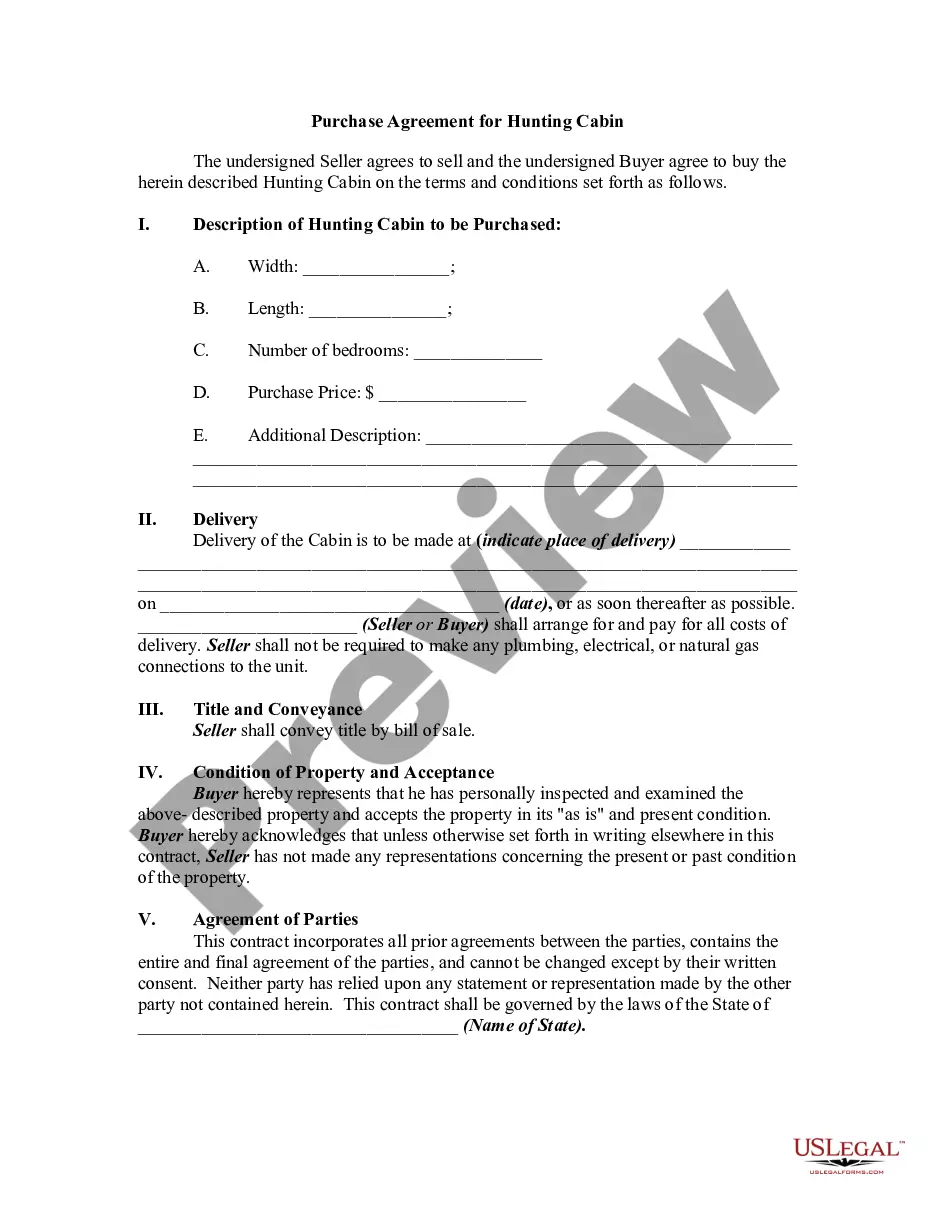
Purchase Agreement for Hunting Cabin
What is this form?
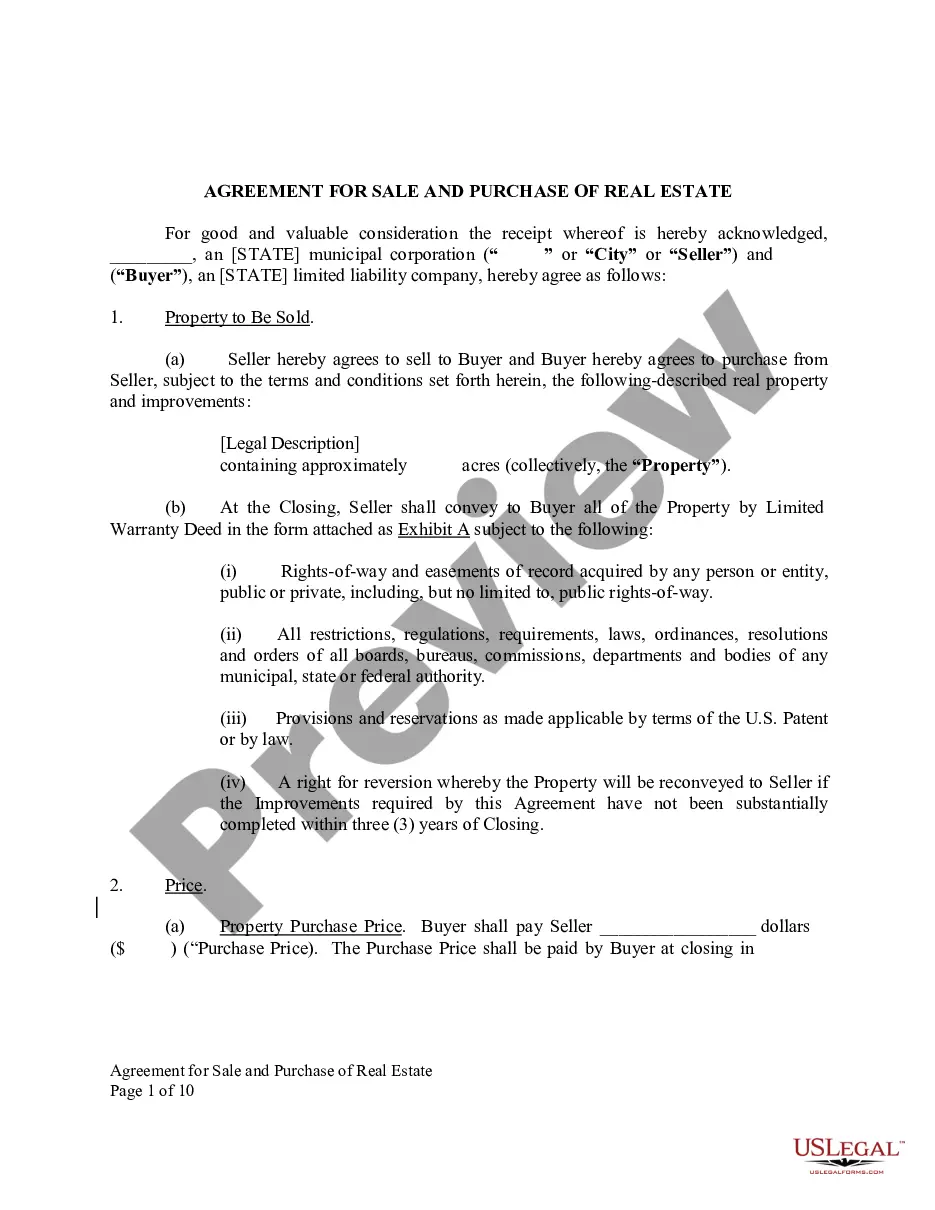
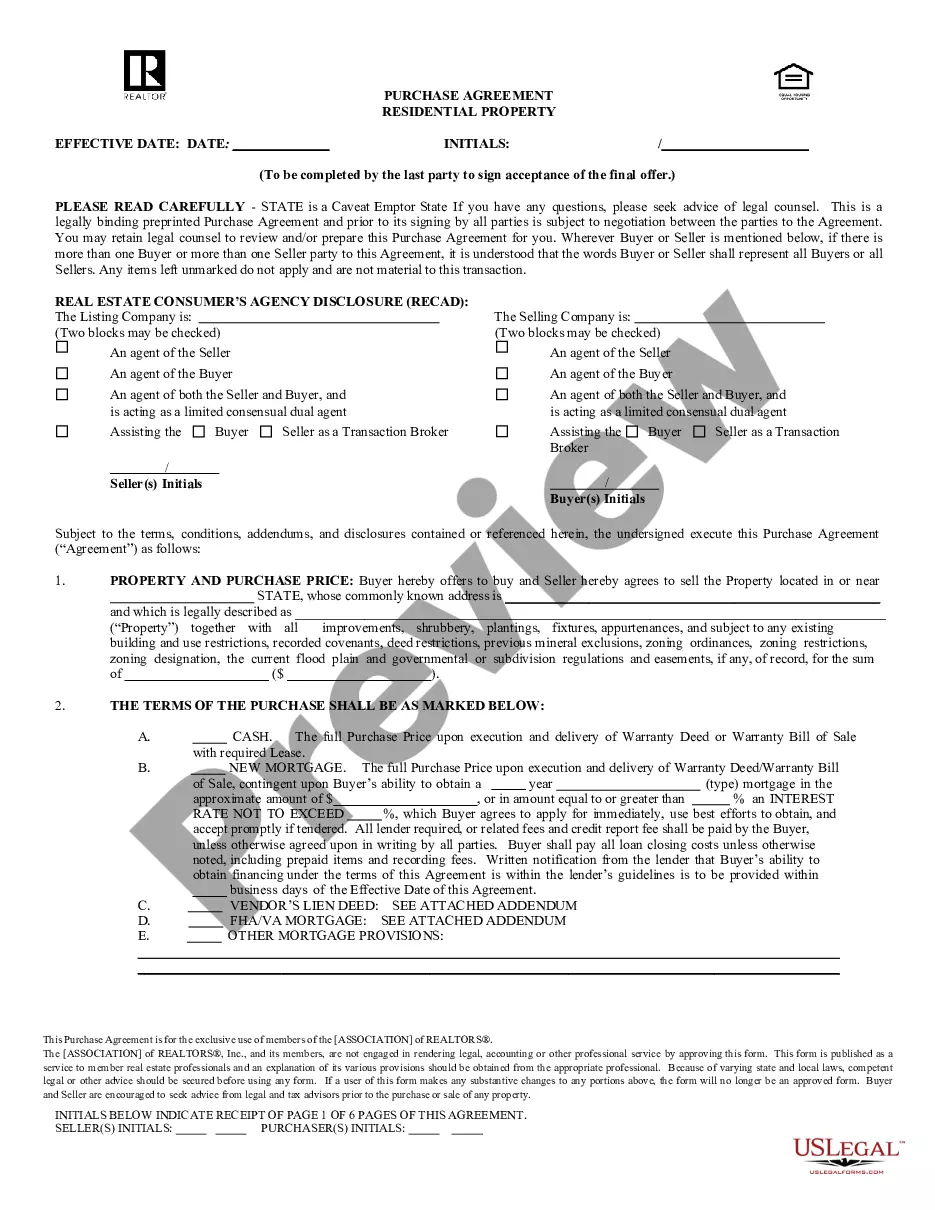
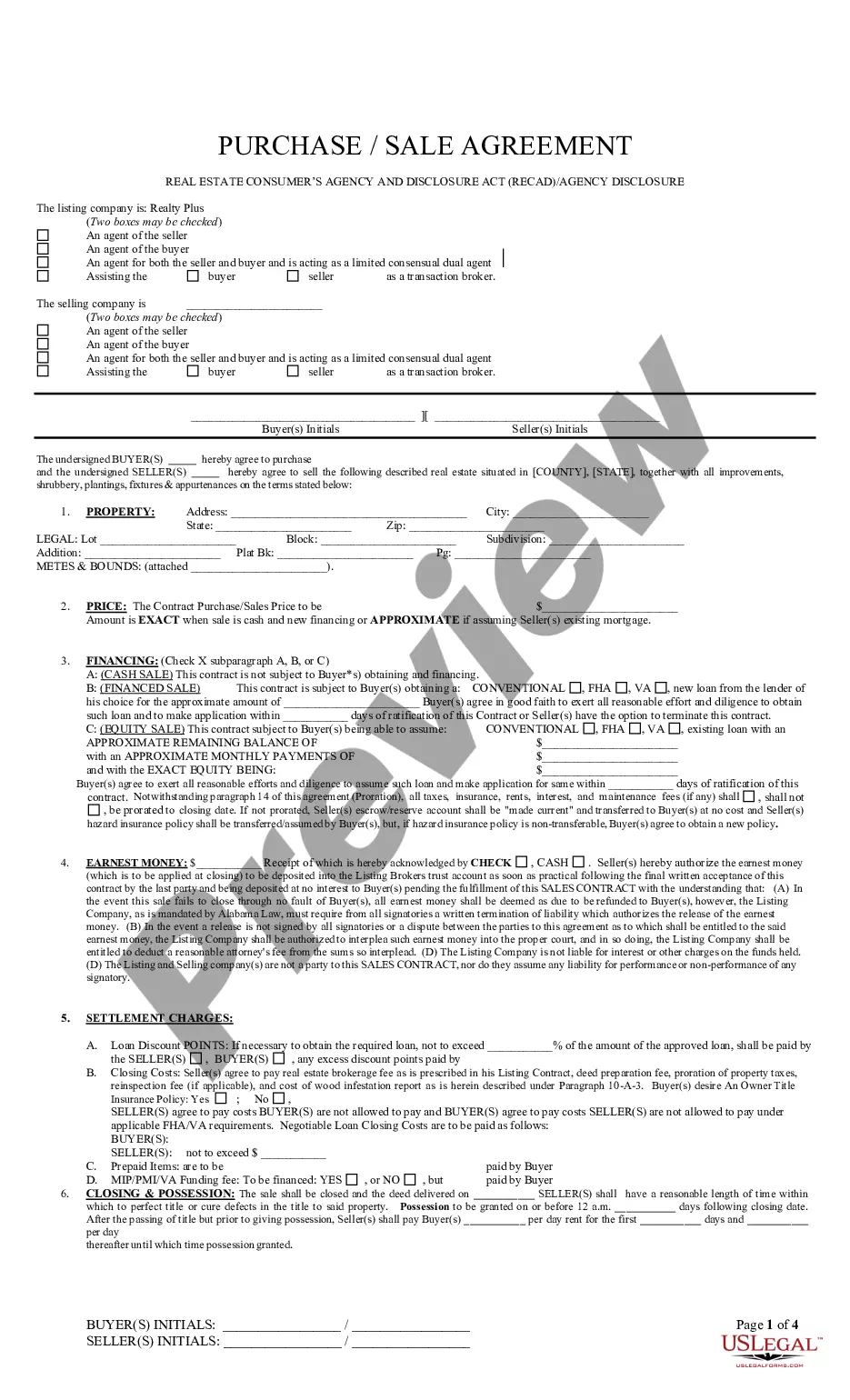
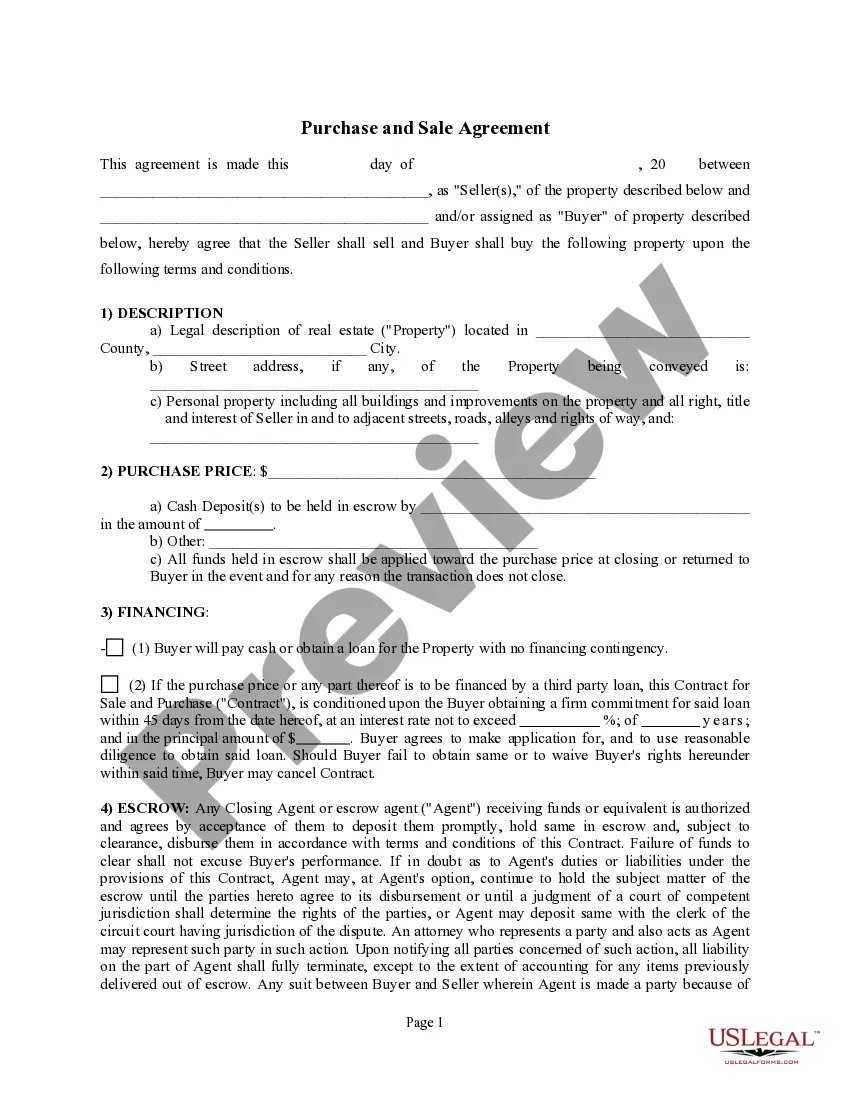
The Purchase Agreement for Hunting Cabin is a legal document designed for private sales between individuals rather than involving a dealership. This form outlines the terms of the sale, including the cabin's description, delivery details, and conditions regarding title and acceptance. It is essential for ensuring that both the seller and buyer reach a mutual understanding regarding ownership and the potential relocation of the cabin, particularly when it is not placed on owned land.
Main sections of this form
- Description of the hunting cabin, including dimensions and other specific features.
- Purchase price and payment terms.
- Delivery information, including location and date of transfer.
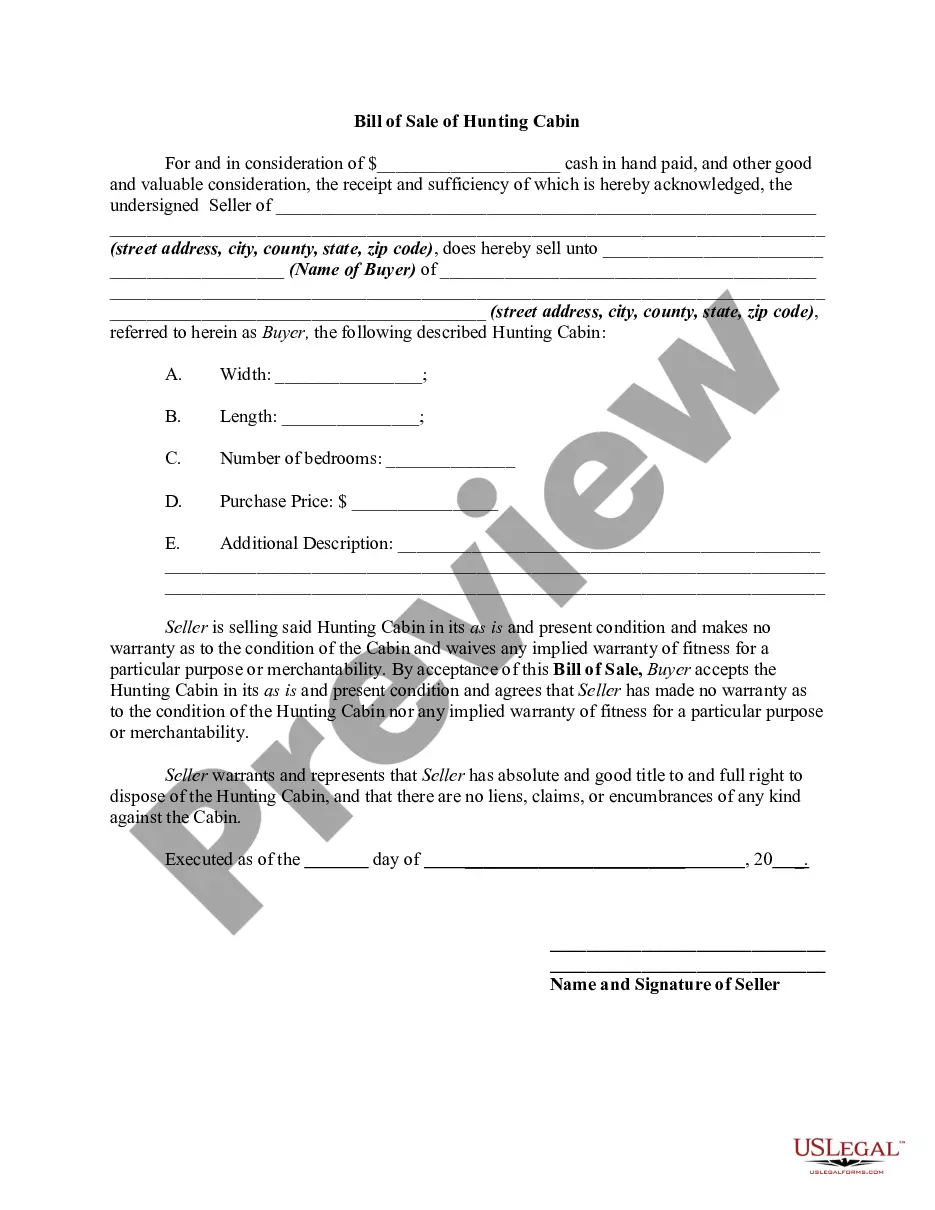
- Provisions related to title transfer and conveyance details.
- Acceptance clause confirming the buyerâs inspection and acceptance of the property in its current condition.
- Governing law clause, indicating the applicable state laws.
When to use this form
This form should be used when you, as an individual, are selling or purchasing a hunting cabin. It is particularly relevant when dealing directly with another individual, where an understanding concerning the ownership and potential relocation of the cabin needs to be formalized. Use this form to protect both parties by documenting the terms of the agreement and any conditions of sale.
Who needs this form
- Individuals looking to buy or sell a hunting cabin directly.
- Parties who want to clearly define the conditions surrounding the sale.
- Buyers who wish to document their acceptance of the cabin in its current condition.
- Sellers wanting to ensure clear title transfer during the sale.
How to prepare this document
- Identify the parties involved in the transaction, including seller and buyer information.
- Provide a detailed description of the hunting cabin, including its dimensions and any distinguishing features.
- Specify the agreed purchase price.
- Indicate the delivery location and expected date of transfer.
- Both parties should review the document for completeness before signing at the designated area.
Does this document require notarization?
This form does not typically require notarization unless specified by local law. However, it is always wise to check local regulations regarding property transactions to ensure compliance.
Get your form ready online
Our built-in tools help you complete, sign, share, and store your documents in one place.
Make edits, fill in missing information, and update formatting in US Legal Forms—just like you would in MS Word.
Download a copy, print it, send it by email, or mail it via USPS—whatever works best for your next step.
Sign and collect signatures with our SignNow integration. Send to multiple recipients, set reminders, and more. Go Premium to unlock E-Sign.
If this form requires notarization, complete it online through a secure video call—no need to meet a notary in person or wait for an appointment.
We protect your documents and personal data by following strict security and privacy standards.

Make edits, fill in missing information, and update formatting in US Legal Forms—just like you would in MS Word.

Download a copy, print it, send it by email, or mail it via USPS—whatever works best for your next step.

Sign and collect signatures with our SignNow integration. Send to multiple recipients, set reminders, and more. Go Premium to unlock E-Sign.

If this form requires notarization, complete it online through a secure video call—no need to meet a notary in person or wait for an appointment.

We protect your documents and personal data by following strict security and privacy standards.
Typical mistakes to avoid
- Failing to clearly describe the cabin and its features, leading to misunderstandings.
- Not specifying the delivery details, which can cause disputes later.
- Overlooking the condition clause, potentially leading to complications regarding acceptance.
- Neglecting to include all terms of the agreement, which can result in unenforceable agreements.
Why complete this form online
- Convenient access to a legally sound purchase agreement that can be downloaded and filled out at your convenience.
- Editable format allows you to customize the document easily to fit your specific transaction needs.
- Reliability of professionally drafted documents ensures legal compliance and protection for both parties.
What to keep in mind
- The Purchase Agreement for Hunting Cabin is essential for defining the terms of a personal sale.
- Clearly outline all details, including cabin description and purchase price, to prevent disputes.
- Sellers and buyers should ensure the document accurately reflects their understanding of the sale conditions.
Looking for another form?


Form popularity
FAQ
A hunting lease is an agreement between you (the lessor) and hunters or anglers (the lessees) that allows them to visit and hunt on your land for a specified time period. Your lessees pay you per acre or per lessee for their hunting experience.
But it's a long-term investment, which is typically attractive to the buyer.Unlike a stock certificate that sits in a safe for 30 years where its value is completely out of your control and can lose, gain or completely shed its value, land can be used as it appreciates in price.
Limit the agreement to the people and lands involved. State the price of the lease and the kind(s) of animal(s) the lessee may hunt. Describe the land to be leased. Prevent the lessee(s) from subleasing the property. Clearly state which rights are included in the lease.
How much does Texas Parks and Wildlife pay for these leases? Payments vary widely depending upon things such as location, size, habitat quality, game species and hunt dates provided. Currently, lease prices range from about $2 to $10 per acre.
Land Use Agreements means (a) the Lease, (b) any access right or other right to use or traverse real property, and (c) any encumbrance, easement, license, restriction, or limitation of any kind applicable to the Site or used in connection with the construction of the Project.
If your sole target is hunting then leasing definitely has benefits. You could potentially buy land that maybe is so great for hunting. Even if you make it "better" it still may never hold the animals you want it to. With a lease, if the hunting is not what you thought you can always look for another lease.
A Land Use Contract (LUC) is an agreement between a local government and a land owner that provided the land owner with development rights over and above what was allowed under current zoning.
One big advantage to this is that you can purchase your home for much less than a traditional home because you don't have to buy the land. At the same time, leased-land properties may offer better surroundings than apartment living for children and pets, and you can invest the money that leasing saves you.