Instruction to Jury Regarding Damages for Conversion by Lienholder
What this document covers
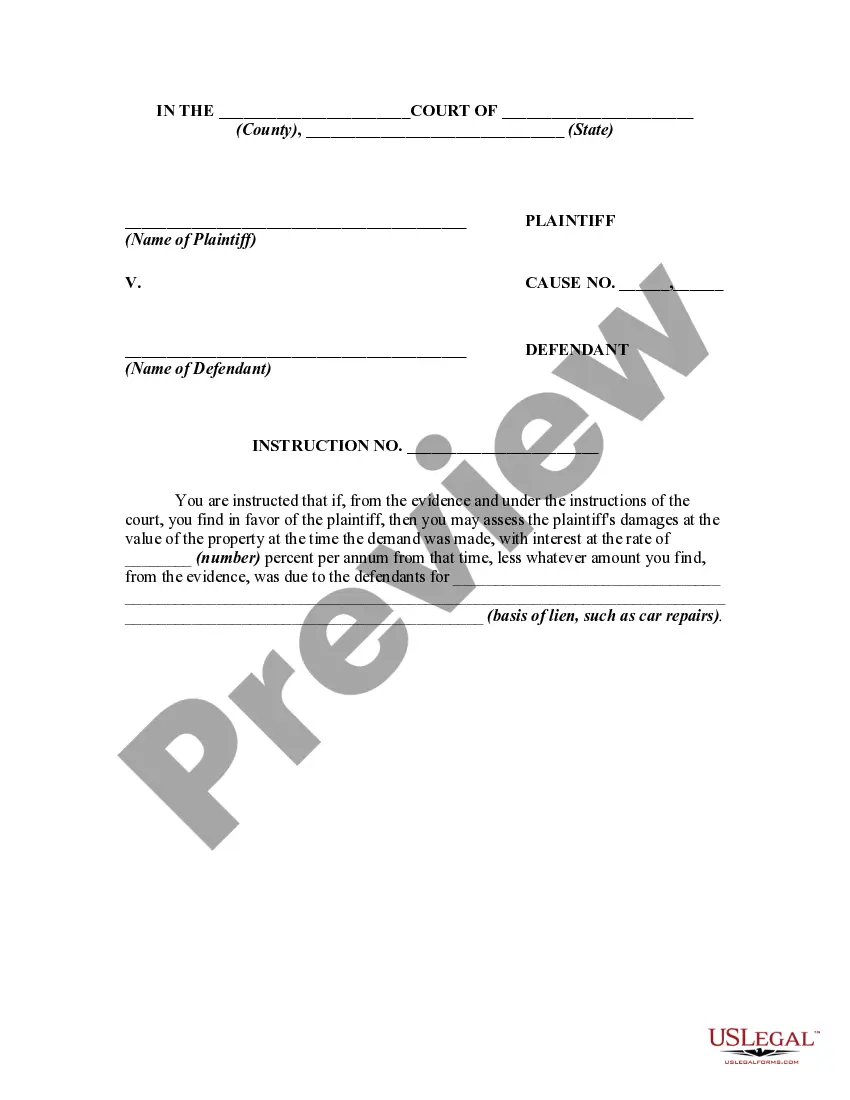
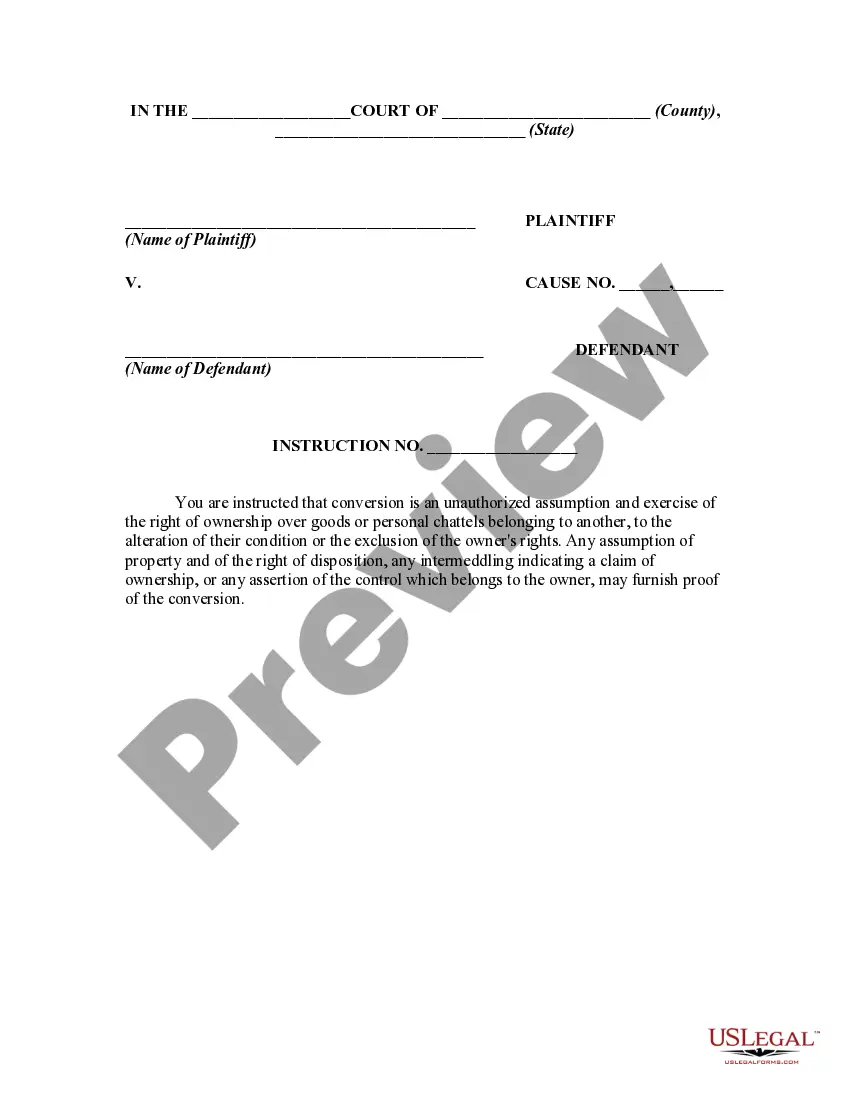
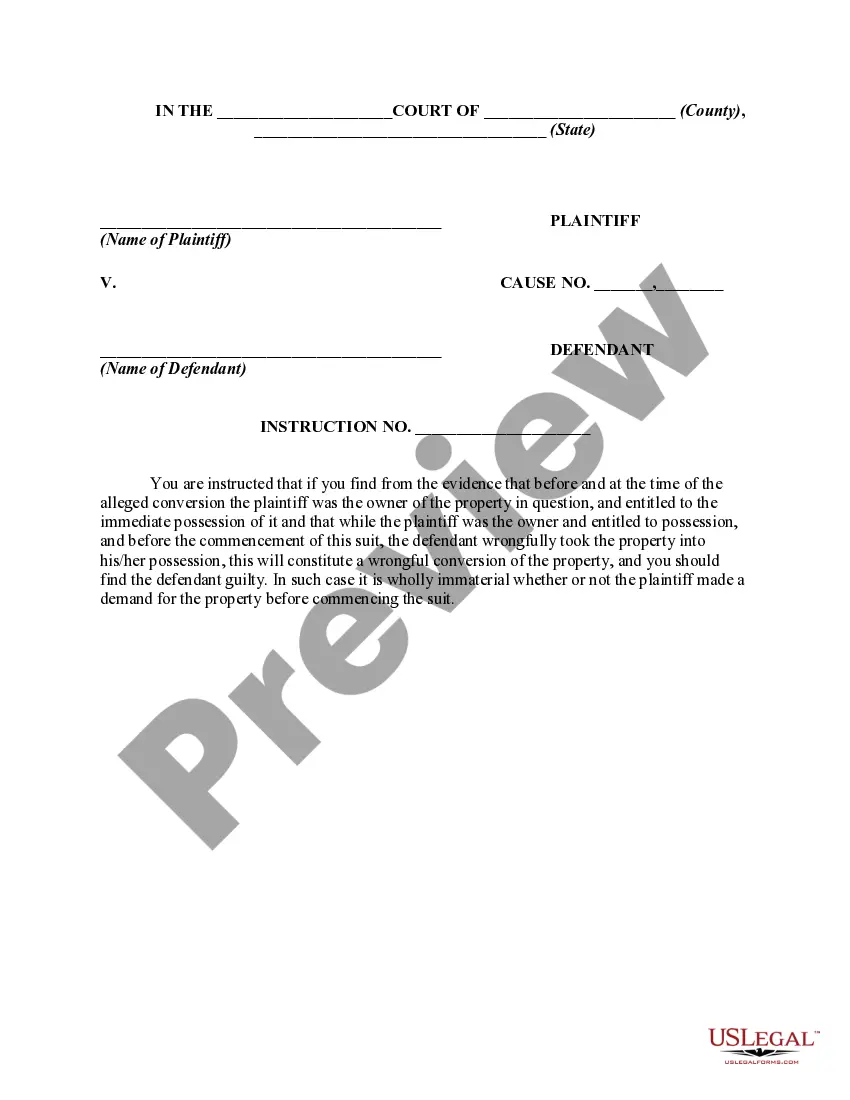
The Instruction to Jury Regarding Damages for Conversion by Lienholder is a legal document used in court cases where a property owner claims that a lienholder has wrongfully converted their property. This form instructs the jury on how to assess damages if they find in favor of the plaintiff. It specifically determines the compensation based on the fair market value of the property, taking into account any debts owed to the lienholder. This form is distinct as it focuses on jury instructions, unlike other legal forms that may deal directly with claims or lawsuits.
Key parts of this document
- Case identification: Includes the names of the plaintiff and defendant and the cause number.
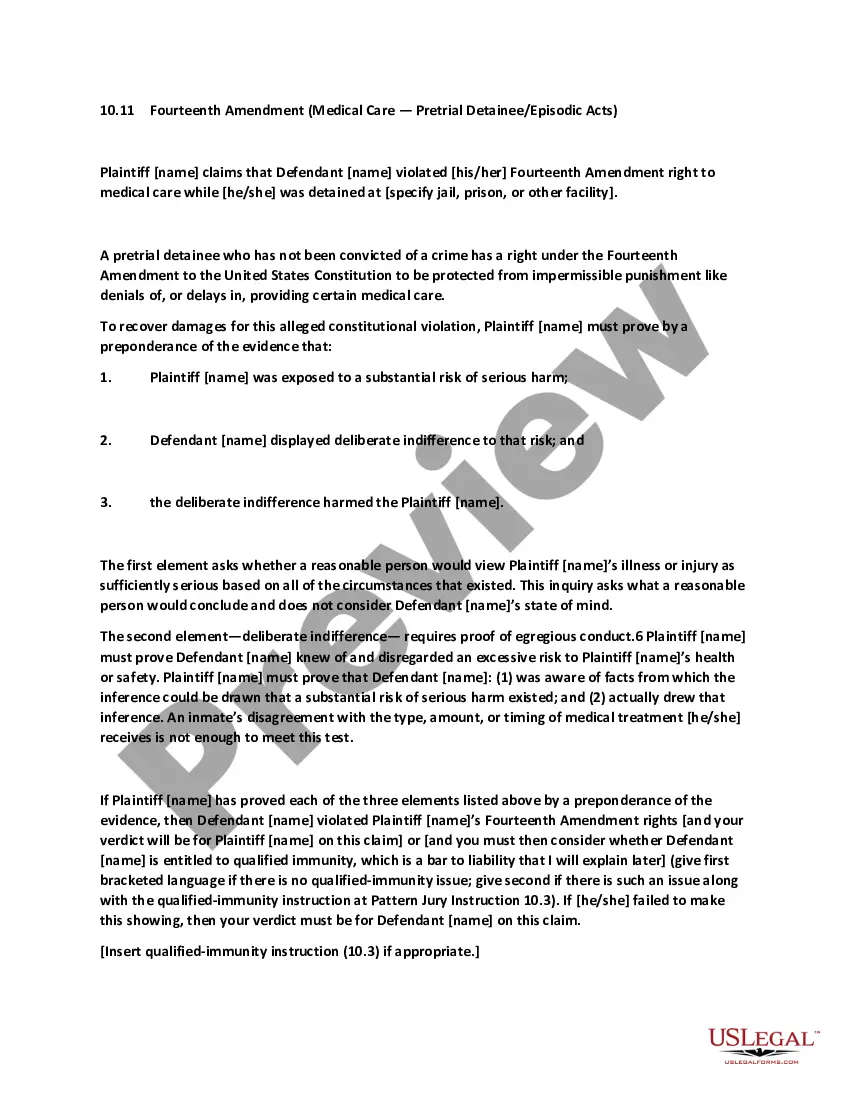
- Jury instruction: Directives on how to evaluate damages if the jury finds in favor of the plaintiff.
- Valuation criteria: Specifies the fair market value of the property at the time the demand was made.
- Interest calculation: Outlines how to calculate interest on the assessed value, defined by a specific percentage.
- Debt consideration: Details the consideration of the amount owed to the defendant, which may reduce the total damages awarded.
Situations where this form applies
This form is appropriate in scenarios where a property owner believes that their property has been improperly retained or converted by a lienholder. It is commonly used in cases involving vehicle repairs, storage facilities, or other situations where personal property is subject to a lien. If you are pursuing a claim for damages resulting from this wrongful conversion, this form provides the necessary jury instructions to ensure your case is clearly presented in court.
Who should use this form
- Property owners seeking damages for wrongful conversion of their property.
- Legal representatives or attorneys involved in litigation related to lienholders and property conversion cases.
- Individuals needing to instruct a jury on the assessment of damages in a trial setting.
Instructions for completing this form
- Identify the parties: Enter the names of the plaintiff and defendant at the beginning of the form.
- Specify the case number: Fill in the cause number as assigned by the court.
- Determine property value: Assess and document the fair market value of the converted property at the time the demand was made.
- Calculate interest: Indicate the interest rate (in percent) to be applied to the assessed value.
- Detail the debt: Clearly explain the basis of the lien and the amount owed to the defendant that may reduce the damages awarded.
Is notarization required?
In most cases, this form does not require notarization. However, some jurisdictions or signing circumstances might. US Legal Forms offers online notarization powered by Notarize, accessible 24/7 for a quick, remote process.
Get your form ready online
Our built-in tools help you complete, sign, share, and store your documents in one place.
Make edits, fill in missing information, and update formatting in US Legal Forms—just like you would in MS Word.
Download a copy, print it, send it by email, or mail it via USPS—whatever works best for your next step.
Sign and collect signatures with our SignNow integration. Send to multiple recipients, set reminders, and more. Go Premium to unlock E-Sign.
If this form requires notarization, complete it online through a secure video call—no need to meet a notary in person or wait for an appointment.
We protect your documents and personal data by following strict security and privacy standards.

Make edits, fill in missing information, and update formatting in US Legal Forms—just like you would in MS Word.

Download a copy, print it, send it by email, or mail it via USPS—whatever works best for your next step.

Sign and collect signatures with our SignNow integration. Send to multiple recipients, set reminders, and more. Go Premium to unlock E-Sign.

If this form requires notarization, complete it online through a secure video call—no need to meet a notary in person or wait for an appointment.

We protect your documents and personal data by following strict security and privacy standards.
Common mistakes
- Failing to accurately assess the fair market value of the property.
- Omitting the correct percentage for interest calculations.
- Not providing sufficient detail about the debt owed to the lienholder.
- Using outdated case numbers or incorrect names of parties involved.
Why use this form online
- Convenience of instant access and download from any location.
- Editability allows you to customize the form to fit your specific case details.
- Reliability, with forms drafted by licensed attorneys to ensure legal compliance and presentation.
Looking for another form?








Form popularity
FAQ
A person who knowingly or intentionally exerts unauthorized control over property of another person commits criminal conversion.
Generally, punitive damages may be allowed when the conversion involves elements of fraud, ill will, malice, recklessness, wantonness, oppression, insult, willful, conscious disregard of the plaintiff's rights, or other aggravating circumstancesxii.
Conversion is a tort that exposes you to liability for damages in a civil lawsuit. It applies when someone intentionally interferes with personal property belonging to another person.
By tortuous taking; by any use or appropriation of the use of the person in possession, indicating a claim of right in opposition to rights of the owner; or. refusal to give up possession to the owner on demand.
A: In a jury trial, the jury is the trier of fact. The jury determines the facts, based upon testimony, and usually determines the amount of money that would fairly compensate the injured party.By statute, judges are required to review the amount of damages based upon the facts and circumstances presented to the jury.
Conversion is a tort that exposes you to liability for damages in a civil lawsuit. It applies when someone intentionally interferes with personal property belonging to another person.
Criminal Conversion: A person who knowingly or intentionally exerts unauthorized control over the property of another person commits criminal conversion.
When you want to reclaim the value of your personal property that was damaged or altered by some else's unauthorized use, you can file a lawsuit for conversion. This intentional tort is the civil law equivalent of a criminal theft charge.