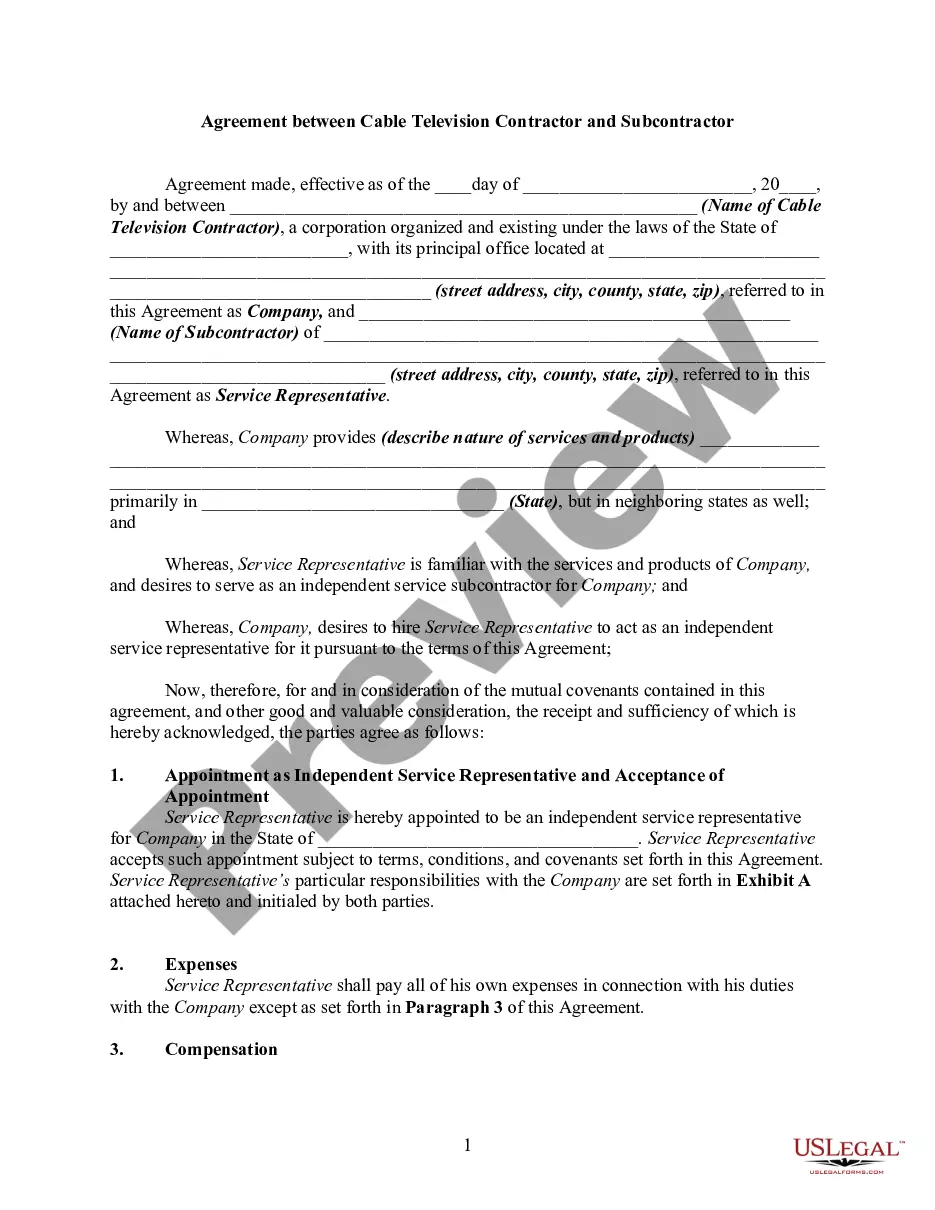
Agreement between Cable Television Contractor and Subcontractor
About this form
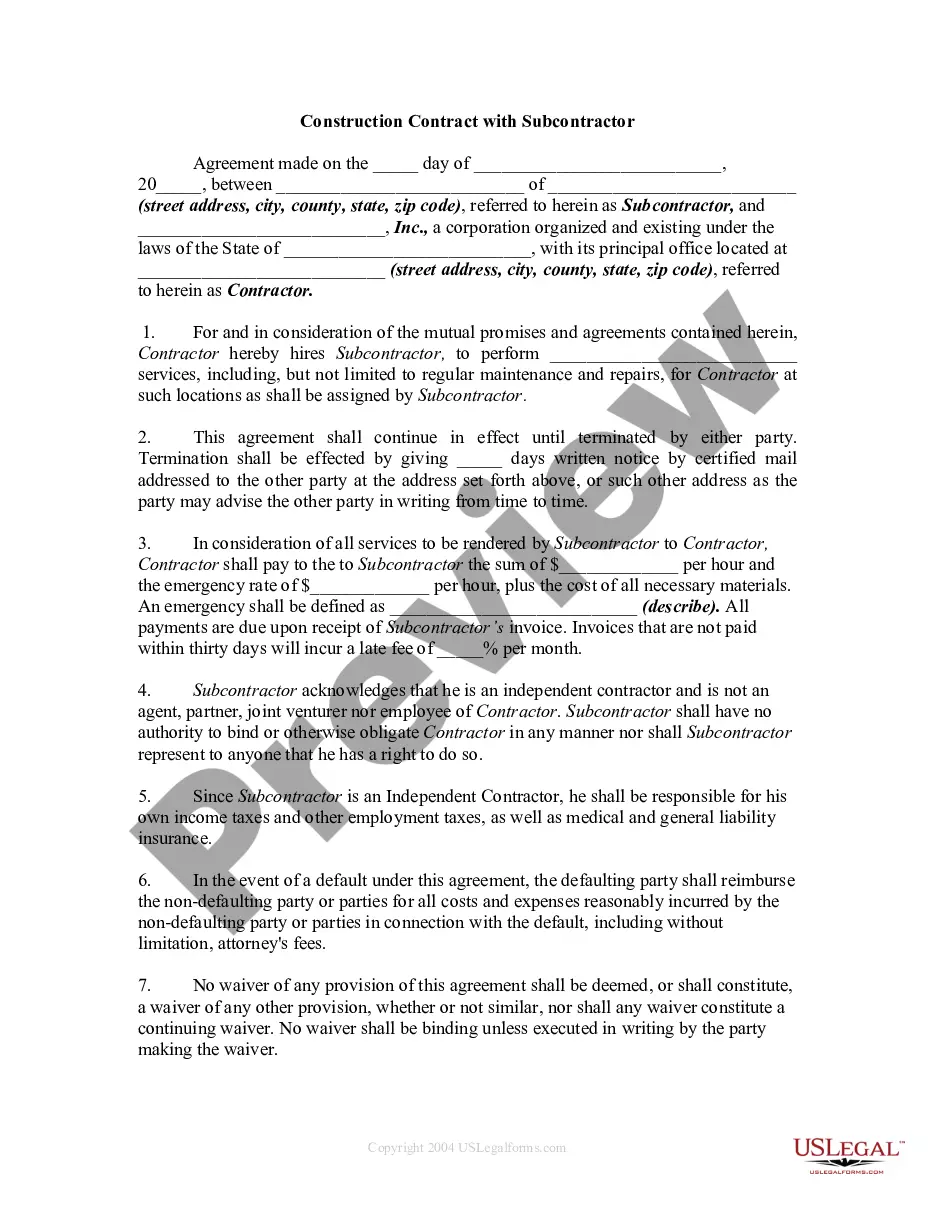
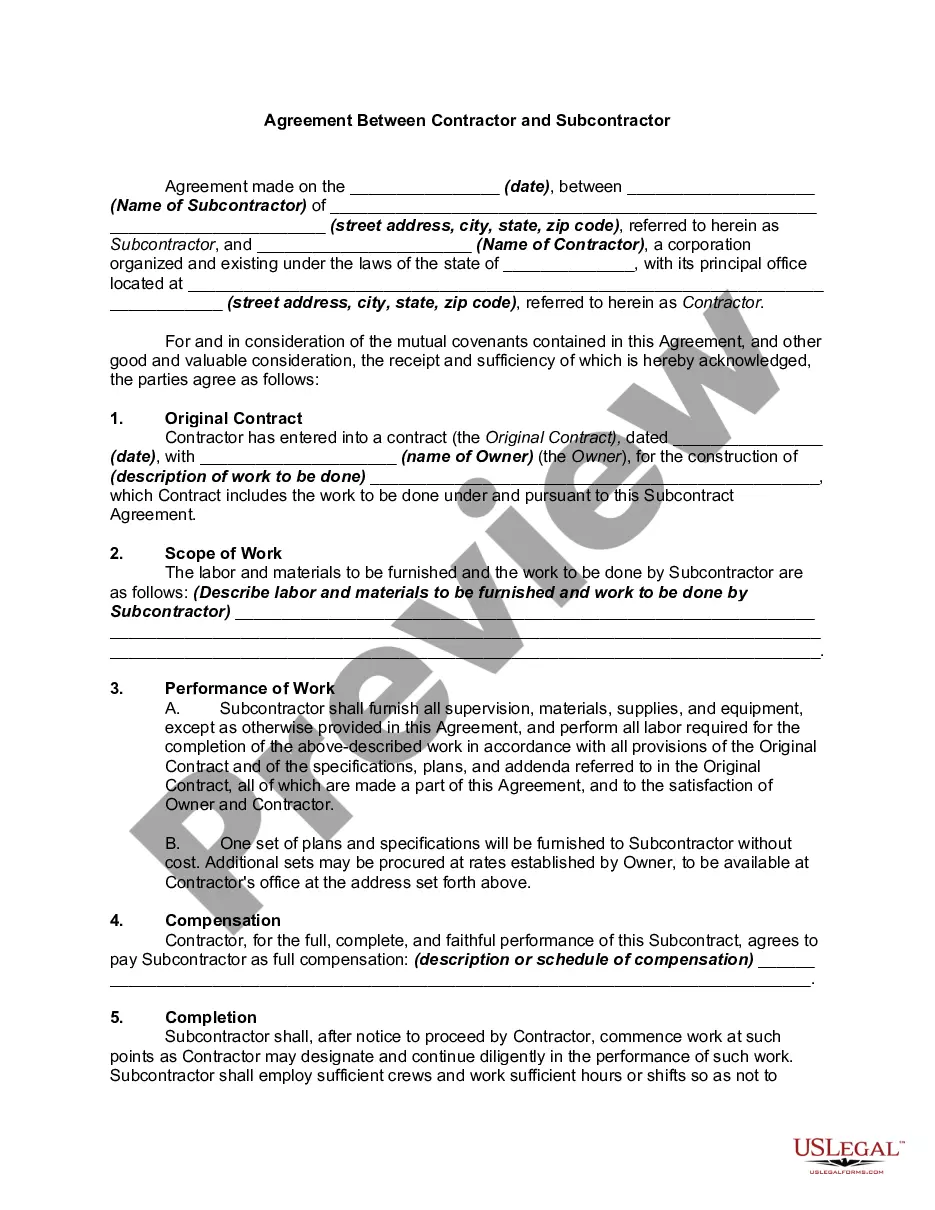
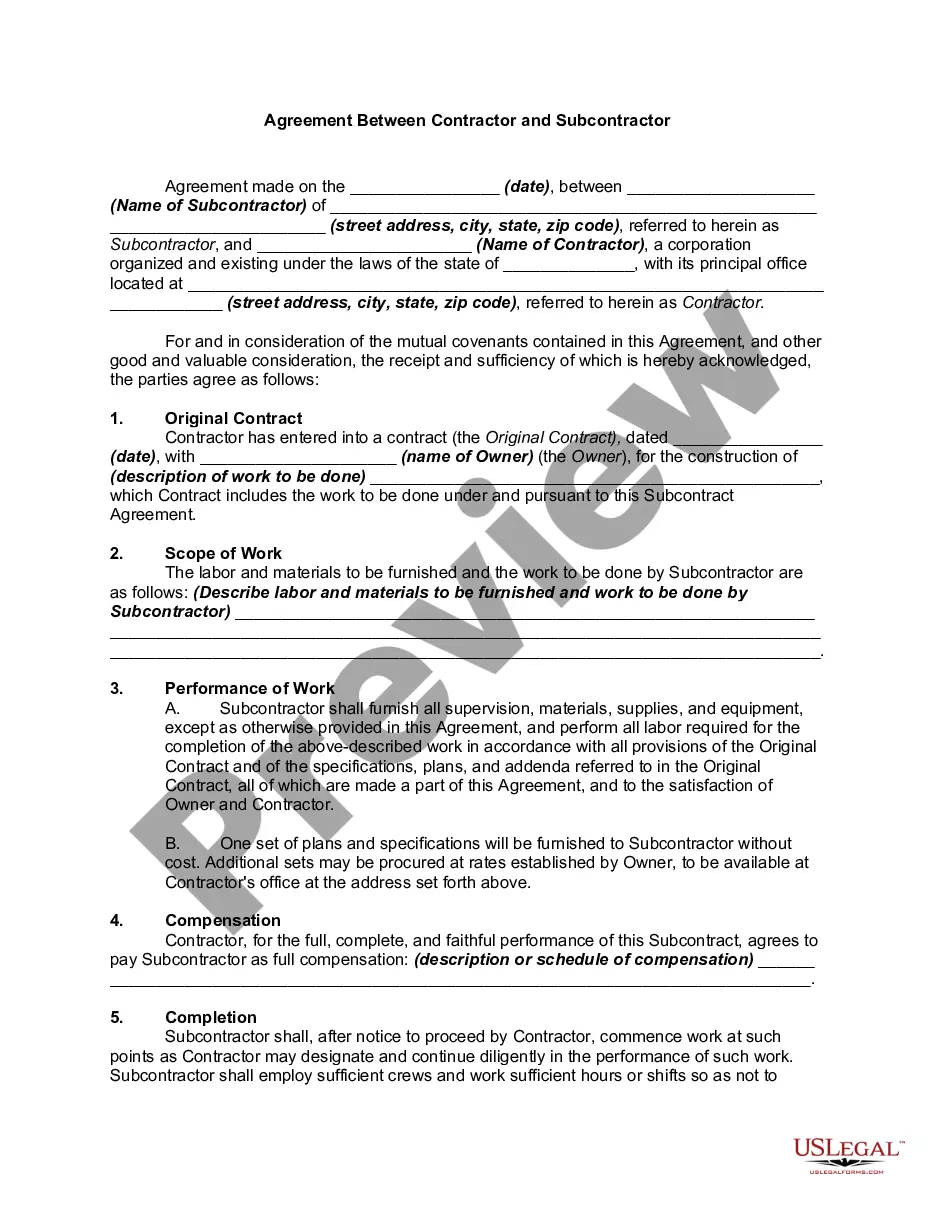
The Agreement between Cable Television Contractor and Subcontractor is a legal document that outlines the relationship between a cable television contractor and a subcontractor hired to provide services. This agreement establishes the rights, responsibilities, and obligations of both parties, ensuring clarity in their business dealings. It differs from employment contracts, as it designates the subcontractor as an independent contractor, not an employee, providing them with flexibility and independence in their work.
Key parts of this document
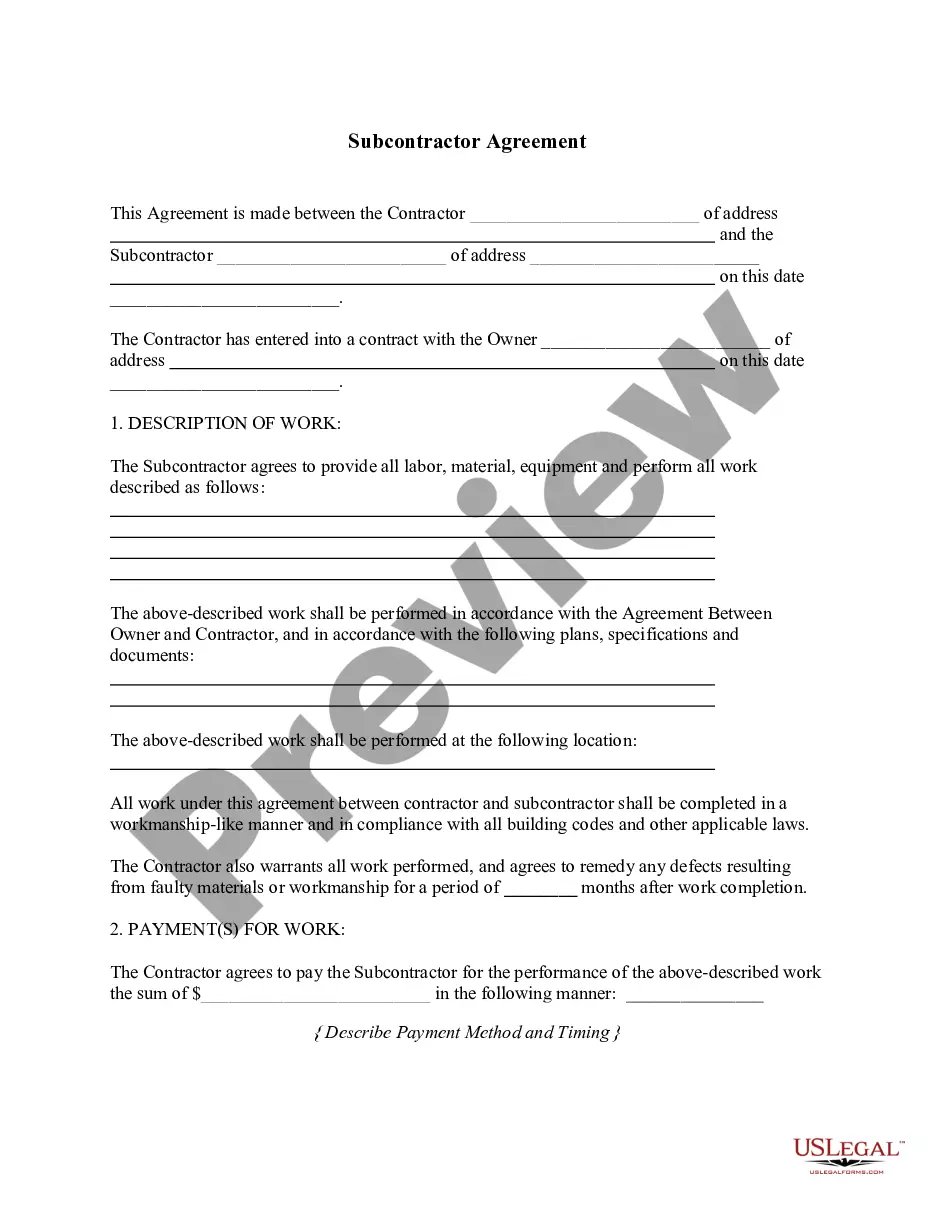
- Identification of the Parties: Names and addresses of both the contractor and subcontractor.
- Appointment Clause: Designates the subcontractor as an independent service representative.
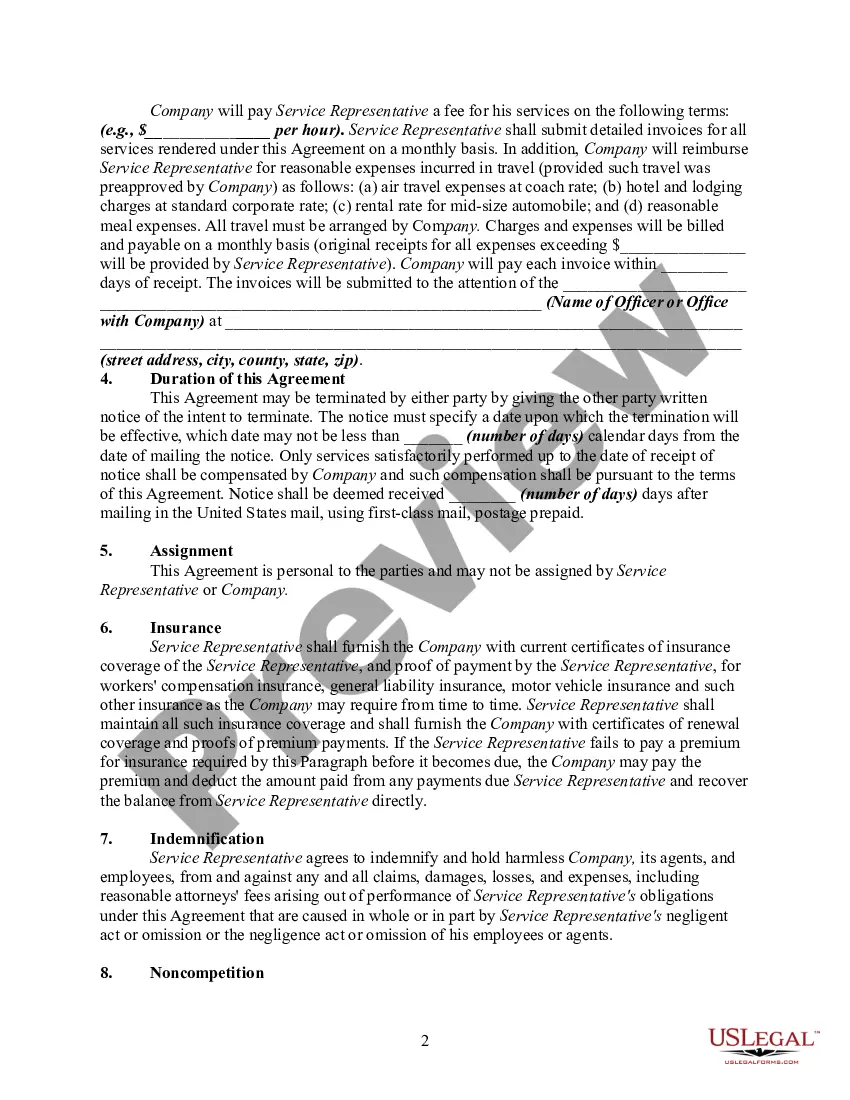
- Compensation Structure: Details payment terms, including service fees and reimbursable expenses.
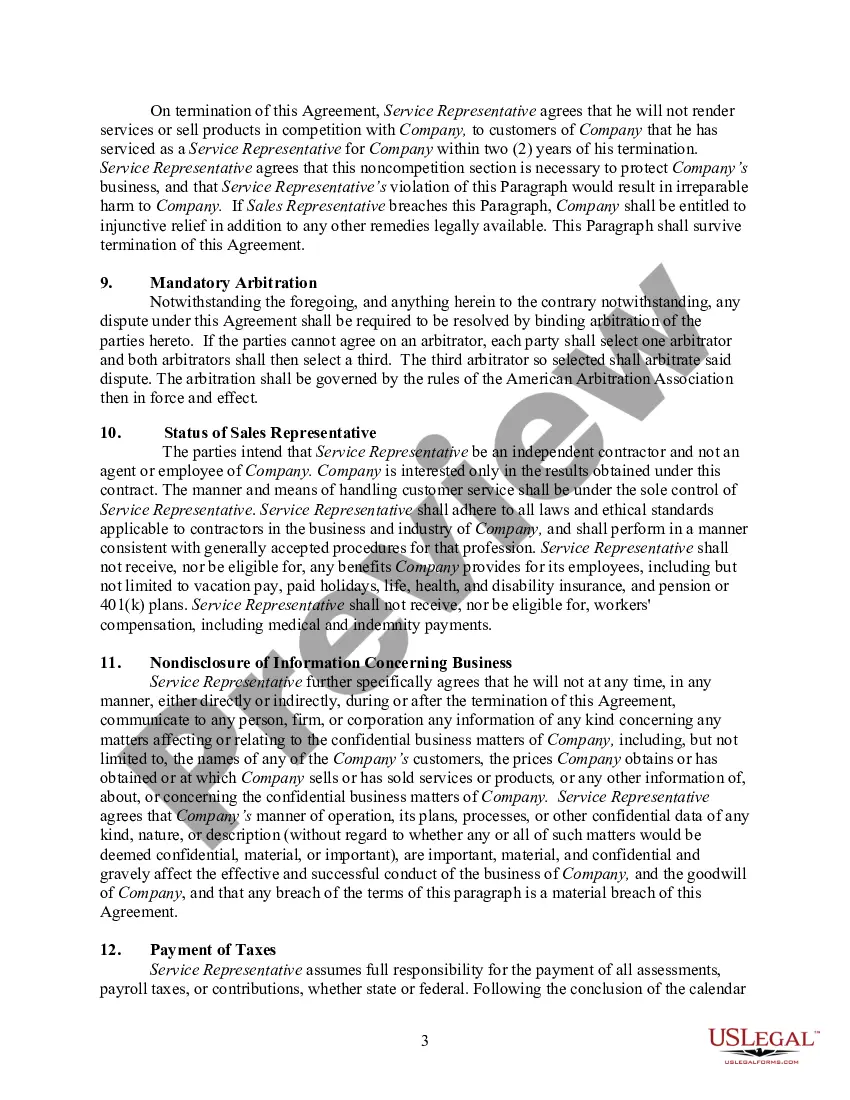
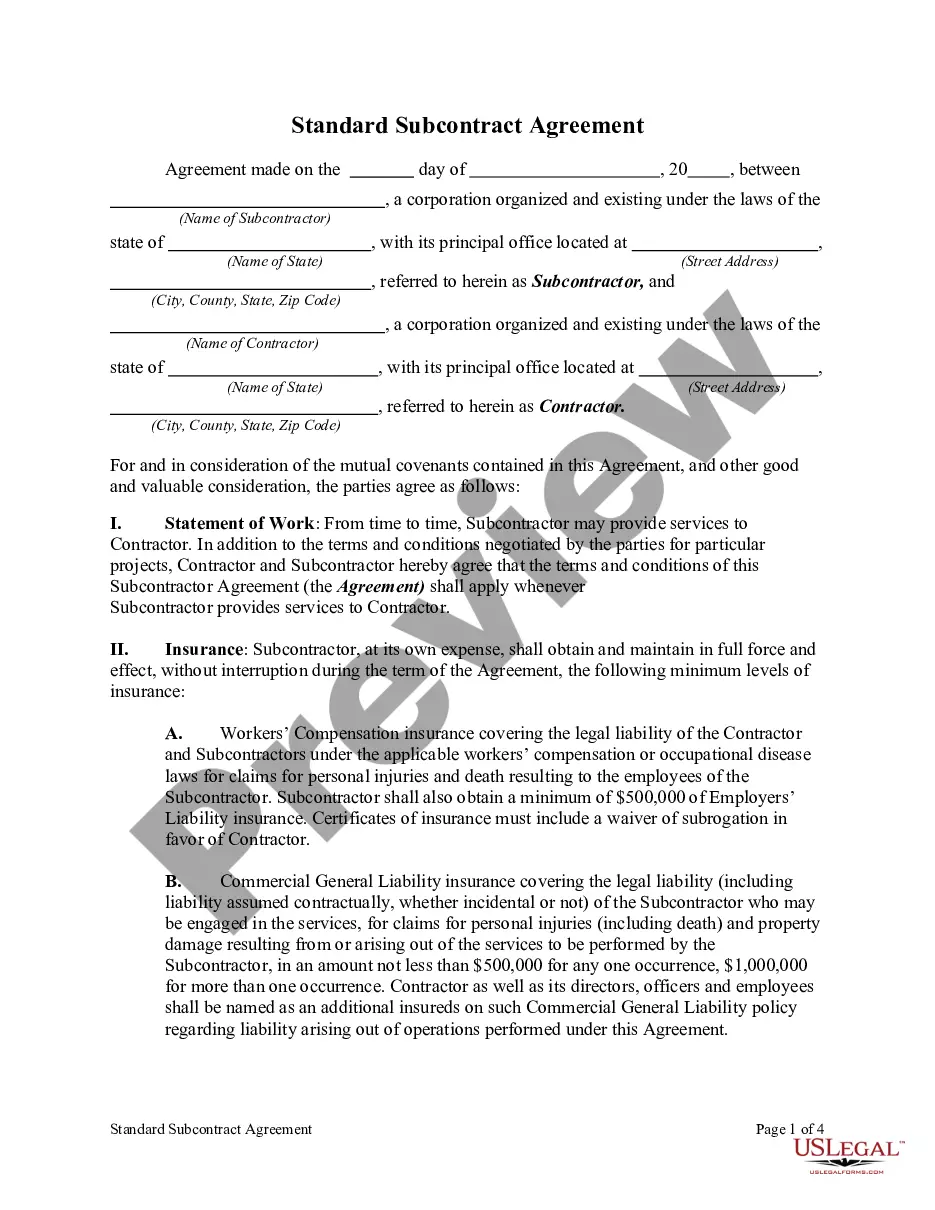
- Insurance Requirements: Stipulates insurance coverage needed from the subcontractor.
- Indemnification Clause: Outlines the responsibility of the subcontractor for claims arising from negligence.
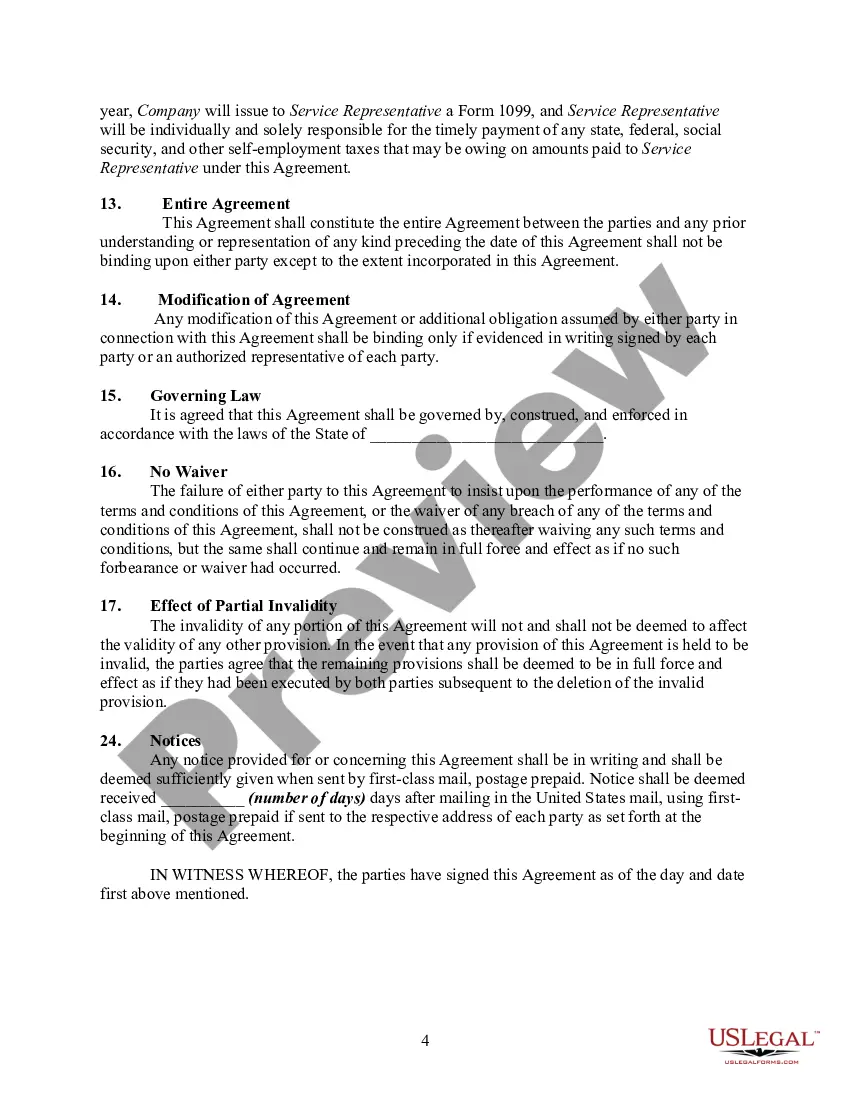
- Termination Terms: Describes how either party can terminate the agreement.

When to use this document
This form is essential when a cable television contractor seeks to engage a subcontractor for specific services within the industry. It is typically used in situations where the contractor requires additional manpower or expertise but wishes to maintain control over the outcomes rather than the methods used by the subcontractor. This ensures both parties have a clear understanding of their roles and compensation, facilitating a smoother working relationship.
Who needs this form
This agreement is suitable for:
- Cable television contractors looking to hire subcontractors for specific projects.
- Subcontractors who seek to establish formal working relationships with cable television contractors.
- Businesses in the cable service industry wanting to clarify terms of service and compensation.
How to prepare this document
- Identify the parties by entering the full names and addresses of the cable television contractor and the subcontractor.
- Specify the state where services will be provided to establish jurisdiction.
- Detail the services to be performed in the designated section, ensuring clarity on expectations.
- Outline the payment terms, including the fee structure and reimbursement for expenses incurred.
- Include signatures and dates from both parties to formalize the agreement.
Does this document require notarization?
Notarization is generally not required for this form. However, certain states or situations might demand it. You can complete notarization online through US Legal Forms, powered by Notarize, using a verified video call available anytime.
Get your form ready online
Our built-in tools help you complete, sign, share, and store your documents in one place.
Make edits, fill in missing information, and update formatting in US Legal Forms—just like you would in MS Word.
Download a copy, print it, send it by email, or mail it via USPS—whatever works best for your next step.
Sign and collect signatures with our SignNow integration. Send to multiple recipients, set reminders, and more. Go Premium to unlock E-Sign.
If this form requires notarization, complete it online through a secure video call—no need to meet a notary in person or wait for an appointment.
We protect your documents and personal data by following strict security and privacy standards.

Make edits, fill in missing information, and update formatting in US Legal Forms—just like you would in MS Word.

Download a copy, print it, send it by email, or mail it via USPS—whatever works best for your next step.

Sign and collect signatures with our SignNow integration. Send to multiple recipients, set reminders, and more. Go Premium to unlock E-Sign.

If this form requires notarization, complete it online through a secure video call—no need to meet a notary in person or wait for an appointment.

We protect your documents and personal data by following strict security and privacy standards.
Avoid these common issues
- Failing to clearly define the services to be provided by the subcontractor.
- Not specifying the payment terms adequately, leading to confusion later on.
- Overlooking to include necessary insurance requirements for the subcontractor.
- Not obtaining signatures from both parties, which can render the agreement unenforceable.
Benefits of completing this form online
- Convenience of accessing the form anytime and from any location.
- Editability allows customization of terms to fit specific needs.
- Reliability of having a legally vetted template drafted by licensed attorneys.
Looking for another form?
Form popularity
FAQ
Name of contractor and contact information. Name of homeowner and contact information. Describe property in legal terms. List attachments to the contract. The cost. Failure of homeowner to obtain financing. Description of the work and the completion date. Right to stop the project.
Timeframe or key milestones of the project; hours of work; deliverables of the project; and. way the business will pay the contractor for their services.
Identifying/Contact Information. Title and Description of the Project. Projected Timeline and Completion Date. Cost Estimate and Payment Schedule. Stop Work Clause and Stop Payment Clause. Act of God Clause. Change Order Agreement. Warranty.
A contract is a legally binding document that details the expectations and responsibilities of all parties involved in a home improvement project. It clarifies the goals of both homeowner and contractor, and it protects each party's rights regarding the project.
Terms. This is the first section of any agreement or contract and states the names and locations of the parties involved. Responsibilities & Deliverables. Payment-Related Details. Confidentiality Clause. Contract Termination. Choice of Law.
An Independent Contractor Agreement is a written contract that spells out the terms of the working arrangement between a contractor and client, including: A description of the services provided. Terms and length of the project or service. Payment details (including deposits, retainers, and other billing details)
Get it in writing. Keep it simple. Deal with the right person. Identify each party correctly. Spell out all of the details. Specify payment obligations. Agree on circumstances that terminate the contract. Agree on a way to resolve disputes.