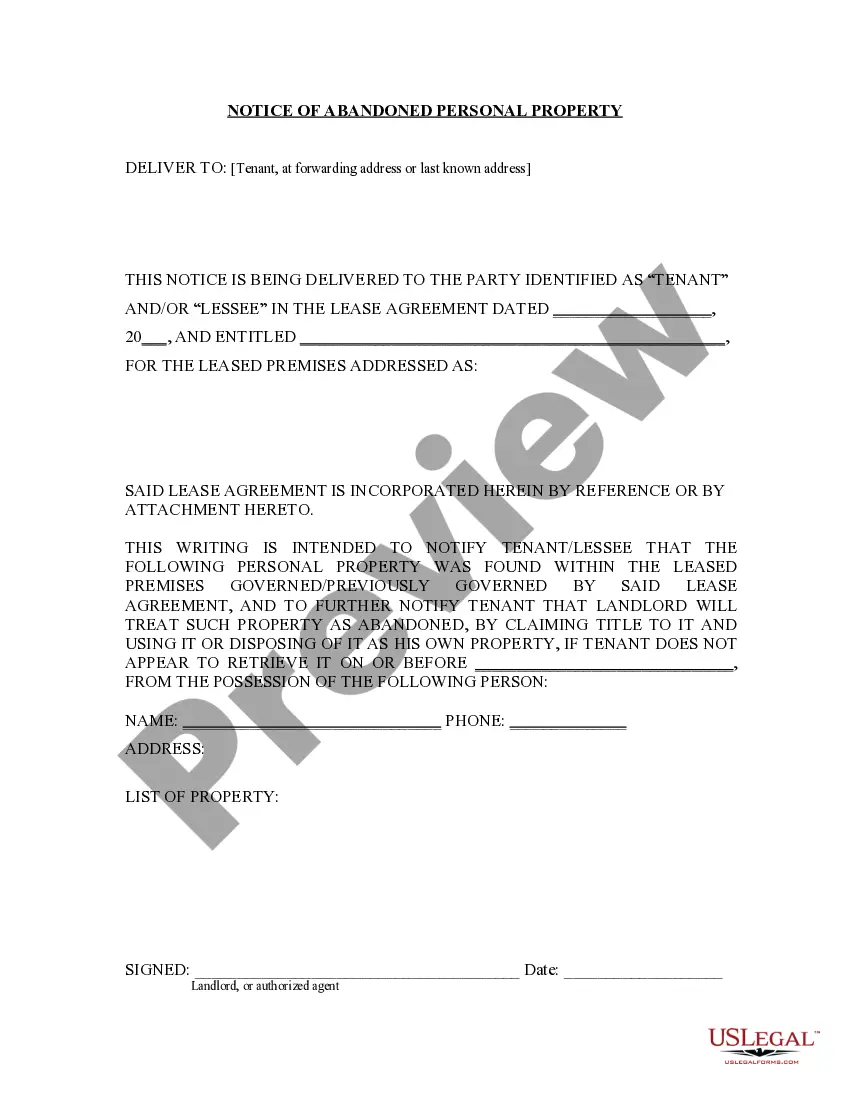
Agreement to Enter a Plea of Guilty
What this document covers
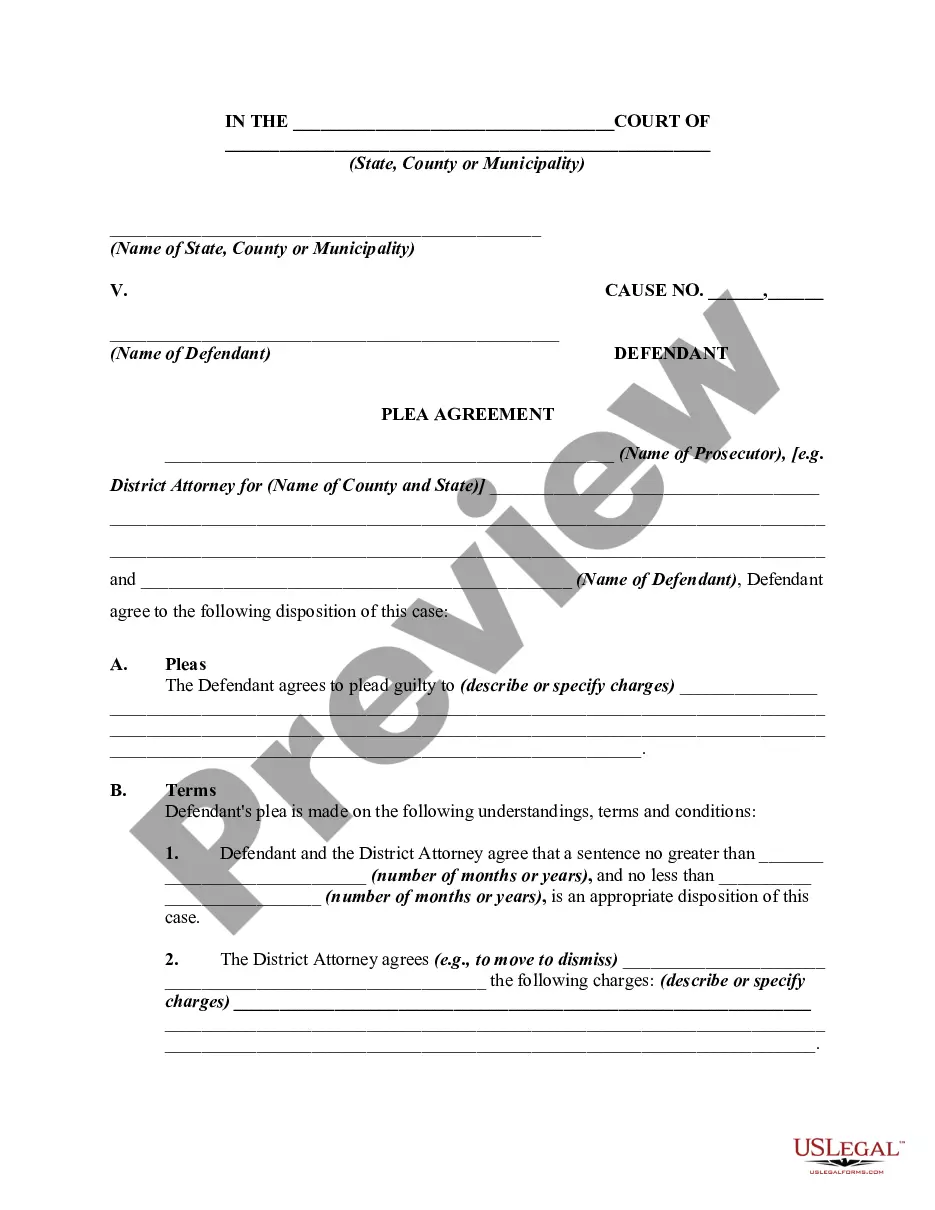
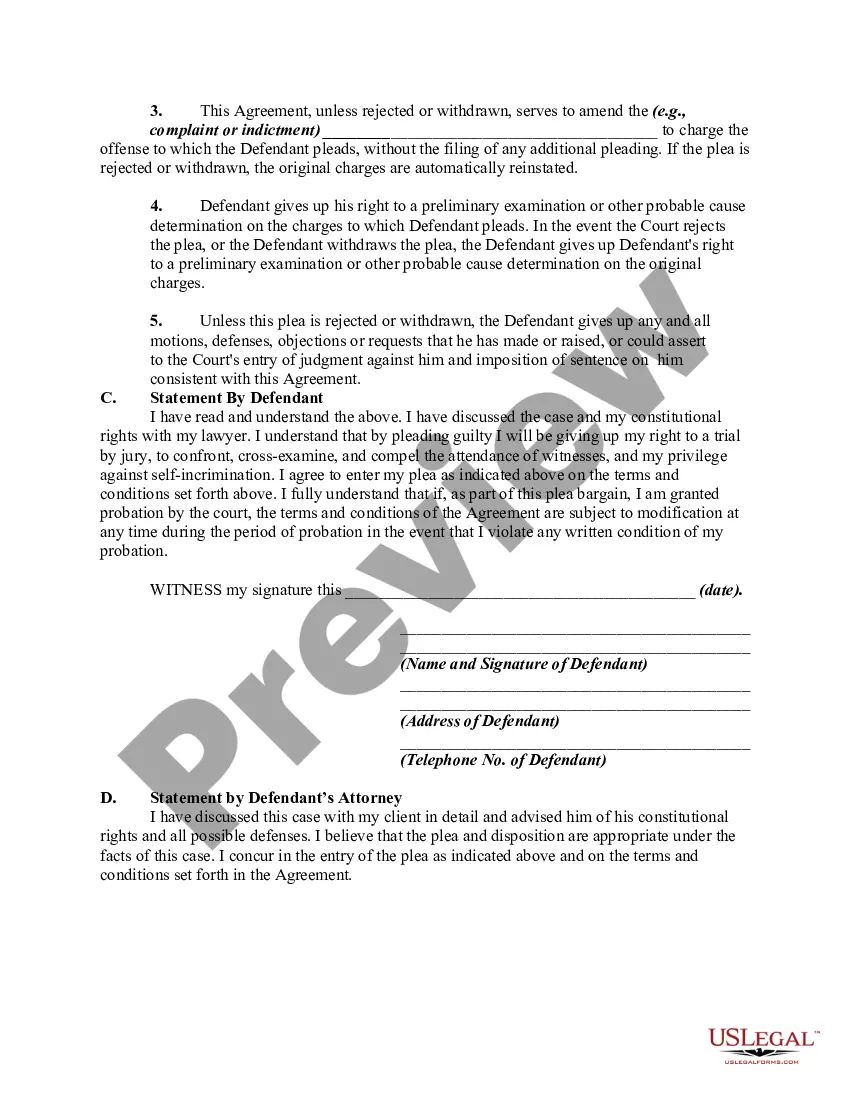
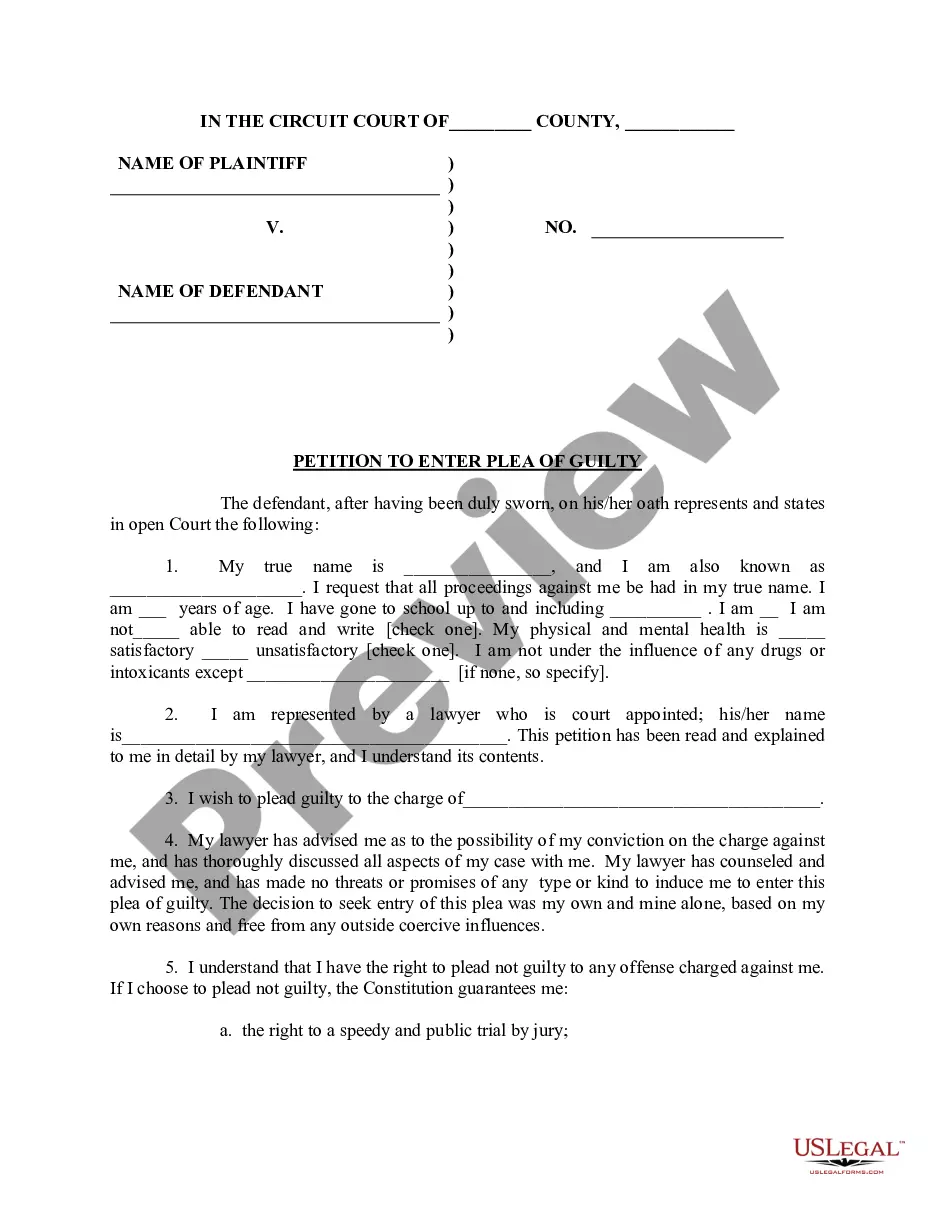
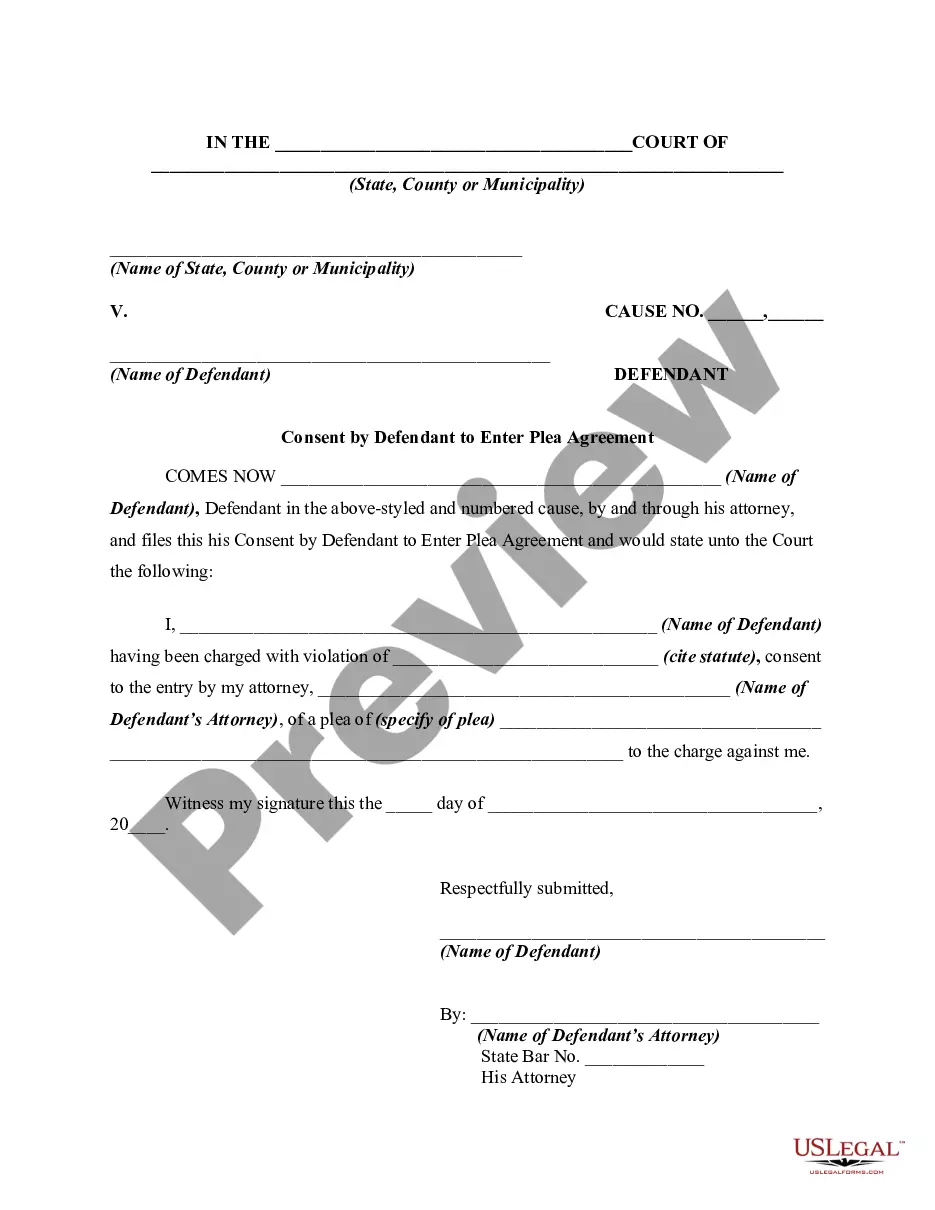
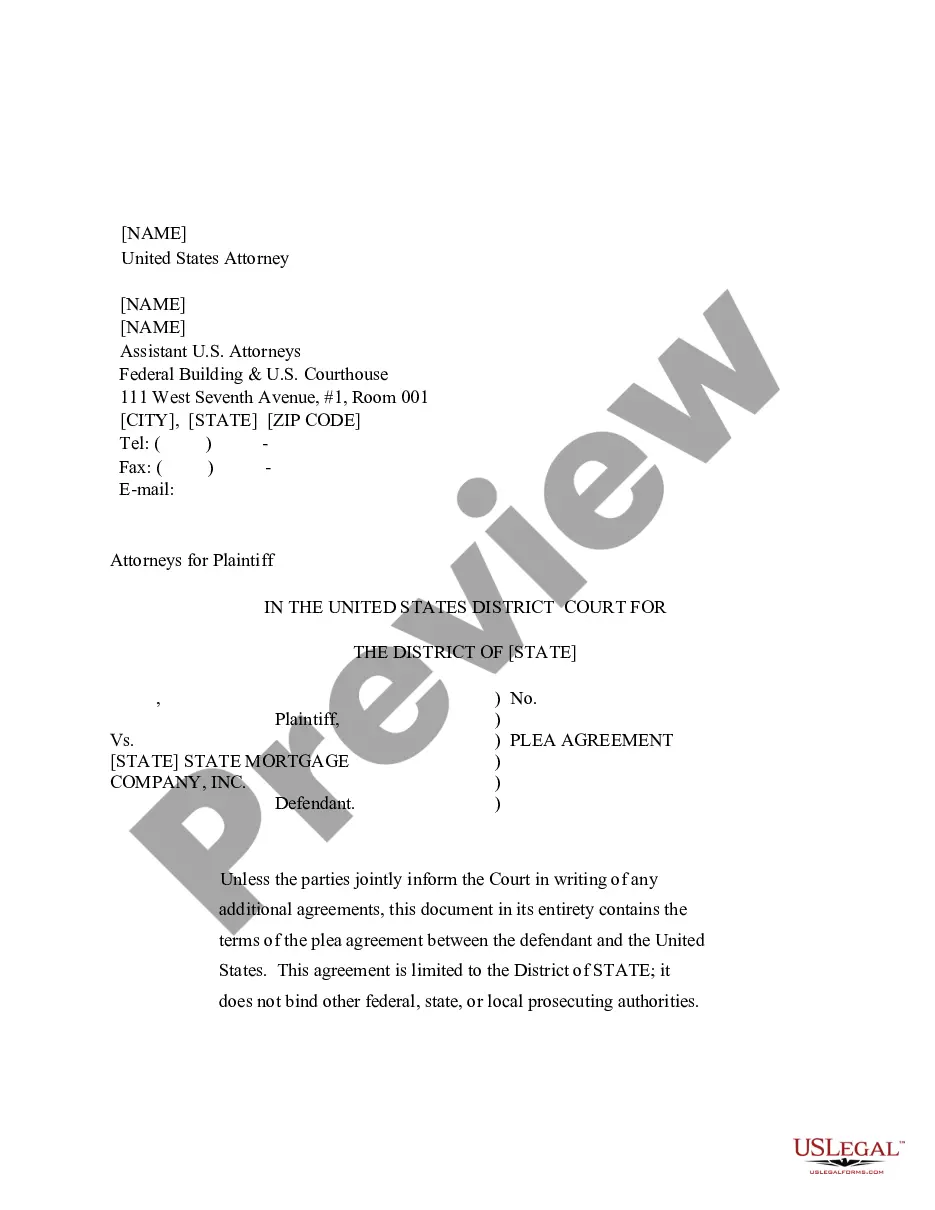
The Agreement to Enter a Plea of Guilty is a legal document used in criminal proceedings where a defendant agrees to plead guilty to specific charges. This form outlines the terms of the guilty plea and helps frame the issues for trial. It is essential for ensuring that all parties understand the implications of the plea and the defendant's rights, distinguishing it from other plea agreements by providing specific terms and conditions pertaining to the case.
Main sections of this form
- Defendant and Prosecutor Information: Names and contact details of the parties involved.
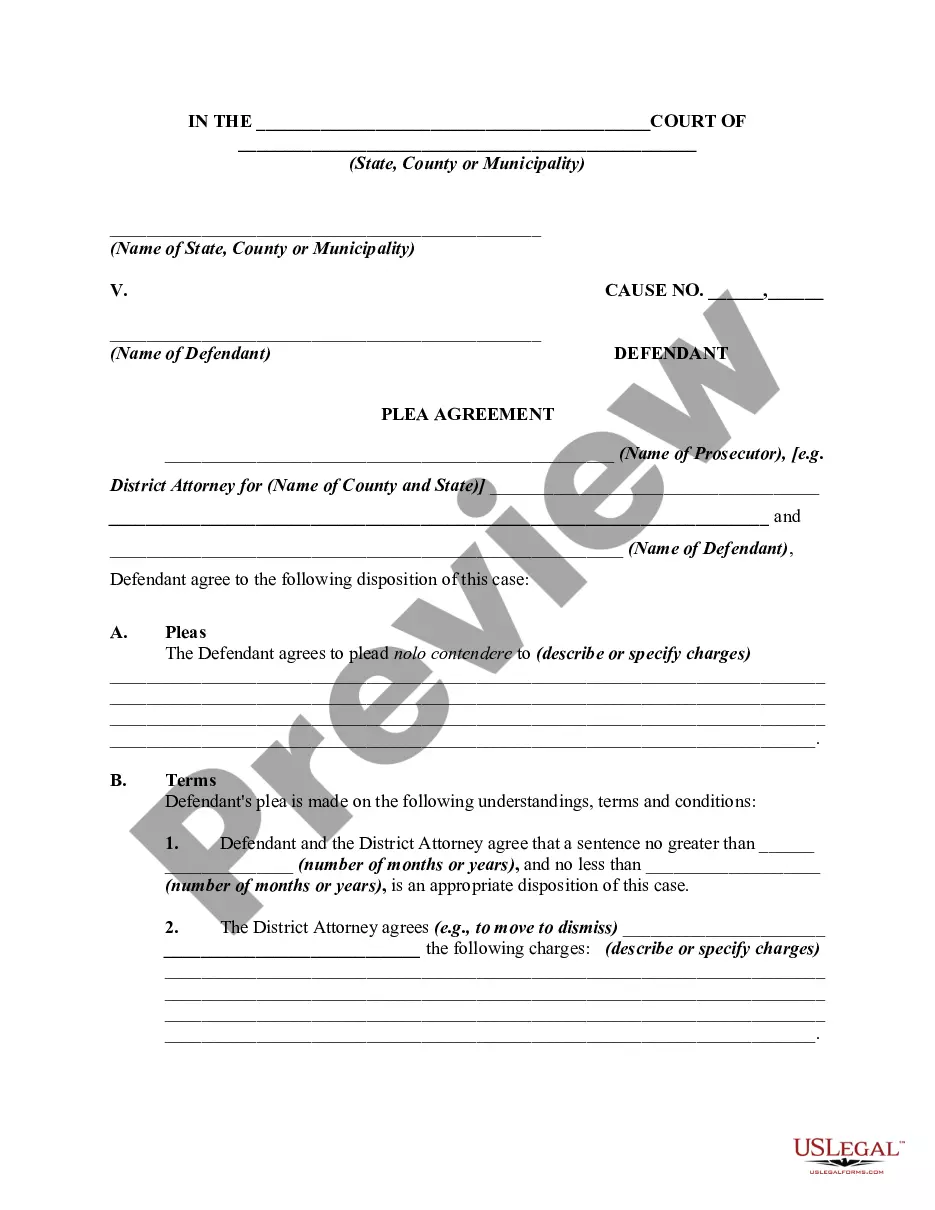
- Plea Agreement Details: Specification of the charges to which the defendant is pleading guilty.
- Terms of Sentencing: Agreement on the sentencing range between the prosecution and the defendant.
- Rights Waiver: Acknowledgment by the defendant of their rights being waived, including the right to a trial.
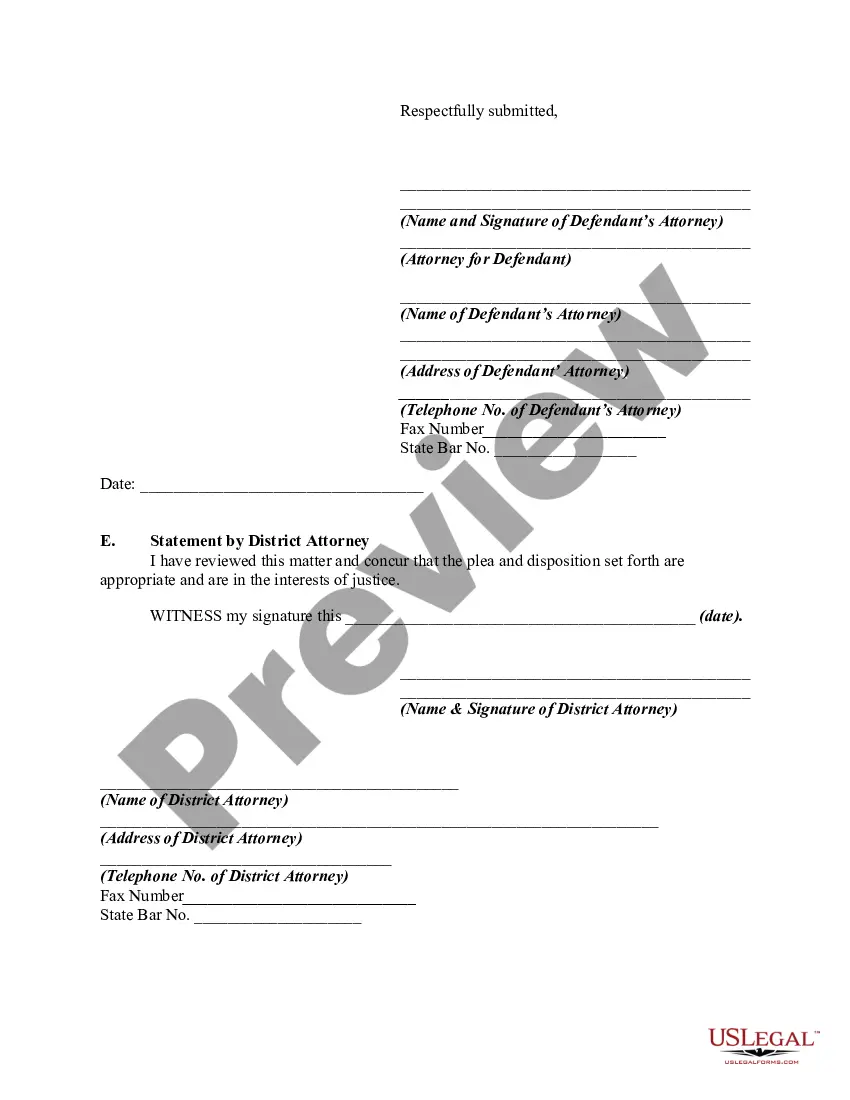
- Signatures: Required signatures from the defendant, their attorney, and the district attorney to validate the agreement.
When to use this form
This form should be used when a defendant in a criminal case intends to plead guilty to the charges brought against them. It is necessary when negotiating terms with the prosecution to avoid trial and ensure a clear understanding of the consequences of the plea. Common scenarios include cases involving lesser charges or where a plea deal has been reached to reduce potential penalties.
Who this form is for
- Defendants in criminal proceedings facing specific charges.
- Attorneys representing defendants in cases where a plea of guilty is anticipated.
- Prosecutors involved in plea negotiations with the defense.
How to complete this form
- Identify and fill in the names of the state, county, and parties involved.
- Specify the charges the defendant is pleading guilty to in the provided section.
- Detail the agreed-upon terms of sentencing, including minimum and maximum sentences.
- Ensure that both the defendant and their attorney sign the agreement along with the district attorney.
- Include the date and any necessary contact information for all parties involved.
Does this document require notarization?
Notarization is generally not required for this form. However, certain states or situations might demand it. You can complete notarization online through US Legal Forms, powered by Notarize, using a verified video call available anytime.
Get your form ready online
Our built-in tools help you complete, sign, share, and store your documents in one place.
Make edits, fill in missing information, and update formatting in US Legal Forms—just like you would in MS Word.
Download a copy, print it, send it by email, or mail it via USPS—whatever works best for your next step.
Sign and collect signatures with our SignNow integration. Send to multiple recipients, set reminders, and more. Go Premium to unlock E-Sign.
If this form requires notarization, complete it online through a secure video call—no need to meet a notary in person or wait for an appointment.
We protect your documents and personal data by following strict security and privacy standards.

Make edits, fill in missing information, and update formatting in US Legal Forms—just like you would in MS Word.

Download a copy, print it, send it by email, or mail it via USPS—whatever works best for your next step.

Sign and collect signatures with our SignNow integration. Send to multiple recipients, set reminders, and more. Go Premium to unlock E-Sign.

If this form requires notarization, complete it online through a secure video call—no need to meet a notary in person or wait for an appointment.

We protect your documents and personal data by following strict security and privacy standards.
Avoid these common issues
- Failing to specify all charges being pled to, leading to misunderstandings.
- Not consulting with a lawyer before signing, which can result in unintentional waiving of rights.
- Leaving fields blank, including sentencing details and signatures.
Benefits of using this form online
- Convenience of completing the form at your own pace.
- Editability to ensure all information is accurate before finalizing the document.
- Access to legal forms drafted by licensed attorneys, ensuring they meet legal standards.
Looking for another form?



Form popularity
FAQ
A plea of guilty in a criminal case consists of three elements.4 Third, it is an admission of actual guilt. 5 A recent Supreme Court decision, North Carolina v. Alford,6 has highlighted the first two elements of the plea, but has cast some doubt on the continued validity of the plea as an admission of guilt.
The House bill provides that evidence of a guilty or nolo contendere plea, of an offer of either plea, or of statements made in connection with such pleas or offers of such pleas, is inadmissible in any civil or criminal action, case or proceeding against the person making such plea or offer.
These pleas include: not guilty, guilty, and no contest (nolo contendere). At Worgul, Sarna & Ness, Criminal Defense Attorneys, LLC, we know how to what's on the line for you and how these different pleas can impact your life.
If the defendant pleads guilty it means they admit to committing the offence they were charged with. The court will then decide what punishment (sentence) the offender will be given.
The validity of a plea bargain is dependent upon three essential components: knowing waiver of rights, voluntary waiver, and the factual basis to support the charges to which the defendant is pleading guilty.
Consider the plea you will be putting in the letter. Include your name and contact information at the top of the letter. Ensure you always address the judge as "Your Honor" in the letter.
For a knowing and intelligent guilty plea to be made, defendants have to: admit the conduct made punishable by the law. admit and understand the charges against them. know the consequences of the plea (both the sentence as it stands and the possible sentences that could be given were the defendant to have a trial),
Valid guilty pleas have three basic elements. The court accepting the plea must have jurisdiction. The defendant must be competent to make the decision to plead guilty. Due process requires that the decision be voluntary and reasonably well-informed.
You should address the judge as "your honor," although "sir" or "ma'am" also may be appropriate. For example, the judge might say "In the matter of State v.