Petition or Application for Writ of Habeas Corpus on Behalf of Prisoner on the Grounds of Excessive Bail
Overview of this form
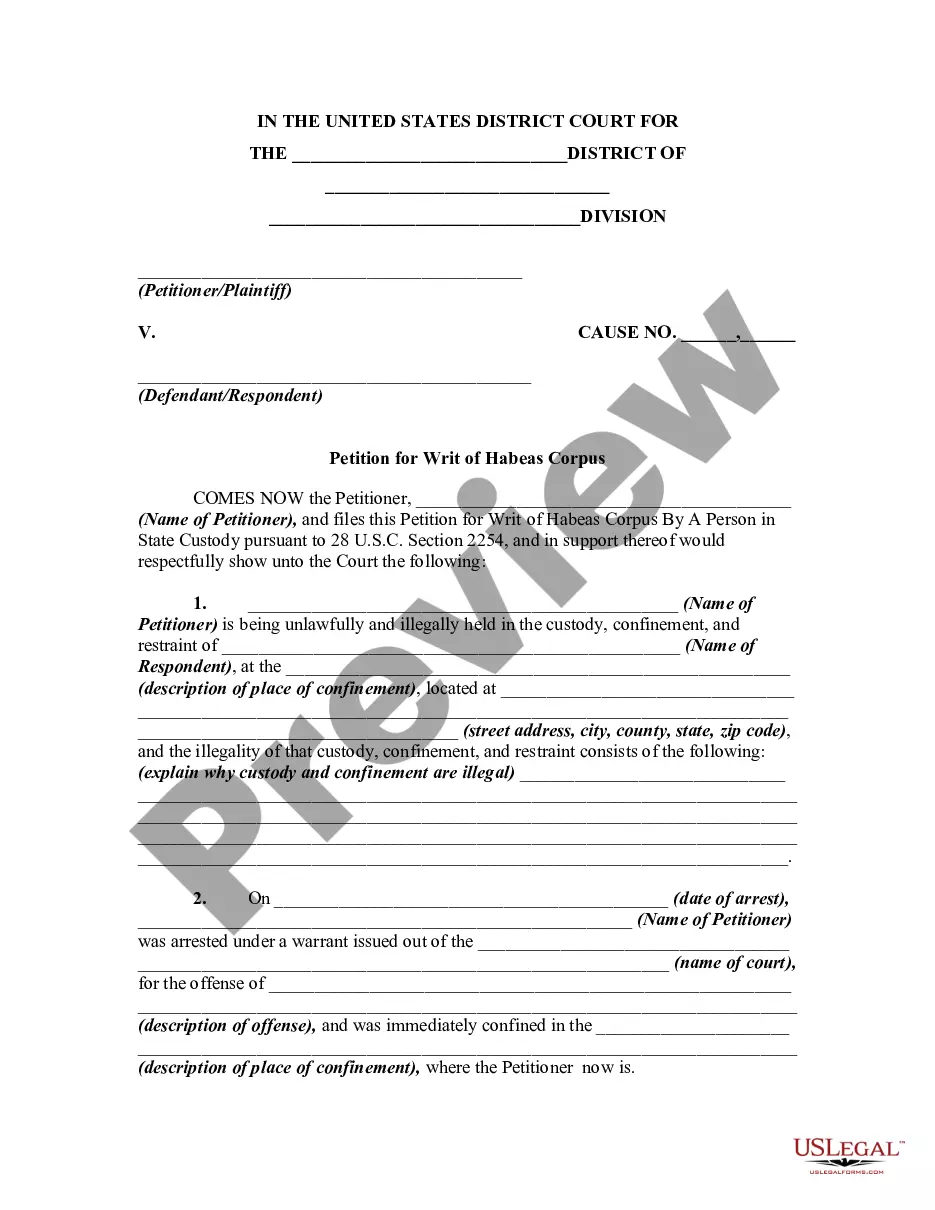
The Petition or Application for Writ of Habeas Corpus on Behalf of Prisoner on the Grounds of Excessive Bail is a legal document which allows a prisoner to challenge the legality of their detention, particularly when they are held on excessive bail. This form serves as a request to the court to assess whether the bail set is appropriate, ensuring that prisoners are not subjected to unreasonable financial barriers to their release. Unlike standard bail applications, this writ addresses issues related to the legality of confinement itself, making it vital for protecting a prisoner's rights.
Key parts of this document
- Name of the petitioner and respondent.
- Description of the place of confinement.
- Details of the arrest including date and charges.
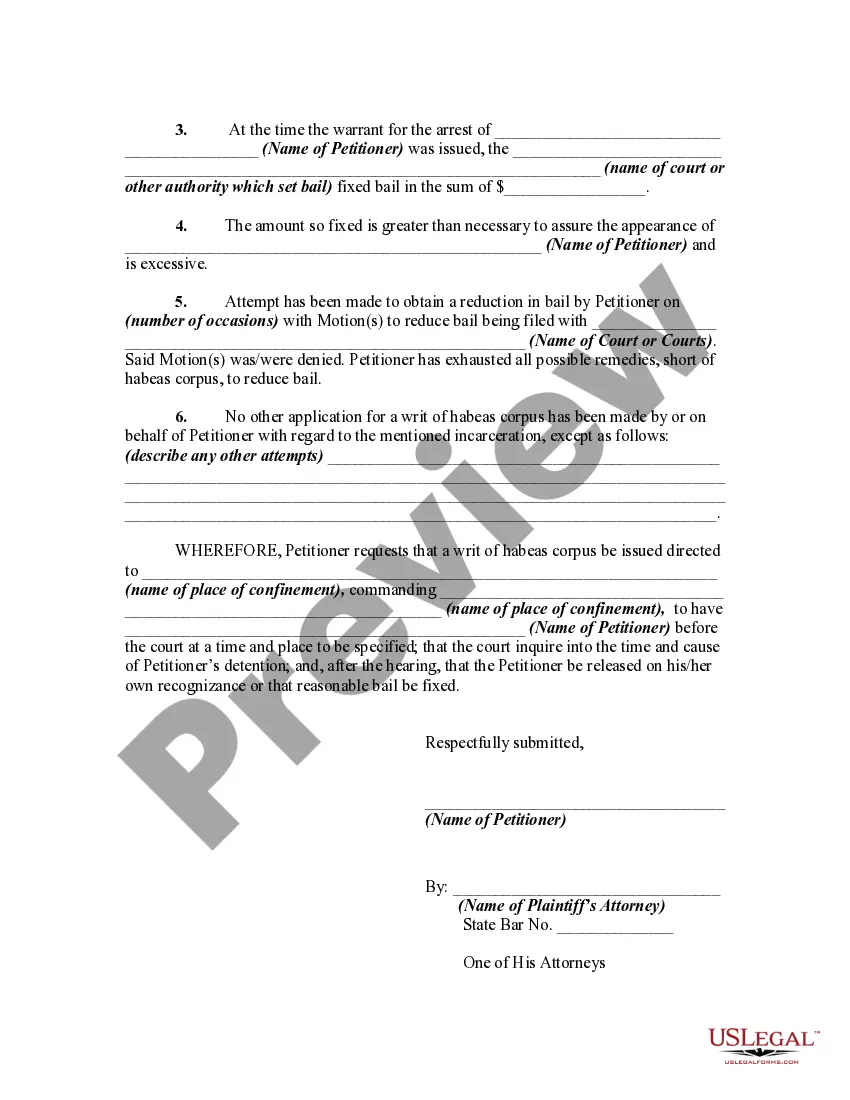
- Statement of the bail amount and rationale for its excessiveness.
- Details of any prior attempts to reduce bail.
- Request for a writ of habeas corpus directed to the appropriate authorities.


When this form is needed
This form is used in situations where a prisoner believes they are being held unlawfully due to excessive bail. Common scenarios include instances where the bail amount set by the court is significantly higher than what is necessary to ensure the prisoner's appearance at trial, or after attempts to lower the bail have been denied by the court.
Who should use this form
- Individuals currently incarcerated who believe they are being detained under excessive bail.
- Family members or legal representatives acting on behalf of a prisoner seeking to file a petition for writ of habeas corpus.
- Attorneys representing clients in custody who wish to challenge the conditions of their bail.
How to complete this form
- Identify the parties involved, including the petitioner and the respondent.
- Provide a clear explanation of why the current confinement is illegal, focusing on the excessive nature of the bail.
- Detail the arrest circumstances, including the date, charges, and place of confinement.
- State the bail amount set and the attempts made to reduce it.
- Conclude with a request for the court to review the case and possibly issue a writ of habeas corpus.
Notarization guidance
Notarization is generally not required for this form. However, certain states or situations might demand it. You can complete notarization online through US Legal Forms, powered by Notarize, using a verified video call available anytime.
Get your form ready online
Our built-in tools help you complete, sign, share, and store your documents in one place.
Make edits, fill in missing information, and update formatting in US Legal Forms—just like you would in MS Word.
Download a copy, print it, send it by email, or mail it via USPS—whatever works best for your next step.
Sign and collect signatures with our SignNow integration. Send to multiple recipients, set reminders, and more. Go Premium to unlock E-Sign.
If this form requires notarization, complete it online through a secure video call—no need to meet a notary in person or wait for an appointment.
We protect your documents and personal data by following strict security and privacy standards.

Make edits, fill in missing information, and update formatting in US Legal Forms—just like you would in MS Word.

Download a copy, print it, send it by email, or mail it via USPS—whatever works best for your next step.

Sign and collect signatures with our SignNow integration. Send to multiple recipients, set reminders, and more. Go Premium to unlock E-Sign.

If this form requires notarization, complete it online through a secure video call—no need to meet a notary in person or wait for an appointment.

We protect your documents and personal data by following strict security and privacy standards.
Avoid these common issues
- Failing to provide adequate information regarding the excessiveness of the bail.
- Not including previous motions made to reduce bail.
- Omitting necessary signatures or contact information.
- Submitting the form to the wrong court or jurisdiction.
Advantages of online completion
- Convenience of accessing the document anytime, from anywhere.
- Editability allows for quick revisions based on specific circumstances.
- Access to professionally drafted templates ensures legal compliance.
Looking for another form?

Form popularity
FAQ
The procedure provides a means for prison inmates, or others acting on their behalf, to dispute the legal basis for confinement.Often, the court holds a hearing on the matter, during which the inmate and the government can both present evidence about whether there is a lawful basis for jailing the person.
So that a petition for writ of habeas corpus under Article 226 can of course be filed by the person in detention or custody, and it can also be filed, on his behalf, by a friend or relation for this reason that such a person is in a position to make an affidavit that the detenu himself is not able to move in the matter
Known as "the Great Writ," habeas corpus gives individuals the power to get help from courts to keep government and any other institutions that may imprison people in check.The writ of habeas corpus gives jailed suspects the right to ask a judge to set them free or order an end to improper jail conditions.
All applications for writs or orders in the nature of writs of Habeas Corpus under Article 226 of the Constitution of India shall be made to the Division Bench taking criminal business of the Appellate Side of the High Court duly verified by oath or affidavit setting forth the circumstances under which the writ or
(b) A writ of habeas corpus may be prosecuted for, but not limited to, the following reasons: (1) False evidence that is substantially material or probative on the issue of guilt or punishment was introduced against a person at any hearing or trial relating to his incarceration; or (2) False physical evidence, believed
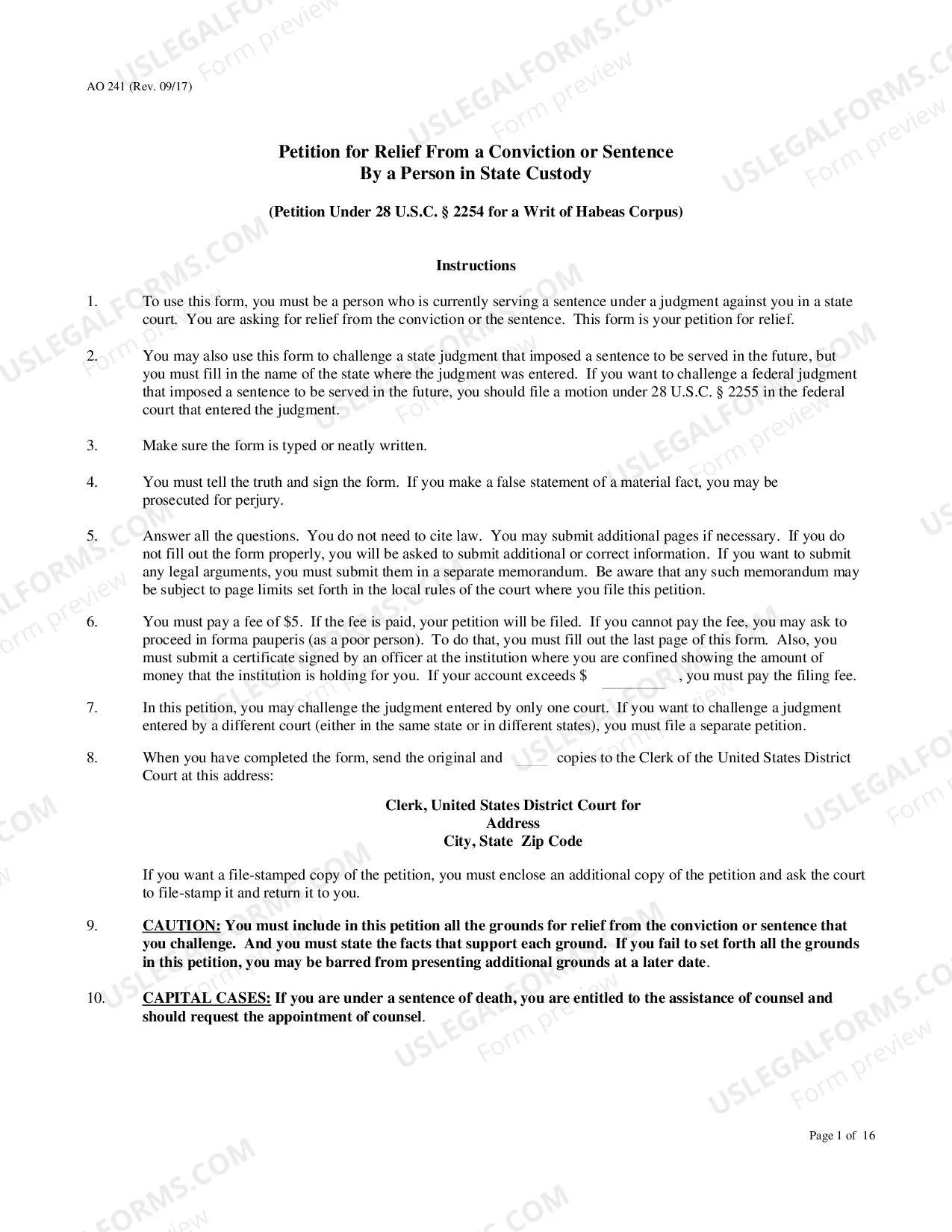
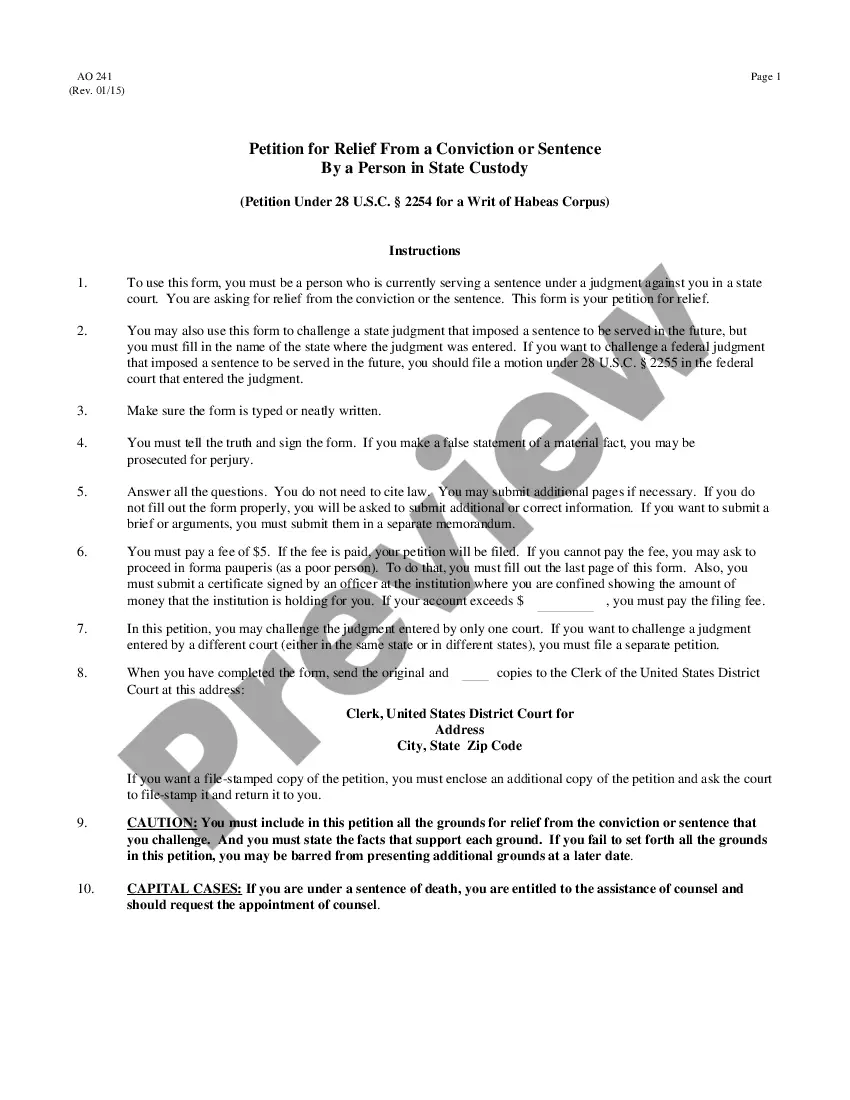
The petition for a writ of habeas corpus must be accompanied by the full $5.00 filing fee. If you want to commence an action without prepayment of fees or security therefor, you must file a motion for leave to proceed in forma pauperis pursuant to 28 U.S.C. § 1915.
Any application under this chapter for habeas corpus relief under section 2254 must be filed in the appropriate district court not later than 180 days after final State court affirmance of the conviction and sentence on direct review or the expiration of the time for seeking such review.