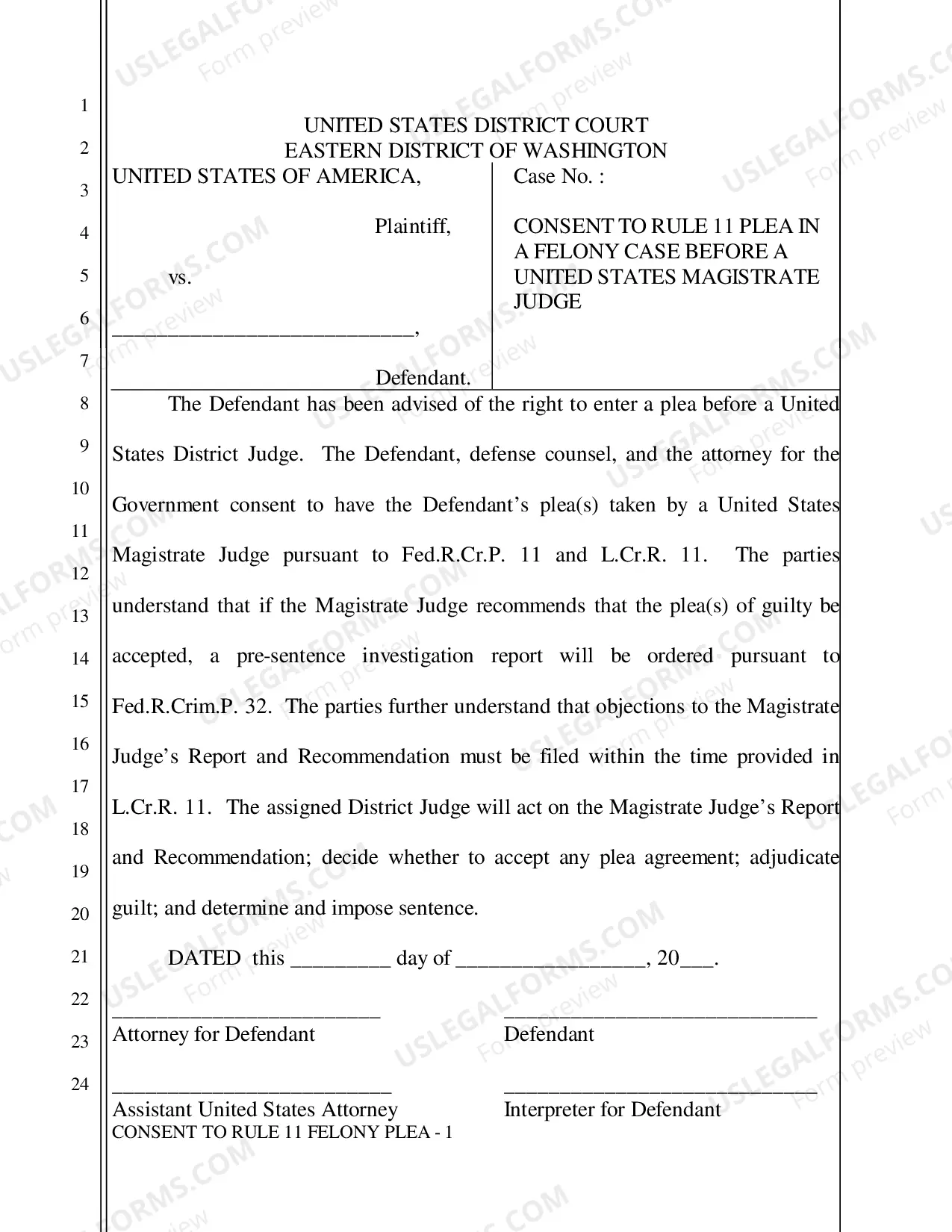
Objection to Appointment of Petitioner as Legal Guardian for a Minor
Overview of this form
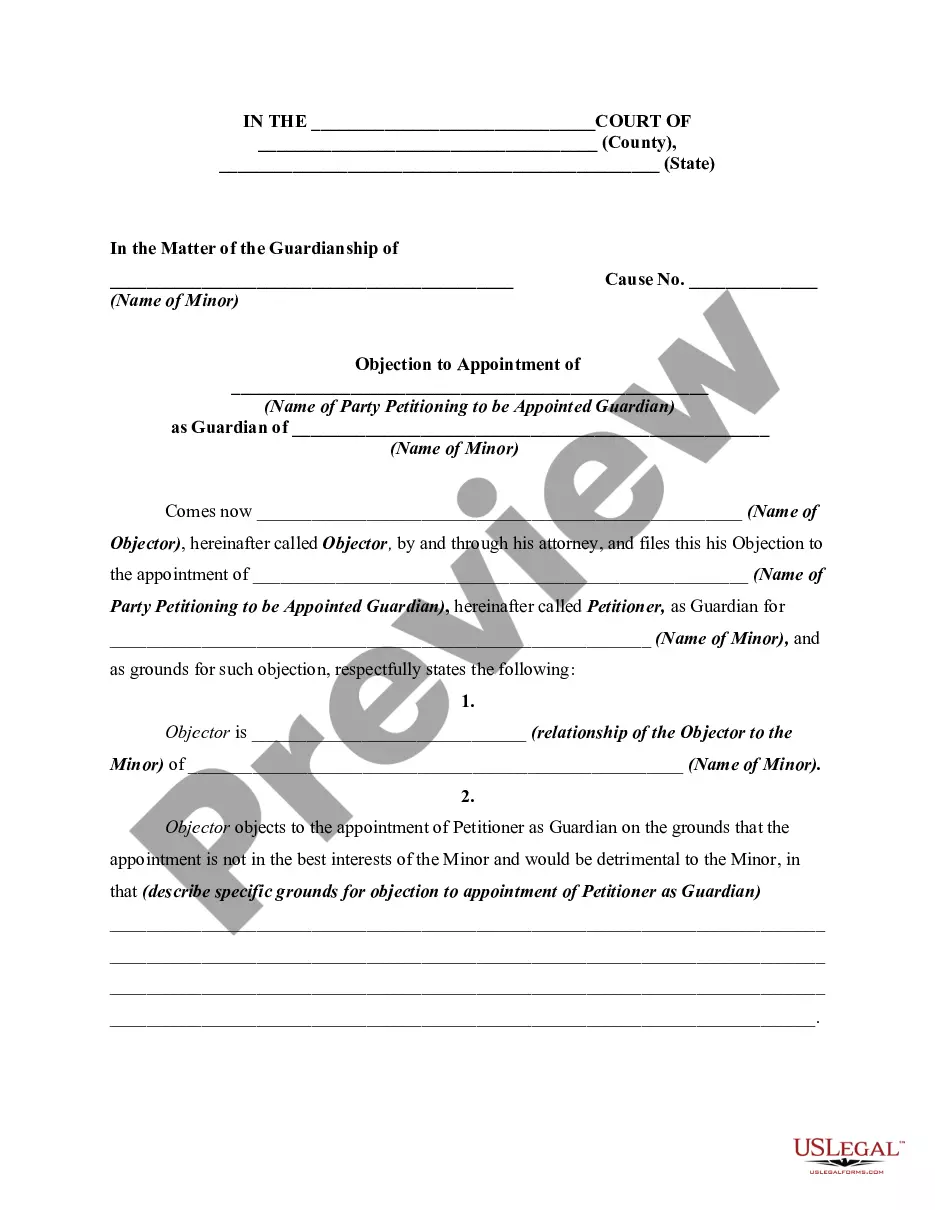
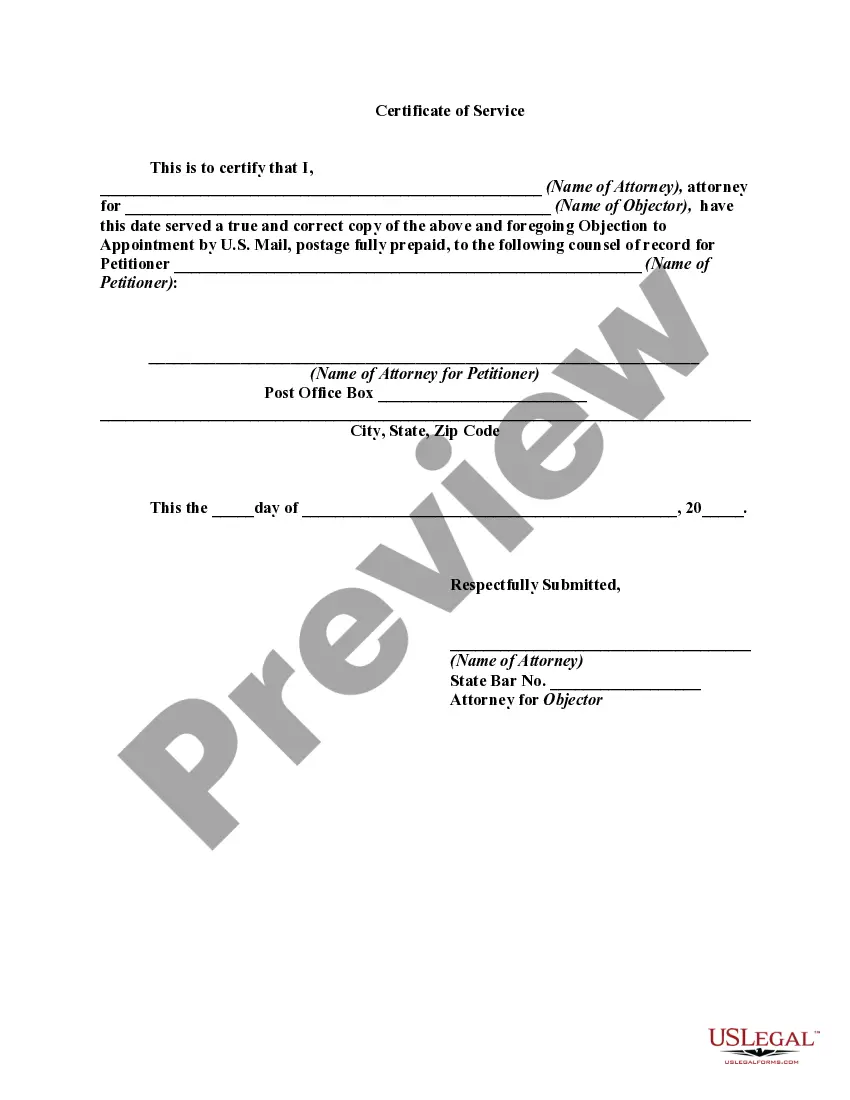
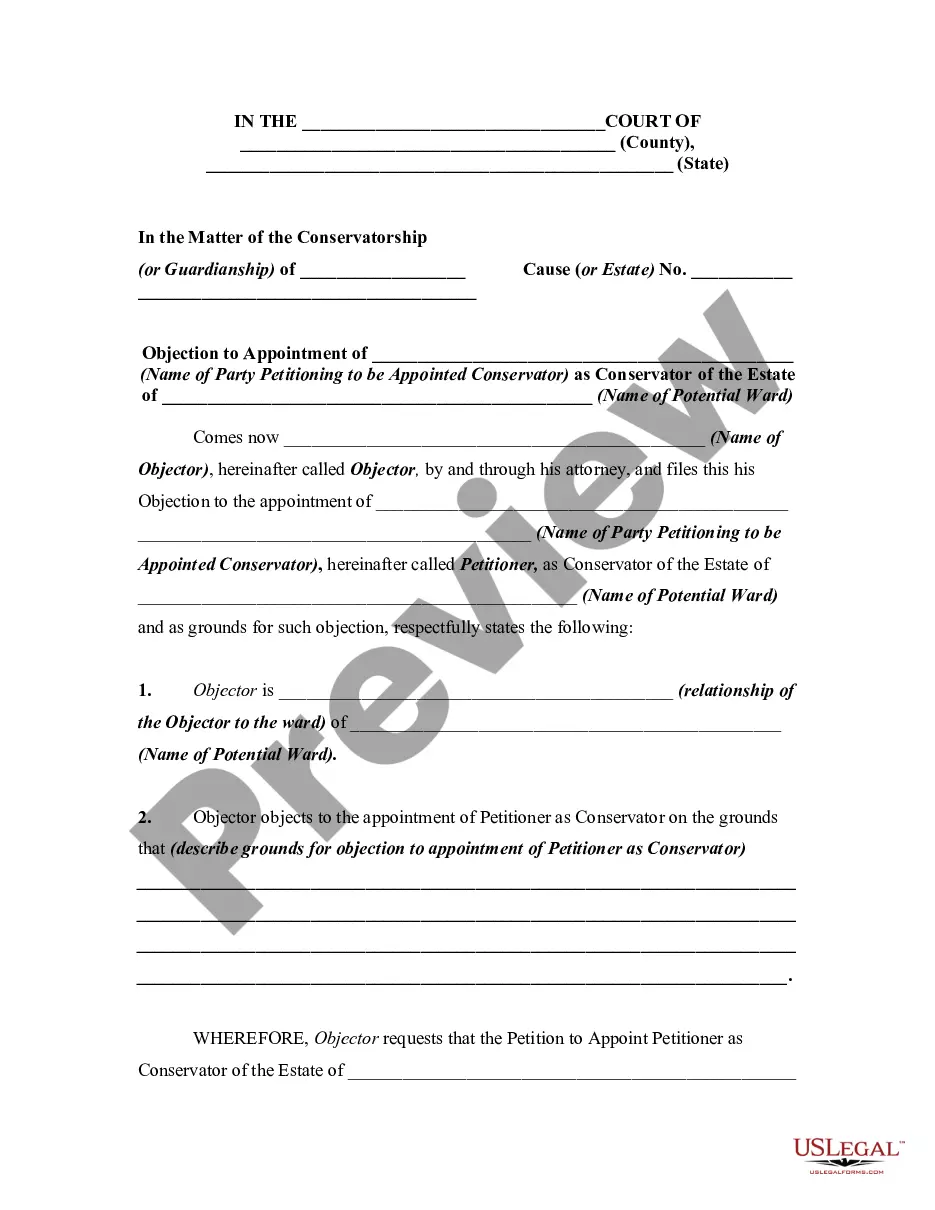
The Objection to Appointment of Petitioner as Legal Guardian for a Minor is a legal document used to formally express disagreement with the appointment of a guardian for a minor child. This specific form enables the objector to detail their objections, citing reasons why the appointment may not be in the best interests of the child. It differs from general guardianship forms by focusing specifically on opposition to a particular petitioner's appointment rather than establishing guardianship itself.
Main sections of this form
- Name of the minor whose guardianship is in question.
- Name of the person petitioning to be appointed as guardian.
- Relationship of the objector to the minor.
- Grounds for objection, detailing specific reasons against the appointment.
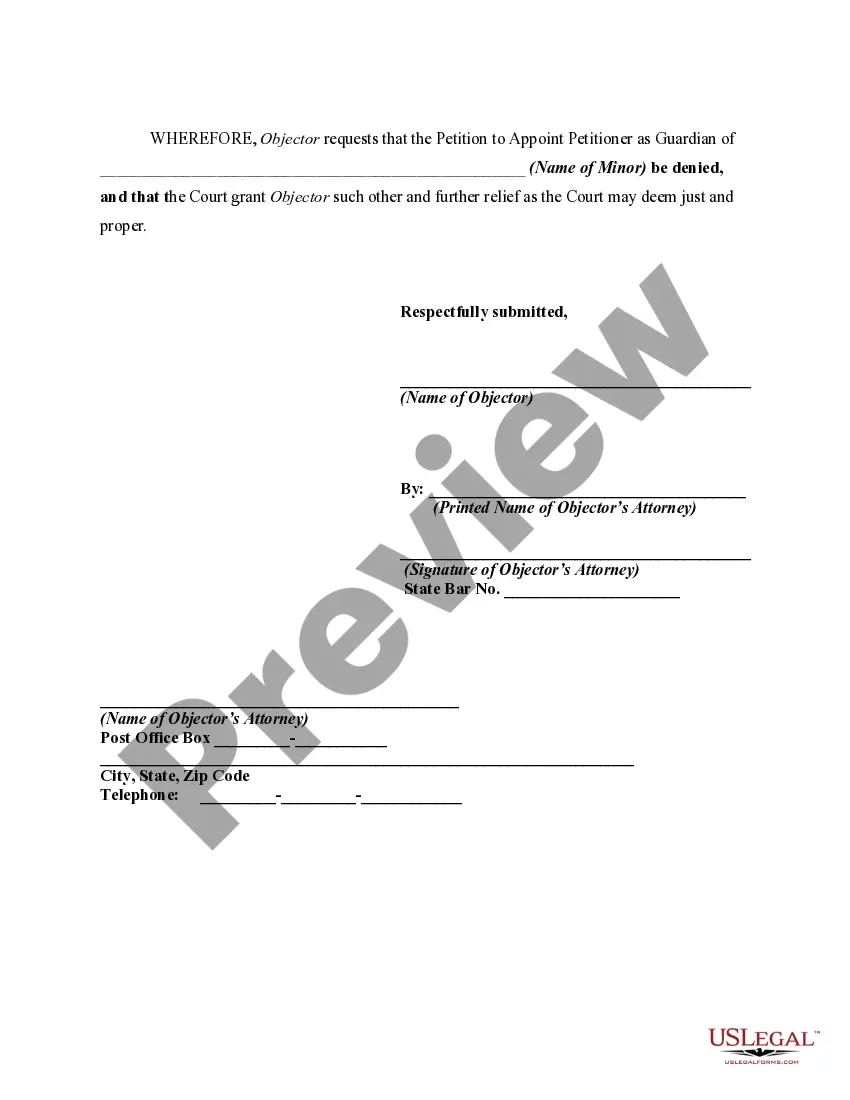
- Request for relief, specifying what the objector is seeking from the court.
- Signature and contact information of the objector and their attorney, if applicable.
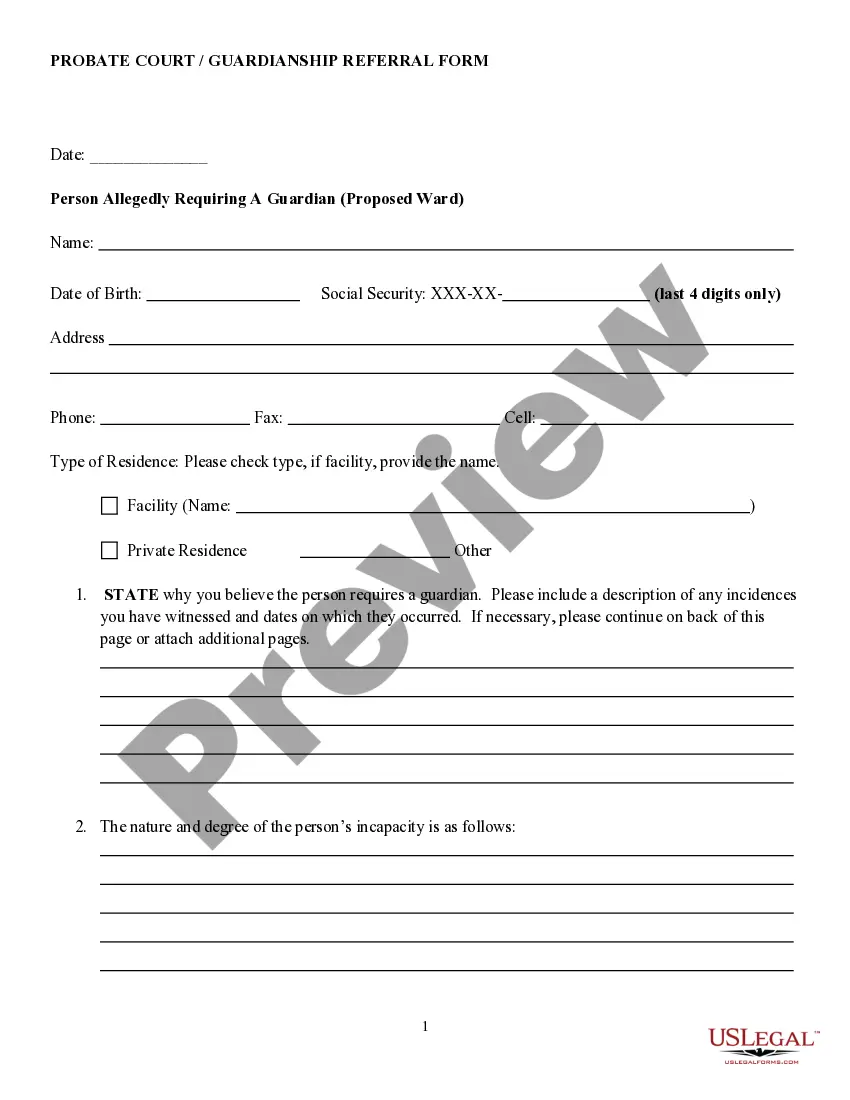

When to use this form
This form is used when an individual believes that the proposed guardian for a minor is not suitable or does not have the child's best interests in mind. Typical scenarios include concerns over the proposed guardian's ability to care for the child, issues related to the guardian's past behavior, or any other specific reasons that may indicate that the appointment would be harmful to the minor.
Who can use this document
- Family members of the minor who wish to contest the guardian appointment.
- Any concerned party with a legitimate interest in the welfare of the child.
- Legal representatives acting on behalf of the objector.
Instructions for completing this form
- Identify the minor by entering their name in the provided space.
- Specify the name of the person petitioning to be the guardian.
- Clearly state your relationship to the minor in the designated section.
- Detail the specific grounds for your objection to the guardianship appointment.
- Sign the document and include your contact information, or have your attorney do so if you are represented.
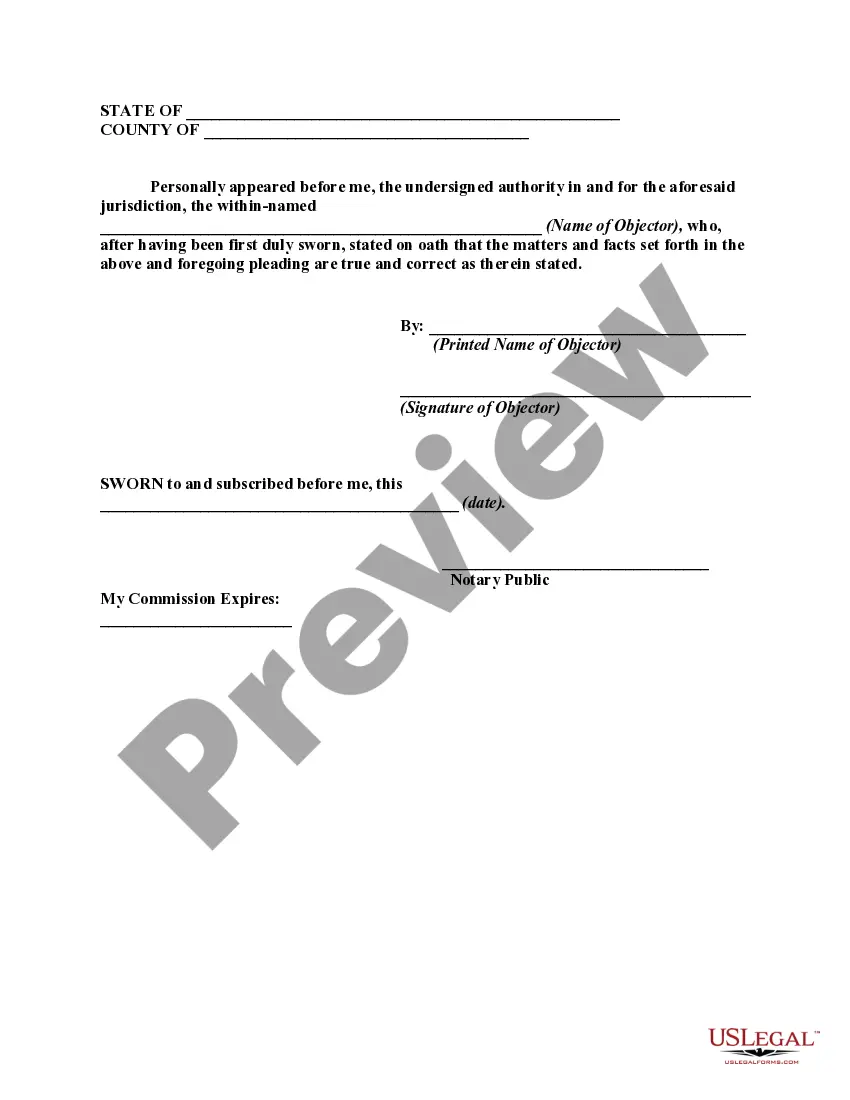
Notarization requirements for this form
This document requires notarization to meet legal standards. US Legal Forms provides secure online notarization powered by Notarize, allowing you to complete the process through a verified video call, available 24/7.
Get your form ready online
Our built-in tools help you complete, sign, share, and store your documents in one place.
Make edits, fill in missing information, and update formatting in US Legal Forms—just like you would in MS Word.
Download a copy, print it, send it by email, or mail it via USPS—whatever works best for your next step.
Sign and collect signatures with our SignNow integration. Send to multiple recipients, set reminders, and more. Go Premium to unlock E-Sign.
If this form requires notarization, complete it online through a secure video call—no need to meet a notary in person or wait for an appointment.
We protect your documents and personal data by following strict security and privacy standards.

Make edits, fill in missing information, and update formatting in US Legal Forms—just like you would in MS Word.

Download a copy, print it, send it by email, or mail it via USPS—whatever works best for your next step.

Sign and collect signatures with our SignNow integration. Send to multiple recipients, set reminders, and more. Go Premium to unlock E-Sign.

If this form requires notarization, complete it online through a secure video call—no need to meet a notary in person or wait for an appointment.

We protect your documents and personal data by following strict security and privacy standards.
Common mistakes
- Failing to provide sufficient details for the grounds of objection.
- Not signing the form or leaving out necessary signatures from legal representatives.
- Submitting the form without understanding local court rules and procedures.
- Omitting critical identifying information for either the minor or the petitioner.
Why use this form online
- Convenience of downloading the form instantly and completing it at your own pace.
- Easy access to legal language drafted by licensed attorneys.
- Reduced chances of errors due to guided prompts in the online form.
Looking for another form?










Form popularity
FAQ
GUARDIAN: In the event I shall die as the sole parent of minor children, then I appoint ____________________________________ as Guardian of said minor children. If this named Guardian is unable or unwilling to serve, then I appoint ____________________________________ as alternate Guardian.
A guardian is responsible for an elder or minor ward's personal care, providing them with a place to live, and with ensuring their medical needs are met. Guardians make sure that their ward has a place to live, such as the guardian's home, with a caretaker, or in an assisted living or full care facility.
Create Durable Power of Attorney Documents. Choose an Agent Wisely. Err on the Side of Caution.
Under certain circumstances, a Guardian may be personally liable for improper distributions, and may be compelled by a Court to make a distribution at the Ward's or Interested Person's request.
The main difference between custody and guardianship is the child's parents - custody is provided to the child's biological parents while guardianship is given to a non-biological parent.
A guardian is also prohibited from making gifts from the ward's estate. Generally, a guardian cannot tie up the ward's money by purchasing real estate, but can lend the money to someone else buying real estate if the property is sufficient security for the loan.
Two lines beneath the guardian's address, you should insert the subject heading of the letter. For example, type RE: Temporary Guardianship of Minor Child, Elizabeth Bennett. Draft the body of the letter. The first paragraph of the body of the letter should name your children and state that you have custody of them.
The guardian is responsible for deciding where the ward's liquid assets will be held and who will be responsible for overseeing the investments. If the ward owns any real estate, the guardian is responsible for paying all of the bills for maintaining the property such as taxes, mortgages and insurance.