Open Listing Agreement - Residential
What this document covers
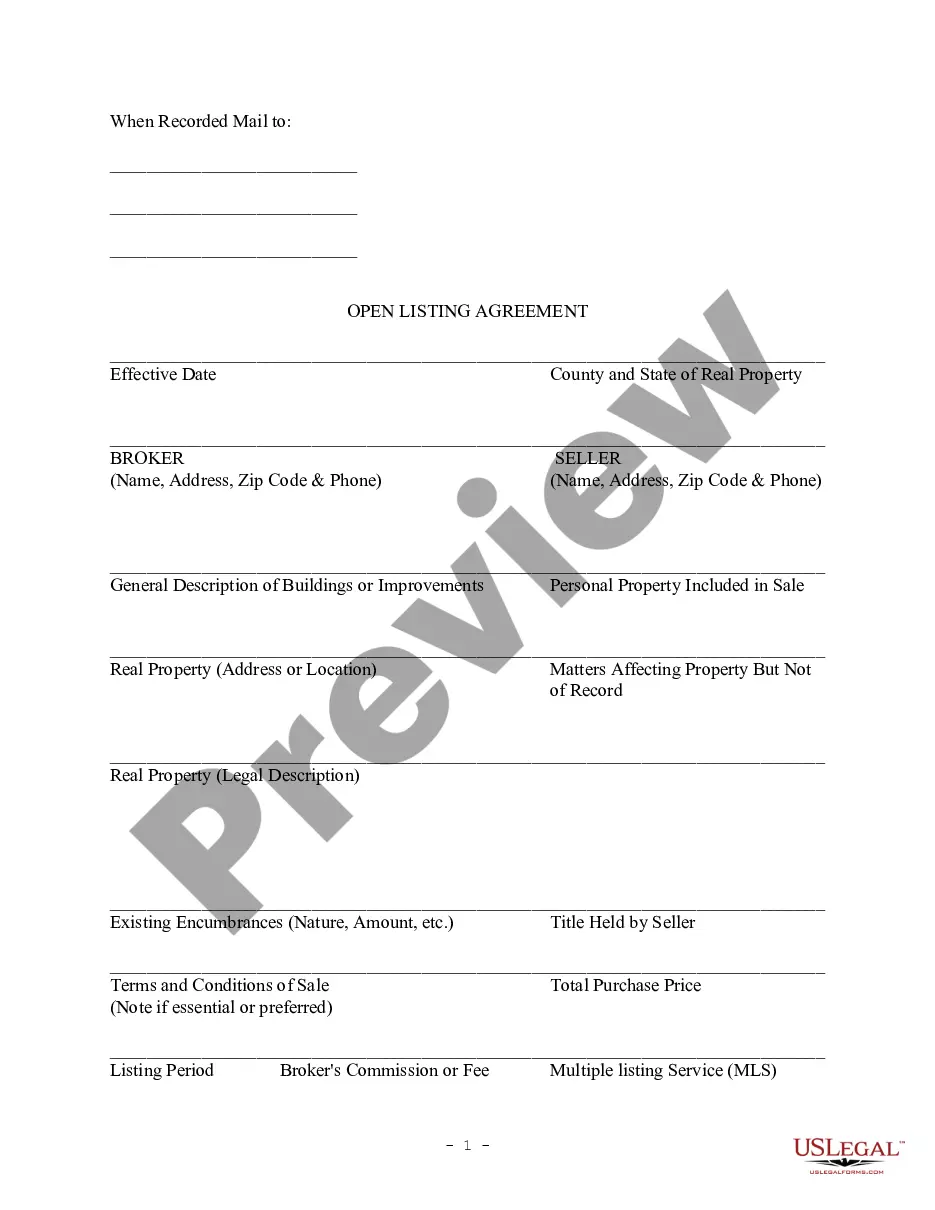
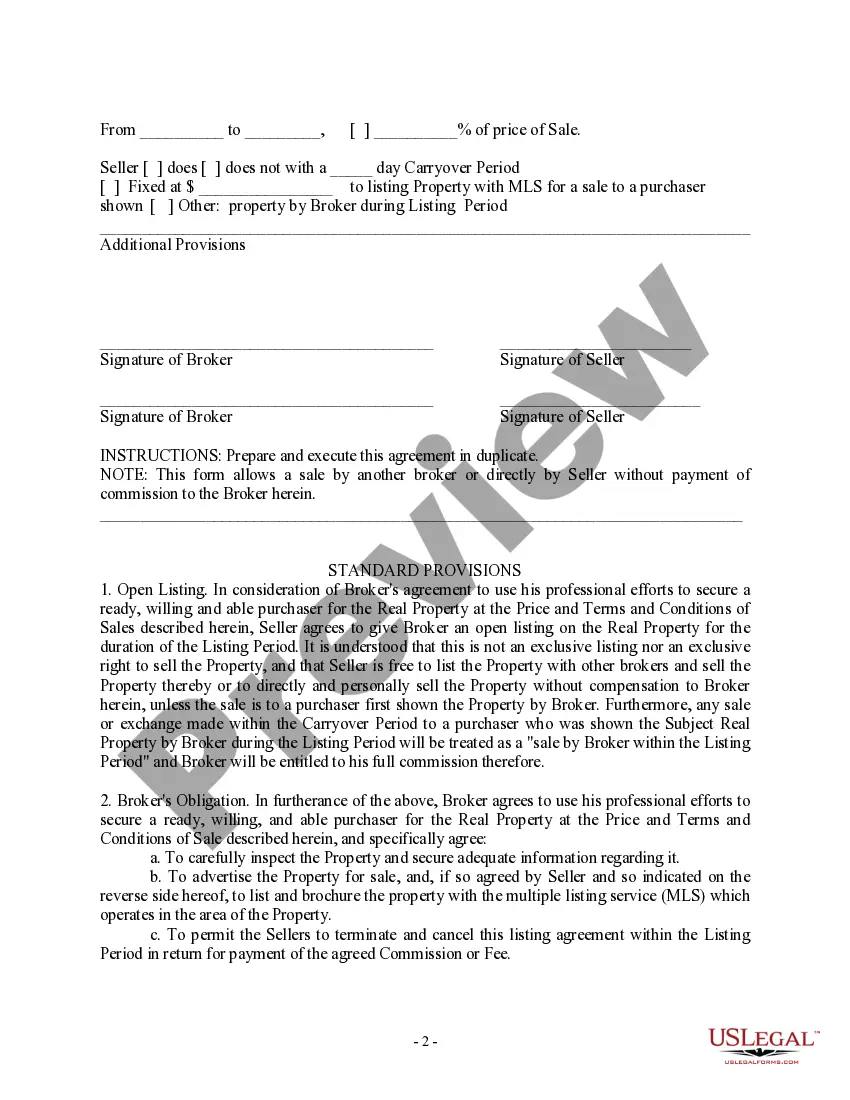
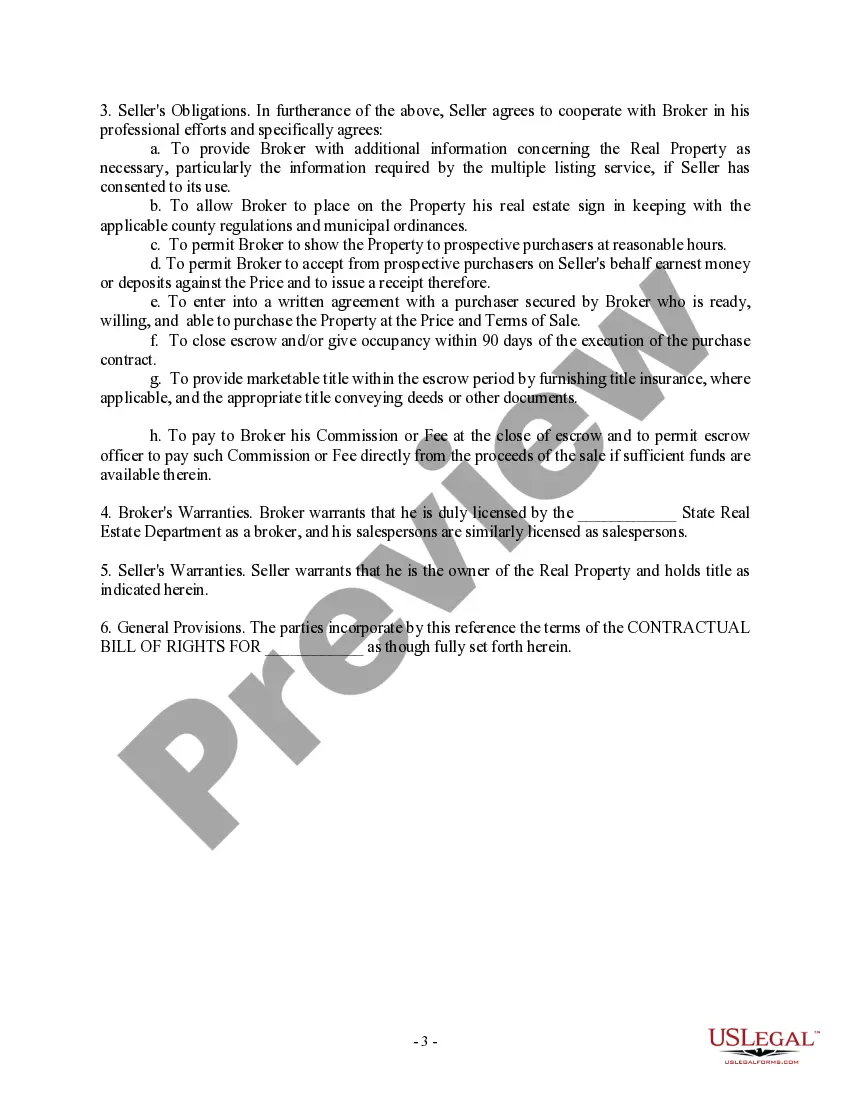
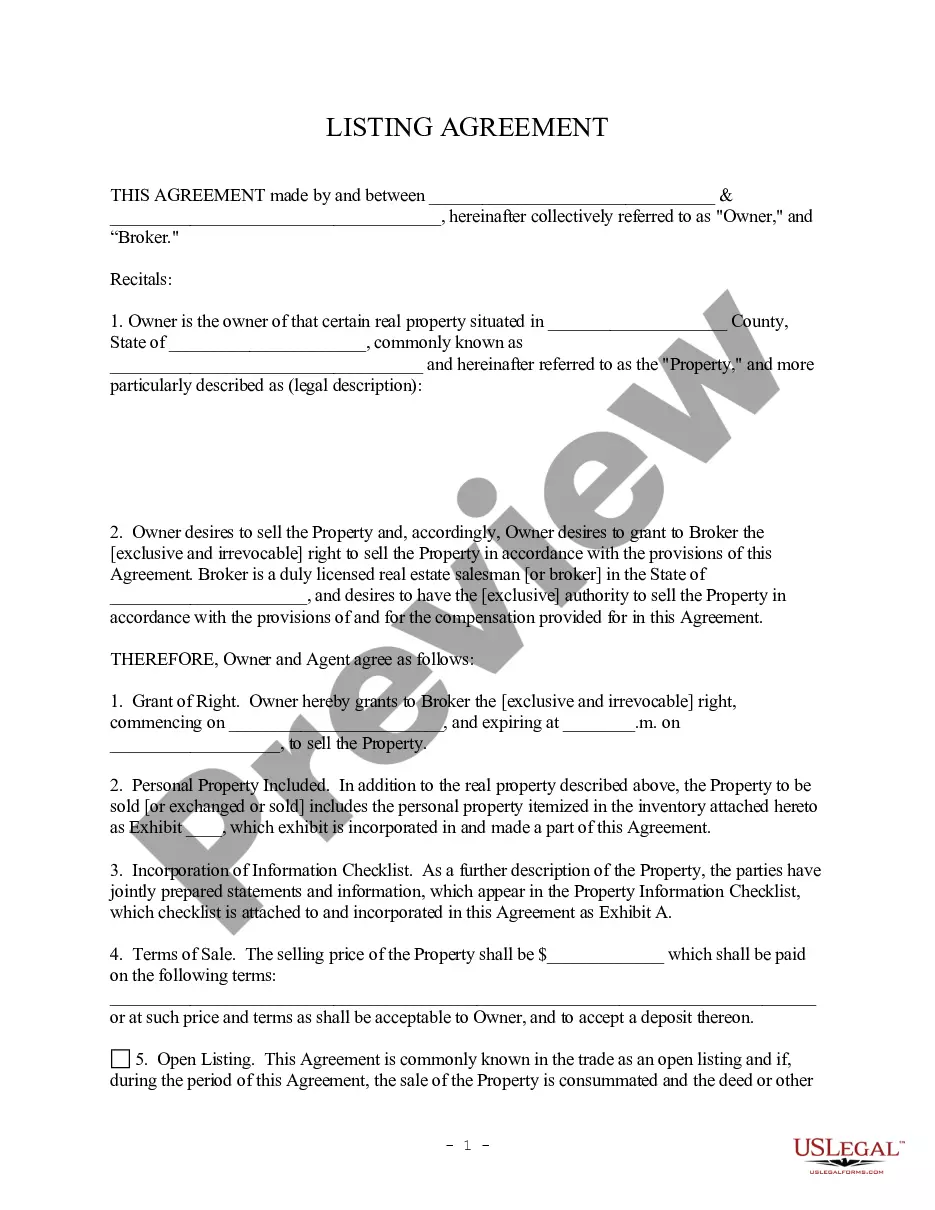
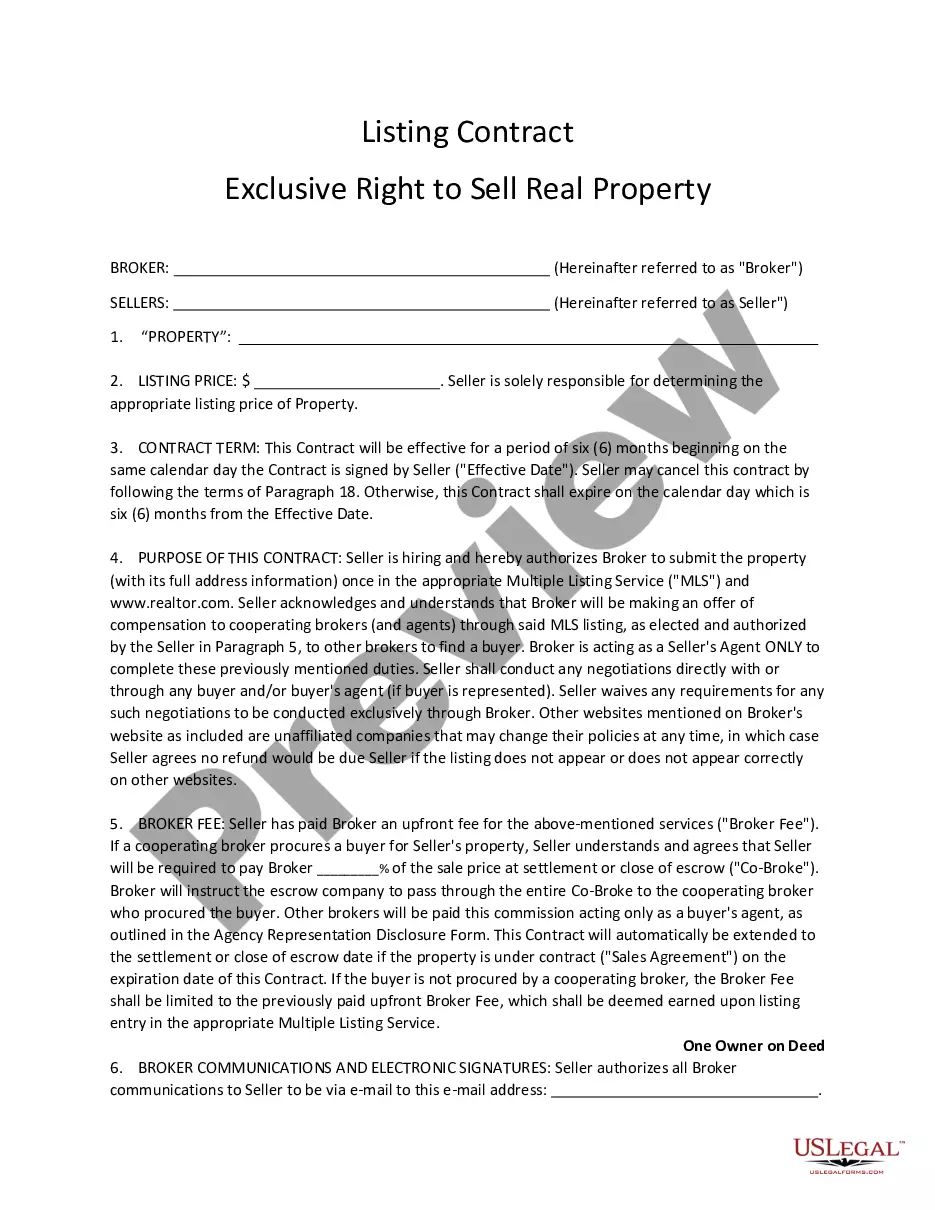
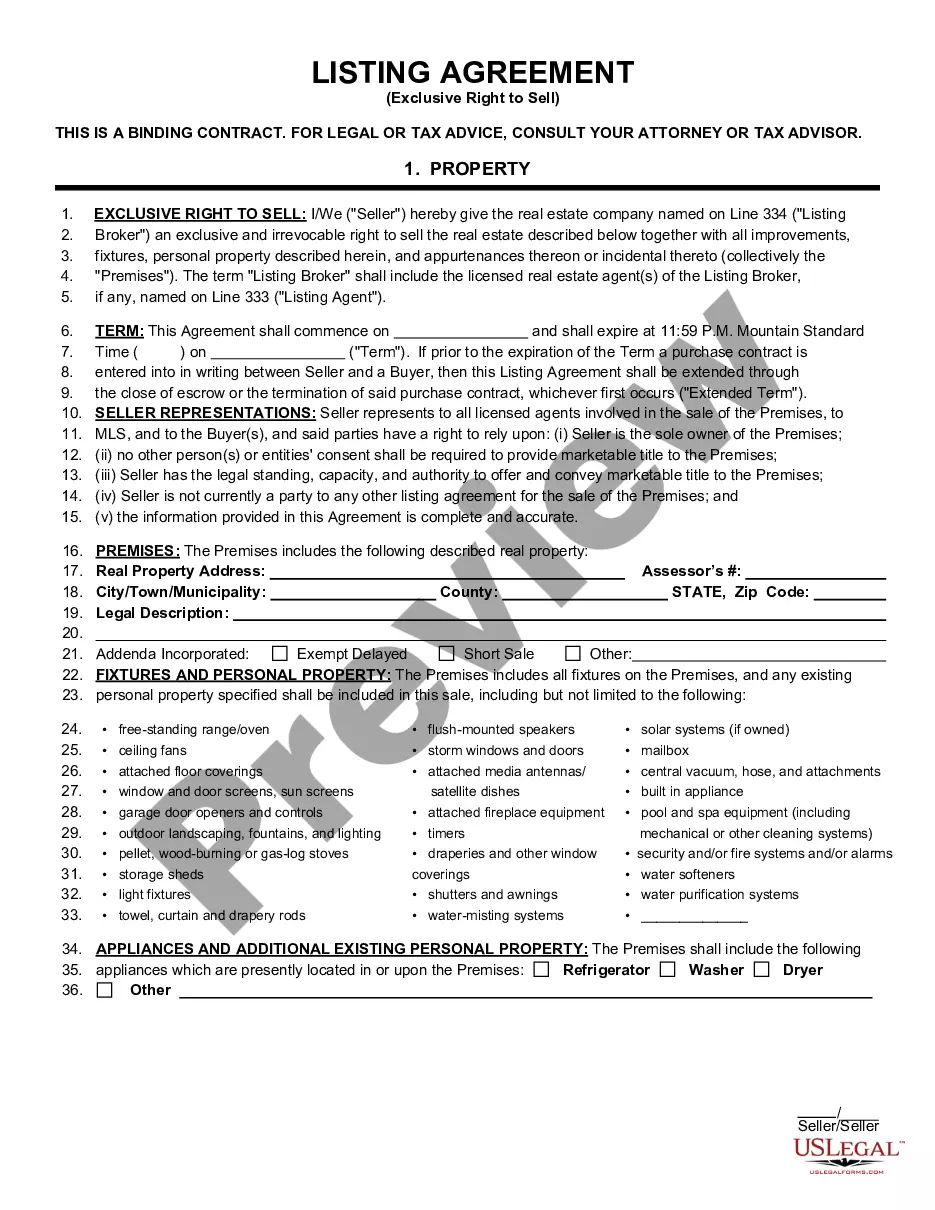
The Open Listing Agreement - Residential is a legal document that establishes a non-exclusive agreement between a real estate broker and a seller. This agreement allows the broker to represent the seller and to list their property for sale in real estate listing services. Unlike exclusive agreements, this form permits the seller to engage multiple brokers and sell the property directly, giving them greater flexibility in their sale process.
Key components of this form
- Effective Date and Property Location
- Broker and Seller Information
- General Description of Real Property and Improvements
- Terms and Conditions of Sale
- Listing Period and Broker's Commission
- Additional Provisions and Signatures

When this form is needed
This form is useful when a seller wants to list their residential property for sale but prefers a non-exclusive arrangement with their broker. It is appropriate for situations where the seller may wish to work with multiple real estate agents or directly sell the property without the obligation to pay a commission to the broker if they find a buyer themselves.
Who this form is for
- Homeowners looking to sell their property without exclusive representation.
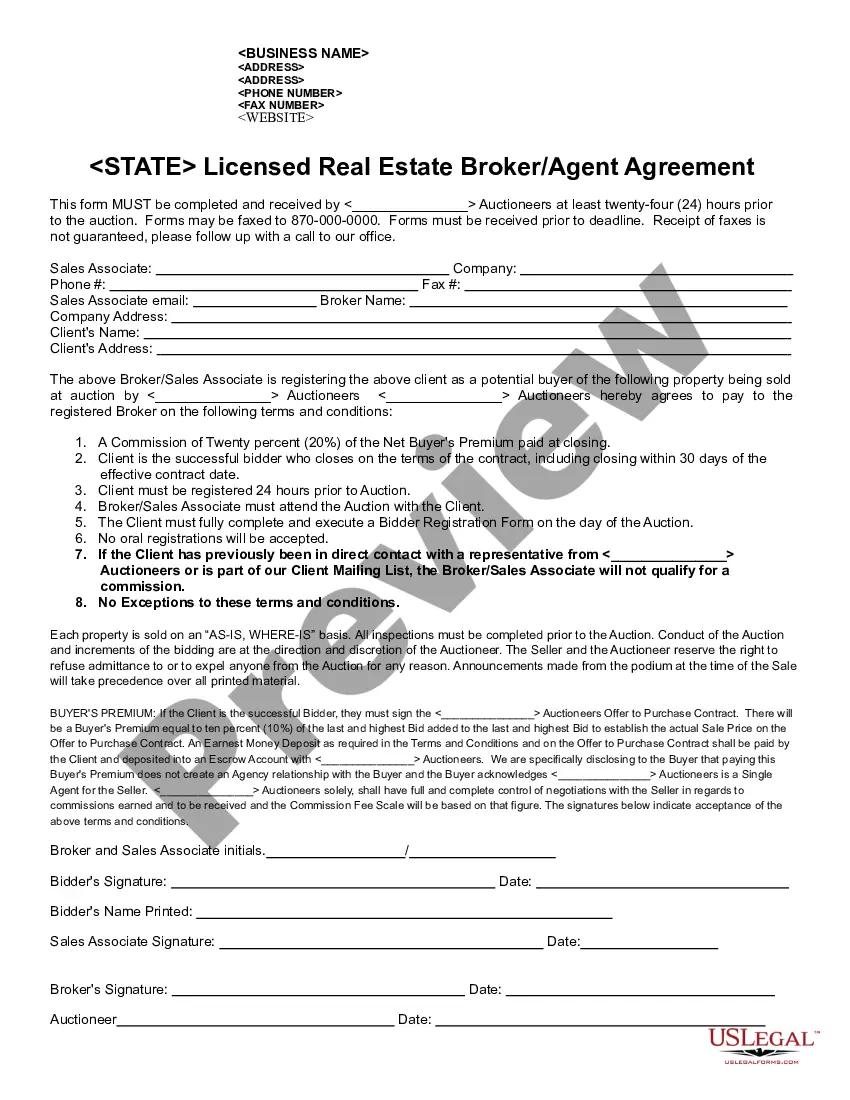
- Real estate brokers who want to list properties on behalf of sellers with shared listing capabilities.
- Sellers interested in maintaining flexibility in their selling strategy.
Completing this form step by step
- Identify the parties involved: Enter the names and contact information of the broker and seller.
- Provide property details: Fill in the address and legal description of the property.
- Specify terms: Clearly state the total purchase price and any existing encumbrances on the property.
- Determine listing period: Indicate the duration of the listing and the broker's commission or fee.
- Include signatures: Ensure that both the broker and seller sign and date the agreement for validation.
Is notarization required?
This form does not typically require notarization unless specified by local law. It's advisable to check local regulations to ensure compliance.
Get your form ready online
Our built-in tools help you complete, sign, share, and store your documents in one place.
Make edits, fill in missing information, and update formatting in US Legal Forms—just like you would in MS Word.
Download a copy, print it, send it by email, or mail it via USPS—whatever works best for your next step.
Sign and collect signatures with our SignNow integration. Send to multiple recipients, set reminders, and more. Go Premium to unlock E-Sign.
If this form requires notarization, complete it online through a secure video call—no need to meet a notary in person or wait for an appointment.
We protect your documents and personal data by following strict security and privacy standards.

Make edits, fill in missing information, and update formatting in US Legal Forms—just like you would in MS Word.

Download a copy, print it, send it by email, or mail it via USPS—whatever works best for your next step.

Sign and collect signatures with our SignNow integration. Send to multiple recipients, set reminders, and more. Go Premium to unlock E-Sign.

If this form requires notarization, complete it online through a secure video call—no need to meet a notary in person or wait for an appointment.

We protect your documents and personal data by following strict security and privacy standards.
Common mistakes to avoid
- Not providing accurate property details, which could lead to misinformation.
- Failing to specify the terms of the commission clearly.
- Neglecting to obtain signatures from all parties involved.
Advantages of online completion
- Convenience: Download and complete the form at your own pace.
- Editability: Easily modify the document to fit your specific needs.
- Reliability: Ensure that the form is drafted and vetted by licensed attorneys, reducing legal risks.
What to keep in mind
- The Open Listing Agreement - Residential allows for a flexible selling approach.
- It is suited for sellers who want to engage multiple brokers or sell independently.
- Accurate completion of this form is crucial for legal validity and clarity.
Looking for another form?


Form popularity
FAQ
Does an open listing need to be in writing? All real estate contracts need to be in writing, so they can be enforceable. There are some legal precedents in which a court enforces an oral real estate agreement, but to do so takes time and resources while it's litigated in the court system.
A real estate deal can take a turn for the worst if the contract is not carefully written to include all the legal stipulations for both the buyer and seller.You can write your own real estate purchase agreement without paying any money as long as you include certain specifics about your home.
Open Listing: A contractual agreement under which the listing broker acts as the agent or as the legally recognized non-agency representative of the seller(s), and the seller(s) agrees to pay a commission to the listing broker only if the property is sold through the efforts of the listing broker. (
It's a legally binding contract that allows the real estate agent (or brokerage) full and total control over the transaction and rights to the agreed upon commission once the home sells. 99% of the time the listing agreement is a listing agreement where the listing agents are responsible for everything, said Lenchek.
Does a Real Estate Purchase Agreement have to be notarized in order to be valid? No, this document does not have to be signed by a notary public since it does not get filed with the County Recorder's Office.
Answer five: Yes, you can terminate the contract with your Realtor.Most listing agreements however provide for the payment of commission if the seller terminates the agreement early or otherwise blocks or prohibits the sale of the property.
The identity of the buyer and seller. A description of the property being purchased. The purchase price. The terms as to how and when payment is to be made. The terms as to how, when, and where the goods will be delivered to the purchaser.
Step 1: Apply For A Mortgage. Step 2: Research The Neighborhood. Step 3: Find A Property. Step 4: Ask For A Seller's Disclosure. Step 5: Make An Offer. Step 6: Hire A Lawyer And Home Inspector. Step 7: Negotiate. Step 8: Finalize Home Financing And Closing.
Who Prepares The Real Estate Purchase Agreement? Typically, the buyer's agent writes up the purchase agreement. However, unless they are legally licensed to practice law, real estate agents generally can't create their own legal contracts.