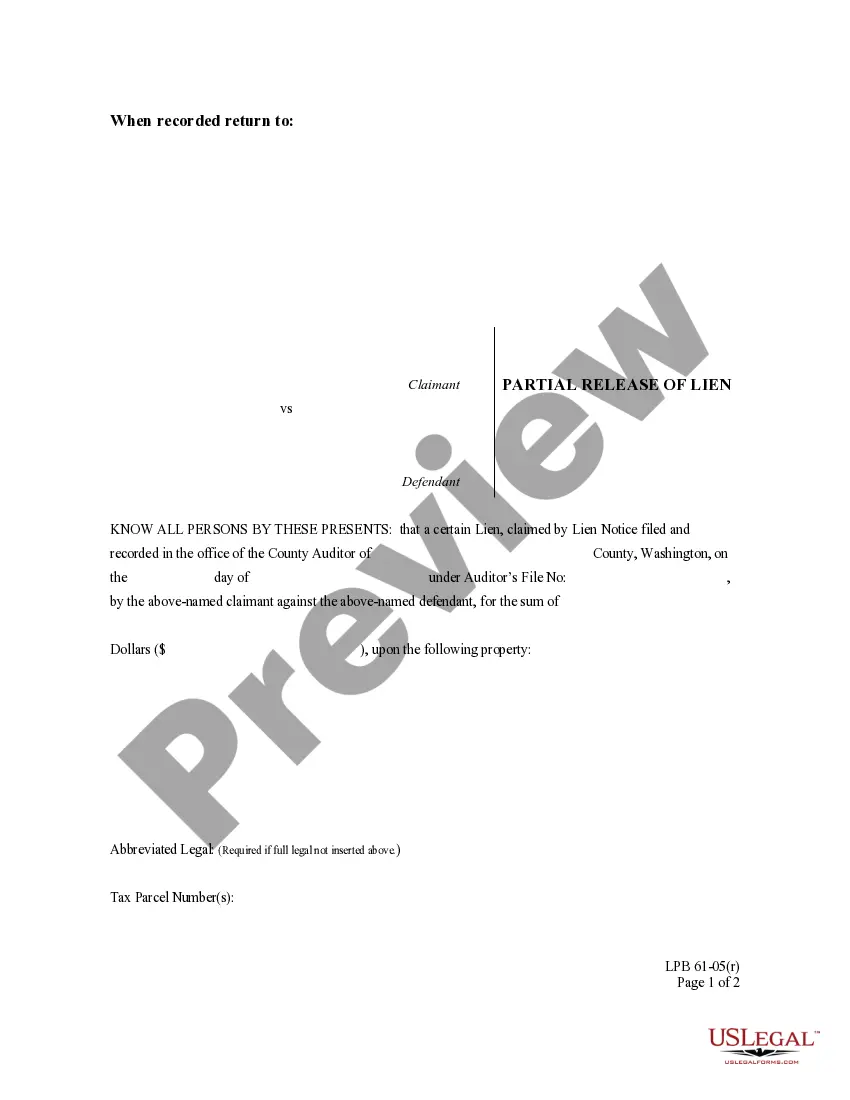
Assignment by Beneficiary of an Interest in the Trust Formed for the Benefit of Beneficiary
Understanding this form
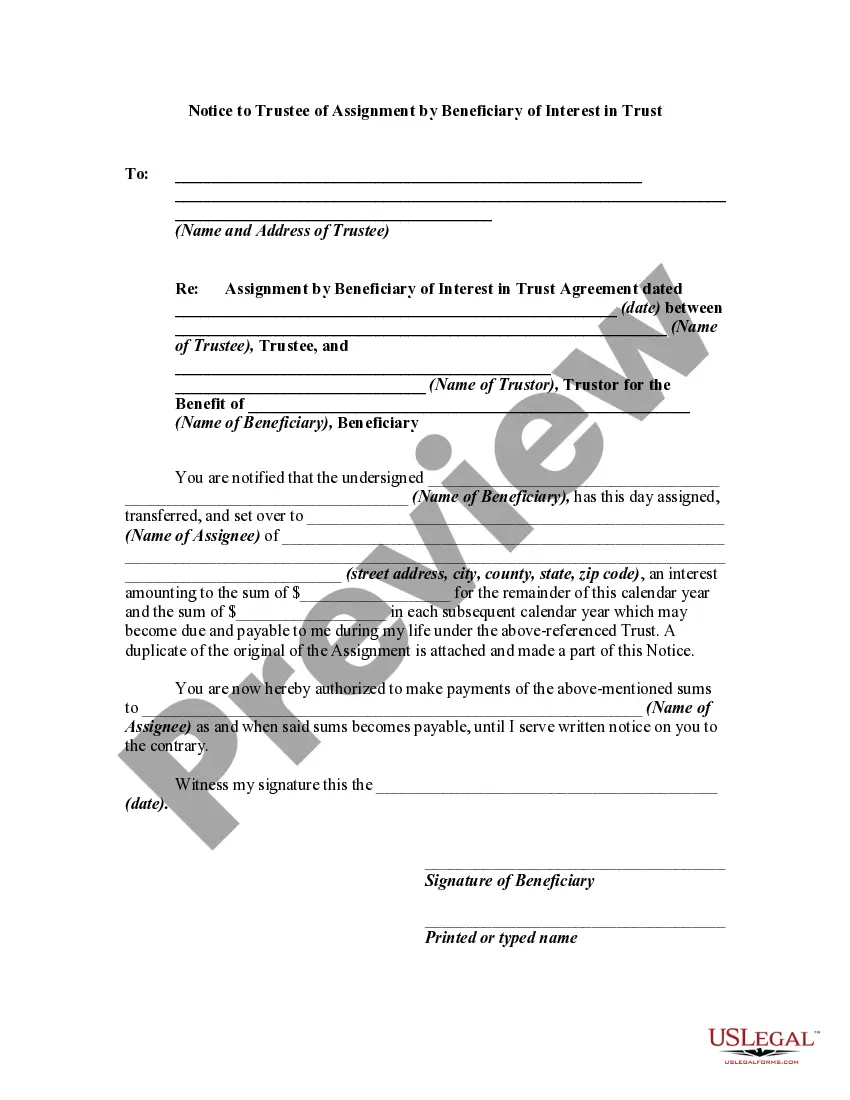
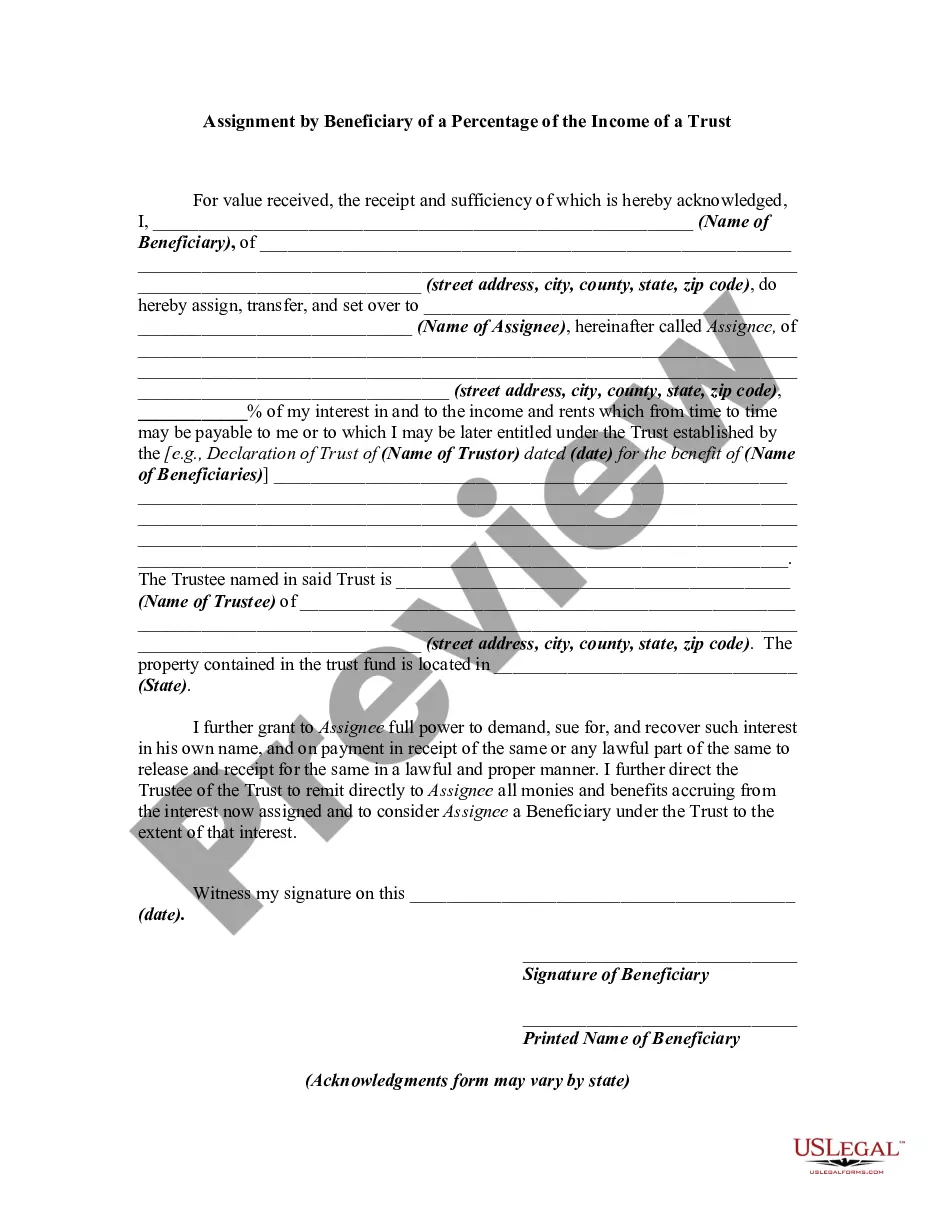
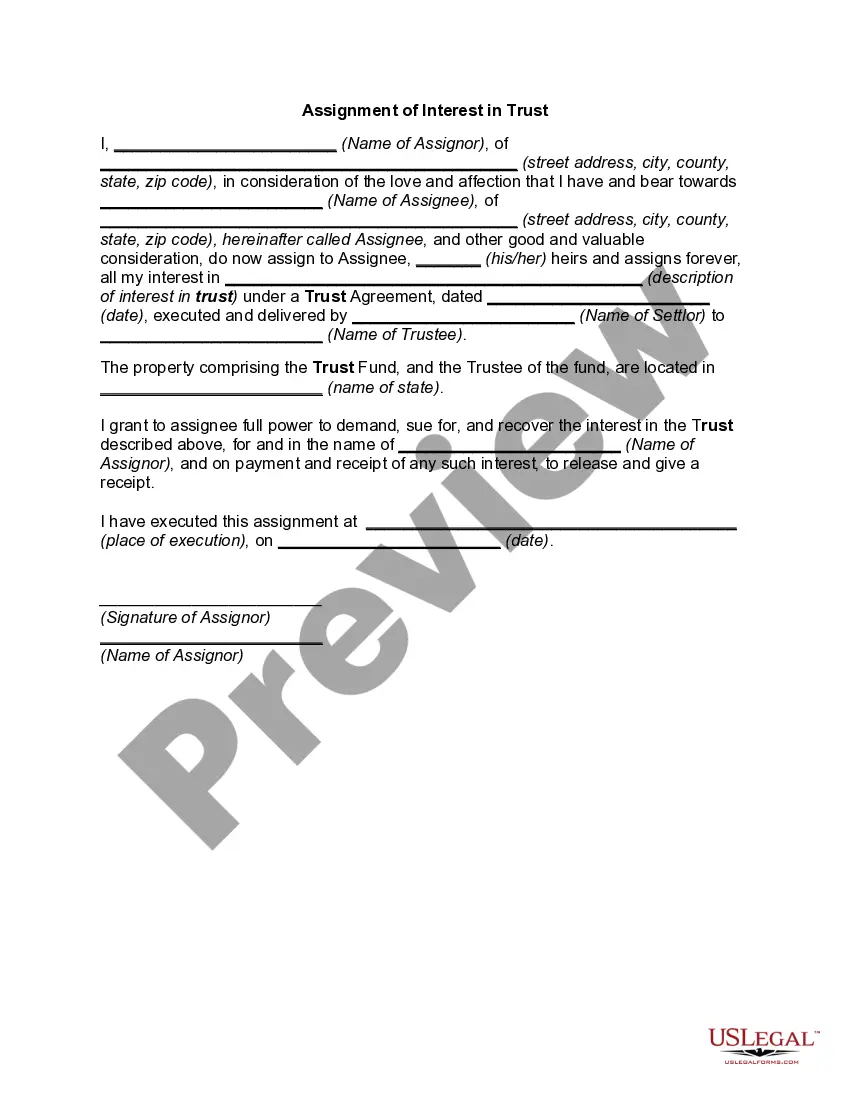
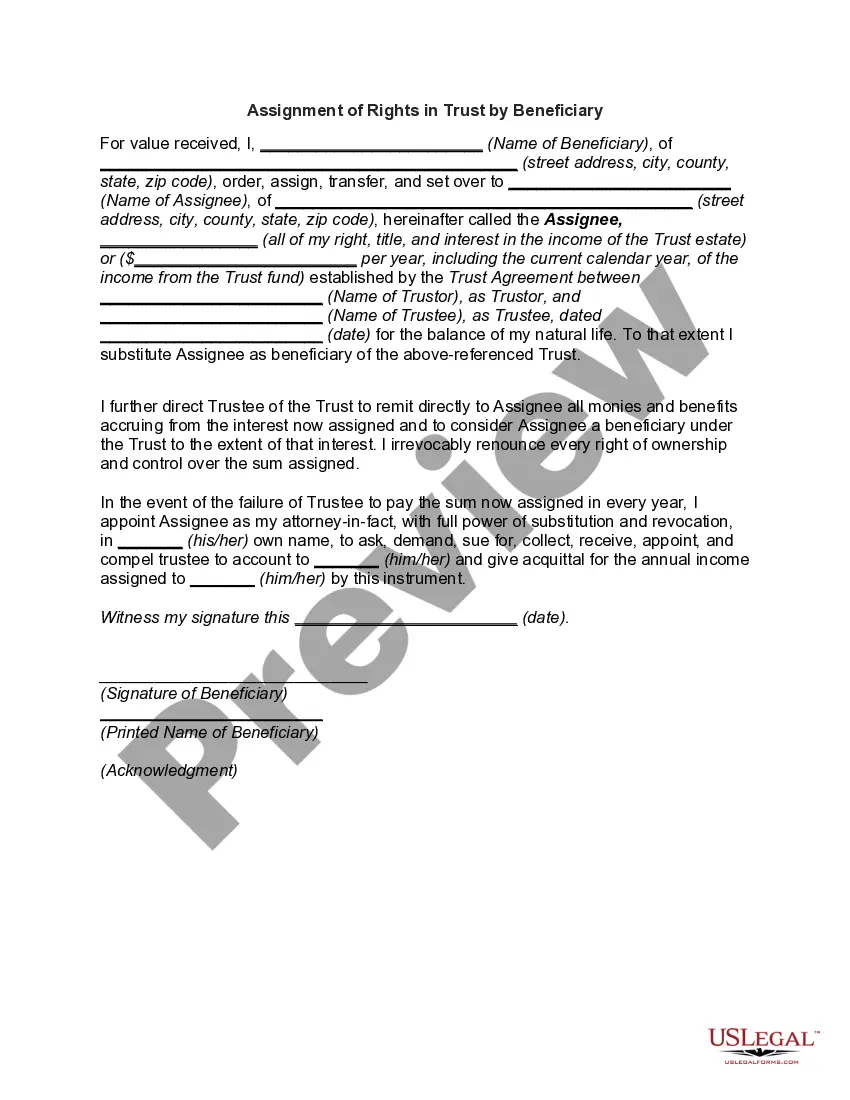
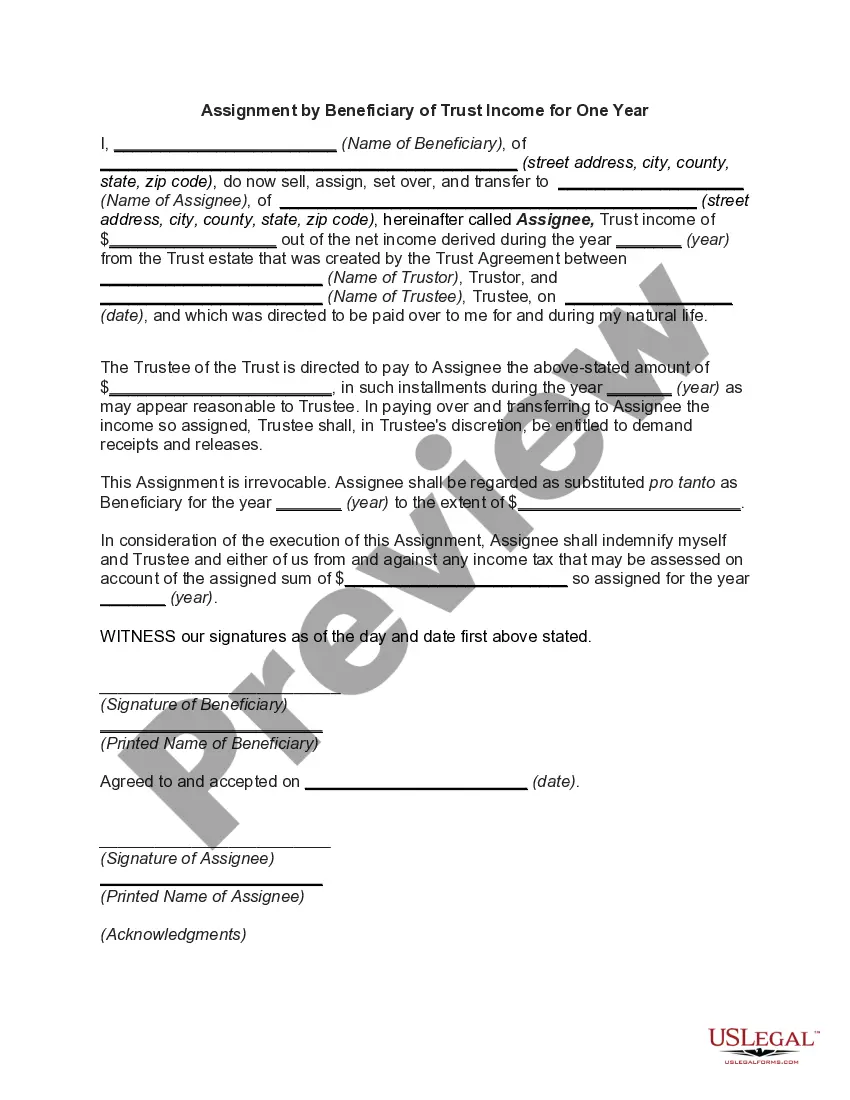
The Assignment by Beneficiary of an Interest in the Trust Formed for the Benefit of Beneficiary is a legal document that allows a beneficiary to transfer their interest in a trust to another party, known as the assignee. This assignment signifies a shift in rights related to the trust, differentiating it from similar forms that may only convey a claim or right to payment. This form serves as a generic template that can be tailored to meet specific state requirements.
Main sections of this form
- Beneficiary's name and address
- Assignee's name and address
- Description of the assigned interest in the trust
- Direction for the trustee to pay the assignee directly
- Signature of the beneficiary
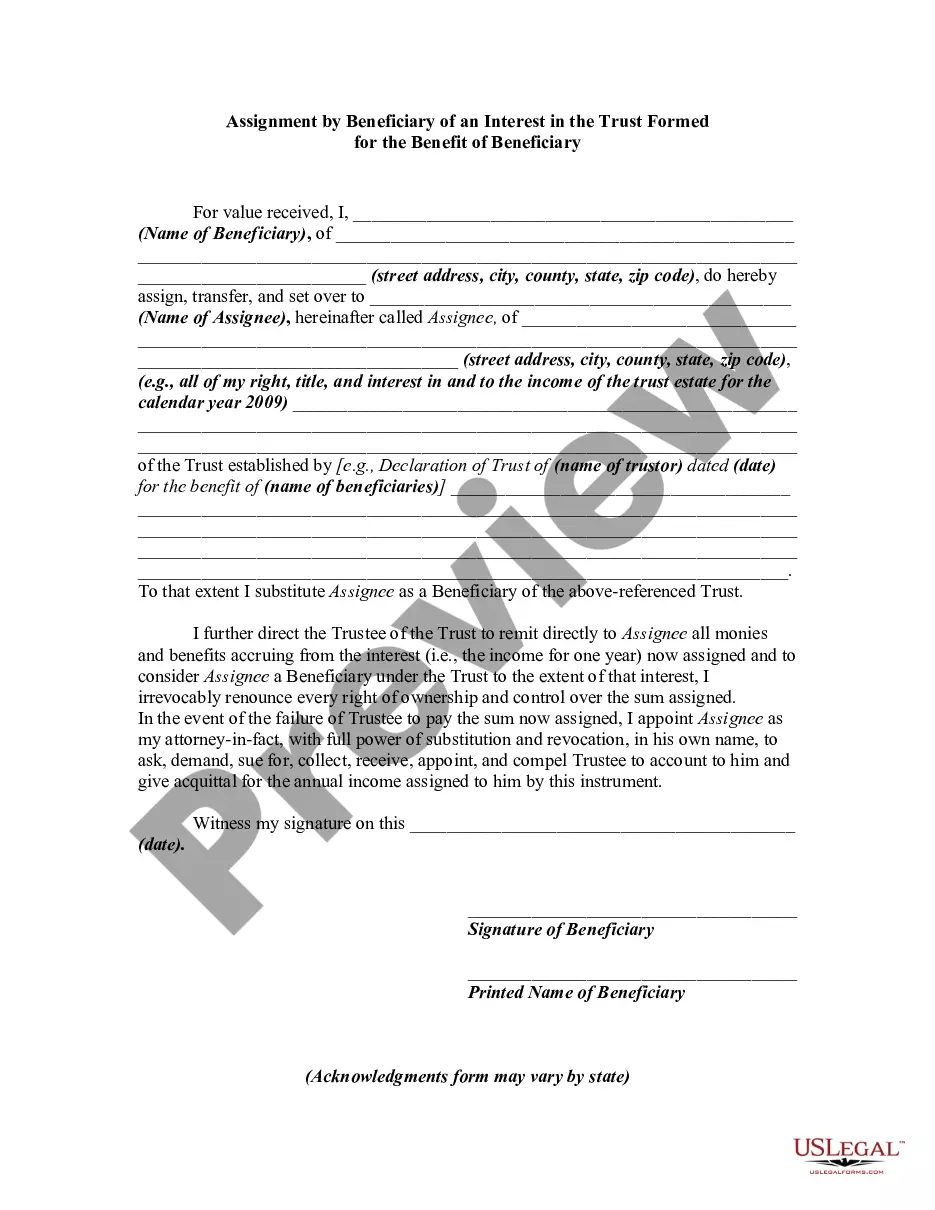
- Notary acknowledgment section
When to use this form
This form should be used when a beneficiary wishes to assign their interest in a trust to another individual or entity. Scenarios may include estate planning situations where a beneficiary wants to transfer their future benefits to a family member or friend, or in cases where a beneficiary requires liquid assets from their trust interest for immediate needs.
Who can use this document
This form is intended for:
- Beneficiaries of a trust who wish to transfer their interest
- Individuals or entities receiving an assigned interest in a trust
- Trustees who may need to document the change in beneficiaries
Instructions for completing this form
- Identify the beneficiary by entering their full name and address.
- Specify the assignee's details, including name and address.
- Clearly describe the interest being assigned, including relevant dates and terms.
- Sign and date the form as the beneficiary, in the presence of a notary if required.
- Complete the notary section to provide legal acknowledgment of the agreement.
Does this form need to be notarized?
This form needs to be notarized to ensure legal validity. US Legal Forms provides secure online notarization powered by Notarize, allowing you to complete the process through a verified video call, available anytime.
Get your form ready online
Our built-in tools help you complete, sign, share, and store your documents in one place.
Make edits, fill in missing information, and update formatting in US Legal Forms—just like you would in MS Word.
Download a copy, print it, send it by email, or mail it via USPS—whatever works best for your next step.
Sign and collect signatures with our SignNow integration. Send to multiple recipients, set reminders, and more. Go Premium to unlock E-Sign.
If this form requires notarization, complete it online through a secure video call—no need to meet a notary in person or wait for an appointment.
We protect your documents and personal data by following strict security and privacy standards.

Make edits, fill in missing information, and update formatting in US Legal Forms—just like you would in MS Word.

Download a copy, print it, send it by email, or mail it via USPS—whatever works best for your next step.

Sign and collect signatures with our SignNow integration. Send to multiple recipients, set reminders, and more. Go Premium to unlock E-Sign.

If this form requires notarization, complete it online through a secure video call—no need to meet a notary in person or wait for an appointment.

We protect your documents and personal data by following strict security and privacy standards.
Common mistakes to avoid
- Failing to include complete and accurate names and addresses of both parties.
- Not properly describing the interest being assigned.
- Neglecting to sign the form in the presence of a notary when required.
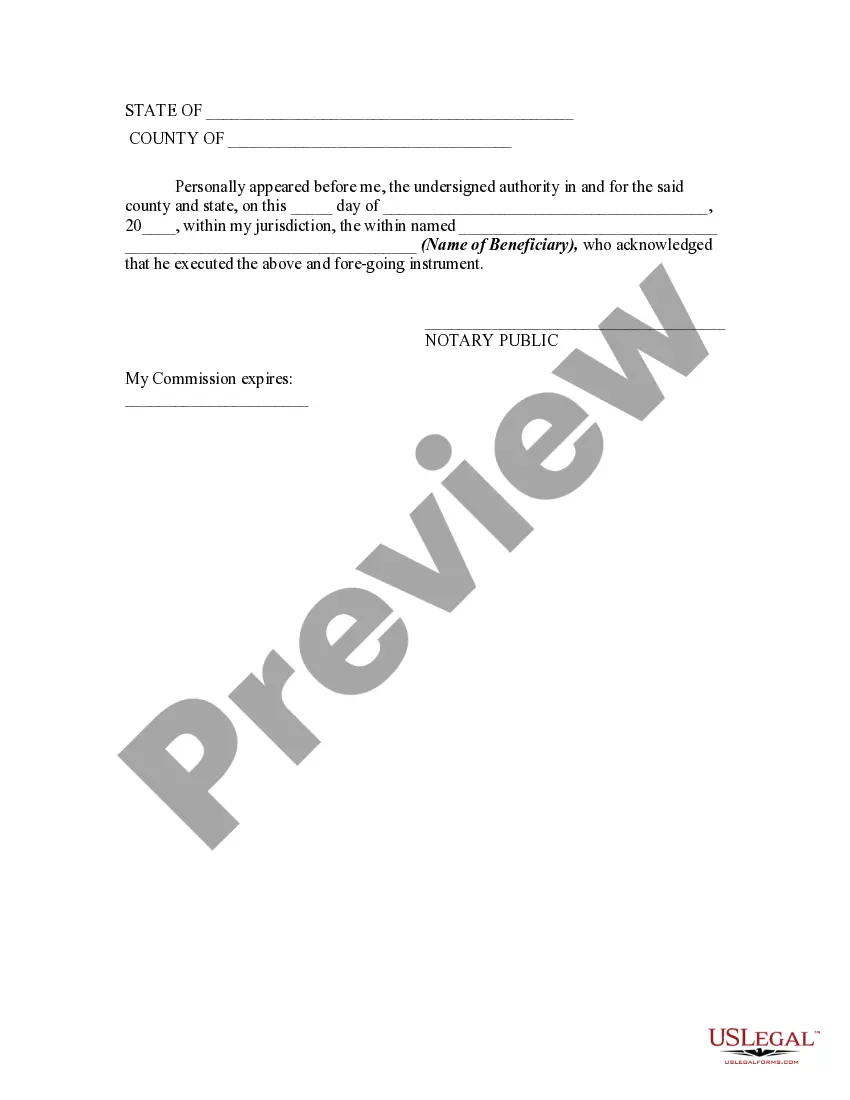
- Omitting to inform the trustee of the assignment.
Why complete this form online
- Convenient access to the form for immediate download.
- Editable fields to customize the form to your specific needs.
- Reliability, knowing the form is drafted by licensed attorneys.
Key takeaways
- This form allows a beneficiary to assign their interest in a trust to another party.
- Clear description of the interest and accurate information are essential for validity.
- Notarization is typically required to ensure legal enforceability.
Looking for another form?

Form popularity
FAQ
This form creates an assignment of a beneficiary’s interest in a trust to another party (the assignee) and directs the trustee to pay the assignee directly, rather than merely conveying a claim to future payments. It serves as a generic template that can be tailored to state requirements and used by beneficiaries, assignees, and trustees to document the change.
Yes. This form allows a beneficiary to transfer, or assign, their interest in a trust to an assignee named in the document. It collects the beneficiary’s and assignee’s names and addresses, describes the assigned interest, and provides a direction for the trustee to pay the assignee directly, with a signature and notary acknowledgment to finalize the transfer.
Assigning your beneficial interest transfers your rights and benefits in the trust to the assignee named in the form, rather than leaving your interest with the trust. It creates a record of the change and provides instructions for the trustee to make payments to the new beneficiary.
Yes, this form supports transferring your interest to an assignee, which can include a sale. It requires identifying the assigned interest and the parties, and it includes a signature and notary acknowledgment to finalize the transfer. Consult a licensed attorney for state-specific requirements or implications.
An assignment of beneficial interest is a legal document transferring a trust beneficiary’s rights and benefits to another party. This form provides that purpose by describing the assigned interest, naming the parties, and directing the trustee to make payments to the new beneficiary, and it can be tailored for different state rules.
This form is designed to transfer the beneficiary’s actual interest in the trust to the assignee, with a specific direction for the trustee to pay the assignee directly, rather than merely documenting a claim to future payments. It’s a generic template that can be customized to fit different state requirements and circumstances.