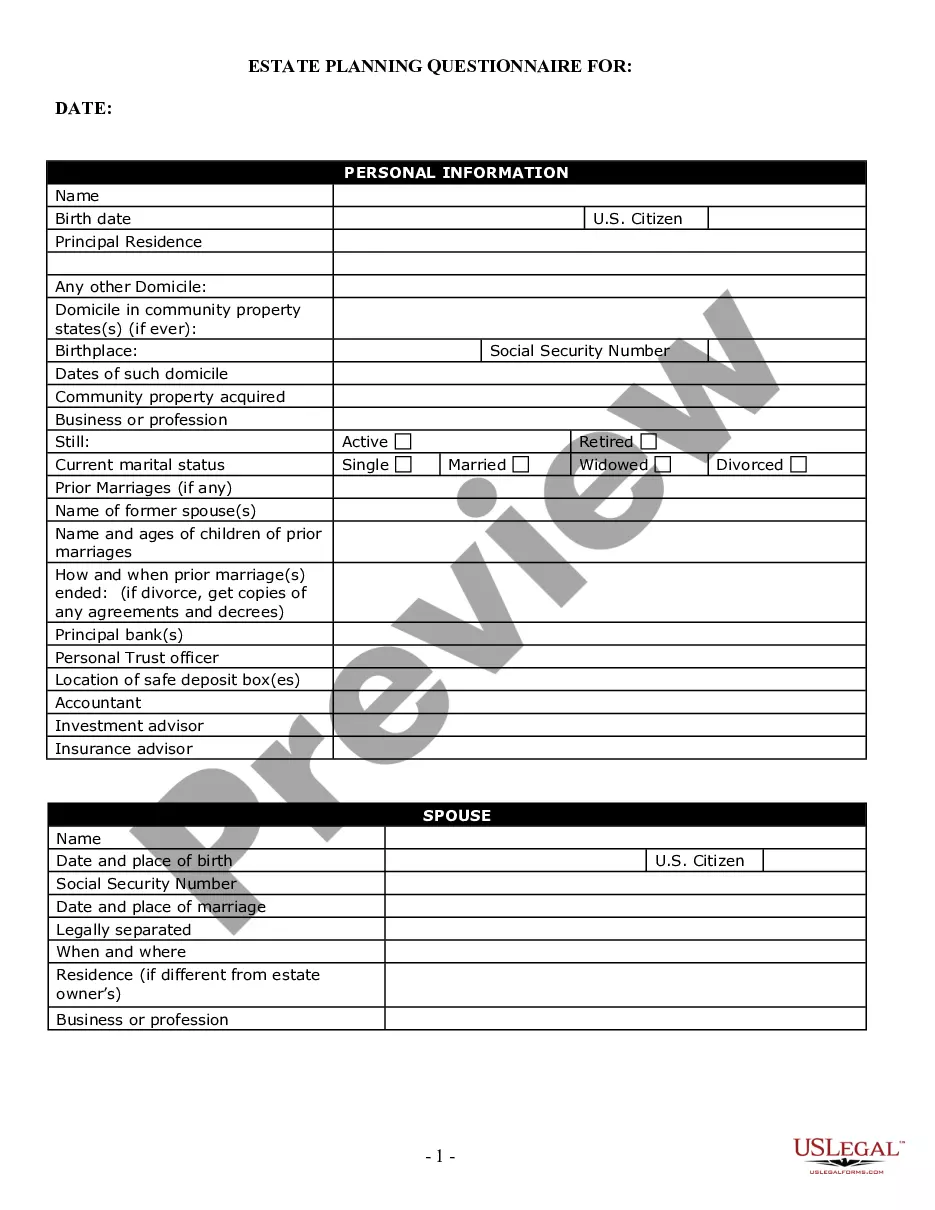
Amendment to Trust Agreement in Order to Withdraw Property from Inter Vivos Trust and Consent of Trustee
What is this form?
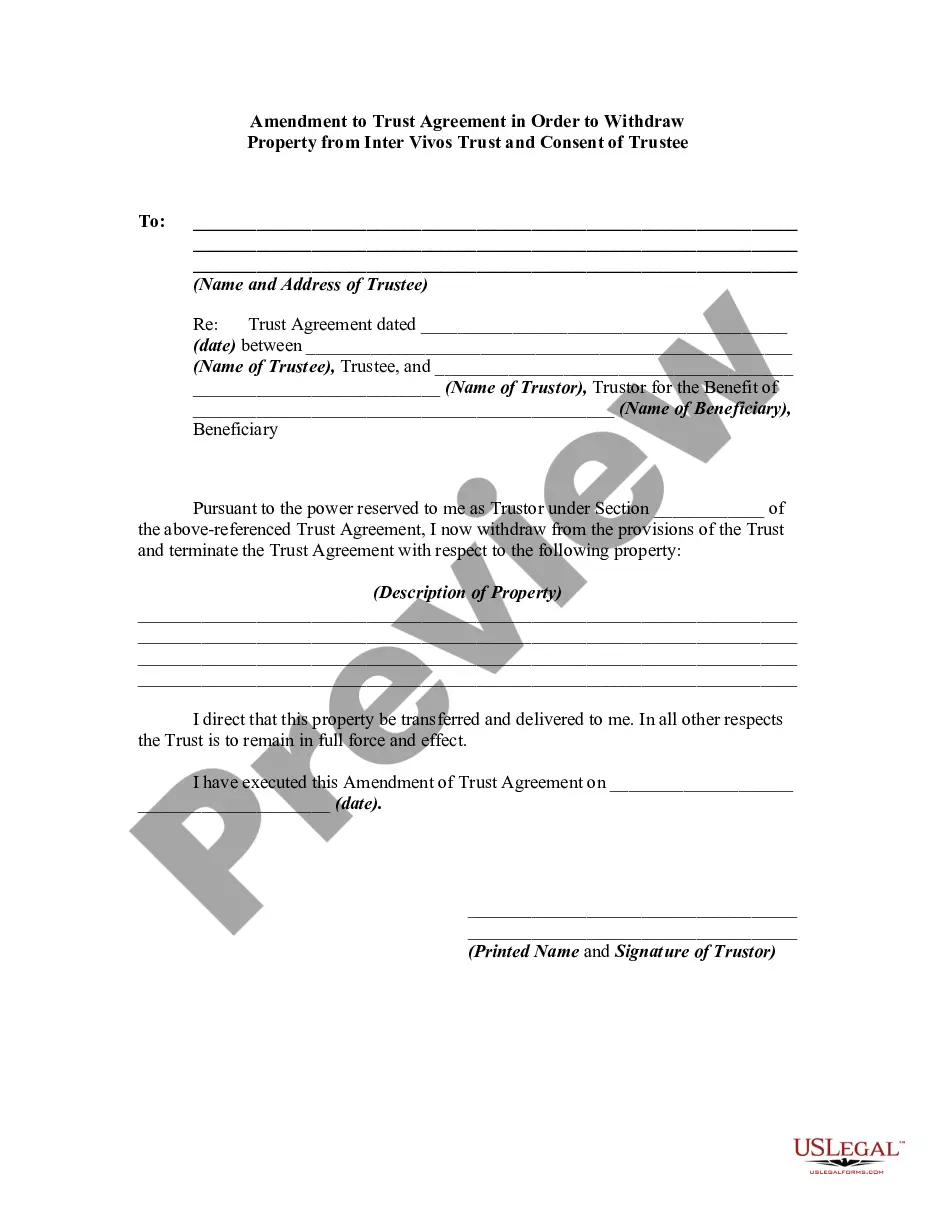
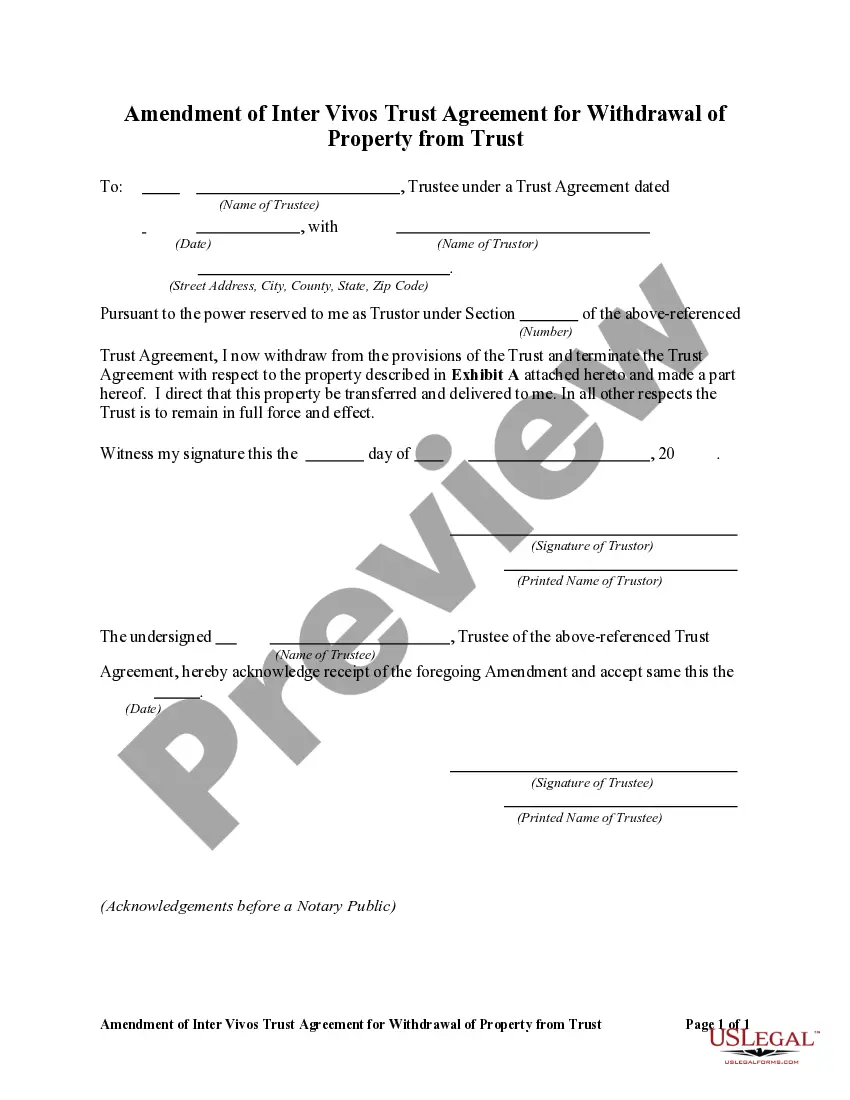
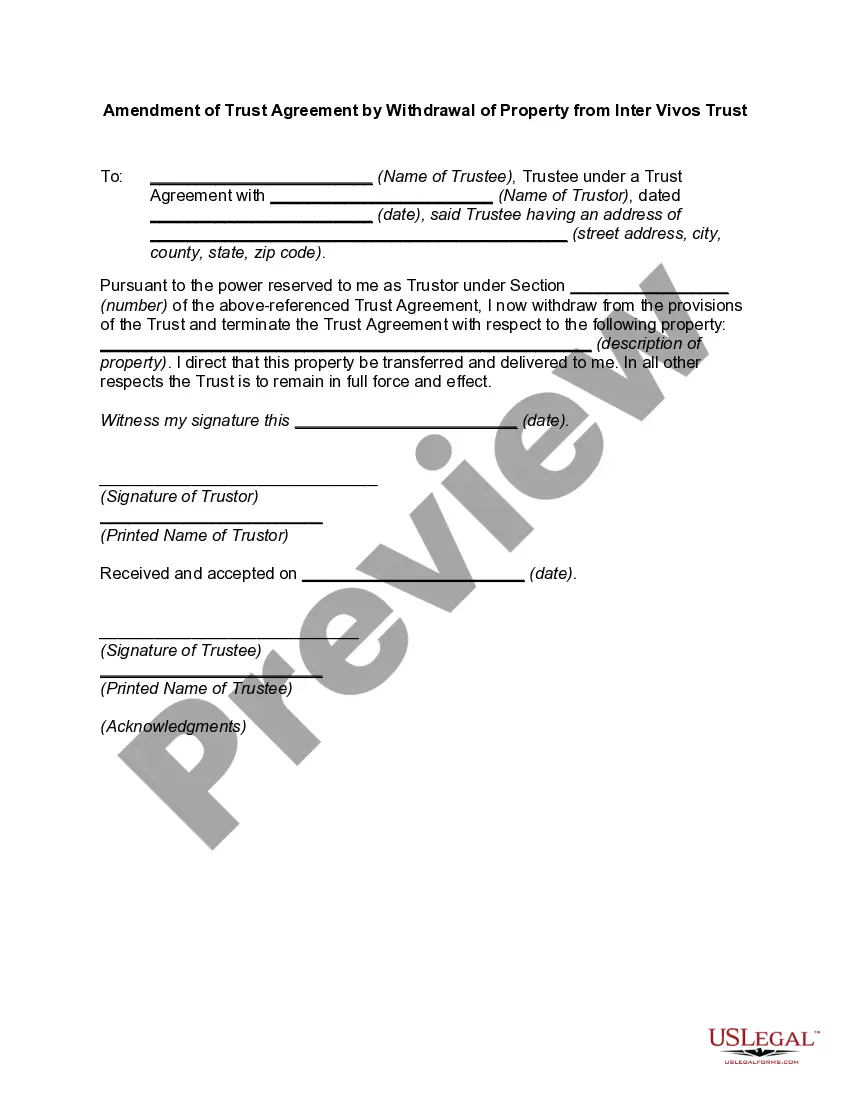
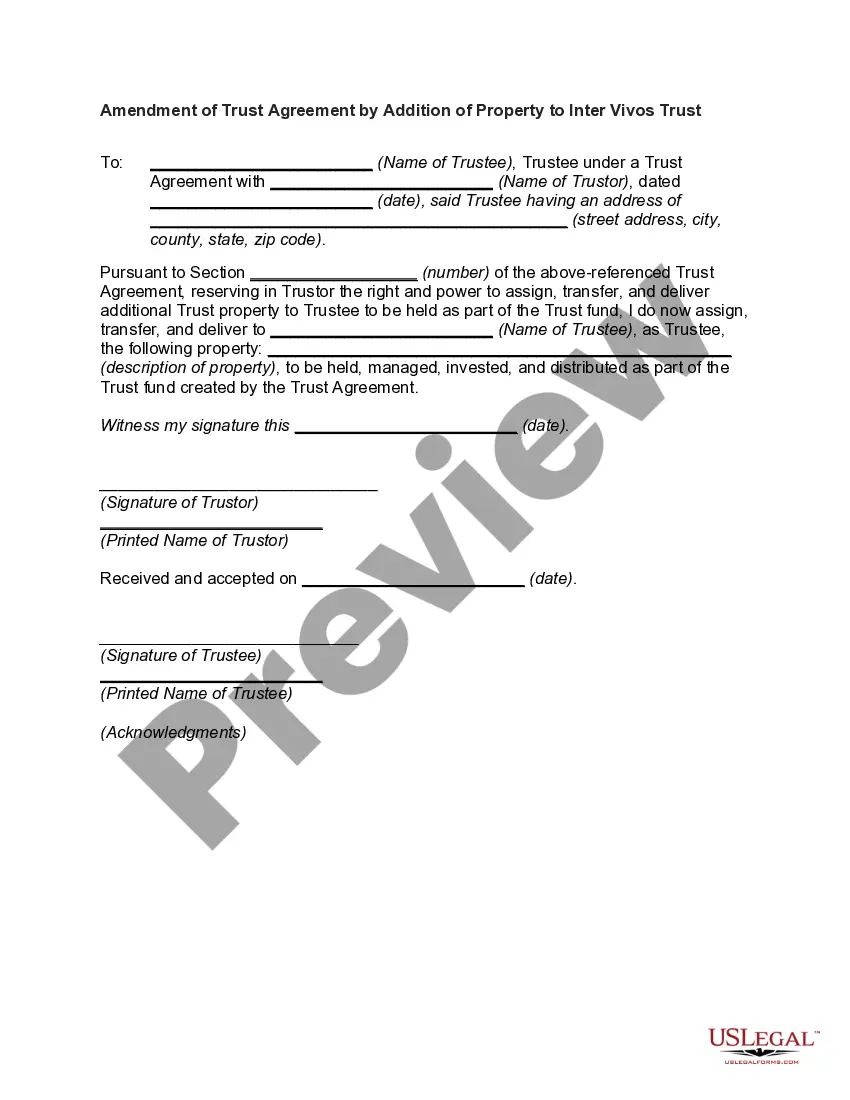
The Amendment to Trust Agreement in Order to Withdraw Property from Inter Vivos Trust and Consent of Trustee is a legal document that allows a trustor to amend an existing trust agreement. This form is specifically designed to withdraw property from an inter vivos trust, providing clarity on the trustor's intent to remove certain assets while leaving the rest of the trust intact. Unlike standard trust agreements, this amendment focuses on property withdrawal and involves confirmation by the trustee, ensuring all parties are legally informed.
What’s included in this form
- Name and address of the trustee.
- Date of the trust agreement.
- Description of the property being withdrawn.
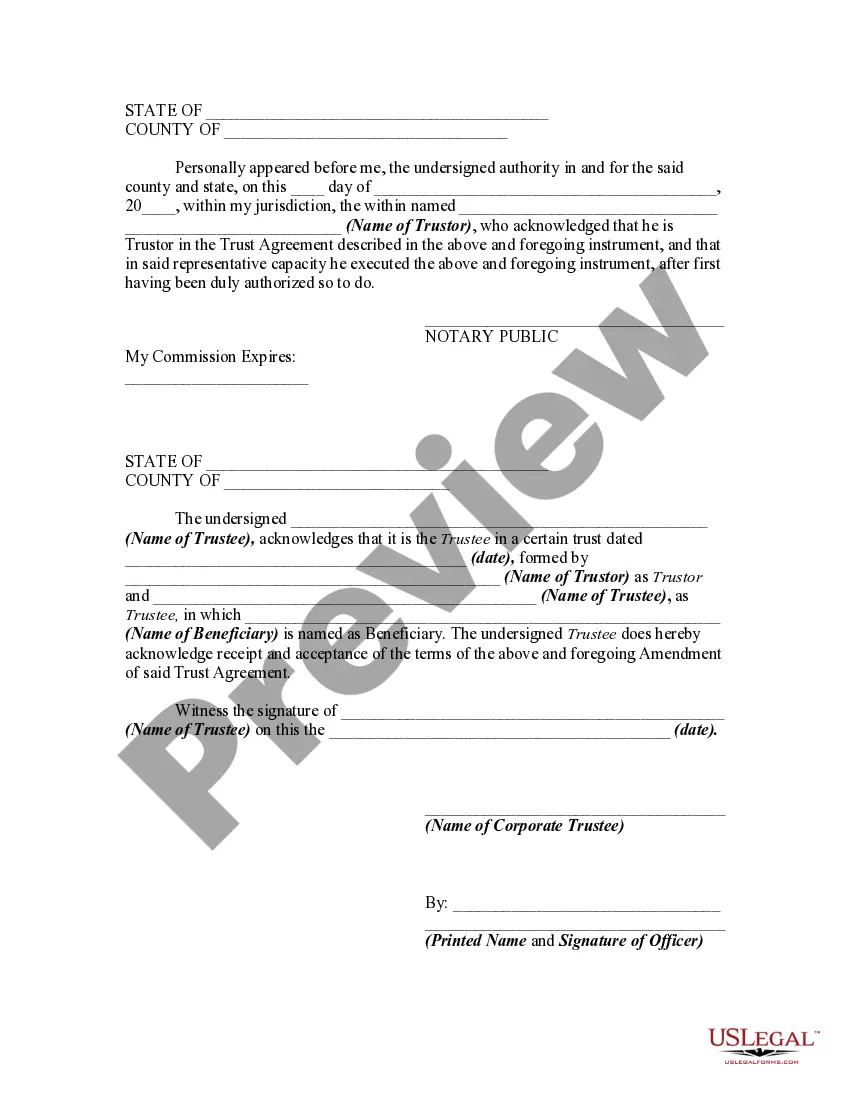
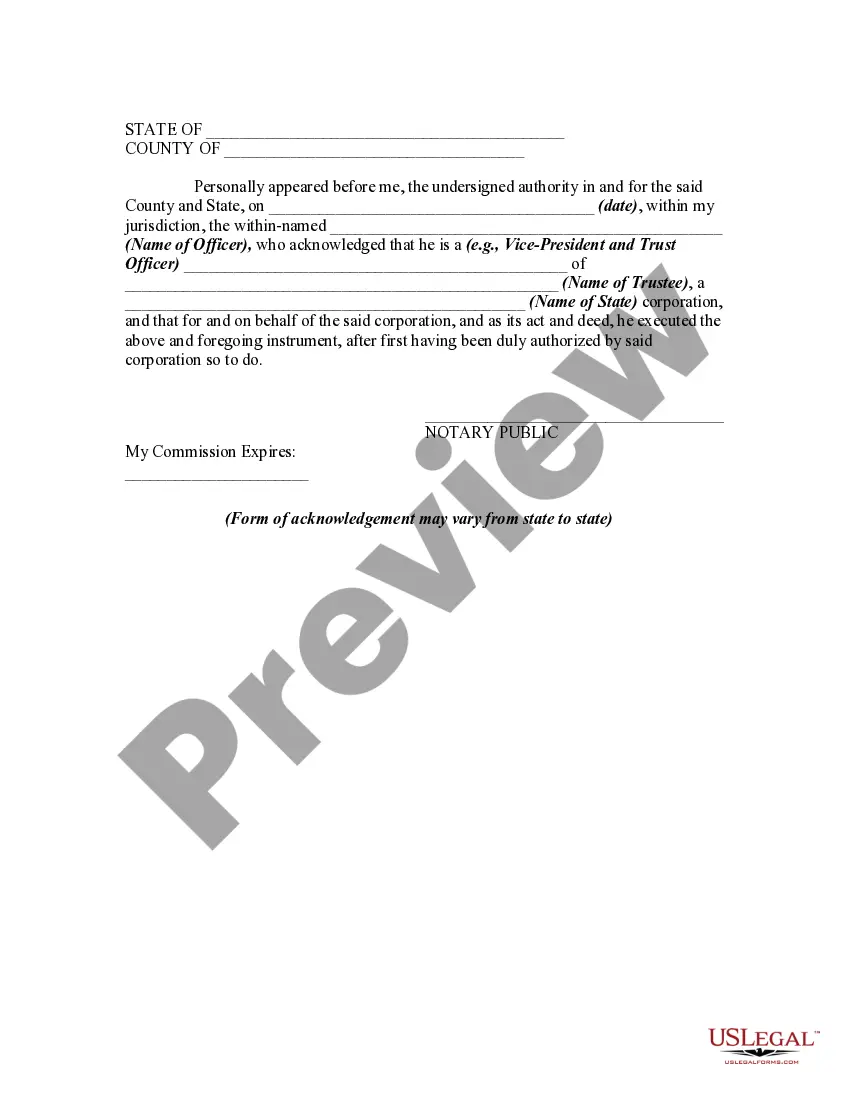
- Notary acknowledgment section for legal verification.
When to use this document
This form should be used when a trustor wishes to withdraw specific property from a trust, especially if the trust agreement allows for such amendments. Common scenarios include changes in the trustor's financial situation, needs for liquidity, or redistributing assets to beneficiaries. It is crucial to ensure that this action aligns with the terms specified in the original trust agreement.
Intended users of this form
This form is intended for:
- Individuals acting as trustors in an inter vivos trust.
- Trustees who need to acknowledge the withdrawal of property.
- Beneficiaries who may be affected by changes in the trust's asset distribution.
How to prepare this document
- Identify the parties involved, including the trustor and trustee.
- Specify the date of the original trust agreement and provide a description of the property being withdrawn.
- Complete the execution section, including the trustor's signature and date.
- Ensure the trustee acknowledges receipt of the amendment by signing where indicated.
- Secure notarization if required, following the local laws applicable to trust documents.
Does this form need to be notarized?
This form needs to be notarized to ensure legal validity. US Legal Forms provides secure online notarization powered by Notarize, allowing you to complete the process through a verified video call, available anytime.
Get your form ready online
Our built-in tools help you complete, sign, share, and store your documents in one place.
Make edits, fill in missing information, and update formatting in US Legal Forms—just like you would in MS Word.
Download a copy, print it, send it by email, or mail it via USPS—whatever works best for your next step.
Sign and collect signatures with our SignNow integration. Send to multiple recipients, set reminders, and more. Go Premium to unlock E-Sign.
If this form requires notarization, complete it online through a secure video call—no need to meet a notary in person or wait for an appointment.
We protect your documents and personal data by following strict security and privacy standards.

Make edits, fill in missing information, and update formatting in US Legal Forms—just like you would in MS Word.

Download a copy, print it, send it by email, or mail it via USPS—whatever works best for your next step.

Sign and collect signatures with our SignNow integration. Send to multiple recipients, set reminders, and more. Go Premium to unlock E-Sign.

If this form requires notarization, complete it online through a secure video call—no need to meet a notary in person or wait for an appointment.

We protect your documents and personal data by following strict security and privacy standards.
Common mistakes
- Failing to specify the property clearly, which can lead to ambiguity.
- Not obtaining the trustee's acknowledgment, which may invalidate the amendment.
- Overlooking the need for notarization, if required by state law.
Benefits of using this form online
- Convenient access to legal forms 24/7 from anywhere.
- Editable templates allow customization to fit individual needs.
- Reliability and accuracy, as forms are drafted by licensed attorneys.
Looking for another form?
Form popularity
FAQ
Of course you can, however, "Codicil" is an amendment to a will. Amending a trust called "Amendment" to the trust, even if it is just amending a trustee's name. It needs to be notarized and some specific language to be sufficient.
Begin an amendment for your living trust. Sign the amendment. Visit a notary public, and have your amendment notarized. Attach the notarized amendment to the original living trust. Restate the living trust.
Just about any writing will suffice to make a valid Trust amendment. Having the writing typed is not legally required. That's really the point of Trust amendments, to allow a Settlor to express his or her intent as easily as possible. As long as the Trust terms are followed, any writing will do.
Locate the original trust. The grantor must locate the original trust documents and identify the specific provisions that require amendment. Prepare an amendment form. Get the amendment form notarized. Attach amendment form to original trust.
Locate the deed that's in trust. This is the warranty deed you originally moved into the trust. Use the proper deed. Check with your title insurance company and lender. Prepare a new deed. Sign in the presence of a notary. Record the deed in the county clerk's office.
An amendment to a trust is not required to be notarized or witnessed unless the terms of the original trust require it.
Find living trust forms online. Be as clear as possible. Include specific language. Have the amendment notarized. Keep your trust document and amendment together in a safe place. Alternatively, do what is called a restatement of the trust. Revoke your trust.
To remove the trustee of an irrevocable trust, a court must get involved. To start the process, a party with an interest in the trust (like a beneficiary or a co-trustee) must file a petition with the appropriate court requesting that the court remove the trustee.