Grant of Solar Easement
Understanding this form
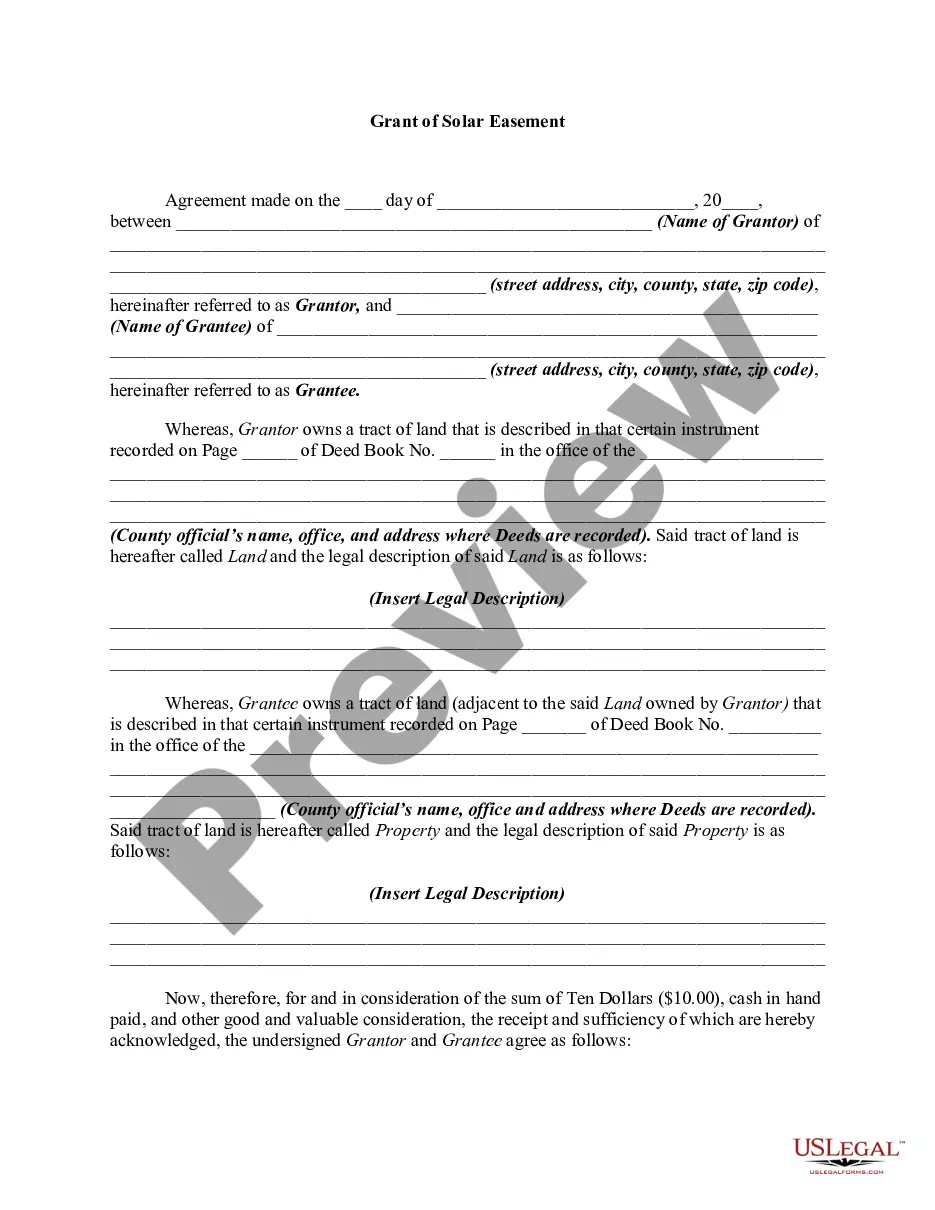
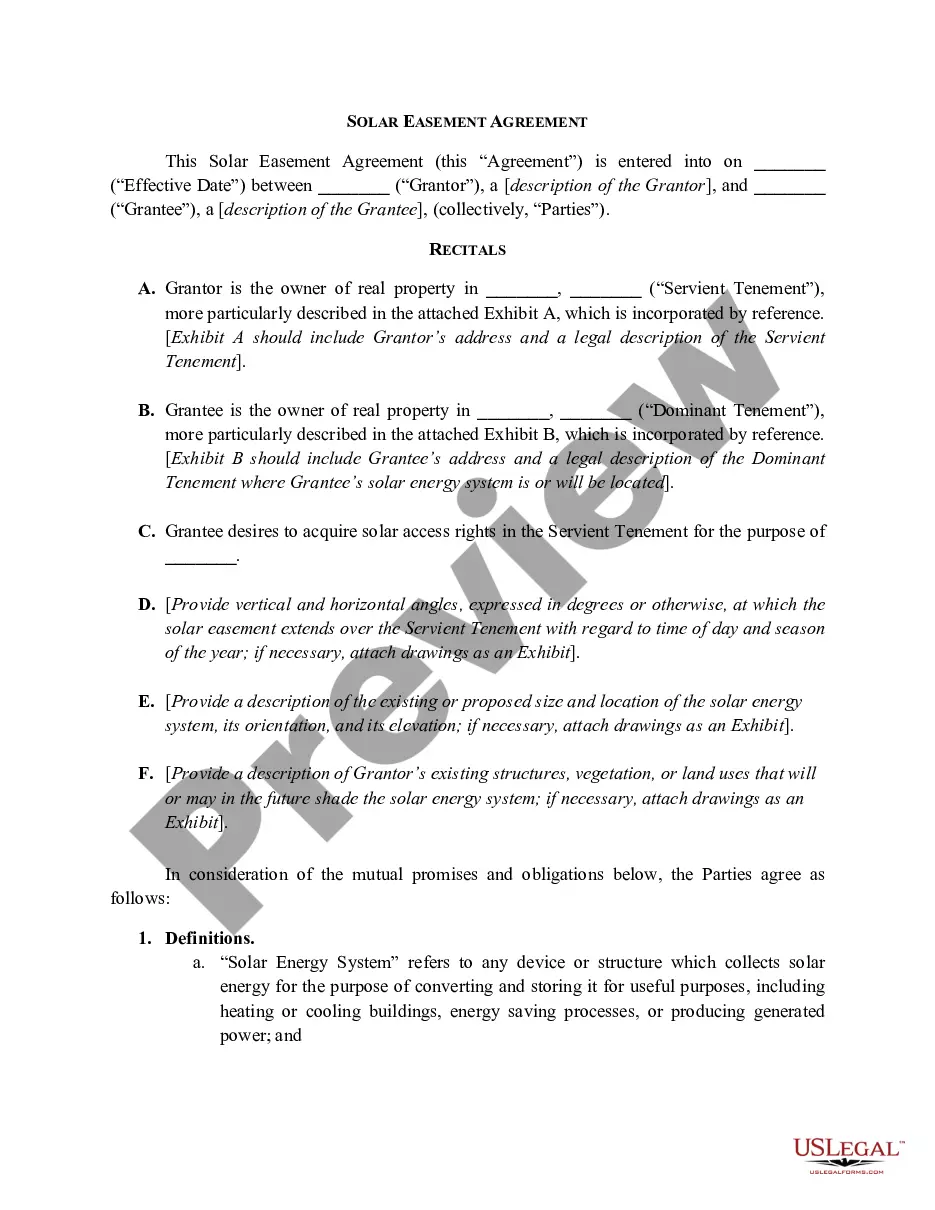
The Grant of Solar Easement is a legal document that allows one property owner (the Grantor) to grant another property owner (the Grantee) the right to receive unobstructed sunlight for solar energy generation. This form establishes a solar easement on the Grantor's property, specifying the location and vertical space where sunlight must be available. Unlike general easements, a solar easement primarily focuses on the preservation of sunlight for energy purposes.
Key components of this form
- Agreement date and parties involved (Grantor and Grantee).
- Legal descriptions of the properties involved.
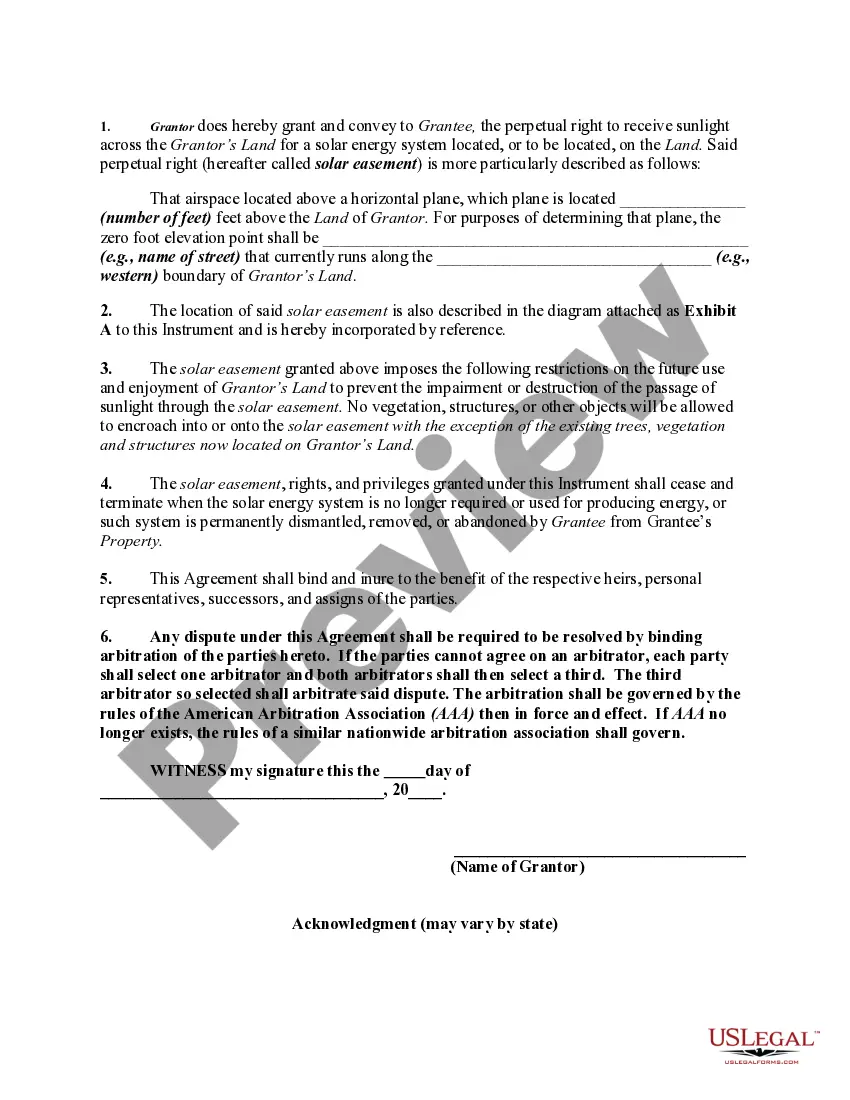
- Specifics of the solar easement, including height and location.
- Restrictions on use of the Grantor's property to protect sunlight access.
- Termination conditions for the easement.
- Dispute resolution mechanism through binding arbitration.
When this form is needed
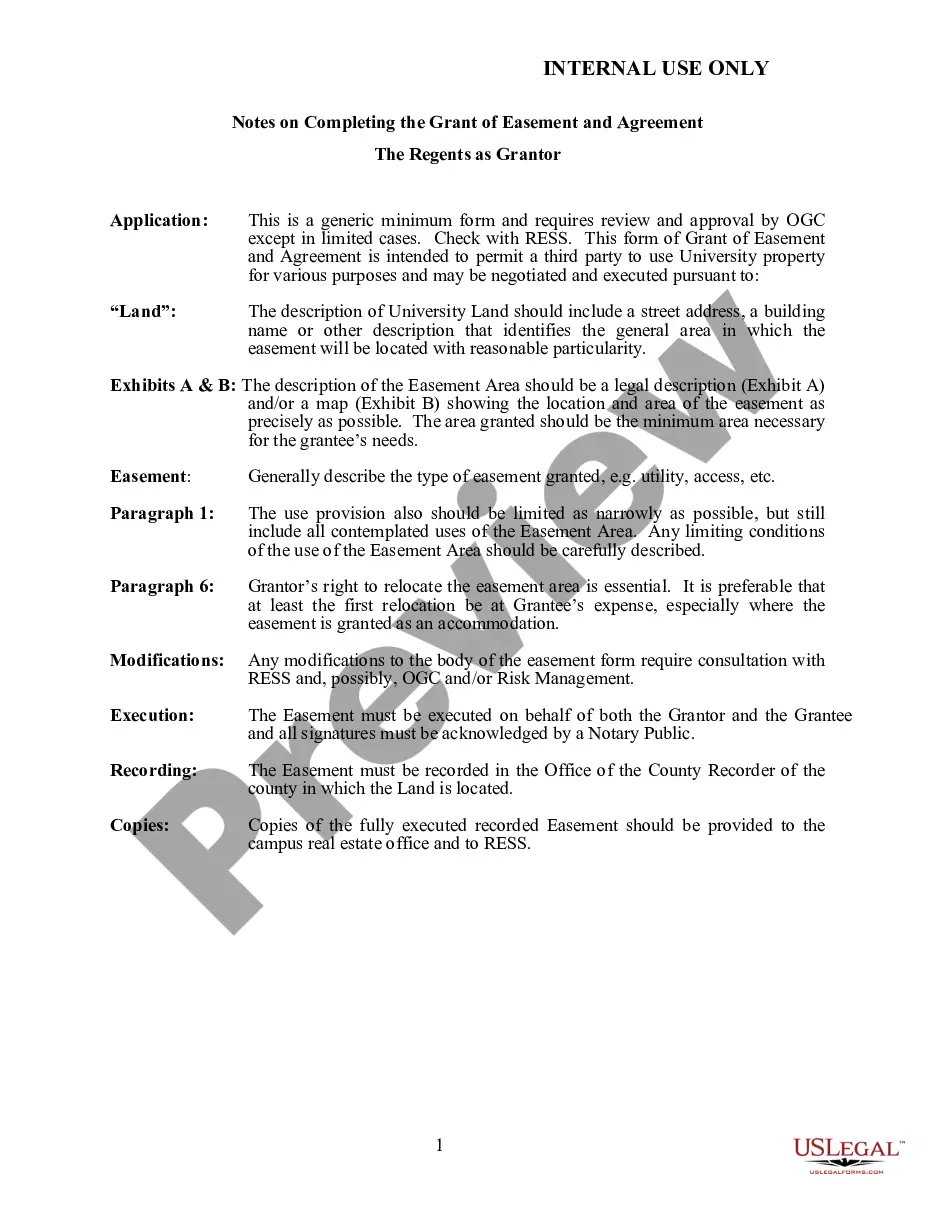
This form is essential when adjacent landowners agree to a solar easement, allowing one property to receive sunlight uninterrupted by structures or vegetation on the other property. It is particularly useful for homeowners and businesses looking to install solar energy systems while ensuring access to sunlight is legally protected. Additionally, it can be used when developing property near existing structures that may obstruct sunlight.
Intended users of this form
This form is intended for:
- Property owners seeking to establish or formalize a solar easement.
- Individuals planning to install solar energy systems on their property.
- Real estate developers managing multiple properties with sunlight considerations.
- Legal advisors assisting clients with property agreements involving solar energy.
Steps to complete this form
- Identify the parties involved: enter the names and addresses of the Grantor and Grantee.
- Provide legal descriptions: accurately describe both properties involved in the easement.
- Specify the easement: indicate the height and location of the goods' sunlight rights.
- Outline restrictions: include any limitations on the Grantor's property usage to maintain sunlight access.
- Sign and date the form: ensure all parties sign the document to make it legally binding.
Notarization requirements for this form
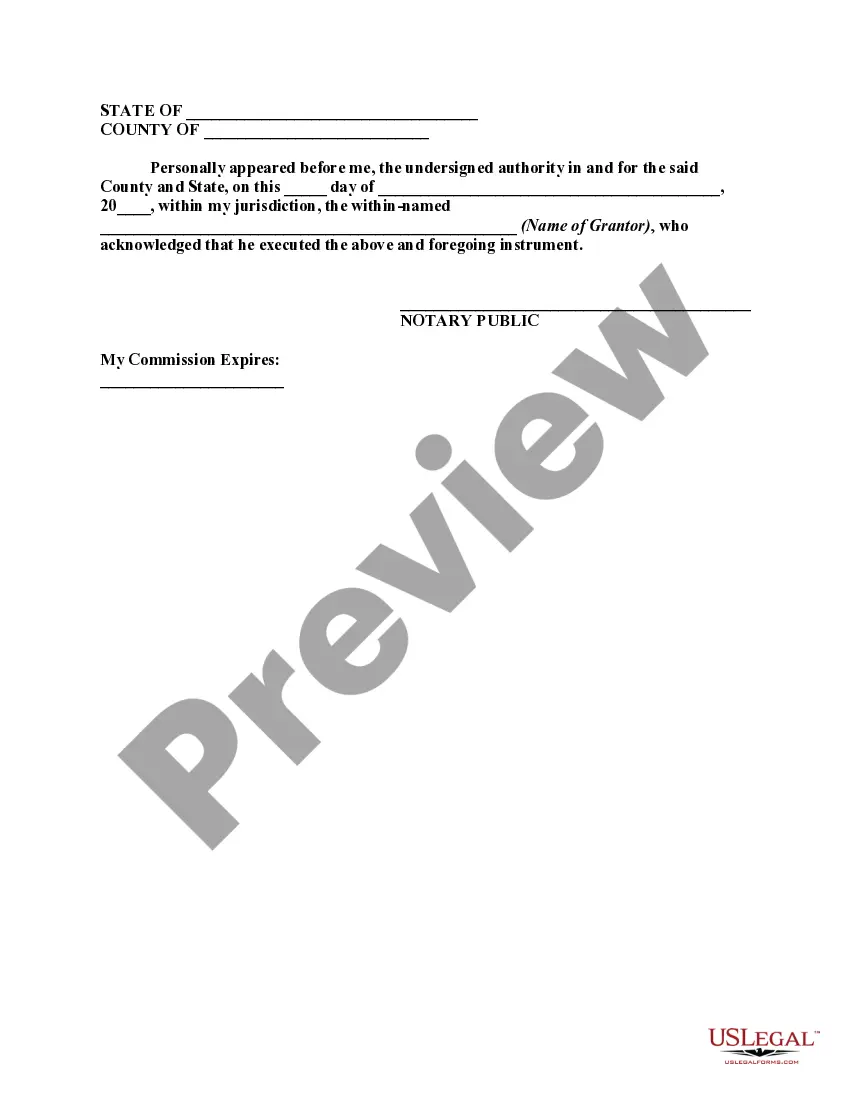
This form does not typically require notarization unless specified by local law. It is essential to check the legal requirements in your state to ensure compliance.
Get your form ready online
Our built-in tools help you complete, sign, share, and store your documents in one place.
Make edits, fill in missing information, and update formatting in US Legal Forms—just like you would in MS Word.
Download a copy, print it, send it by email, or mail it via USPS—whatever works best for your next step.
Sign and collect signatures with our SignNow integration. Send to multiple recipients, set reminders, and more. Go Premium to unlock E-Sign.
If this form requires notarization, complete it online through a secure video call—no need to meet a notary in person or wait for an appointment.
We protect your documents and personal data by following strict security and privacy standards.

Make edits, fill in missing information, and update formatting in US Legal Forms—just like you would in MS Word.

Download a copy, print it, send it by email, or mail it via USPS—whatever works best for your next step.

Sign and collect signatures with our SignNow integration. Send to multiple recipients, set reminders, and more. Go Premium to unlock E-Sign.

If this form requires notarization, complete it online through a secure video call—no need to meet a notary in person or wait for an appointment.

We protect your documents and personal data by following strict security and privacy standards.
Common mistakes to avoid
- Failing to provide accurate legal descriptions of the properties.
- Not specifying the exact height or location of the solar easement correctly.
- Overlooking the need for signatures from all parties involved.
- Neglecting to consider specific state regulations regarding solar easements.
Why complete this form online
- Convenience of instant access to legally drafted templates.
- Editability allows users to customize information according to their specific needs.
- Reliability of forms prepared by licensed attorneys experienced in real estate law.
Legal use & context
- The solar easement conveyed through this form is legally enforceable and provides specified rights to access sunlight for solar energy systems.
- Characteristics of the easement may be subject to local land use laws and zoning regulations.
- Parties are encouraged to seek legal advice to ensure full compliance with jurisdictional requirements.
What to keep in mind
- The Grant of Solar Easement formalizes the right to receive sunlight for solar energy.
- It is critical for protecting a solar energy investment from obstruction by neighboring properties.
- Proper completion and understanding of local laws enhance the validity of the easement.
Looking for another form?


Form popularity
FAQ
Although an easement grants a possessory interest in the land for a specific purpose, the landowner retains the title to the property. Easements may be given to anyone, such as neighbors, government agencies, and private parties.
Rights of way (similar to the driveway example, but also including walkways or pathways); Public utilities, such as gas, electricity or water and sewer mains; Parking areas; Access to light and air; and. Shared walls.
An easement is a "nonpossessory" property interest that allows the holder of the easement to have a right of way or use property that they do not own or possess. An easement doesn't allow the easement holder to occupy the land or to exclude others from the land unless they interfere with the easement holder's use.
Solar Farm Land Lease Rates Around the United States Taking location into account, as well as the other factors listed above, solar farm lease rates can come in anywhere from $300 to $2,000 per acre annually.
Include the whole length and width. Do this by reference to plans and a ground inspection. Deduct the "after scenario" value from the "before scenario" value to arrive at a value per unit of the easement land. Multiply by the measured area of the easement land to arrive at a total market value.
How much do solar farm leases pay? Landowners who rent out their land for a solar farm can earn between $250 and $3,000 per acre a year, according to top solar land lease websites.
An easement may be insured in a loan policy when the only grant of the easement is by the mortgage itself. This can only occur when the owner of the benefited land, which is the land to be mortgaged, is also the owner of the easement premises.
The value of the easement is based on the difference between the value of the whole property before the taking and its value after the taking with the easement in place.
In most situations, easements will not decrease the value of the property. If the easement has strict rules or requirements the property owner must follow, however, it can affect property value and marketability.