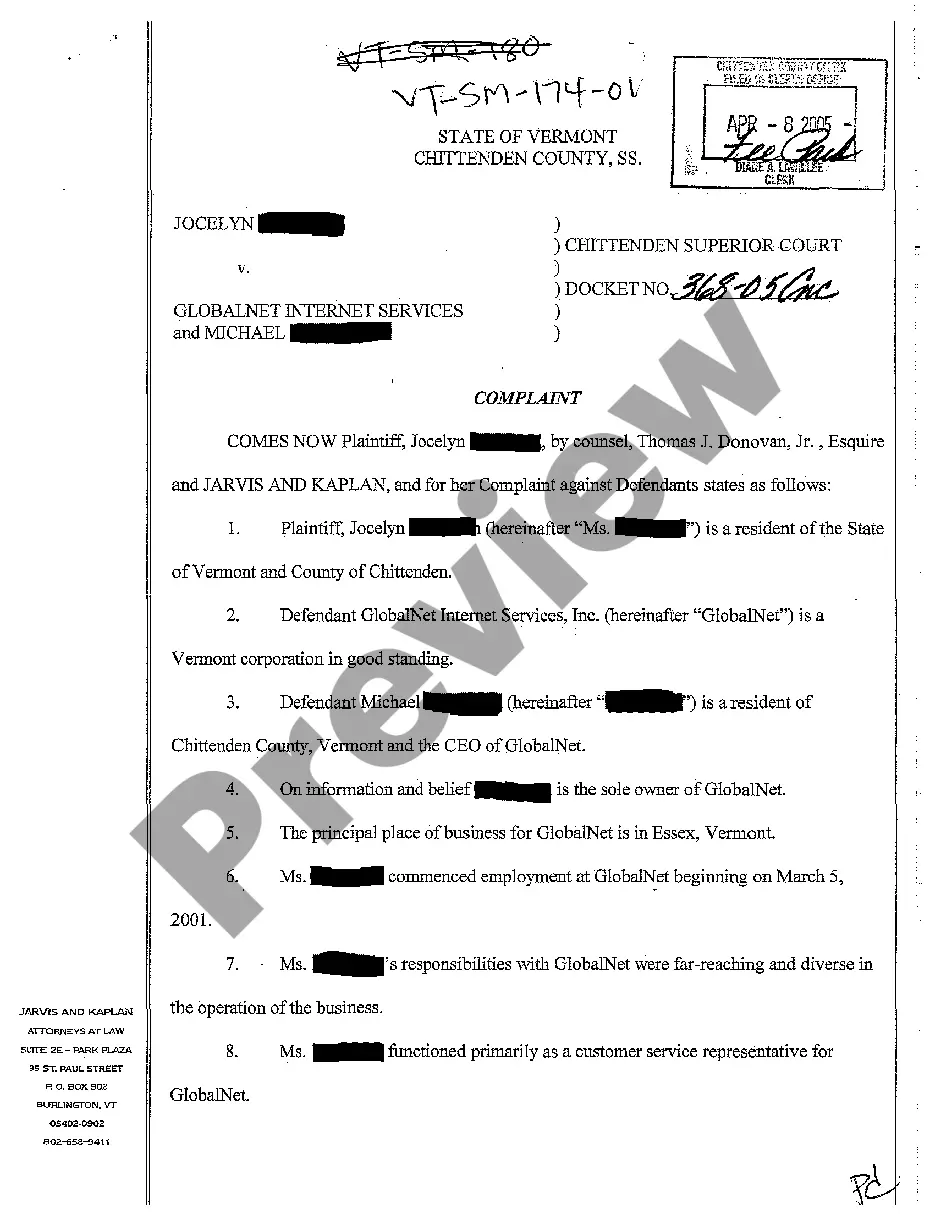
Affidavit of Amount Due on Open Account
About this form
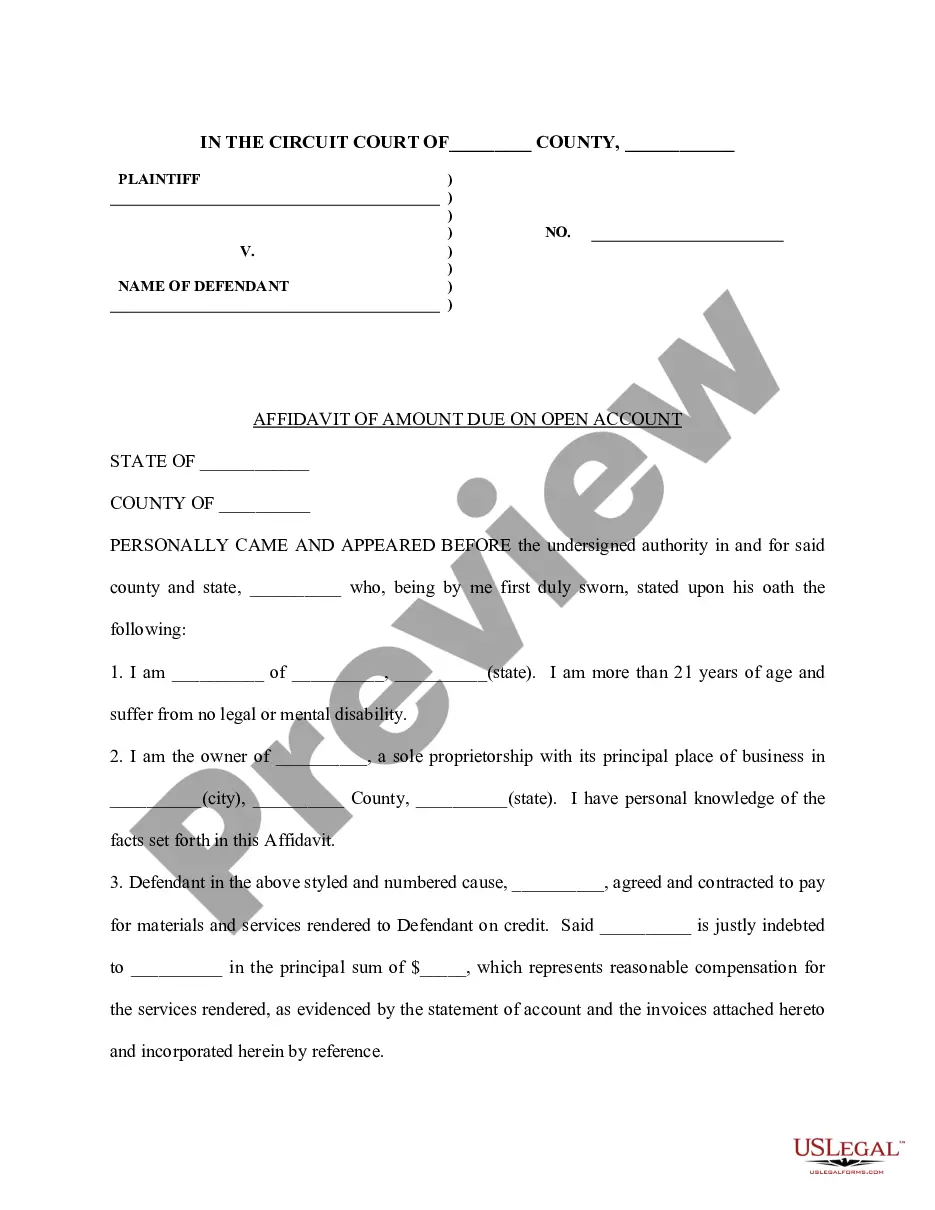
The Affidavit of Amount Due on Open Account is a legal document used in debt recovery cases. It allows a plaintiff to formally swear to the facts about a debt that the defendant allegedly owes them. This affidavit serves as evidence in court, differentiating it from less formal statements by providing a sworn statement, which can carry significant legal weight.
Form components explained
- Identification of the parties involved: the plaintiff and the defendant.
- Statement of the plaintiff's qualification and relationship to the debt.
- Details about the debt, including the amount due and the basis for the claim.
- Confirmation that the account is owing, with an assertion that no payments have been made.
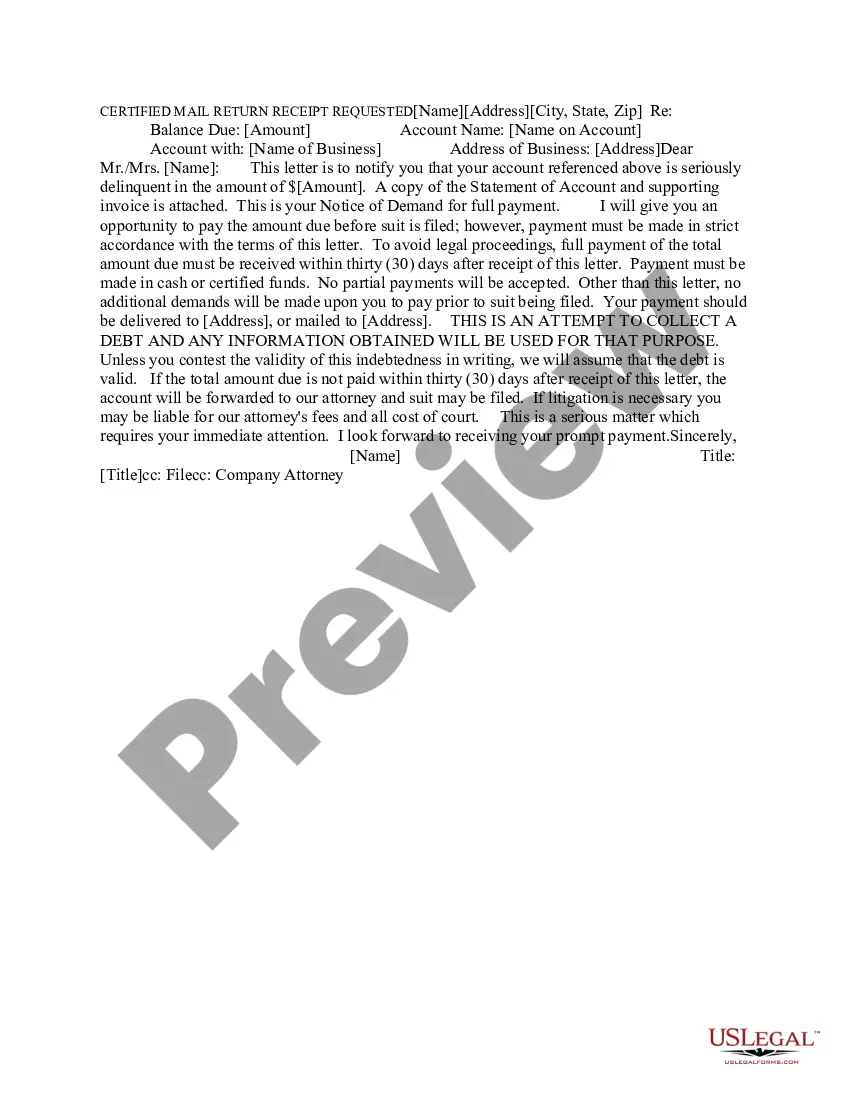
- Evidence of written demand for payment from the defendant.
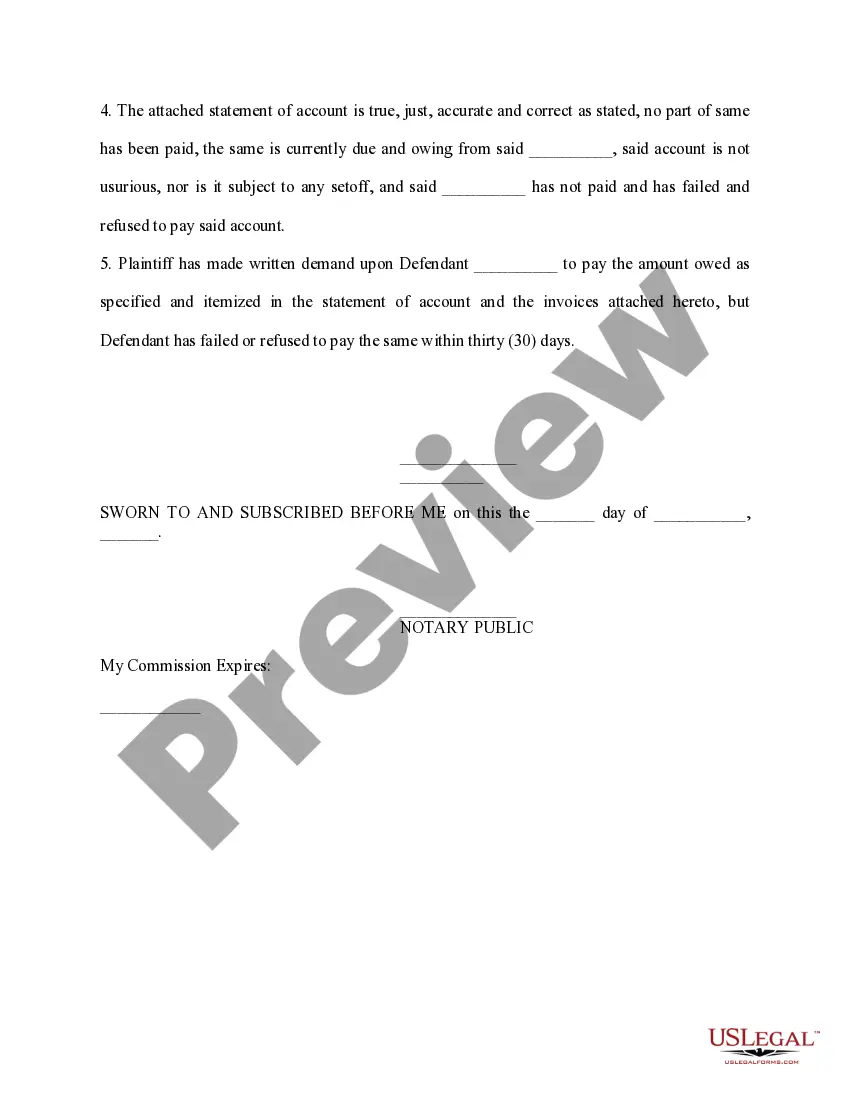
- Signature and notarization attesting to the truthfulness of the affidavit.
When to use this form
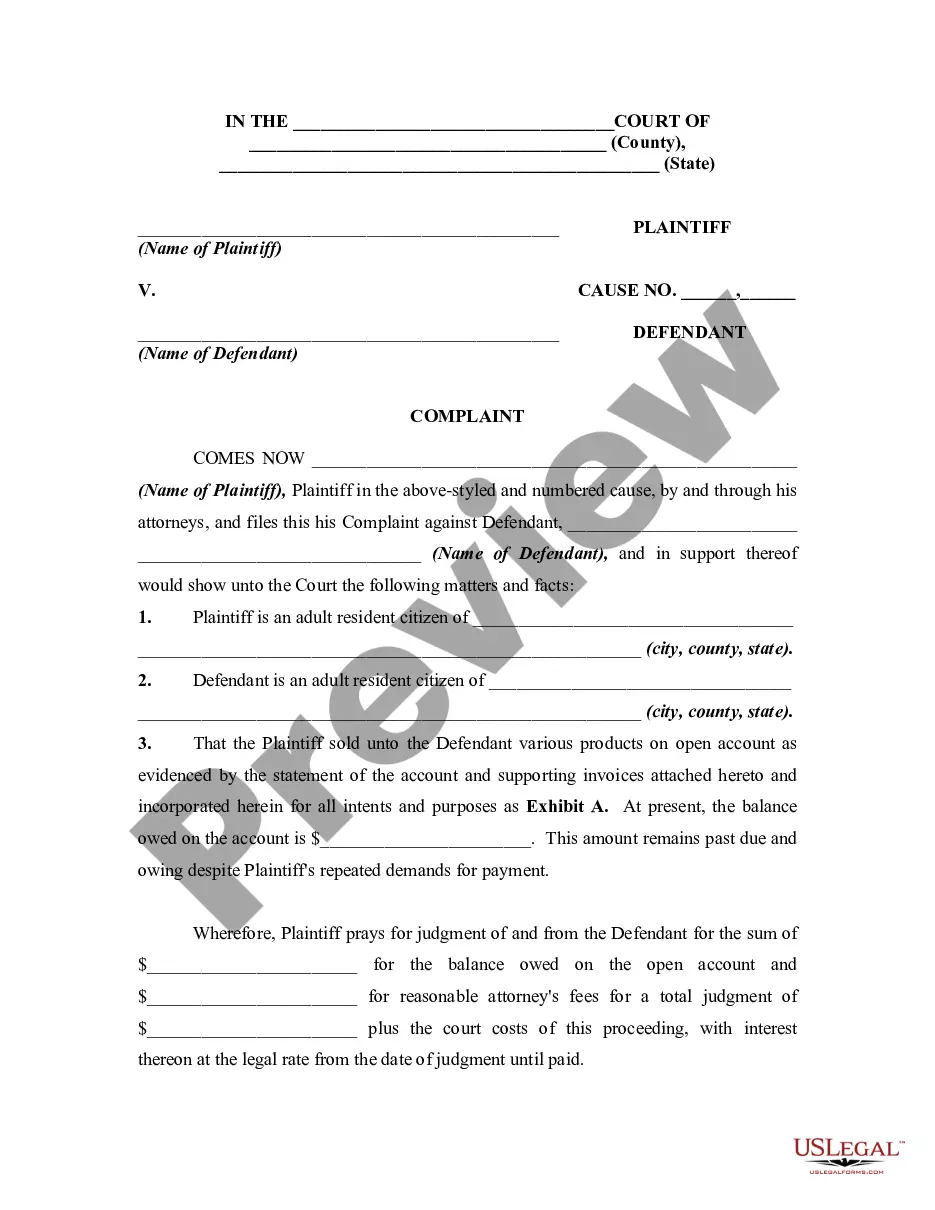
This form should be used when a plaintiff needs to assert a claim for unpaid debts owed by a defendant. It is applicable in situations where the plaintiff has provided goods or services on credit, and the defendant has failed to make the required payments after a written demand for payment has been made. Utilization of this affidavit can aid in legal proceedings for debt recovery, providing a clear account of amounts owed.
Who can use this document
This affidavit is suitable for:
- Business owners seeking to recover debts from clients or customers.
- Individuals who have extended credit for services or goods and need to formalize their claim.
- Creditors who must establish proof of the amount due before taking legal action.
Steps to complete this form
- Identify the state and county at the top of the affidavit.
- Provide your name and your capacity concerning the business.
- Clearly state the defendant's name and the details of the debt owed, including amounts.
- Attach statement of account and any invoices as evidence of the debt.
- Sign the document in front of a notary public to have it properly sworn.
Does this document require notarization?
Notarization is required for this form to take effect. Our online notarization service, powered by Notarize, lets you verify and sign documents remotely through an encrypted video session, available 24/7.
Get your form ready online
Our built-in tools help you complete, sign, share, and store your documents in one place.
Make edits, fill in missing information, and update formatting in US Legal Forms—just like you would in MS Word.
Download a copy, print it, send it by email, or mail it via USPS—whatever works best for your next step.
Sign and collect signatures with our SignNow integration. Send to multiple recipients, set reminders, and more. Go Premium to unlock E-Sign.
If this form requires notarization, complete it online through a secure video call—no need to meet a notary in person or wait for an appointment.
We protect your documents and personal data by following strict security and privacy standards.

Make edits, fill in missing information, and update formatting in US Legal Forms—just like you would in MS Word.

Download a copy, print it, send it by email, or mail it via USPS—whatever works best for your next step.

Sign and collect signatures with our SignNow integration. Send to multiple recipients, set reminders, and more. Go Premium to unlock E-Sign.

If this form requires notarization, complete it online through a secure video call—no need to meet a notary in person or wait for an appointment.

We protect your documents and personal data by following strict security and privacy standards.
Avoid these common issues
- Failing to properly identify all parties involved.
- Not attaching the necessary evidence, such as invoices or an account statement.
- Neglecting to have the form notarized, if required.
- Leaving out or incorrectly stating the amount owed.
Benefits of using this form online
- Convenience of downloading from anywhere at any time.
- Editability allows you to customize the form to fit your specific situation.
- Access to templates drafted by licensed attorneys, ensuring reliability and legal compliance.
Key takeaways
- The Affidavit of Amount Due is a sworn statement used in debt recovery cases.
- It must be completed accurately, with necessary evidence attached.
- Notarization is required for the affidavit to carry legal weight.
Looking for another form?





Form popularity
FAQ
An affidavit is used for the purpose of proving in court that a claim is true, and is typically used in conjunction with witness statements and other corroborating evidence. Through an affidavit, an individual swears that the information contained within is true to the best of their knowledge.
An affidavit is a written statement. It considers having a format under oath. It's only valid when it is on a voluntary basis and without coercion. When you sign an affidavit, you say that the evidence is accurate and that you are aware of the details in the affidavit personally.
In the sentence, the person writing the statement must state that he or she is stating that the information is accurate. (Example: I, Jane Doe, solemnly swear that the contents of this document are true and correct, and that I agree to abide by the terms in this affidavit.)
Title the affidavit. First, you'll need to title your affidavit. Craft a statement of identity. Write a statement of truth. State the facts. Reiterate your statement of truth. Sign and notarize.
In a nutshell, an affidavit is a sworn statement that is in writing. Affidavits are usually used in a court or in negotiations. They are common in family law cases and bankruptcy cases. They are also used in civil and criminal cases, though not as often as family or bankruptcy law cases.