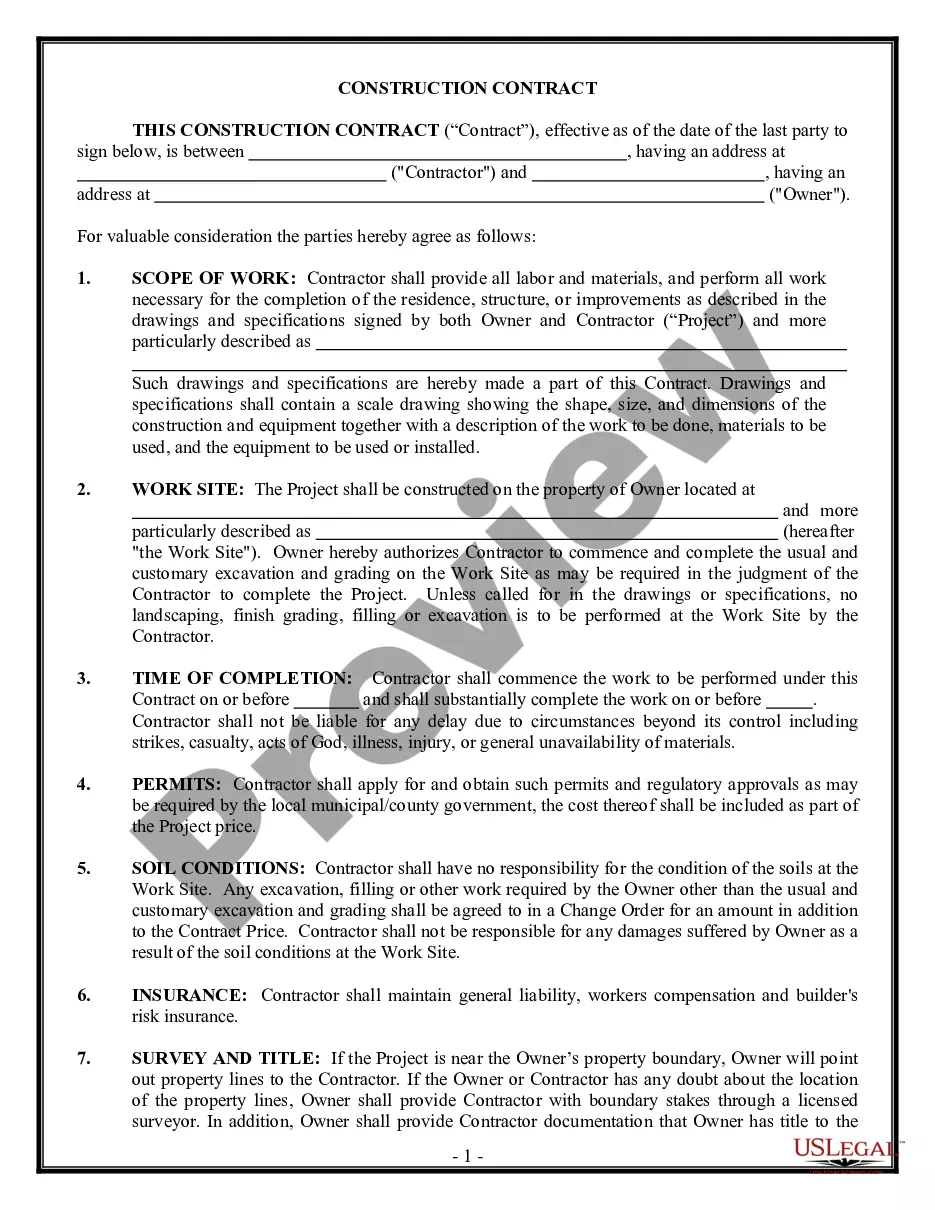
Agreement by Accounting Firm to Employ Auditor as Self-Employed Independent Contractor
Understanding this form
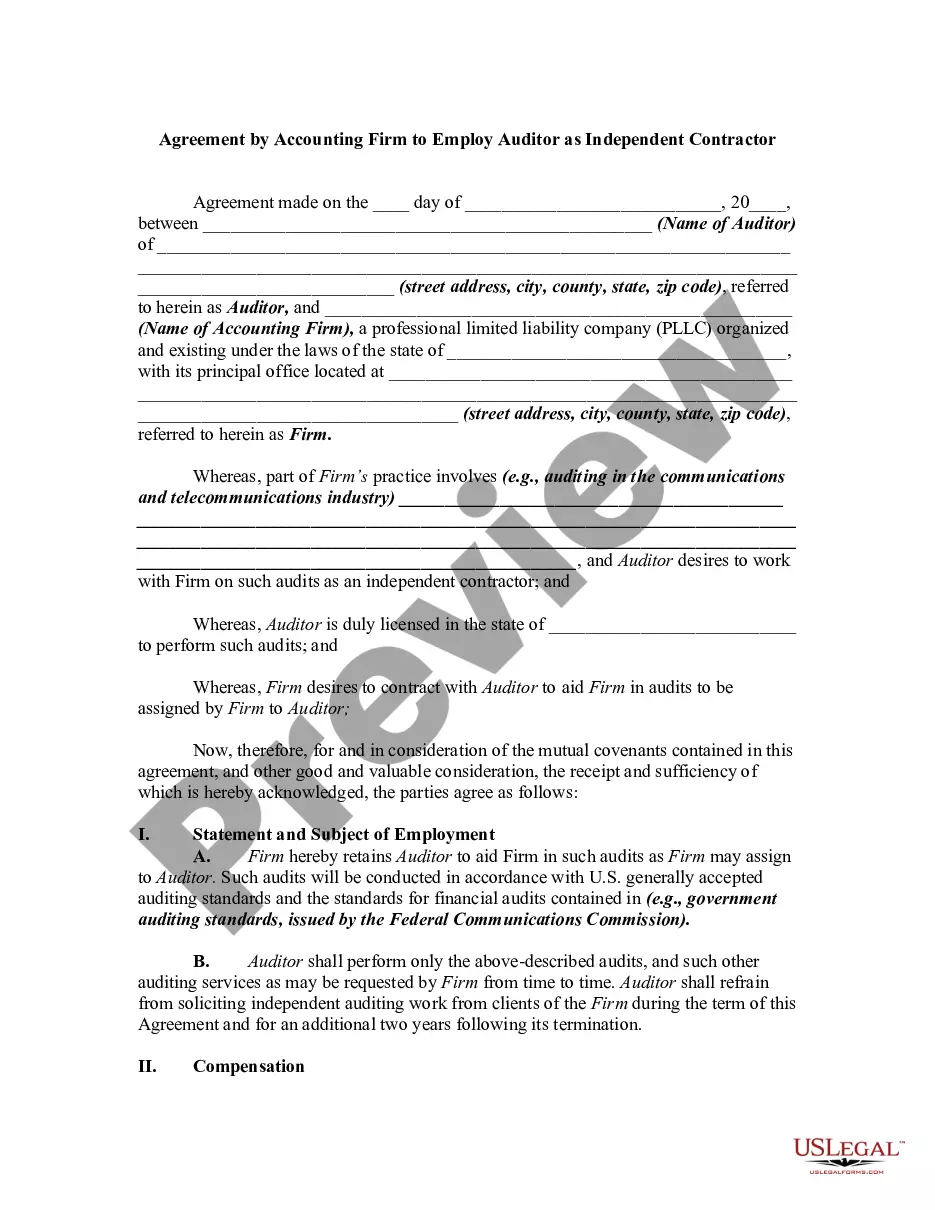
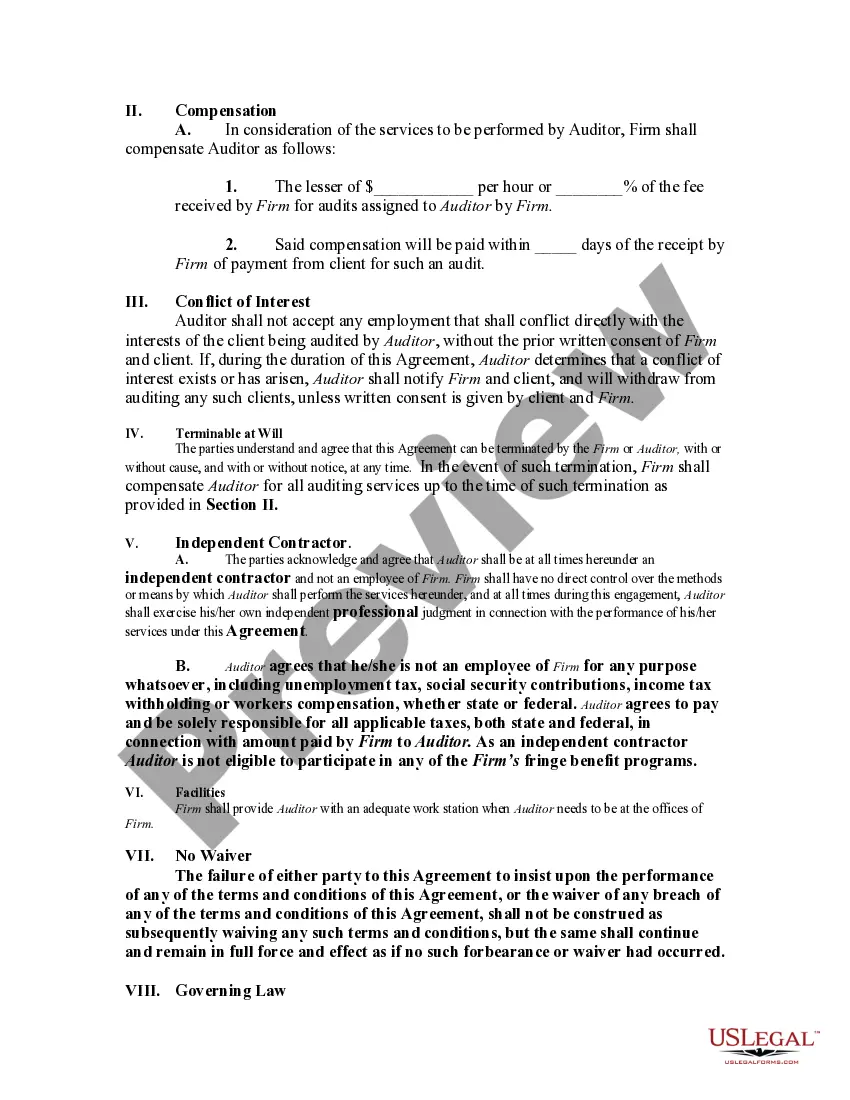
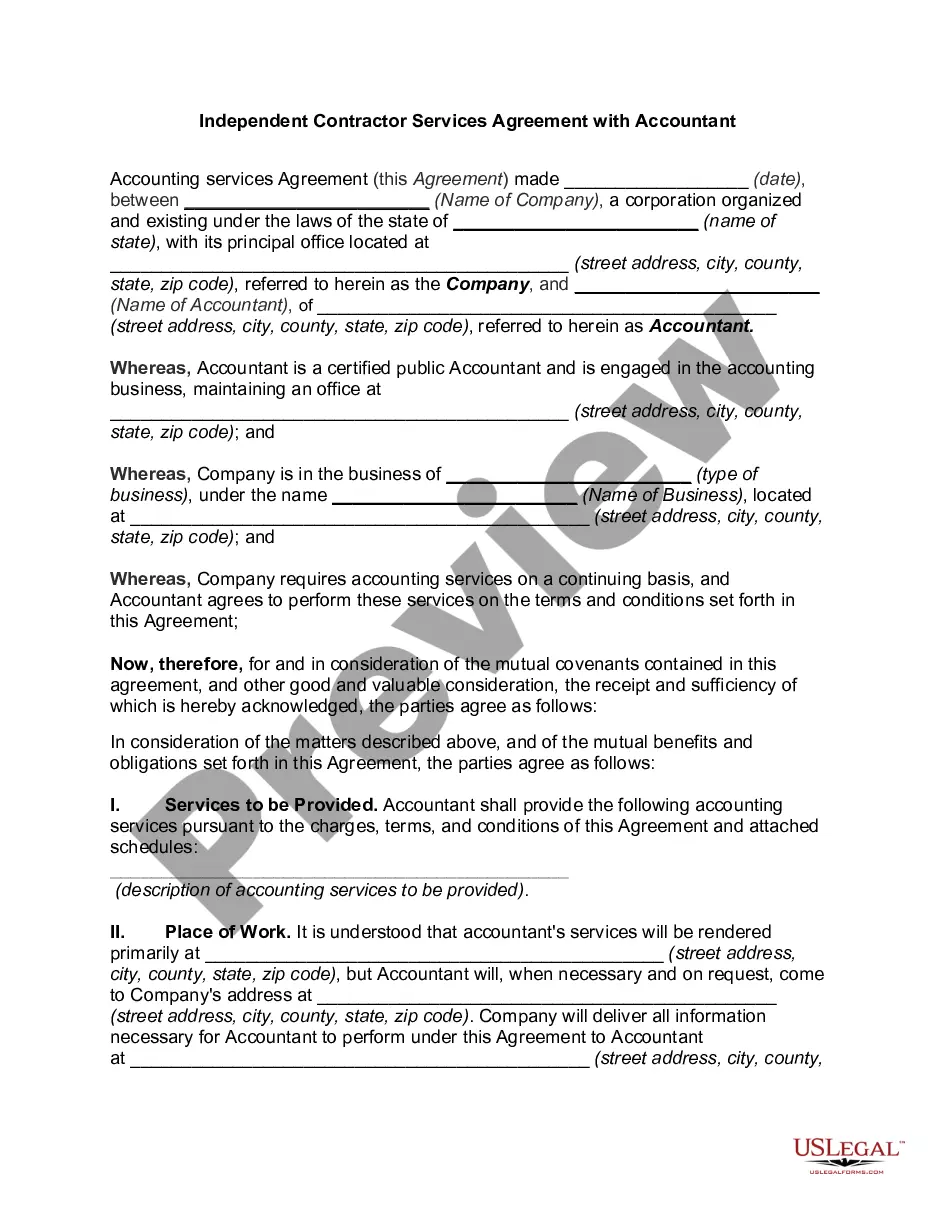
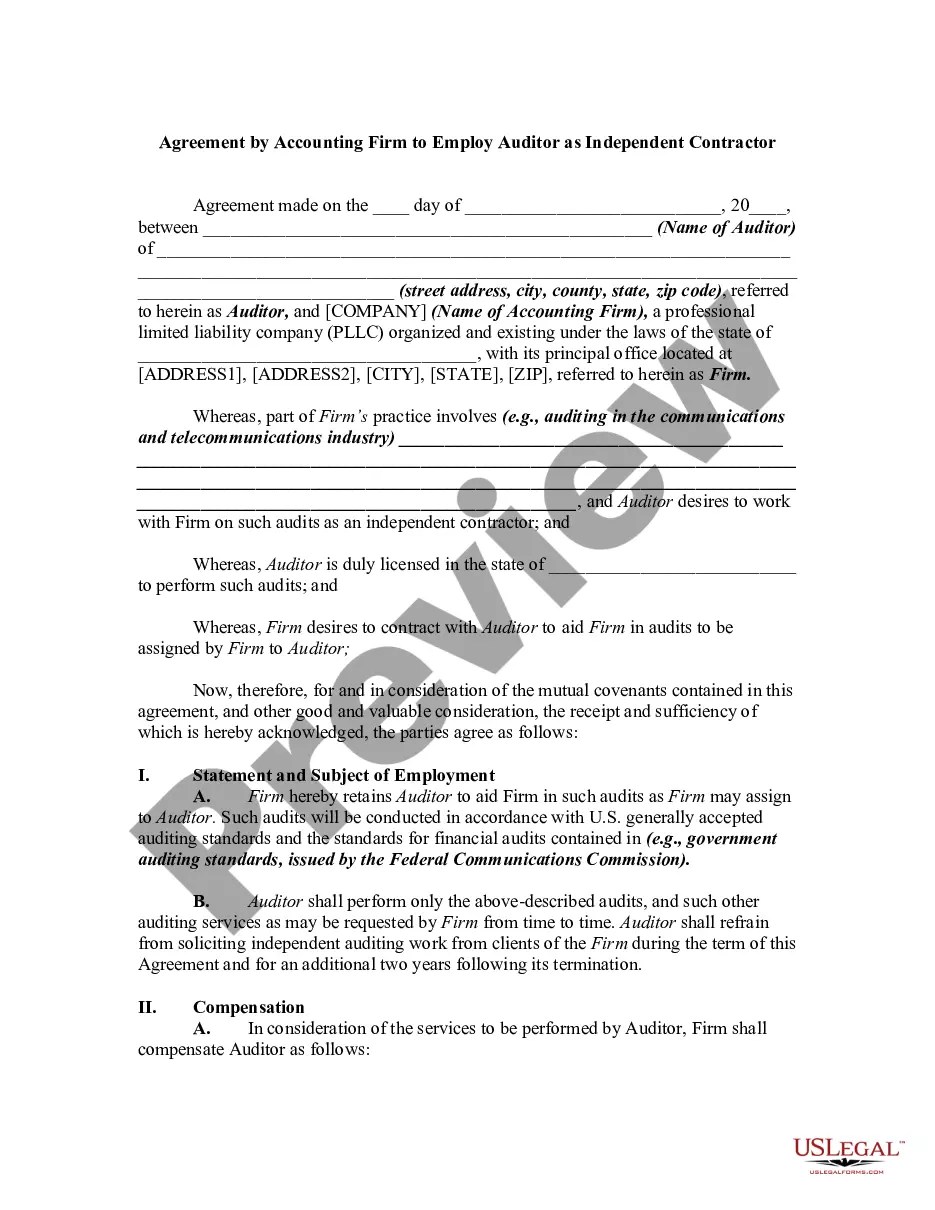
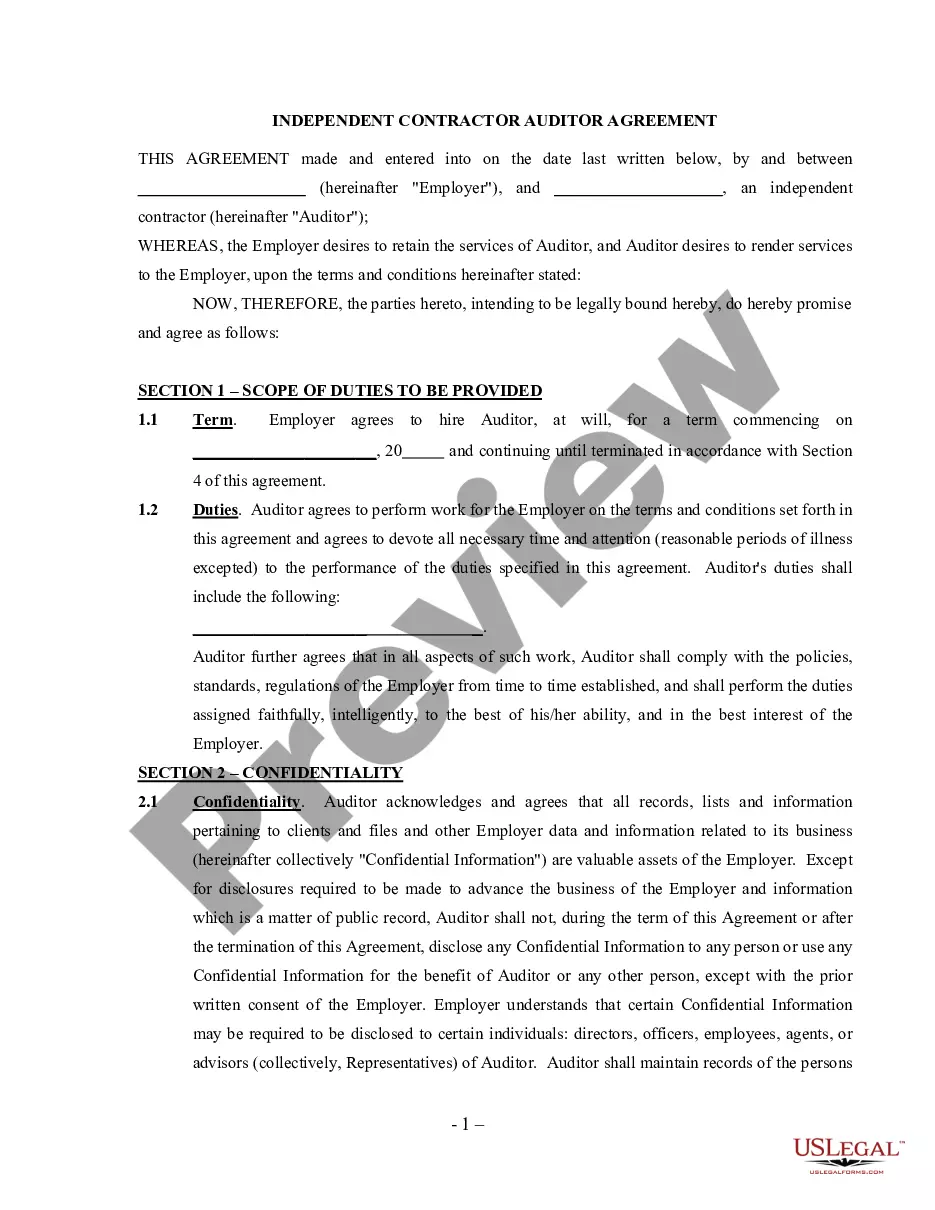
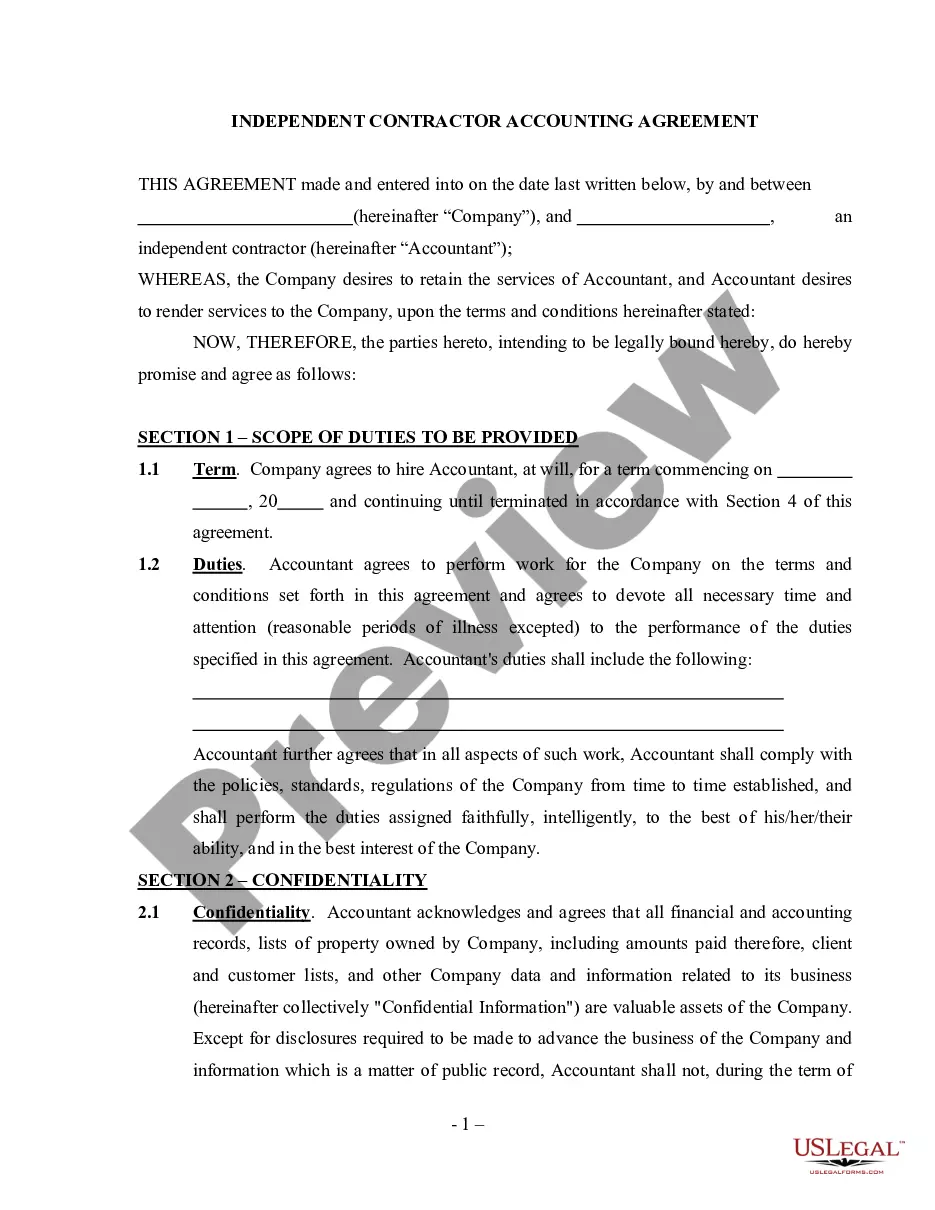
The Agreement by Accounting Firm to Employ Auditor as Self-Employed Independent Contractor is a legal document that establishes a professional relationship between an accounting firm and an auditor working as an independent contractor. This form clarifies the terms of engagement, including the scope of services, compensation, and expectations regarding confidentiality and conflict of interest. Unlike a standard employment agreement, this form distinguishes the auditor's status as an independent contractor, thus affecting legal and tax liabilities for both parties.
What’s included in this form
- Identification of the auditor and the accounting firm, including their addresses.
- A statement detailing the scope of the auditor's employment and specific services to be provided.
- Compensation terms including payment structure and timing of payments.
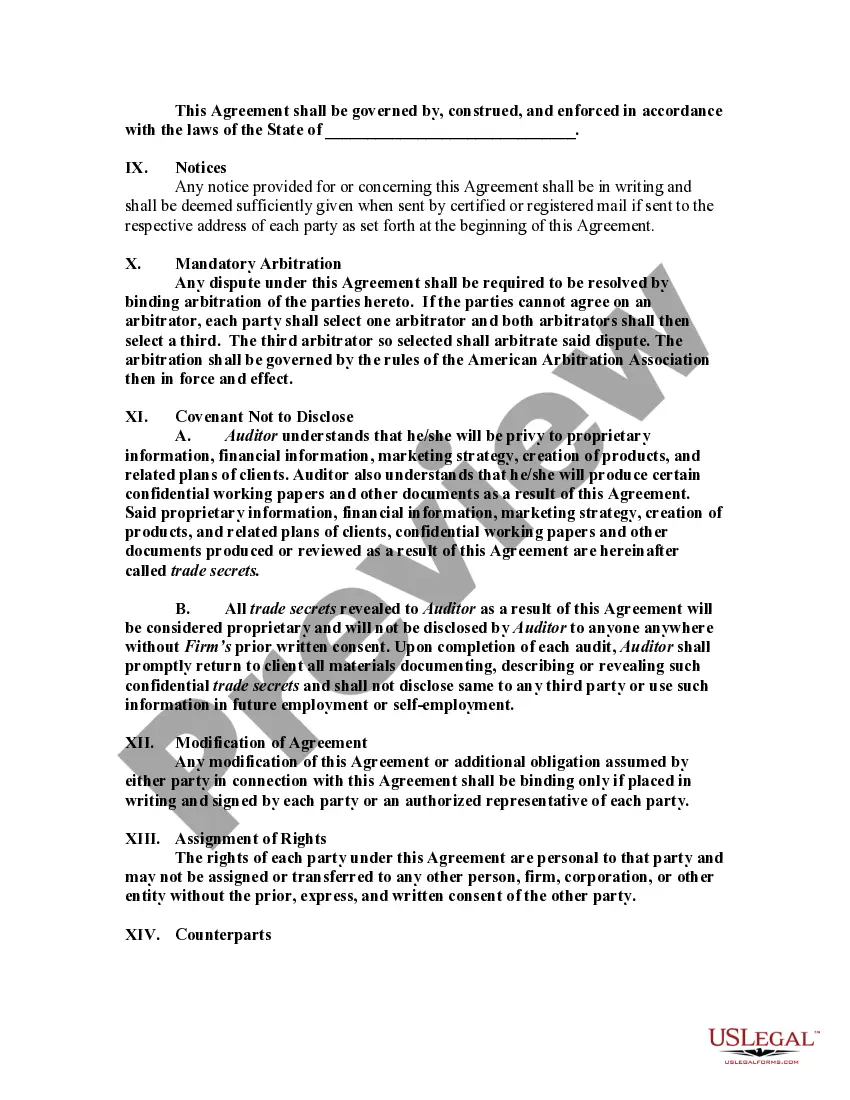
- Clauses addressing conflicts of interest and confidentiality obligations.
- The contract's terminability and recognition of the auditor as an independent contractor.
- Provisions for notices, governing law, and dispute resolution through arbitration.

When to use this form
This form is necessary when an accounting firm wishes to hire an auditor as an independent contractor. It is typically used when the firm requires external audit services without establishing an employment relationship. This form is suitable for scenarios such as auditing specific projects, industries, or clients in which the auditor has specialized skills or qualifications.
Who needs this form
This agreement is designed for:
- Accounting firms looking to contract external auditors for independent audit services.
- Auditors seeking to formalize their role as independent contractors rather than employees.
- Businesses involved in industries that require specialized audit expertise, ensuring compliance with relevant standards.
Steps to complete this form
- Identify the parties: Fill in the names and addresses of both the auditor and the accounting firm.
- Define the scope of the work: Specify the nature of the audits the auditor will conduct.
- Detail the compensation structure: Enter the agreed hourly rate or percentage of fees received.
- Include conflict of interest provisions: Ensure disclosures regarding potential conflicts are stated clearly.
- Sign and date the form: Ensure that both parties sign and date the agreement to make it legally binding.
Notarization requirements for this form
This form does not typically require notarization unless specified by local law. However, having the agreement notarized can provide additional authenticity and safeguard against disputes.
Get your form ready online
Our built-in tools help you complete, sign, share, and store your documents in one place.
Make edits, fill in missing information, and update formatting in US Legal Forms—just like you would in MS Word.
Download a copy, print it, send it by email, or mail it via USPS—whatever works best for your next step.
Sign and collect signatures with our SignNow integration. Send to multiple recipients, set reminders, and more. Go Premium to unlock E-Sign.
If this form requires notarization, complete it online through a secure video call—no need to meet a notary in person or wait for an appointment.
We protect your documents and personal data by following strict security and privacy standards.

Make edits, fill in missing information, and update formatting in US Legal Forms—just like you would in MS Word.

Download a copy, print it, send it by email, or mail it via USPS—whatever works best for your next step.

Sign and collect signatures with our SignNow integration. Send to multiple recipients, set reminders, and more. Go Premium to unlock E-Sign.

If this form requires notarization, complete it online through a secure video call—no need to meet a notary in person or wait for an appointment.

We protect your documents and personal data by following strict security and privacy standards.
Common mistakes
- Failing to specify the exact services the auditor will provide.
- Neglecting to clarify compensation terms, leading to disputes over payment.
- Omitting conflict of interest provisions which can compromise the audit's integrity.
- Leaving sections incomplete or unsigned, which may invalidate the agreement.
Advantages of online completion
- Convenient access allows quick form retrieval and completion from anywhere.
- Editable templates make it easy to customize the form to meet specific needs.
- Reliable legal structure ensures compliance with legal standards, minimizing risk.
Legal use & context
- This agreement establishes the nature of the auditor's independent contractor status, which affects taxation and liability.
- The clear definitions of duties and compensation help mitigate disputes and establish enforceable terms.
- Confidentiality and conflict of interest clauses protect both the auditorâs and firmâs interests.
What to keep in mind
- This agreement formalizes the relationship between an accounting firm and an independent auditor.
- It details compensation, responsibilities, and conflict management.
- Proper completion and signing are essential for legal enforceability.
Glossary of terms used in this form
- Independent contractor: A person or entity engaged to perform services for another entity under terms specified in a contract, not under direct control.
- Conflict of interest: A situation in which an individual's personal interests might compromise their judgment and professional obligations.
- Compensation: Payment received for services rendered, typically outlined in contractual agreements.
Looking for another form?
Form popularity
FAQ
Terms. This is the first section of any agreement or contract and states the names and locations of the parties involved. Responsibilities & Deliverables. Payment-Related Details. Confidentiality Clause. Contract Termination. Choice of Law.
The IRS requires contractors to fill out a Form W-9, request for Taxpayer Identification Number and Certification, which you should keep on file for at least four years after the hiring. This form is used to request the correct name and Taxpayer Identification Number, or TIN, of the worker or their entity.
An independent contractor is distinct from an employee who works regularly for a single employer. Independent contractors are not employees of the business or entity they are providing services for. However, the employer is paying the independent contractor for their work.
The dictionary definition of employee says succinctly that an employee is a person who works for another in return for financial or other compensation.3 Under that definition, independ- ent contractors would appear to be employees.
For most types of projects you hire an independent contractor (IC) to do, the law does not require you to put anything in writing. You can meet with the IC, agree on the terms of your arrangement, and have an oral contract or agreement that is legally binding. Just because you can doesn't mean you should, however.
Form W-9. Form W-9, the Request for Taxpayer Identification Number and Certification, is required to be completed by all contractors. A Written Contract. Invoices. Form 1099-MISC. Form SS-8?
Terms. This is the first section of any agreement or contract and states the names and locations of the parties involved. Responsibilities & Deliverables. Payment-Related Details. Confidentiality Clause. Contract Termination. Choice of Law.
A business may pay an independent contractor and an employee for the same or similar work, but there are important legal differences between the two.For the independent contractor, the company does not withhold taxes. Employment and labor laws also do not apply to independent contractors.
The earnings of a person who is working as an independent contractor are subject to Self-Employment Tax. If you are an independent contractor, you are self-employed. To find out what your tax obligations are, visit the Self-Employed Tax Center.