Sample Letter for Motion to Dismiss in Referenced Bankruptcy
Understanding this form
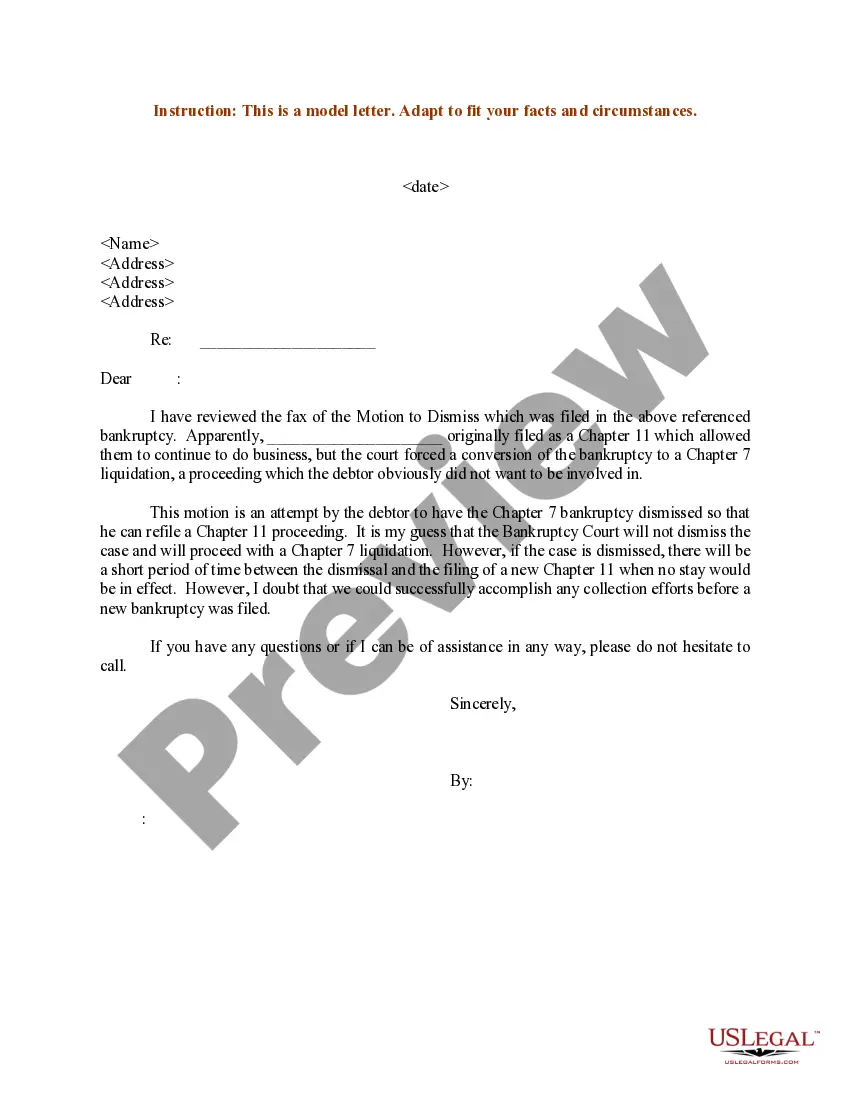
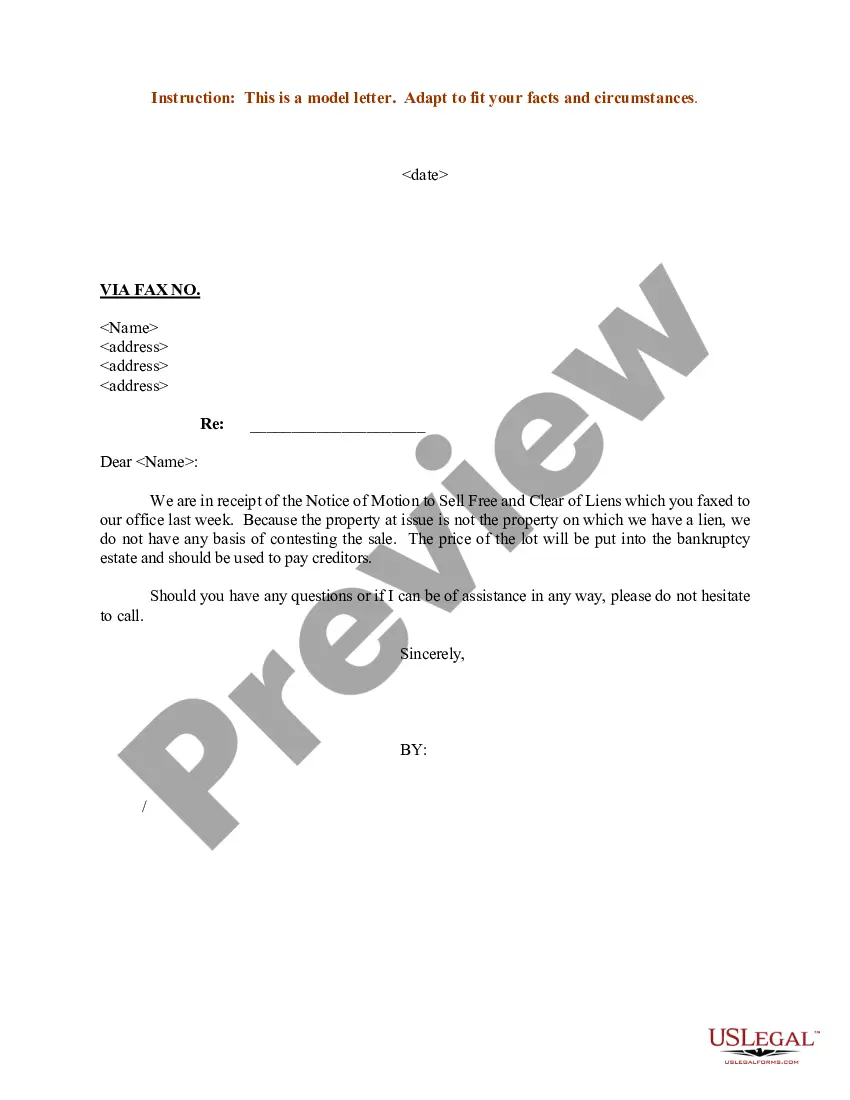
A Sample Letter for Motion to Dismiss in Referenced Bankruptcy is a template letter that individuals can use to formally request the dismissal of a bankruptcy case. This document provides a structured way to present your reasons for seeking dismissal, which may differ from other legal correspondence. This form is beneficial for those looking to navigate bankruptcy procedures with clarity and legal support.
Key components of this form
- Date of the letter
- Name and address of the individual filing the motion
- Subject line referencing the bankruptcy case
- Reason for requesting the dismissal
- Signature of the individual submitting the motion
Situations where this form applies
This form is typically used when an individual wishes to withdraw their bankruptcy application or contest an existing bankruptcy case. You may need this letter if your circumstances have changed, like securing a new job or resolving outstanding debts, and you want to dismiss the bankruptcy proceedings.
Who this form is for
- Individuals currently involved in a bankruptcy case who wish to request its dismissal
- Debtors seeking to improve their financial situation by terminating bankruptcy proceedings
- Anyone needing a structured format to communicate with the court regarding their bankruptcy status
Steps to complete this form
- Identify the date of your letter.
- Enter your full name and address at the top of the letter.
- Clearly state the subject line referencing the bankruptcy case.
- Provide a detailed explanation of the reasons for your motion to dismiss.
- Sign the letter to lend it authenticity.
Notarization requirements for this form
Notarization is generally not required for this form. However, certain states or situations might demand it. You can complete notarization online through US Legal Forms, powered by Notarize, using a verified video call available anytime.
Get your form ready online
Our built-in tools help you complete, sign, share, and store your documents in one place.
Make edits, fill in missing information, and update formatting in US Legal Forms—just like you would in MS Word.
Download a copy, print it, send it by email, or mail it via USPS—whatever works best for your next step.
Sign and collect signatures with our SignNow integration. Send to multiple recipients, set reminders, and more. Go Premium to unlock E-Sign.
If this form requires notarization, complete it online through a secure video call—no need to meet a notary in person or wait for an appointment.
We protect your documents and personal data by following strict security and privacy standards.

Make edits, fill in missing information, and update formatting in US Legal Forms—just like you would in MS Word.

Download a copy, print it, send it by email, or mail it via USPS—whatever works best for your next step.

Sign and collect signatures with our SignNow integration. Send to multiple recipients, set reminders, and more. Go Premium to unlock E-Sign.

If this form requires notarization, complete it online through a secure video call—no need to meet a notary in person or wait for an appointment.

We protect your documents and personal data by following strict security and privacy standards.
Typical mistakes to avoid
- Failing to include the bankruptcy case number.
- Not providing adequate reasons for dismissal.
- Omitting a signature, which could invalidate the motion.
- Using incorrect formatting or language that does not comply with court standards.
Benefits of using this form online
- Convenience of immediate access to a structured document.
- Editability allows you to customize the form to suit your specific case.
- Reliability, knowing the template has been drafted by legal professionals.
Legal use & context
- A motion to dismiss is a formal request to terminate bankruptcy proceedings for specific legal reasons.
- This form serves as a legal communication tool between you and the court.
- Filing this motion correctly is crucial for a valid dismissal of your bankruptcy case.
Looking for another form?
Form popularity
FAQ
This template provides a formal letter you can use to request dismissal of a referenced bankruptcy case. It guides you to include the date, your name and address, a subject line referencing the case, the reason for dismissal, and your signature. Use it when circumstances change and you want to withdraw or terminate the bankruptcy proceeding.
Use the form’s elements: the date, your name and address, a subject line referencing the bankruptcy case, a clear reason for requesting dismissal, and your signature. The template emphasizes presenting the reason succinctly and referencing the case to help the court understand why dismissal is being sought.
This form provides a template letter you can use to request dismissal of a referenced bankruptcy case. It’s intended for individuals who wish to withdraw or terminate the bankruptcy proceeding. Remember that actual dismissal may involve court procedures and local rules; consult a licensed attorney if you have questions.
A motion to dismiss in bankruptcy is a request to terminate the bankruptcy case. This Sample Letter for Motion to Dismiss in Referenced Bankruptcy offers a template you can use to communicate that request to the court, including the reason and case reference. It is a letter, not the court’s formal motion.
Yes. This template lets individuals draft and submit a request to dismiss the bankruptcy case. It provides the required elements and a fill-in structure to help you communicate with the court. Verify local filing rules and consider consulting a licensed attorney for jurisdiction-specific requirements.
It is a fill-in-the-blank template letter specifically labeled as a Sample Letter for Motion to Dismiss in Referenced Bankruptcy. It focuses on presenting a reason and case reference in a simple letter format, not a stand-alone formal court motion, and is designed for multi-state use.