Agreement Between Heirs and Third Party Claimant as to Division of Estate
Understanding this form
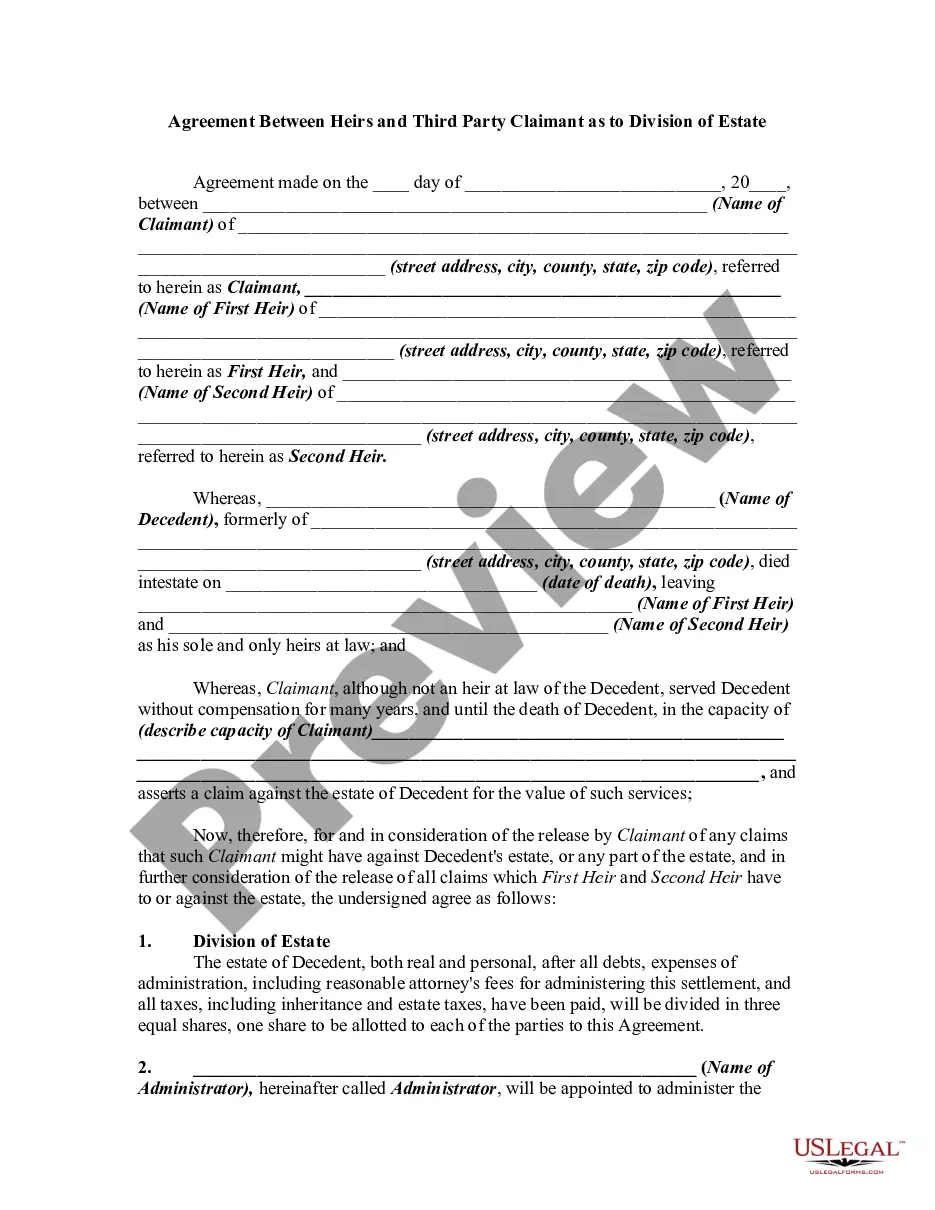
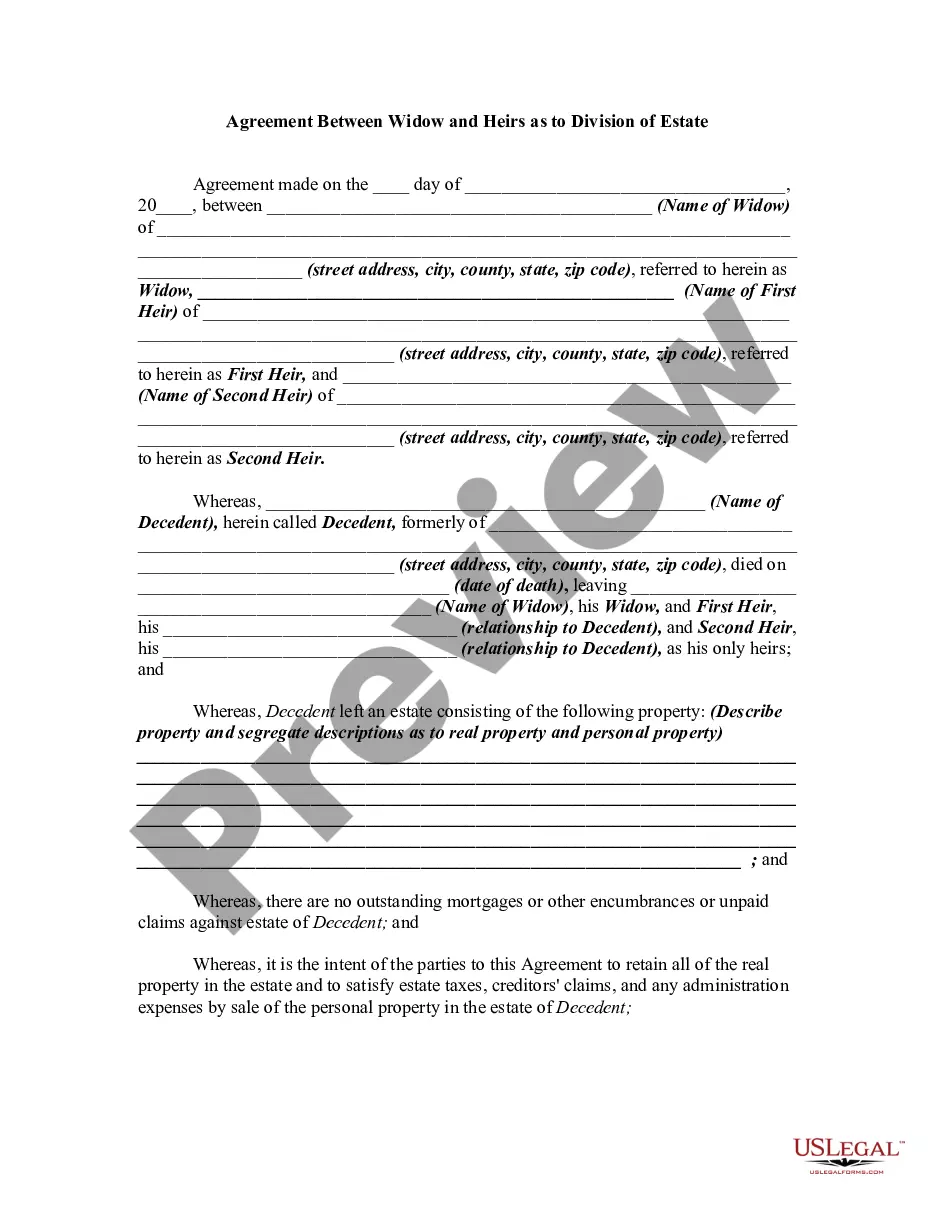
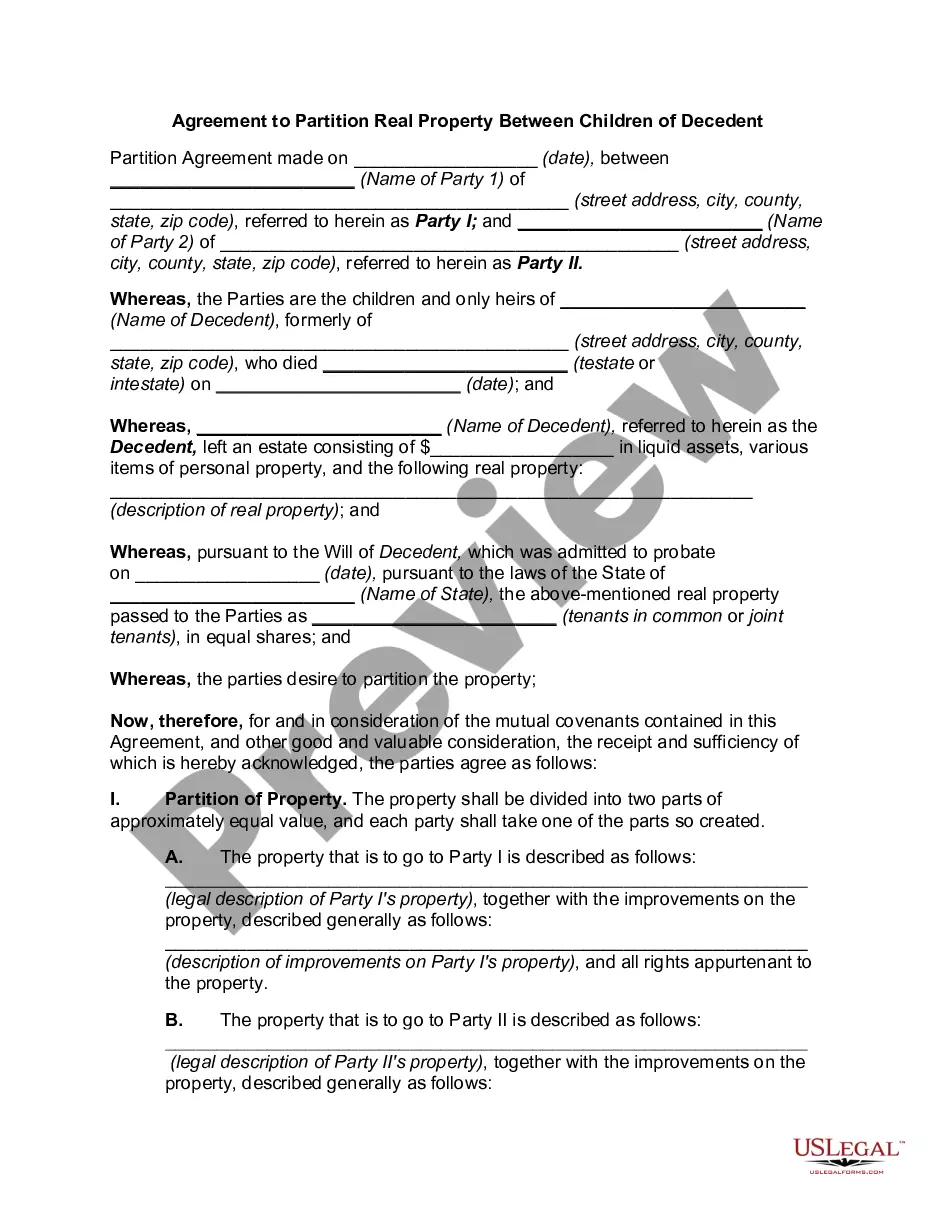
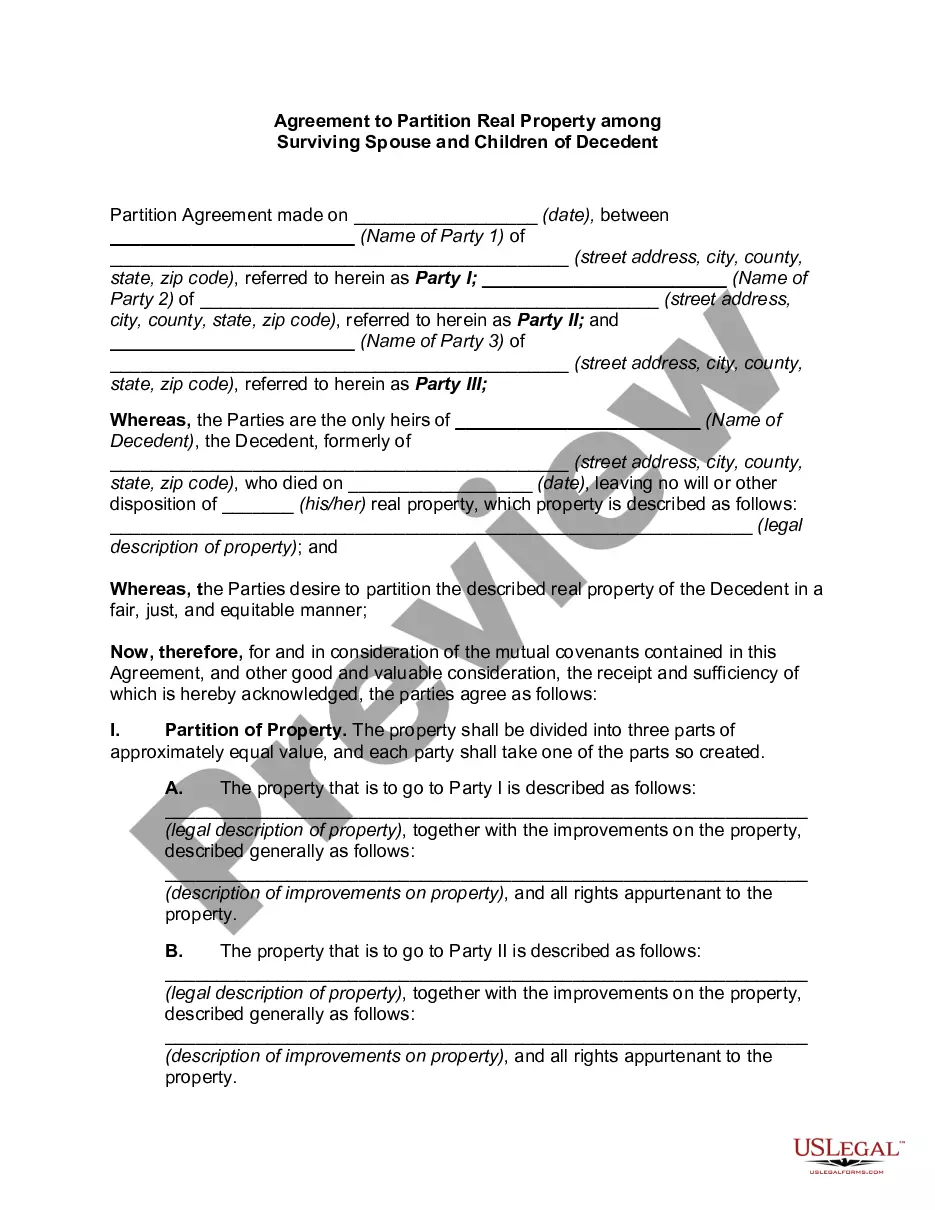
This Agreement Between Heirs and Third Party Claimant as to Division of Estate formalizes the arrangement among heirs and a third-party claimant regarding the distribution of an intestate estate. An intestate estate arises when a deceased individual did not leave a valid will. This form serves to resolve disputes over the estate's division, ensuring that all parties agree on the claims and the division of property in a clear and legally binding manner.
Key components of this form
- Identification of all parties involved, including heirs and the claimant.
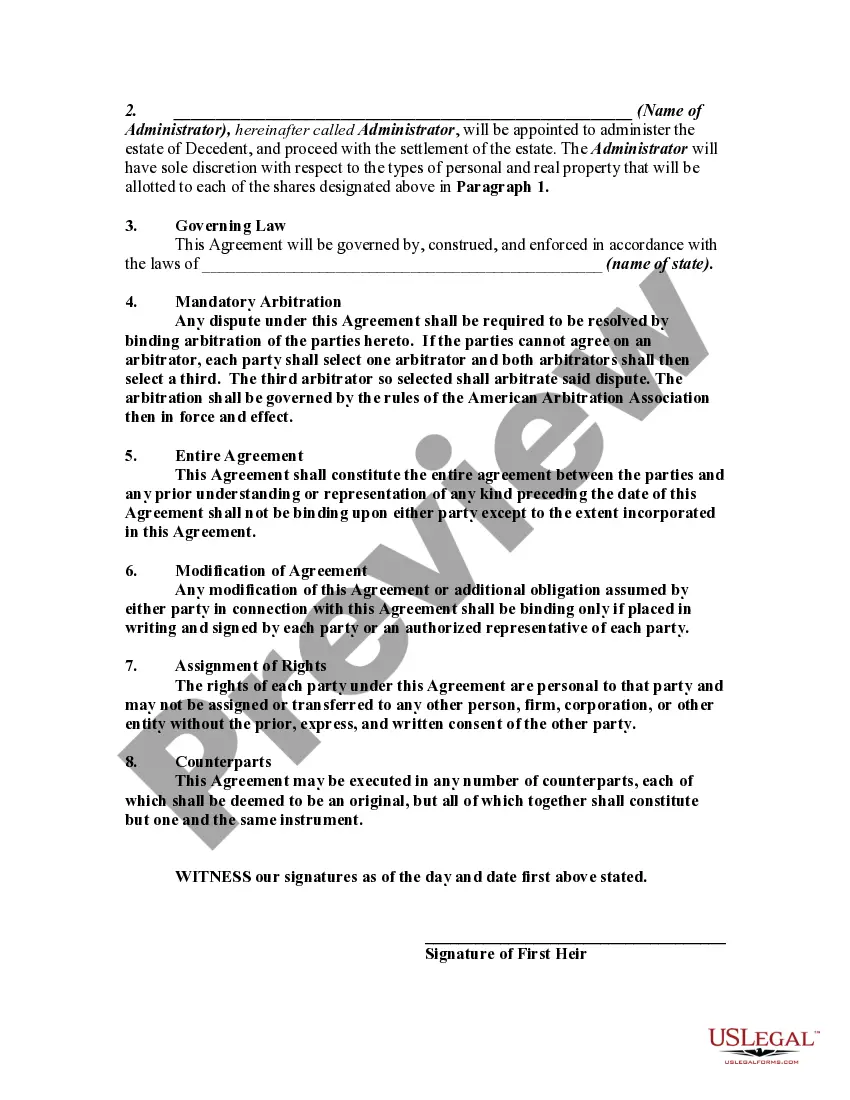
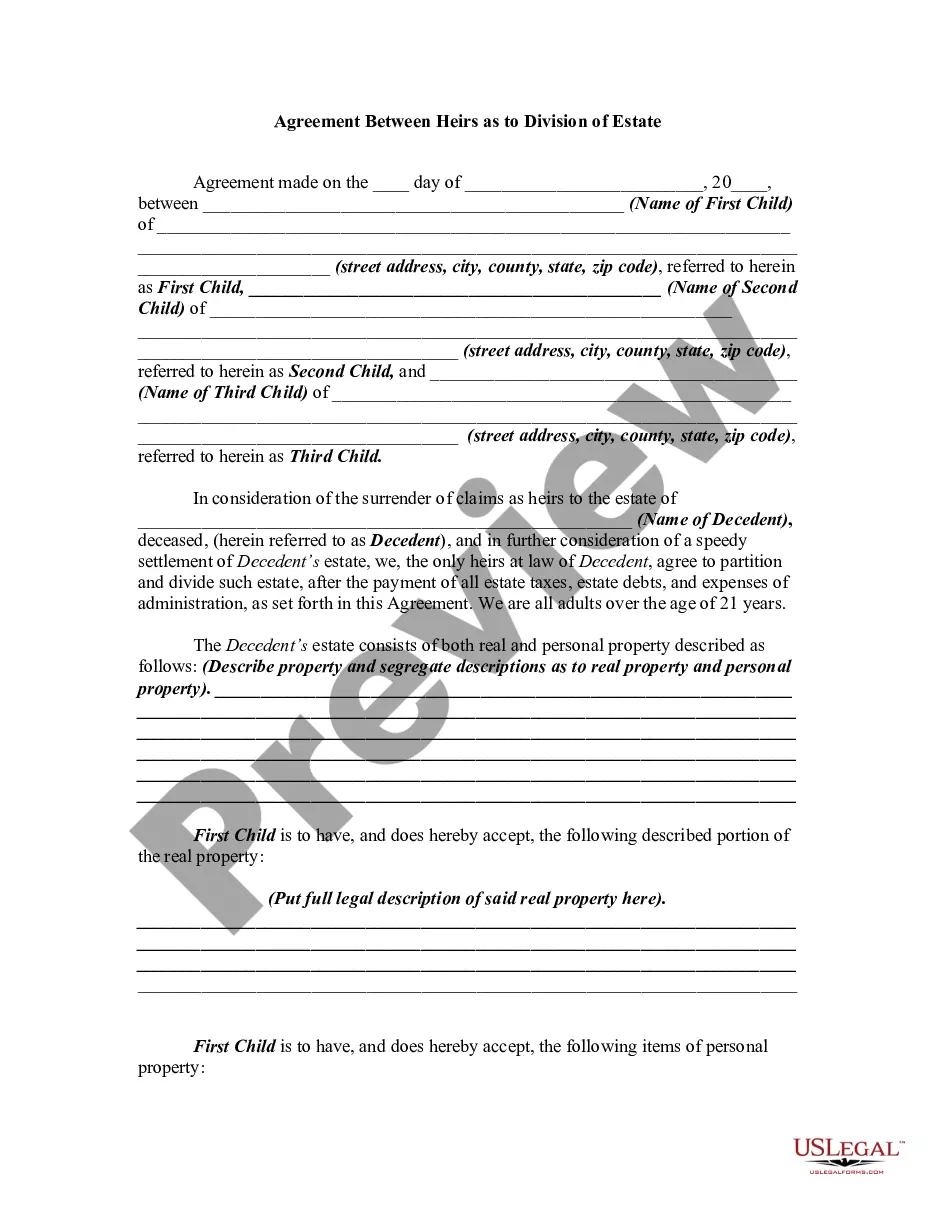
- Provision for the division of the estate after settling debts and expenses.
- Appointment of an administrator to oversee estate matters.
- Governing law clause specifying which state law applies.
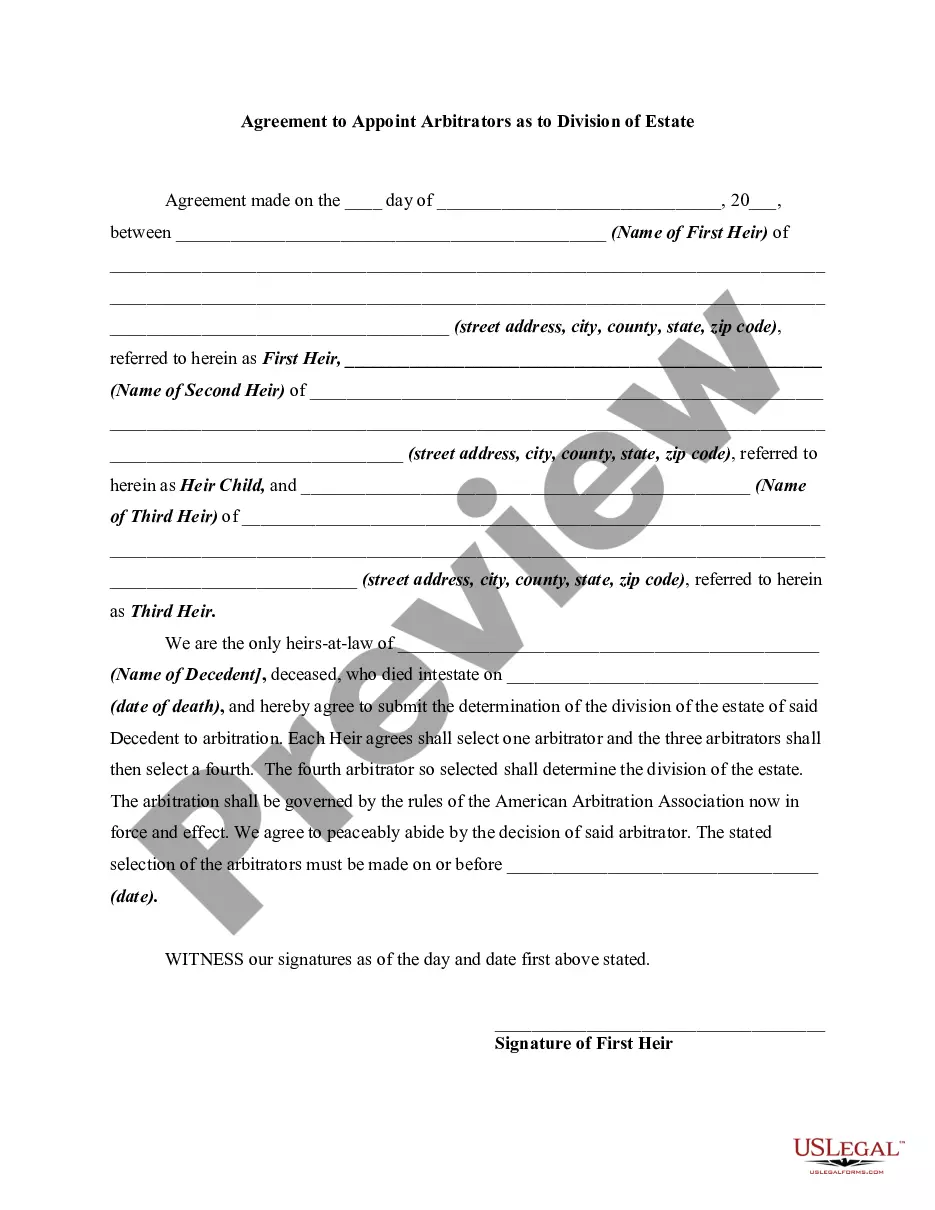
- Mandatory arbitration clause for resolving disputes among parties.
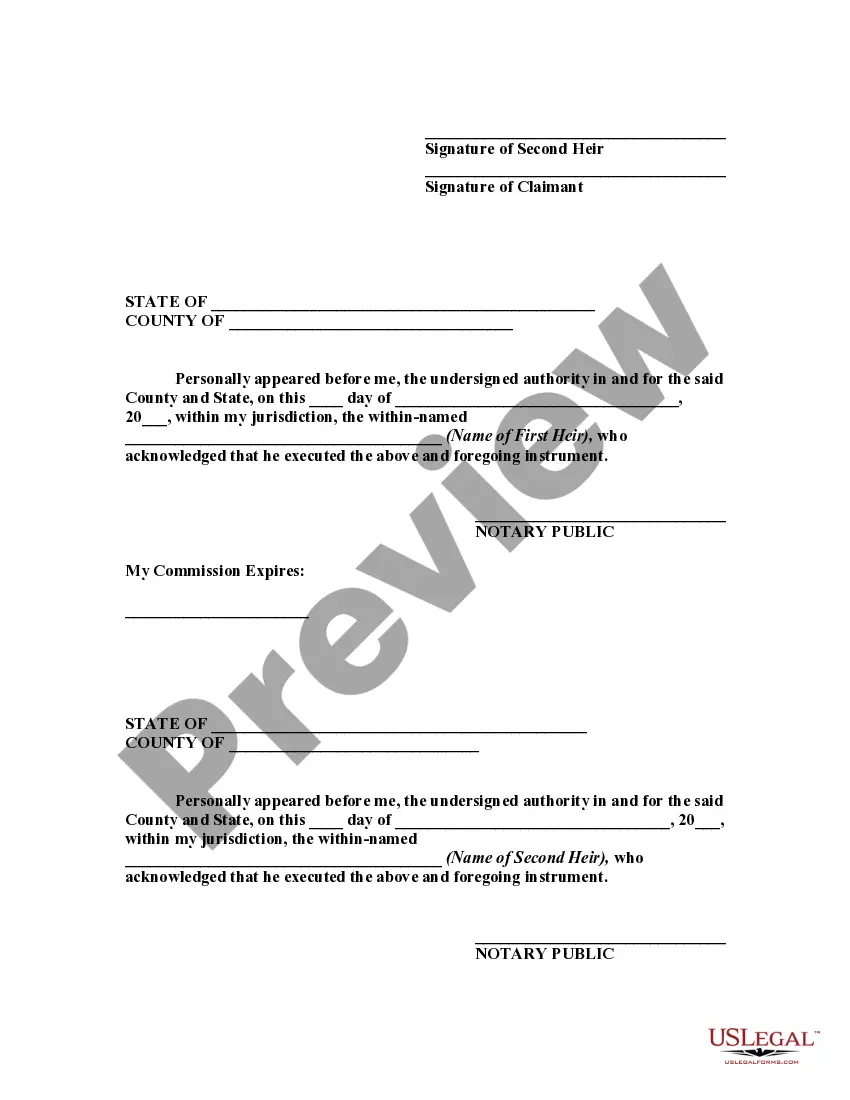
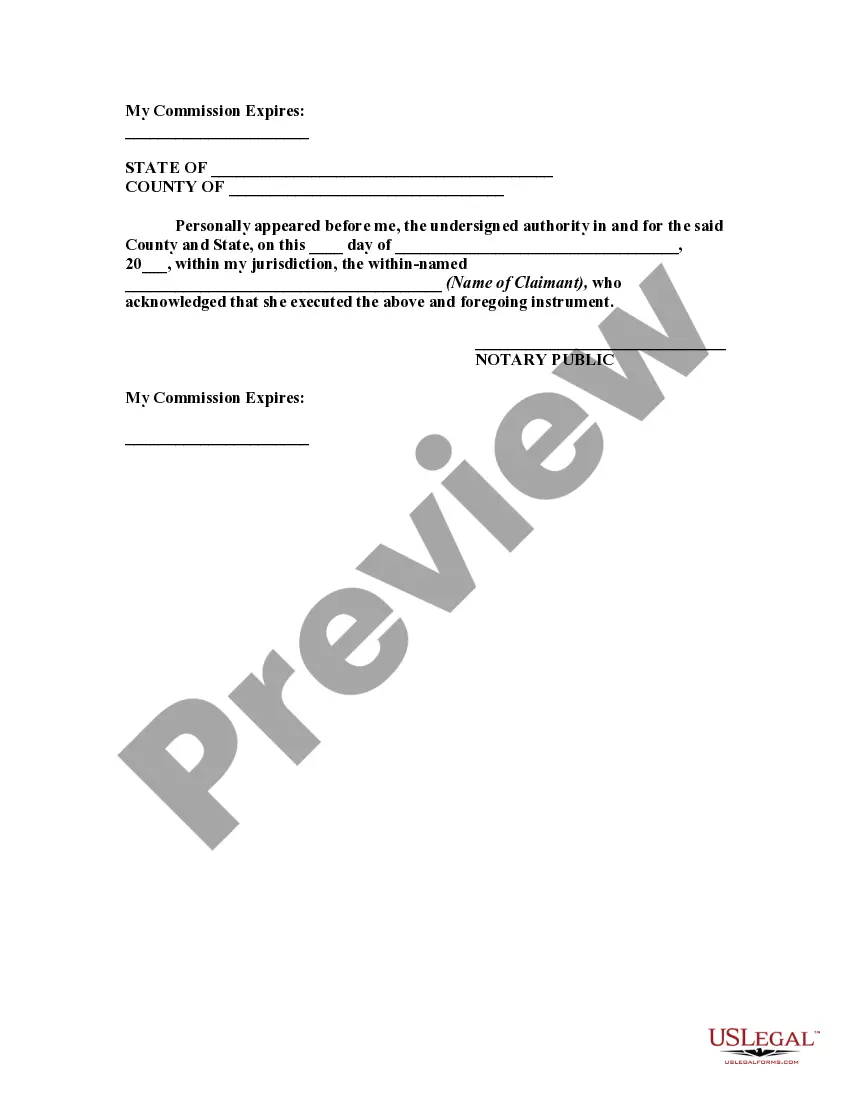
- Signature lines for all parties with notary acknowledgment sections.
When to use this form
This form is essential when family members and third parties need to come to an agreement on dividing an intestate estate. It is particularly useful when there are claims made by individuals who are not heirs but have provided services to the deceased. Use this form to document the agreed-upon division of assets and to avoid potential conflicts in the future.
Intended users of this form
- Heirs of a deceased individual without a will.
- Third-party claimants who have rendered services to the decedent.
- Families seeking to prevent disputes or litigation over estate division.
- Individuals looking for a clear agreement on asset distribution.
Steps to complete this form
- Identify all parties involved, including full names and addresses of the heirs and the claimant.
- Specify the name and address of the decedent and their date of death.
- Clearly state the services provided by the claimant and any claims they have against the estate.
- Detail the agreed-upon division of the estate, including who administers it.
- Have all parties sign the agreement, ensuring it is notarized as required by law.
Does this form need to be notarized?
Yes, this form must be notarized to be legally valid. This ensures that the identities of the parties are verified and that the agreement is executed with due formalities. With US Legal Forms, you can take advantage of integrated online notarization services, providing you with secure video calls and legal equivalence without the need for travel.
Get your form ready online
Our built-in tools help you complete, sign, share, and store your documents in one place.
Make edits, fill in missing information, and update formatting in US Legal Forms—just like you would in MS Word.
Download a copy, print it, send it by email, or mail it via USPS—whatever works best for your next step.
Sign and collect signatures with our SignNow integration. Send to multiple recipients, set reminders, and more. Go Premium to unlock E-Sign.
If this form requires notarization, complete it online through a secure video call—no need to meet a notary in person or wait for an appointment.
We protect your documents and personal data by following strict security and privacy standards.

Make edits, fill in missing information, and update formatting in US Legal Forms—just like you would in MS Word.

Download a copy, print it, send it by email, or mail it via USPS—whatever works best for your next step.

Sign and collect signatures with our SignNow integration. Send to multiple recipients, set reminders, and more. Go Premium to unlock E-Sign.

If this form requires notarization, complete it online through a secure video call—no need to meet a notary in person or wait for an appointment.

We protect your documents and personal data by following strict security and privacy standards.
Typical mistakes to avoid
- Failing to include all parties involved in the agreement.
- Not specifying the services provided by the third-party claimant.
- Omitting the notarization, if required by local laws.
- Confusing terms regarding the division of property leading to ambiguity.
Benefits of completing this form online
- Convenience of downloading the form immediately and editing it as needed.
- Access to legally vetted templates drafted by licensed attorneys.
- Clear and structured format that simplifies the completion process.
- Reduced risk of errors compared to handwritten agreements.
- This agreement provides a legally binding resolution for the distribution of an intestate estate.
- It is enforceable provided that all parties have willingly signed and acknowledged the terms.
- Consulting an attorney for specific guidance relevant to your jurisdiction is advisable.
Key takeaways
- A formal agreement helps avoid disputes and provides clarity on estate division.
- Involving a third-party claimant can create complexity, so clear terms are essential.
- Notarization ensures the agreement is legally recognized and could be critical for enforcement.
Looking for another form?
Form popularity
FAQ
The executor can sell property without getting all of the beneficiaries to approve.Once the executor is named there is a person appointed, called a probate referee, who will appraise the estate assets.
Where a person is a Residuary Beneficiary, they are entitled to receive a full account of the Estate assets and how they have been distributed in order to see how their share has been calculated. The Estate Accounts do not have to be provided until the Estate administration has been finalised.
Most assets can be distributed by preparing a new deed, changing the account title, or by giving the person a deed of distribution. For example: To transfer a bank account to a beneficiary, you will need to provide the bank with a death certificate and letters of administration.
Each beneficiary is entitled to a trustee's accounting, at least annually, at termination of the trust, and on upon a change of trustee. (California Probate Code 16062). Unfortunately, not all beneficiaries are entitled to automatic accounting, nevertheless, the court may force the trustee to provide an accounting.
Before distributing assets to beneficiaries, the executor must pay valid debts and expenses, subject to any exclusions provided under state probate laws.The executor must maintain receipts and related documents and provide a detailed accounting to estate beneficiaries.
Before distributing assets to beneficiaries, the executor must pay valid debts and expenses, subject to any exclusions provided under state probate laws.The executor must maintain receipts and related documents and provide a detailed accounting to estate beneficiaries.
When the executor has paid off the debts, filed the taxes and sold any property needed to pay bills, he can submit a final estate accounting to the probate court. Once the probate court approves the accounting, he can distribute assets to you and other beneficiaries according to the terms of the will.
In regard to the question posed, the short answer is: No, all of the beneficiaries do not have to agree to the terms of the contract for a real estate contract to be legally binding.