Agreement Between Widow and Heirs as to Division of Estate
Overview of this form
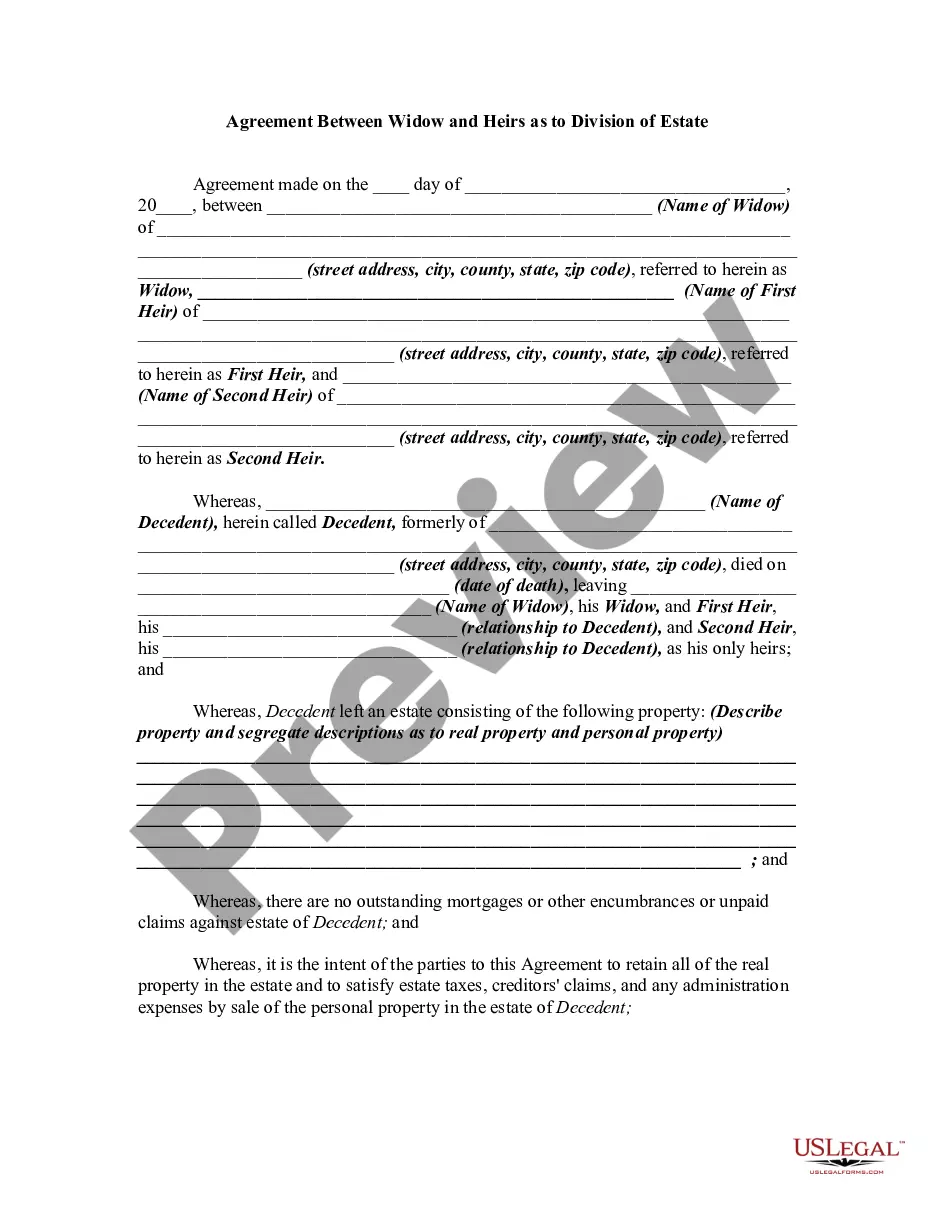
The Agreement Between Widow and Heirs as to Division of Estate is a legal document designed to facilitate the distribution of an intestate estate among a widow and the heirs of the deceased. This agreement outlines the division of property and assets when a person passes away without a valid will. Unlike a standard will, this form addresses settlements that are mutually agreed upon by family members, ensuring that all parties understand their rights and entitlements according to the specific arrangements made.
What’s included in this form
- Identification of the parties: Names and addresses of the widow and heirs.
- Details about the decedent: Information including the name and date of death.
- Property description: Segregation of real and personal property owned by the decedent.
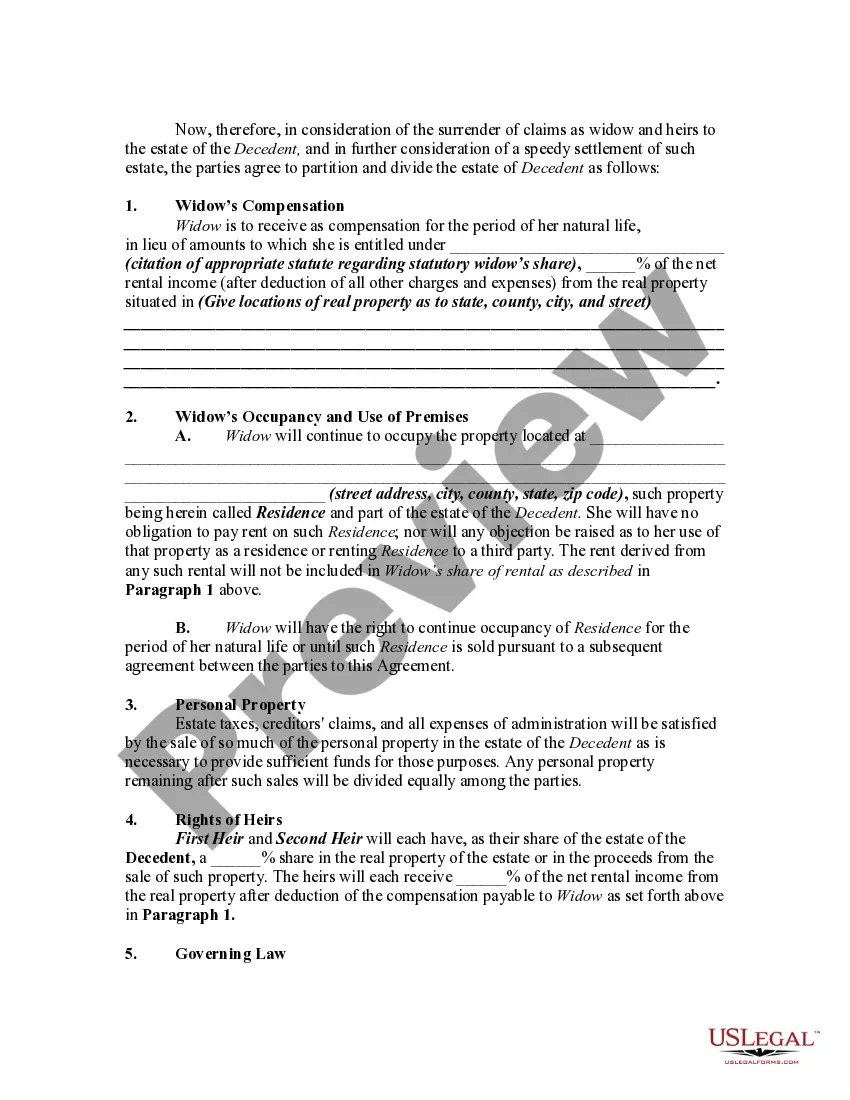
- Widow's compensation and rights to occupancy of real property.
- Division of personal property and responsibilities for estate-related expenses.
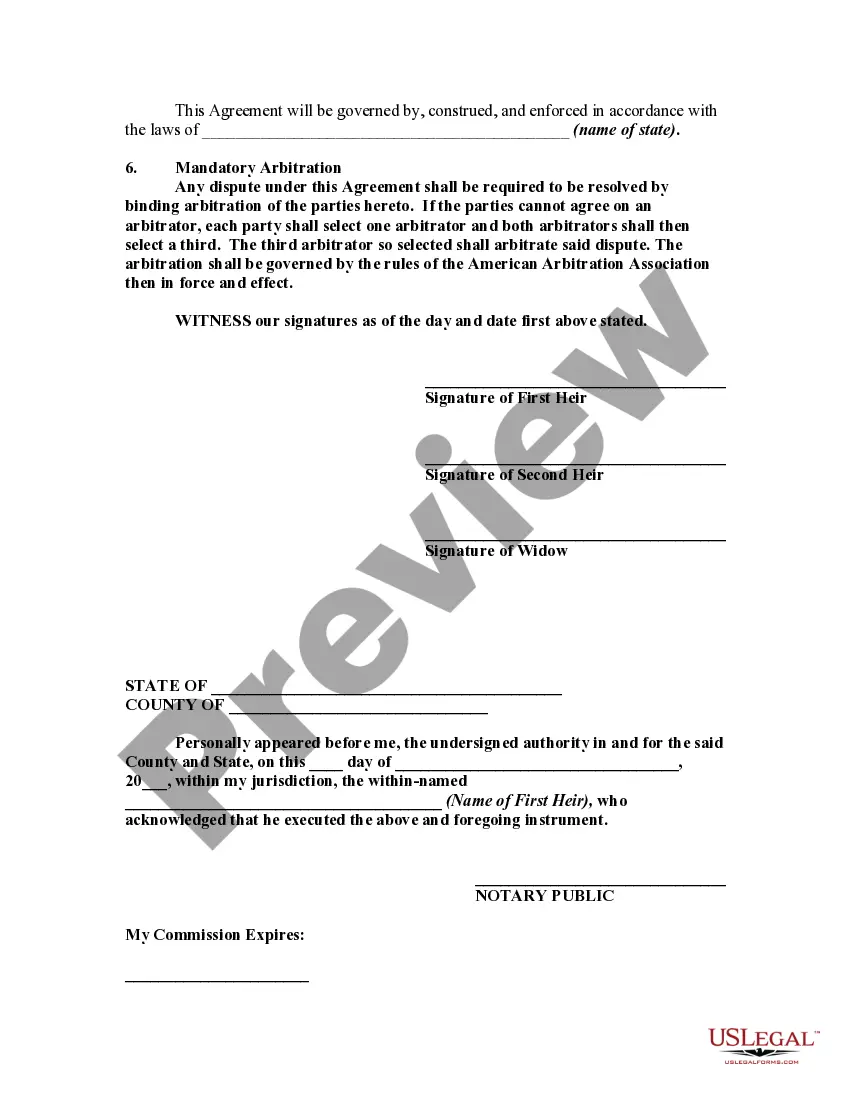
- Governing law and mandatory arbitration clauses for dispute resolution.
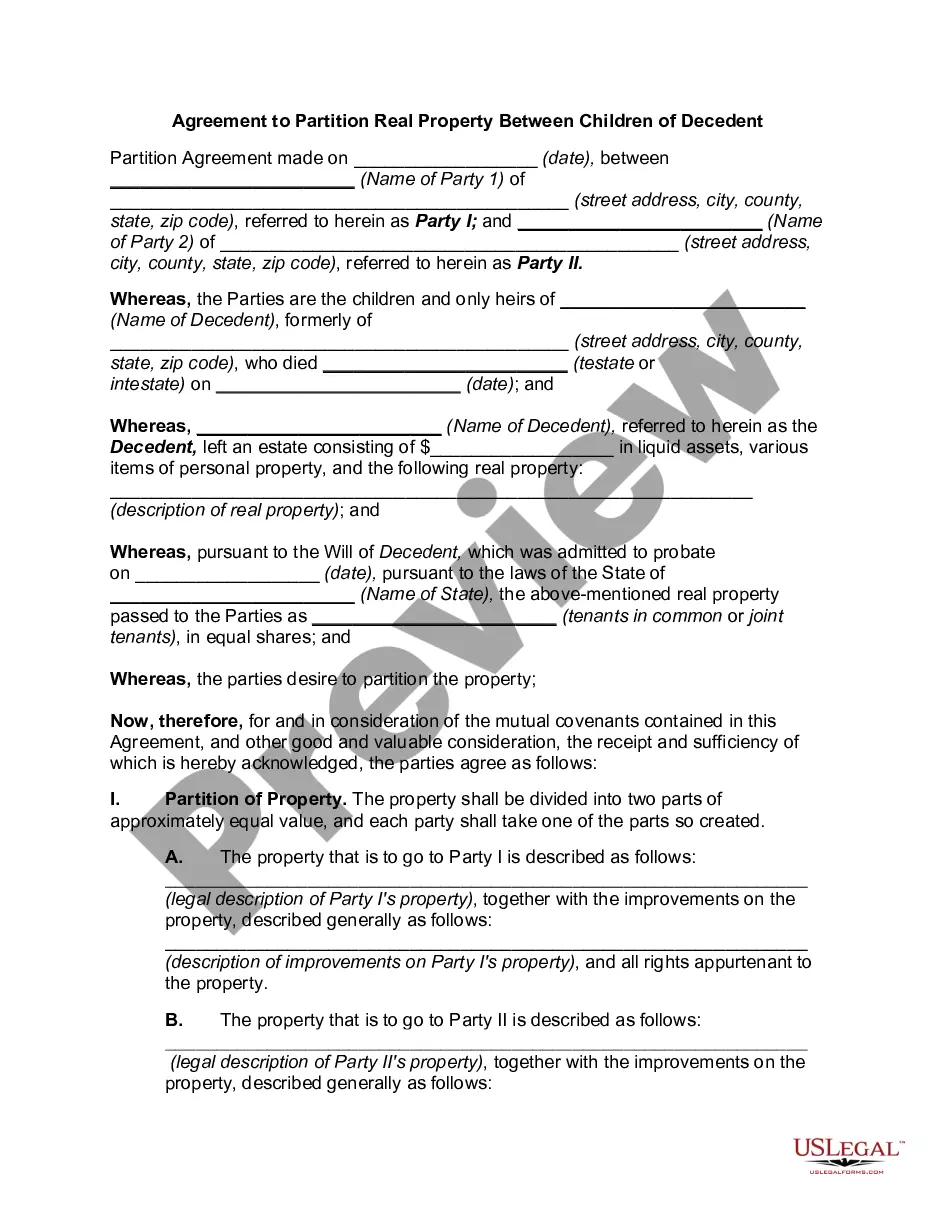
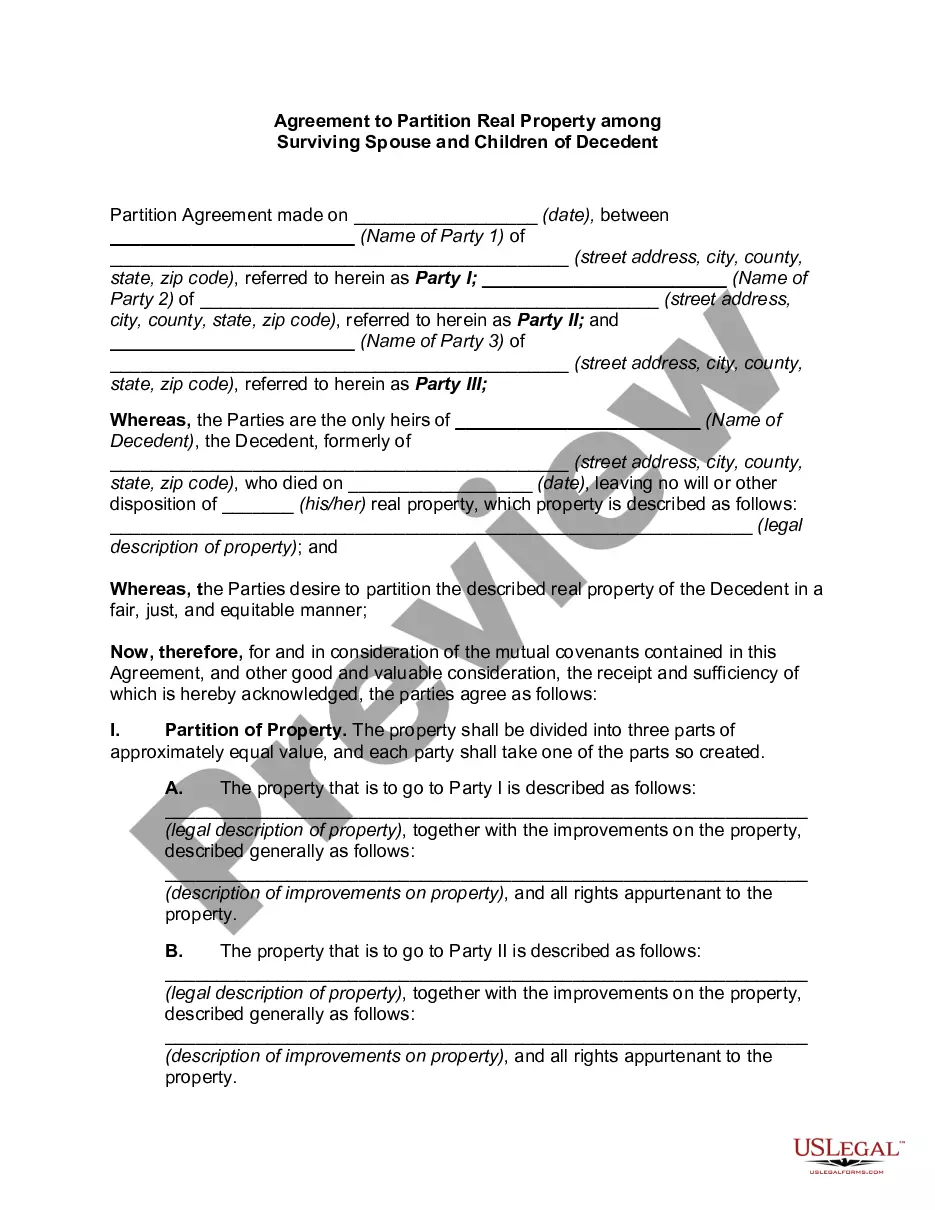
When this form is needed
This form is useful when a decedent has died without leaving a valid will (intestate) and the surviving widow and heirs wish to establish a clear agreement on how to divide the estate. It is commonly used to resolve family disputes over inheritance and to settle claims quickly. Utilize this form when all parties agree to the terms of estate division to avoid potential legal complications in the future.
Intended users of this form
- The widow of the deceased individual.
- All heirs of the deceased, including children and other relatives.
- Family members seeking a formal agreement regarding estate distribution.
- Individuals involved in an intestate succession situation.
How to prepare this document
- Identify all parties involved by entering their full names and contact information.
- Provide details regarding the decedent, including their name and date of death.
- Describe the property owned by the decedent, separating real property from personal property.
- Outline the terms of the widow's compensation and her rights to reside in the property.
- Specify how any personal property will be managed and divided among the heirs.
- Ensure all parties sign the agreement and have it notarized, if required.
Notarization requirements for this form
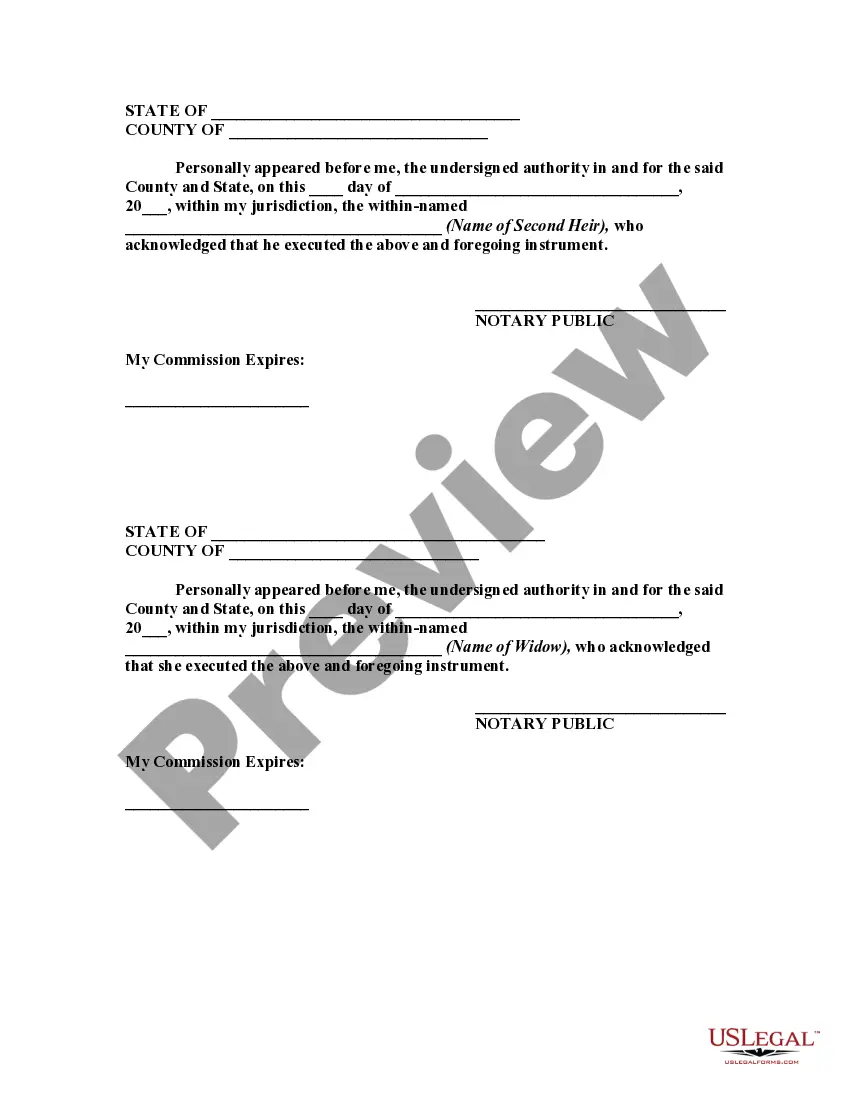
This document requires notarization to meet legal standards. US Legal Forms provides secure online notarization powered by Notarize, allowing you to complete the process through a verified video call, available 24/7.
Get your form ready online
Our built-in tools help you complete, sign, share, and store your documents in one place.
Make edits, fill in missing information, and update formatting in US Legal Forms—just like you would in MS Word.
Download a copy, print it, send it by email, or mail it via USPS—whatever works best for your next step.
Sign and collect signatures with our SignNow integration. Send to multiple recipients, set reminders, and more. Go Premium to unlock E-Sign.
If this form requires notarization, complete it online through a secure video call—no need to meet a notary in person or wait for an appointment.
We protect your documents and personal data by following strict security and privacy standards.

Make edits, fill in missing information, and update formatting in US Legal Forms—just like you would in MS Word.

Download a copy, print it, send it by email, or mail it via USPS—whatever works best for your next step.

Sign and collect signatures with our SignNow integration. Send to multiple recipients, set reminders, and more. Go Premium to unlock E-Sign.

If this form requires notarization, complete it online through a secure video call—no need to meet a notary in person or wait for an appointment.

We protect your documents and personal data by following strict security and privacy standards.
Typical mistakes to avoid
- Failing to include all heirs or parties involved in the estate.
- Not providing a clear description of the property to avoid confusion.
- Leaving out terms related to estate expenses, which can lead to future disputes.
- Not having the agreement notarized if required by state law.
Advantages of online completion
- Convenience of downloading and completing the form at your own pace.
- Editability allows customization to address specific needs and circumstances.
- Reliability of professionally drafted legal documents to meet state requirements.
- Access to support if you have questions while completing the form.
Looking for another form?



Form popularity
FAQ
Heirs are entitled to receive their inheritance.In legal terms, heirs are the next of kin and are the people who would normally benefit if the person died without leaving a will (died intestate.) The succession of intestate heirs is based on direct descendants, such as children or grandchildren.
3 attorney answers All heirs are required to come to an agreement before property may be sold. However, on occasion, a Special Proceeding may be invoked where all of the parties go to court and the court gets involved in the decision.
Generally the heirs don't decide if the house is sold unless somehow it is titled in all their names. If is a specific gift and the will requires it be transferred to all six, and one does not want to sell, that person can buy out the other 5. There of course is always a partition Acton.
Draw lots and take turns picking items. Use colored stickers for each person to indicate what he wants. Get appraisals. Make copies. Use an online service like FairSplit.com to catalog and divide personal property in an estate.
All forms of intestate property are divided among the heirs upon the basis of the fair market value, which is represented by a cash value.In most states, the fair market value of all the deceased's intestate property is added to together to form the intestate estate. It is this value that is divided among the heirs.
In many states, the required period is 120 hours, or five days. In some states, however, an heir need only outlive the deceased person by any period of time -- theoretically, one second would do.
Divide up assets based on their value. Instruct your executor to divide assets equally. Instruct your executor to sell everything and then distribute the proceeds to your beneficiaries equally.
Get the proper estate distribution documents. Verify your role as executor or administrator. Bring the will to the city or county office in charge of estate disbursements. Open a bank account in the name of the decedent's estate. Itemize the property of the estate. Pay the estate's bills.
Unfortunately, there is not much you can do if the person will not agree to settle or sell the home. There may be other legal tactics you can do, but generally, if the property must get sold (or you want to sell the home) and the other heirs do not, then a partition action may be your only option.