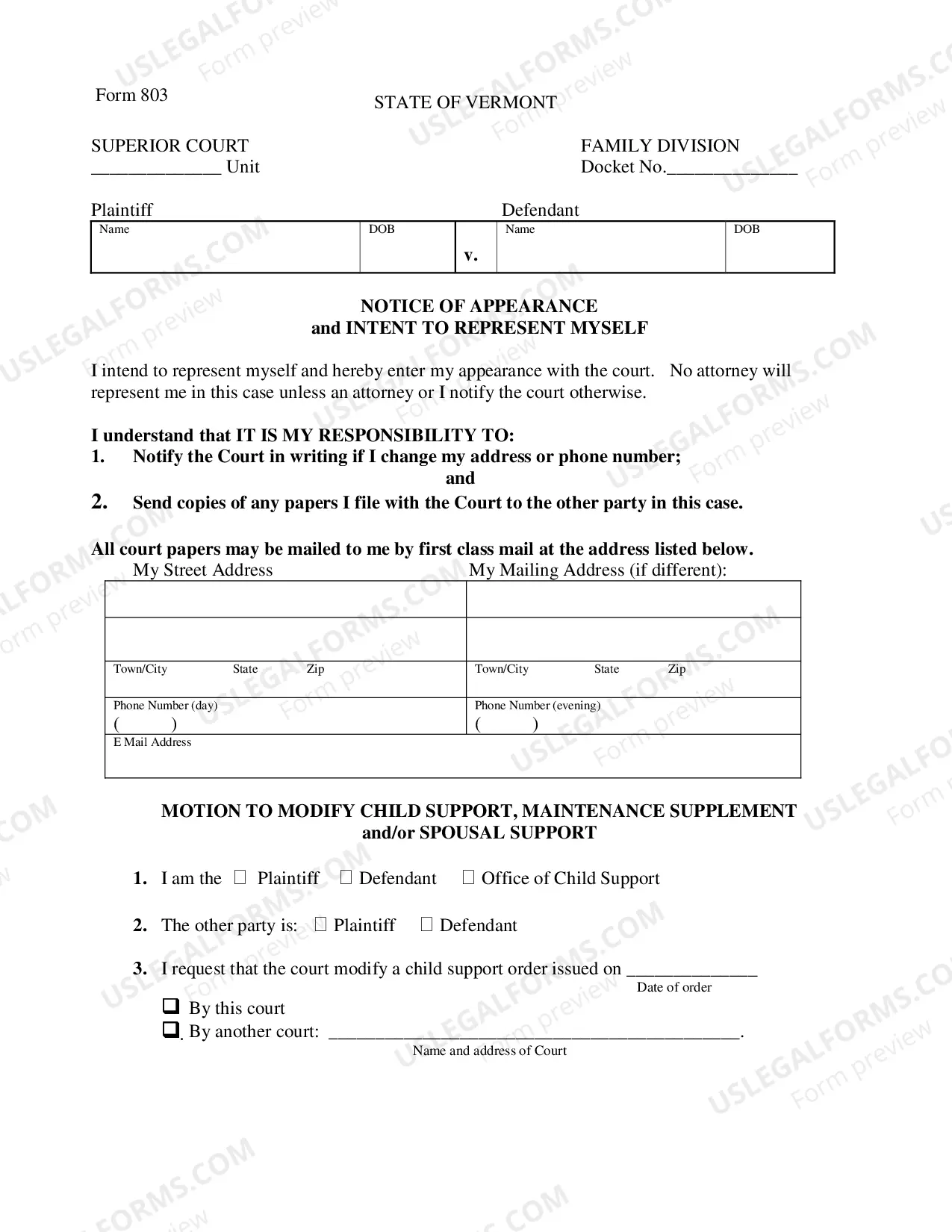
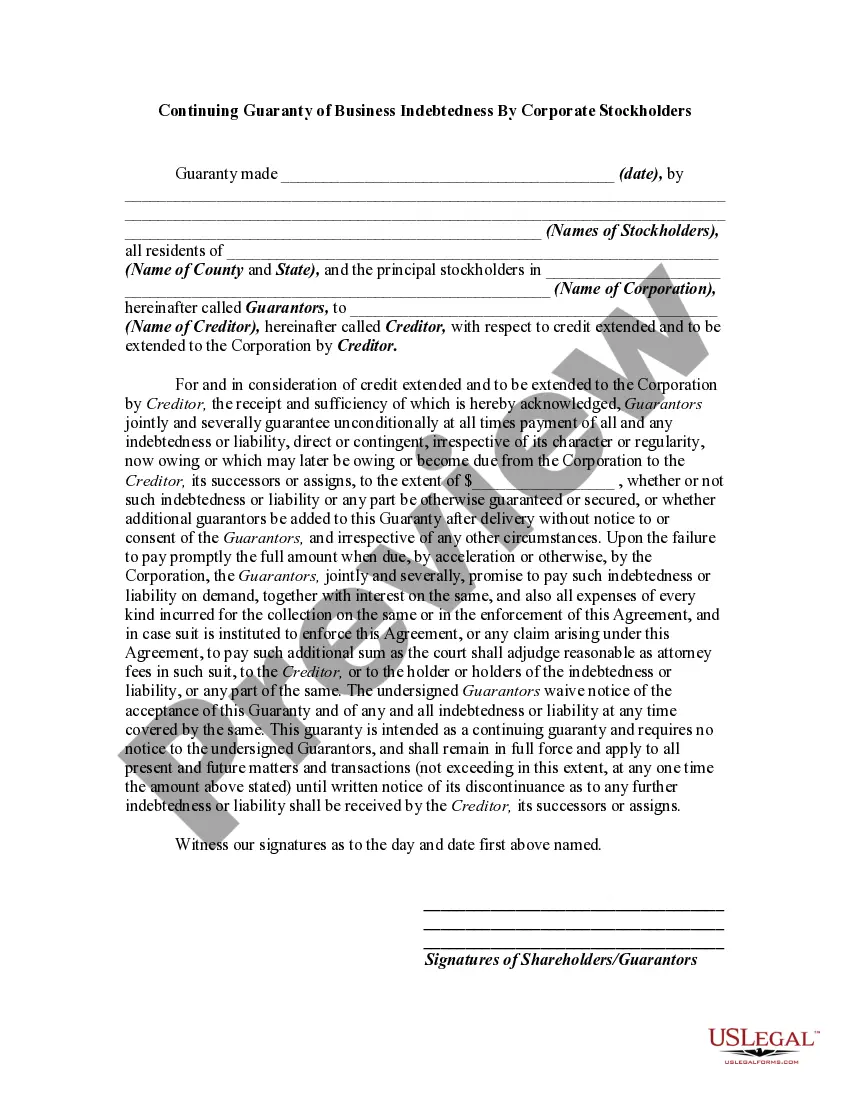
Continuing Guaranty of Business Indebtedness By Corporate Stockholders
What this document covers
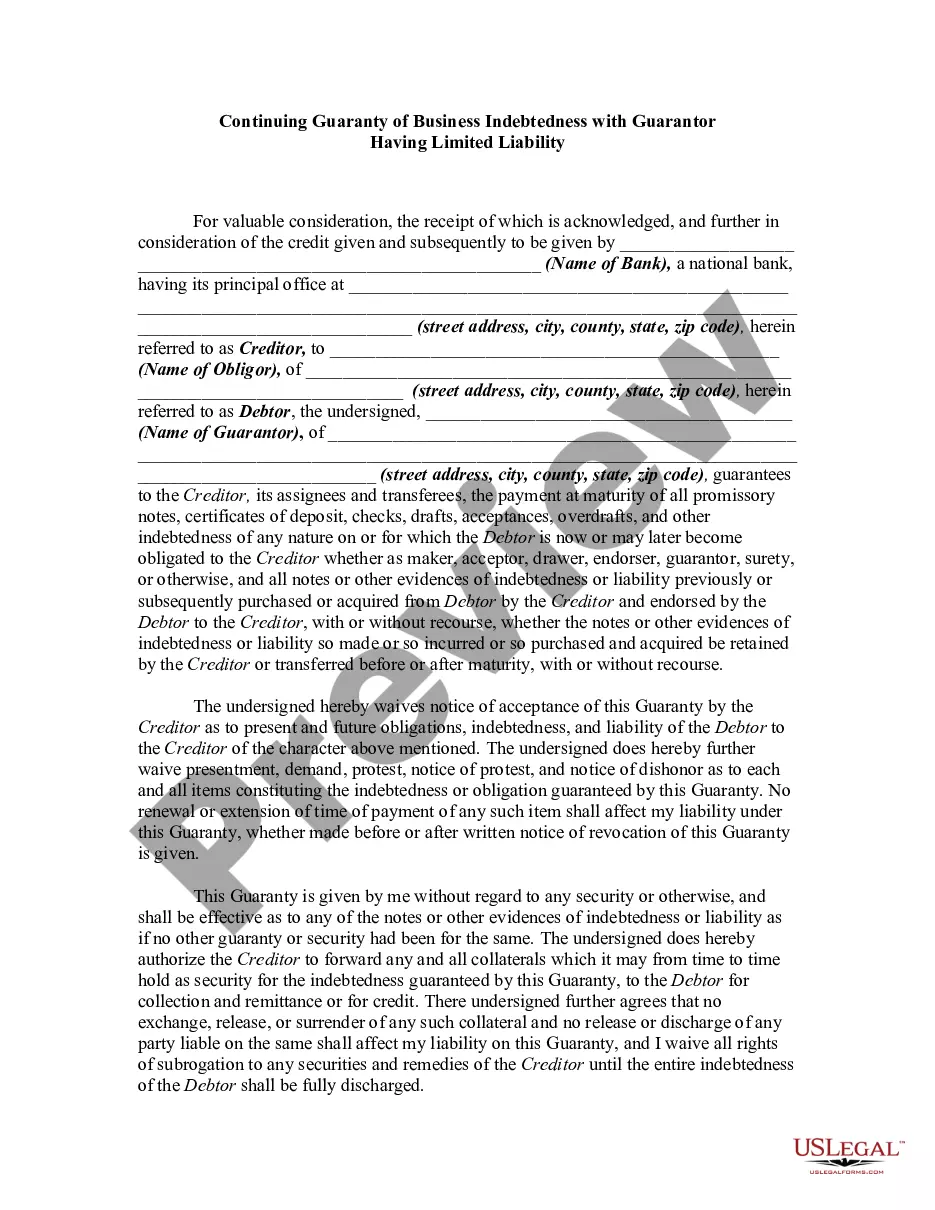
The Continuing Guaranty of Business Indebtedness by Corporate Stockholders is a legal document where shareholders of a corporation personally guarantee the corporation's debts. This form establishes that, in addition to their investment in the company, the individual stockholders are liable for the corporation's financial obligations. This is distinct from standard corporate operations, where shareholders are usually not personally responsible for the business's debts.
Form components explained
- Guarantors' information: Names and residences of stockholders guaranteeing the debt.
- Creditor details: Identification of the creditor extending credit to the corporation.
- Debt specifics: The exact amount of indebtedness being guaranteed and its nature.
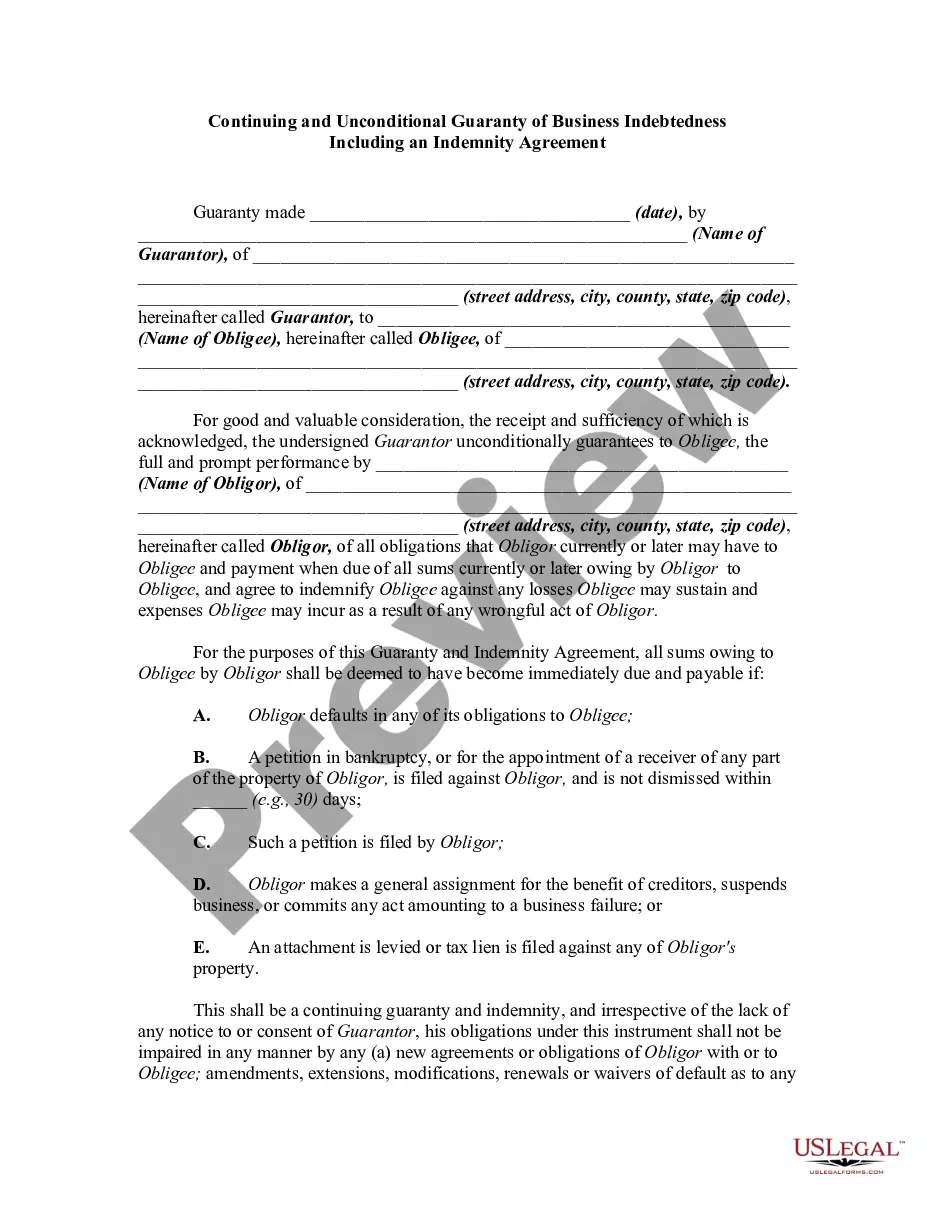
- Joint and several liabilities: Confirmation that each stockholder is independently responsible for the total debt.
- Waiver of notice: A clause stating that guarantors waive any notice upon acceptance of the guaranty.
- Continuing guaranty clause: Indicates that the guaranty applies to present and future liabilities until revoked.
Common use cases
This form should be used when a corporation is seeking credit from a lender, and the shareholders wish to assure the creditor of payment through personal guarantees. It is especially useful in situations where the corporation may be perceived as a higher risk, thus requiring additional security for the debt, or when the creditor specifically requests personal guarantees from the stockholders.
Who needs this form
- Stockholders of a corporation looking to secure financing for their business.
- Creditor institutions requiring personal guarantees from shareholders as part of a credit agreement.
- Corporations experiencing difficulty accessing traditional financing structures.
How to complete this form
- Identify the parties: Enter the names and addresses of the stockholders and creditor.
- Specify the corporation: Fill in the name of the corporation for which the debt is guaranteed.
- Enter the amount: Clearly state the maximum amount of indebtedness guaranteed.
- Provide relevant dates: Include the date of the guaranty agreement.
- Obtain signatures: Collect signatures from all guarantors to finalize the document.
Is notarization required?
This form does not typically require notarization unless specified by local law. However, it is advisable to check your jurisdiction's requirements or consult with a legal professional.
Get your form ready online
Our built-in tools help you complete, sign, share, and store your documents in one place.
Make edits, fill in missing information, and update formatting in US Legal Forms—just like you would in MS Word.
Download a copy, print it, send it by email, or mail it via USPS—whatever works best for your next step.
Sign and collect signatures with our SignNow integration. Send to multiple recipients, set reminders, and more. Go Premium to unlock E-Sign.
If this form requires notarization, complete it online through a secure video call—no need to meet a notary in person or wait for an appointment.
We protect your documents and personal data by following strict security and privacy standards.

Make edits, fill in missing information, and update formatting in US Legal Forms—just like you would in MS Word.

Download a copy, print it, send it by email, or mail it via USPS—whatever works best for your next step.

Sign and collect signatures with our SignNow integration. Send to multiple recipients, set reminders, and more. Go Premium to unlock E-Sign.

If this form requires notarization, complete it online through a secure video call—no need to meet a notary in person or wait for an appointment.

We protect your documents and personal data by following strict security and privacy standards.
Avoid these common issues
- Failing to identify all stockholders who should sign the guaranty.
- Not specifying the total amount of the guarantee clearly.
- Omitting signatures, which can invalidate the guaranty.
- Incorrectly filling in creditor details, leading to potential disputes.
Why use this form online
- Immediate access: Download the form conveniently and fill it out at your own pace.
- Editability: Easily customize the document to fit your specific situation.
- Legality: Forms are drafted by licensed attorneys to ensure compliance with legal standards.
Legal use & context
This guaranty form binds stockholders to the debts of the corporation, making them responsible if the corporation defaults. It's important to understand that while this adds a layer of security for creditors, it also puts stockholders at financial risk. The enforceability of the guaranty depends on the proper execution of the document in accordance with state laws.
What to keep in mind
- The form allows stockholders to personally guarantee corporate debts.
- It is essential for securing credit for the corporation.
- All parties must properly identify themselves and agree to the terms.
- Careful completion and understanding of responsibilities are crucial to avoid legal issues.
Looking for another form?
Form popularity
FAQ
A corporate guarantee is an official letter where a guarantor. They are usually a form of insurance for the lender. becomes responsible for handling debt payments or takes overall responsibility for debt repayment in case the debtor defaults on the loan.
A guarantee is a put option on the assets of the firm with an exercise price equal to the face value of the debt. Consider the following: Let 'V' be the value of a firm and 'F' be the face value of its debt. For simplicity, assume there are no coupon payments and all the debt mature on a specified date.
Generally, shareholders are not personally liable for the debts of the corporation. Creditors can only collect on their debts by going after the assets of the corporation.This is called piercing the corporate veil.
A continuing guaranty is an agreement by the guarantor to be liable for the obligations of someone else to the lender, even if there are several different obligations that are made, renewed or repaid over time. In contrast, a specific guaranty is limited only to one individual transaction.
A guaranty of the payment of an obligation, without words of limitation or condition, is construed as an absolute or unconditional guaranty.
Specific Guarantee: A specific guarantee is for a single debt or any specified transaction. It comes to an end when such debt has been paid.A continuing guarantee applies to all the transactions entered into by the principal debtor until it is revoked by the surety.
As per Section 186 a company cannot give any loan or guarantee or provide security in connection with a loan to any other body corporate or person: exceeding sixty per cent. of its paid-up share capital, free reserves and securities premium account or one hundred per cent.
A continuing guarantee is said to be revoked as regards to the future transactions to be entered between the debtor and the creditor, in the following ways: By notice of revocation by the surety (Section 130) By death of the surety (Section 131)
Continuing Guarantee: It is a guarantee for a series of transactions. According to Section 129, continuing guarantee extends to a series of transactions. The liability of surety in this case extends to a number of transactions and he becomes liable for the unpaid balance at the end of the. guarantee.