Authorization to School for Emergency Medical Treatment for Minor - Patient Consent
About this form
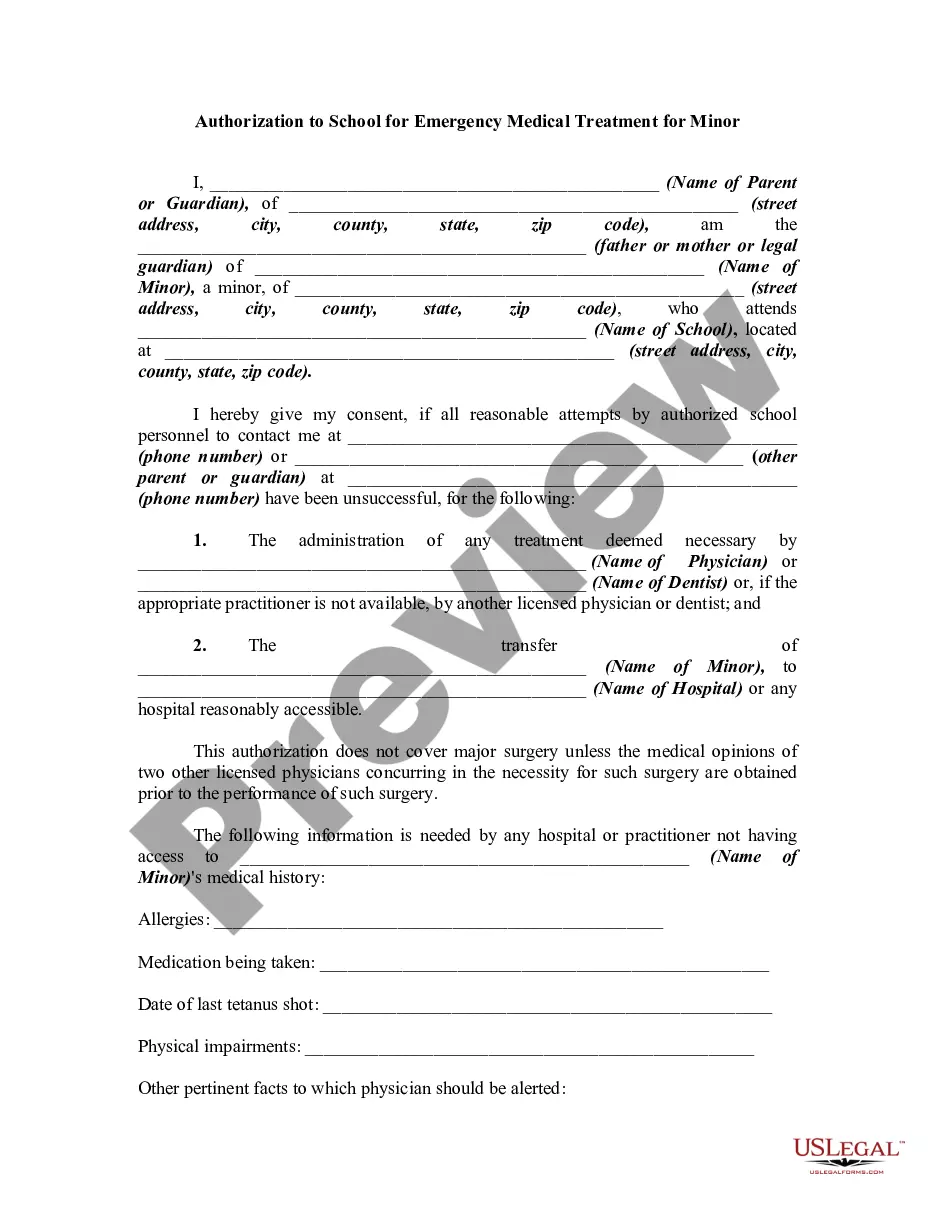
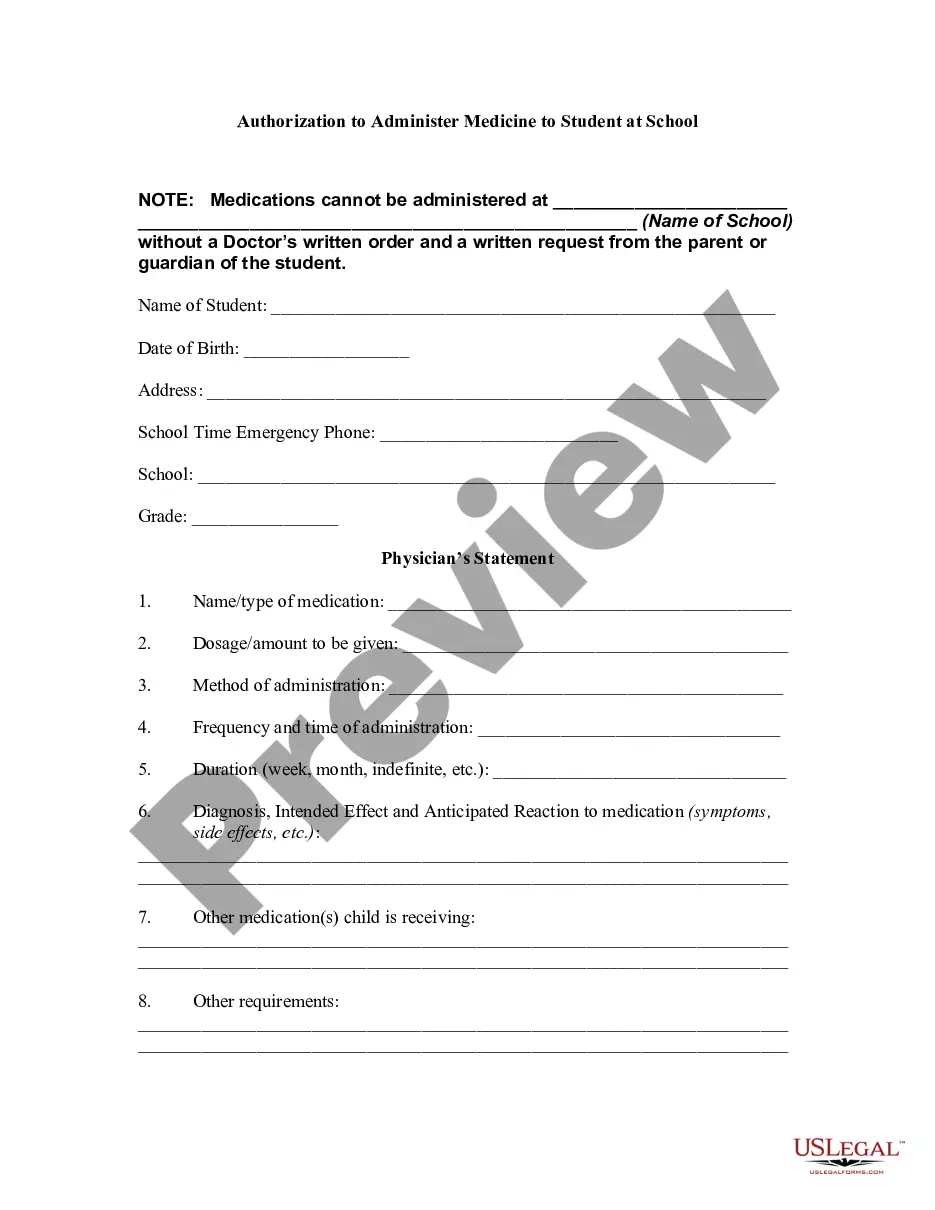
The Authorization to School for Emergency Medical Treatment for Minor - Patient Consent is a legal document that allows parents or guardians to grant permission for a minor child to receive emergency medical treatment while at school. This form is essential for ensuring that health care providers can act quickly in emergencies when parents or guardians may not be reachable. It differs from other medical authorization forms by specifically addressing situations occurring within a school setting.
Main sections of this form
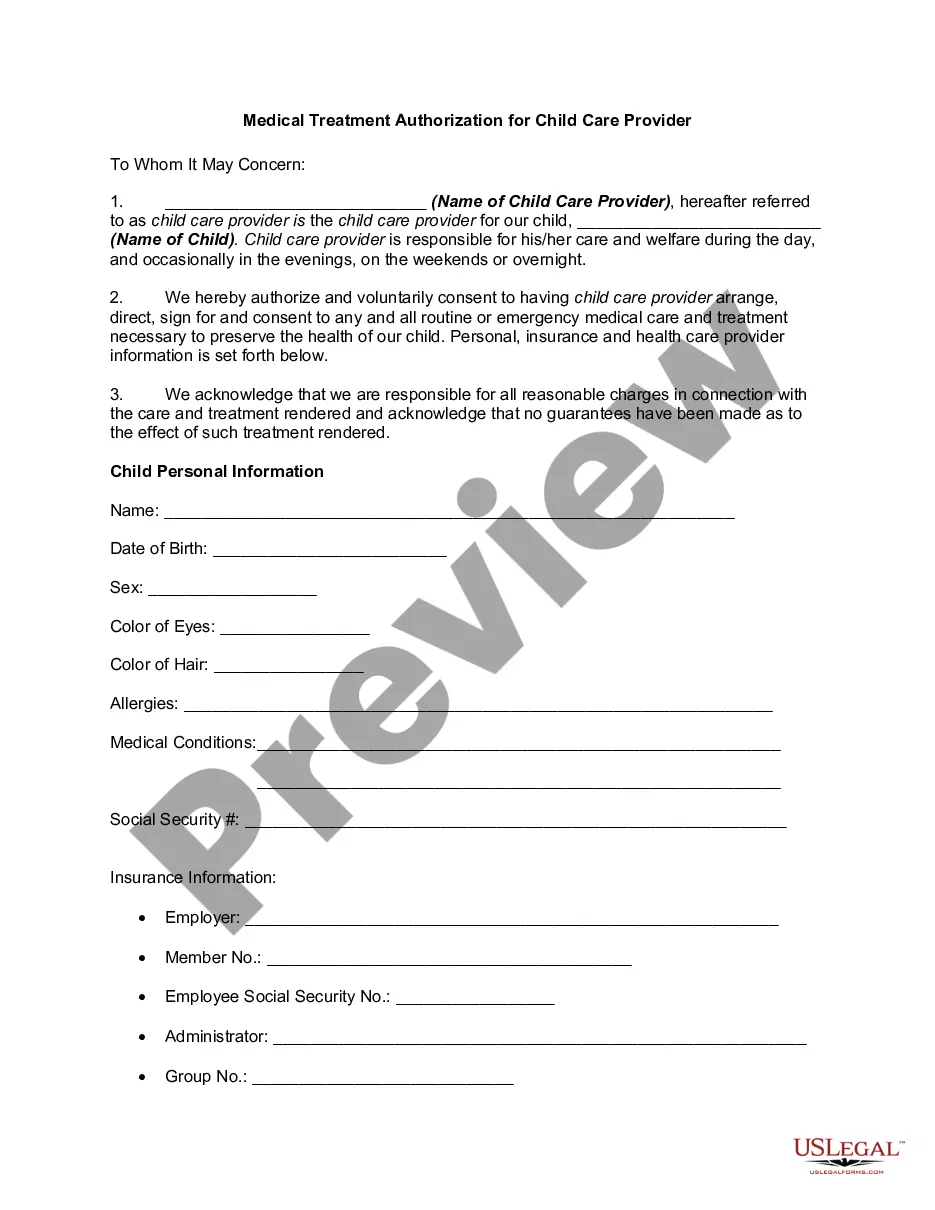
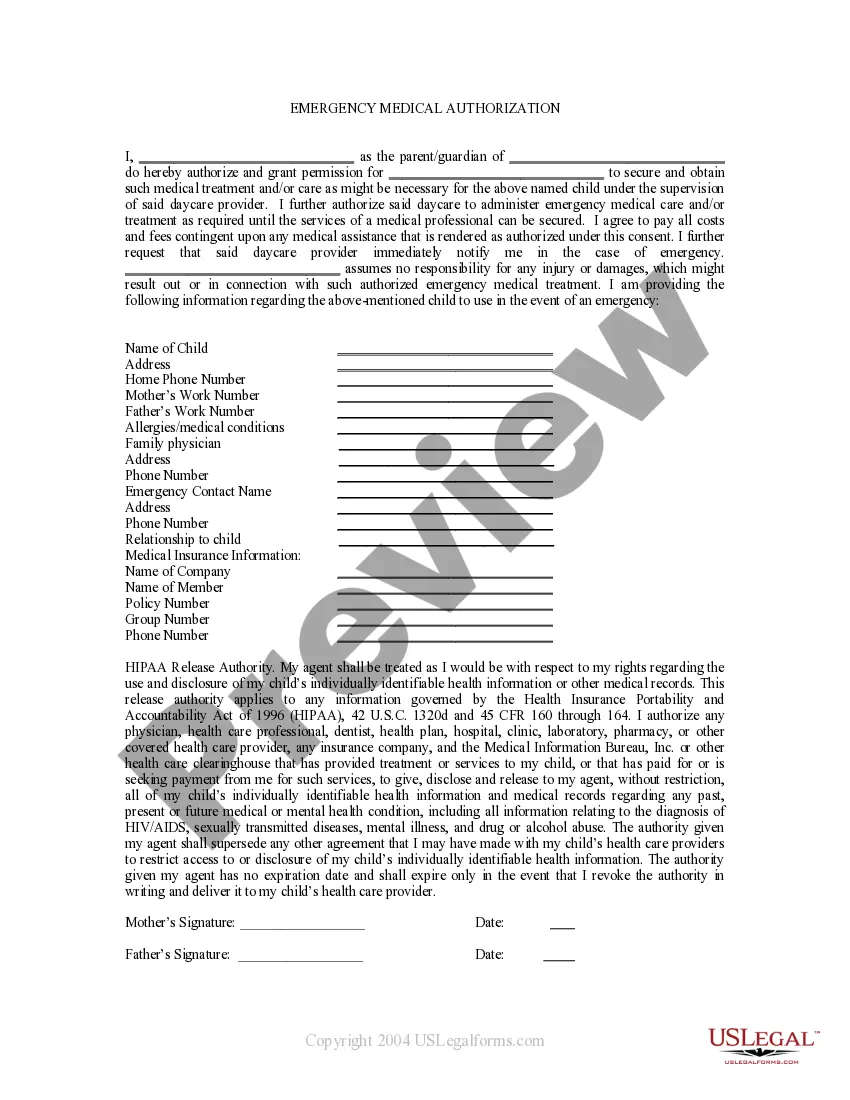
- Identification of the parent or guardian authorizing treatment.
- Details of the minor child, including name and school location.
- Consent for medical treatment by specific health professionals.
- Instructions for emergency contacts if the parent or guardian is unavailable.
- Health information about the minor, including allergies and medications.
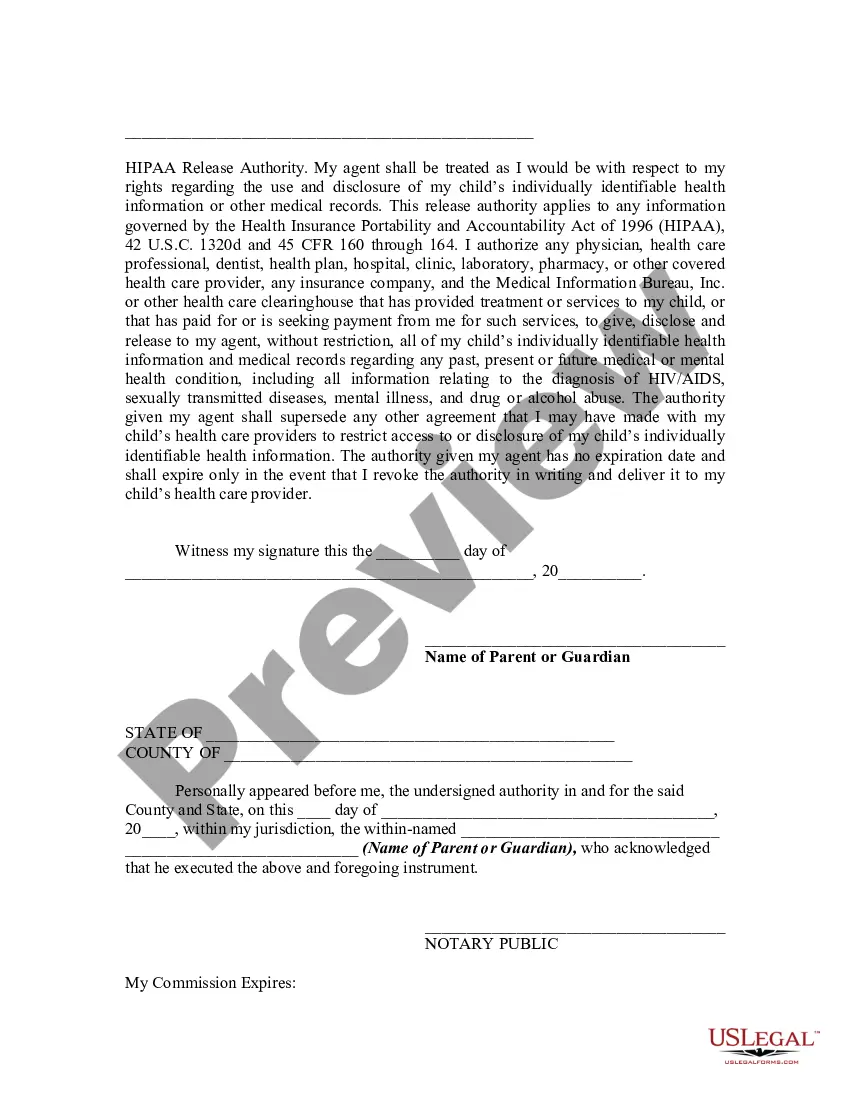
- HIPAA release authority for the disclosure of medical information.

When to use this form
This form should be used when a minor child is enrolled in a school and parents or guardians want to ensure that medical personnel can provide necessary treatment in case of an emergency. Situations that may require this form include accidents during school activities, sudden illnesses, or any event where a child requires immediate medical attention but the parent or guardian cannot be contacted.
Who can use this document
- Parents or guardians of minor children attending school.
- Individuals responsible for a child's care in educational settings.
- School administrators who need documented consent for emergency protocols.
Completing this form step by step
- Identify the parent or guardian and provide their contact information.
- Enter the minor childâs name and school details.
- Specify the health professionals authorized to administer treatment.
- List emergency contacts, including their phone numbers.
- Fill in necessary health information about the minor.
- Sign and date the form, and have it notarized if required.
Notarization guidance
This form does not typically require notarization unless specified by local law. It is always a good practice to check state requirements to ensure the validity of the document.
Get your form ready online
Our built-in tools help you complete, sign, share, and store your documents in one place.
Make edits, fill in missing information, and update formatting in US Legal Forms—just like you would in MS Word.
Download a copy, print it, send it by email, or mail it via USPS—whatever works best for your next step.
Sign and collect signatures with our SignNow integration. Send to multiple recipients, set reminders, and more. Go Premium to unlock E-Sign.
If this form requires notarization, complete it online through a secure video call—no need to meet a notary in person or wait for an appointment.
We protect your documents and personal data by following strict security and privacy standards.

Make edits, fill in missing information, and update formatting in US Legal Forms—just like you would in MS Word.

Download a copy, print it, send it by email, or mail it via USPS—whatever works best for your next step.

Sign and collect signatures with our SignNow integration. Send to multiple recipients, set reminders, and more. Go Premium to unlock E-Sign.

If this form requires notarization, complete it online through a secure video call—no need to meet a notary in person or wait for an appointment.

We protect your documents and personal data by following strict security and privacy standards.
Common mistakes to avoid
- Failing to include accurate contact information for emergency contacts.
- Leaving out critical health information about the minor.
- Not specifying the health professionals authorized to treat the child.
- Neglecting to sign or date the form.
Advantages of online completion
- Instant access: Download and print the form at your convenience.
- Editability: Fill in the form digitally before printing.
- Reliability: Access attorney-drafted templates designed for specific needs.
Legal use & context
- The form is legally binding when signed and executed correctly.
- Provides necessary authority for medical personnel to act in emergencies.
- May be used in conjunction with other medical consent forms as needed.
Key takeaways
- The form is essential for ensuring children's access to immediate medical treatment when the parent cannot be reached.
- Parents must provide specific health information and authorize medical personnel to act in emergencies.
- State laws may influence the requirements for this form, so local consultation is recommended.
Looking for another form?
Form popularity
FAQ
If you are under 16 you can go to see a doctor without your parents or carer but you would need them to register you at your GP surgery so that you can book appointments. When you see the doctor anything you discuss will be private.
The law authorizes parent(s) or guardian(s) of a minor (anyone under the age of 18) to give informed consent for most medical decisions on behalf of the child. Laws vary from state to state, but here is a general approach to the situation.
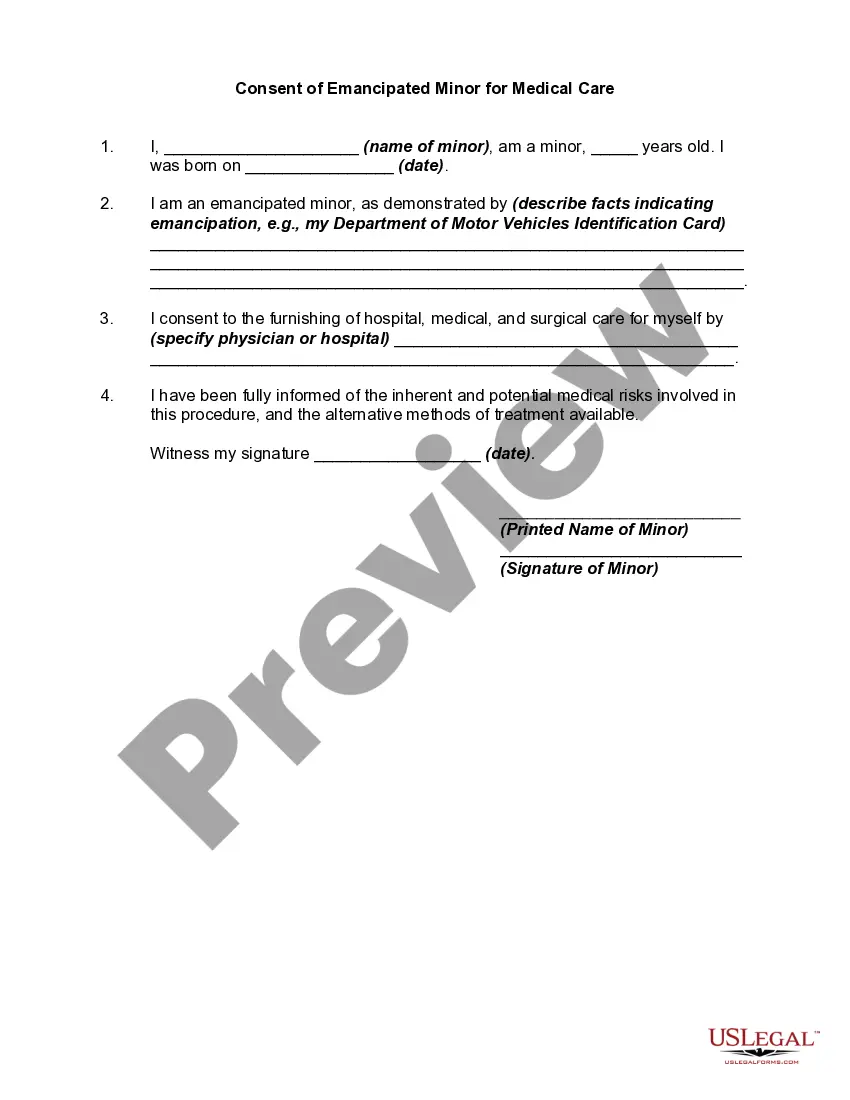
MINOR MUST BE EMANCIPATED (GENERALLY 14 YEARS OF AGE OR OLDER) LAW/DETAILS MAY/MUST THE HEALTH CARE PROVIDER INFORM A PARENT ABOUT THIS CARE OR DISCLOSE RELATED MEDICAL INFORMATION TO THEM? An emancipated minor may consent to medical, dental and psychiatric care.
Since the 1990s, California law has afforded minors the right to consent to certain types of medical care, such as the diagnosis and treatment of sexually transmitted diseases, without the consent of their parent or guardian.
The most common age of consent is 16, which is a common age of consent in most other Western countries.States where the age of consent is 18 (13): Arizona, California, Delaware, Florida, Idaho, Kentucky, North Dakota, Oregon, Tennessee, Texas, Utah, Virginia, and Wisconsin.
A care provider may perform a routine test or treatment on a minor who is over the age of 14 without parental consent and without accompaniment, on condition that the minor him/herself gives informed consent for the medical procedure.
Although most adolescent patients younger than 18 years cannot legally provide informed consent, they can and should provide their assent for decisions that affect their health, life, and death.