Partial Assignment of Life Insurance Policy as Collateral
What is this form?
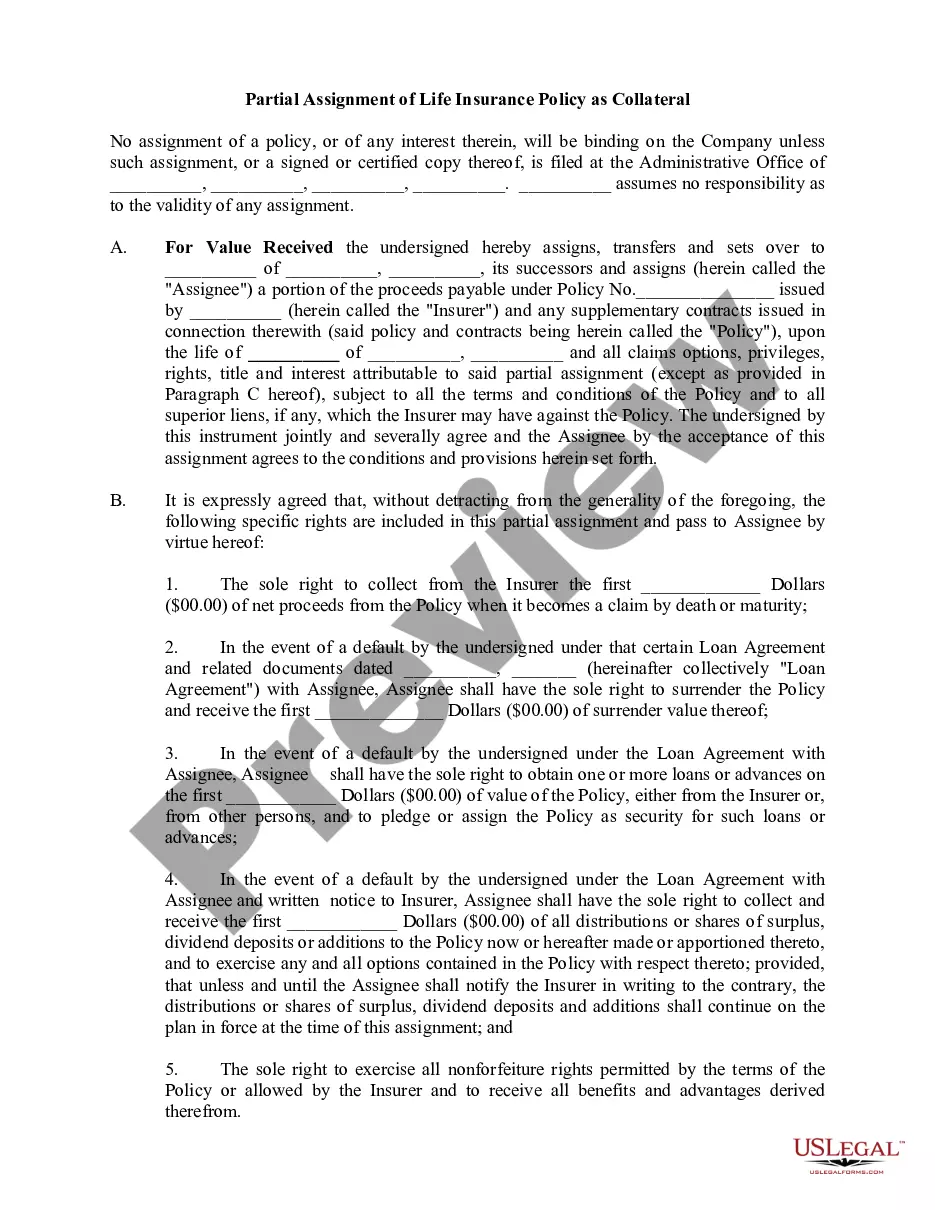
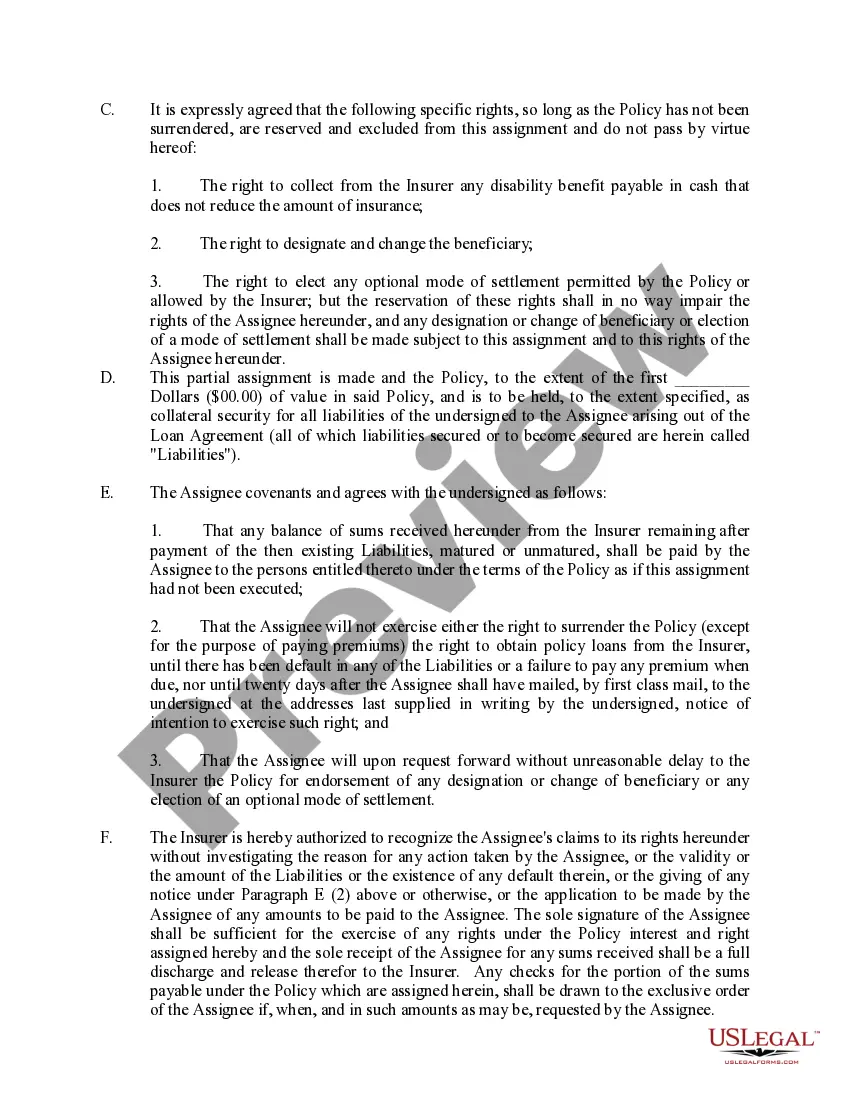
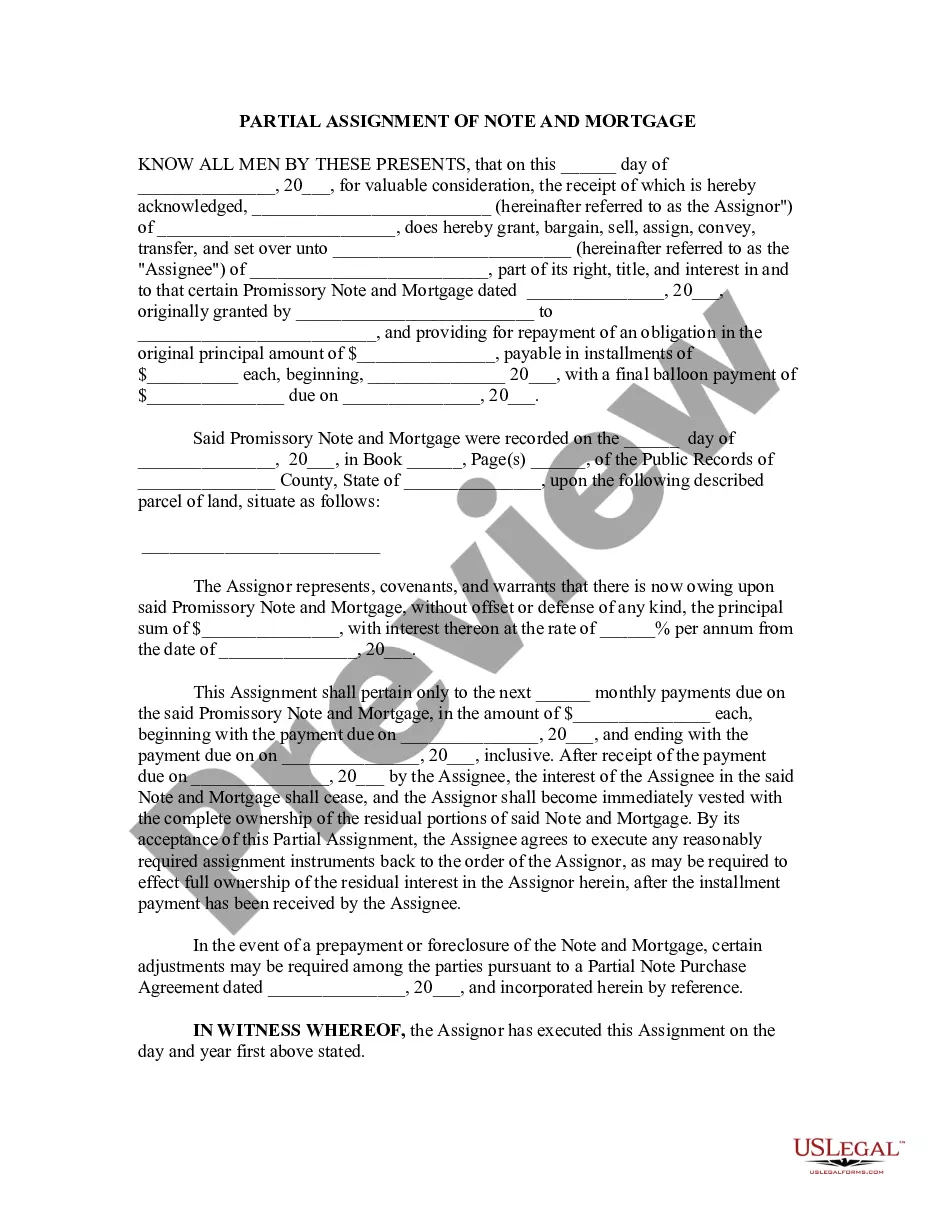
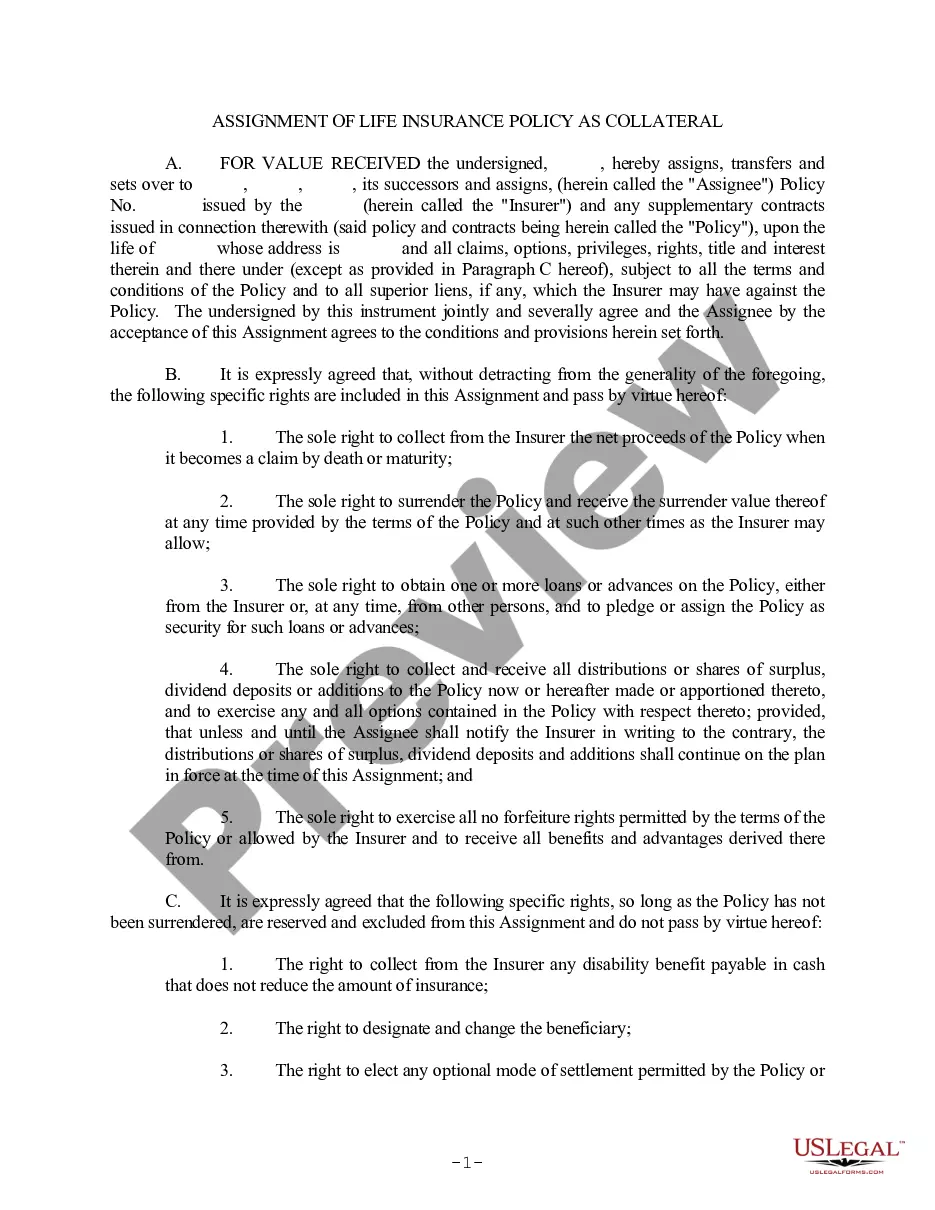
The Partial Assignment of Life Insurance Policy as Collateral is a legal document that allows a policyholder to assign a portion of their life insurance policy proceeds as collateral for a loan. This means that if the policyholder passes away before the loan is repaid, the loan can be settled using the assigned insurance proceeds. This form is specific in nature and is distinct from full assignments, as it only covers a part of the policy value, allowing the policyholder to retain some rights over the policy while offering security to the lender.
Form components explained
- Identification of the parties involved, including the policyholder and the lender (assignee).
- Details about the life insurance policy, including policy number and insurer information.
- Description of the specific rights being assigned to the lender, such as proceeds upon death or loan default.
- Provisions regarding the rights retained by the policyholder, such as beneficiary designations.
- Conditions under which the lender can exercise their rights to the policy.
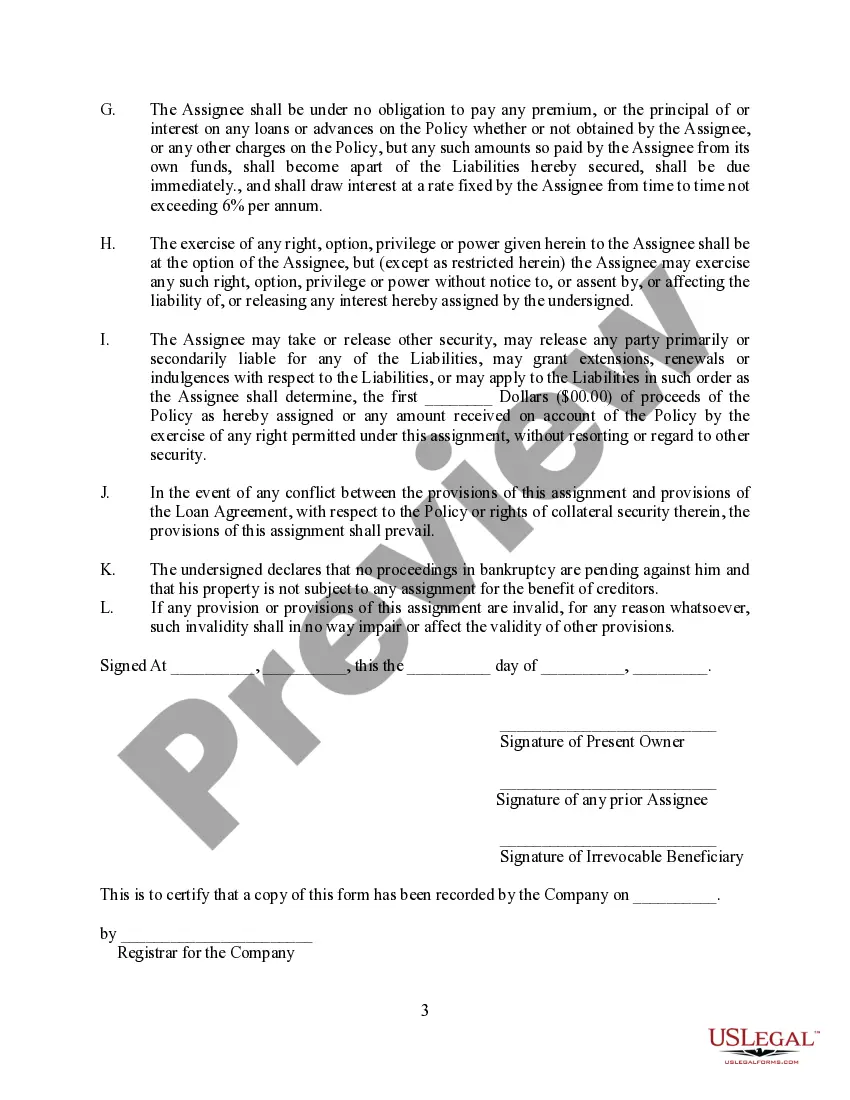
- Signatures of the policyholder, any prior assignees, and potentially an irrevocable beneficiary.
Common use cases
This form is typically used when an individual takes out a loan and offers part of their life insurance policy as collateral. It is particularly useful in situations where the lender requires assurance of repayment in the event of the borrower's death. If you are seeking to secure a loan and have a life insurance policy, this form ensures that the proceeds can be used to satisfy any outstanding debts, providing peace of mind for both parties involved.
Who should use this form
- Policyholders who have a life insurance policy and are taking out a loan.
- Lenders or financial institutions requiring collateral for loans.
- Individuals wanting to secure their loans while retaining some control over their life insurance policies.
Steps to complete this form
- Identify and provide the names and addresses of the parties involved: the policyholder and the lender.
- Fill out the policy details, including the policy number and the insurer's name.
- Clearly specify the amount of proceeds being assigned as collateral.
- Ensure to retain any desired rights as the policyholder, detailing them within the form.
- Sign the document in the presence of a notary if required and have any other required parties sign as well.
Is notarization required?
Notarization is required for this form to take effect. Our online notarization service, powered by Notarize, lets you verify and sign documents remotely through an encrypted video session, available 24/7.
Get your form ready online
Our built-in tools help you complete, sign, share, and store your documents in one place.
Make edits, fill in missing information, and update formatting in US Legal Forms—just like you would in MS Word.
Download a copy, print it, send it by email, or mail it via USPS—whatever works best for your next step.
Sign and collect signatures with our SignNow integration. Send to multiple recipients, set reminders, and more. Go Premium to unlock E-Sign.
If this form requires notarization, complete it online through a secure video call—no need to meet a notary in person or wait for an appointment.
We protect your documents and personal data by following strict security and privacy standards.

Make edits, fill in missing information, and update formatting in US Legal Forms—just like you would in MS Word.

Download a copy, print it, send it by email, or mail it via USPS—whatever works best for your next step.

Sign and collect signatures with our SignNow integration. Send to multiple recipients, set reminders, and more. Go Premium to unlock E-Sign.

If this form requires notarization, complete it online through a secure video call—no need to meet a notary in person or wait for an appointment.

We protect your documents and personal data by following strict security and privacy standards.
Mistakes to watch out for
- Failing to provide accurate policy information, which can result in invalid assignments.
- Not specifying the exact dollar amount assigned, leading to potential disputes.
- Not retaining necessary rights, such as the ability to change beneficiaries.
- Neglecting to have the form notarized if state laws require it.
- Not signing the form before the required witnesses or notary.
Key takeaways
- The Partial Assignment of Life Insurance Policy as Collateral is essential for securing loans with life insurance proceeds.
- It allows the policyholder to maintain certain rights while providing security to the lender.
- Accuracy is crucial; ensure all details related to the policy and parties involved are correct.
- Consult state-specific regulations to ensure compliance with local laws.
Looking for another form?

Form popularity
FAQ
Policy loans are available on most permanent cash value life insurance policies.The policy's cash value acts as collateral for the policy loan. If you never pay back the policy loan during your lifetime, the amount is deducted from the death benefit when you pass awaymeaning that your beneficiaries repay the loan.
How much you can borrow from a life insurance policy varies by insurer, but the maximum policy loan amount is typically at least 90% of the cash value, with no minimum amount. When you take out a policy loan, you're not removing money from the cash value of your account.
You can only borrow against a permanent or whole life insurance policy. Policy loans are borrowed against the death benefit, and the insurance company uses the policy as collateral for the loan.
A collateral assignment of life insurance is a method of securing a loan by using a life insurance policy as collateral. If you pass away before the loan is repaid, the lender can collect the outstanding loan balance from the death benefit of your life insurance policy.
Collateral refers to the cash value in a life insurance policy whole life or universal life policies that build up cash value but it does not apply to term policies.And the policy has to stay current, meaning you need to keep up with paying all the necessary premiums for the life of the loan.
A collateral assignment of life insurance is a conditional assignment appointing a lender as the primary beneficiary of a death benefit to use as collateral for a loan. If the borrower is unable to pay, the lender can cash in the life insurance policy and recover what is owed.
If the policy is transferred under an absolute assignment, the transfer is irrevocable and the assignee receives full control of the policy.If the policy is transferred as a means of establishing security on a debt, it is considered a collateral assignment.
A collateral assignment is temporary. For example, you take out a loan from the bank who asks you to provide life insurance to pay off the loan if you should die. Since you already have life insurance, you direct your insurer to pay off the loan out of the proceeds of your life policy.