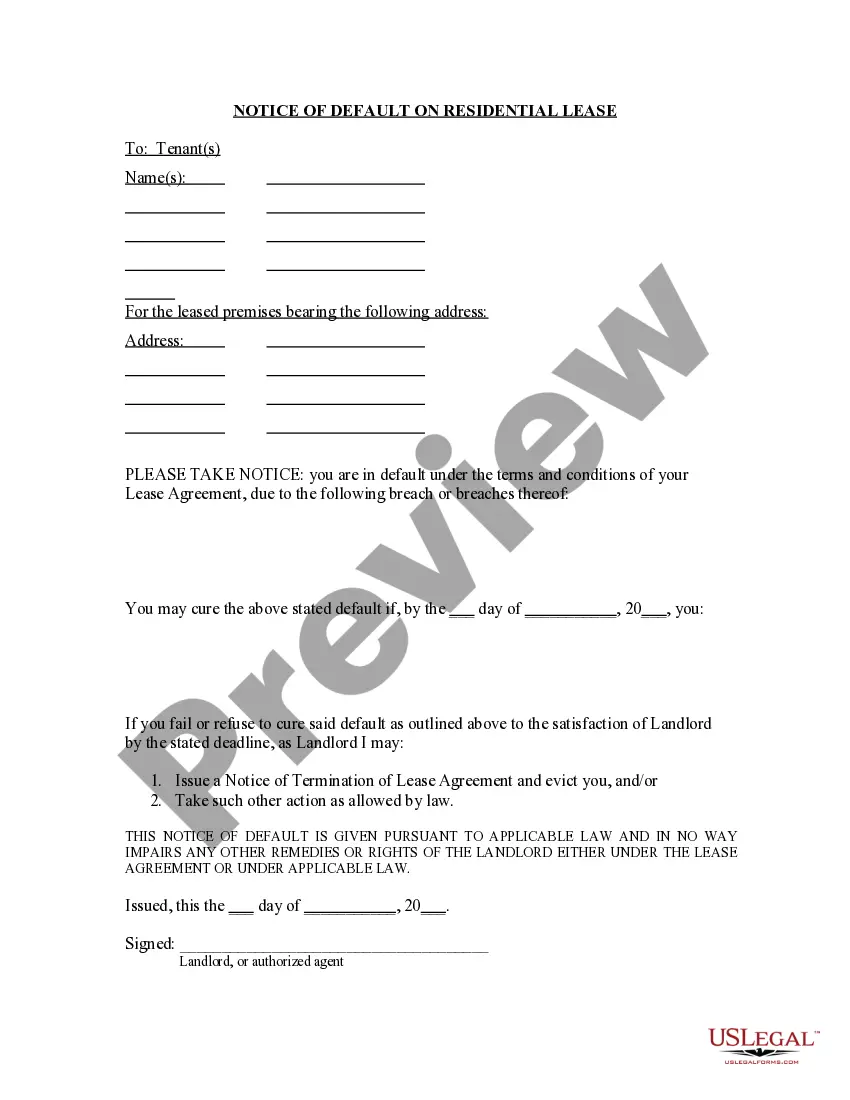
Notice of Contest of Lien
What this document covers
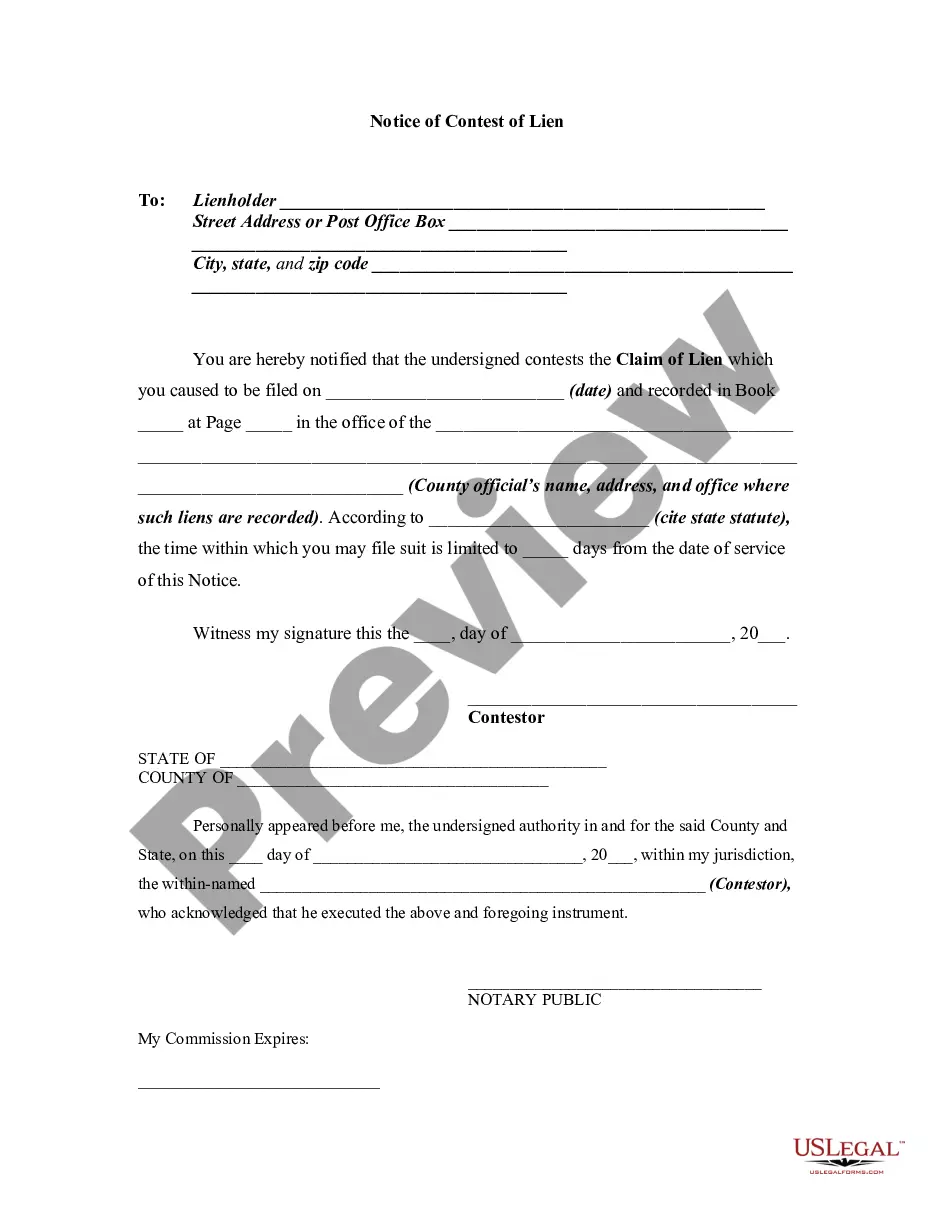
The Notice of Contest of Lien is a legal document used to formally dispute a lien filed against a property. This form notifies the lienholder that the listed party contests the lien's validity. It serves as a crucial step in a legal process that may lead to the resolution of disputes regarding property ownership and claims. Unlike other forms related to liens, this document specifically addresses the contesting of liens rather than filing or responding to them.
Form components explained
- Contact information for the lienholder, including name, address, and company.
- Date of the lien's filing and the book and page number where it is recorded.
- Citation of the relevant state statute that governs the contesting of liens.
- Time frame within which the lienholder must file a lawsuit in response to the notice.
- Signature of the contestor and notary verification.

Situations where this form applies
This form should be used when an individual or entity believes a lien filed against their property is invalid or unjust. Common scenarios include disputes over unpaid debts, issues with service providers, or discrepancies in property claims. Filing this notice is vital to preserving the right to resolve the dispute in court, as it sets the formal contestation process in motion.
Who this form is for
The Notice of Contest of Lien is intended for:
- Property owners who believe they are incorrectly named in a lien.
- Contractors or service providers who have disputes with clients over unpaid work.
- Individuals or businesses facing legal claims attached to their property.
Completing this form step by step
- Identify the lienholder's name and address to whom the notice is addressed.
- Enter the date the lien was filed and the corresponding book and page number.
- Cite the pertinent state statute regarding contesting liens.
- Specify the deadline by which the lienholder must respond or file suit.
- Sign the form and have it notarized as required.
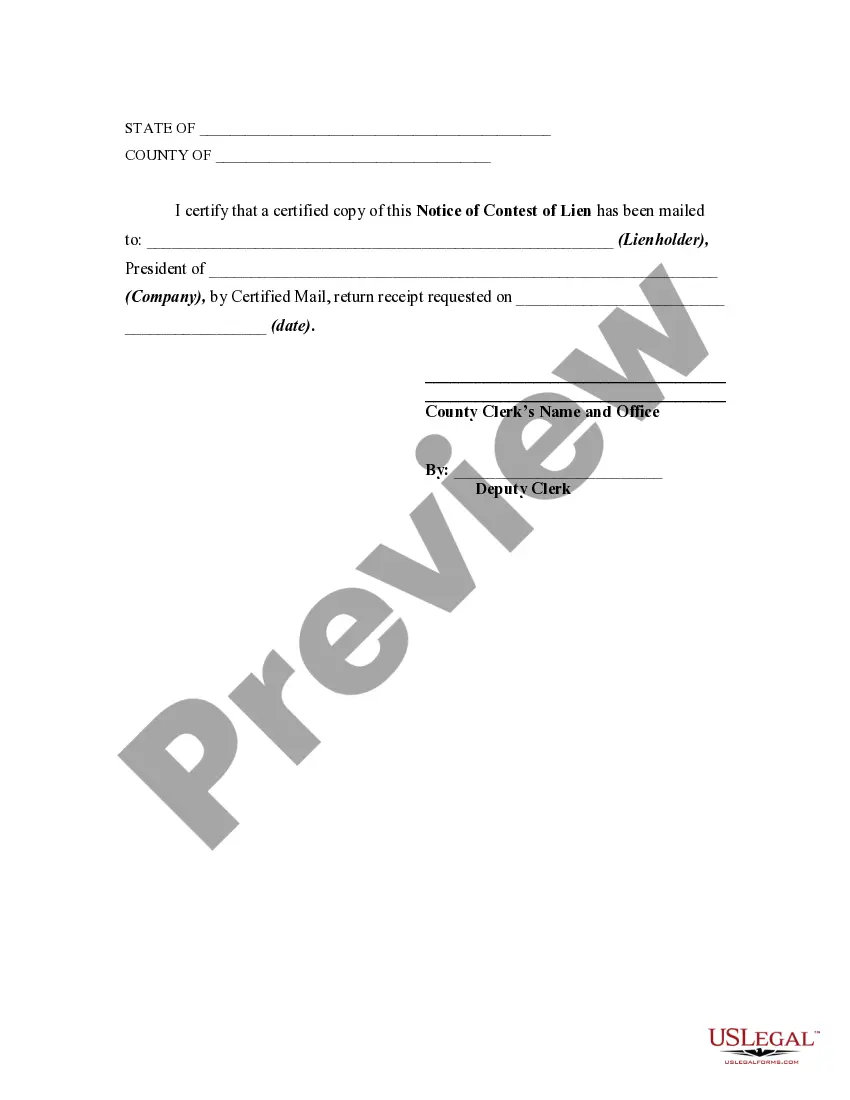
- Prepare a certified copy for mailing to the lienholder and keep a record of the mailing date.
Notarization guidance
Notarization is required for this form to take effect. Our online notarization service, powered by Notarize, lets you verify and sign documents remotely through an encrypted video session, available 24/7.
Get your form ready online
Our built-in tools help you complete, sign, share, and store your documents in one place.
Make edits, fill in missing information, and update formatting in US Legal Forms—just like you would in MS Word.
Download a copy, print it, send it by email, or mail it via USPS—whatever works best for your next step.
Sign and collect signatures with our SignNow integration. Send to multiple recipients, set reminders, and more. Go Premium to unlock E-Sign.
If this form requires notarization, complete it online through a secure video call—no need to meet a notary in person or wait for an appointment.
We protect your documents and personal data by following strict security and privacy standards.

Make edits, fill in missing information, and update formatting in US Legal Forms—just like you would in MS Word.

Download a copy, print it, send it by email, or mail it via USPS—whatever works best for your next step.

Sign and collect signatures with our SignNow integration. Send to multiple recipients, set reminders, and more. Go Premium to unlock E-Sign.

If this form requires notarization, complete it online through a secure video call—no need to meet a notary in person or wait for an appointment.

We protect your documents and personal data by following strict security and privacy standards.
Mistakes to watch out for
- Failing to include accurate details about the lienholder and lien.
- Not adhering to the specified timeline for submitting the notice.
- Omitting the required notarization, which can invalidate the form.
Why complete this form online
- Convenience of accessing and completing the form from home.
- Editable templates allow for accurate and personalized entries.
- Immediate downloads ensure timely submission of your contest notice.
What to keep in mind
- The Notice of Contest of Lien is essential for disputing a lien on your property.
- Correct completion and timely submission are vital to protect your legal rights.
- Consult local laws to understand specific requirements for using this form in your state.
Looking for another form?








Form popularity
FAQ
The Notice of Contest of Lien is a multi-state legal form used to formally dispute a lien filed against a property. It notifies the lienholder that the contestor believes the lien is invalid and begins the contestation process. The form requires the lienholder's contact info, the lien's filing date and recording details, a statute citation, a contest timeframe, and the contestor's signature with notarization.
Provide the lienholder's full name, mailing address, and company name as they appear on the lien document. This contact information ensures the notice reaches the correct party and allows the lienholder to respond within the contest period defined by the form. Accurate contact details help prevent misdelivery.
Include the lien's filing date and the book and page numbers where the lien is recorded. These details identify the exact lien against the property and assist in locating the record in the property's file for clarity and efficiency.
Yes. The form requires a citation to the relevant state statute that governs the contesting of liens. Including this reference helps establish the legal basis for the contest and guides the proceedings within the appropriate statutory framework.
It specifies a time frame within which the lienholder must file a lawsuit in response to the notice. The contestor should note this deadline and ensure the notice is properly served so the lienholder has an opportunity to respond within that period.
It is specifically used to contest a lien's validity, rather than filing or responding to a lien. It initiates the formal contestation process, requires the contestor's signature and notary verification, and includes a citation to the governing statute, distinguishing it from standard lien filings or releases.