Complaint in Federal Court for Damages Resulting From Use of Excessive Force - Police Brutality - by Arresting Officer and Failure to Provide Adequate Medical Treatment
Overview of this form
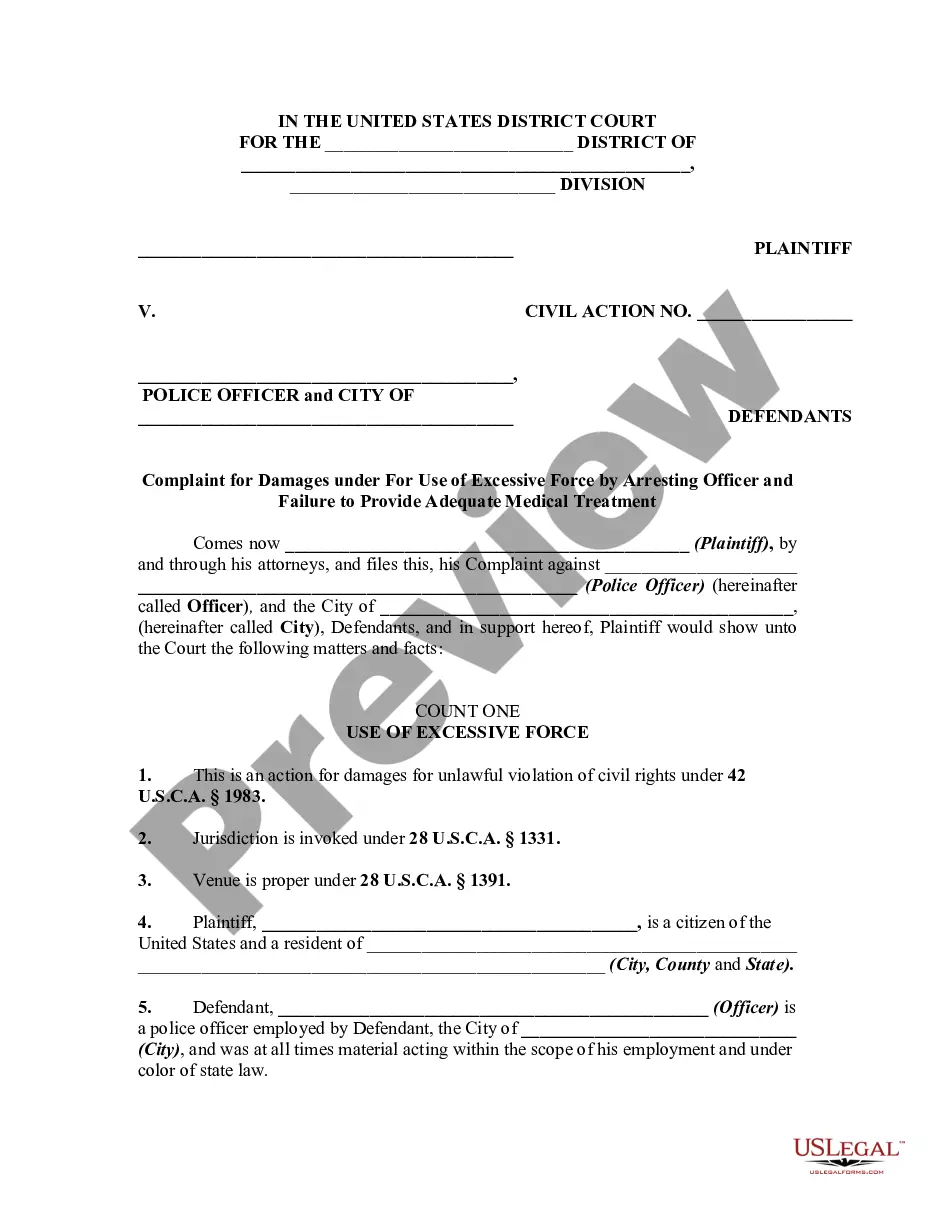
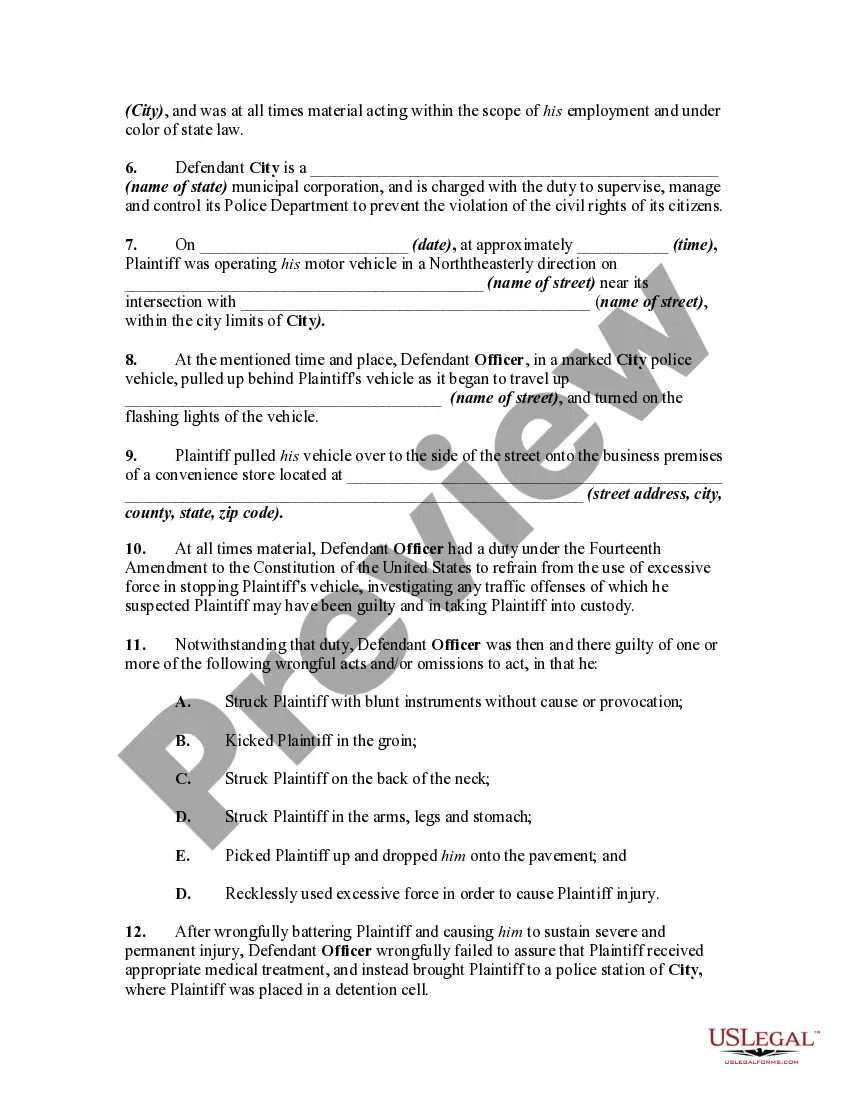
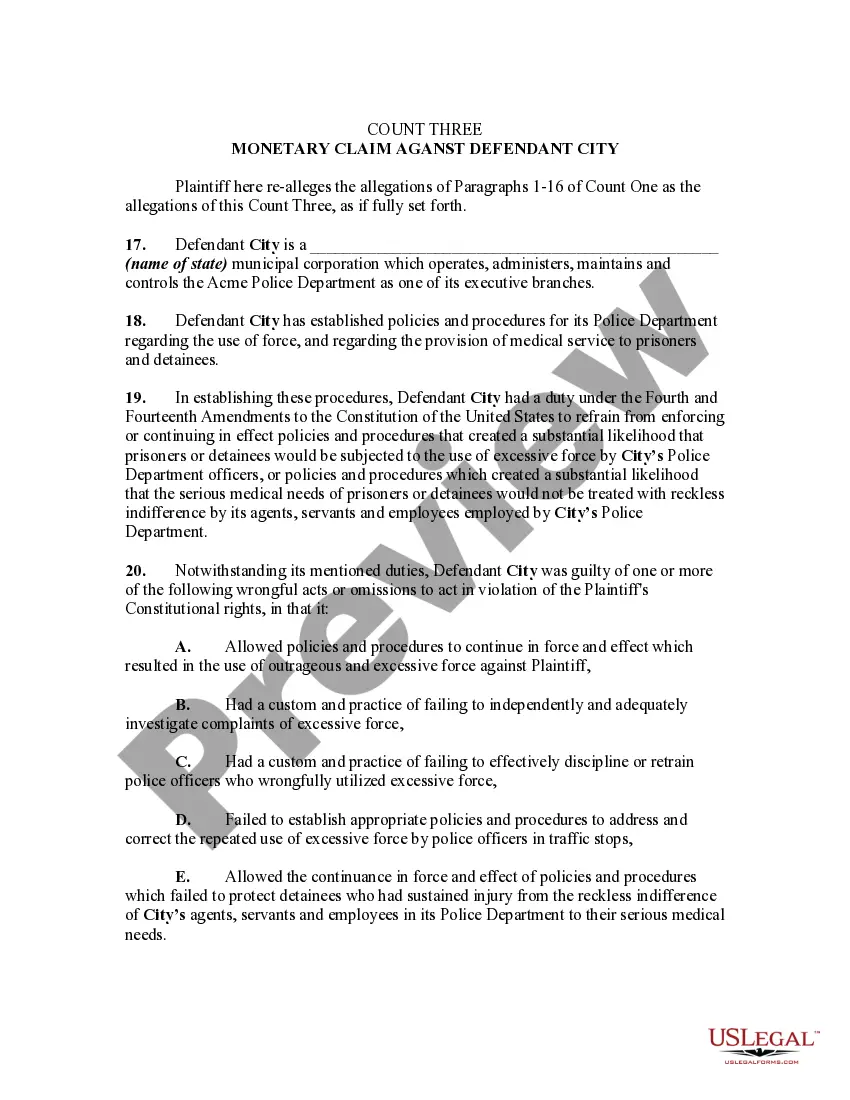
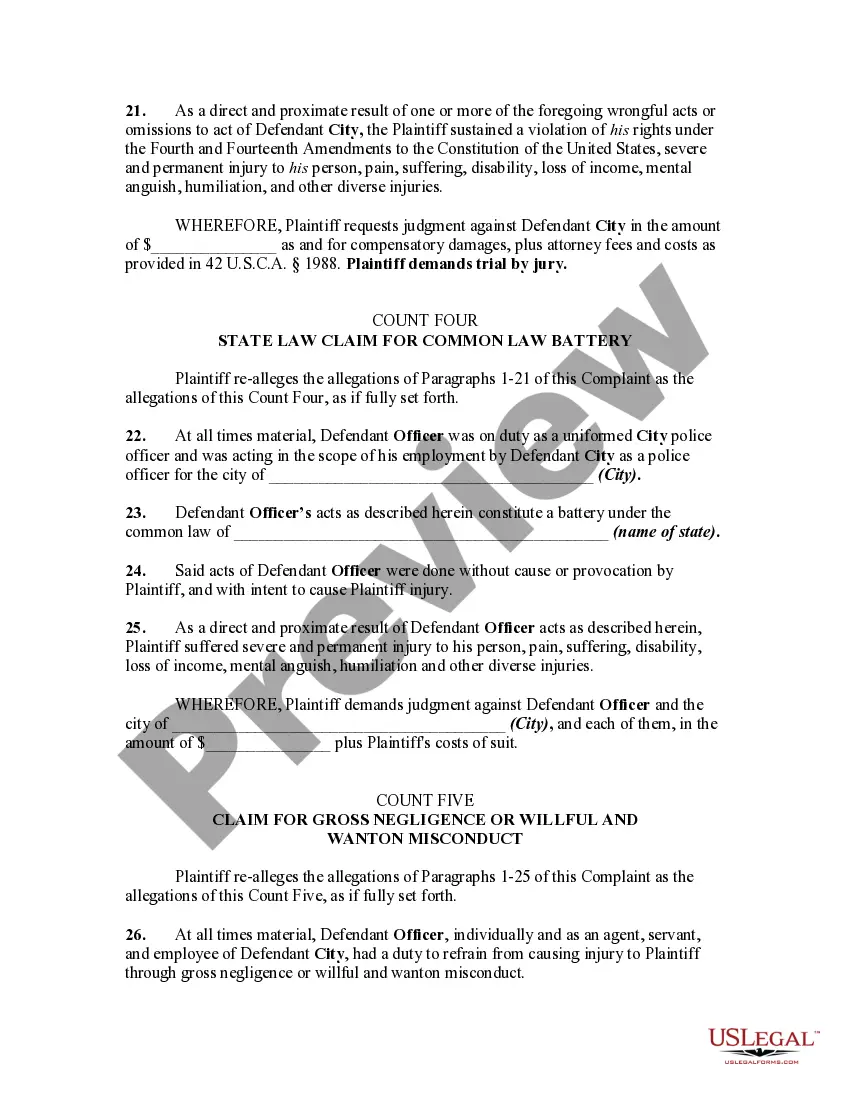
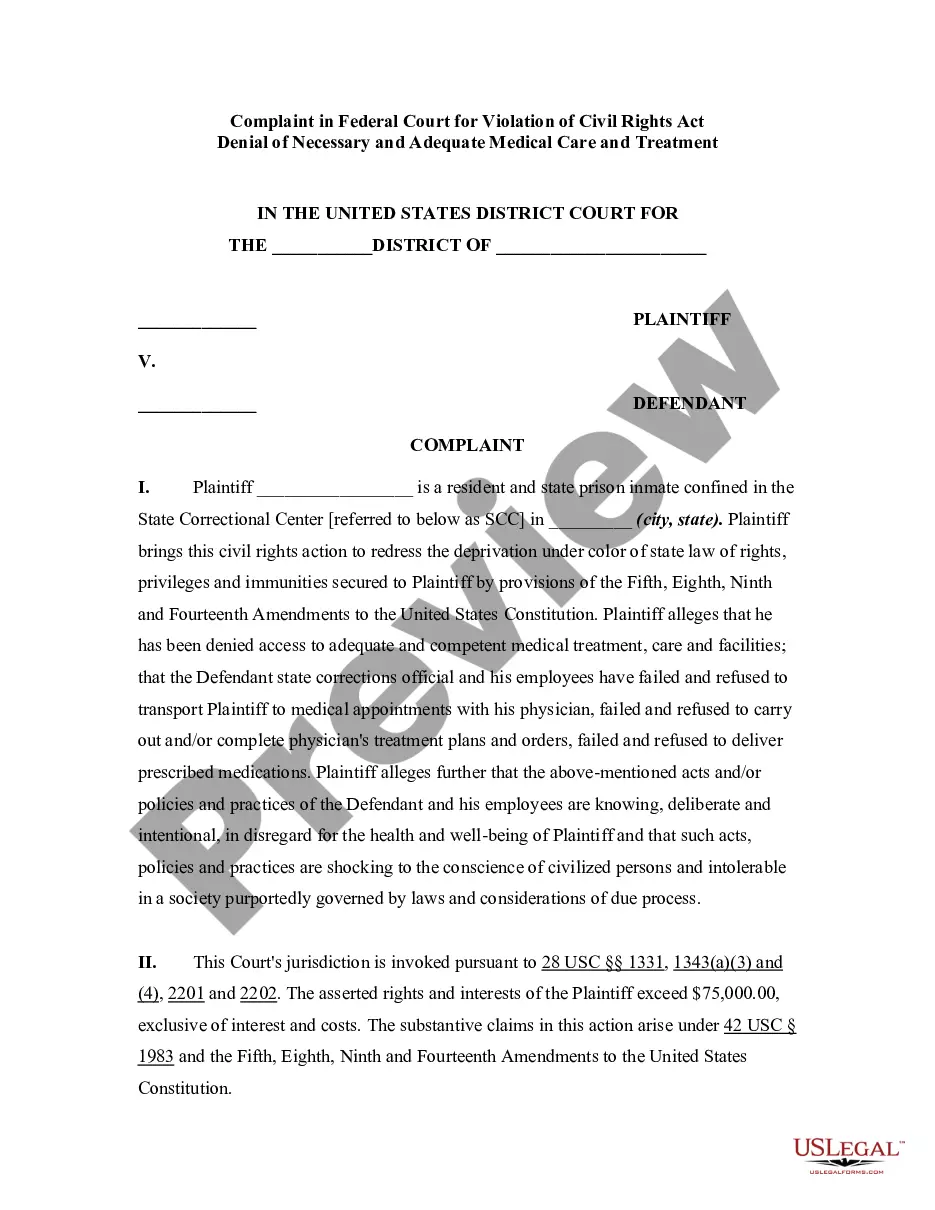
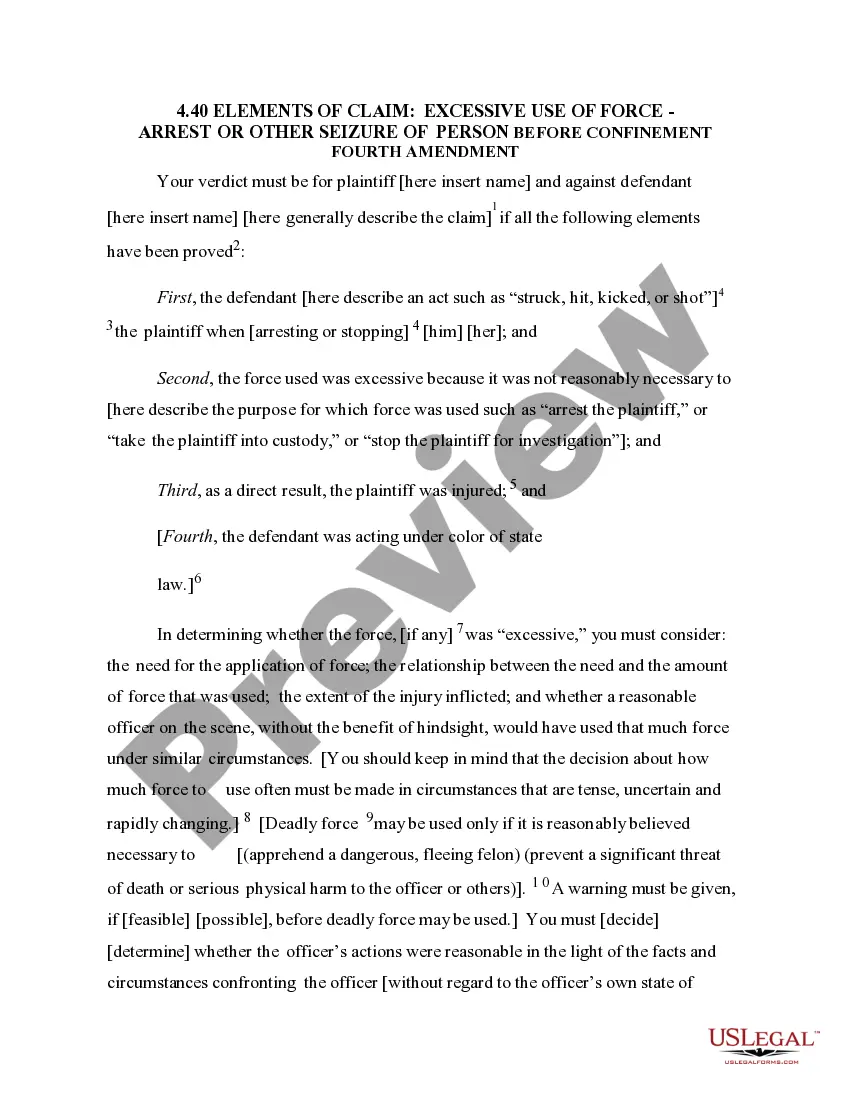
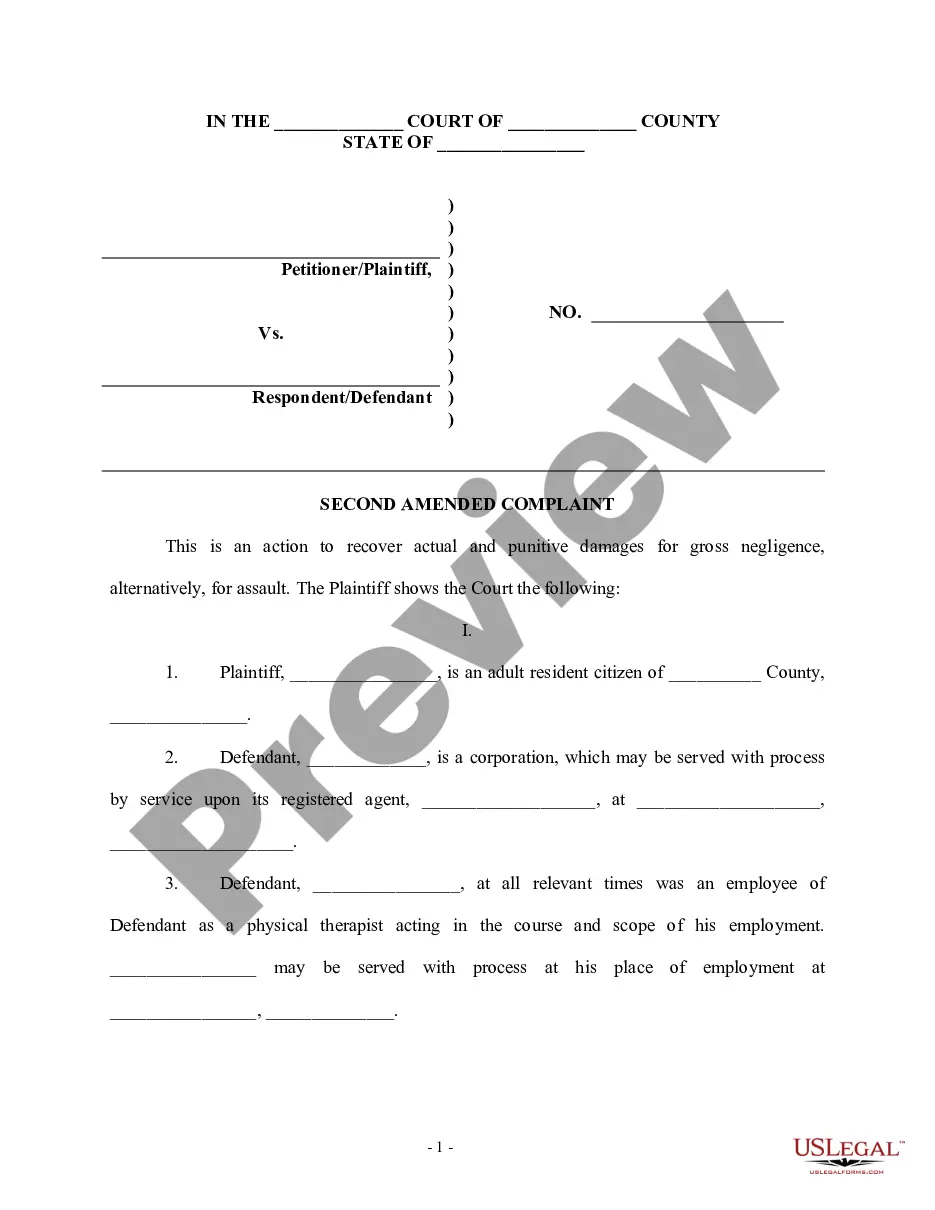
The Complaint in Federal Court for Damages Resulting From Use of Excessive Force - Police Brutality is a legal document used by individuals seeking to hold police officers and municipalities accountable for unlawful acts of excessive force during an arrest. This form specifically addresses violations of constitutional rights under 42 U.S.C.A. § 1983, as well as claims under state battery laws. This form differs from general complaint forms by focusing on police misconduct and inadequate medical treatment following such incidents.
Key components of this form
- Identification of the plaintiff and defendants, including the police officer and city.
- Clarification of jurisdiction and venue for the case.
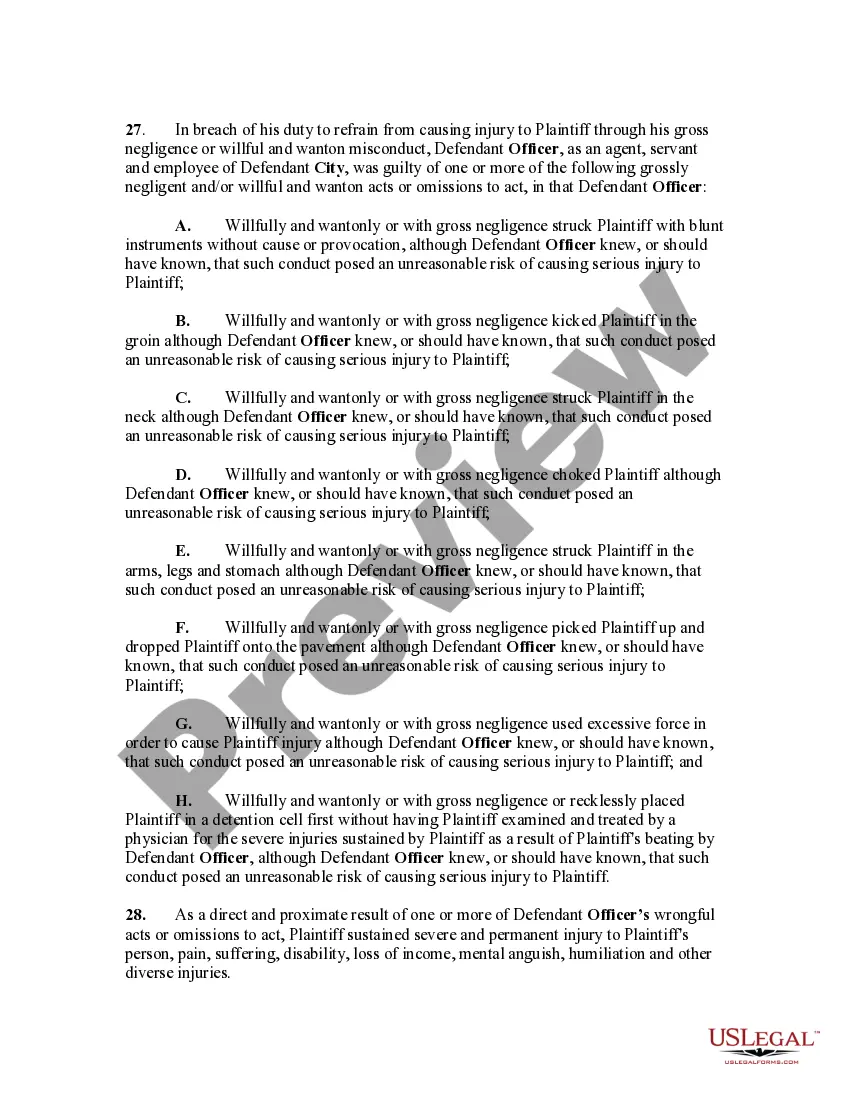
- Allegations regarding the use of excessive force and failure to provide medical care.
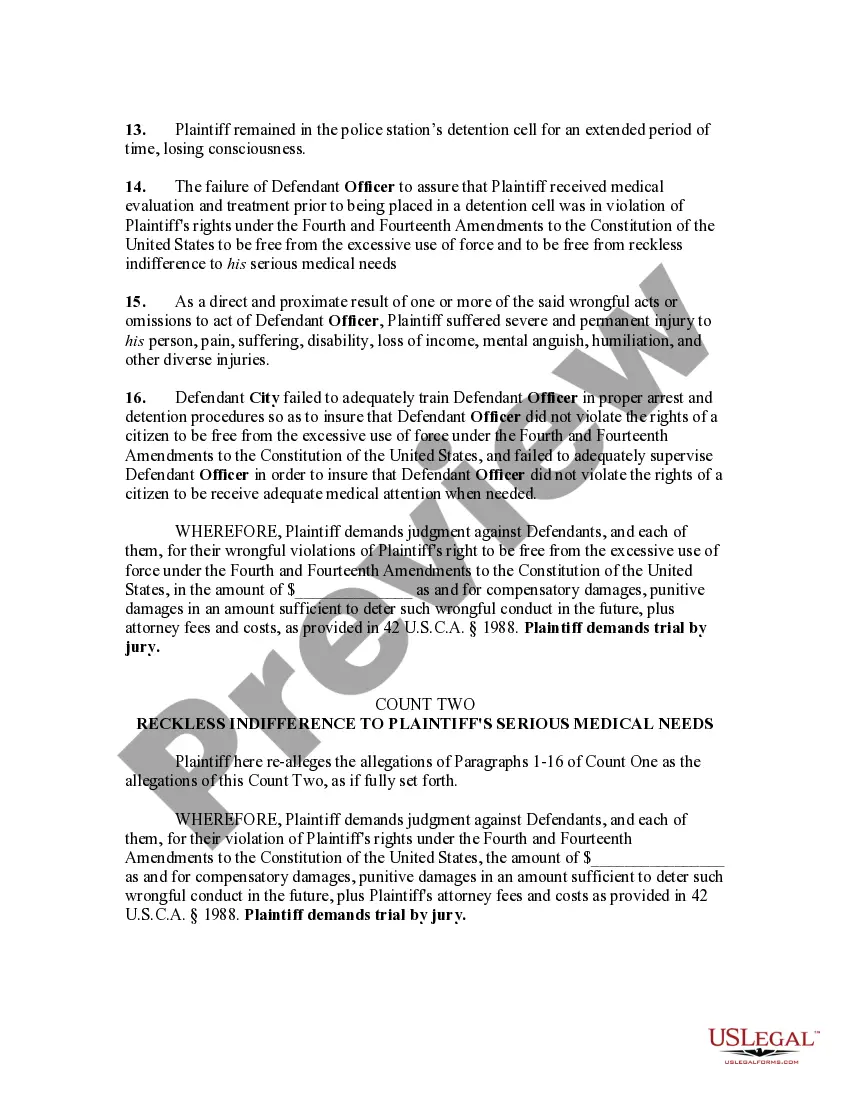
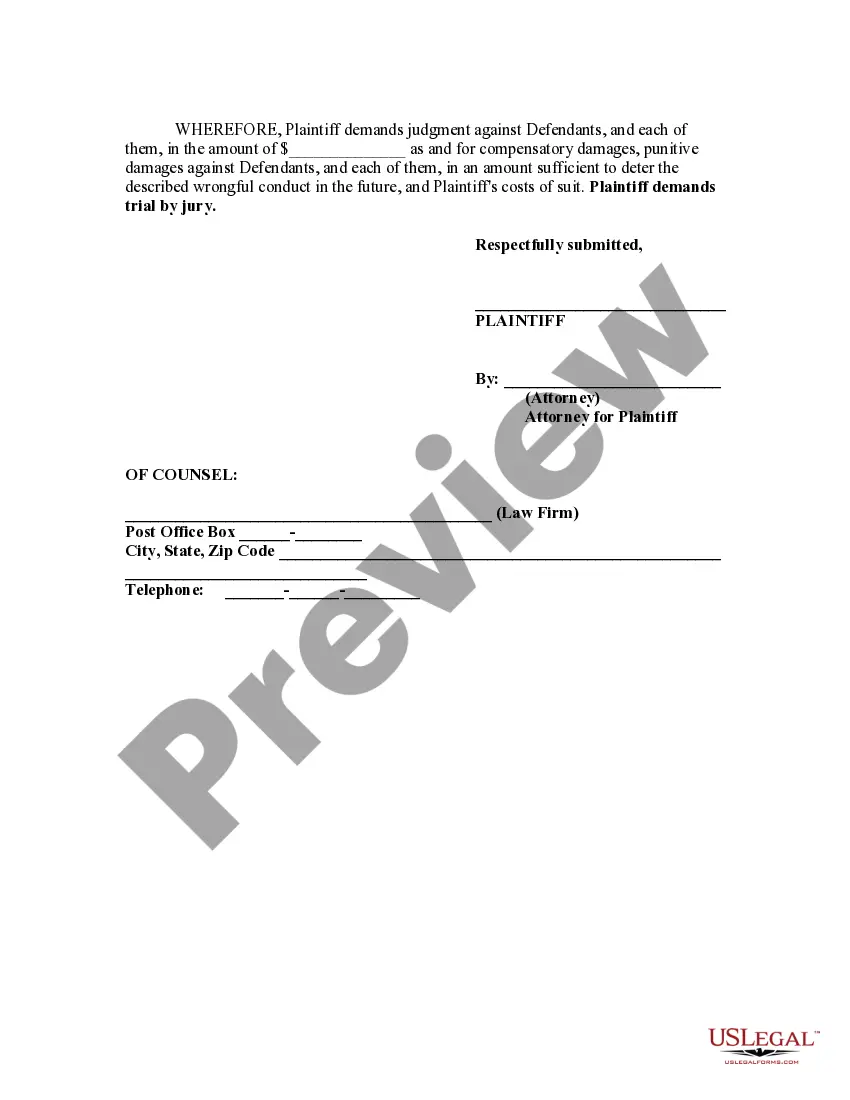
- Details of injuries sustained and the resulting damages claimed.
- Multiple counts addressing different aspects of the legal claims, including civil rights violations and state law claims.
Situations where this form applies
This form should be used when an individual believes they have been subjected to excessive force by a police officer during an arrest and subsequently did not receive adequate medical treatment for any injuries sustained. If you experienced physical harm or violated rights due to improper conduct by law enforcement, this form can be an essential step in seeking justice and compensation.
Intended users of this form
- Individuals who have been arrested and believe they were subjected to excessive force by law enforcement officers.
- Those seeking to file a federal complaint related to police brutality and civil rights violations.
- Claimants looking to hold a city or municipality accountable for the actions of their police department.
How to complete this form
- Identify all parties involved by entering the names and addresses of the plaintiff, police officer, and city.
- Detail the events surrounding the incident, including dates, times, and locations.
- List the specific actions taken by the officer that constituted excessive force and provided inadequate medical attention.
- Outline the injuries and damages suffered as a result of the officer's actions.
- Sign and date the complaint, include attorney information if applicable, and file with the appropriate federal court.
Is notarization required?
This form does not typically require notarization unless specified by local law, allowing you to submit it without the additional step of notarization.
Get your form ready online
Our built-in tools help you complete, sign, share, and store your documents in one place.
Make edits, fill in missing information, and update formatting in US Legal Forms—just like you would in MS Word.
Download a copy, print it, send it by email, or mail it via USPS—whatever works best for your next step.
Sign and collect signatures with our SignNow integration. Send to multiple recipients, set reminders, and more. Go Premium to unlock E-Sign.
If this form requires notarization, complete it online through a secure video call—no need to meet a notary in person or wait for an appointment.
We protect your documents and personal data by following strict security and privacy standards.

Make edits, fill in missing information, and update formatting in US Legal Forms—just like you would in MS Word.

Download a copy, print it, send it by email, or mail it via USPS—whatever works best for your next step.

Sign and collect signatures with our SignNow integration. Send to multiple recipients, set reminders, and more. Go Premium to unlock E-Sign.

If this form requires notarization, complete it online through a secure video call—no need to meet a notary in person or wait for an appointment.

We protect your documents and personal data by following strict security and privacy standards.
Mistakes to watch out for
- Failing to clearly identify all parties involved, including the specific police officer.
- Not providing sufficient details regarding the incidents of excessive force and medical negligence.
- Omitting critical dates and timelines related to the events described.
- Neglecting to specify damages and the basis for the claim amounts requested.
Advantages of online completion
- Convenient access to a professionally drafted legal complaint tailored for federal court.
- Edit and customize the form to fit your specific situation easily.
- Immediate download for prompt filing, helping to meet court deadlines.
Legal use & context
- This form is used to initiate a federal civil rights lawsuit under 42 U.S.C.A. § 1983.
- It serves as a formal request for damages due to police misconduct and violation of constitutional rights.
- Filing this complaint provides a mechanism for addressing grievances against law enforcement.
Looking for another form?
Form popularity
FAQ
Police brutality is a civil rights violation that occurs when a police officer acts with excessive force by using an amount of force with regards to a civilian that is more than necessary. Excessive force by a law enforcement officers is a violation of a person's rights.
The constitutional right to be protected from excessive force is found in the reasonable search and seizure requirement of the Fourth Amendment and the prohibition on cruel and unusual punishment in the Eighth Amendment.
Complaint Outcomes Where a complaint is sustained the action being taken against the officer can range from remedial action to criminal charges or dismissal from the NSW Police Force.
The Laws on the Books Title 18 of the US Code makes it illegal for police officers to willfully deprive or conspire to deprive other people of any right protected by the Constitution or US law.In short, victims of police brutality cannot file civil lawsuits against police officers under Title 18.
Victims of police misconduct, brutality, or excessive force can file a lawsuit in California. That lawsuit is usually based on civil rights violations. The lawsuit can seek money damages for the victim.
Excessive force refers to situations where government officials legally entitled to use force exceed the minimum amount necessary to diffuse an incident or to protect themselves or others from harm.
The term excessive force specifically refers to situations where law enforcement officers exceed the amount of force necessary against another person in an attempt to defuse a situation or to protect others or themselves from danger or harm.
The short answer to the question posed above is yes, police officers in California can be sued civilly for negligence.
The Law Enforcement Officers' Bill of Rights (LEBOR, LEOBR, or LEOBoR) is intended to protect American law enforcement personnel from investigation and prosecution arising from conduct during official performance of their duties, and provides them with privileges based on due process additional to those normally