Petition Contesting Probate of Will on the Grounds of Mental Incompetence and Undue Influence
What is this form?
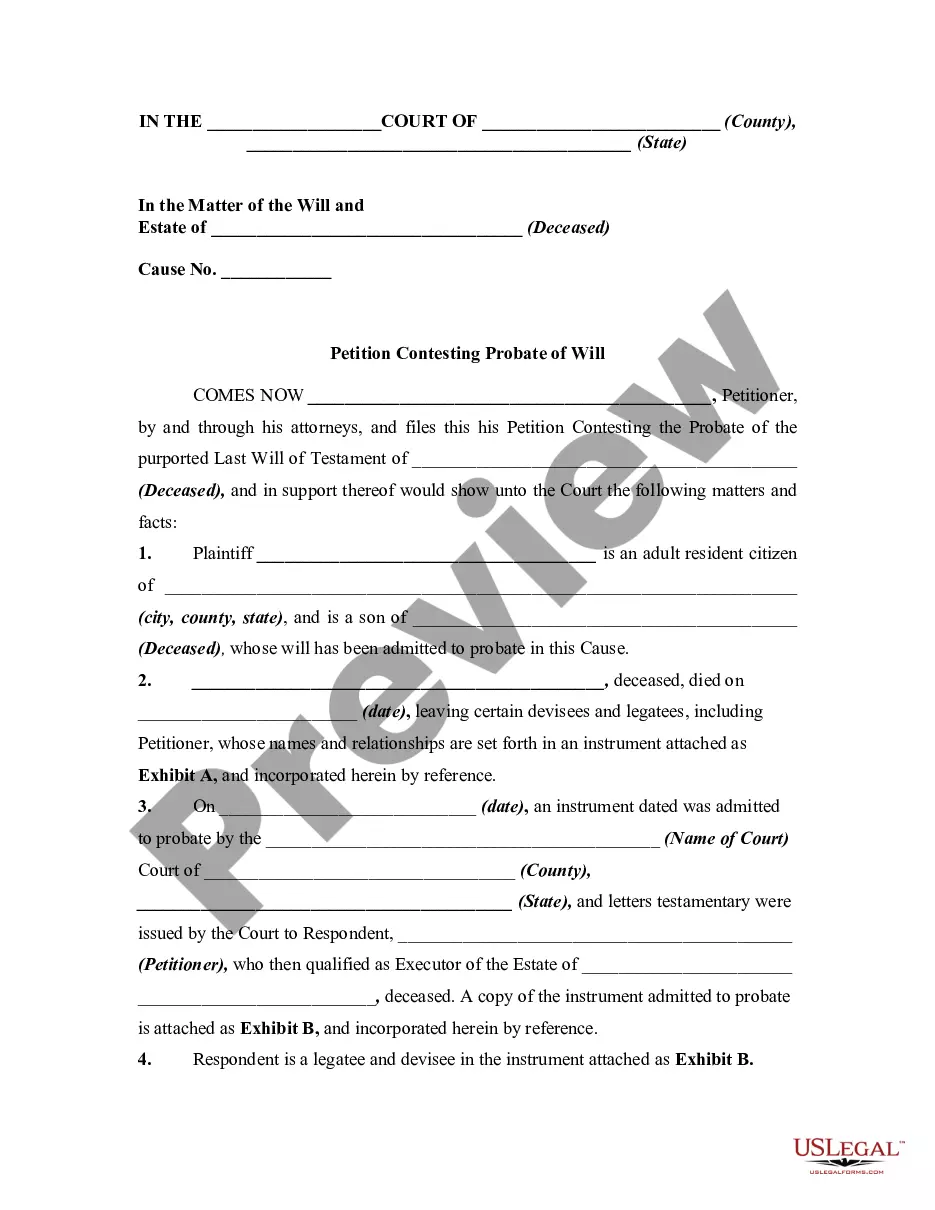
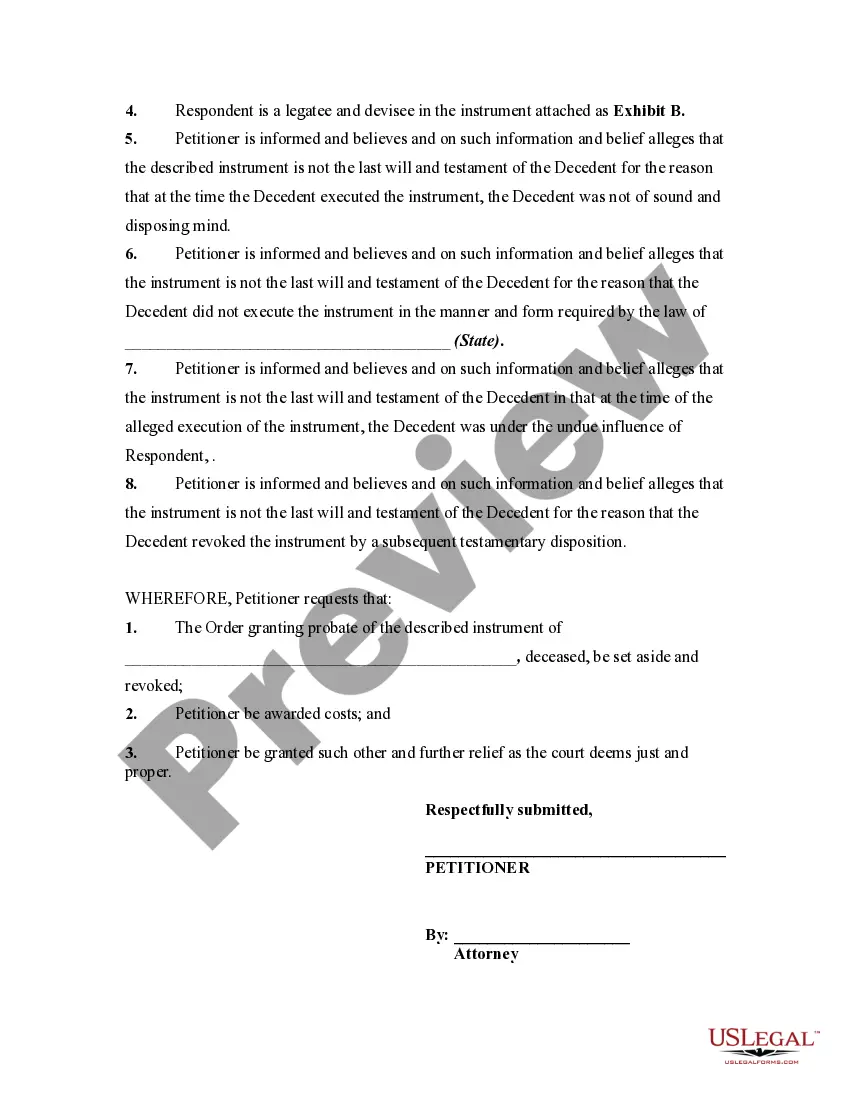
This form is a Petition Contesting Probate of Will on the Grounds of Mental Incompetence and Undue Influence. It is used to challenge the validity of a will after it has been admitted to probate, particularly focusing on the assertions that the deceased was not mentally competent or was unduly influenced at the time of creating the will. This form serves to allow interested parties to formally contest the probate process based on these grounds rather than simply accepting the will as valid without scrutiny.
Main sections of this form
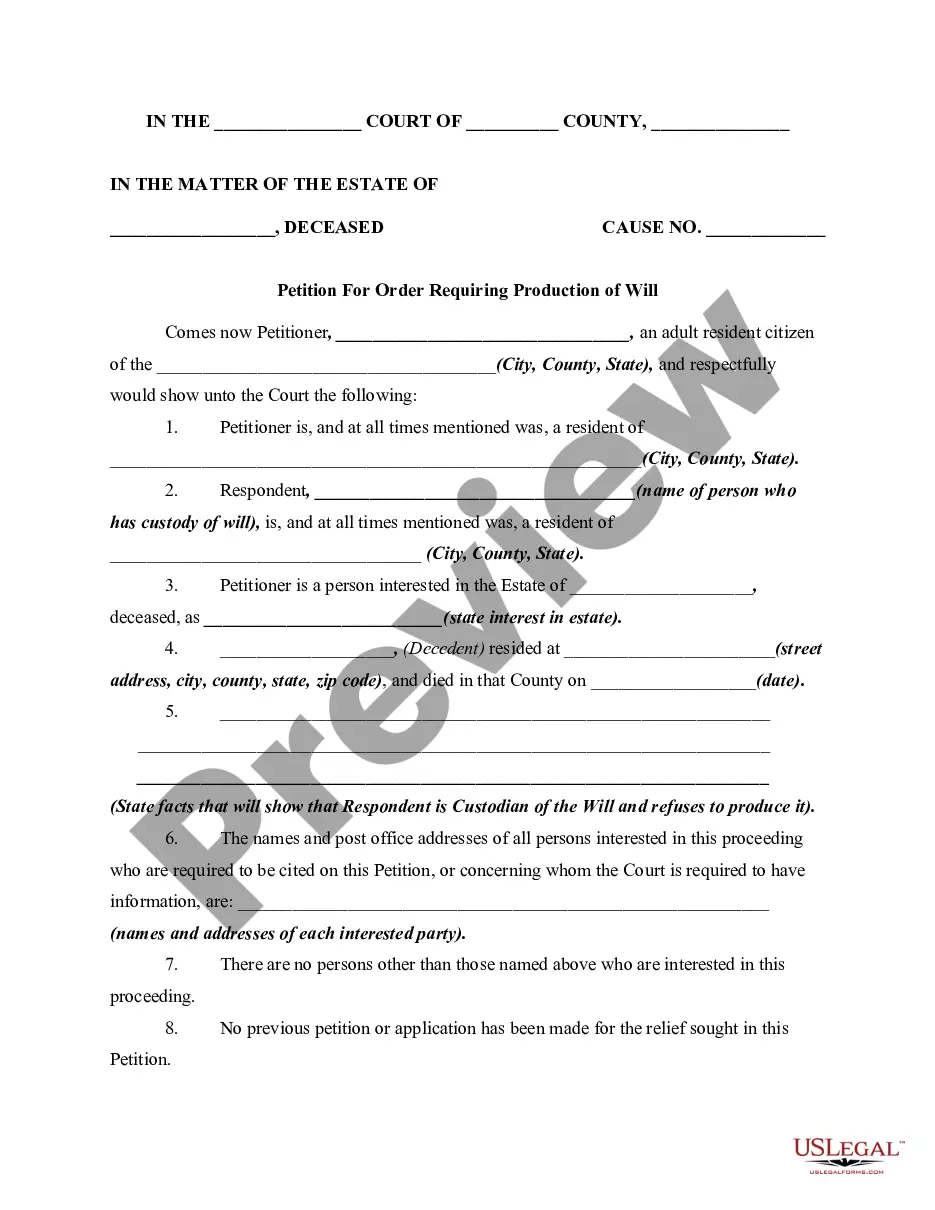
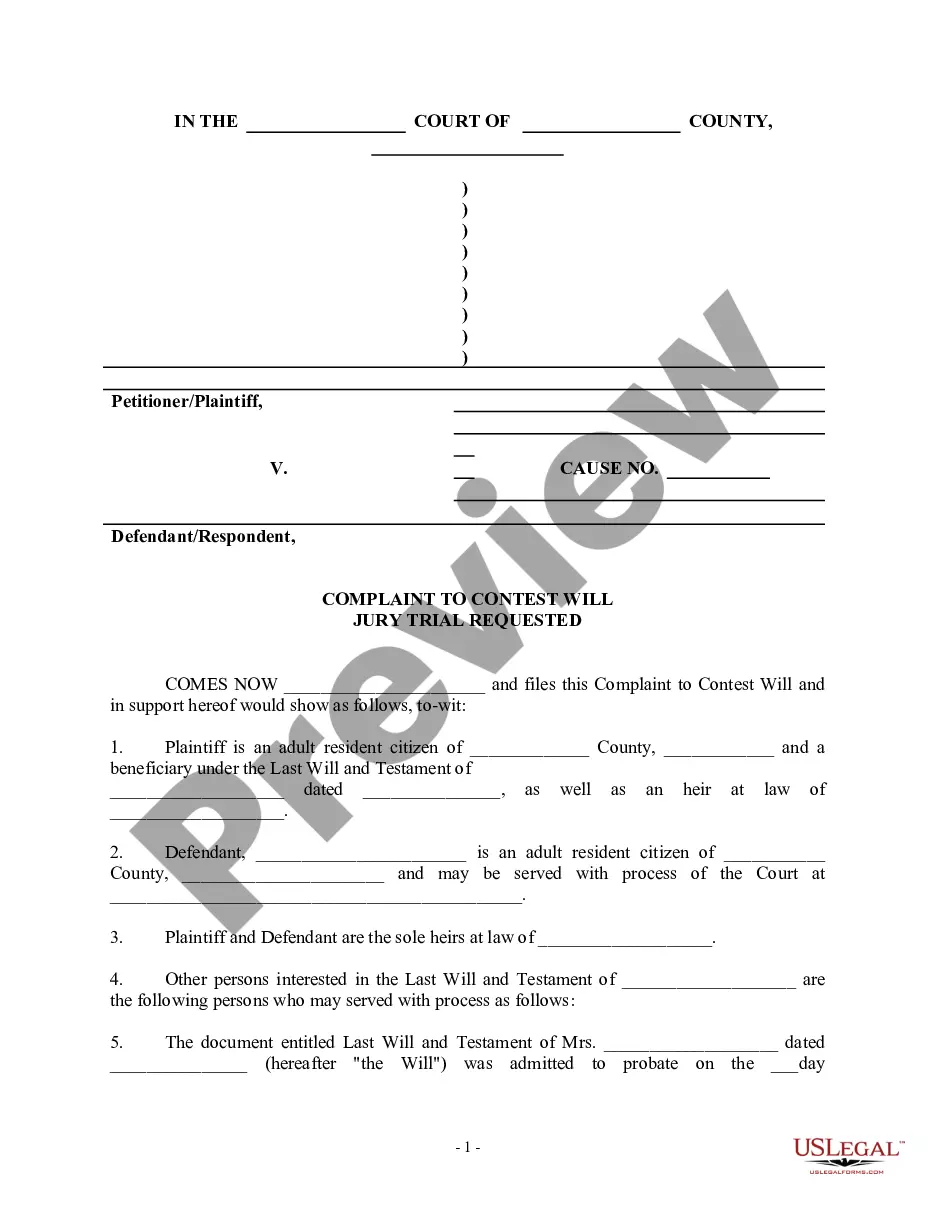
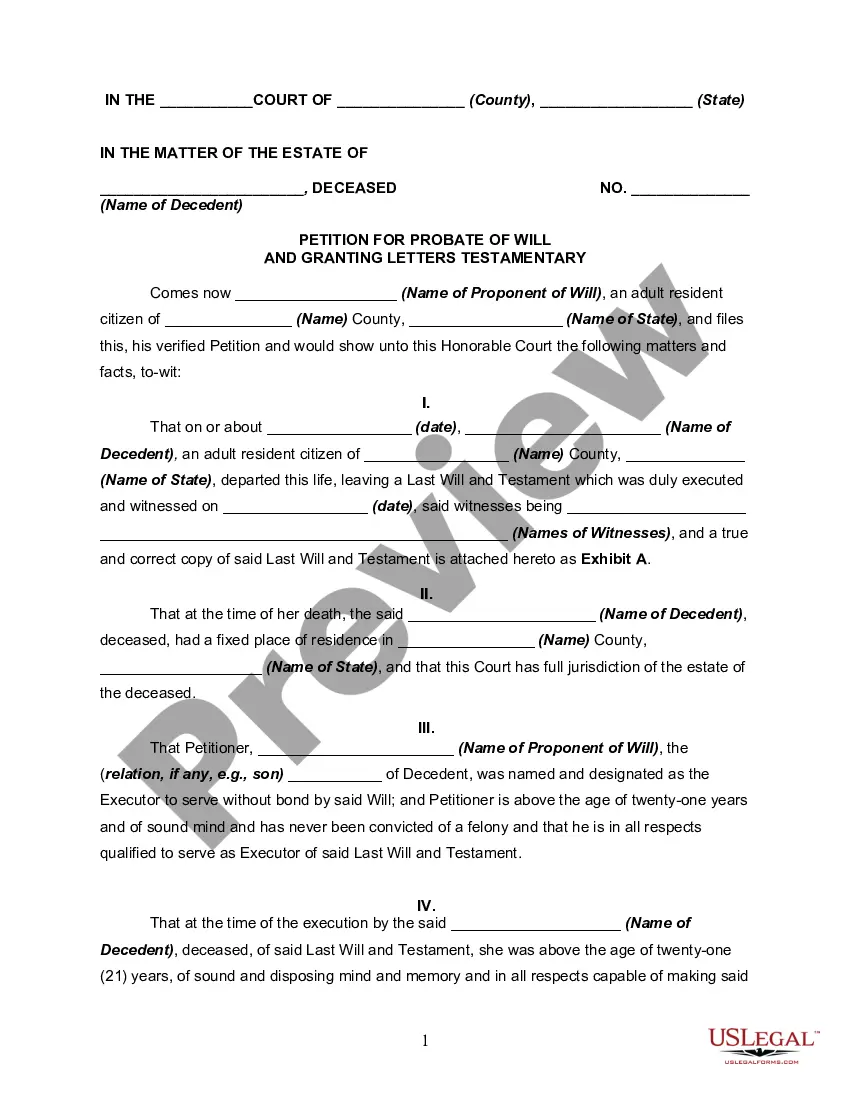
- Identification of the deceased and the filing party, known as the petitioner.
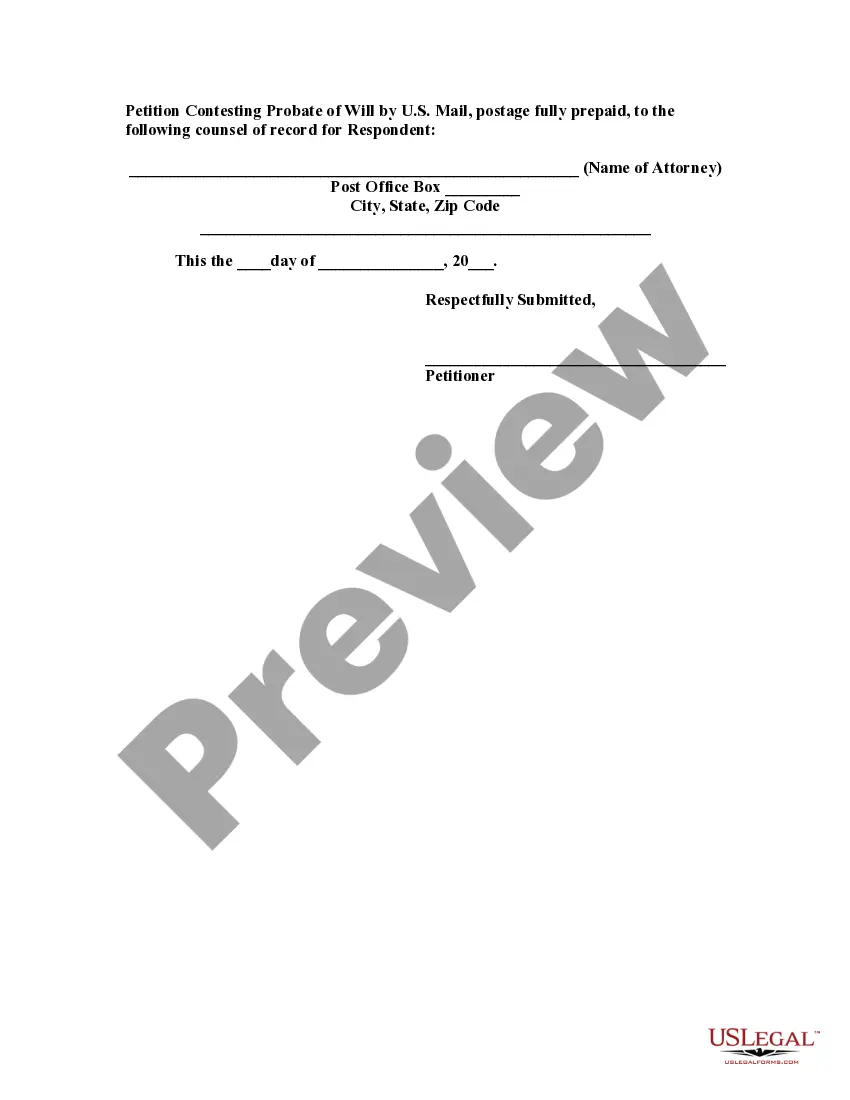
- Details about the will being contested, including the date of execution and the court of probate.
- Allegations concerning the deceased's mental competence and claims of undue influence.
- Request for the court to set aside or revoke the probate of the will.
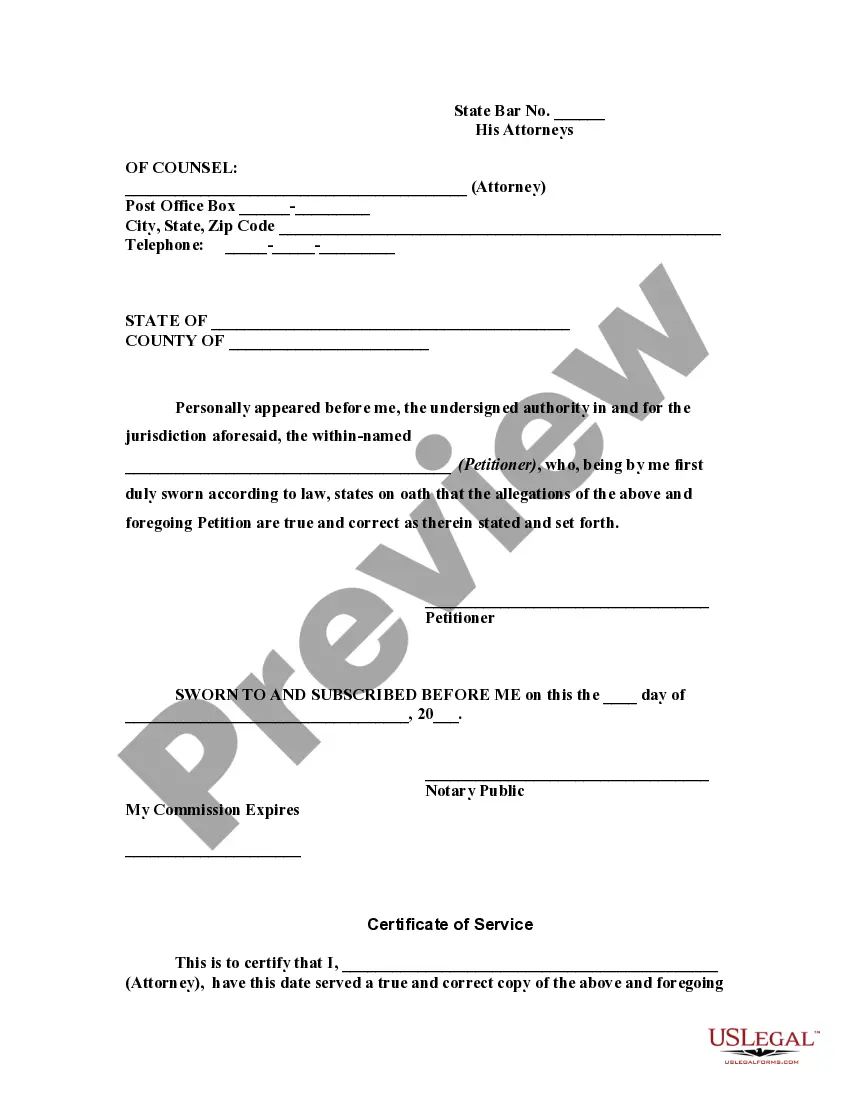
- Signature of the petitioner and attorney along with a sworn statement affirming the truth of the petition.

Common use cases
This form should be used when an individual is contesting a will that has been admitted to probate. Common scenarios include concerns that the deceased was not of sound mind when the will was created, or that coercion or undue influence was exerted by a beneficiary or other party affecting the deceased's decisions regarding their estate.
Who should use this form
- Individuals who believe they are affected by an unfair will distribution.
- Beneficiaries who have concerns regarding the mental state of the testator at the time of the will's execution.
- Family members or heirs who suspect undue influence in the creation of the will.
- Anyone who has standing in the estate and wishes to formally contest the probate process.
Steps to complete this form
- Identify and fill in the name of the deceased and the petitioner.
- Specify important dates such as the date of the will's execution and the date of death.
- Provide detailed allegations regarding mental incompetence or undue influence.
- List any supporting documents or exhibits that substantiate claims.
- Ensure all required signatures are obtained, including notarization if needed.
Does this form need to be notarized?
To make this form legally binding, it must be notarized. Our online notarization service, powered by Notarize, lets you verify and sign documents remotely through an encrypted video session.
Get your form ready online
Our built-in tools help you complete, sign, share, and store your documents in one place.
Make edits, fill in missing information, and update formatting in US Legal Forms—just like you would in MS Word.
Download a copy, print it, send it by email, or mail it via USPS—whatever works best for your next step.
Sign and collect signatures with our SignNow integration. Send to multiple recipients, set reminders, and more. Go Premium to unlock E-Sign.
If this form requires notarization, complete it online through a secure video call—no need to meet a notary in person or wait for an appointment.
We protect your documents and personal data by following strict security and privacy standards.

Make edits, fill in missing information, and update formatting in US Legal Forms—just like you would in MS Word.

Download a copy, print it, send it by email, or mail it via USPS—whatever works best for your next step.

Sign and collect signatures with our SignNow integration. Send to multiple recipients, set reminders, and more. Go Premium to unlock E-Sign.

If this form requires notarization, complete it online through a secure video call—no need to meet a notary in person or wait for an appointment.

We protect your documents and personal data by following strict security and privacy standards.
Mistakes to watch out for
- Failing to file the petition within the jurisdiction's time limits.
- Not including necessary supporting documents or evidence.
- Using vague language in claims about mental incompetence or undue influence.
- Omitting signatures or notarization when required.
Benefits of using this form online
- Convenient access to a legally vetted template that can be downloaded immediately.
- Editability allows for customization based on specific details and jurisdiction requirements.
- Reliable resources, with the assurance that the form meets current legal standards.
Looking for another form?



Form popularity
FAQ
It can be difficult to prove undue influence, because it's impossible to know what someonewho is no longer around to tell youwas thinking when he or she made a will.
A fiduciary relationship between the deceased and a beneficiary who is the dominant party. The deceased trusted and confided in the beneficiary. The beneficiary procured or prepared the will. The beneficiary received a substantial benefit under the will.
To contest the will, you need a valid reason. These are fairly straightforward. You need to reasonably prove the testator lacked the mental capacity to understand what was going on when the current will was signed, was pressured into changing it or that the will failed to meet state regulations and is thus not legal.
The Most Important Evidence in an Undue Influence Claim Under California financial elder abuse law, you must prove four elements to establish undue influence: (1) vulnerability of the victim, (2) apparent authority of the wrongdoer, (3) actions and tactics of the wrongdoer, and (4) an inequitable result.
Under California financial elder abuse law, you must prove four elements to establish undue influence: (1) vulnerability of the victim, (2) apparent authority of the wrongdoer, (3) actions and tactics of the wrongdoer, and (4) an inequitable result.
Isolation from friends, family, or a social support system; Dependency upon the abuser; Abuser's use of the victim's financial assets; Psychological abuse, threats and intimidation; Physical violence, including threats of physical violence;
One in four people would mount a legal challenge against a loved one's will if they were unhappy with it, a survey reveals.
The main grounds to contest a will are: Lack of testamentary capacity (the mental capacity needed to make a valid will) Lack of due execution (a failure to meet the necessary formalities i.e. for the will to be in writing, signed and witnessed correctly)
To prove undue influence, a party must show that one party to the contract is a person with weaknesses which make him likely to be affected by such persuasion, and that the party exercising the persuasion is someone in a special relationship with the victim that makes the victim especially susceptible to such