Motion By Plaintiff to Refer Cause to Mediation
Overview of this form
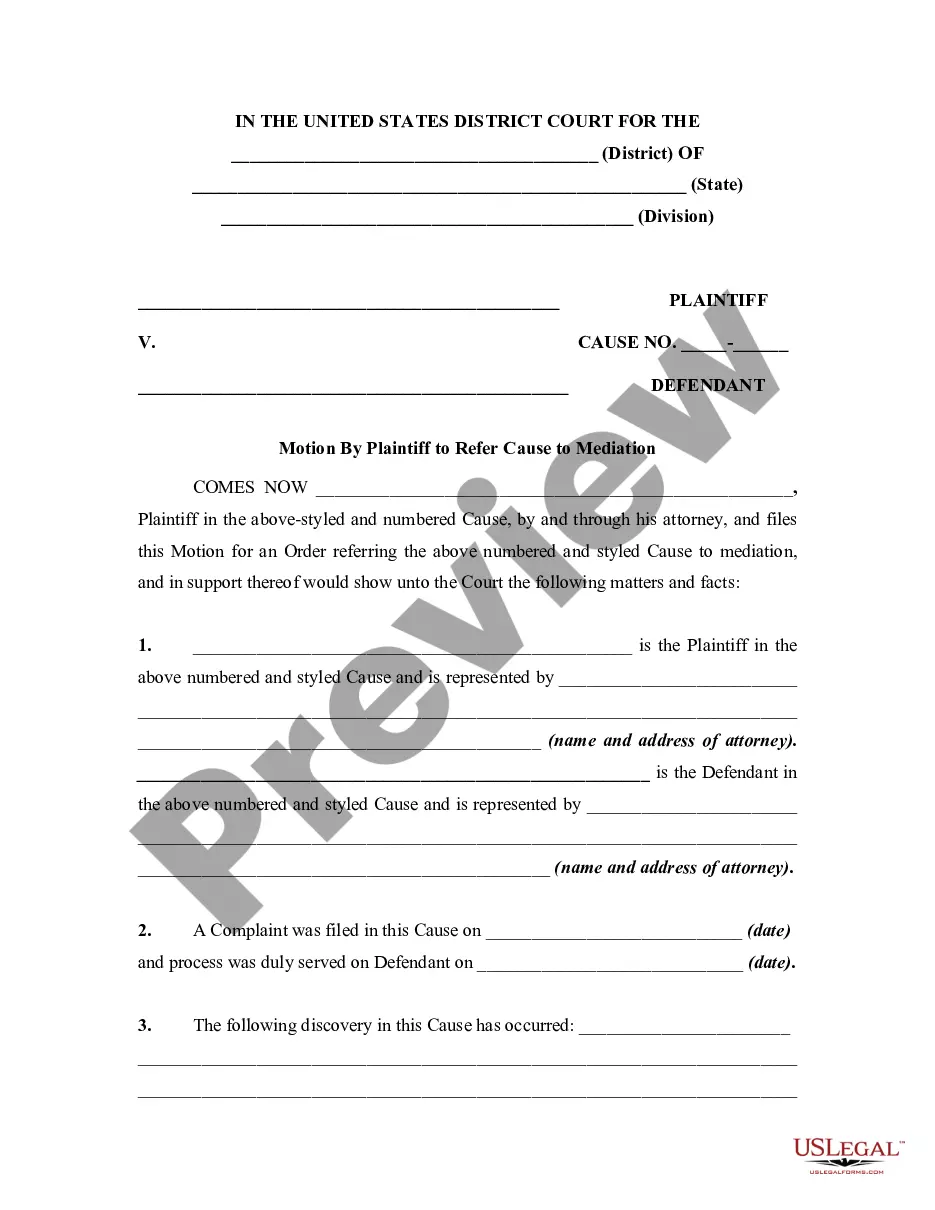
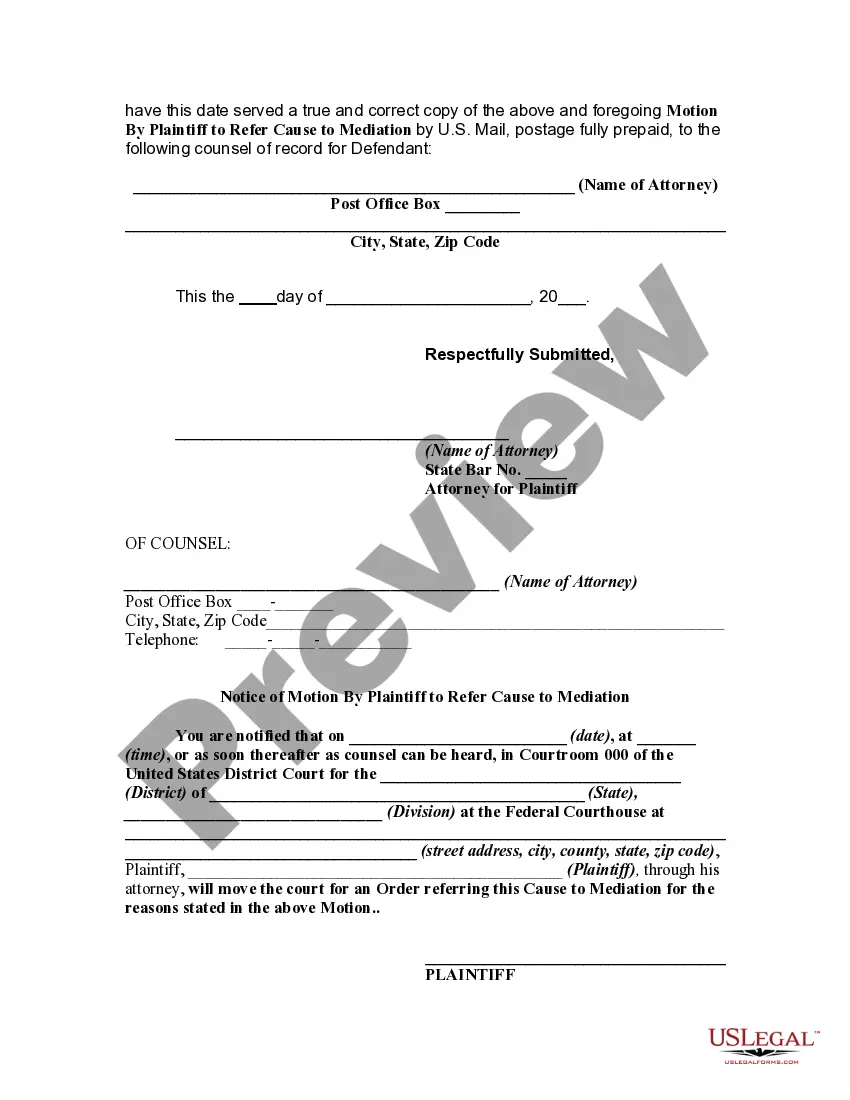
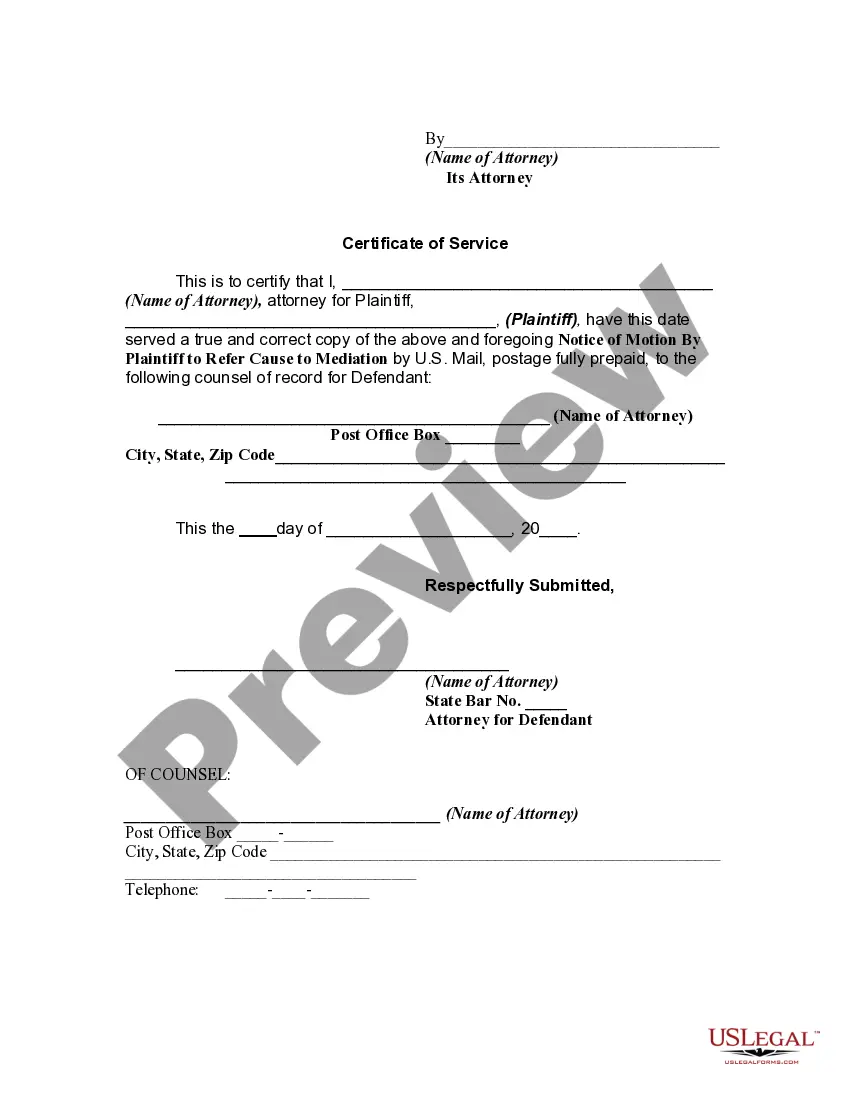
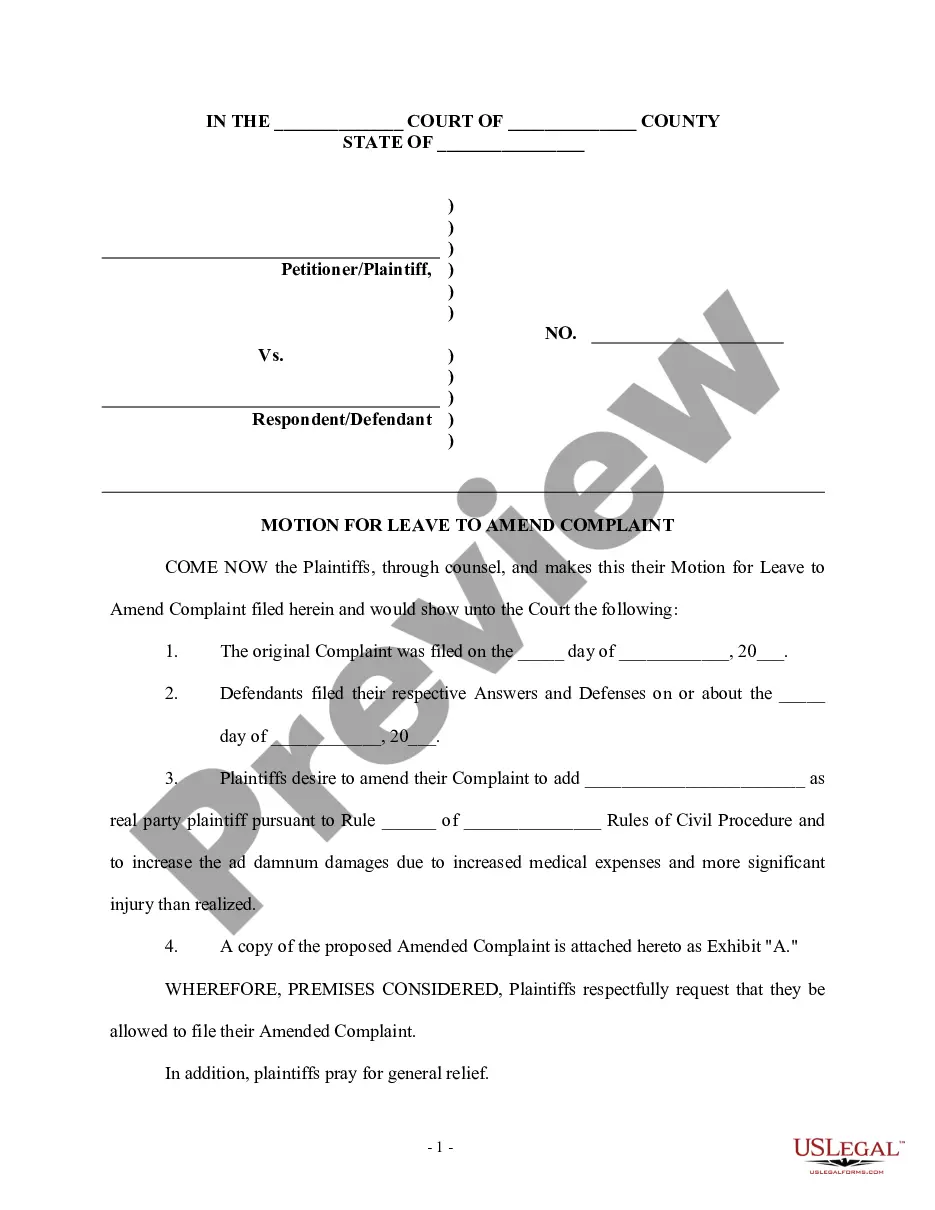
The Motion by Plaintiff to Refer Cause to Mediation is a legal document used to request that a court refer a dispute to mediation. Mediation is a voluntary and non-binding process where a neutral mediator helps the parties negotiate a settlement. This form serves the purpose of facilitating communication between disputing parties to reach a resolution outside of court, differentiating it from litigation processes that involve judges and strict legal rules.
Form components explained
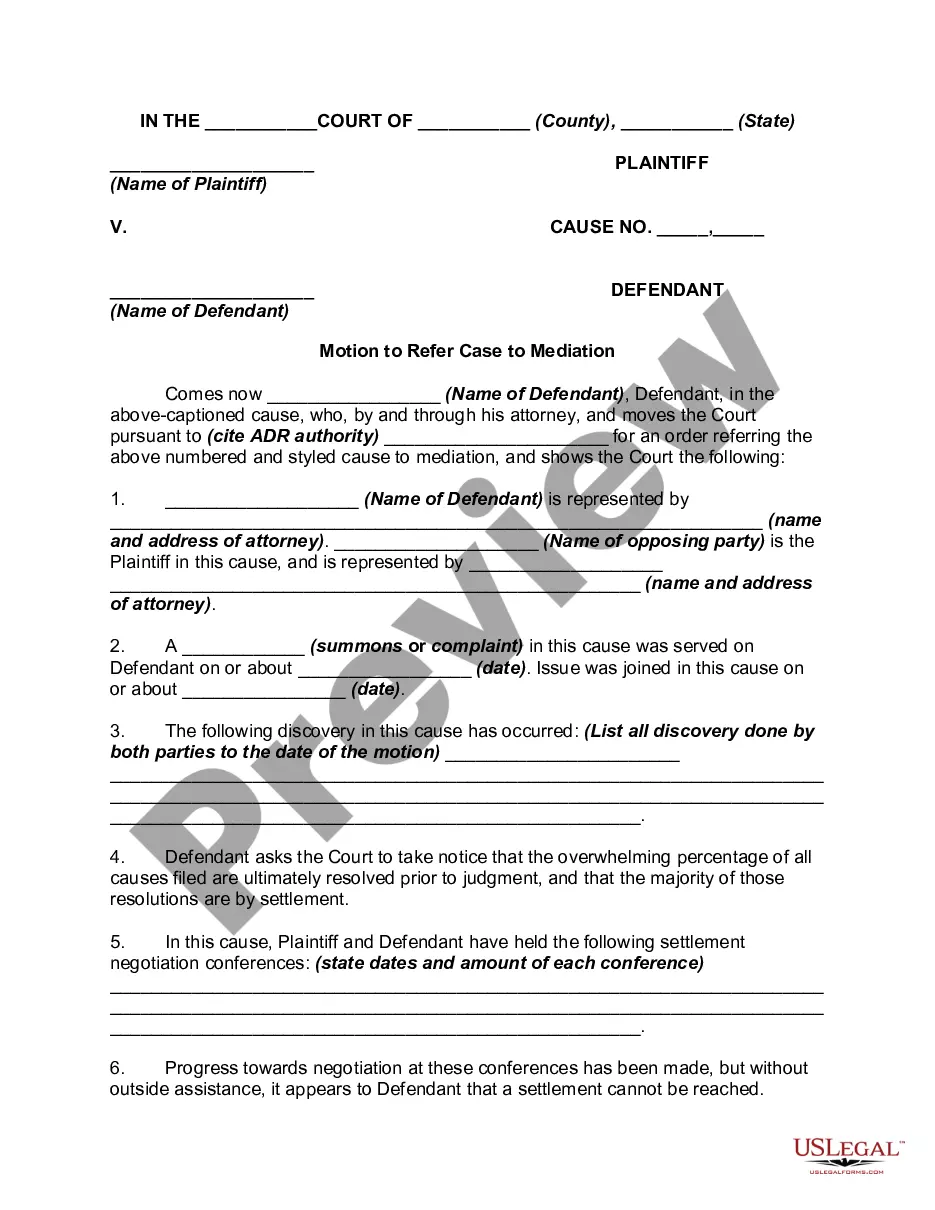
- Header section indicating the court, cause number, and parties involved.
- Introduction detailing the plaintiff and their legal representation.
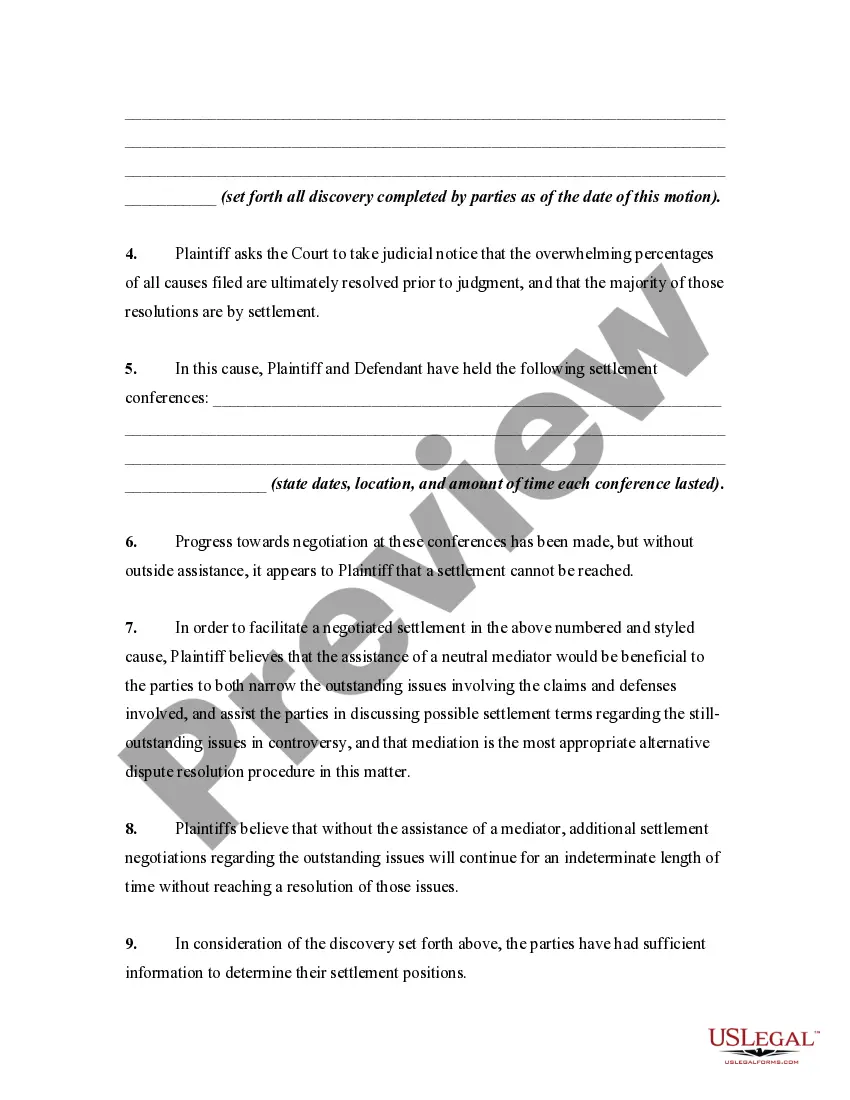
- History of the case, including the filing date and service of process.
- Summary of any previous settlement conferences held between the parties.
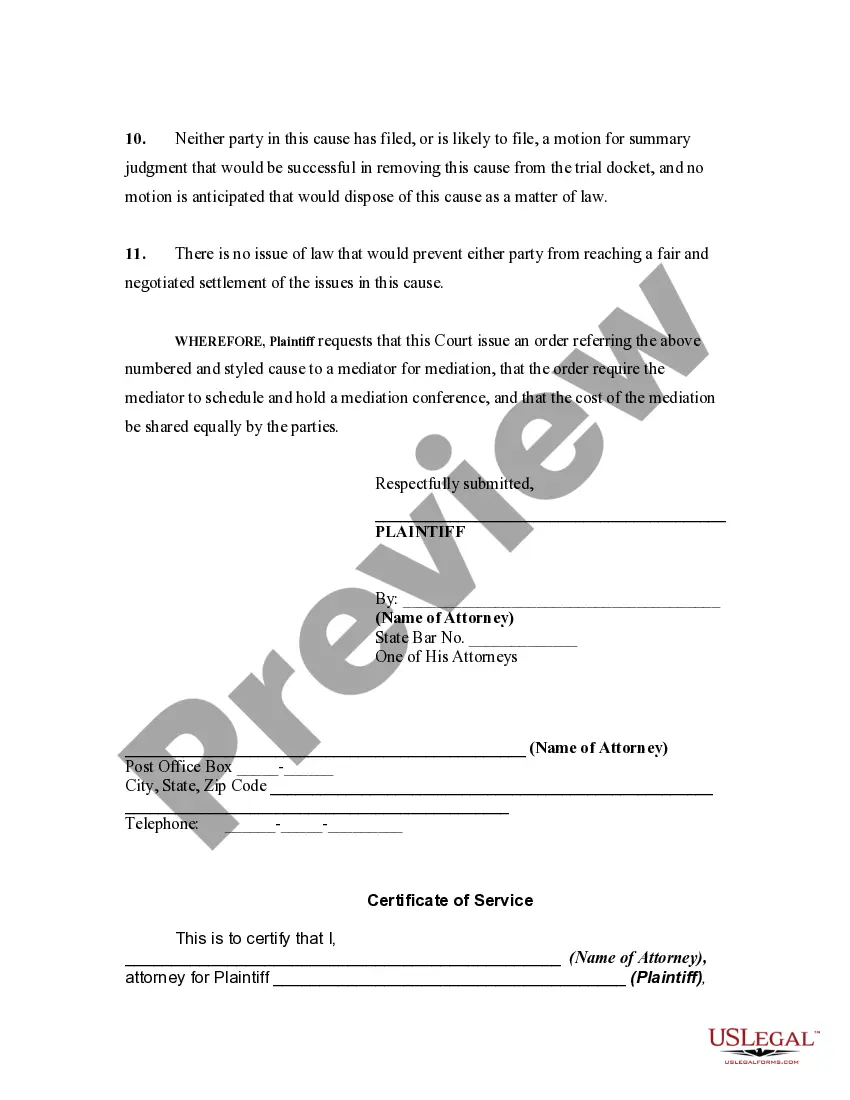
- Arguments in favor of mediation, citing the benefits of neutral support in negotiations.
- A formal request for the court to order mediation and details regarding shared costs.

Common use cases
This form is typically used when both parties in a legal dispute have attempted to negotiate a settlement but have not been successful. If there is progress in negotiations but obstacles remain, the plaintiff can file this motion to seek the assistance of a mediator, enhancing the chances of reaching a mutually beneficial settlement.
Who this form is for
- Plaintiffs seeking to resolve disputes outside of litigation.
- Parties who have already engaged in unsuccessful settlement talks.
- Individuals or entities involved in civil litigation requiring mediation assistance.
- Attorneys representing plaintiffs in mediation referral motions.
How to complete this form
- Enter the names of the parties involved and their attorneys at the top of the form.
- Provide the date the complaint was filed and the date of service to the defendant.
- Summarize any discovery that has occurred in the case.
- List all previous settlement conferences, including dates and durations.
- State the reasons for requesting mediation, focusing on the benefits of a neutral mediator.
- Sign and date the motion, along with any necessary certificates of service.
Does this document require notarization?
This form does not typically require notarization unless specified by local law. Always verify your state's requirements to ensure compliance.
Get your form ready online
Our built-in tools help you complete, sign, share, and store your documents in one place.
Make edits, fill in missing information, and update formatting in US Legal Forms—just like you would in MS Word.
Download a copy, print it, send it by email, or mail it via USPS—whatever works best for your next step.
Sign and collect signatures with our SignNow integration. Send to multiple recipients, set reminders, and more. Go Premium to unlock E-Sign.
If this form requires notarization, complete it online through a secure video call—no need to meet a notary in person or wait for an appointment.
We protect your documents and personal data by following strict security and privacy standards.

Make edits, fill in missing information, and update formatting in US Legal Forms—just like you would in MS Word.

Download a copy, print it, send it by email, or mail it via USPS—whatever works best for your next step.

Sign and collect signatures with our SignNow integration. Send to multiple recipients, set reminders, and more. Go Premium to unlock E-Sign.

If this form requires notarization, complete it online through a secure video call—no need to meet a notary in person or wait for an appointment.

We protect your documents and personal data by following strict security and privacy standards.
Common mistakes to avoid
- Failing to include dates of previous settlement conferences.
- Not providing sufficient details about the progress of negotiations.
- Omitting attorney information or signatures.
- Neglecting to serve a copy of the motion to the defendantâs attorney.
Why complete this form online
- Instant access to professionally drafted legal documents.
- Ability to customize the form to fit specific case details.
- Convenient download and filing process, saving time and resources.
- Guidance throughout the completion process, ensuring accuracy.
- This motion acts as an official request to the court to facilitate mediation.
- It provides a clear summary of the issues and prior attempts at resolution.
- Filing this motion is a recognized step towards conflict resolution within the legal system.
Looking for another form?
Form popularity
FAQ
Don't just repeat your Statement of Claim or Defence. Do outline the main issues in the case, and your position on each of those issues. Do consider addressing any weaknesses up-front. Do include any settlement offers that have been made to date.
Establish the purpose of the meeting. Establish mediator/facilitator role. Establish time limits for the discussion (may need to schedule another meeting). Set groundrules. Define the problem.
There are essentially 5 steps to a successful mediation. They are comprised of the introduction; statement of the problem; information gathering; identification of the problems; bargaining; and finally, settlement.
Avoid saying alienating things, and say difficult things in the least alienating way possible. Set ground rules to avoid attacking openings. Remember that avoiding saying unwelcome things, by having the mediator say them, merely transfers the other party's resentment from counsel to the mediator.
Mediators help the parties get what they want by asking open-ended questions to find out what it is they want. To determine their desired outcome, the mediator can simply ask, "What exactly are you looking for in this deal?" The mediator should try to determine if the parties' wants are common, different or opposed.
Focus on the problem. Rather than blaming particular individuals, identify the issues at stake, and invite others to join you in thinking about solutions. Engage in joint problem solving. Promote effective feedback.
The Mediator Does Not Pick Sides. Be Open Minded and Listen to Opposing Counsel's Presentation. Mediations Are Typically Long, Boring2026and Intense. Mediators Are Not Arbitrators or Judges. Mediation Often Is the Best Time to Settle.
Proper Training:- Proper training to mediators, arbitrators etc. must have to be provided so that they would be able to resolve the disputes and help in promotion of such friendly solution to dispute. Training may also be given to welfare experts, family counselor etc. to promote these means.
A Position Statement is a permanent record of a party's position, ever present throughout the mediation.Position Statements should be provided by each party to every other party, and the mediator. Often a date for simultaneous exchange is suggested by the mediator or agreed between the parties.