Vermont Authorization To Obtain Medical Treatment For Minor Child - Horse Equine Forms
What this document covers
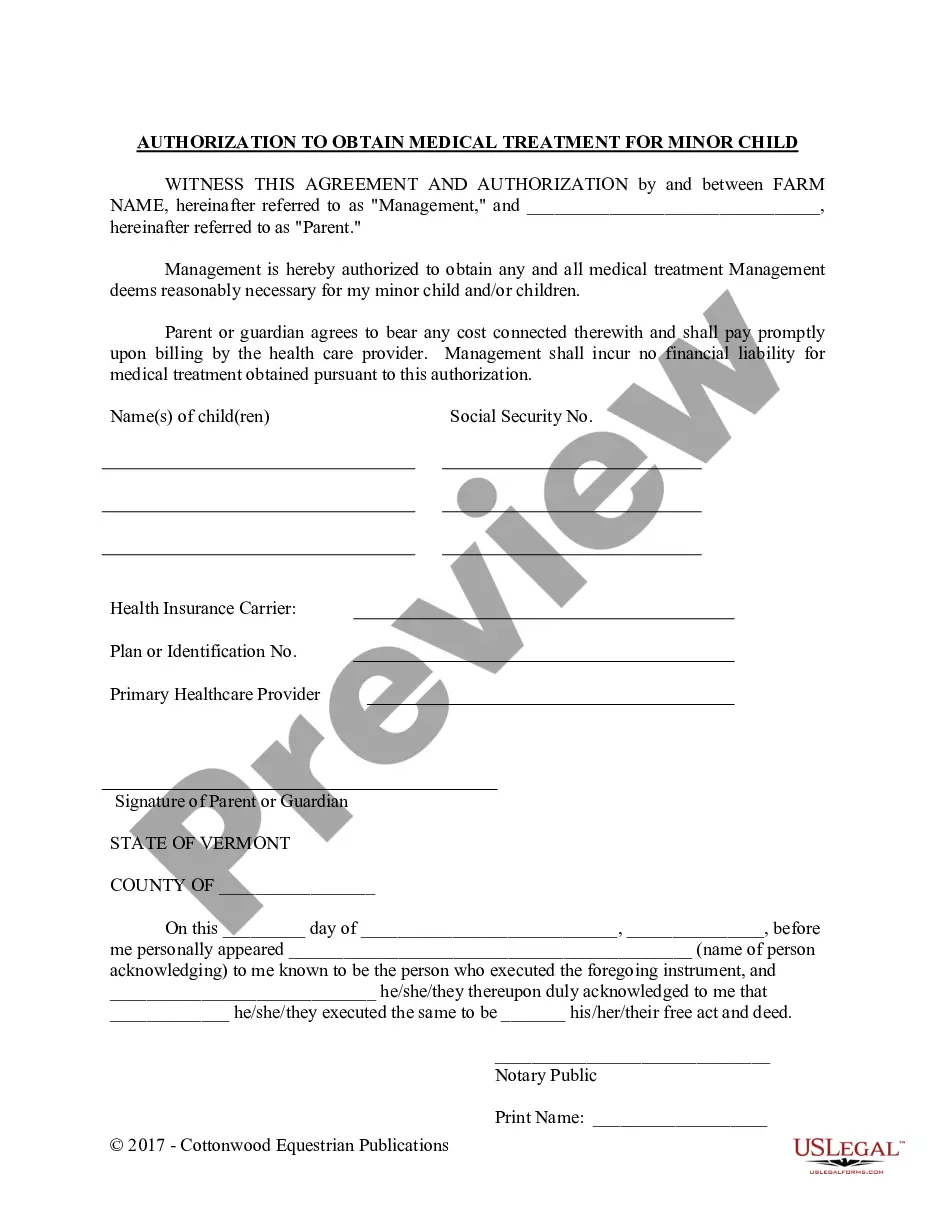
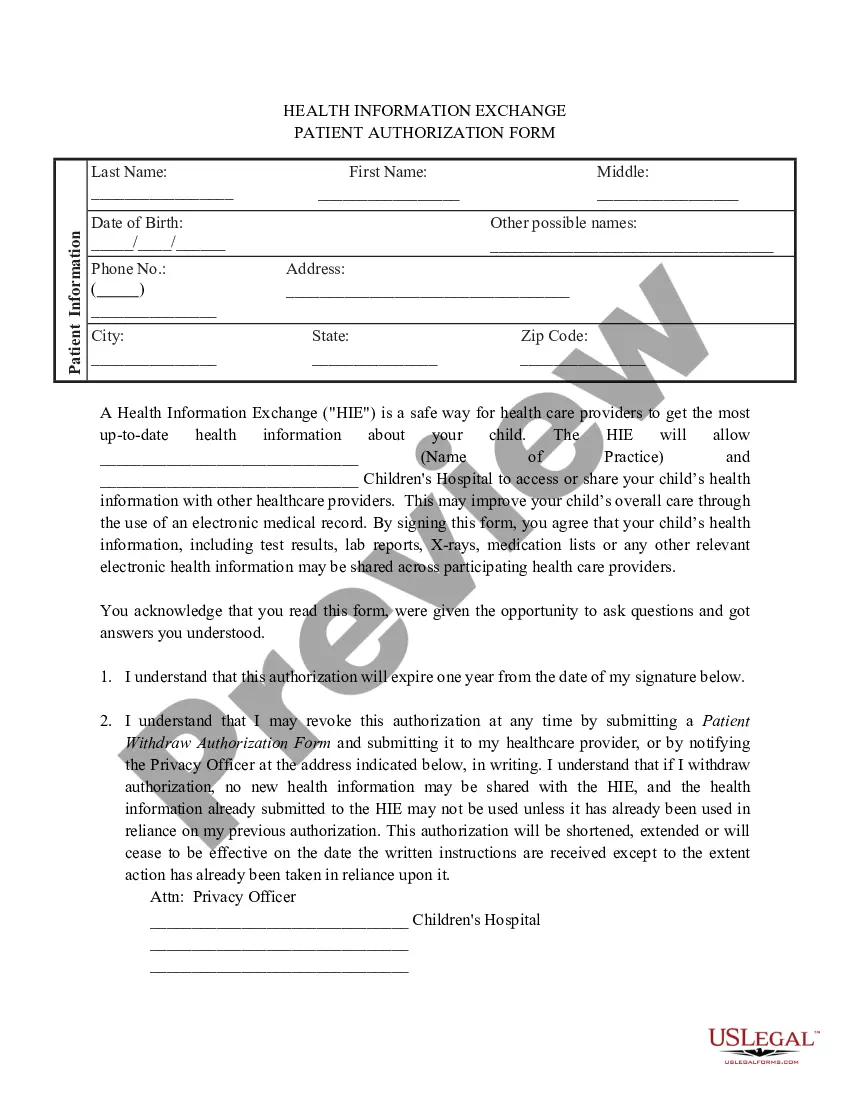
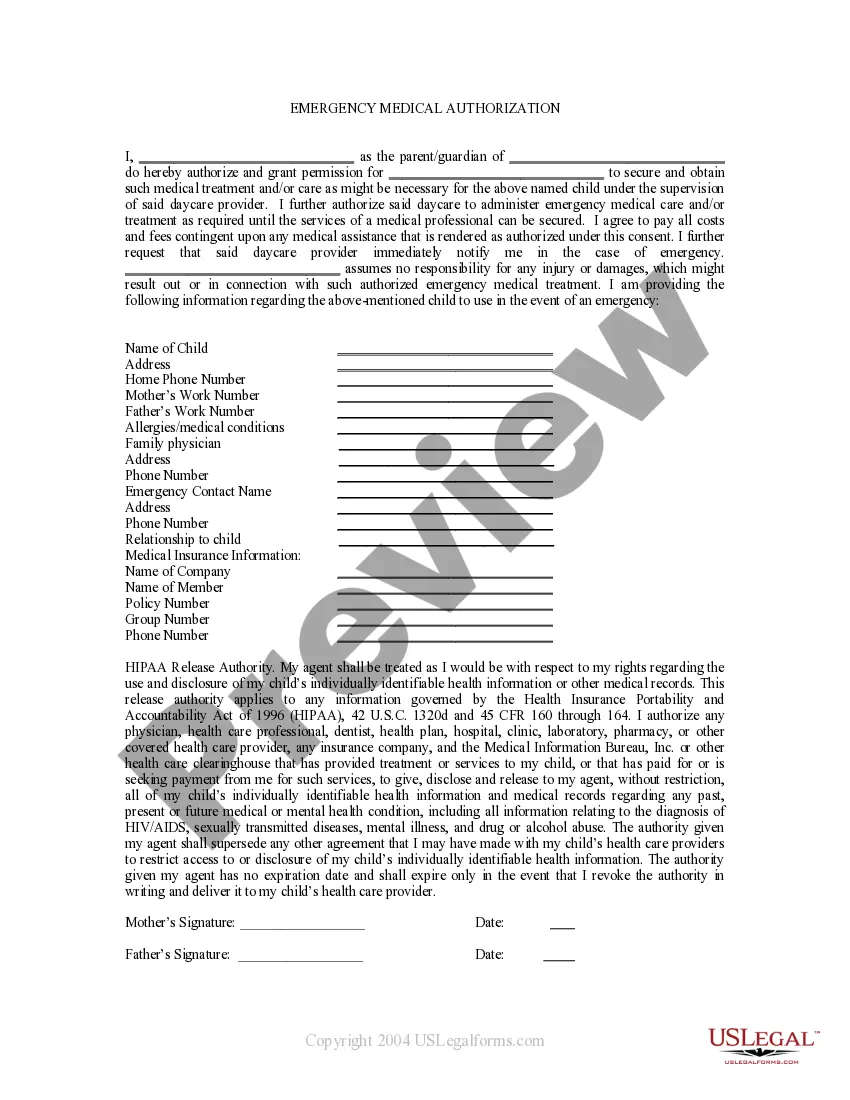
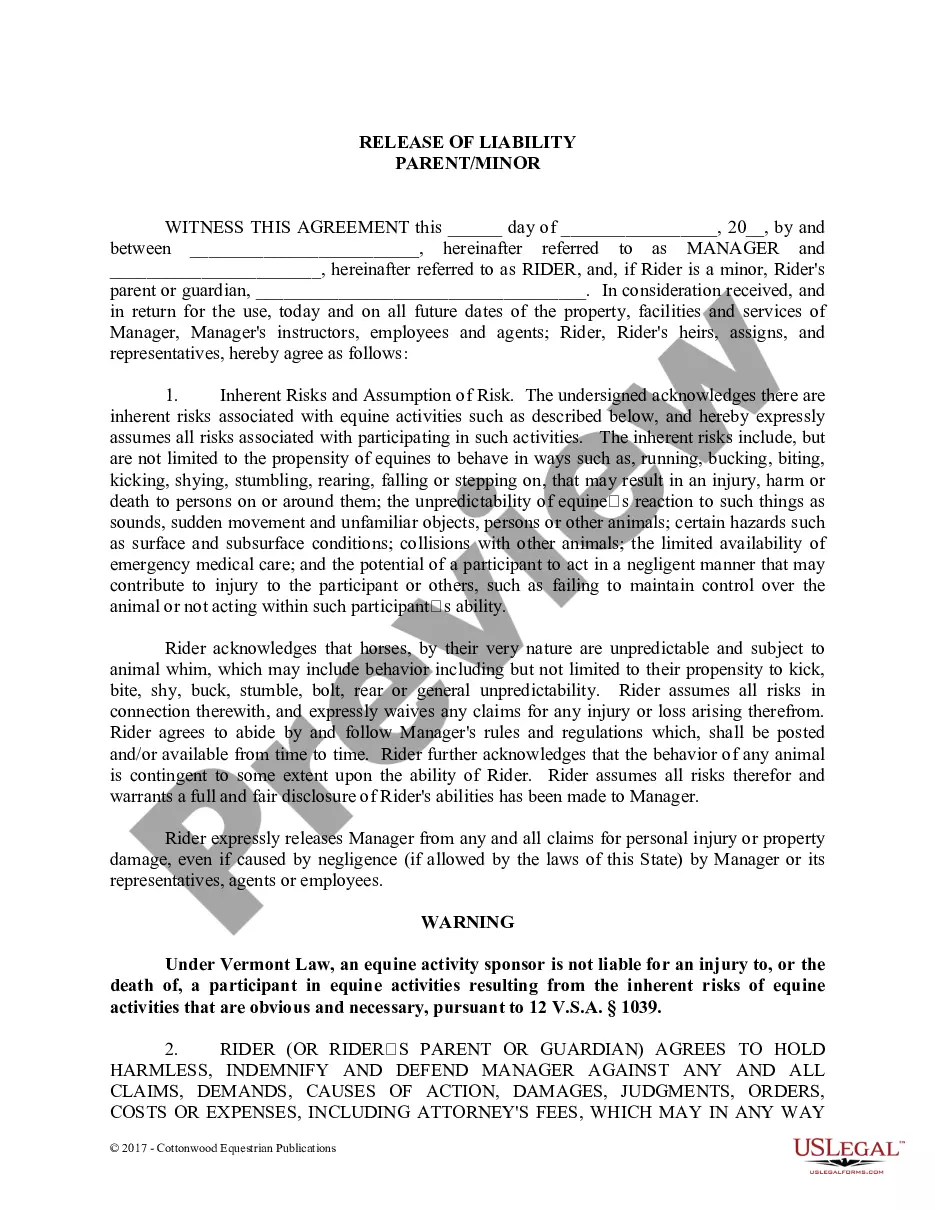
The Authorization To Obtain Medical Treatment For Minor Child is a crucial legal document designed for situations where a minor may require immediate medical attention while participating in equine activities. This form empowers farm management to seek necessary medical care in emergencies, ensuring that children can receive timely treatment without delay. It differs from general medical authorization forms in its specific focus on equine-related incidents.
Key components of this form
- Details of the farm management authorized to obtain treatment.
- Parent or guardian's acknowledgment of responsibility for medical costs.
- Identification of the minor child or children involved in equine activities.
- Health insurance information for billing purposes.
- Signature of the parent or guardian to validate the authorization.
- Notarization section to verify the identity of the signatory.

Situations where this form applies
This form should be used whenever a minor child is participating in horse riding or other equine activities, particularly in scenarios where there is a risk of injury. It is essential to have this authorization in place before engaging in such activities to ensure that emergency medical treatment can be accessed without hesitation.
Who this form is for
- Parents or guardians of minor children participating in equine activities.
- Farm and equestrian facility managers seeking to ensure immediate medical care for minors.
- Any organization or club involved in horse training or riding programs for children.
Instructions for completing this form
- Identify the farm management and enter the name of the facility.
- Fill in the name and details of the minor child or children.
- Provide health insurance information, including the carrier and policy number.
- Have the parent or guardian sign the form in the designated area.
- Complete the notarization section, if necessary, to validate the document.
Notarization guidance
Yes, this form must be notarized to be legally valid. Taking advantage of US Legal Formsâ online notarization service can simplify this process, offering secure video calls with notaries who can validate your documents without the need for in-person visits.
Get your form ready online
Our built-in tools help you complete, sign, share, and store your documents in one place.
Make edits, fill in missing information, and update formatting in US Legal Forms—just like you would in MS Word.
Download a copy, print it, send it by email, or mail it via USPS—whatever works best for your next step.
Sign and collect signatures with our SignNow integration. Send to multiple recipients, set reminders, and more. Go Premium to unlock E-Sign.
If this form requires notarization, complete it online through a secure video call—no need to meet a notary in person or wait for an appointment.
We protect your documents and personal data by following strict security and privacy standards.

Make edits, fill in missing information, and update formatting in US Legal Forms—just like you would in MS Word.

Download a copy, print it, send it by email, or mail it via USPS—whatever works best for your next step.

Sign and collect signatures with our SignNow integration. Send to multiple recipients, set reminders, and more. Go Premium to unlock E-Sign.

If this form requires notarization, complete it online through a secure video call—no need to meet a notary in person or wait for an appointment.

We protect your documents and personal data by following strict security and privacy standards.
Avoid these common issues
- Failing to complete all sections of the form, such as missing the child's health insurance details.
- Not having the form notarized if required by state law.
- Using outdated or incorrect information about the farm management or healthcare provider.
Why use this form online
- Immediate access to a comprehensive form that is easy to download and print.
- Editable fields allow for customization to fit specific needs and situations.
- Reliability of professionally drafted documents created by licensed attorneys.
Main things to remember
- This form authorizes farm management to seek medical treatment for minors in equine activities.
- It establishes financial responsibility for medical costs incurred.
- Proper completion and notarization of the form are crucial for its legality.
- The form is applicable across multiple states; however, local laws should be considered.
Looking for another form?
Form popularity
FAQ
Step 1 Find a Competent Guardian. Step 2 Inform the Guardian of Child's Medical Issues (if any) Step 3 Inform the Guardian of the Child's Medications. Step 4 Determine an End Date. Step 5 Sign the Document.
If you share legal custody with your child's other parent or parents, you will want to arrange to have the form notarized together.Once the covered time period is up, a new medical release form will need to be notarized for a caregiver's authority to make medical decisions to continue.
A notarized letter of consent will be required for children who travel without one or both of their parents or legal guardians.There is no standard-issue minor travel consent form, though there are templates online that may be used as examples.
The grandparents' medical consent form allows a parent or legal guardian to hand over all responsibility regarding their child's health care decisions to one of the child's grandparents.
MINOR MUST BE EMANCIPATED (GENERALLY 14 YEARS OF AGE OR OLDER) LAW/DETAILS MAY/MUST THE HEALTH CARE PROVIDER INFORM A PARENT ABOUT THIS CARE OR DISCLOSE RELATED MEDICAL INFORMATION TO THEM? An emancipated minor may consent to medical, dental and psychiatric care.
Since the 1990s, California law has afforded minors the right to consent to certain types of medical care, such as the diagnosis and treatment of sexually transmitted diseases, without the consent of their parent or guardian.
If you share legal custody with your child's other parent or parents, you will want to arrange to have the form notarized together.Once the covered time period is up, a new medical release form will need to be notarized for a caregiver's authority to make medical decisions to continue.
A legal document, dated and signed by a patient and his or her health care provider, designating that the patient has been advised about the care about to be received.
A care provider may perform a routine test or treatment on a minor who is over the age of 14 without parental consent and without accompaniment, on condition that the minor him/herself gives informed consent for the medical procedure.