Answer by Defendant in a Civil Lawsuit Alleging the Affirmative Defense of Contributory Negligence
About this form
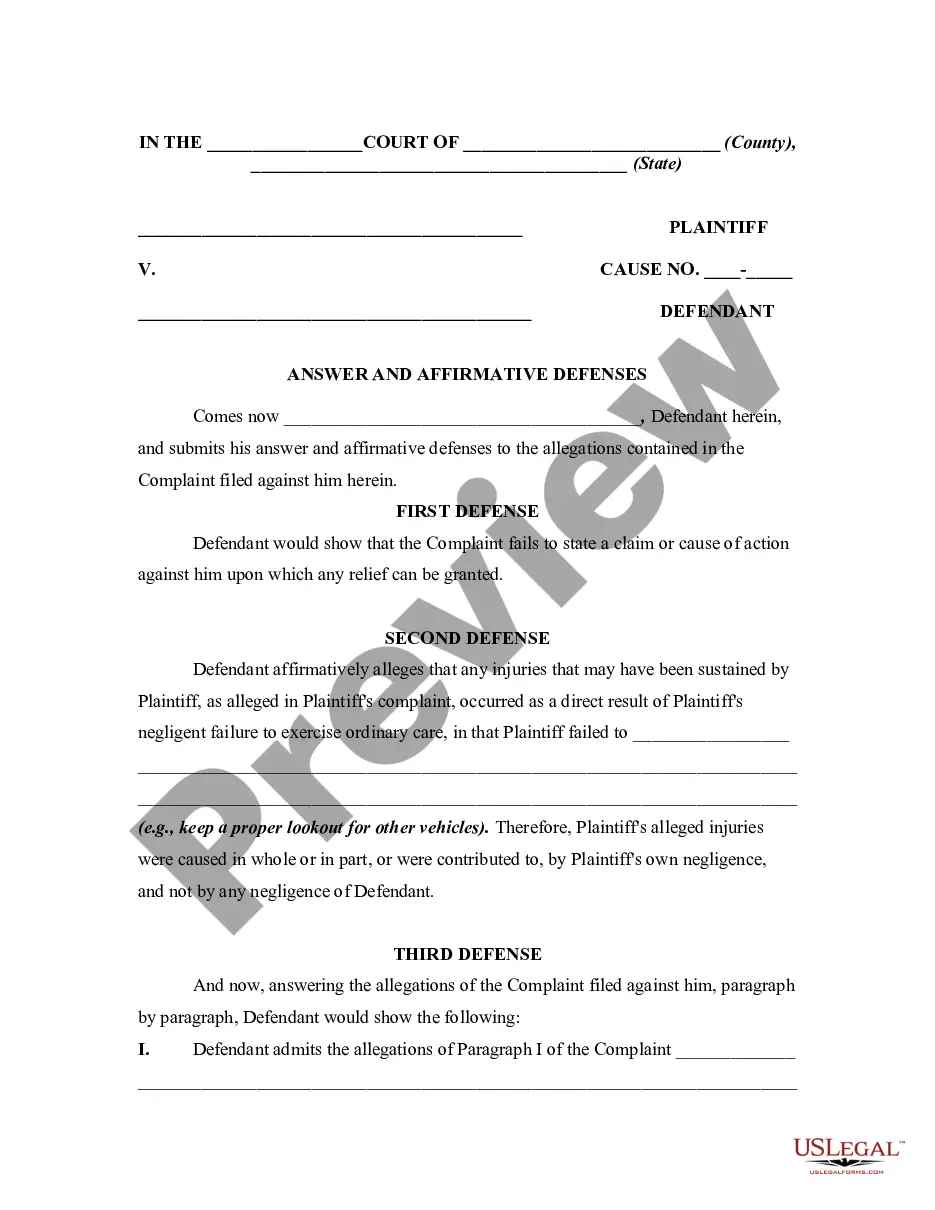
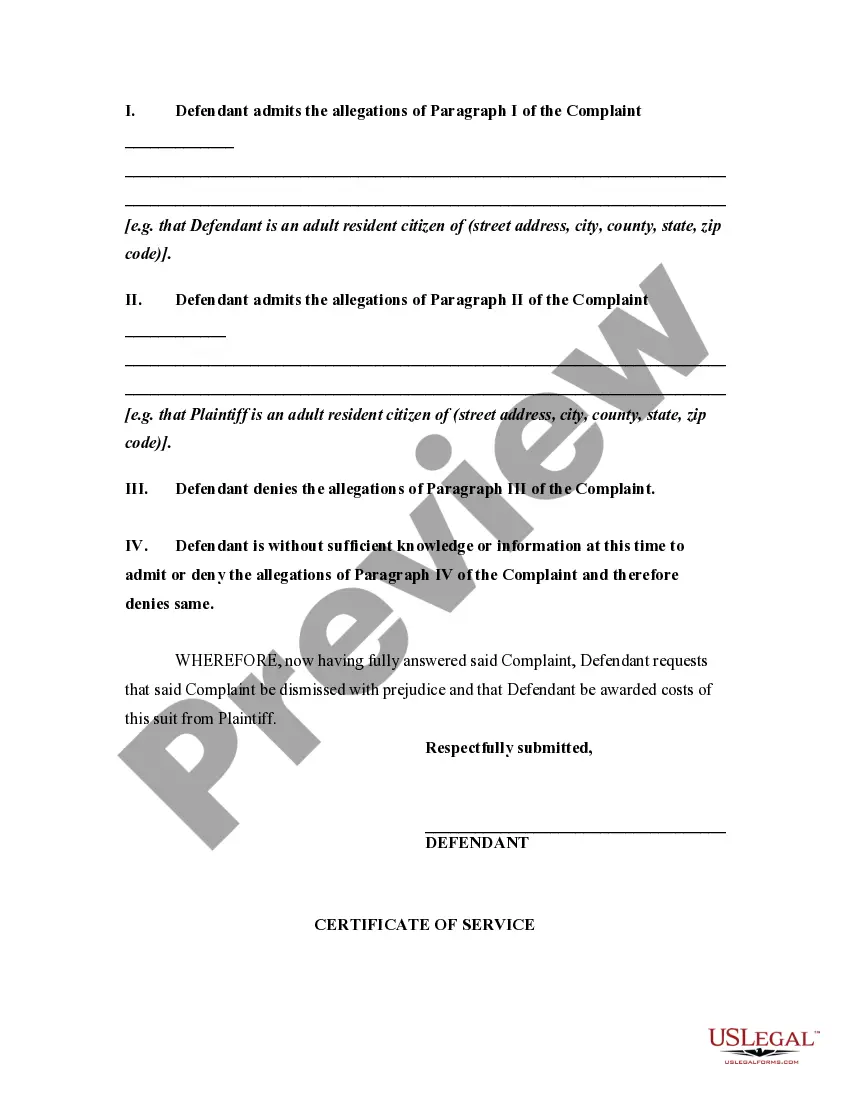
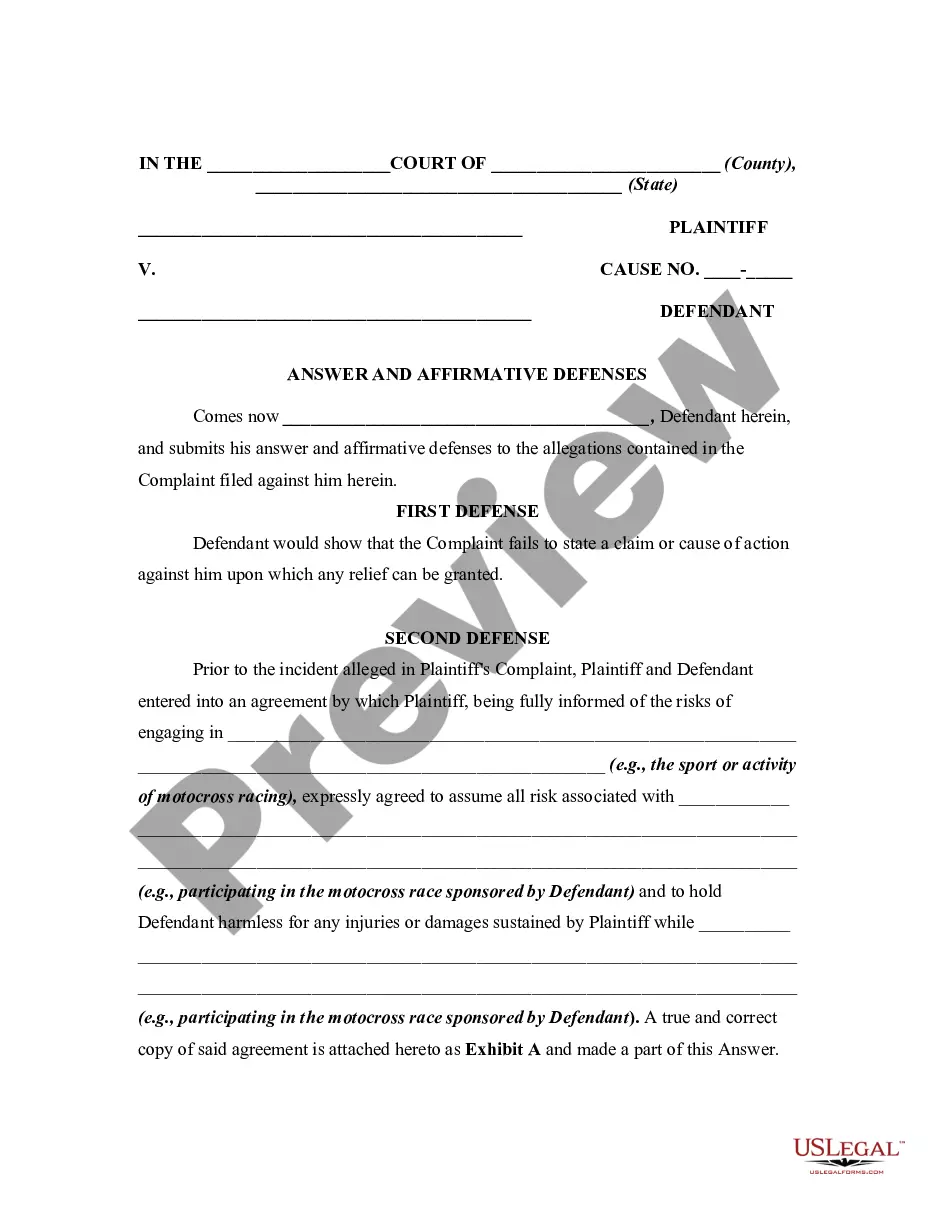
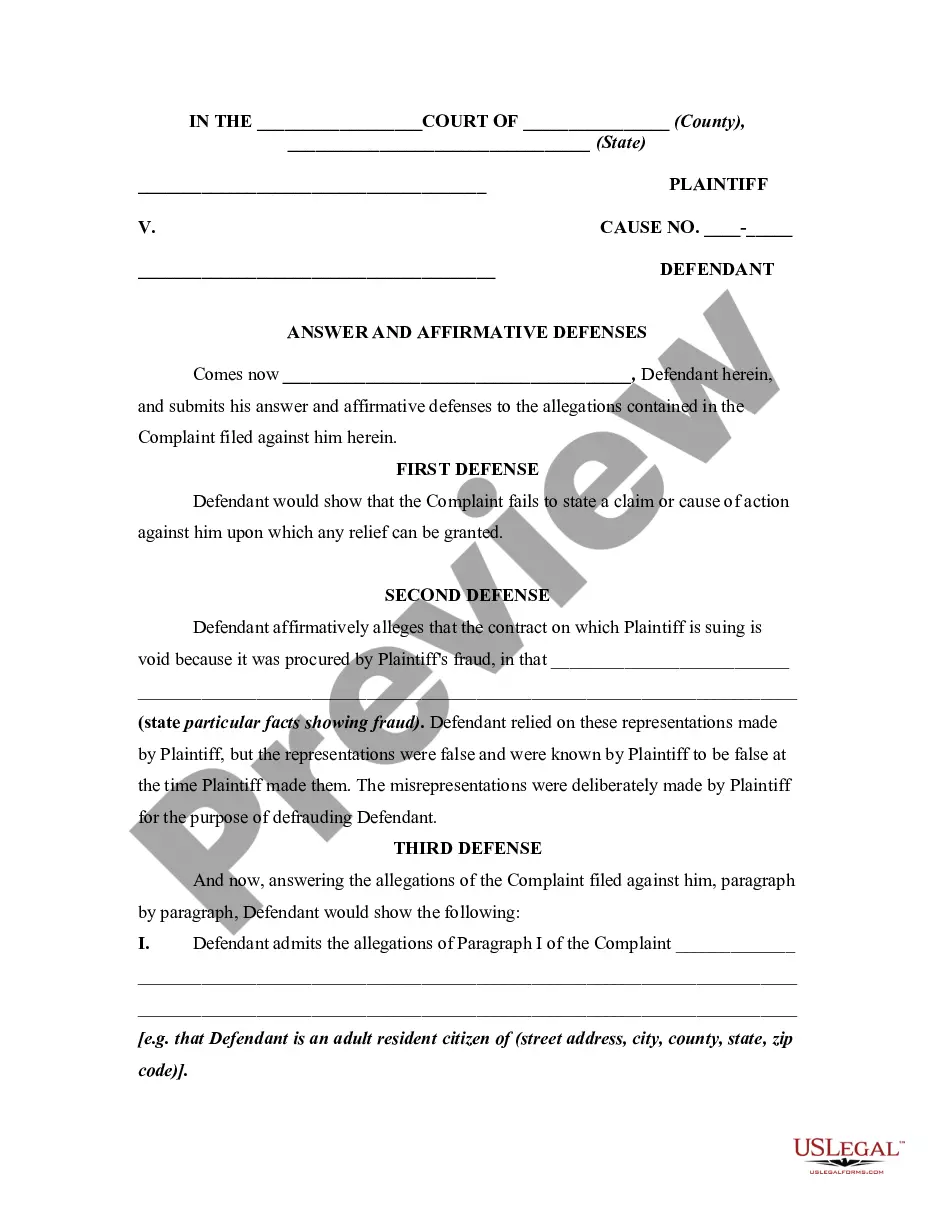
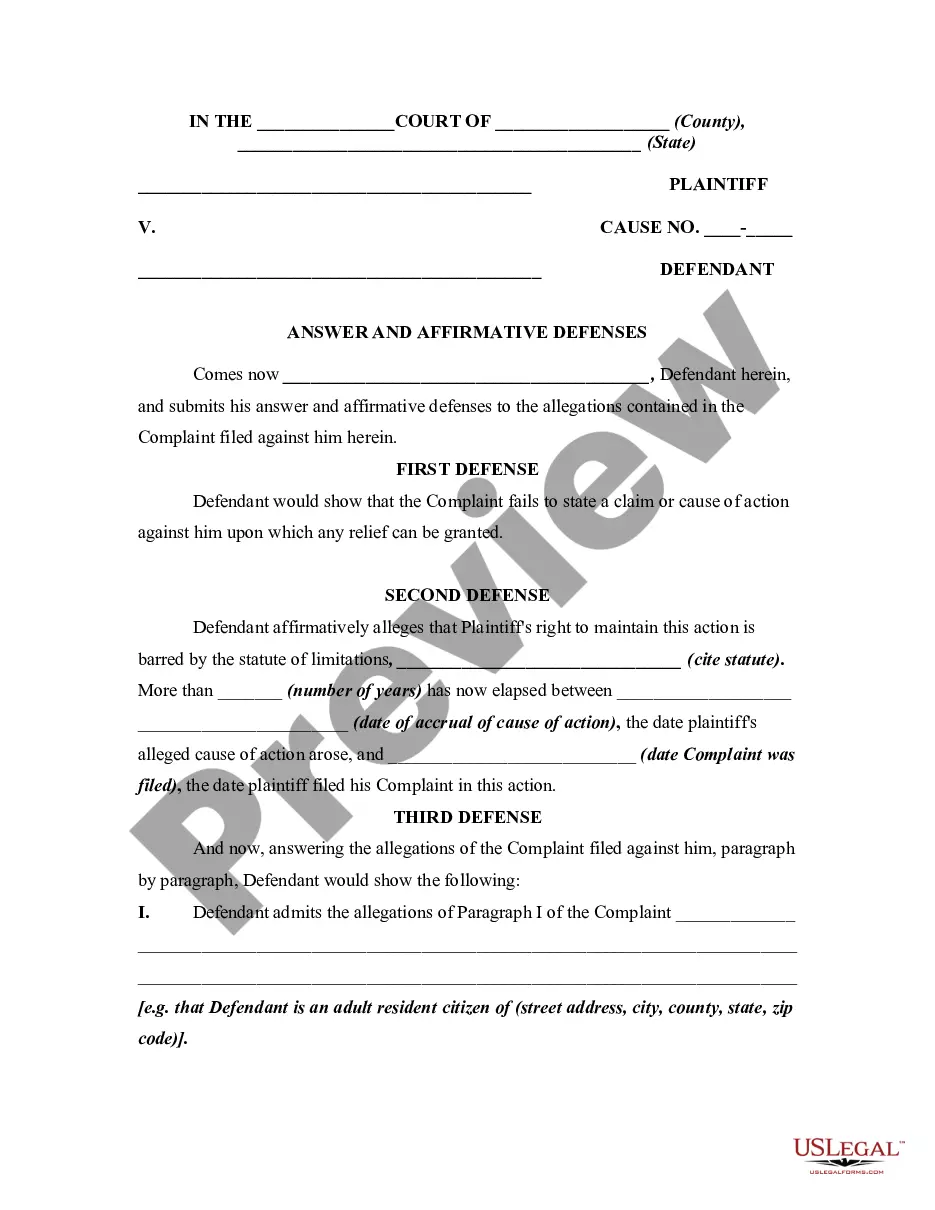
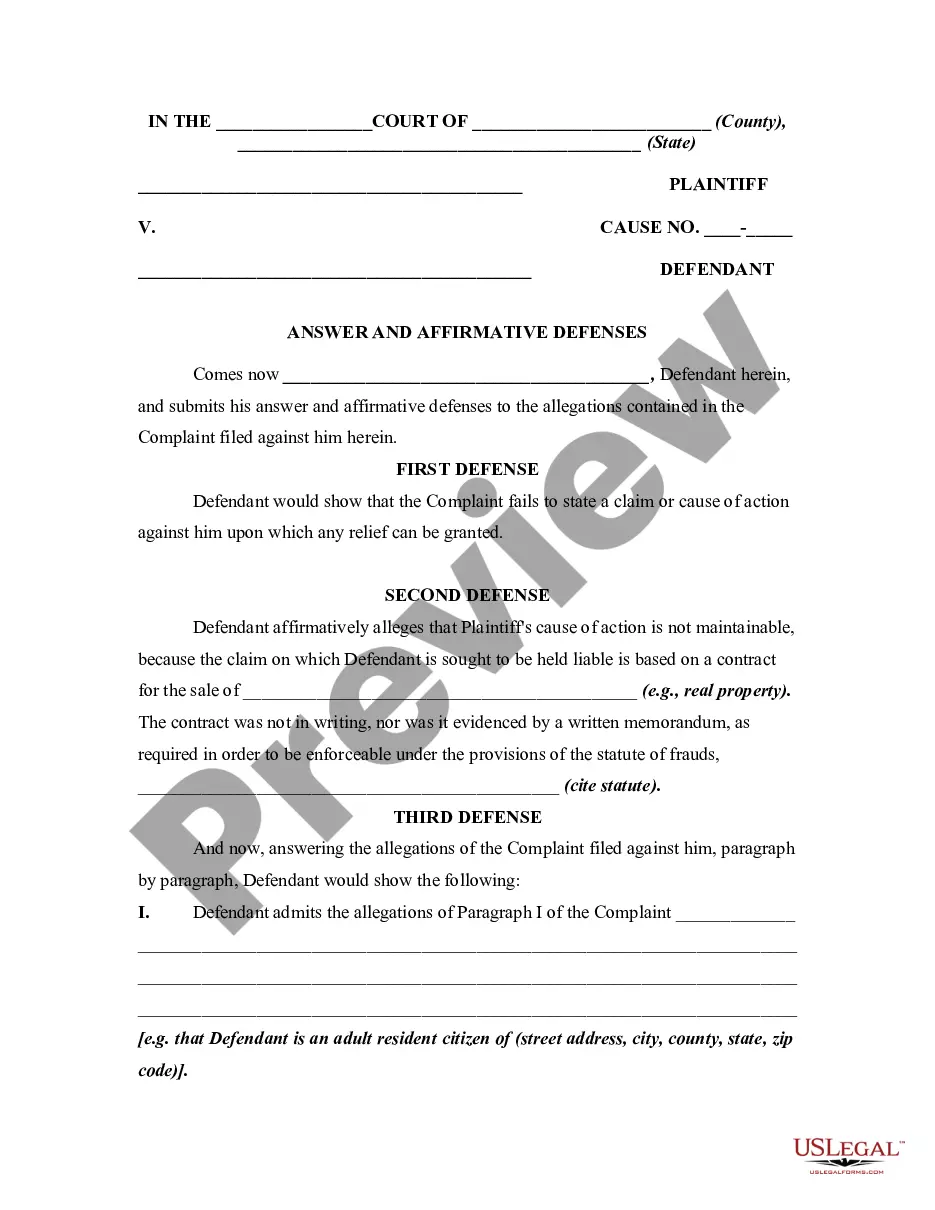
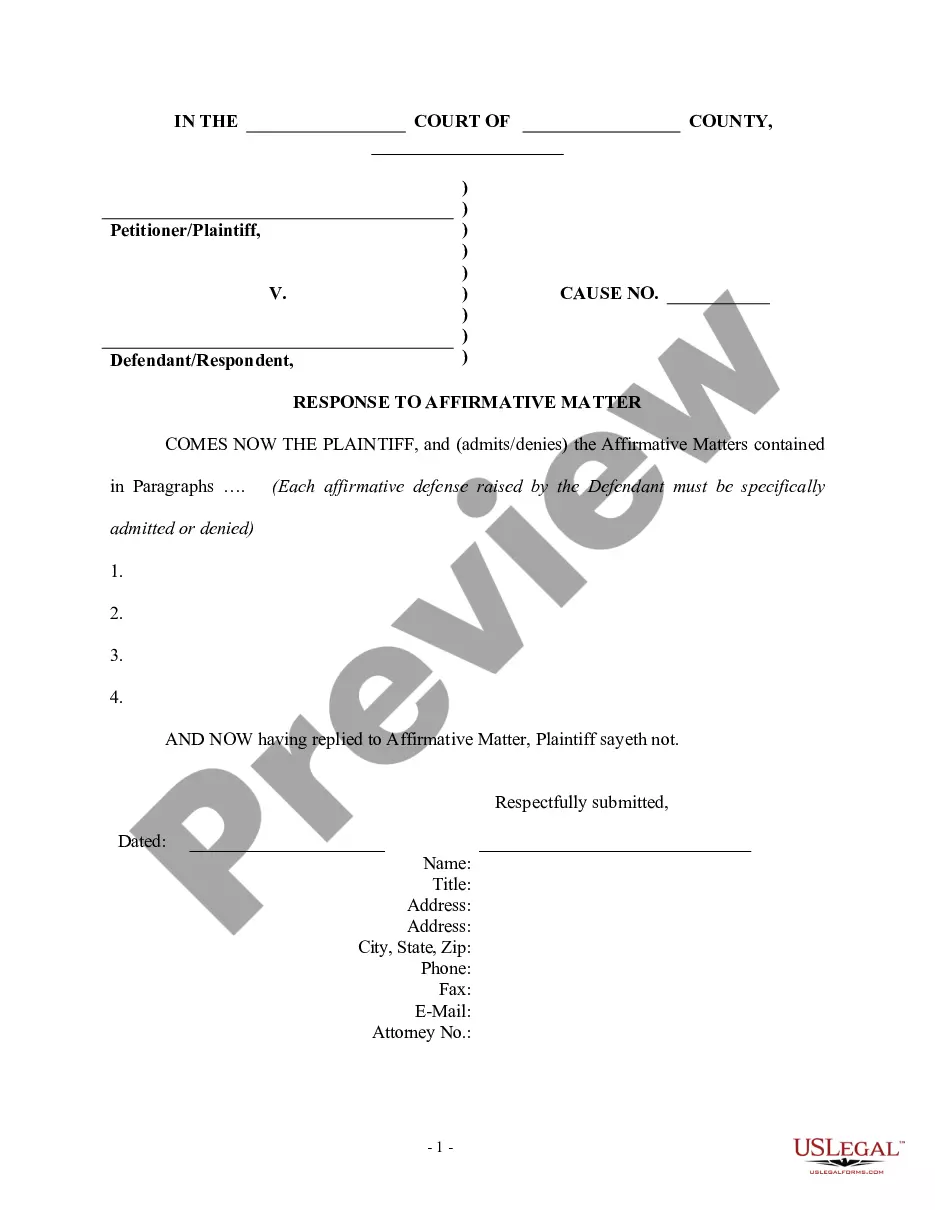
This form, titled "Answer by Defendant in a Civil Lawsuit Alleging the Affirmative Defense of Contributory Negligence," is a legal document that allows a defendant to respond to the allegations made in a civil lawsuit. Unlike a simple denial of the claims, this form enables the defendant to assert their own defenses, specifically the concept of contributory negligence. By using this form, a defendant can argue that the plaintiff's own negligence contributed to their injuries, potentially reducing or eliminating the defendant's liability.
Key parts of this document
- Case caption: Includes court information, parties involved, and the case number.
- Answer section: The defendant admits or denies specific allegations made in the plaintiff's complaint.
- First defense: Argument that the complaint fails to state a claim against the defendant.
- Second defense: Assertion that the plaintiff's own negligence contributed to their injuries.
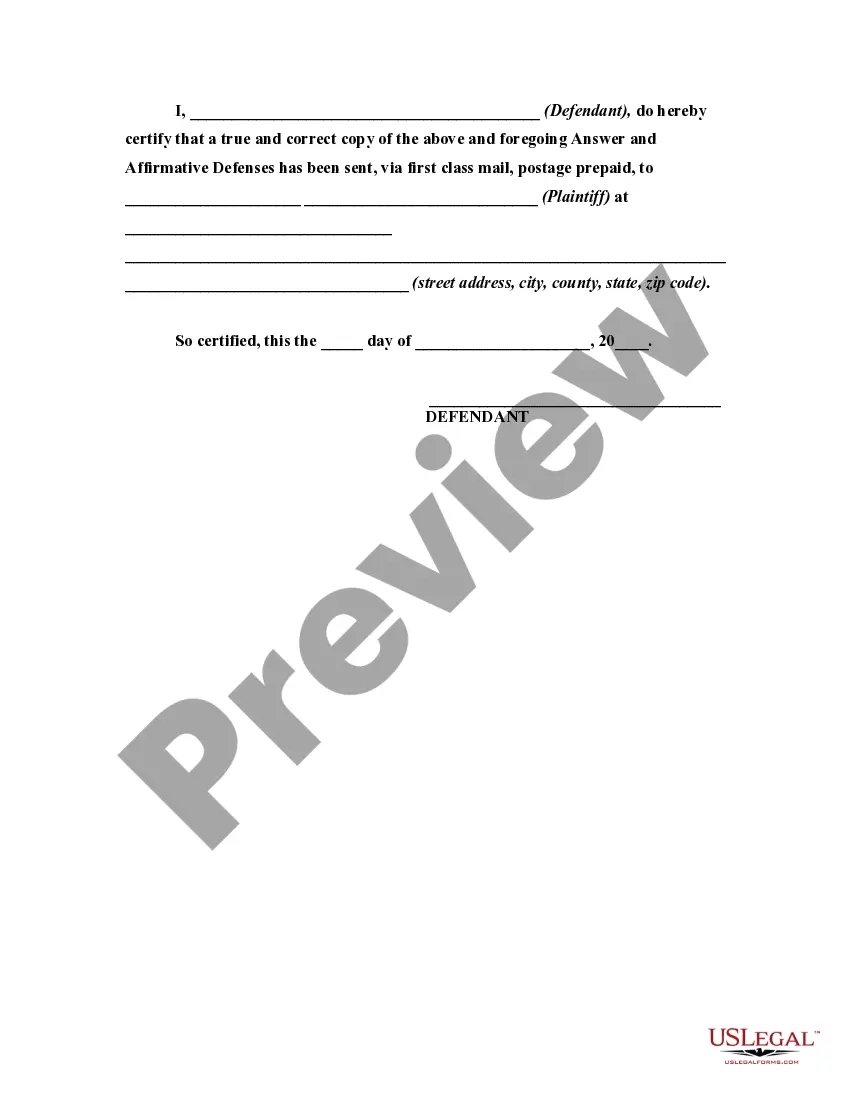
- Certification of service: Confirmation that the response has been sent to the plaintiff.
When this form is needed
This form should be used when a defendant is facing a civil lawsuit where the plaintiff has claimed negligence. It is appropriate when the defendant believes that the plaintiff's own actions contributed to the harm being claimed. This defense is crucial in asserting legal rights and can impact the outcome of the case, especially in jurisdictions where contributory negligence affects liability.
Who should use this form
This form is intended for:
- Defendants in civil lawsuits alleging negligence.
- Individuals or entities seeking to assert the defense of contributory negligence.
- Those who wish to formally respond to a plaintiff's complaint in a legal proceeding.
Instructions for completing this form
- Identify the parties: Fill in the court's name, county, and state at the top of the form.
- Complete the answer section: Respond to each allegation made by the plaintiff, indicating whether you admit, deny, or lack knowledge.
- Specify the affirmative defenses: Clearly outline your defenses, including specific details on how the plaintiff's actions contributed to their alleged injuries.
- Sign and date the document: Make sure to sign under the declaration section as the defendant.
- Serve the plaintiff: Ensure a copy of the completed form is sent to the plaintiff's address as certified.
Does this document require notarization?
This form does not typically require notarization unless specified by local law. It's important to check with your state's regulations to confirm notarization requirements before filing.
Get your form ready online
Our built-in tools help you complete, sign, share, and store your documents in one place.
Make edits, fill in missing information, and update formatting in US Legal Forms—just like you would in MS Word.
Download a copy, print it, send it by email, or mail it via USPS—whatever works best for your next step.
Sign and collect signatures with our SignNow integration. Send to multiple recipients, set reminders, and more. Go Premium to unlock E-Sign.
If this form requires notarization, complete it online through a secure video call—no need to meet a notary in person or wait for an appointment.
We protect your documents and personal data by following strict security and privacy standards.

Make edits, fill in missing information, and update formatting in US Legal Forms—just like you would in MS Word.

Download a copy, print it, send it by email, or mail it via USPS—whatever works best for your next step.

Sign and collect signatures with our SignNow integration. Send to multiple recipients, set reminders, and more. Go Premium to unlock E-Sign.

If this form requires notarization, complete it online through a secure video call—no need to meet a notary in person or wait for an appointment.

We protect your documents and personal data by following strict security and privacy standards.
Typical mistakes to avoid
- Failing to respond to all allegations in the complaint.
- Providing insufficient details regarding the affirmative defense of contributory negligence.
- Not signing the document before filing it with the court.
- Ignoring local court rules for filing deadlines and procedures.
Why complete this form online
- Convenience: Access and complete the form from anywhere with an internet connection.
- Editability: Customize the form easily to fit your specific case's details.
- Guidance: Follow clear instructions to help ensure compliance with legal standards.
Legal use & context
- This form is enforceable as part of the legal defenses available in civil litigation.
- Understanding contributory negligence is crucial, as it varies by state jurisdiction.
- Defendants should be aware of the potential impacts of this defense on their case outcomes.
Main things to remember
- This form allows defendants to formally respond to claims of negligence in civil lawsuits.
- Using the affirmative defense of contributory negligence can significantly impact liability.
- Ensure compliance with local rules and provide detailed responses in all sections of the form.
Looking for another form?
Form popularity
FAQ
A party presents a justiciable defense of estoppel if he or she shows a misrepresentation of a material fact upon which the party asserting estoppel detrimentally relied.
The name of the court - you can find this at the top of the Complaint you got. The Court Division - this is the county where the complaint was filed. The Docket No. The Plaintiff's name. The Defendant's name - your name. The kind of complaint you are answering.
An affirmative defense operates to prevent conviction even when the prosecutor has proof beyond a reasonable doubt as to every element of the crime. Some jurisdictions place the burden on the defendant to prove the defense, while others require that the prosecution disprove the defense beyond a reasonable doubt.
Current filing fees are: In district court, the fee for defendant's first filing is typically $223.00, but that might vary depending on the type of case. To verify your filing fee, click to visit Filing Fees and Waivers. In justice court, the fee for defendant's first filing is typically $71.
When drafting an answer, one must: (1) follow the local, state, and federal court rules; (2) research the legal claims in the adversary's complaint; (3) respond to the adversary's factual allegations; and (4) assert affirmative defenses, counterclaims, cross-claims, or third-party claims, if applicable.
File an answer. The most common way to respond to a complaint is by filing an answer. Negotiate. Being served with a lawsuit does not automatically mean you need to appear in court. Request more information from the plaintiff. Cross-complain. File a motion to dismiss.
You can file an answer or a general denial. Filing an answer. You can file a motion In certain situations, you can respond to the lawsuit by filing a motion (a request) that usually tells the court that the plaintiff made a mistake in the lawsuit. Talk to a lawyer!
An affirmative defense to a civil lawsuit or criminal charge is a fact or set of facts other than those alleged by the plaintiff or prosecutor which, if proven by the defendant, defeats or mitigates the legal consequences of the defendant's otherwise unlawful conduct.
Affirmative defenses are legal defenses that raise new facts or issues not raised in the Complaint. If you want the court to consider your legal defenses you MUST include them in your Answer. Therefore, any possible defense you might want the court to consider at trial should be in your Answer.