Complaint to Quiet Title by Person Claiming Adverse Possession - Squatters Rights
Understanding this form
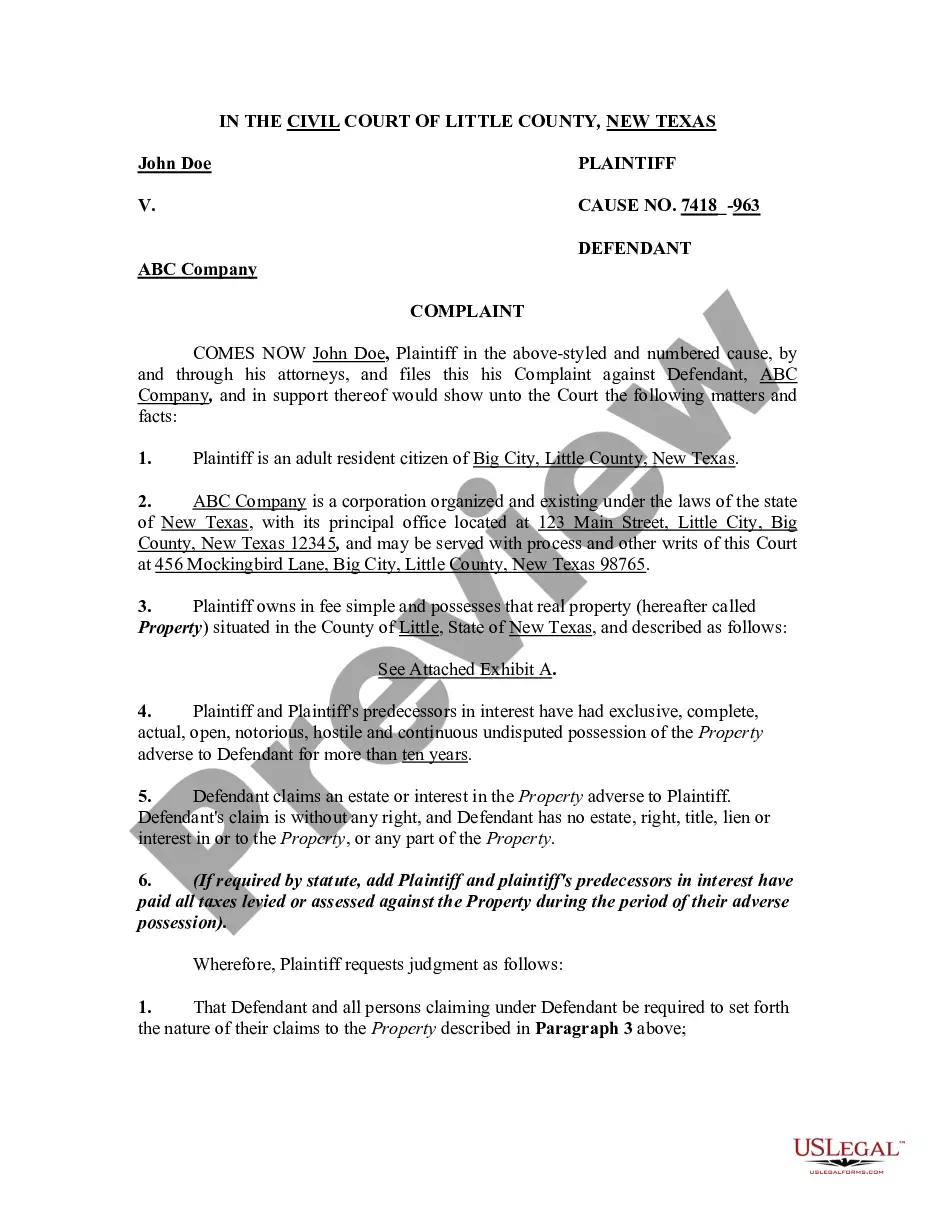
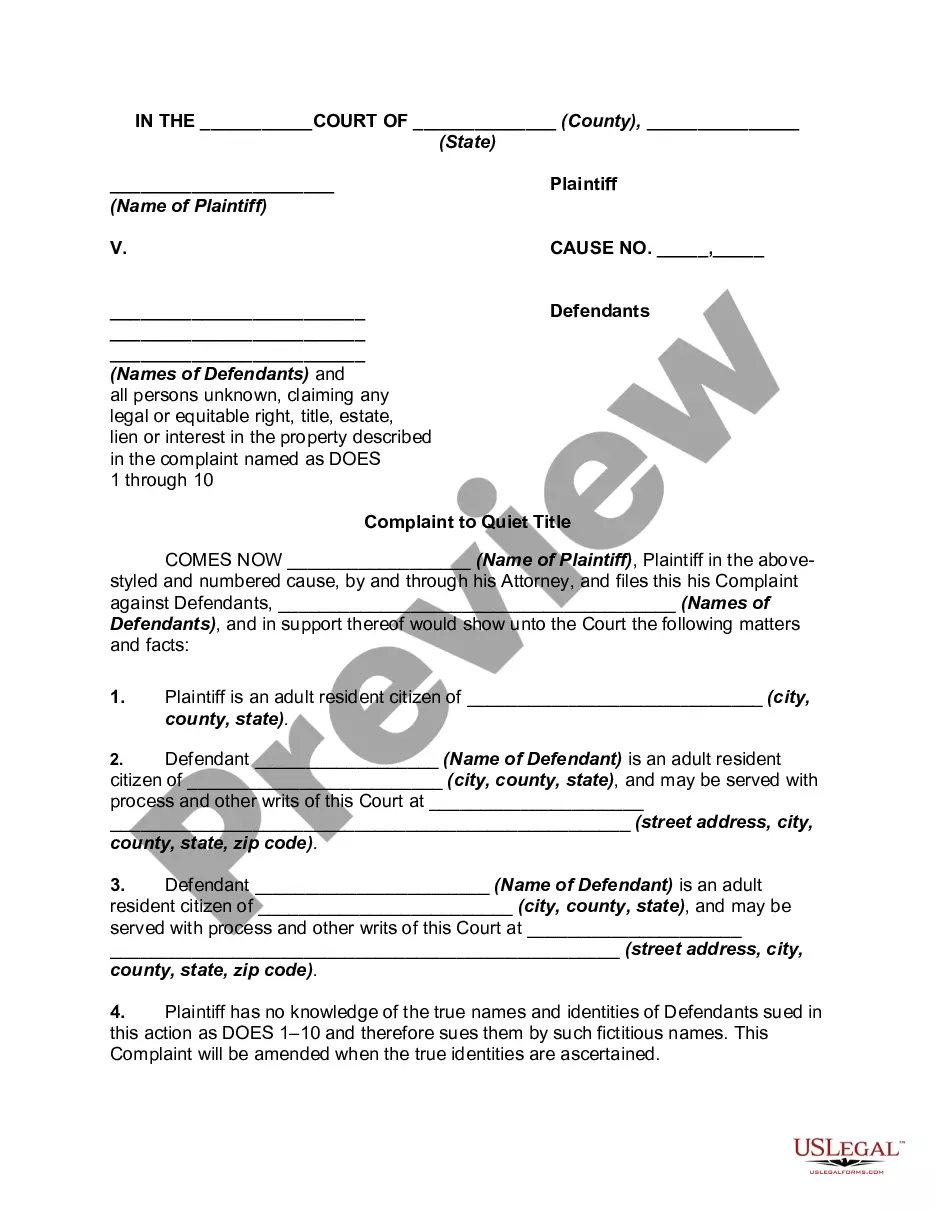
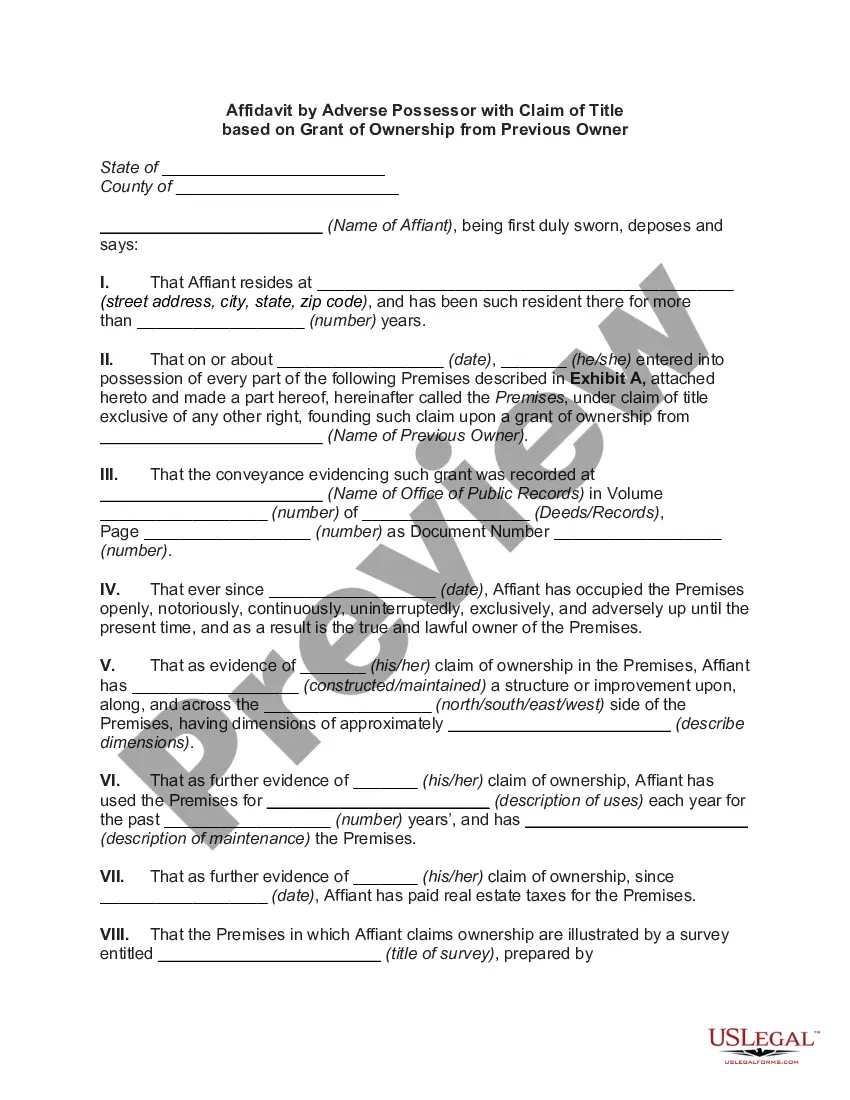
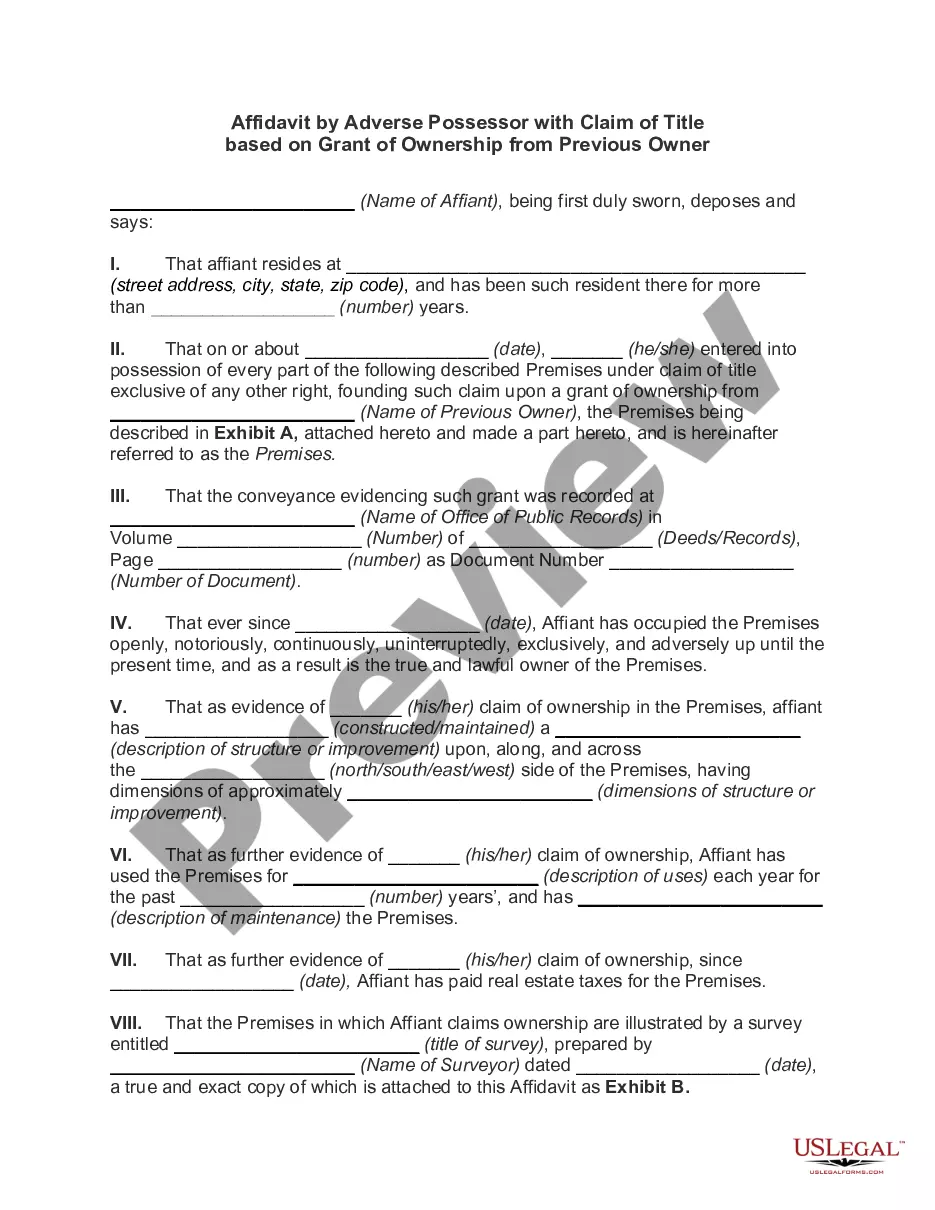
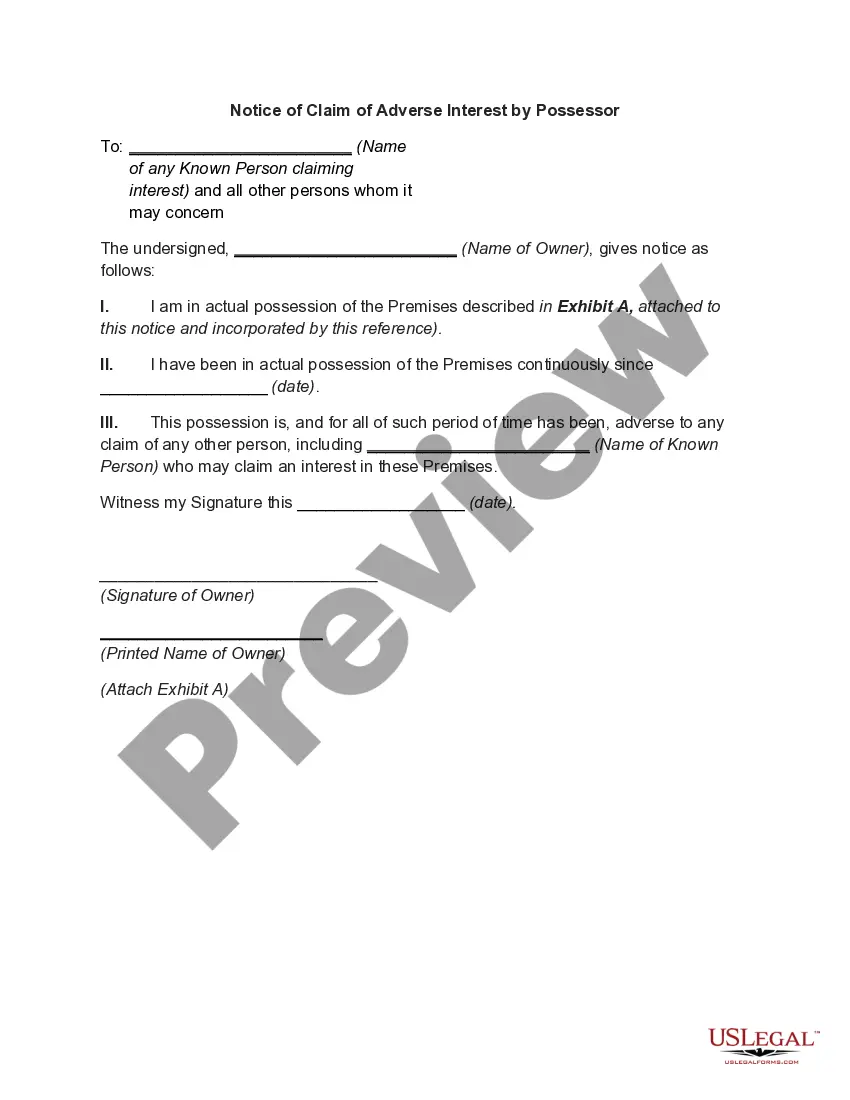
The Complaint to Quiet Title by Person Claiming Adverse Possession form is used to establish legal ownership of a property when someone has occupied it without the true owner's permission for a specified period of time. This process, known as adverse possession, allows individuals to gain ownership rights by demonstrating actual, visible, exclusive, and continuous possession of the property. This form differs from other property disputes as it specifically targets claims made by individuals who have possessed the property openly and notoriously in defiance of the owner's rights.
Key components of this form
- Pleading details, including plaintiff and defendant information.
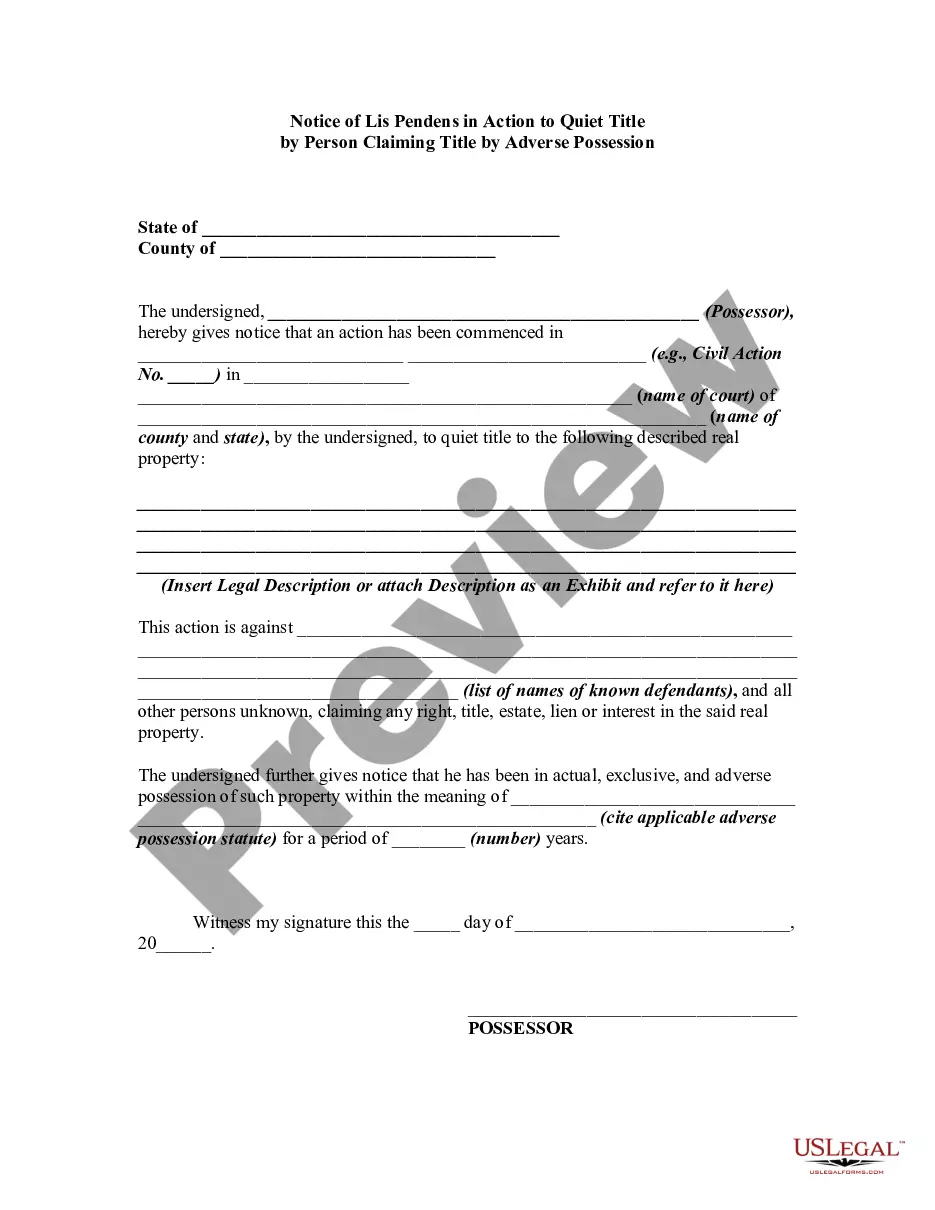
- Description of the property in dispute, including legal description.
- Statement of the plaintiff's claim to exclusive and continuous possession.
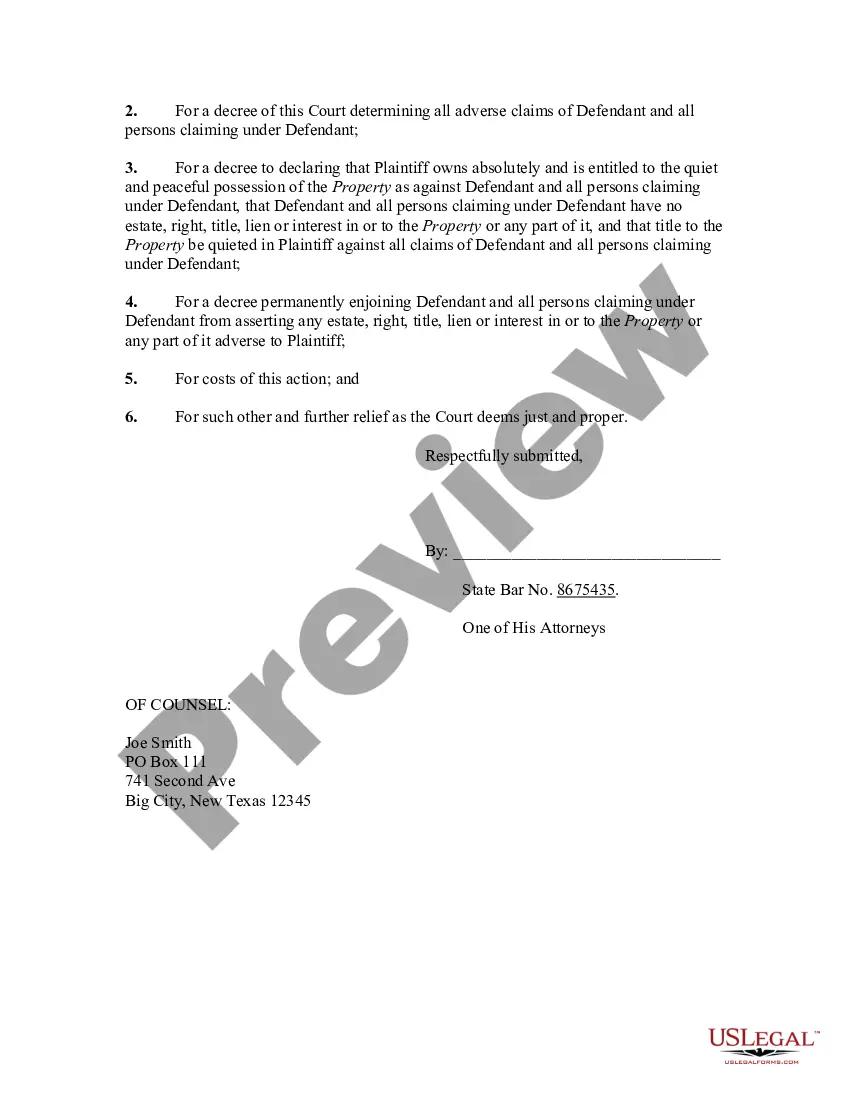
- Request for judgment and relief against the defendant's claim.
- Signature and attorney representation details.
When to use this form
This form is appropriate in scenarios where an individual has occupied a property for a certain statutory period and is seeking to establish legal ownership through adverse possession. It may be used in situations where the original owner is unaware of the occupancy or has not taken action to reclaim the property, allowing the possessor to formally challenge any competing claims to rights or ownership.
Who this form is for
- Individuals who have occupied a property without the owner's permission for the statutory period.
- Property possessors seeking to formalize their ownership rights.
- Anyone involved in a dispute over property ownership related to adverse possession.
How to complete this form
- Identify the parties involved: the plaintiff and the defendant.
- Provide the legal description of the property that is being claimed.
- State the duration and nature of the adverse possession.
- Specify the claims of the defendant that are being challenged.
- Include requested relief, detailing what you seek from the court.
- Sign the form with appropriate attorney representation details, if applicable.
Does this form need to be notarized?
This form must be notarized to be legally valid. US Legal Forms provides secure online notarization powered by Notarize, allowing you to complete the process through a verified video call.
Get your form ready online
Our built-in tools help you complete, sign, share, and store your documents in one place.
Make edits, fill in missing information, and update formatting in US Legal Forms—just like you would in MS Word.
Download a copy, print it, send it by email, or mail it via USPS—whatever works best for your next step.
Sign and collect signatures with our SignNow integration. Send to multiple recipients, set reminders, and more. Go Premium to unlock E-Sign.
If this form requires notarization, complete it online through a secure video call—no need to meet a notary in person or wait for an appointment.
We protect your documents and personal data by following strict security and privacy standards.

Make edits, fill in missing information, and update formatting in US Legal Forms—just like you would in MS Word.

Download a copy, print it, send it by email, or mail it via USPS—whatever works best for your next step.

Sign and collect signatures with our SignNow integration. Send to multiple recipients, set reminders, and more. Go Premium to unlock E-Sign.

If this form requires notarization, complete it online through a secure video call—no need to meet a notary in person or wait for an appointment.

We protect your documents and personal data by following strict security and privacy standards.
Typical mistakes to avoid
- Failing to provide a complete legal description of the property.
- Not specifying the exact duration of adverse possession.
- Omitting necessary signatures or attorney representation.
- Neglecting to tailor the form to comply with specific state laws.
Benefits of completing this form online
- Convenient access to professionally drafted legal templates.
- Editable forms that can be customized to fit your specific situation.
- Immediate download for quick filing.
- Confidence in compliance with legal standards and practices.
Looking for another form?

Form popularity
FAQ
Factual possession of the land (see below) an intention to possess the land to the exclusion of all others, including the legal owner. the possession must be 'adverse', ie without legal entitlement or without the owner's consent.
When two or more persons have adverse claims to the same property, any of them may file a quiet title action. The purpose of the quiet title action is to eliminate an adverse claim to a legal interest in the property and to establish, perfect, or quiet the title in the property in one or more of the claimants.
Many states, including California, allow squatters to gain legal possession of property as long as they comply with certain legal requirements.You must pay it for at least five years during the physical occupation of the property. This will allow you to make a claim of legal ownership.
They are (i) declaration of hostile animus (ii) long and uninterrupted possession of the person pleading ouster and (iii) exercise of right of exclusive ownership openly and to the knowledge of other co-owner.
In order to claim adverse possession, there are basic tests you have to meet. You have to prove that your use was open, notorious, hostile, actual, exclusive and continuous.Proving adverse possession is not easy, and you have to go to court to get a judge to rule.
Why would a property owner file a quiet title suit?the owner against liabilities and losses resulting from title defects. A lender's title insurance policy generally protects. the lender against the possibility that the lender's lien cannot be enforced.
Adverse possession is a doctrine under which a person in possession of land owned by someone else may acquire valid title to it, so long as certain common law requirements are met, and the adverse possessor is in possession for a sufficient period of time, as defined by a statute of limitations.
Open and Notorious. The person seeking adverse possession must occupy a parcel of land in a manner that is open and obvious. Exclusive. Hostile. Statutory Period. Continuous and Uninterrupted.
A party with a claim of ownership to land can file an action to quiet title, which serves as a sort of lawsuit against anyone and everyone else who has a claim to the land. If the owner prevails in the quiet title action, no further challenges to the title can be brought.