Exclusive License to Fish on Property of Another
Understanding this form
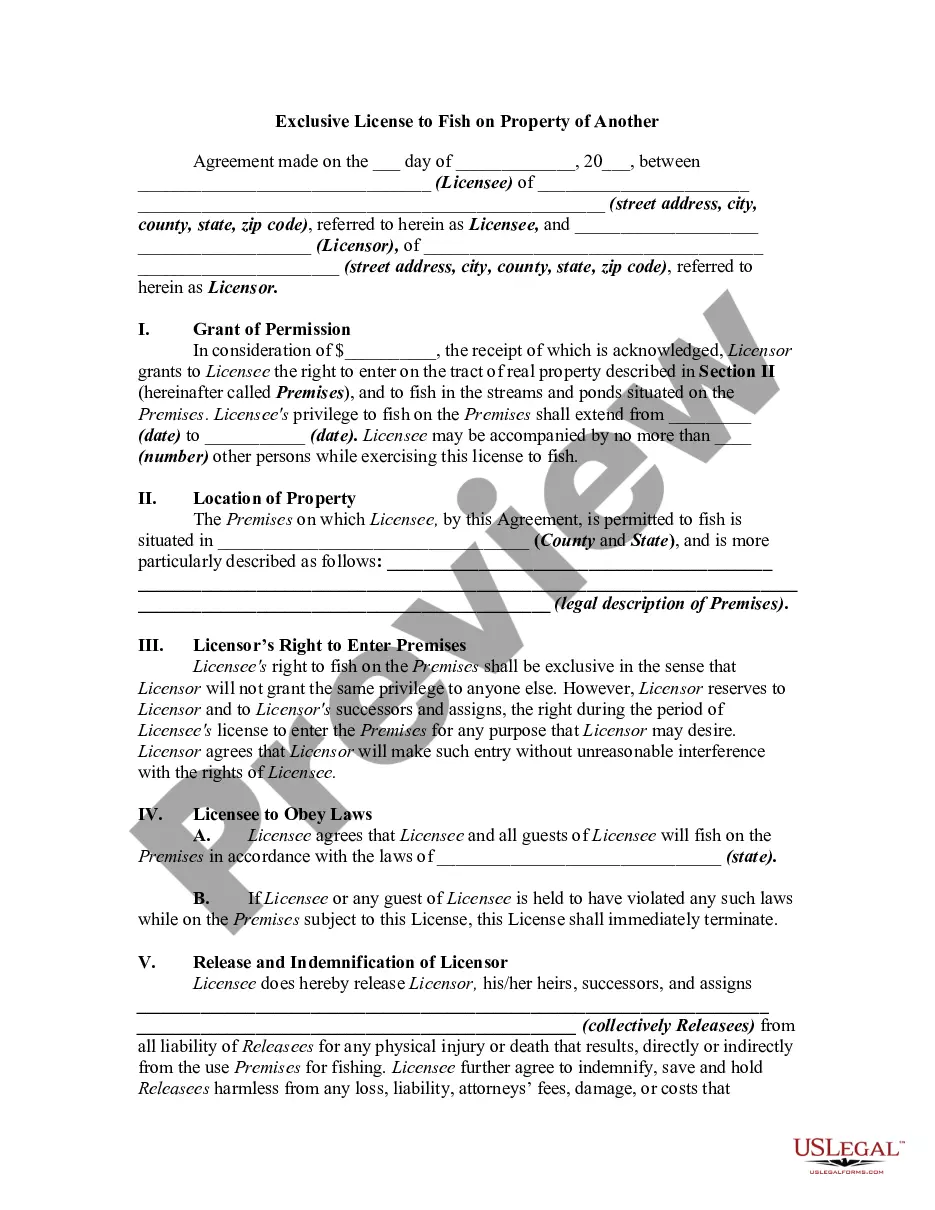
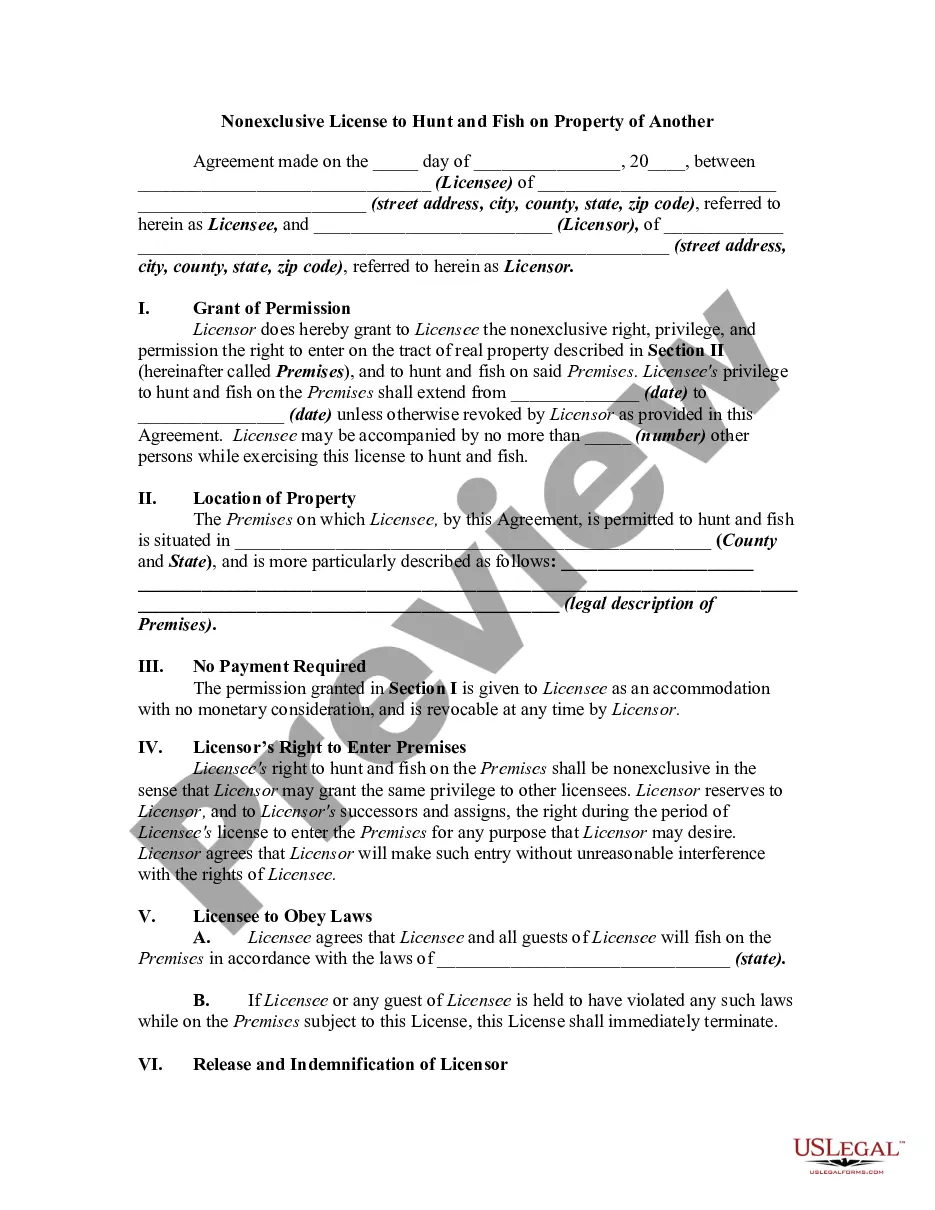
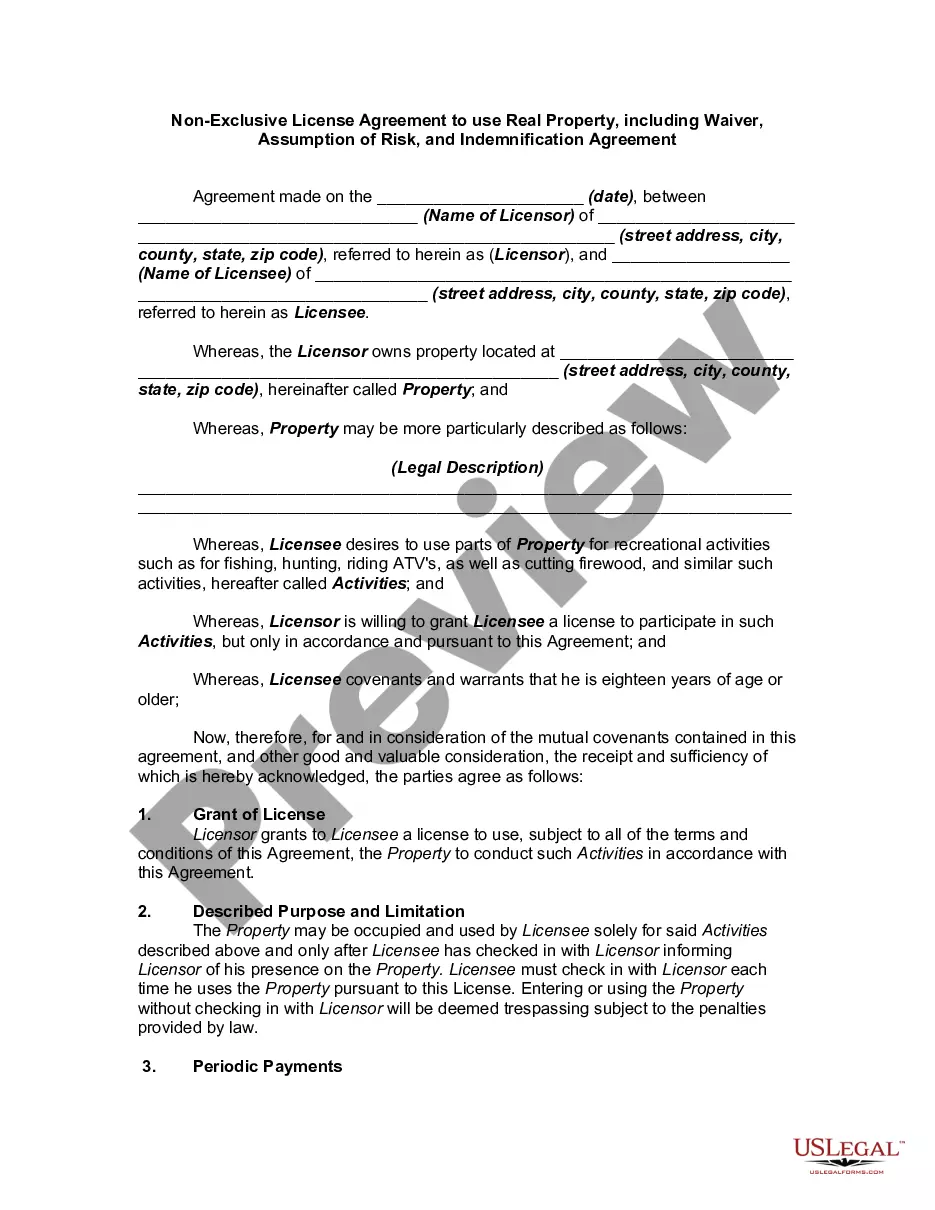
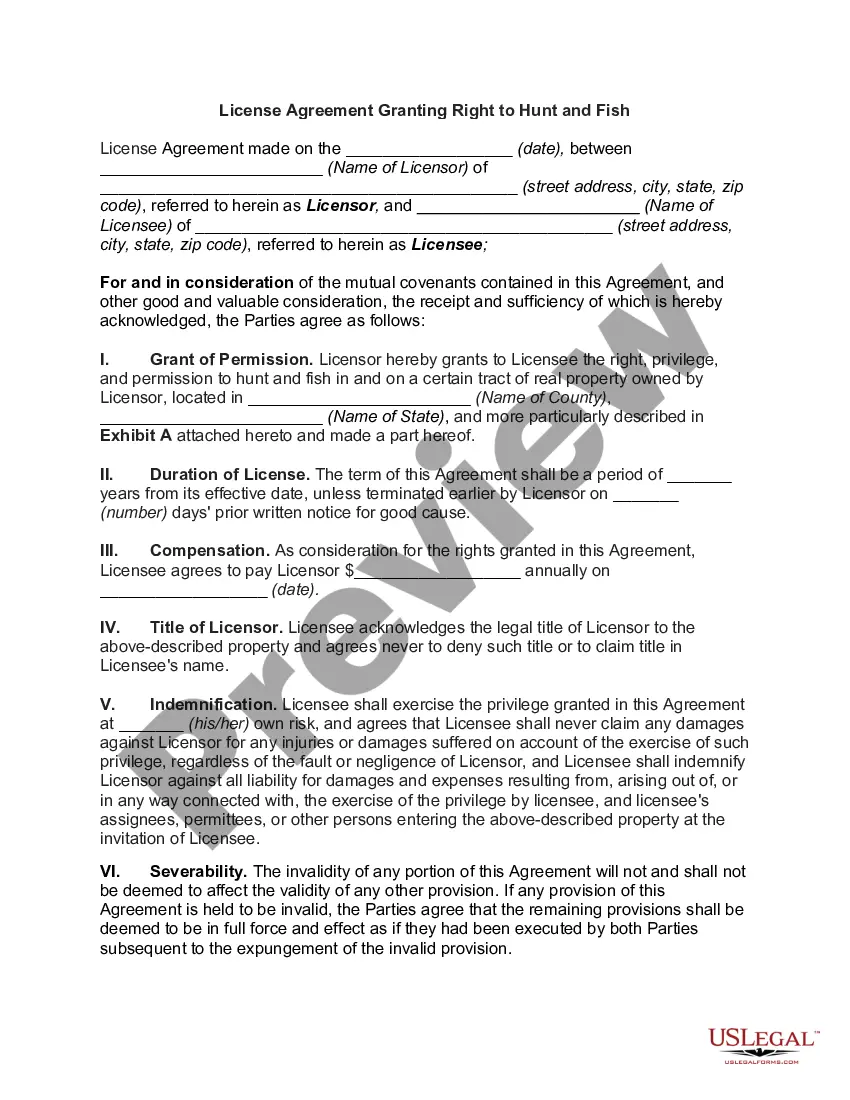
The Exclusive License to Fish on Property of Another is a legal document that grants an individual (the Licensee) permission to fish on the property of another person (the Licensor). Unlike a lease, this form provides a non-transferable privilege that can be revoked at any time by the property owner. It outlines specific terms, including the duration of the license, the location of the fishing rights, and conditions for use, differentiating it from other types of agreements concerning land use.
Main sections of this form
- Grant of Permission: States the terms under which the Licensee can fish on the property.
- Location of Property: Provides detailed information about the estate where fishing is allowed.
- Licensor's Right to Enter: Clarifies the Licensor's right to access the property despite granting fishing rights.
- Licensee to Obey Laws: Mandates compliance with local fishing regulations.
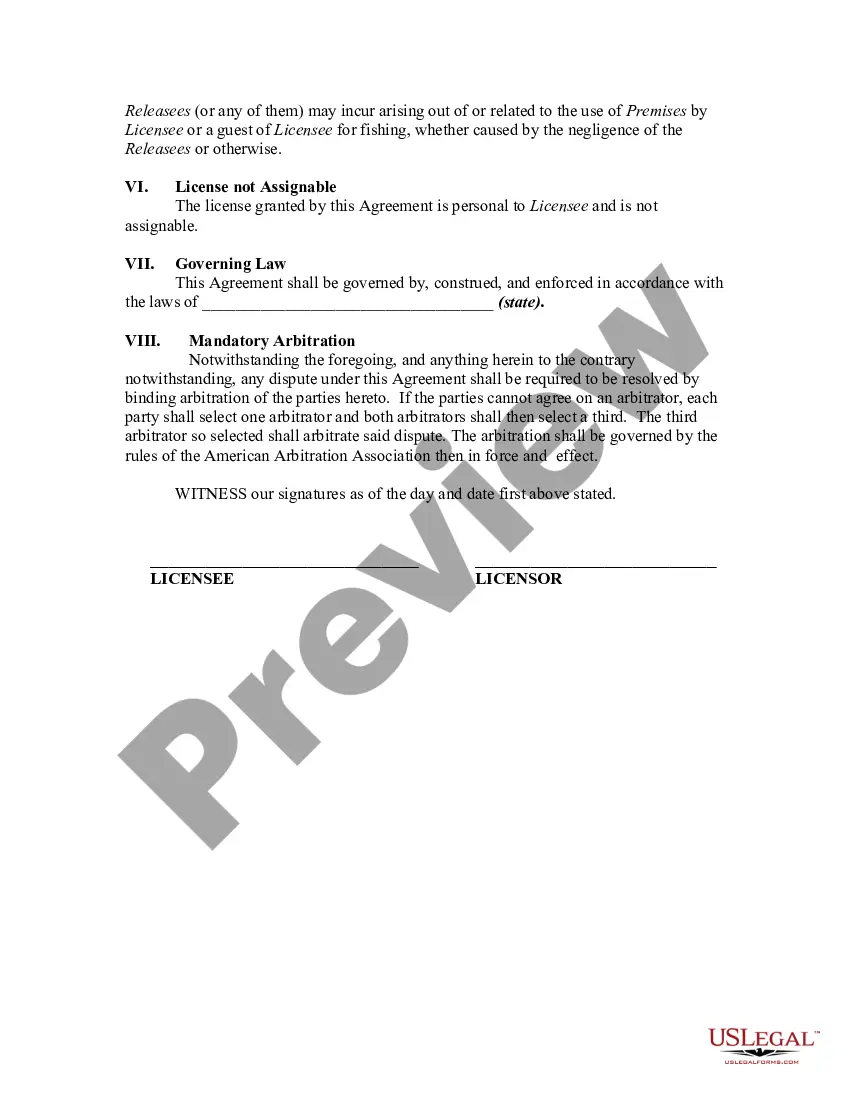
- Release and Indemnification: Protects the Licensor from liability related to the fishing activities of the Licensee.
- Governing Law and Mandatory Arbitration: Establishes applicable legal jurisdiction and method for resolving disputes.
When to use this document
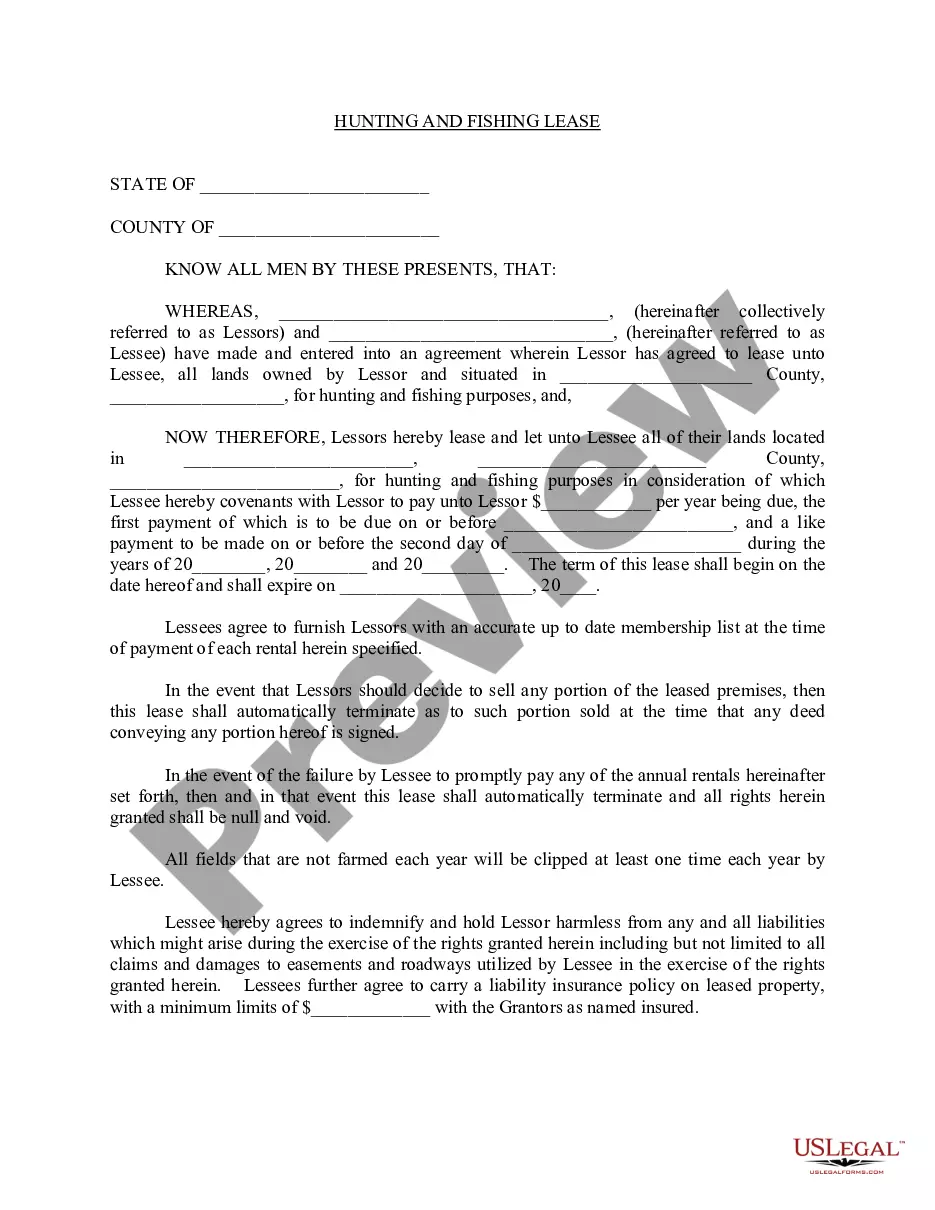
This form should be used when a property owner wishes to allow an individual to fish on their land, creating an exclusive and temporary arrangement. It is applicable in scenarios such as private fishing releases, controlled fishing events, or when a landowner wants to manage fishing activities on their property while maintaining authority over land access.
Who this form is for
- Property Owners (Licensors) who want to grant fishing rights on their land.
- Individuals (Licensees) seeking permission to fish on someone elseâs property.
- Recreational fishing organizations that need to formalize agreements with landowners.
Steps to complete this form
- Identify the parties: Fill in the names and addresses of the Licensee and Licensor.
- Specify the property: Provide the legal description and location of the fishing area.
- Enter the duration: State the start and end dates for the fishing license.
- Set guest limits: Indicate the maximum number of guests allowed to fish with the Licensee.
- Review for accuracy: Ensure that all information is correct before signing.
Does this form need to be notarized?
This form does not typically require notarization unless specified by local law. However, consulting with a legal professional can provide clarification based on specific circumstances.
Get your form ready online
Our built-in tools help you complete, sign, share, and store your documents in one place.
Make edits, fill in missing information, and update formatting in US Legal Forms—just like you would in MS Word.
Download a copy, print it, send it by email, or mail it via USPS—whatever works best for your next step.
Sign and collect signatures with our SignNow integration. Send to multiple recipients, set reminders, and more. Go Premium to unlock E-Sign.
If this form requires notarization, complete it online through a secure video call—no need to meet a notary in person or wait for an appointment.
We protect your documents and personal data by following strict security and privacy standards.

Make edits, fill in missing information, and update formatting in US Legal Forms—just like you would in MS Word.

Download a copy, print it, send it by email, or mail it via USPS—whatever works best for your next step.

Sign and collect signatures with our SignNow integration. Send to multiple recipients, set reminders, and more. Go Premium to unlock E-Sign.

If this form requires notarization, complete it online through a secure video call—no need to meet a notary in person or wait for an appointment.

We protect your documents and personal data by following strict security and privacy standards.
Mistakes to watch out for
- Failing to accurately describe the property can lead to confusion and disputes.
- Not specifying the number of guests allowed under the license.
- Omitting required compliance with local fishing laws and regulations.
Why complete this form online
- Convenience: Easily download and fill out the form from the comfort of your home.
- Editability: Tailor the agreement to fit specific needs and conditions before finalizing.
- Reliability: Forms are drafted by licensed attorneys, ensuring legal accuracy and compliance.
Legal use & context
- The license given is a revocable privilege, which means it can be terminated by the Licensor at any time.
- The agreement should clearly state the applicable state laws to avoid legal issues.
- Licensors are protected from liability for any incidents that occur during the use of the property by the Licensee.
Key takeaways
- Understand the nature of an exclusive license as a revocable permission, not a property interest.
- Ensure that the license agreement is clear and complies with local laws.
- Both parties should be aware of their rights and responsibilities as outlined in the agreement.
Looking for another form?

Form popularity
FAQ
Initially, where the copyright owner grants an exclusive license, as the plaintiff did in Fathers and Daughters, that license is treated as a copyright transfer, meaning that only the exclusive licensee and not the original owner can sue for infringement of those rights.
Exclusive Copyright License means any material agreement now or hereafter in existence granting to any Grantor an exclusive right to use, copy, reproduce, distribute, prepare derivative works, display or publish any materials on which a United States Copyright is in existence or may come into existence.
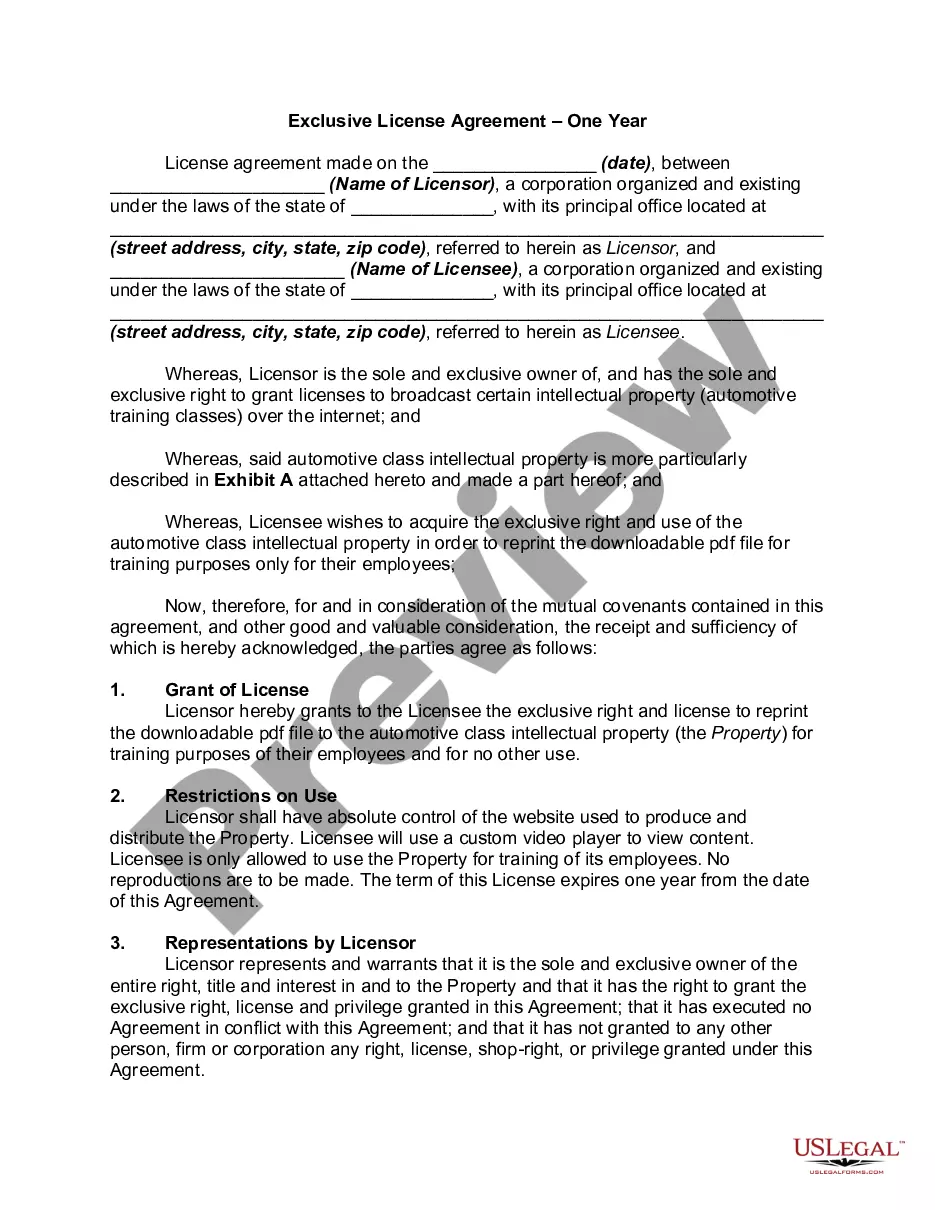
An exclusive license grants the licensee singular permission to exploit the intellectual property in question.Non-exclusive licenses allow more latitude in the number of licenses granted while allowing the licensor to retain the rights to further develop and exploit its own intellectual property.
The difference between exclusive and non-exclusive agreement refers to how vendors and partners work with each other. Exclusive agreements exclude competitors for a set period of time, while non-exclusive agreements allow for competitors, often as motivating tools.
An exclusive license grants the licensee singular permission to exploit the intellectual property in question. No other entity, including the party granting the license (the licensor), is allowed to use the intellectual property covered by the license unless specific carve-outs are included in the agreement.
The exclusivity gives the licensee the incentive to invest in developing the market potential of the technology.This is because the licensor could sell licenses to all of the company's competitors after the first licensee educates and cultivates the market for the product.