Prenuptial Marital Property Agreement Waiving right to Elect to Take Against the Surviving Spouse - Separate or Community Property
Overview of this form
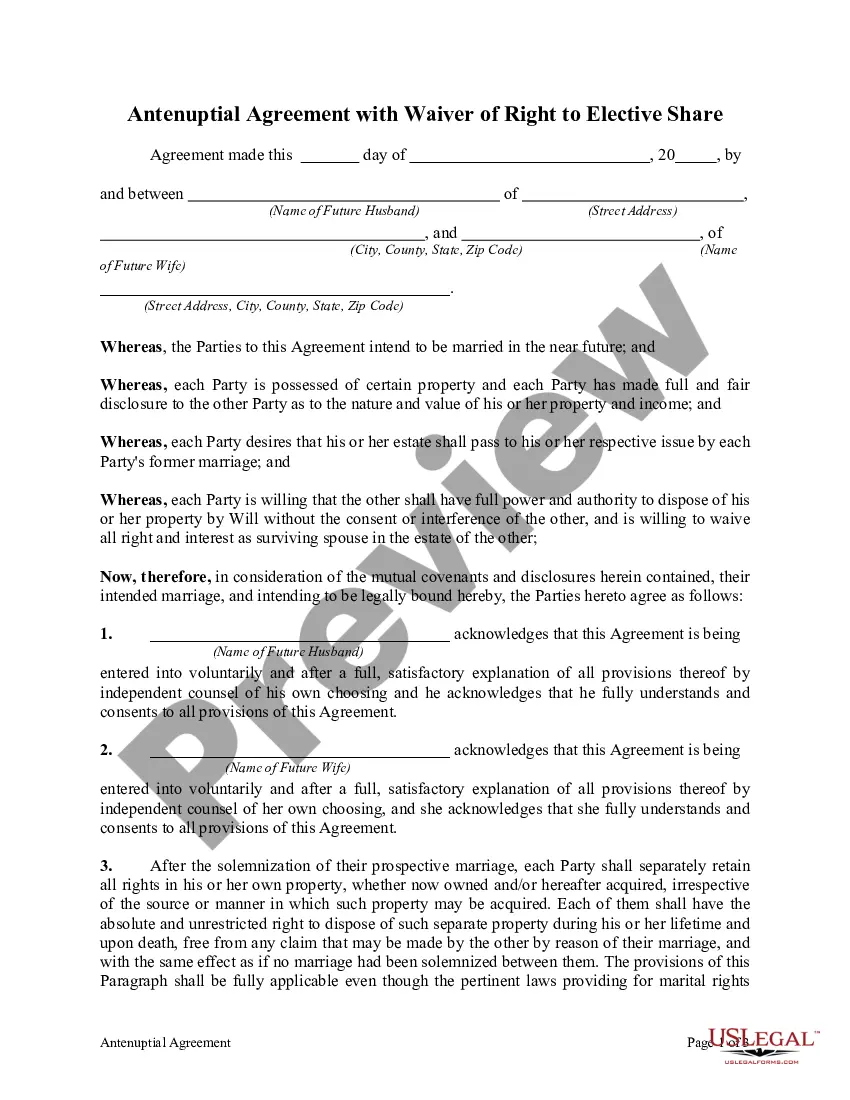
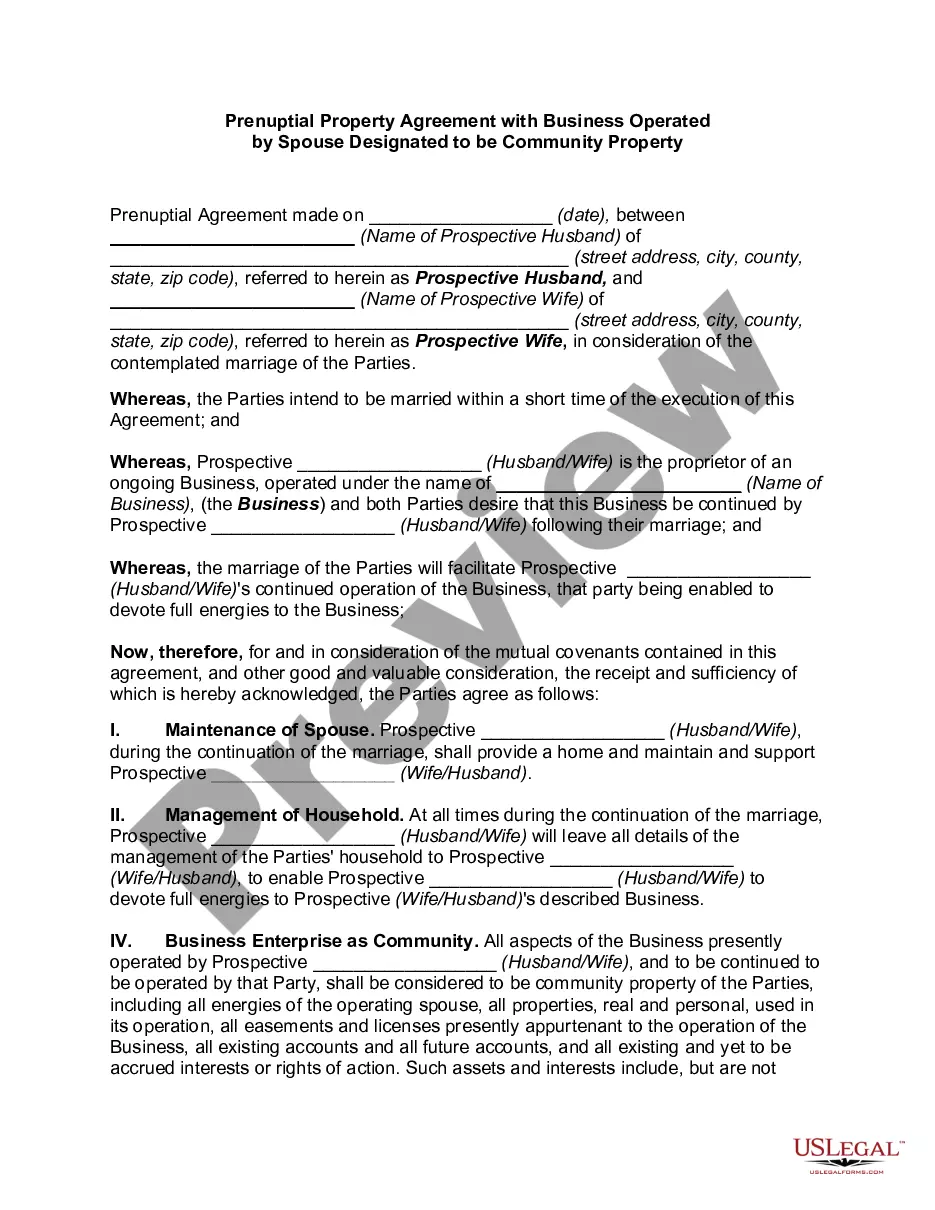
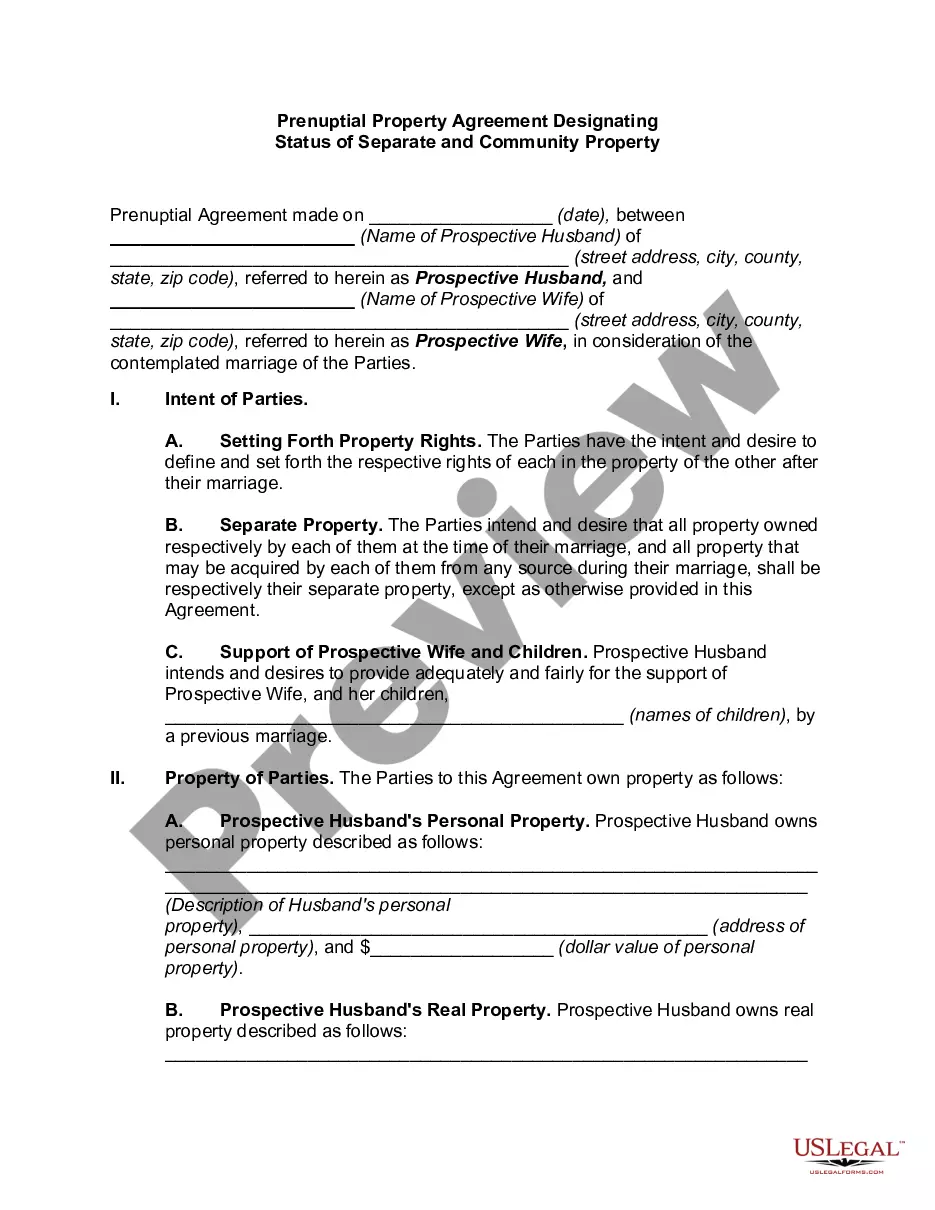
The Prenuptial Marital Property Agreement Waiving Right to Elect to Take Against the Surviving Spouse is a legal contract created by two individuals planning to marry. This agreement specifies the property rights of each party, outlines their separate and community property, and waives any rights to elect against a surviving spouse's will. Unlike a standard prenuptial agreement, this form is particularly focused on addressing rights concerning after-death property disposition, ensuring clarity in the event of a spouse's passing.
Key components of this form
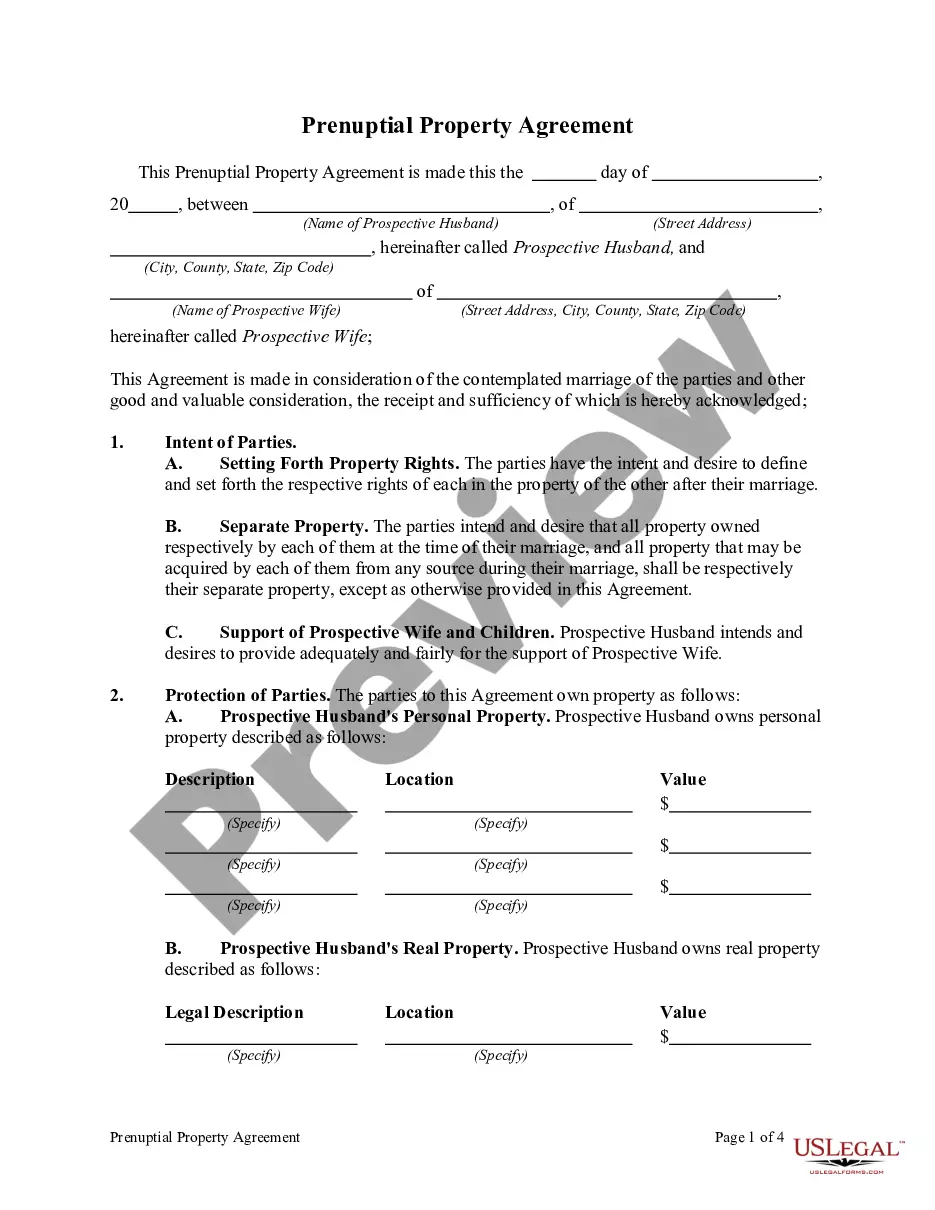
- Date and names of both parties are outlined in the introduction.
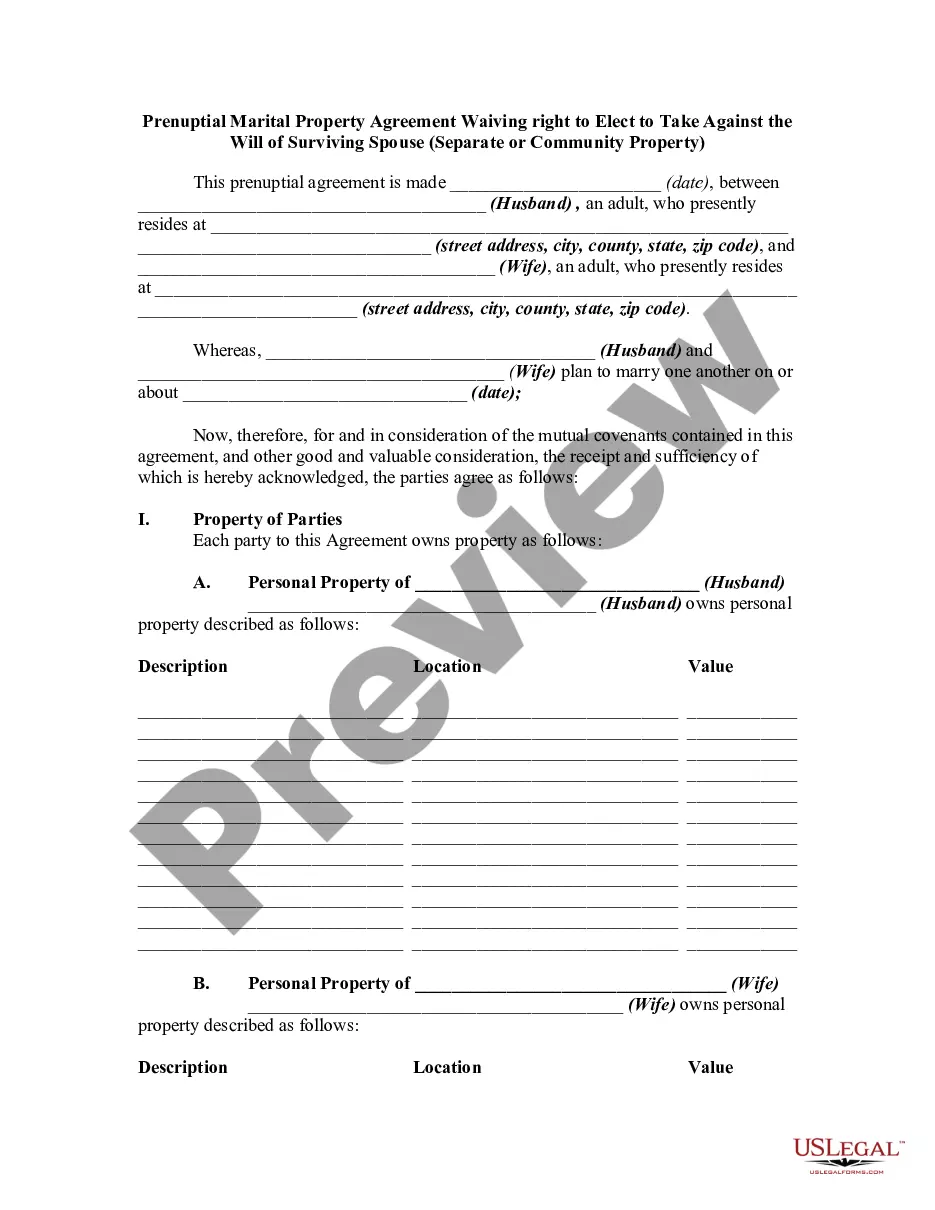
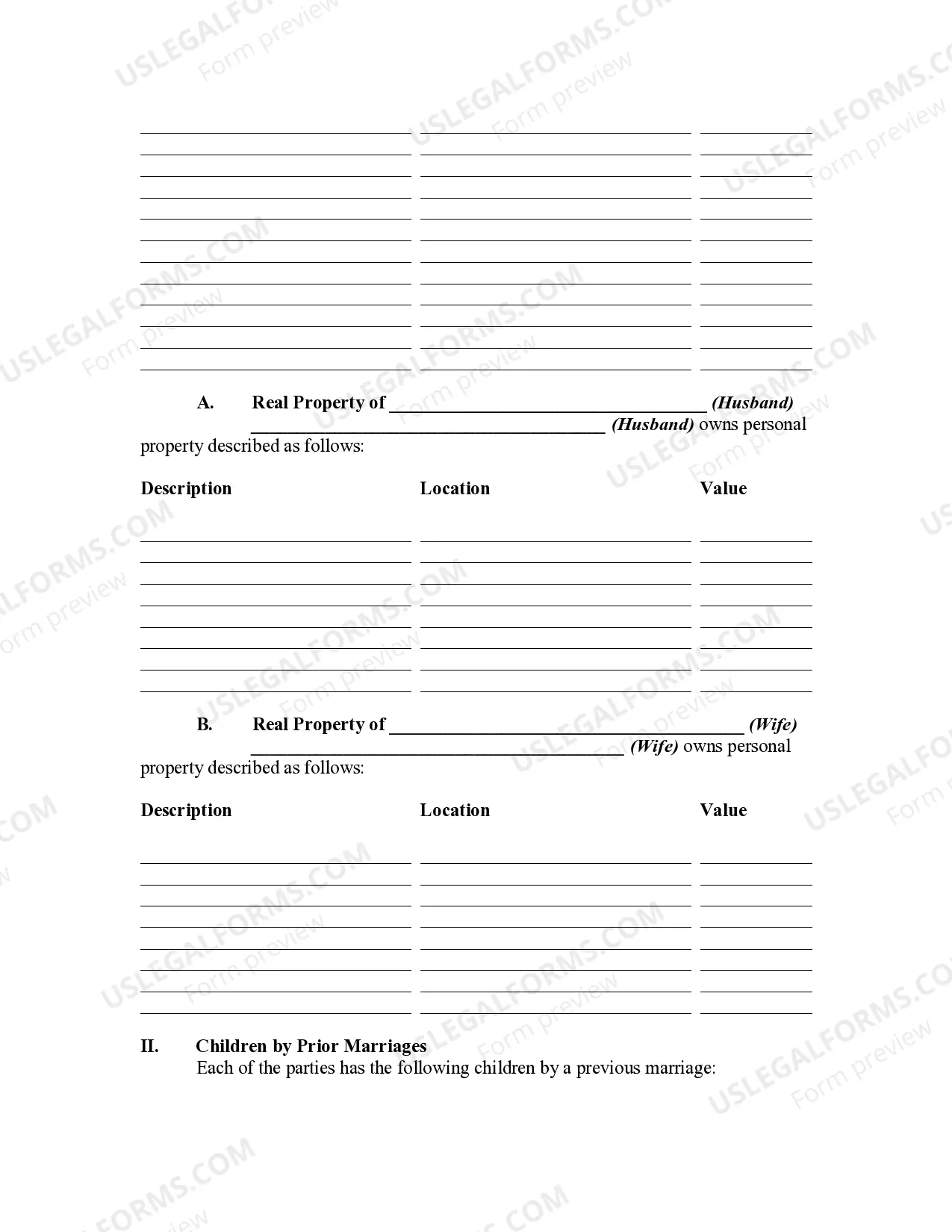
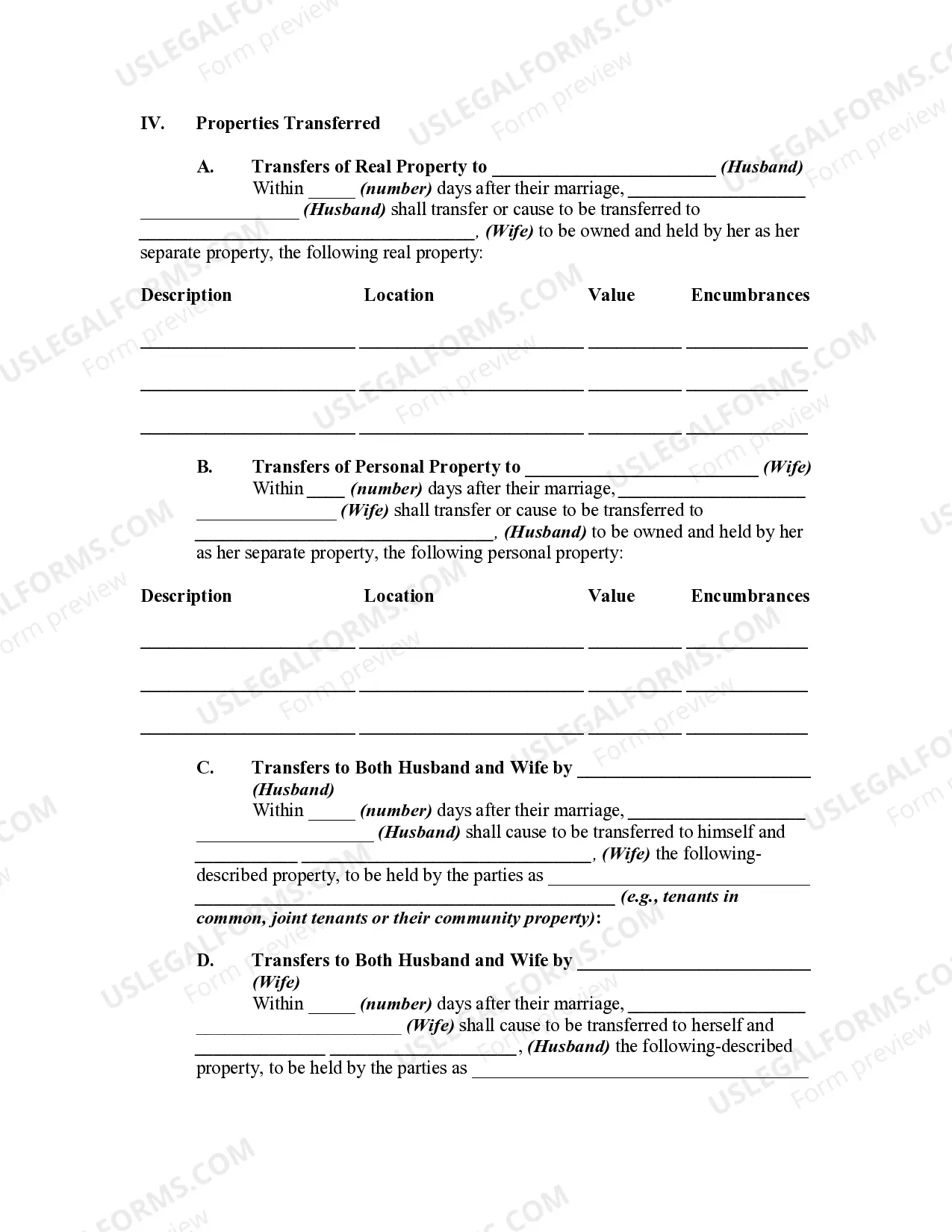
- Detailed lists of personal and real property owned by each spouse are included.
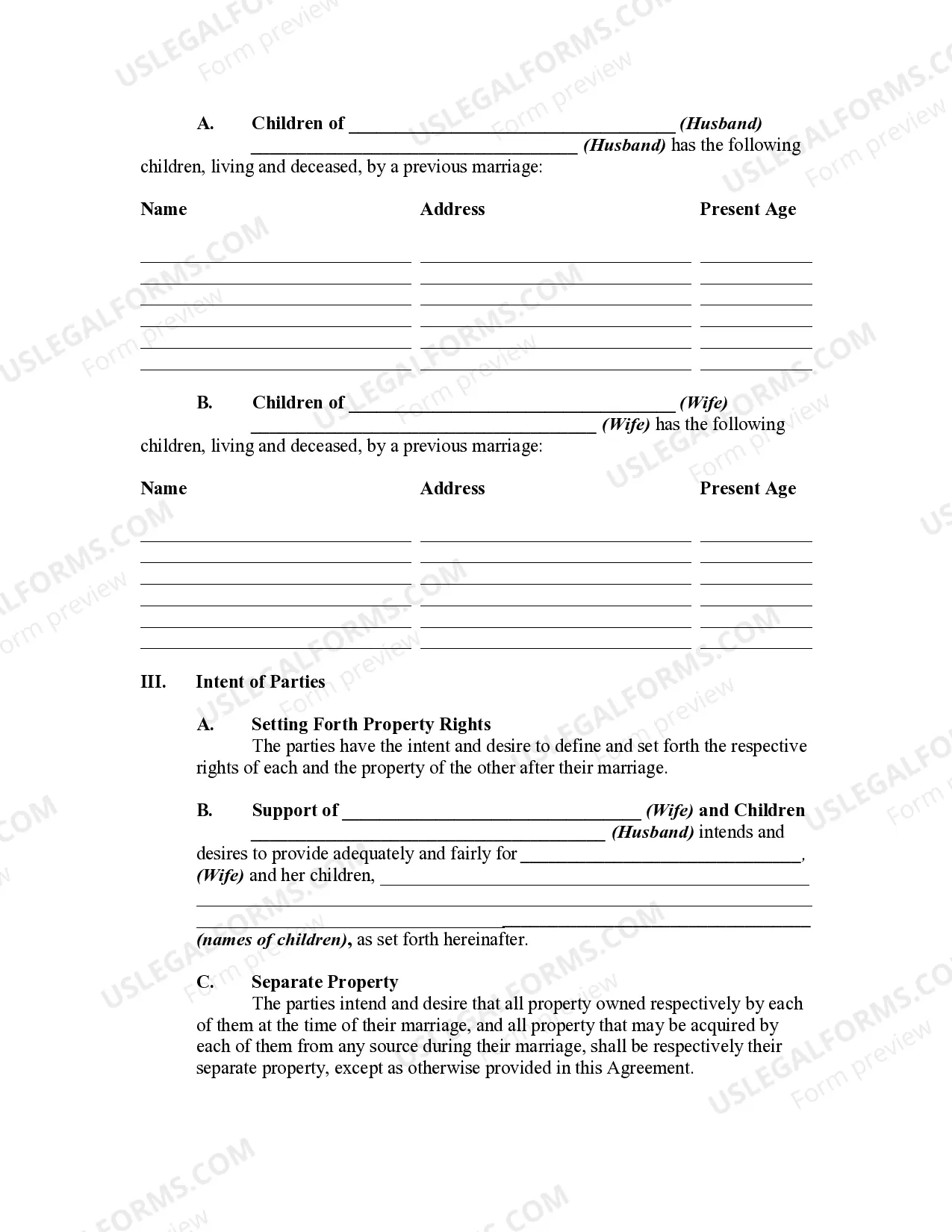
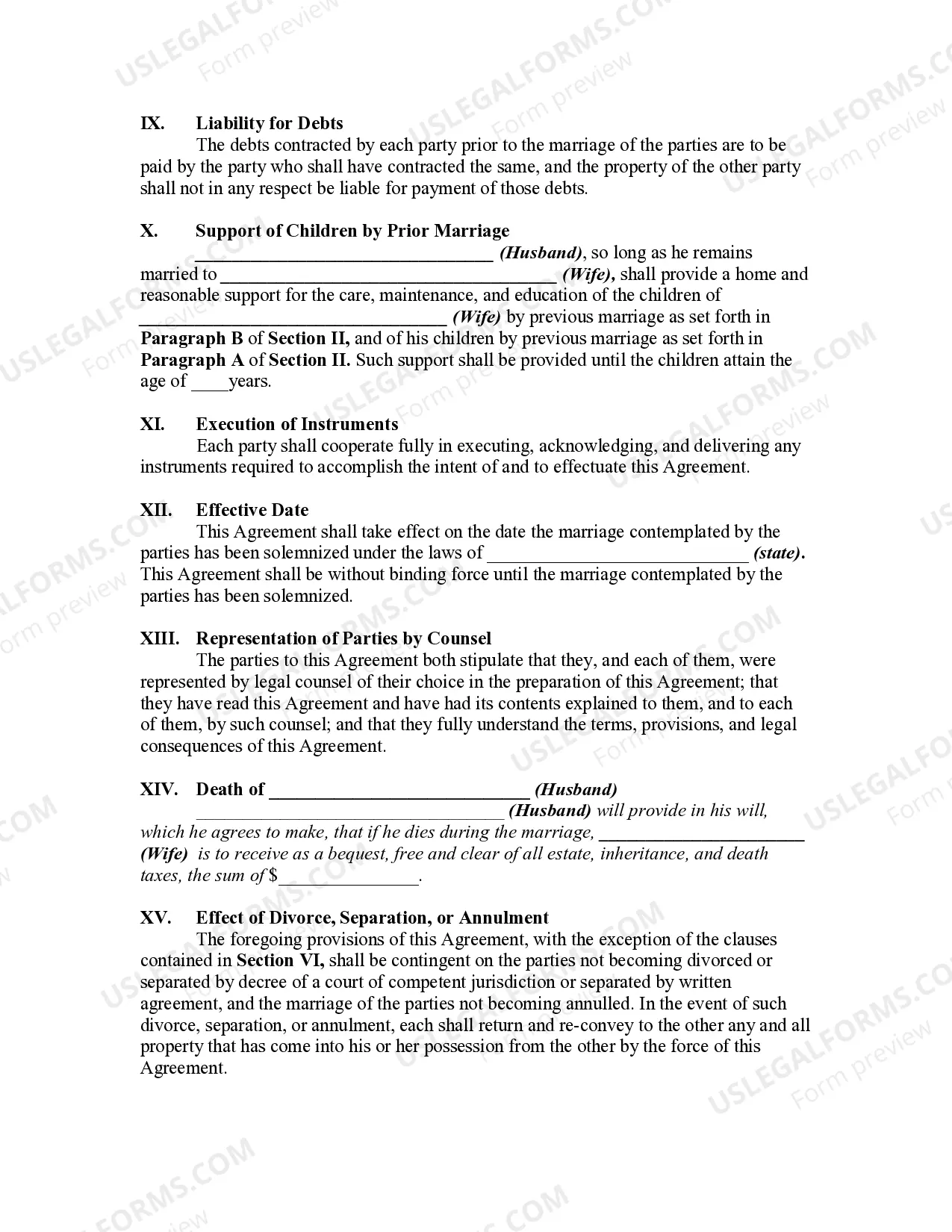
- Provisions for children from prior marriages and their support are specified.
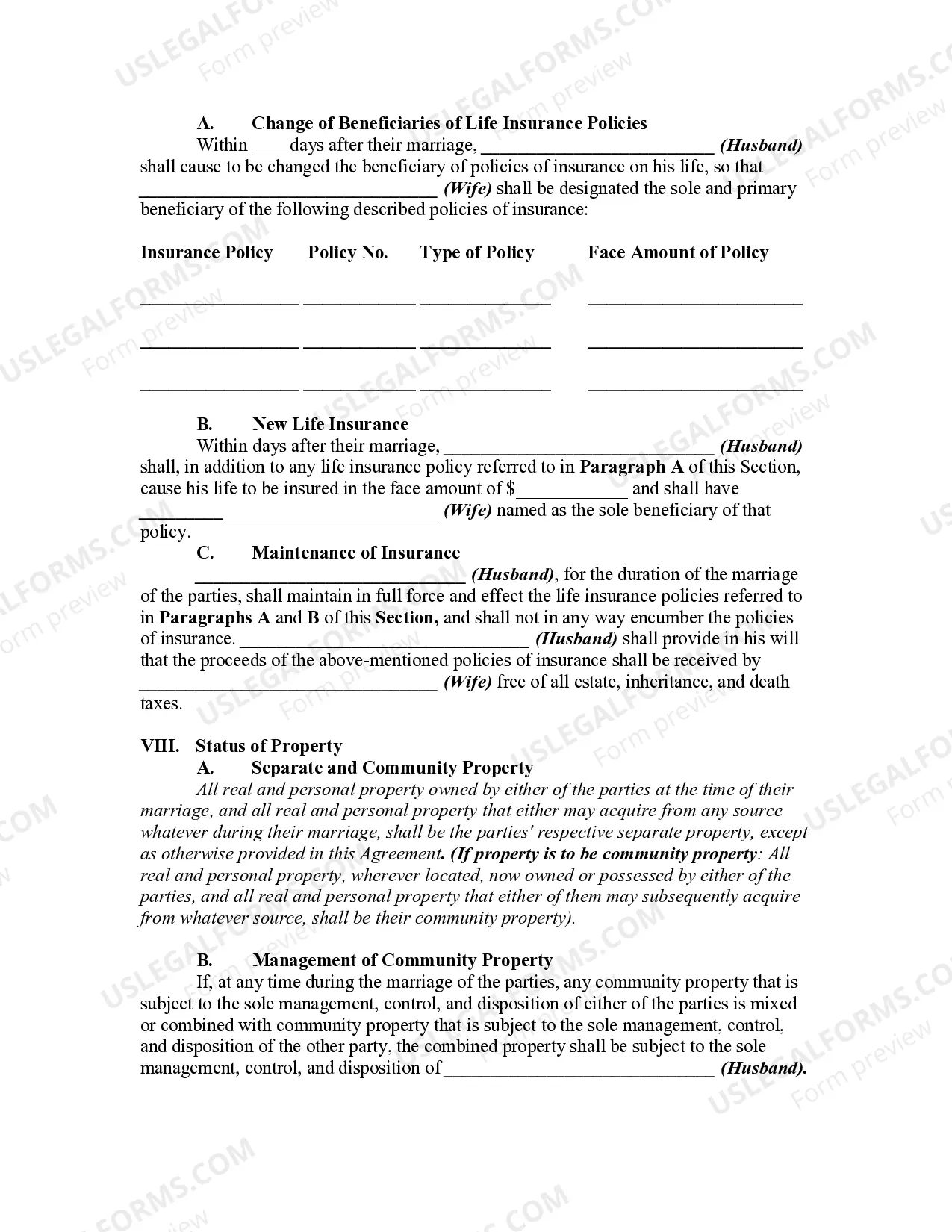
- The intent to designate property as separate or community is clearly stated.
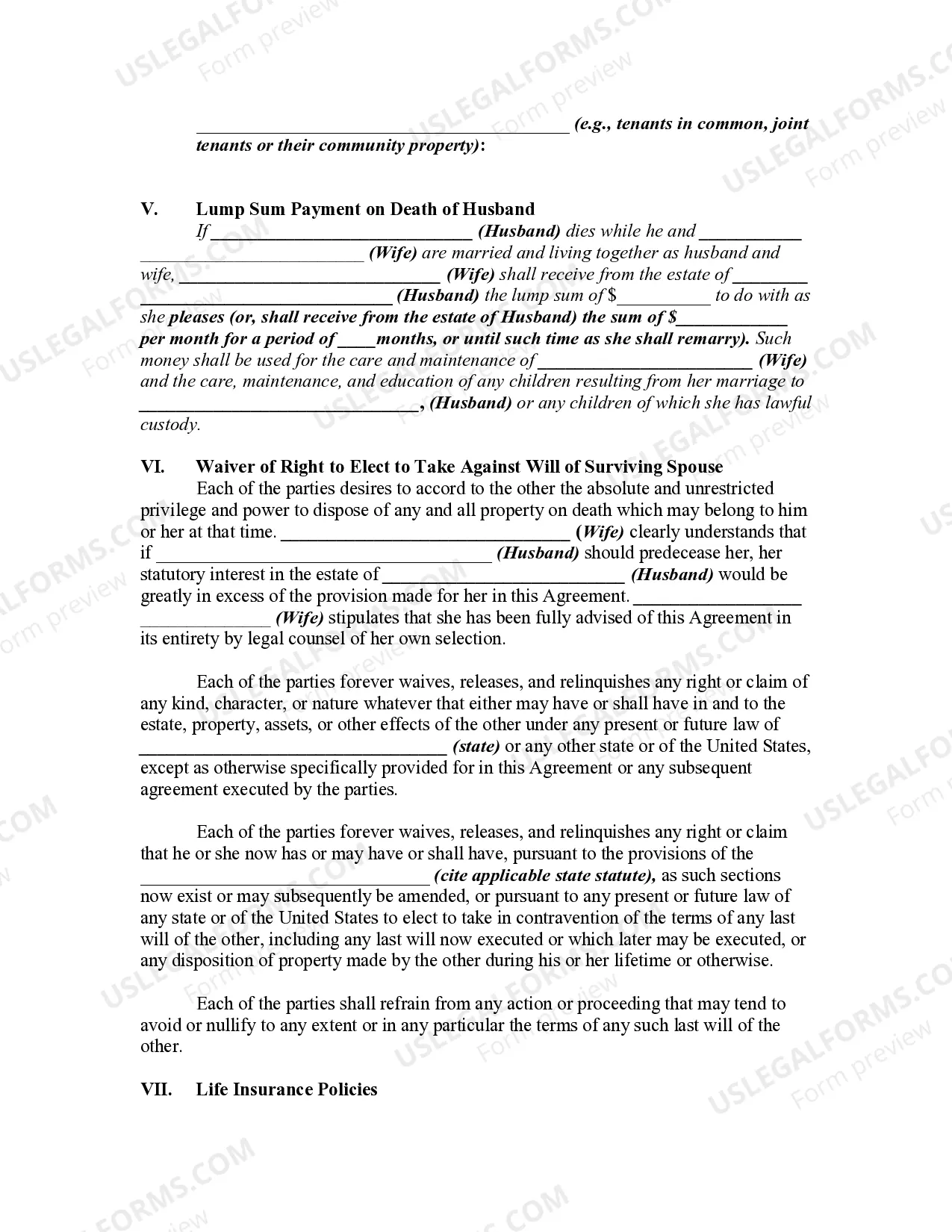
- Clauses regarding the transfer of property and financial provisions upon death are included.
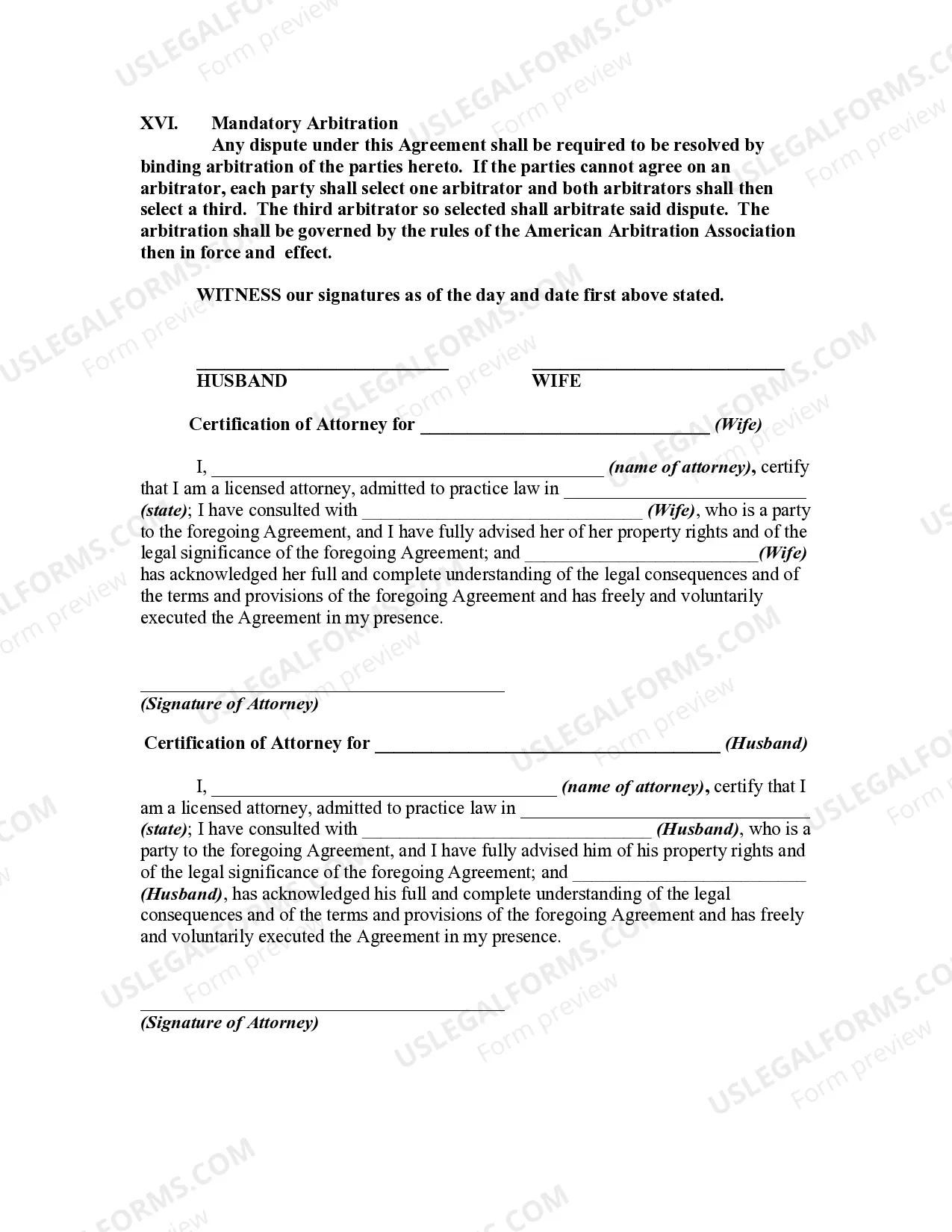
- Waivers of rights to elect against each other's estate are explicitly outlined.
Situations where this form applies
This form should be used when a couple wishes to establish their property rights before marriage, particularly when one or both parties have significant assets or children from previous relationships. It is crucial in situations where one spouse wants to ensure their estate will be distributed according to their will and not subject to automatic inheritance claims from the surviving spouse.
Who should use this form
This agreement is appropriate for:
- Couples who are about to marry and wish to clarify their financial responsibilities and rights.
- Individuals entering a marriage with substantial individual property or debt.
- Parents with children from previous marriages wanting to secure their children's inheritance.
- Couples seeking to waive any future claims against each other's estates.
How to prepare this document
To complete this prenuptial agreement, follow these steps:
- Identify and enter the full names of both the Husband and Wife, along with their residential addresses.
- List all personal and real property owned by each party with descriptions and values.
- Specify any children from previous marriages, including their names and current ages.
- Clearly state the intentions regarding property rights and management after marriage.
- Include provisions for property transfers and establish terms regarding support for children.
- Ensure both parties sign the agreement in the presence of their legal counsel.
Notarization guidance
This form does not typically require notarization unless specified by local law. However, having it notarized can provide additional legal assurance of its authenticity and compliance, especially during disputes.
Get your form ready online
Our built-in tools help you complete, sign, share, and store your documents in one place.
Make edits, fill in missing information, and update formatting in US Legal Forms—just like you would in MS Word.
Download a copy, print it, send it by email, or mail it via USPS—whatever works best for your next step.
Sign and collect signatures with our SignNow integration. Send to multiple recipients, set reminders, and more. Go Premium to unlock E-Sign.
If this form requires notarization, complete it online through a secure video call—no need to meet a notary in person or wait for an appointment.
We protect your documents and personal data by following strict security and privacy standards.

Make edits, fill in missing information, and update formatting in US Legal Forms—just like you would in MS Word.

Download a copy, print it, send it by email, or mail it via USPS—whatever works best for your next step.

Sign and collect signatures with our SignNow integration. Send to multiple recipients, set reminders, and more. Go Premium to unlock E-Sign.

If this form requires notarization, complete it online through a secure video call—no need to meet a notary in person or wait for an appointment.

We protect your documents and personal data by following strict security and privacy standards.
Common mistakes to avoid
- Failing to fully disclose all assets and liabilities can lead to disputes later.
- Not having separate legal counsel for each party can create conflicts of interest.
- Ignoring state-specific legal requirements can render the agreement unenforceable.
- Overlooking the need to update the agreement after significant life changes, like the birth of children.
Why complete this form online
- Convenience of downloading and customizing the agreement from home.
- The ability to clearly define and secure personal property interests before marriage.
- Access to attorney-drafted templates ensuring legal compliance and clarity.
- Time efficiency compared to traditional in-person consultations.
- This agreement is legally enforceable as long as it is properly executed by both parties.
- State laws may vary, so it is important to ensure compliance with relevant legal standards.
- This form provides clarity in inheritance rights, protecting each partyâs intended outcomes.
Quick recap
- The agreement outlines property rights and responsibilities before marriage.
- It waives the right to take against a spouse's estate upon death.
- Employing this form can help prevent disputes regarding property after marriage.
- Legal counsel is recommended to ensure that both parties understand their rights.
Looking for another form?


Form popularity
FAQ
The answer is yes. You can waive alimony in a prenuptial agreement; however, it must be done with the significant caveats and disclosures and there is never a 100% guarantee.However, if the waiver of alimony would leave the spouse needing government assistance, the court can and will set aside the waiver of alimony.
A prenup can also be overturned if one or both parties change their mind after initially signing the agreement. They may decide at that time to sign a new agreement suspending the prenup.
Waiving Spousal Support If it is agreed that neither party is entitled to spousal support than both parties can agree to waive the support or not claim it at all.
2. Prenups make you think less of your spouse. And at their root, prenups show a lack of commitment to the marriage and a lack of faith in the partnership.Ironically, the marriage becomes more concerned with money after a prenup than it would have been without the prenup.
Regardless of your state's property division laws, a prenuptial agreement lets you decide how marital property will be divided in the event of a divorce.In this sense, a prenuptial agreement can "override" community property or equitable distribution laws.
An alimony waiver means that you and/or your spouse agree that no award of support, maintenance or alimony will be made by the Court at the time of the divorce. If you waive alimony at the time of your divorce, you are also waiving any claim for past or future alimony.
The amendment is typically written by a lawyer because of its legal nature. You'll have to have the entire agreement signed and notarized to make the changes valid. If, for whatever reason, you and your spouse decide to cancel your prenuptial agreement, you can use a document called a Release of Marital Agreement.
The three most common grounds for nullifying a prenup are unconscionability, failure to disclose, or duress and coercion.Duress and coercion can also invalidate a prenup. If the prenup was signed the day before your wedding, it may appear that the parties didn't have much time to fully review the agreement.
When a prenuptial agreement and a last will and testament are in conflict, the prenuptial agreement often takes precedence, but the decision is in the hands of a probate court.A last will and testament states a deceased person's wishes for their estate after their death.