Agreement for Assignment and Sale of Partnership Interest and Reorganization with Purchaser as New Partner including Assignment
Understanding this form
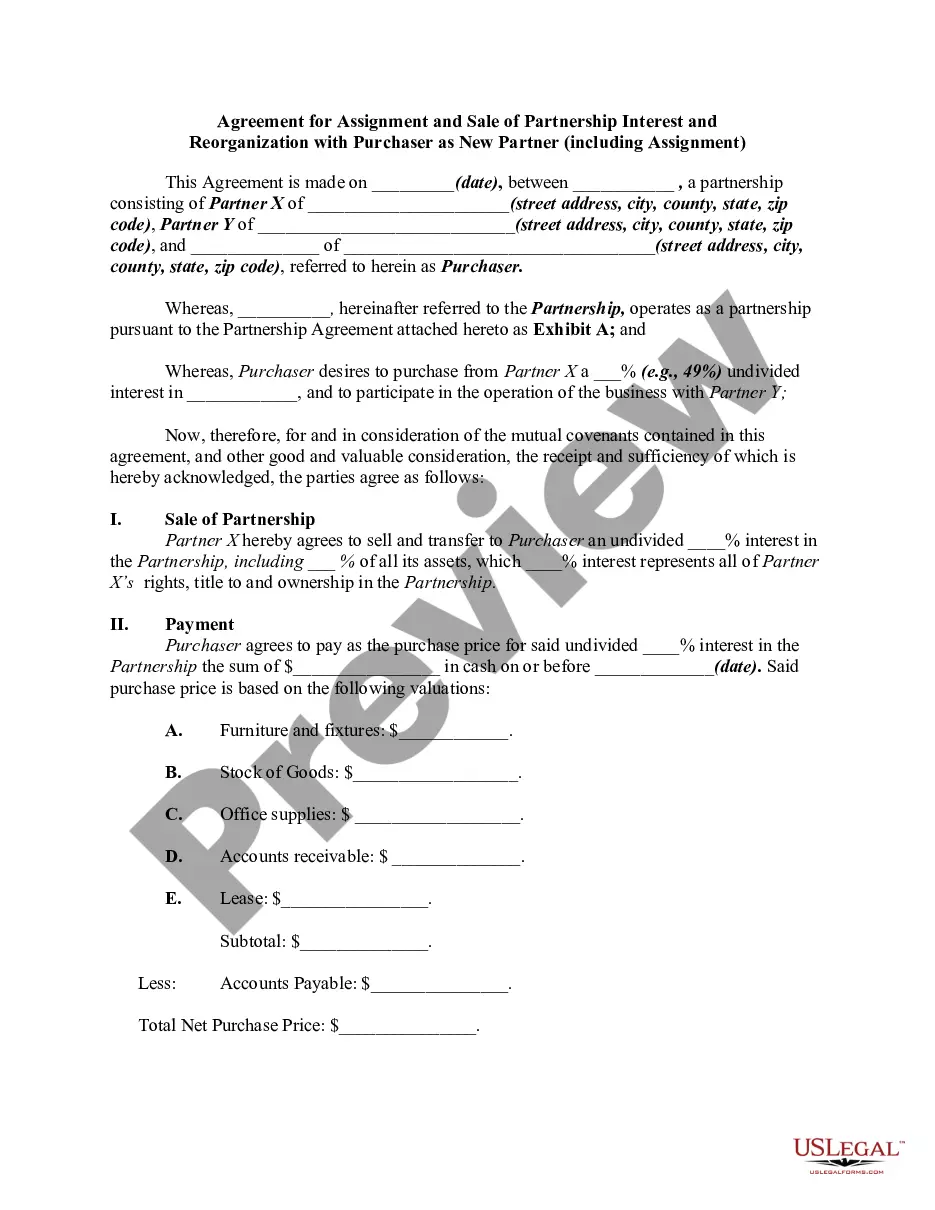
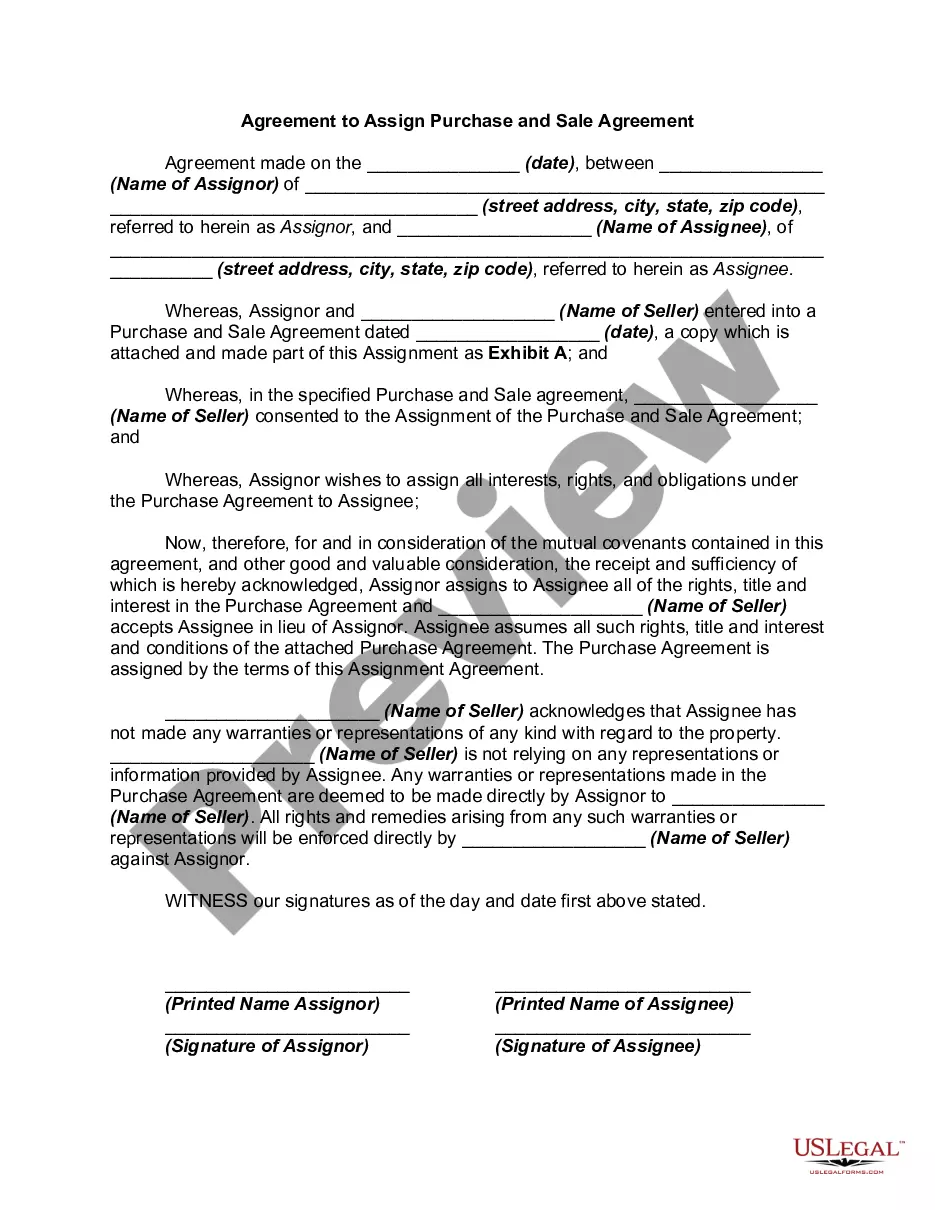
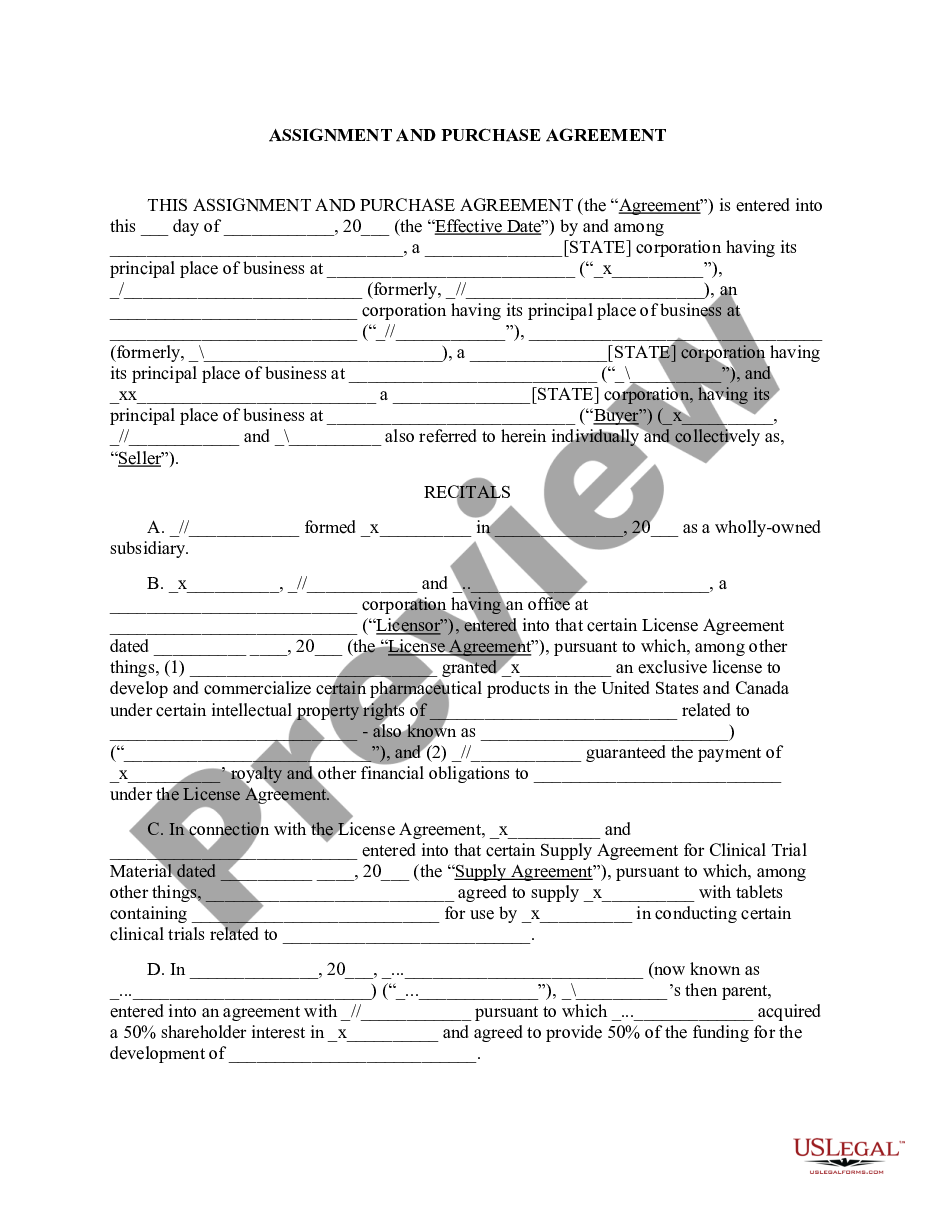
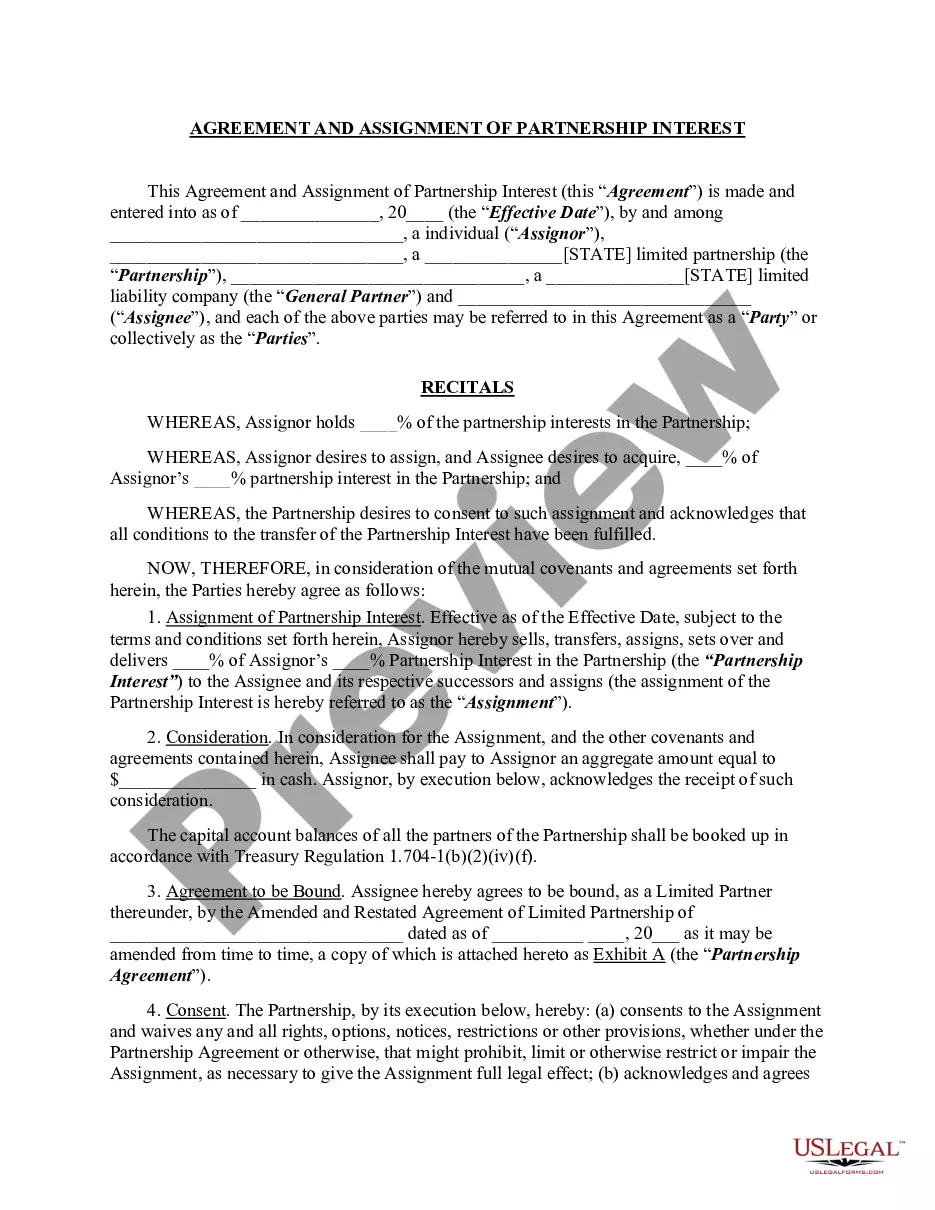
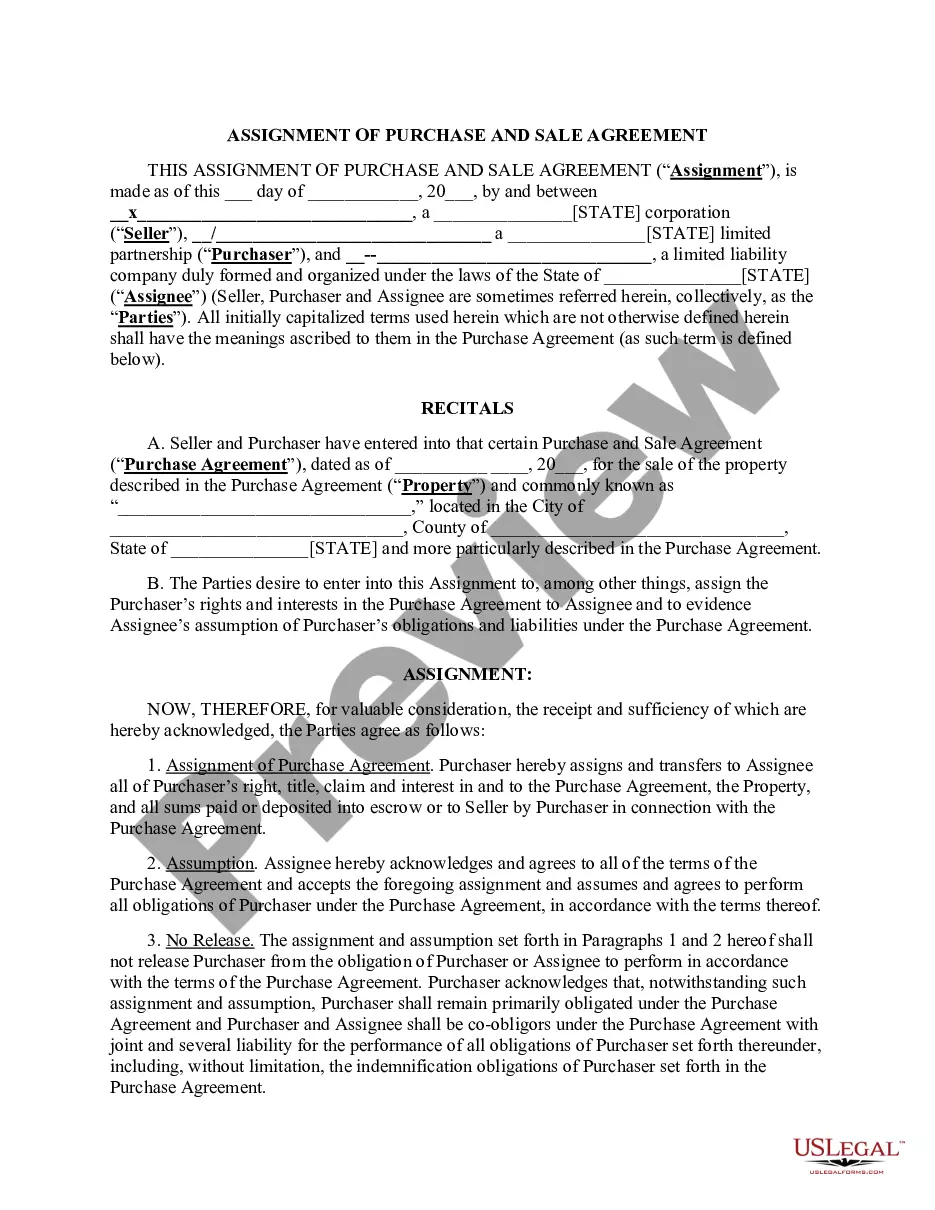
The Agreement for Assignment and Sale of Partnership Interest and Reorganization with Purchaser as New Partner including Assignment is a legal document used to facilitate the transfer of a partner's interest in a partnership. This form ensures that the buyer is formally recognized as a new partner and outlines the terms under which the transfer occurs, which differentiates it from other partnership agreements that may not explicitly detail the sale of an interest or reorganization within the partnership structure.
Key components of this form
- Sale of Partnership: Details the transfer of the partnership interest from the selling partner to the purchaser.
- Payment: Specifies the purchase price for the partnership interest, including asset valuation.
- Audit Books of Account: Addresses how the partnership's assets and liabilities are to be audited and recorded post-sale.
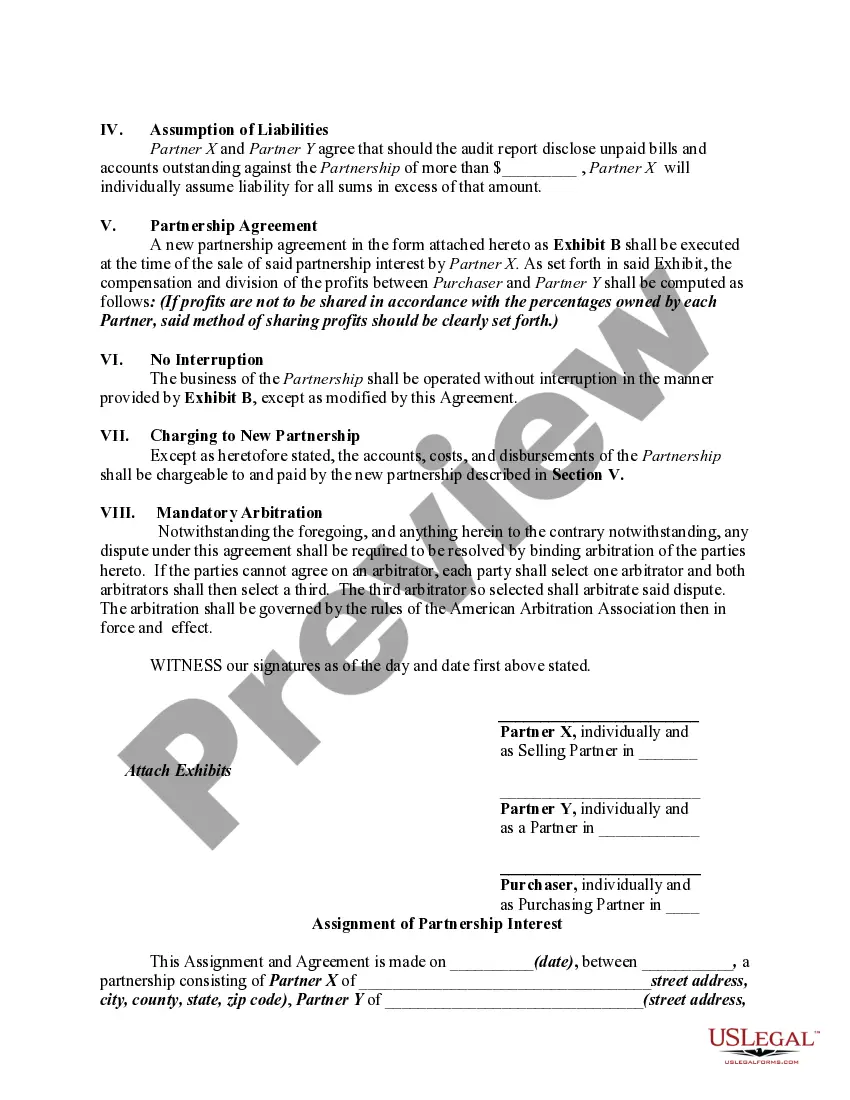
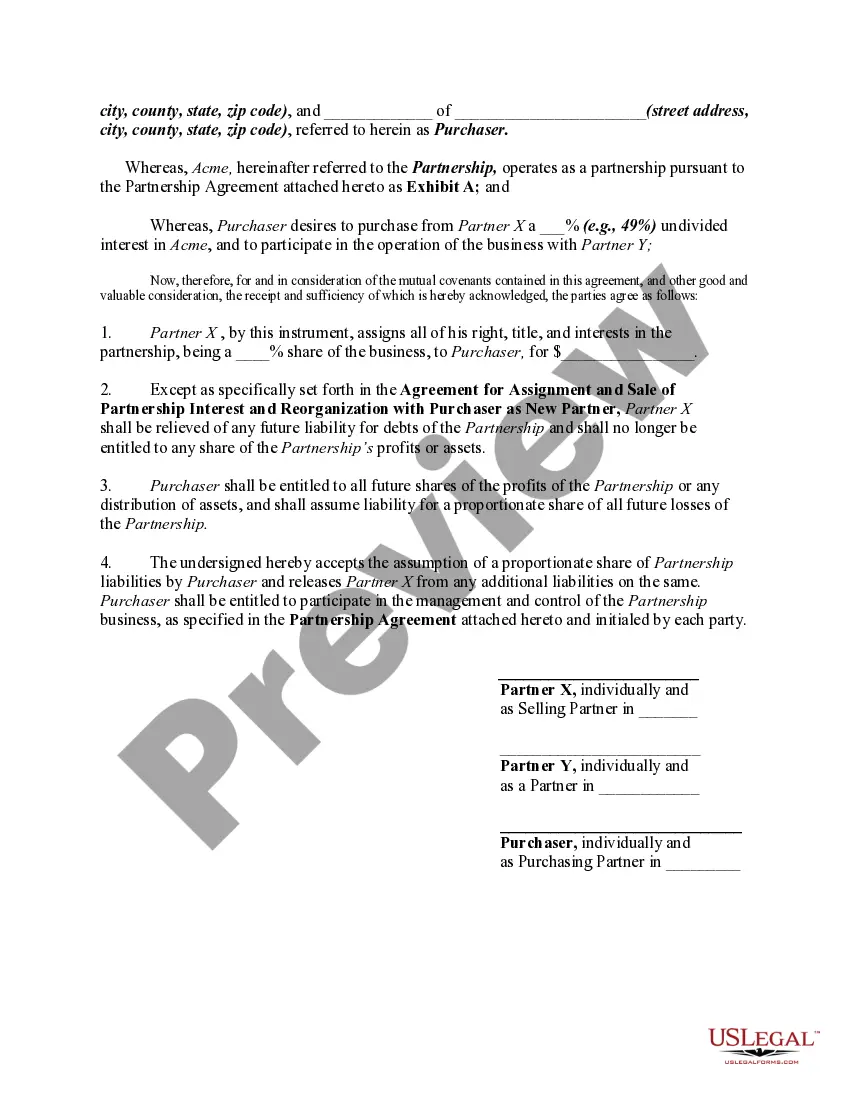
- Assumption of Liabilities: Outlines which liabilities the purchaser assumes and how excess liabilities are handled.
- New Partnership Agreement: Introduces a new agreement that reflects the updated ownership structure.
- Mandatory Arbitration: Establishes that disputes will be resolved through binding arbitration.
When to use this document
This form should be used in situations where a current partner wishes to sell their interest in a partnership and a new partner is being introduced. It serves to formally document the transaction, specify payment terms, and outline the responsibilities and rights of the new partner, thereby preventing misunderstandings or future disputes.
Intended users of this form
This form is suitable for:
- Partners in an existing partnership looking to sell their interest.
- Individuals or entities interested in acquiring an interest in a partnership.
- Partnerships undergoing reorganization due to changes in their ownership structure.
Instructions for completing this form
- Identify the parties involved, including the selling partner and purchaser.
- Enter the date of the agreement and details of the partnership being sold.
- Specify the undivided interest being sold and the corresponding purchase price.
- Conduct an audit of the partnership's assets and liabilities as outlined.
- Prepare the new partnership agreement as referenced in the document.
- Ensure all parties sign the document, confirming their agreement to the terms.
Does this document require notarization?
This form does not typically require notarization unless specified by local law. However, having the document notarized can provide an additional layer of authenticity and may help prevent disputes in the future.
Get your form ready online
Our built-in tools help you complete, sign, share, and store your documents in one place.
Make edits, fill in missing information, and update formatting in US Legal Forms—just like you would in MS Word.
Download a copy, print it, send it by email, or mail it via USPS—whatever works best for your next step.
Sign and collect signatures with our SignNow integration. Send to multiple recipients, set reminders, and more. Go Premium to unlock E-Sign.
If this form requires notarization, complete it online through a secure video call—no need to meet a notary in person or wait for an appointment.
We protect your documents and personal data by following strict security and privacy standards.

Make edits, fill in missing information, and update formatting in US Legal Forms—just like you would in MS Word.

Download a copy, print it, send it by email, or mail it via USPS—whatever works best for your next step.

Sign and collect signatures with our SignNow integration. Send to multiple recipients, set reminders, and more. Go Premium to unlock E-Sign.

If this form requires notarization, complete it online through a secure video call—no need to meet a notary in person or wait for an appointment.

We protect your documents and personal data by following strict security and privacy standards.
Common mistakes to avoid
- Failing to specify the payment terms clearly, which can lead to disputes.
- Not conducting an audit before completing the sale, risking undisclosed liabilities.
- Overlooking the need for a new partnership agreement after the transfer.
- Neglecting to have all parties sign the document, which can affect enforceability.
- Assuming that oral agreements regarding the sale are sufficient, contrary to the need for a written document.
Benefits of using this form online
- Convenience of downloading and filling out the form at your own pace.
- Editable templates to tailor the form specifically to your partnership situation.
- Access to reliable legal resources ensuring compliance with state regulations.
Looking for another form?
Form popularity
FAQ
Like any contractual agreement, partnership agreements do not have to be in writing, as verbal agreements are also legally binding.In a partnership, each person is liable for the debts and actions of the other partners, so the contractual relationship and obligations need to be completely transparent.
Forming a PartnershipPartnerships exist between two or more people who want to go into business together. In most states, creating a legally binding partnership requires nothing more than a verbal agreement and a handshake.
Provisions of an APA may include payment of purchase price, monthly installments, liens and encumbrances on the assets, condition precedent for the closing, etc. An APA differs from a stock purchase agreement (SPA) where company shares, title to assets, and title to liabilities are also sold.
A partner's interest in a partnership is considered personal property that may be assigned to other persons. In addition, an assignment of the partner's interest does not give the assignee any right to participate in the management of the partnership.
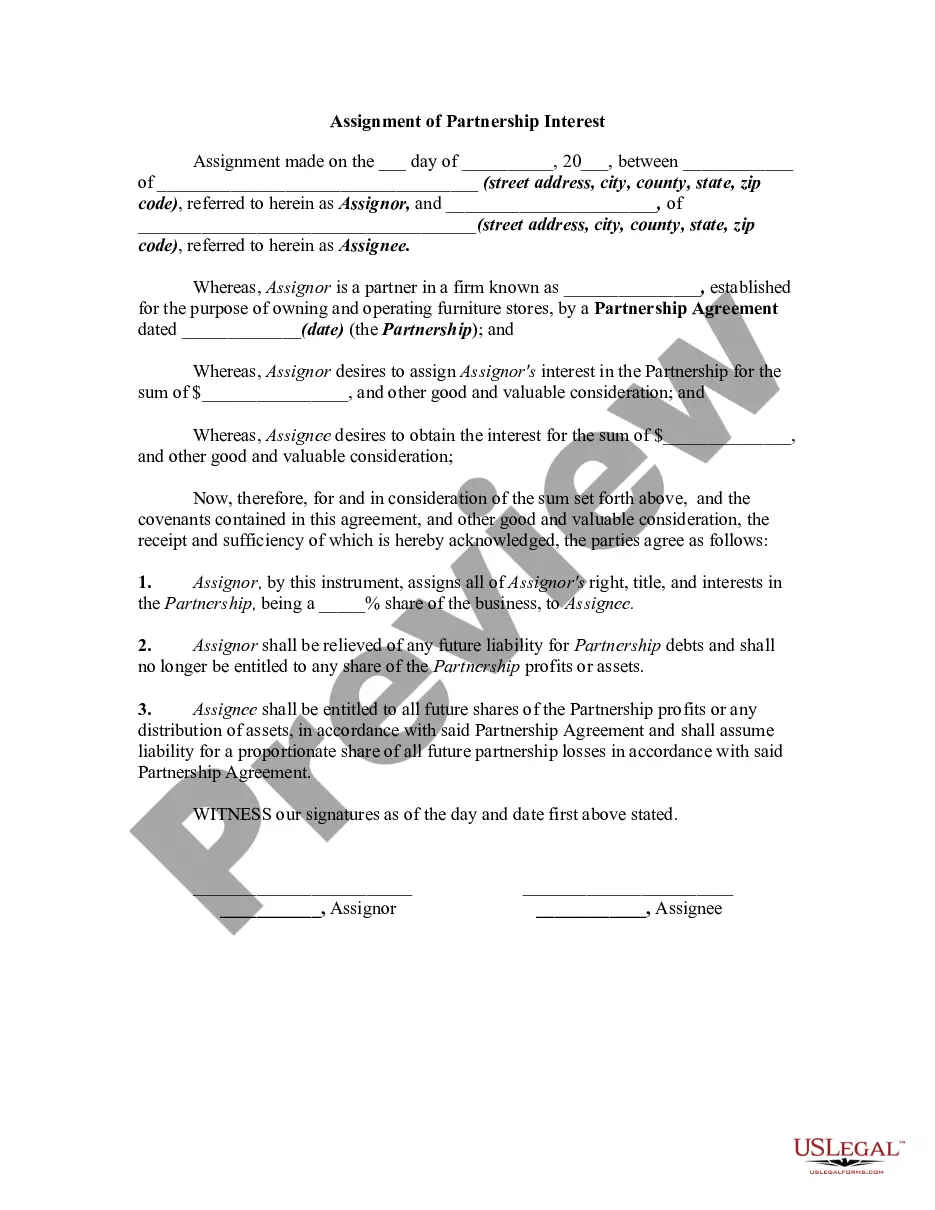
An Assignment of Partnership Interest is a legal document that transfers the rights to receive benefits from an original business partner (Assignor) to a new business partner (Assignee).Assignee: name and address of the new partner receiving the business interest.
Although there's no requirement for a written partnership agreement, often it's a very good idea to have such a document to prevent internal squabbling (about profits, direction of the company, etc.) and give the partnership solid direction. Limited liability partnerships do have a writing requirement.
Name of your partnership. Contributions to the partnership and percentage of ownership. Division of profits, losses and draws. Partners' authority. Withdrawal or death of a partner.
Name of the partnership. Contributions to the partnership. Allocation of profits, losses, and draws. Partners' authority. Partnership decision-making. Management duties. Admitting new partners. Withdrawal or death of a partner.