Defendant as Witness
What is this form?
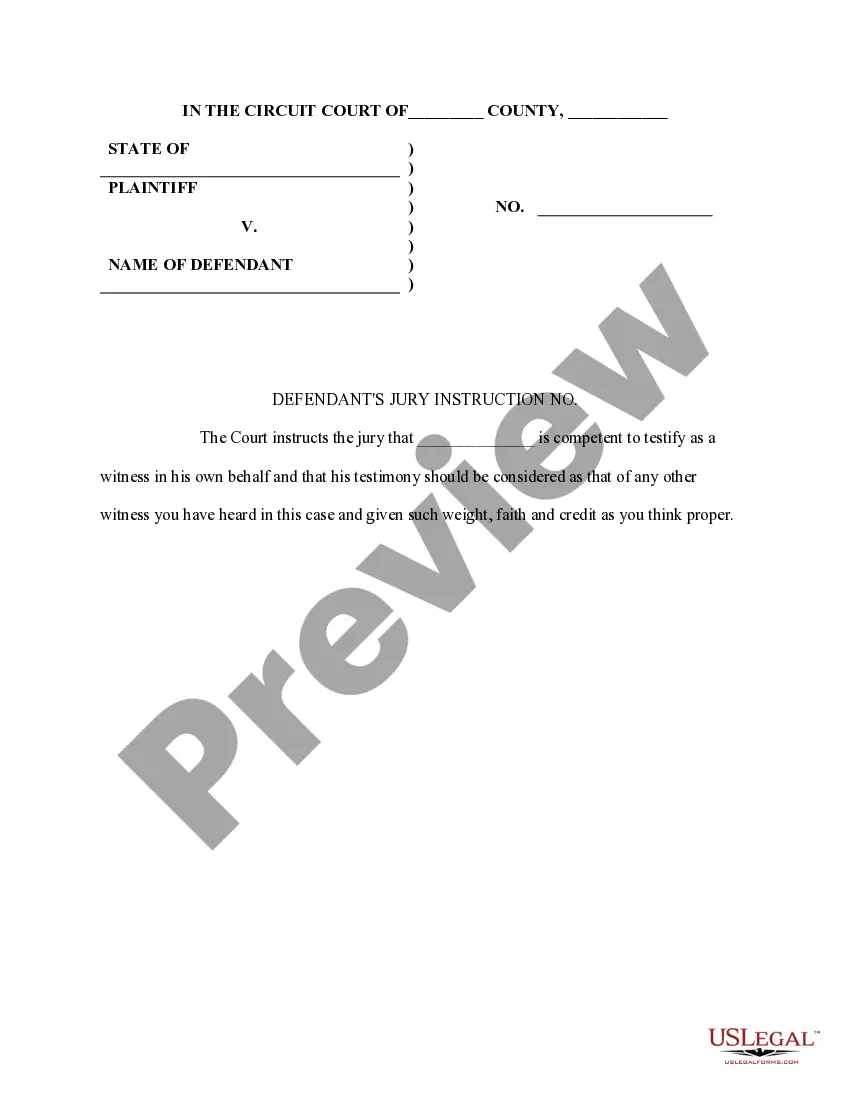
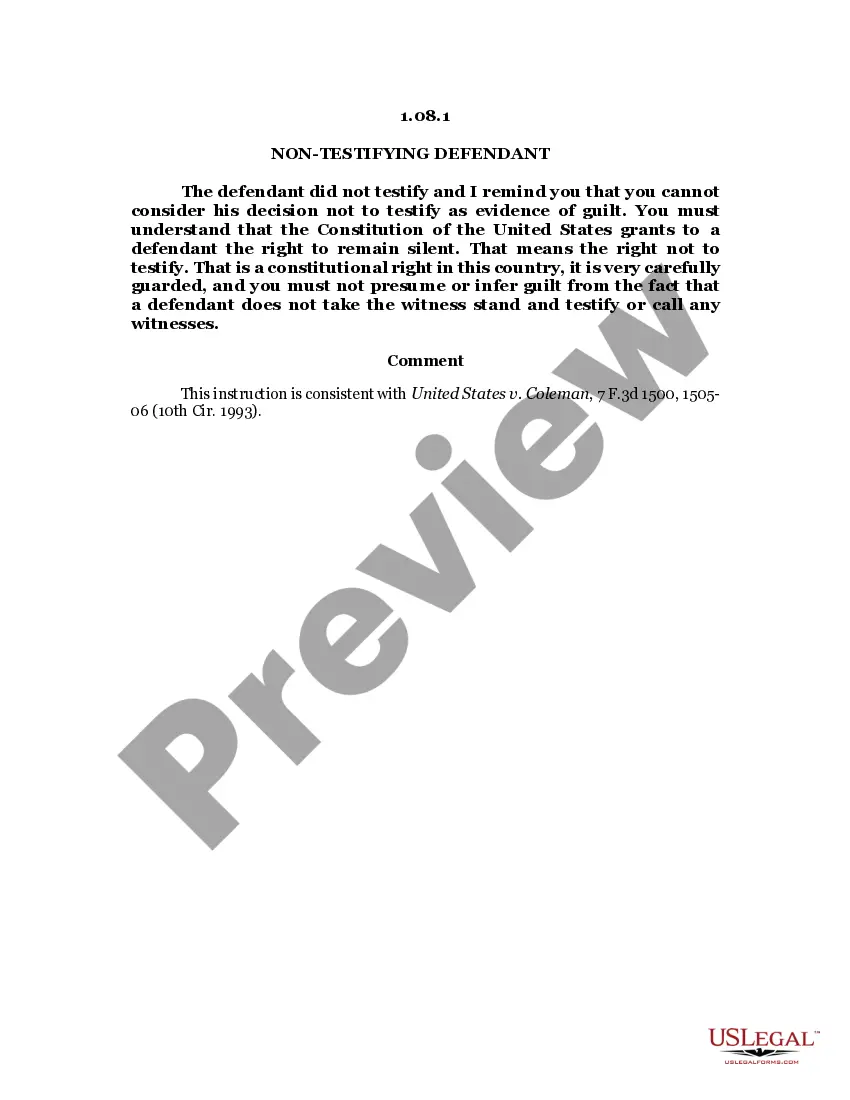
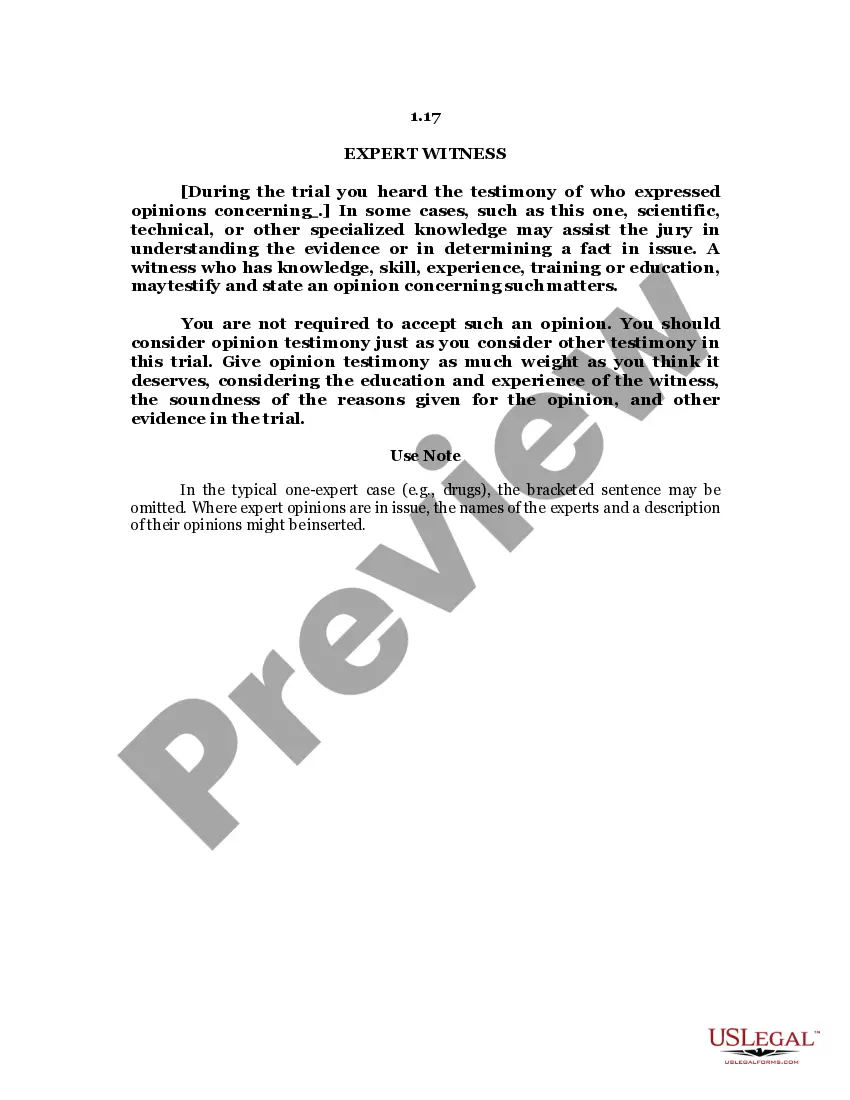
The Defendant as Witness form is a sample jury instruction used in court proceedings. This form instructs the jury on the defendant's competence to testify in their own defense. Unlike other jury instructions, this specific form focuses on assessing the defendant's ability to provide testimony, ensuring that their statements are treated with the same credibility and weight as any other witness in the case.
Key components of this form
- Introduction of the defendant as a witness.
- Statement regarding the defendant's competence to testify.
- Instruction for the jury to consider the defendant's testimony equally with other witnesses.
- Guidance on how to assess the weight and credibility of the defendant's testimony.
Common use cases
This form is used when a defendant in a trial is prepared to testify on their own behalf. It becomes relevant during jury instructions to ensure the jury understands the significance and relevance of the defendant's testimony, particularly in cases where the defendant's account is crucial for establishing facts in their defense.
Who should use this form
- Defendants in criminal trials who wish to testify.
- Attorneys representing defendants who need to instruct the jury on the competence of their client as a witness.
- Judges presiding over trials who need a template for jury instructions regarding a defendant's testimony.
Steps to complete this form
- Identify the defendant's name to be included in the testimony statement.
- Draft the jury instruction regarding the defendant's competence to testify.
- Ensure clarity in the instruction for the jury to assess the defendant's testimony.
- Review the instruction for alignment with local legal standards and courtroom practices.
Notarization requirements for this form
This form does not typically require notarization unless specified by local law. Always verify local requirements to ensure compliance.
Get your form ready online
Our built-in tools help you complete, sign, share, and store your documents in one place.
Make edits, fill in missing information, and update formatting in US Legal Forms—just like you would in MS Word.
Download a copy, print it, send it by email, or mail it via USPS—whatever works best for your next step.
Sign and collect signatures with our SignNow integration. Send to multiple recipients, set reminders, and more. Go Premium to unlock E-Sign.
If this form requires notarization, complete it online through a secure video call—no need to meet a notary in person or wait for an appointment.
We protect your documents and personal data by following strict security and privacy standards.

Make edits, fill in missing information, and update formatting in US Legal Forms—just like you would in MS Word.

Download a copy, print it, send it by email, or mail it via USPS—whatever works best for your next step.

Sign and collect signatures with our SignNow integration. Send to multiple recipients, set reminders, and more. Go Premium to unlock E-Sign.

If this form requires notarization, complete it online through a secure video call—no need to meet a notary in person or wait for an appointment.

We protect your documents and personal data by following strict security and privacy standards.
Common mistakes to avoid
- Failing to clearly state the defendant's name in the instruction.
- Using ambiguous language that could confuse the jury regarding the defendant's testimony.
- Neglecting to cite relevant state laws that may impact the instruction.
Advantages of online completion
- Convenient access allows for easy downloading and editing of forms.
- Templates drafted by licensed attorneys ensure legal accuracy.
- Ability to customize the form quickly to meet specific case needs.
Quick recap
- The Defendant as Witness form is crucial for affirming a defendant's right to testify.
- Jurors must be aware of how to evaluate the credibility of the defendant's testimony.
- This form is beneficial for defendants and legal professionals navigating criminal trials.
Looking for another form?



Form popularity
FAQ
If the defendant chooses to remain silent, the prosecutor cannot call the defendant as a witness, nor can a judge or defense attorney force the defendant to testify. (Defendants in civil cases may, however, be forced to testify as a witness in a civil case.
In criminal cases, defendants often are ordered not to have contact with any witnesses while the case is pending. Even if the court does not forbid contact, this is a best practice because contact can lead to accusations of witness tampering, whether or not tampering actually occurred.
A criminal defense attorney or their assistants have a right to ask a prosecution witness for an interview as long as they are not harassing or threatening them. The prosecution can advise the witness that they are not required to go through this conversation, but they cannot block them from meeting with the defense.
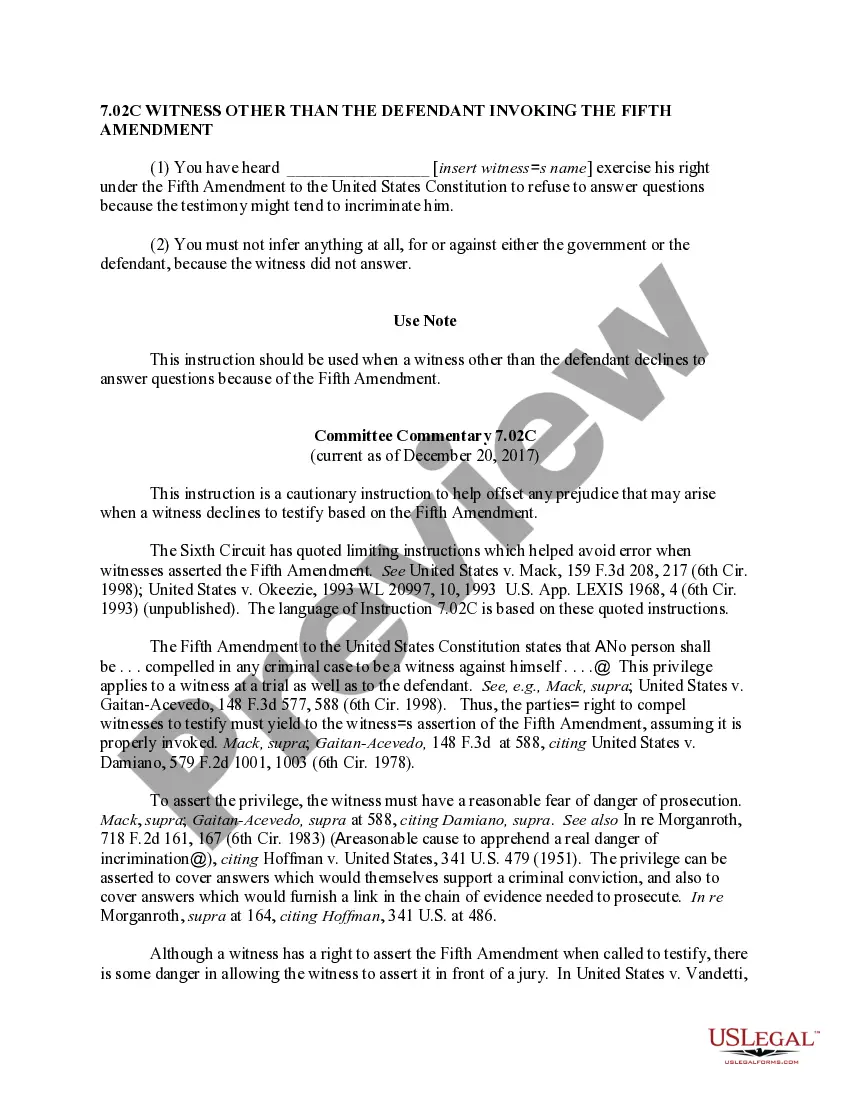
A witness is a person who saw or heard the crime take place or may have important information about the crime or the defendant. Both the defense and the prosecutor can call witnesses to testify or tell what they know about the situation. What the witness actually says in court is called testimony.
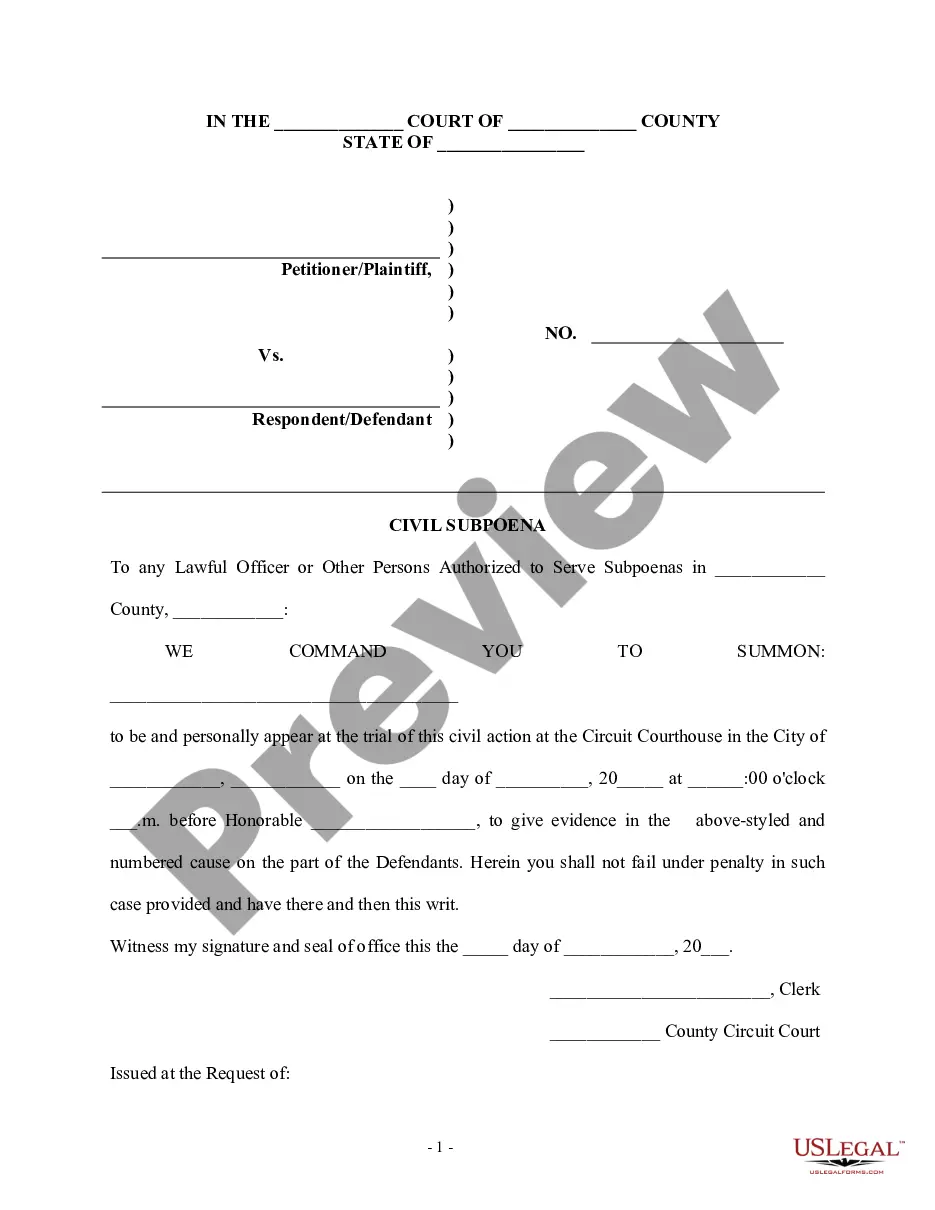
Yes, you may call a defendant as a witness and compel the defendant to testify in a civil case.
Here are partial examples of the kinds of information defendants routinely must disclose: Federal courts. Upon demand by the prosecutor, the defense must give written notice of intent to offer any alibi defense and reveal the names, addresses, and telephone numbers of the alibi witnesses.
In other words, the plaintiff may summon the defendant as a witness and require him, to produce the documents. Similarly, the defendant may summon the plaintiff, as held by this Court in Syed Yasin v.
A criminal defendant has the right to testify or not to testify in any criminal case. If a defendant chooses not to testify, that fact cannot be held against the defendant, and cannot be used to infer guilt.