Affidavit by Mother for Constructive Service of Father who Deserted Mother and Abandoned Minor Child
About this form
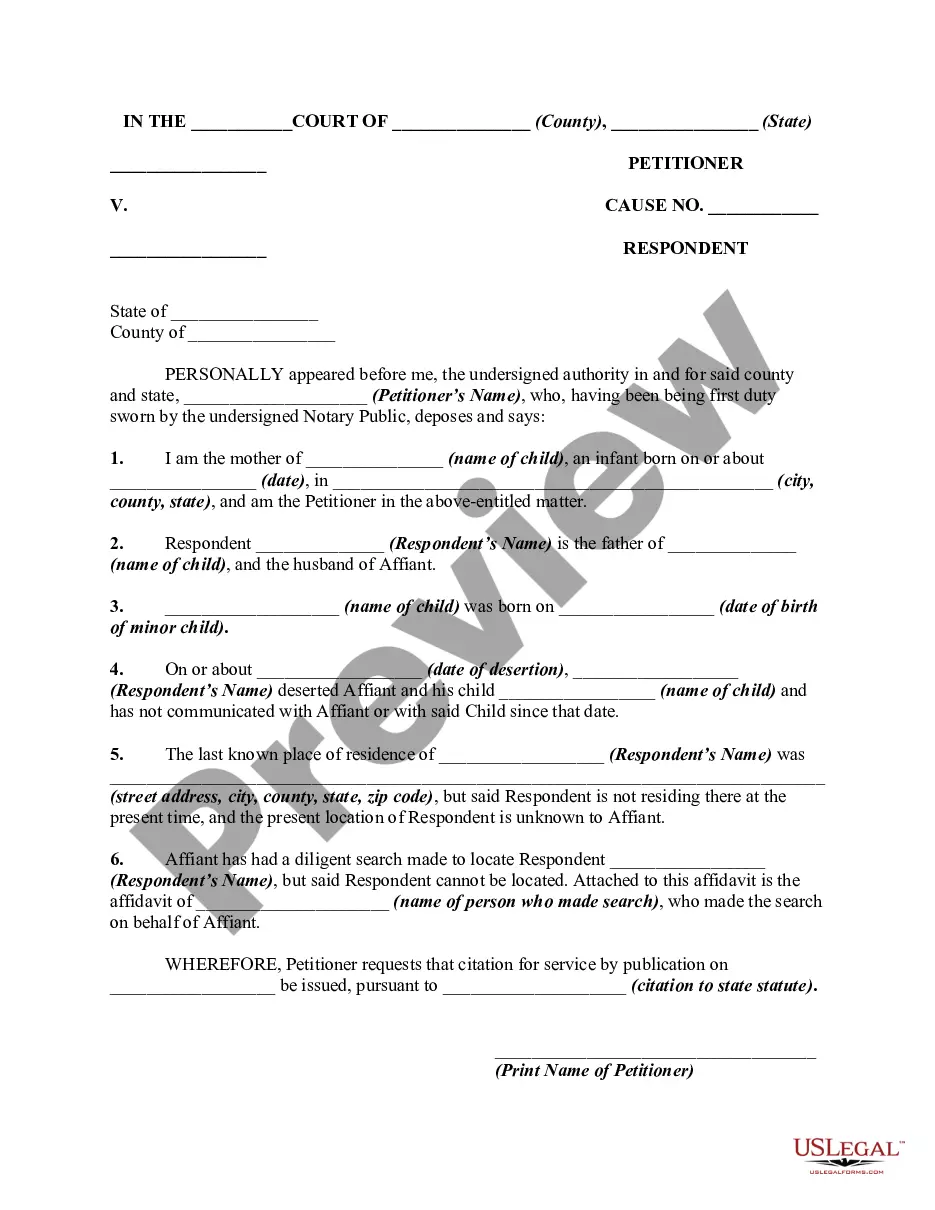
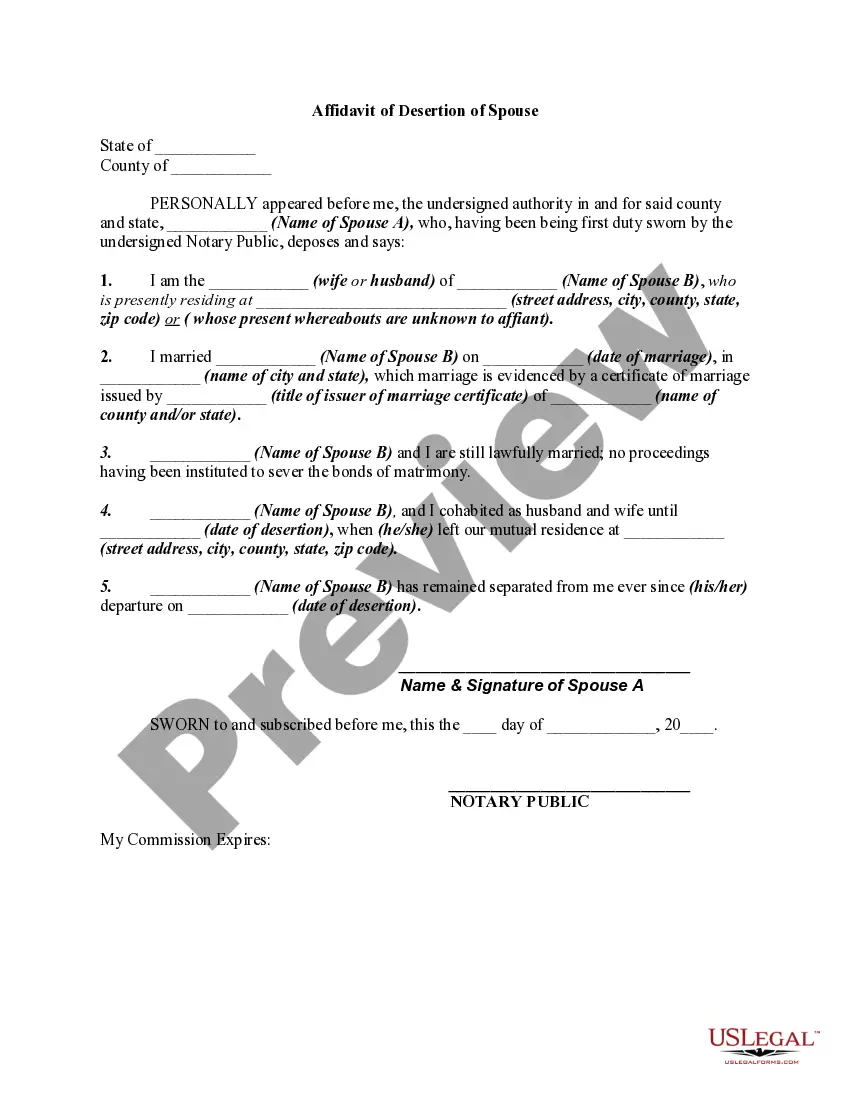
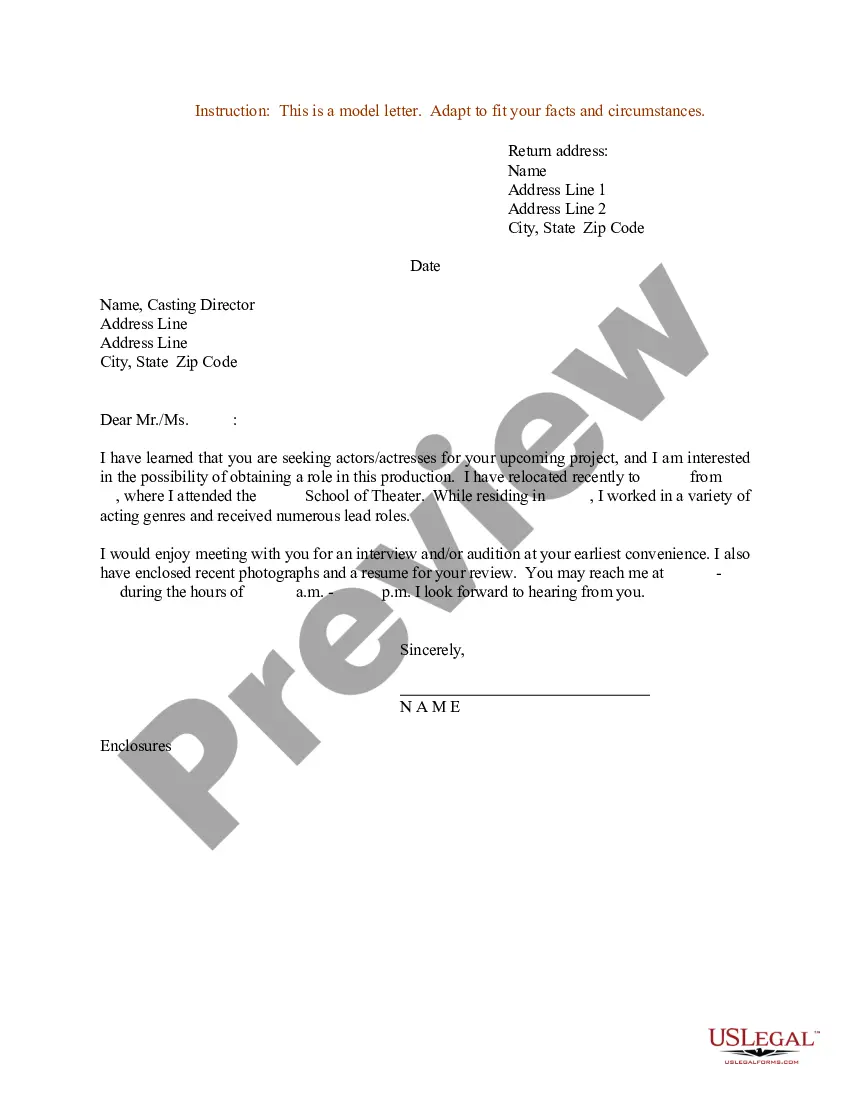
This form is an affidavit prepared by a mother to facilitate constructive service for the father who has deserted her and abandoned their minor child. This Affidavit by Mother for Constructive Service is essential in situations where traditional service methods are not viable, allowing the court to proceed with legal matters concerning the abandonment of a child.
Form components explained
- Petitioner and Respondent Names: Identification of the mother as Petitioner and the father as Respondent.
- Child's Details: Information regarding the minor child, including name and date of birth.
- Date of Desertion: The exact date the father deserted his family.
- Last Known Address: The last known residence of the father before his disappearance.
- Diligent Search: A declaration that a diligent search has been made to locate the father, including details of the person who conducted the search.
- Request for Citation: A formal request for citation for service by publication allowed under state law.
When this form is needed
This affidavit should be used when a mother is seeking to initiate legal proceedings against the father of her child after he has deserted them. It applies in cases where the whereabouts of the father are unknown, making traditional service of process impossible, thus necessitating constructive service through publication in a legal notice.
Who should use this form
- Any mother whose partner or husband has abandoned her and their child.
- Individuals wishing to file for child support or custody in the absence of the father.
- Parents needing to provide legal notice to an absent parent to proceed with court filings.
Steps to complete this form
- Identify the parties involved: Fill in the full names of the Petitioner (mother) and Respondent (father).
- Enter the child's details: Provide the name and date of birth of the minor child.
- Specify the date of desertion: State the date when the father abandoned the family.
- List last known address: Include the last known address of the father, along with any other available location information.
- Document the diligent search: Attach supporting documentation from the individual who conducted the search for the father.
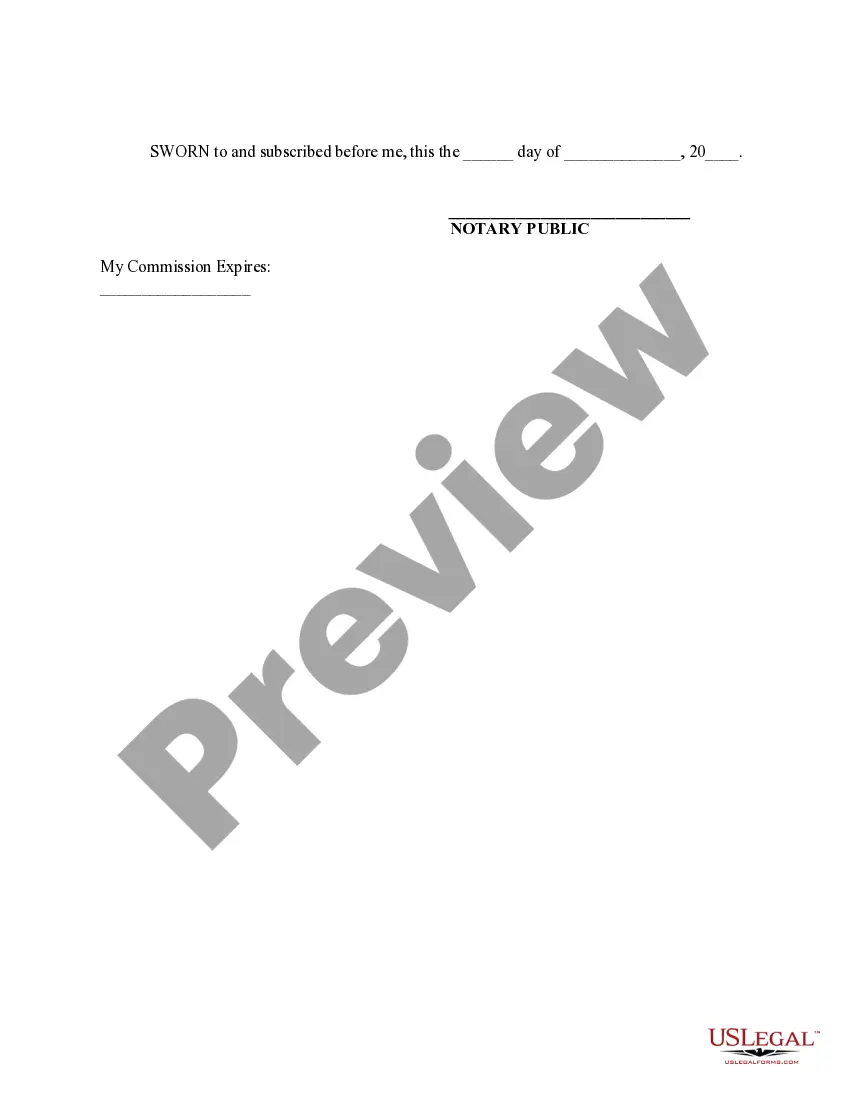
- Sign and notarize: Ensure the form is signed before a notary public to verify authenticity.
Does this document require notarization?
Yes, this form must be notarized to be legally valid. US Legal Forms provides integrated online notarization services that are available 24/7, allowing you to complete the notarization via secure video call, eliminating the need for travel.
Get your form ready online
Our built-in tools help you complete, sign, share, and store your documents in one place.
Make edits, fill in missing information, and update formatting in US Legal Forms—just like you would in MS Word.
Download a copy, print it, send it by email, or mail it via USPS—whatever works best for your next step.
Sign and collect signatures with our SignNow integration. Send to multiple recipients, set reminders, and more. Go Premium to unlock E-Sign.
If this form requires notarization, complete it online through a secure video call—no need to meet a notary in person or wait for an appointment.
We protect your documents and personal data by following strict security and privacy standards.
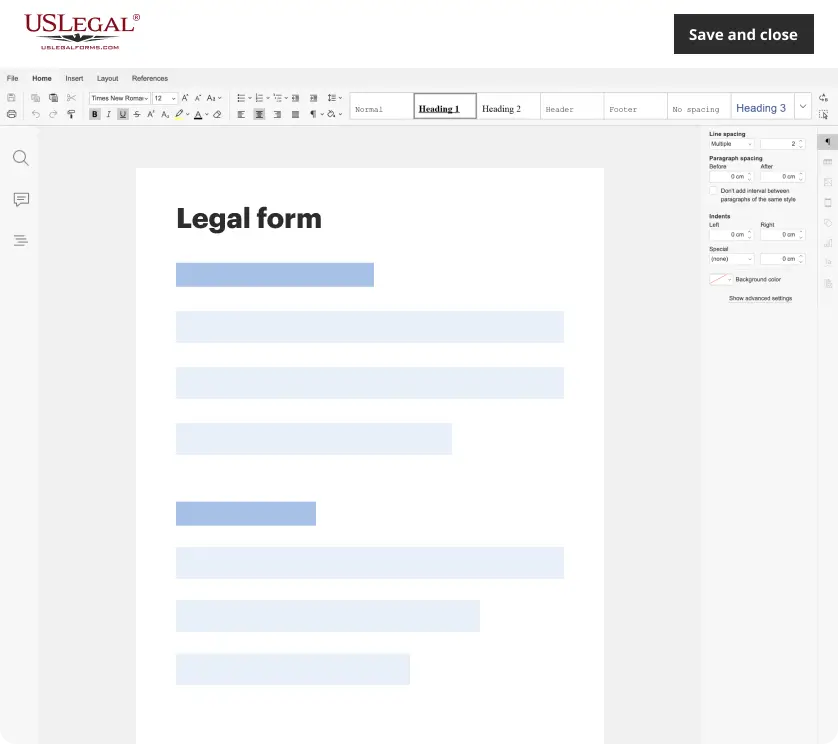
Make edits, fill in missing information, and update formatting in US Legal Forms—just like you would in MS Word.
Download a copy, print it, send it by email, or mail it via USPS—whatever works best for your next step.
Sign and collect signatures with our SignNow integration. Send to multiple recipients, set reminders, and more. Go Premium to unlock E-Sign.

If this form requires notarization, complete it online through a secure video call—no need to meet a notary in person or wait for an appointment.

We protect your documents and personal data by following strict security and privacy standards.
Avoid these common issues
- Failure to include the child's complete information, such as name and date of birth.
- Not providing sufficient details about the father's last known location.
- Omitting the affidavit of the person who performed the search.
- Not notarizing the affidavit, which is important for legal validity.
Why complete this form online
- Convenience: Easy access to download and fill out the form at any time.
- Editability: Ability to customize the form to fit specific needs before printing.
- Reliability: Forms are drafted and reviewed by licensed attorneys, ensuring legal compliance.
What to keep in mind
- This affidavit is crucial for mothers needing to assert abandonment by the father in legal proceedings.
- It facilitates constructive service, allowing legal processes to proceed when the father cannot be located.
- Complete all sections accurately and ensure proper notarization for validity.
- Understand and follow state-specific guidelines to ensure compliance with local laws.
Looking for another form?
Form popularity
FAQ
Difficult relationships with peers and romantic partners. low self-esteem. trust issues. anger issues. mood swings. codependency. fear of intimacy. anxiety disorders.
An orphan (from the Greek: 03bf03c103c603b103bd03cc03c2, romanized: orphanos) is a child whose parents have died, are unknown, or have permanently abandoned them. In common usage, only a child who has lost both parents due to death is called an orphan.
A misdemeanor conviction might lead to up to a year (or more) in jail, while a felony conviction can bring a punishment of 10 years or more in a state prison.
A child who was abandoned by a parent or caregiver may have mood swings or anger later in life. These behaviors can alienate potential intimate partners and friends. A child's self-esteem can also be affected by lack of parental support. Abandonment fears can impair a person's ability to trust others.
'Foundling' is an historic term applied to children, usually babies, that have been abandoned by parents and discovered and cared for by others. Abandoned children were not unusual in the eighteenth century when the Foundling Hospital was established.
Abandonment issues arise when an individual has a strong fear of losing loved ones. A fear of abandonment is a form of anxiety. It often begins in childhood when a child experiences a traumatic loss. Children who go through this experience may then begin to fear losing other important people in their lives.
Abandonment of the child (this is often the most common ground for requesting termination of an absent parent's parental rights. In most states, the biological parent must show that the absent parent has not seen or contacted the child for at least four months);
A mother who leaves her children is often considered to be going against the very essence of maternal nature. Even if she sees her children every second weekend, she can be made to feel unworthy of her mother status. "Mothers who leave can suffer terrible isolation, criticism and shame," says psychologist Kirsty Levin.
Unfortunately, abandoned children (also called "foundlings") who do not get their needs met often grow up with low self-esteem, emotional dependency, helplessness, and other issues. A person charged with deserting a child may face felony or misdemeanor penalties and other consequences.